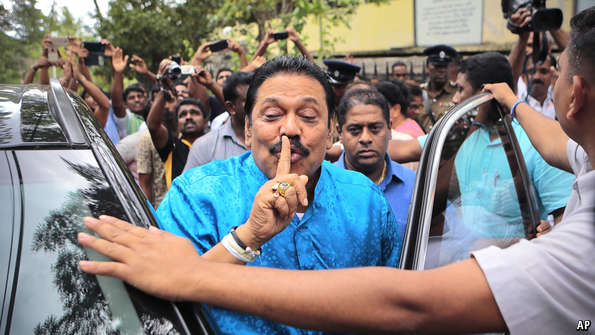
“I am not sidelined, but decided to function low-key” – Premier Mahinda Rajapaksa

Prime Minister Mahinda Rajapaksa in an interview with the Daily Mirror speaks about future economic plans of the government amidst the pandemic situation and responds to allegations made against the regime, which is has completed one year in office.
Excerpts:

Q How does the Government expect to perform amidst the pandemic situation?

The COVID-19 pandemic is the biggest challenge for us. We are now working with the health authorities to overcome it. We have received vaccines. If we get them in sufficient quantity we could overcome this health crisis earlier than expected.

Q The pandemic posed economic challenges both locally and globally. How are you planning to get the economy on track under the present circumstances?

There is a huge challenge. So far we have effectively dealt with every challenge that we encountered. We will tide over this one too as we have succeeded in the past.

“But we have not defaulted payment of any installment. We will be able to proceed as usual. We have implemented an economic development plan. When it progresses we can address all such challenges without any problem”

Q The Government gave tax concessions upon election to office after the 2019 Presidential Elections. This resulted in a revenue loss to the state coffers. How can you manage financial requirements?

We intended to encourage new business opportunities while boosting the existing ones through such tax reliefs. Entrepreneurs are inclined to invest more and more when they are relieved of tax burden. When such business development takes place, it is a victory for us.

Q But there is a temporary revenue shock to the state. What do you say about it?

I don’t think it is a serious challenge. It is a challenge. But, we are capable of handling it successfully.

Q The Government also needs a lot of foreign exchange for debt servicing. How challenging is it?

That challenge has always existed. But we have not defaulted payment of any installment. We will be able to proceed as usual. We have implemented an economic development plan. When it progresses we can address all such challenges without any problem. Our economy has now started to take off.

“The COVID-19 pandemic is the biggest challenge for us. We are now working with the health authorities to overcome it. We have received vaccines. If we get them in sufficient quantity we could overcome this health crisis earlier than expected”

Q The opposition has launched a campaign citing that the Government has failed in every aspect. How do you respond to this as the Prime Minister?

It is the duty of the opposition. The opposition is politically duty-bound to see that the government becomes a failure. The opposition is proceeding with its duty in politics. Even a newspaper reader tends to read articles which are critical of the Government rather than the ones praising it. We also read such articles to know what we are criticised for. According to my 50-year experience in politics I know it for a fact that people are willing to read anti-government news and articles.

Q But, such criticism snowballs and gets established within the society. What is your experience in this regard?

For that we should counter it. We should not stop only at reading such news and articles. We should act accordingly and appropriately. We should go for a mechanism to blunt such criticism.

Q Does it mean that there is no such mechanism at present?

Some people say there are shortcomings in this case. But some others maintain that what we do is good enough.

“We intended to encourage new business opportunities while boosting the existing ones through such tax reliefs. Entrepreneurs are inclined to invest more and more when they are relieved of tax burden. When such business development takes place, it is a victory for us”

Q The Government faces harsh criticism after it has completed one year in office. What do you feel about it as a lawmaker who counts 50 years in politics?

Going by the past I know people start critically viewing the Government after it puts one year in office. This is natural. But people have not abandoned the Government. I know they have not changed. They just listen to criticism against the Government and remain mute. They are with the Government.

Q What are the Government’s top economic priorities this year?

We have launched a programme with emphasis on the development of agriculture. We are striving for self-sufficiency in this regard. We are going ahead with the extension of the Southern Expressway. We have finalised planning work for the construction of Colombo-Ratnapura Expressway. The Central Expressway will be extended to Dambulla from Kurunegala. We are taking in this direction. We are planning for the extension of the railway line up to Pelmadulla.

Q Is the Government seeking investments under the BOT system (Build, Operate, Transfer) for road developments instead of raising loans?

Investors expect quick returns on money on the ground for road construction through such a system. They have to charge from road users. But, our people are not used to paying exorbitantly for use of the road. Investors are a bit reluctant regarding arrangements for investment in road projects under such a system.

Q Yet, it is challenging to raise loans, isn’t it?

It is challenging. But, we have been successful in implementing projects under loan schemes.

Q When does the Government expect to enact the new Constitution?

The process is now underway. If we complete the work on the new Constitution we would be able to enact it by the end of 2021 or early next year.

Q The present Government comprises a mix of politicians from traditional and non-traditional streams. The President is from the non-traditional stream whereas you and a host of others are traditional politicians. How do you describe this experience in governing?

It is extremely good. When there is a mix there are checks and balances properly done within the Government. There are merits in it. The government can deliver.

Q There is public perception that you, despite being the Prime Minister, have been sidelined. How true is it?

There is nothing like that. I have decided to function low-key, though. We don’t work seeking publicity all the time. There are people who work hard, but without much fanfare. I do a lot of work without much publicity being sought.

“The opposition is politically duty-bound to see that the government becomes a failure. The opposition is proceeding with its duty in politics. Even a newspaper reader tends to read articles which are critical of the Government rather than the ones praising it”

Q You had to grapple with human rights issues in Geneva during the 2010/2015 period. Again, the Government is under scrutiny by the UNHRC in Geneva. How do you get ready for it?

Whenever we form a Government we face this problem from the western world. We need to clarify our positions. We have this challenge every time we are in power. The Foreign Ministry is working out a mechanism to face this situation in Geneva. I am also in the loop.

Q There are Muslim organizations now joining hands with Tamil Diaspora groups this time. These Muslim groups are up in arms against the Government over the burial issue. How do you counter it?

It is a settled issue. The World Health Organization has said that individual countries can take the most appropriate decision in this regard. We should look at the best method to prevent the spread of the virus through dead bodies. What is paramount is public health.

Q Will there be any diplomatic row with India over the issue involving the East Container Terminal?

No, there won’t be any issue. We maintain healthy relations with India in this regard. There are two schools of thought regarding this investment project. Alienation of state assets is not the policy of this Government. Quite a number of Buddhist monks oppose it. They have already come out.

Q People complain about the rising cost of living. What is the Government doing to contain it?

Actually some steps should be taken to cushion the burden. The cost of living committee meets.

Q What do you think of import restriction on items such as turmeric?

It is true that people were inconvenienced when a decision was taken regarding turmeric. However, people started cultivating turmeric as a result. Some people cultivated turmeric sufficient for their household consumption. It boosted local growth. Now supply is getting restored.
The increase of local production is the only solution to bring down the cost of living.

Q Is there a move to reshuffle the Cabinet and increase the number of state ministers?

This is a rumour. But, I am not aware of any such move. There is no discussion on increasing the number of state ministers.

“Going by the past I know people start critically viewing the Government after it puts one year in office. This is natural. But people have not abandoned the Government. I know they have not changed”

Q There is a huge allegation against the Government regarding the damage to forest cover under the pretext of carrying out development projects. What can you say?

Only the opposition should be held responsible for deforestation. When they formed the government, they did it at whims. It is an irony that they talk about it today.

Q What is your response to the opposition’s campaign titled ‘Sir Failed’?

It is a kind of a propaganda tool being employed by them to portray the Government in negative light. That is their political duty to dub the Government as a total failure. When the same allegation is repeated for hundreds of times, it gets established. The opposition is involved in such media stunts as a result. Today, the UNP does not exist virtually.

Q What is your view on the role of the present opposition?

The split in the opposition is not a healthy sign for democracy. A strong opposition keeps a government in check and forces it to deliver.

Q There is a call for former Prime Minister Ranil Wickremesinghe to join Parliament. What is your view?

I don’t think there is anyone other than him to represent the UNP in Parliament. He is the most suitable person to lead the opposition.

Q You say so because he is your old friend. Am I correct?

(Laughs) It isn’t because he is my friend. Politically speaking, he is the suitable person. His presence is disadvantageous to the government, though. I believe a strong opposition is always needed. The present opposition is not effective. At that time, the Joint Opposition was far more effective.

Q The appointment of ex-military officers to key positions is interpreted as heading towards militarisation. How do you see it?

There is no militarisation. A retired military officer is not a military officer. He is a civil person. It is always better for the government to have a team capable of working efficiently. They work hard. I, as a lawyer, may count more on lawyers. The President, as an ex- military officer, knows competent people who were in the military. The President obtains their services. Military officers are also Sri Lankans. They are a disciplined lot.

Q What is the position regarding the elections to the provincial councils?

I believe the elections should be conducted as early as possible. We need the second tier of political representatives. People are used to the system. This is my opinion. There are others in the government, who don’t like it.
Japan regrets Sri Lanka’s scrapping of port terminal deal

The Japanese Government has expressed regret over Sri Lanka’s decision to scrap the East Container Terminal deal with Japan and India.

The Ambassador of Japan to Sri Lanka Akira Sugiyama met with Foreign Minister Dinesh Gunawardena today (03) and discussed a range of matters relevant to the bilateral partnership between Sri Lanka and Japan.

The issue over the East Container Terminal deal is believed to have been raised at the meeting.

The Memorandum of Cooperation among the three Governments of Sri Lanka, Japan and India on the development of the East Container Terminal located in the Colombo South Port was signed in Colombo on 28 May 2019.

Then Ports and Shipping and Southern Development Minister Sagala Ratnayaka who signed the agreement on behalf of Sri Lanka in 2019 insisted that the ECT was not “sold” to India or Japan.

As per the 2018 agreement India and Japan were to have a 49% stake collectively in the Terminal Operations Company that was to be set up with the exclusive and explicit purpose of providing the equipment and systems necessary for the development of the ECT and managing the ECT for long periods.

Under the agreement the stake of 51% of the TOC was to belong to the Government of Sri Lanka under the Sri Lanka Ports Authority (SLPA).

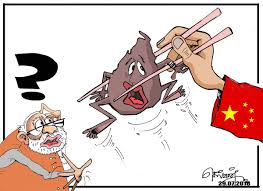
It was recently speculated that Chinese intelligence agencies were behind the opposition by trade unions to the ECT deal.

India reiterates call for full implementation of 13th Amendment

India today reiterated calls for the full implementation of the 13th Amendment to the Constitution.

Deputy High Commissioner Vinod K Jacob today met with Sri Lanka Muslim Congress (SLMC) Leader Rauff Hakeem,

Hakeem evaluated India’s gesture of early supply of Covid vaccines to Sri Lanka. Both sides also discussed matters pertaining to economic, financial and development cooperation opportunities.

The High Commission said that Hakeem shared his assessment about the challenges facing the Muslim community in recent times.

He also briefed about the issues involved in the forthcoming UNHRC session beginning later this month.

Deputy High Commissioner Jacob recalled the conversations between the Indian and Sri Lankan leadership since November 2019.

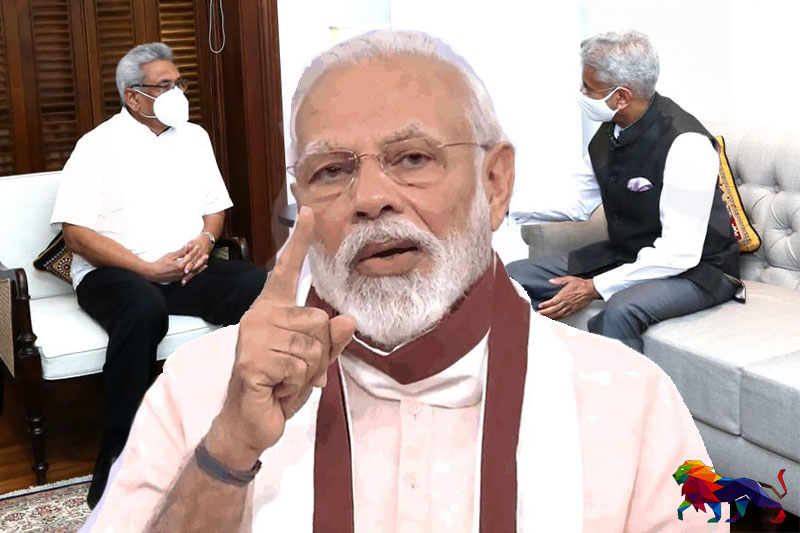
During the Virtual Bilateral Summit between Prime Minister Narendra Modi and Prime Minister Mahinda Rajapaksa in September 2020, the latter had expressed the confidence that Sri Lanka will work towards realizing the expectations of all ethnic groups.

Deputy High Commissioner reiterated India’s long standing and principled position on meaningful devolution through full implementation of 13th amendment and Provincial Councils.

Posted in Uncategorized

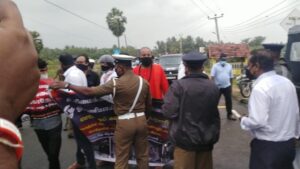
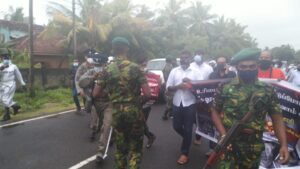
Despite Armed Brutal STF Crackdown in Sri Lanka – Tamil’s Walk For Justice Begins in the East and will End In the North

Despite heavily armed brutal Special Task Force (STF) crackdown, Tamil’s Walk for Justice Began in the Eastern town of Pothuvil and end in the Northern town of Polihandi. Hundreds are joining despite road blocks, threats, harassments and intimidation.

Yesterday, in a dramatic turn of events a Catholic Bishop of Trincomalee Bishop Christian Noel Emanuel was served with stay order by the police from participating in the Walk for Justice for Tamils. Several current & former Member’s of Parliament, Tamil journalists and civil society leaders were also served with stay orders to prevent them from covering or participating in this walk.

This walk for justice was organized by North and East Civil Society Organizations to protest abuses against Tamils and to highlight Tamil’s joint appeal to UN High-Commissioner for Human Rights and to UN Human Rights Council member states. This appeal included a request to Refer Sri Lanka to the International Criminal Court (ICC) for War Crimes, Crimes Against Humanity and Genocide committed against the Tamil people by the Sri Lankan State.

This walk began today in Pothuvil in the Eastern province and will end in Polihandy in the Northern province.

The Walk is to highlight the following issues:

1) Continuing land grab in Tamil areas and converting Tamil’s traditional and historical places into Sinhalese areas by establishing Buddhist temples after destroying Hindu temples. As of now around 200 Hindu temples were effected.

2) Muslims who died due to COVID are cremated against the wishes of the families and against Islamic teachings.

3) Tamils in the upcountry have been urging for pay raise of 1,000 rupees, but the Government is not responding to their demands.

4) Since the war ended ten years ago, militarization of Tamil areas is continuing and Tamils historical identity is destroyed with the aim to change demography in favor of Sinhalese, using different government departments, especially archeological department. Also, Government sponsored Sinhalese settlements are continuing.

5) Tamil cattle owners are facing numerous problems, where their gracing areas are being occupied by Sinhalese and their cows killed.

6) PTA has been used to imprison Tamil youths without charge or trial for over 40 years are now being used against Muslims.

7) Tamil political prisoners have been imprisoned for years without trial. The Government have pardoned Sinhalese on a regular basis, but none of the Tamil political prisoners were pardoned.

8) Families of the enforced disappeared have been protesting to find their loved ones, but the Government refuses to give them an answer.

9) Tamils have been denied the Right to Remember their war dead, as demonstrated by denying remembrance events, destruction of cemeteries of the was dead and demolition of memorials.

10) Government is targeting Tamil journalists who cover these abuses and Tamil Civil Society activists who protest these abuses.

11) To Implement Tamil’s Joint Appeal to UN High Commissioner for Human Rights and to UN Human Rights Council Member States, which includes request to Refer Sri Lanka to International Criminal Court (ICC) for War Crimes, Crimes Against Humanity and Genocide committed against Tamil people by the Sri Lankan State.

Govt. decides to reject UN rights chief’s report on Sri Lanka

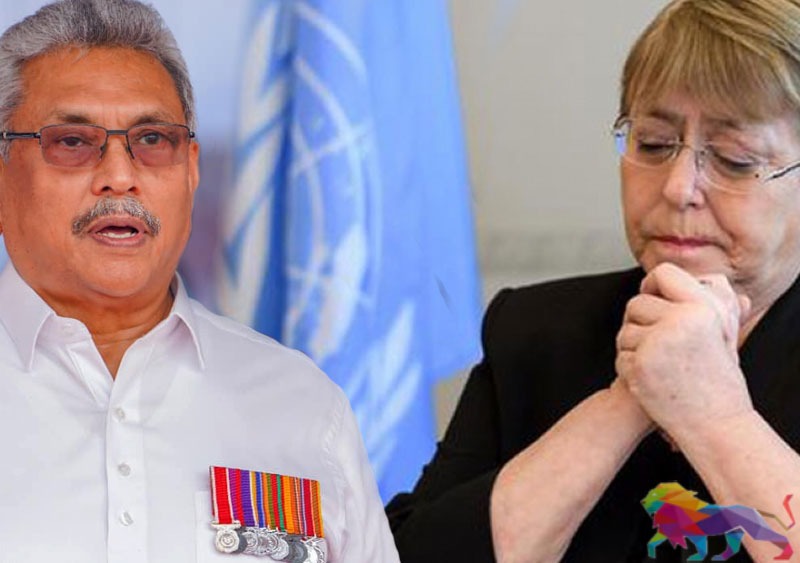
The Government of Sri Lanka has decided to reject the report compiled by the United Nations Human Rights Commissioner Michelle Bachelet on alleged human rights violations in Sri Lanka, says Minister Udaya Gammanpila.

He said Sri Lanka’s response to the report, which has already been submitted in writing, will be made public when Foreign Affairs Minister Dinesh Gunawardena addresses the UN Human Rights Council.

The government decided to reject the report as it has been prepared in violation of the mandates given through resolutions 30/1 and 40/1 of the UN Human Rights Council, Minister Gammanpila noted.

Further, the 17-page report only contains 02 pages that are in accordance with the mandate conferred on the Human Rights Commissioner, the Minister explained. The remaining content of the report are maliciously aimed at the government, contrary to their scope, he added.

In addition, the report has failed to present credible evidence pertaining to the allegations levelled at Sri Lanka, Minister Gammanpila said further.

In the report published in late January, the UN rights chief had stressed that the failure of Sri Lanka to address past violations has significantly heightened the risk of human rights violations being repeated.

She also called for an International Criminal Court investigation into Sri Lanka’s Tamil separatist conflict and sanctions on military officials accused of war crimes.

“Domestic initiatives for accountability and reconciliation have repeatedly failed to produce results, more deeply entrenching impunity, and exacerbating victims’ distrust in the system,” the report read.

It went on to say that the government of President Gotabaya Rajapaksa has reversed some advances made under previous administrations in protecting human rights.

Posted in Uncategorized

India-Lanka relations under strain over denial of East Container Terminal in Colombo port

India-Sri Lanka relations have come under strain following Sri Lanka’s withdrawal from its written commitment to give Colombo port’s Easter Container Terminal (ECT) to India, and to offer the West Container Terminal (WCT) in lieu of it as a sop.

A disappointed Indian High Commissioner Gopal Baglay met President Gotabaya Rajapaksa, Prime Minister Mahinda Rajapaksa and Foreign Minister Dinesh Gunawardena on Tuesday apparently to express India’s dismay about the breach of trust.

Asked about the outcome of the discussions, the Indian High Commission said that India will issue a statement on it from New Delhi. The statement is awaited.

The suddenness of the Sri Lankan cabinet’s decision, without any prior discussion with India, had upset New Delhi, Indian sources said. The cavalier fashion in which a bilateral agreement and repeated verbal commitments were flouted is bound to have an impact on the relationship, though it is too early to say in what particular ways it will be impacted, the sources added.

As regards the offer of the West Container Terminal (WCT), the sources said that it had come out of the blue. Firstly the offer has to be made officially and with adequate details for India to consider it in depth, the sources said. As of now there is only a public statement, albeit official, that the WCT will be built and run by the Sri Lanka Ports Authority (SLPA) in collaboration with India and Japan for 35 years as a private public partnership to go by, Indian sources said.

Immediately after the February 1 cabinet decision, the Indian High Commission had issued a statement reiterating India’s position that all parties to the May 18, 2019 Memorandum of Cooperation (MOC) – Sri Lanka, India and Japan – over the ECT, should adhere to it. It was stated that the MOC had emerged from discussions at the highest national level and was backed with assurances from the Sri Lankan government subsequently, and even recently.

Earlier in January, the Indian Foreign Minister S.Jaishankar had indicated India’s deep interest in the ECT. “India is interested in the security and development of Colombo port,” he said in explanation when asked about his talks on it with the Sri Lankan President here.

Just a few days prior to the cabinet decision, the government of India had gifted 500,000 doses of the COVISHIELD vaccine to Sri Lanka as part of its “Neighborhood First Policy” and had committed itself to a steady supply of the vaccine. India was, as in many cases in the past, the first respondent to the virus pandemic in Sri Lanka. China has only promised to send 300,000 doses of its vaccine.

Support in UNHRC

Earlier, Sri Lanka had made a request to India to support it at the UN Human Rights Council (UNHRC) where a hostile resolution is likely to be introduced in March by the Core Group led by Western nations backed by the US. The UN High Commissioner for Human Rights, Michelle Bachelet, had recommended “targeted sanctions” against Sri Lanka and also referring it to the International Criminal Court (ICC) for alleged “war crimes”. The US is at odds with Sri Lanka since the later rejected a grant of US$ 480 million for transport development and land registration under the Millennium Challenge Corporation Compact.

In the light of Colombo’s decision on the ECT, the question that is asked is: Would New Delhi’s approach to Sri Lanka’s case in the UNHRC change? However, informed sources said that there is still a lot of time for India to adopt a stand on this issue. Much would depend on the exact nature of Colombo’s offer of the West Container Terminal and the seriousness of its intention to stick to commitments solemnly made in regard to it, they added.

Reasons For Denial

While it was true that Sri Lankan nationalists, both within the government and outside, along with 23 workers’ unions and a section of Buddhist monks, were against giving the ECT to India, it was believed President Gotabaya Rajapaksa was himself in favor of the deal largely based on the May 2019 MOC.

It was believed that Gotabaya was considering several factors such as: geo-political factors, the importance of India for the defense of Sri Lanka, and the need to maintain a balance between China and India in economic and strategically important projects. The President was therefore expected to be able to convince the agitated port workers’ unions that the ECT was not going to be sold or leased out to India and that the SLPA would have majority stake (51%) in the terminal.

But at the end of the day, the workers’ view prevailed. This was because they kept insisting that the President’s election manifesto Vistas of Prosperity and Splendor had explicitly mentioned Public-Private Sector Partnership only in the case of the development of the West Container Terminal (WCT), and not the ECT. What was implicit in the line on ECT was that the government will build and run the ECT.

Furthermore, key members of the President’s own think tank “Viyathmaga” such as Dr.Nalaka Godahewa and Dr.Priyath Bandhu Wickrama had had discussions with the workers’ unions and had reported back to the President to say that the workers’ case was reasonable based as it was on the election manifesto. The interlocutors assured the President that the workers’ were in agreement with him on Public-Private cooperation in building and running the West Container Terminal.

So far, India has not indicated whether it will accept the Lankan proposal on the West Container Terminal. The proposed deal appears to be the same as that which related to the ECT broadly. But the WCT has to be constructed from scratch and the details as to the stakes are yet to be worked out.

Some hardline Lankan nationalists would continue to agitate against giving any port terminal to India “even a 1% stake” as a union leader said.

The General Secretary of the Port Workers’ Union, Niroshan Gorakahenna, has been quoted in the Tamil paper Virakesari as saying that the workers were opposed to giving any terminal to foreign countries whether it was ECT or WCT. The WCT could not be bartered away to get back the ECT, he stressed. The workers would now discuss what steps they should take to press their case, Gorakahenna added.

In its defense, the government could say that it is only implementing the President’s election manifesto faithfully, a manifesto for which 6.9 million Lankans (52%) voted to install Gotabaya Rajapaksa in power.

India will Mount Pressure

India is also expected to flex its muscles so that Sri Lanka does not take it for granted. It is already raising the Tamil-Sinhalese ethnic reconciliation issue especially the full implementation of the 13 th.Constitutional Amendment (13A) which stems from the India-Sri Lanka Accord of 1987.

The 13A, which established elected provincial councils, gave the Tamil majority province (as well as other provinces) a modicum of devolved power, which in India’s view, would led to the extinction of separatist tendencies among the minority Tamils. There is an apprehension that in the proposed new Lankan constitution, the provisions contained in 13A will not find a place.

On Tuesday, the Indian Deputy High Commissioner, Vinod.K.Jacob, met two Tamil leaders from the Eastern Province, former Chief Minister and current MP, Sivanesathurai Chandrakanthan alias Pillayan, and former Minister Vinayagamurthi Muralitharan, alias Karuna Amman, and discussed 13A.

Jacob had reiterated the position of the Government of India that meaningful devolution is the way forward for achieving the aspirations of the Tamil people and stressed full implementation of 13th amendment.

The other sensitive issue is the tough resolution which is likely to be moved in the UN Human Rights Council (UNHRC) in Geneva in March. While the Human Rights High Commissioner Michelle Bachelet has recommended targeted sanctions and hauling up Sri Lanka before the International Criminal Court for alleged “war crimes” the Sri Lankan government has taken a defiant stand accusing the UNHRC of going by falsehoods and recommending remedies which violate the sovereignty of Sri Lanka.

Sri Lanka has asked for India’s support in the UNHRC since India has generally been supporting Sri Lanka in the council. Colombo hopes that with the grant of the WCT to compensate for the denial of the ECT, New Delhi will oblige Colombo at the UNHRC. Sri Lankans point out that China and Russia have already pledged support openly.

Posted in Uncategorized

India presses for full implementation of 13A in Sri Lanka for better representation of Tamils

Colombo: During a meeting with Eastern Province’s former chief minister Sivanesaturai Chandrakanthan and former lawmaker Vinayagamurthi Muralitharan, India’s Deputy High Commissioner Vinod K Jacob on Tuesday discussed bilateral cooperation and implementation of the 13th Amendment.

“Deputy HC Vinod K Jacob held separate meetings with delegations led by Hon”ble MP S Chandrakanthan (Pillayan) & Mr V Muralitharan (Karuna Amman). Development coop in the East & full implementation of 13th amendment & Provincial Councils were discussed in these meetings,” the Indian High Commission in Colombo tweeted on Tuesday.

The 13th Amendment provides for devolution of power to the Tamil community. India has been pressing Sri Lanka to implement the 13th Amendment which was brought in after the Indo-Sri Lankan agreement of 1987.

However, the Sinhala nationalist parties and the erstwhile Liberation Tigers of Tamil Eelam vehemently opposed it.

While nationalists have decried it as excess sharing of power, the Tamil Tigers criticised it as sharing of only few powers.

President Gotabaya Rajapaksa has shown inclination to abolish the provisions in a soon-to-be revised Constitution.

The ruling Sri Lanka People’s Party (SLPP) allies have mounted a public campaign for abolition of the provincial councils system. The SLPP’s Sinhala majority hardliners have been advocating a total abolition of the island’s provincial council system established in 1987.

In his visit to Colombo last month, External Affairs Minister S Jaishankar met a delegation of Tamil National Alliance (TNA) lawmakers with whom he discussed, among other things, the role played by provincial councils in national reconciliation. The TNA is the main Tamil party in the island nation. Jaishankar also met a delegation of the Tamil Progressive Alliance.

During a joint media interaction with his counterpart Dinesh Gunawardena in Colombo, Jaishankar underlined India’s backing for Lanka’s reconciliation process and an “inclusive political outlook” that encourages ethnic harmony.

“As we promote peace and well-being in the region, India has been strongly committed to the unity, stability and territorial integrity of Sri Lanka. Our support for the reconciliation process in Sri Lanka is longstanding, as indeed for an inclusive political outlook that encourages ethnic harmony,” he said.

“It is in Sri Lanka’s own interest that the expectations of the Tamil people for equality, justice, peace and dignity within a united Sri Lanka are fulfilled. That applies equally to the commitments made by the Sri Lankan government on meaningful devolution, including the 13th Amendment to the Constitution,” Jaishankar had said.

Posted in Uncategorized

Indo- Lanka ties takes a hit

Relations between Sri Lanka and India hit a new low yesterday after Prime Minister Mahinda Rajapaksa announced that Sri Lanka will not go ahead with the agreement to jointly manage the East Container Terminal (ECT) at the Colombo Port with India and Japan.

Sources in New Delhi told the Daily Mirror that the Indian Government is likely to express serious disappointment at Sri Lanka’s decision at a higher level.

While India is expected to maintain its interest on Sri Lanka and continue funding key projects to counter China’s stronghold on the island, the decision not to implement the agreement signed in 2019 will however see strong reactions from Delhi, sources said.

The Memorandum of Cooperation among the three Governments of Sri Lanka, Japan and India on the development of the East Container Terminal located in the Colombo South Port was signed in Colombo on May 28, 2019. Then Ports and Shipping and Southern Development Minister Sagala Ratnayaka who signed the agreement on behalf of Sri Lanka in 2019 insisted that the ECT was not “sold” to India or Japan.

“The original discussion was for them to operate it for 35 years but we later brought it down.we had a consultant working with us and we were to work it all out by November.

But there was a government change,” he said.

He told the Daily Mirror that there was also no opposition to the agreement at the time and that Sri Lanka stood to greatly benefit from the deal.

As per the 2018 agreement India and Japan were to have a 49% stake collectively in the Terminal Operations Company that was to be set up with the exclusive and explicit purpose of providing the equipment and systems necessary for the development of the ECT and managing the ECT for long periods. Under the agreement the stake of 51% of the TOC was to belong to the Government of Sri Lanka under the Sri Lanka Ports Authority (SLPA). It was recently speculated that Chinese intelligence agencies were behind the opposition by trade unions to the ECT deal. Indian diplomatic sources told the Daily Mirror they are still of the strong view that Chinese agencies were funding some protests against the ECT. However, there has not been any evidence to back the claims.

Meanwhile, the Indian High Commission in Colombo issued a quick response after Prime Minister Mahinda Rajapaksa announced that the ECT will be fully managed by Sri Lanka.

“I would like to reiterate the expectation of the Government of India for expeditious implementation of the trilateral Memorandum of Cooperation (MOC) signed in May 2019 among the Governments of India, Japan and Sri Lanka for the development of ECT with participation from these three countries,” a spokesperson at the Indian High Commission in Colombo told reporters.

The spokesperson said that the commitment of the Government of Sri Lanka with regard to the ECT has been conveyed several times in the recent past, including at leadership level.

“Sri Lanka cabinet also took a decision three months ago to implement the project with foreign investors,” the spokesperson said.

Posted in Uncategorized

Anthem only in Sinhalese at Independence Day event

The National anthem will be sung only in Sinhalese and not two languages at the main Independence Day celebrations this week.

Defence Secretary General (Retd) Kamal Gunaratne said the anthem will be sung when President Gotabaya Rajapaksa hoists the National flag at the main event on Thursday, 4th February.

The former government sang the National anthem in Sinhalese and Tamil.

However the current administration sang the anthem only in Sinhalese at the 72nd Independence Day celebrations last year.

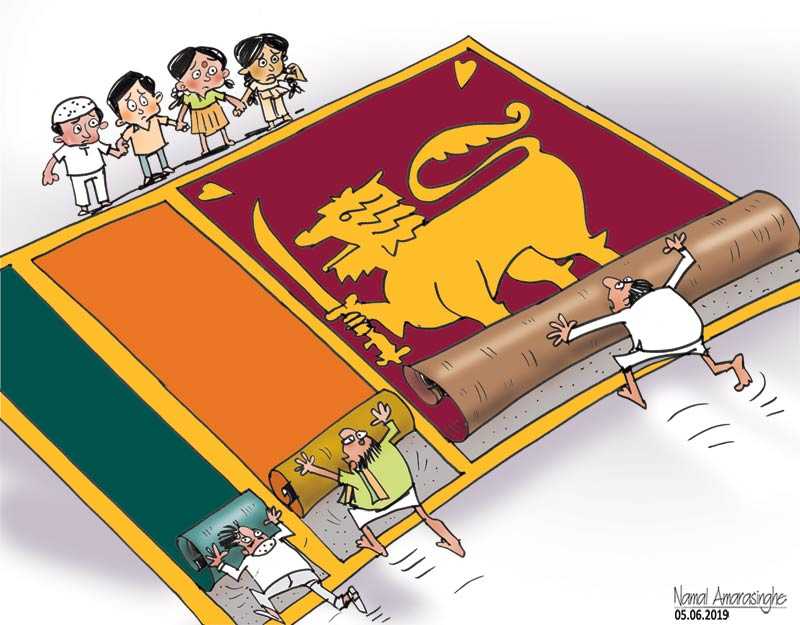
Meanwhile, steps are being taken to amend the Lion in the National flag.

Responding to a question posed at a virtual media conference, General Gunaratne said that concerns had been raised over some shortcomings in the image of the Lion in the Sri Lanka flag.

“Proposals were made by some people in society over some shortcomings in the Lion image,” he said.

General Gunaratne said that the Home Affairs Ministry has taken the proposals into consideration.

“However, there is a large process to follow. It will need to be put forward to Parliament for approval,” General Gunaratne added.

General Gunaratne said that the relevant officials are discussing the matter with the Government.

He said that very little could be done with the flag ahead of the 73rd Independence Day celebrations.

As a result, the existing Sri Lanka flag with the Lion image will be used at the celebration.

However, he said the process to make the required changes is underway.

Sri Lanka, PRC sign MoU to deepen apparel trade ties

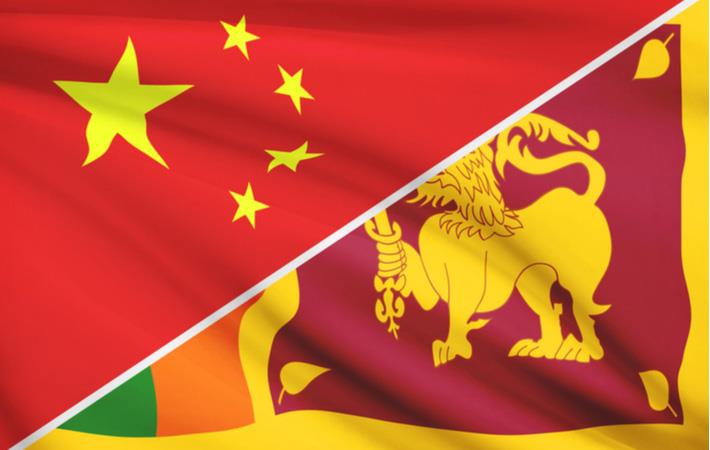
Sri Lanka and China recently signed a memorandum of understanding (MoU) to boost bilateral apparel trade that was severely affected by the COVID-19 pandemic. The China National Textile and Apparel Council signed the agreement with Sri Lanka’s Joint Apparel Association Forum (JAAF) to strengthen the working relationship between the two associations.

Other key objectives of the agreement are to promote value chain cooperation in the two countries, increase mutual visits, promote exchanges and improve mutual trust among industry personnel.

The effort was initiated by the embassy of Sri Lanka in Beijing, JAAF chairman A Sukumaran and China National Textile and Apparel Council vice president XuYingxin, according to a Sri Lankan newspaper report.

Sri Lanka also invited investors from China to explore investment opportunities in the upcoming textile park in Eravur.

Apparel and textile trade between China and Sri Lanka has expanded over the last three years and in 2019, the total textile and apparel trade between the two countries reached $1.24 billion.