Beijing attempts to force Sri Lanka to approve vaccine

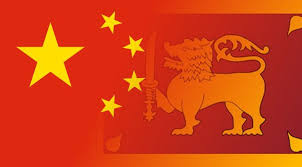
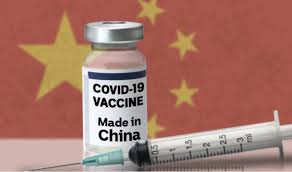
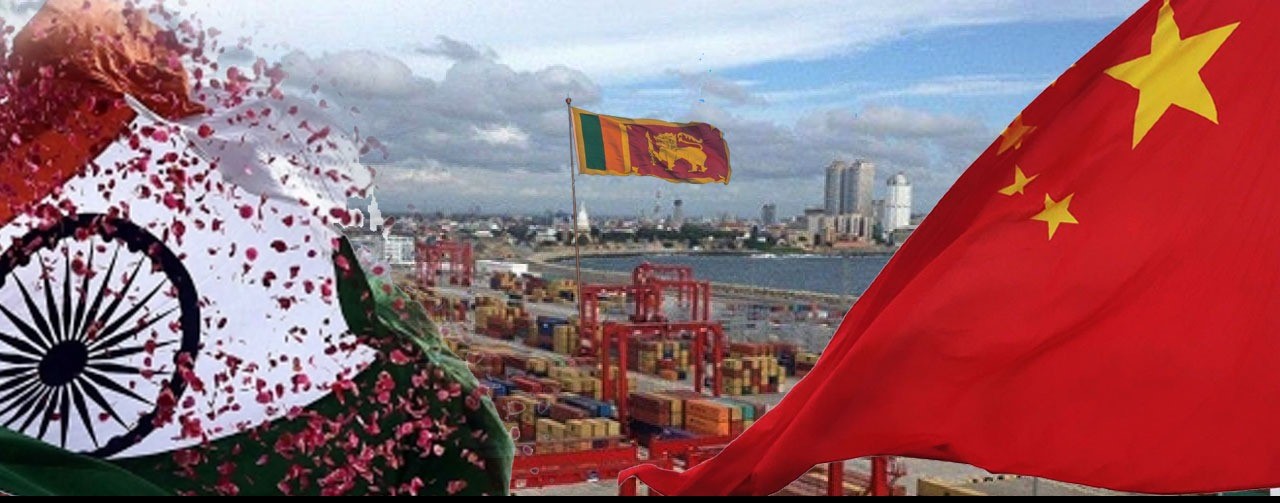
China has allegedly pushed the Sri Lankan Government to approve Covid-19 vaccines manufactured by Chinese state-owned Sinopharm, a development that comes close on the heels of India’s gift of 500,000 doses of the locally manufactured Covishield jab to the island nation, the Economic Times reported.

China has decided to gift 300,000 doses of the vaccines to Sri Lanka, one of its key partners in the Belt and Road Initiative in the Indian Ocean Region.

The Chinese Embassy in Colombo pushed the Rajapaksa Government to approve Sinopharm vaccines by citing their efficacy and approval by some other countries, said people aware of the matter.

They said China was put on the back foot by India’s “vaccine diplomacy” or the decision to gift doses of made-in-India coronavirus vaccines to friendly nations, the Economic Times reported.

A Chinese statement even named a few leaders who have taken a shot of Chinese vaccines to point to their efficacy.

China’s move came shortly after India announced gifting of Covishield vaccines to Sri Lanka, a Colombo-based person said on condition of anonymity. Covishield, the local name for the Oxford University-Astrazeneca vaccine being manufactured by the Pune-based Serum Institute of India, has been approved for emergency use by Sri Lanka.

On Thursday, 500,000 doses of the jab were transported in tailor-made boxes in a special Air India flight to Colombo.

The gift from India was in keeping with India’s continued support to Sri Lanka in fighting pandemic, said officials. Four consignments of medical supplies weighing about 25 tonnes were donated by India, which also organised online experience-sharing programmes for Sri Lankan medical professionals. India and Sri Lanka are the largest contributors to the Covid-19 Emergency Fund for SAARC.

A number of countries in the subcontinent including Nepal, Bangladesh, Sri Lanka and the Maldives, where China has substantial investments, caught China by by surprise by opting for made-in-India vaccines.

So far, India has sent consignments of coronavirus vaccines under grant assistance to Nepal, Bangladesh, Bhutan, the Maldives, Seychelles, Myanmar and Mauritius.

India is one of the world’s biggest drug-makers and an increasing number of countries have approached it for procuring the coronavirus vaccines. It is also undertaking commercial supplies of the doses to a number of countries, including Saudi Arabia, South Africa, Brazil, Morocco and West Asian countries, the Economic Times reported.

India rushed two million doses of Covishield vaccine to Brazil on the request of Brazilian President Jair Bolsonaro.

Millions of doses of made-in-India Covid vaccines will continue to reach those in the Caribbean and the Pacific too. Two North African countries — Egypt and Algeria, are expected to receive vaccines from India in the near future.

Posted in Uncategorized

Impunity for Past Crimes in Sri Lanka Could Trigger Renewed Conflict -By Lisa Schlein – VOA

GENEVA – U.N. human rights officials are alarmed by Sri Lanka’s lack of accountability for past crimes, warning it could result in a resurgence of the same kind of violations and abuse that triggered past armed conflict.

Sri Lanka’s 26-year-long civil war with the Tamil Tigers ended nearly 12 years ago. Since then, U.N. officials say successive governments have done nothing to redress the population’s grievances, hold perpetrators of crimes accountable and provide justice and reparations to the victims of the war.

A hard-hitting report issued by the Office of the U.N. High Commissioner for Human Rights finds impunity for grave human rights violations and abuses by all sides is more entrenched than ever.

Human rights spokeswoman Ravina Shamdasani tells VOA her agency has documented many cases of extrajudicial killings, enforced disappearances, arbitrary detentions and other violations of international humanitarian law.

“There have been many Commissions of Inquiry that were appointed by successive governments to look into the kinds of grave human rights violations that have been committed, but none of them have yielded any concrete results…This current government has moved beyond merely a slow process of accountability to active political obstruction of accountability,” she said.

The report documents a pattern of intensified surveillance, harassment and intimidation of civil society organizations, human rights defenders and victims, lawyers and journalists.

Of particular concern, it notes, is the increasing marginalization of Tamil and Muslim minorities. Authors of the report warn divisive and discriminatory rhetoric from the highest state officials risks generating further polarization and violence.

Shamdasani says it is troubling to see many of the officials who are part of the current administration were in power when the conflict was ending, and many atrocities committed.

“Since last year, the President has appointed at least 28 serving or former military and intelligence personnel to key administrative posts. So, these are people who remain in power. And what is really worrying is that some of these officials were actually implicated in alleged war crimes and crimes against humanity during the final years of the conflict,” she said.

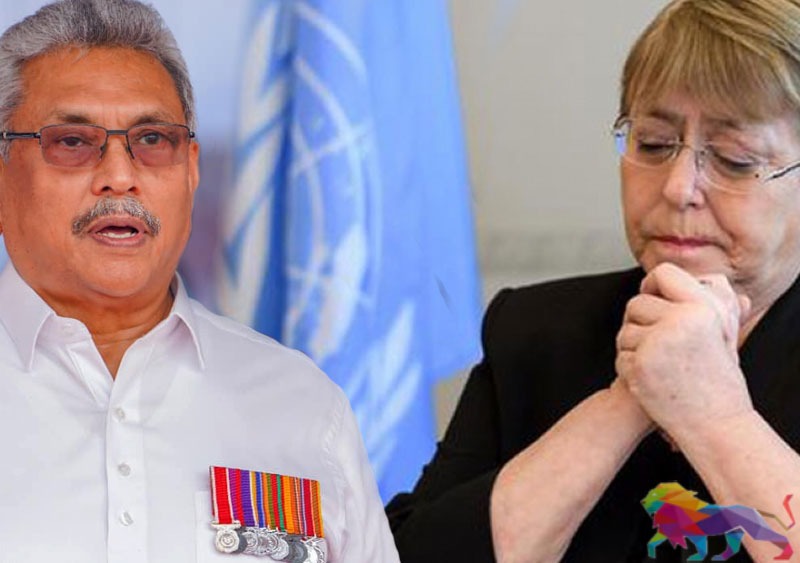
U.N. rights chief Michele Bachelet says the Sri Lankan government has demonstrated its inability or unwillingness to hold anyone accountable. Therefore, she is urging governments to investigate and prosecute alleged perpetrators of crimes in their national courts under an accepted system of international justice.

Shamdasani says the Sri Lankan government was given the report before publication.

A Sri Lankan official told Reuters the accusations in the report regarding the government’s actions are wrong.

Shamdasani says some of the government’s extensive comments have been incorporated into the report, which will be formally presented to the Human Rights Council on February 24.

China Steps Up Vaccine Diplomacy, To Donate 3 Lakh Doses To Sri Lanka: Report

Beijing: China will donate three lakh COVID-19 vaccine doses to Sri Lanka, stepping up its vaccine diplomacy in South Asia as India rushed its domestically manufactured coronavirus vaccines to several countries in the subcontinent as well as across the globe.
Sri Lankan President Gotabaya Rajapaksa on Thursday thanked India for its generosity after he received five lakh doses of Covishield vaccine gifted by New Delhi under the “Neighbourhood First” policy.

“China will donate three lakh COVID-19 vaccine doses to Sri Lanka to jointly fight the COVID-19 pandemic,” state-run Xinhua news agency reported on Wednesday, citing a statement from the Chinese embassy in Colombo.

China made the decision after a recent request by the Lankan government, it said.

The jabs manufactured by the China National Pharmaceutical Group Co Ltd (Sinopharm) are expected to be handed over to the Lankan side in mid-February.

A number of countries in the subcontinent including Nepal, Bangladesh, Sri Lanka and the Maldives, where Beijing has substantial investments, caught China by surprise by opting for Indian vaccines.

So far, India has sent consignments of coronavirus vaccines under grant assistance to Nepal, Bangladesh, Bhutan, the Maldives, Seychelles, Myanmar and Mauritius.

India is one of the world’s biggest drug-makers and an increasing number of countries have already approached it for procuring the coronavirus vaccines.

It is also undertaking commercial supplies of the doses to a number of countries, including Saudi Arabia, South Africa, Brazil and Morocco. India has also rushed two million doses of Covishield vaccine to Brazil on the request of Brazilian President Jair Bolsonaro.

Meanwhile, Lankan President Gotabaya Rajapaksa’s senior advisor Lalith Weeratunga told journalists in Colombo on Wednesday that the National Medicines Regulatory Authority (NMRA) was conducting tests on the Sinopharm vaccine and once clearance is obtained from them, the vaccine could be used under an emergency basis, the Xinhua report said.

Separately, China has offered to step-up cooperation to Maldives to control the pandemic.

On January 26, Vice Foreign Minister Luo Zhaohui co-hosted the 7th round of China-Maldives diplomatic consultations with Maldivian Minister of State for Foreign Affairs Ahmed Khaleel via video link.

Luo Zhaohui said China and Maldives supported each other, effectively contained the virus spread in their countries, and actively promoted economic recovery.

Both sides need to make continuous efforts to push forward their bilateral relations, a Chinese Foreign Ministry statement said.

Government Rethinking ECT Strategy And Proposed Deal With Adani Group In The Face Of Mounting Pressure From Trade Unions?

The government is considering the option of withdrawing its plans to develop the East Container Terminal (ECT) of the Colombo Port, in partnership with the Adani Group of India.

The development comes against the backdrop where the government has come under severe pressure from a number of trade unions at the Sri Lanka Ports Authority (SLPA) to withdraw the plan. The trade unions have threatened to launch stronger union action should the government fail to respond to their demands.

State Minister Nalaka Godahewa and former SLPA Chairman Priyath Bandu Wickrema, now a Ministry Secretary, today visited the SLPA premises to meet the protesting workers. They were booed by a group of protesters who insisted that the government must only begin negotiations after pulling out of the proposed “Adani deal”.

Meanwhile, several prominent Cabinet ministers, including Wimal Weerawansa, have expressed their disappointment with the proposed deal. They are of the view that the East Container Terminal (ECT) should be developed and operated by the Sri Lanka Ports Authority (SLPA), with the involvement of a foreign party — a sentiment shared by protesting unions.

It is in this context that the government is now rethinking its ECT strategy, a top government source told Asian Mirror. However, it is still not clear as to how the government intends to manage the New Delhi’s interest in the event of a sudden withdrawal. The development of the ECT was a focal point during discussions between the Sri Lankan government and India’s Foreign Minister S. Jaishankar during the latter’s visit to the island.

Sri Lanka surpasses 300 COVID-19 deaths

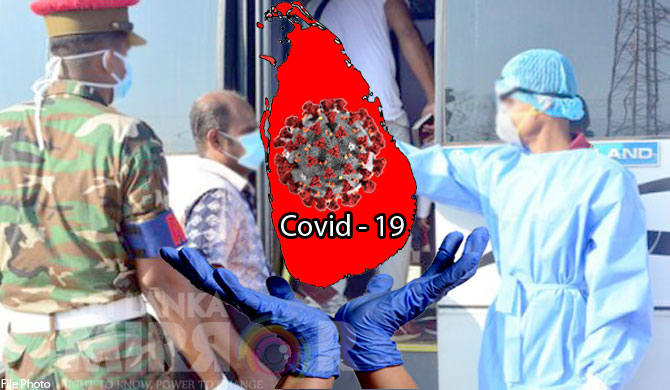
The Director General of Health Services confirms 08 more Covid-19 related deaths in the country increasing the death toll due to the virus to 305.

One of the victims is a 65-year-old male from Kolonnawa who was transferred from Colombo National Hospital to Iranawila Treatment Center after being identified as Covid-19 positive. He had passed away at that center on January 27 while the cause of death is Covid-19 pneumonia.

A 67-year-old woman from Panadura had passed away at the Panadura Base Hospital on January 27 also due to Covid-19 pneumonia.

A 58-year-old male from Galle who had been identified as Covid positive while being treated at the Karapitiya Teaching Hospital and later transferred to Mulleriyawa Base Hospital had passed away on January 28. The cause of death is cited as Covid-19 pneumonia and a heart attack.

A 90-year-old woman from Kalutara had passed away at the Kalutara General Hospital on January 24 due to complications related to Covid-19.

An 80-year-old male from Moratuwa who was transferred from a private hospital in Colombo to the Pimbura Base Hospital after testing positive for the virus had passed away on January 28. The cause of death is heart failure caused by Covid-19 infection, high blood pressure and sugar levels.

A 43-year-old woman from Piliyandala had passed away on January 29 while being treated at the Kothalawala Defence University Hospital, due to Covid-19 pneumonia and blood poisoning.

A 63-year-old male from Sainthamaruthu 12 area had been identified as Covid-19 positive at the Sammanthurai Base Hospital and transferred to IDH, where he passed away on January 29 due to shock caused by blood poisoning, Covid-19 pneumonia and health disease.

A 66-year-old woman from Ratnapura had been transferred from Ratnapura teaching Hospital to IDH after testing positive for coronavirus. She had passed away at IDH on January 28 due to Covid-19 pneumonia, shock caused by blood poisoning and heart failure.

Posted in Uncategorized

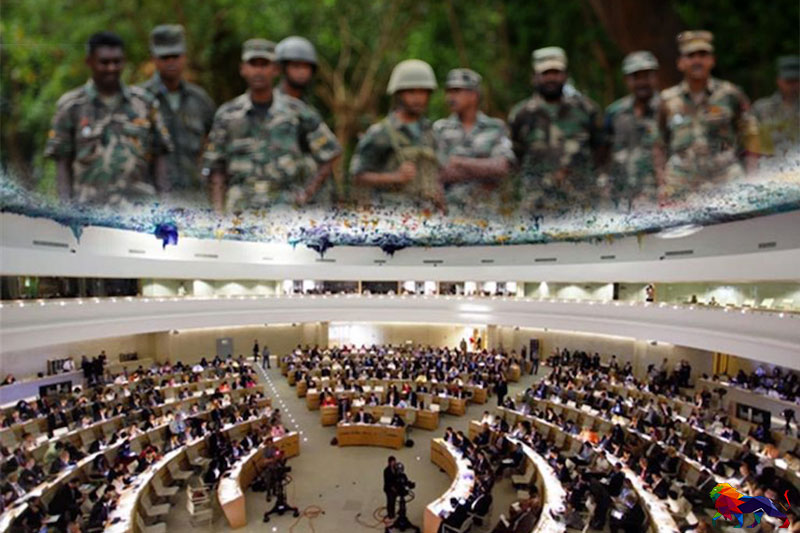
UNHRC urged to adopt a new resolution on Sri Lanka

The United Nations Human Rights Council (UNHRC), at its upcoming session, should act on the recommendations of the UN High Commissioner for human rights, Human Rights Watch (HRW) said today (29).

HRW urged the council to adopt a new resolution to enhance the scrutiny of Sri Lanka’s deteriorating human rights situation and pursue accountability for past and recent violations.

In her report released on January 27, 2021, High Commissioner for Human Rights Michelle Bachelet said she was “alarmed” by Sri Lanka’s deteriorating human rights situation and set out steps that the Human Rights Council should take to confront the growing risk of future violations.

Since the Government of President Gotabaya Rajapaksa has withdrawn its support for the 2015 consensus resolution seeking justice and reconciliation, and shown general disregard for upholding basic human rights, the council should act to protect those most at risk and advance accountability for grave international crimes, Human Rights Watch said.

“The UN High Commissioner’s report highlights Sri Lanka’s egregious record of complete impunity for appalling crimes, and very disturbing developments under the Rajapaksa administration,” said John Fisher, Geneva Director at Human Rights Watch.

“The Human Rights Council has given Sri Lanka every opportunity to address these issues over many years, and now greater international involvement is needed to help protect vulnerable groups and hold those responsible for grave international crimes to account.”

During the final months of the civil war between the Government and the separatist Liberation Tigers of Tamil Eelam (LTTE) that ended in May 2009, both sides committed atrocities that killed tens of thousands of civilians. UN investigators found that these atrocities may amount to war crimes and crimes against humanity. Grave abuses included summary executions, torture, rape, and the murder and enforced disappearance of journalists and activists.

Many senior figures implicated in those abuses returned to government following the election of Gotabaya Rajapaksa in 2019. The UN High Commissioner found that “Sri Lanka remains in a state of denial about the past, with truth-seeking efforts aborted and the highest state officials refusing to make any acknowledgement of past crimes”.

The High Commissioner described “a deepening and accelerating militarisation of civilian government functions”. Since 2020, she wrote, “The President has appointed at least 28 serving or former military and intelligence personnel to key administrative posts,” including senior military officials who have been alleged in UN reports to be implicated in alleged war crimes and crimes against humanity. Among them are the Defense Secretary, Gen. Kamal Gunaratne, who commanded the 53rd Division at the end of the civil war, and the Chief of Defense Staff, Gen. Shavendra Silva, who is banned from travelling to the United States due to his alleged involvement in extrajudicial killings.

In the 2015 Human Rights Council Resolution 30/1, the previous Sri Lankan Government agreed to adopt measures to ensure truth-telling, reparations, security sector reform, and justice through a hybrid mechanism including international investigators, prosecutors, and judges. In February 2020, three months after Rajapaksa won the presidential election, his Government renounced those commitments.

The High Commissioner drew attention in her report to the growing dangers vulnerable minority groups face. Rajapaksa set up an advisory council on governance consisting of senior Buddhist monks, established a task force on the sensitive issue of archaeological heritage management that consisted almost entirely of Sinhalese members, and under the pretext of Covid-19, mandated cremations for all deaths, groundlessly preventing Muslims from practicing their own burial rites.

The High Commissioner described how counterterrorism laws have been used to “stifle legitimate activities” of civil society organisations. She noted that as of December, over 40 civil society organisations had approached the Office of the High Commissioner for Human Rights (OHCHR) with reports of harassment, surveillance, and repeated scrutiny by various security services.

Bachelet expressed concern that the 20th Amendment to the Constitution, adopted in October, “has fundamentally eroded the independence of key commissions and institutions, including the HRCSL (Human Rights Commission of Sri Lanka), Election Commission, National Police Commission, and the judiciary.”

On January 21, Sri Lanka announced a new commission of inquiry to examine the findings of previous domestic inquiries, which the Government proposes as an alternative to Human Rights Council action. Bachelet noted that “(n)umerous commissions of inquiry appointed by successive governments failed to credibly establish truth and ensure accountability”. She said that the current Government “has proactively obstructed or sought to stop ongoing investigations and criminal trials to prevent accountability for past crimes.”

A commission appointed in January 2020 “intervened in favour of military intelligence officers in ongoing judicial proceedings…withholding documentary evidence, (and) threatening prosecutors with legal action”. Meanwhile, “not a single emblematic case has been brought to a successful conclusion or conviction”.

Bachelet concluded that “trends emerging over the past year…represent clear early-warning signs of a deteriorating human rights situation and a significantly heightened risk of future violations, and therefore calls for strong preventive action.” She said that once again the Human Rights Council is at “a critical turning point” in its dealings with Sri Lanka. Twice previously the council supported domestic accountability and reconciliation initiatives. “The Government has now demonstrated its inability and unwillingness to pursue a meaningful path towards accountability for international crimes and serious human rights violations.”

Bachelet acknowledged that the current situation in Sri Lanka represents a stark test to the UN: “(T)he trends highlighted in this report represent yet again an important challenge for the United Nations, including the Human Rights Council, in terms of its prevention function.” An independent review of the UN’s actions in Sri Lanka in 2009 concluded there had been a systemic failure of the prevention agenda. “The international community must not repeat those mistakes, nor allow a precedent that would undermine its efforts to prevent and achieve accountability for grave violations in other contexts,” she wrote.

She said the Human Rights Council should enhance the High Commissioner’s Office’s monitoring and reporting on the situation in Sri Lanka, including on accountability, and “support a dedicated capacity to collect and preserve evidence for future accountability processes, to advocate for victims and survivors, and to support relevant judicial proceedings in member states”. She also urged UN member countries to take action, by pursuing prosecutions of alleged Sri Lankan perpetrators in national courts under the principle of universal jurisdiction, and by imposing targeted sanctions, including travel bans and asset freezes, against alleged perpetrators.

“This strong and clear report by the High Commissioner leaves no room for doubt about the situation in Sri Lanka, or what is at stake when the Human Rights Council considers a new resolution in a few weeks’ time,” Fisher said. “Member states should draft and adopt a strong resolution that protects vulnerable people in Sri Lanka, advances justice for international crimes, and shows that the council is able to respond to challenges posed by the Sri Lankan Government.”
Posted in Uncategorized

Carefully reviewing UN report on human rights situation in Sri Lanka: US

The US has said that it is carefully reviewing a report from the UN on Sri Lanka’s human rights situation which highlights worrying trends such as deepening impunity, increasing militarisation of governmental functions, ethno-nationalist rhetoric and intimidation of the civil society over the past year.

The report urges enhanced monitoring and strong preventive action by the international community, warning that “Sri Lanka’s current trajectory sets the scene for the recurrence of the policies and practices that gave rise to grave human rights violations.”

“We are carefully reviewing the significant report from” the UN Human Rights Council “on human rights in Sri Lanka,” US State Department Spokesman Ned Price said.

“Sri Lanka’s future depends on respecting rights today and taking meaningful steps to deal with the past,” Price said in a tweet, a day after the UN report warned that the failure of Sri Lanka to address past violations has significantly heightened the risk of human rights violations being repeated.

Nearly 12 years after the armed conflict in Sri Lanka ended, impunity for grave human rights violations and abuses by all sides is more entrenched than ever, with the current government proactively obstructing investigations and trials, and reversing the limited progress that had been previously made, according to the report, mandated by the UN Human Rights Council resolution.

The report highlights worrying trends over the past year, such as deepening impunity, increasing militarisation of governmental functions, ethno-nationalist rhetoric and intimidation of the civil society.

Among the early warning signals, the report highlights are: the accelerating militarisation of civilian governmental functions, reversal of important constitutional safeguards, political obstruction of accountability, exclusionary rhetoric, intimidation of civil society and the use of anti-terrorism laws.

According to the UN figures, up to 40,000 civilians were killed by the security forces during then Mahinda Rajapaksa”s regime that brought an end to nearly three decades of civil war in Sri Lanka with the defeat of LTTE in 2009.

Both the government troops and the Tamil Tiger rebels are accused of war crimes.

Posted in Uncategorized

‘Sri Lanka will face the UNHRC with grit’

Minister Keheliya Rambukwella says the Sri Lankan government will face the upcoming United Nations Human Rights Council with grit.

Speaking to media in Kandy today, the Minister said the former good governance lost the confidence of the international community, adding that as a result the present government has faced many obstacles.

Minister Rambukwella said the UNHRC has made various baseless allegations over the prevalent situation in Sri Lanka adding that certain groups led Sri Lanka to the present state of affairs.

The Minister claimed Sri Lanka will be answerable to the UNHRC and the world for its actions during the term of the former government.

He explained that the former government introduced the 30/1 resolution and accepted the charges levelled against the country, promising to punish military personnel.

Minister Rambukwella hoped the government’s honesty would triumph against international forces.

Sri Lanka reports seven COVID-19 deaths Thursday, toll rises to 297

Sri Lanka confirmed seven deaths on Thursday due to COVID -19 raising the death toll from the viral disease to 297, according to health authorities.

The Director General of Health Services confirmed the following deaths caused by COVID -19 virus infection and accordingly the total number of deaths due to COVID -19 infection in Sri Lanka is 297 by now.

01. The deceased is an 86 year old male resident of Colombo 06 area. He died on January 26 on admission to Itthepana District Hospital. The cause of death was said to be exacerbated diabetes and high blood pressure associated with COVID-19 infection.

02. The deceased is a 73 year old male from Nittambuwa area. He has died at his residence on January 28. The Cause of death is mentioned as exacerbated diabetes and high blood pressure and heart attack associated with COVID-19 infection.

03. The deceased is a 76 year old female from Ratnapura. She died on January 28 while receiving treatment at the Ratnapura teaching Hospital. The cause of death is mentioned as Covid pneumonia, blood poisoning and heart disease.

04. The deceased is a 61 year old male resident of Colombo 13 area. He was diagnosed as infected with Covid-19 virus and transferred from General Hospital Colombo to the Mulleriyawa Base Hospital where he died on January 27.

05. The deceased is a 61 year old male inmate of Colombo Prison. He was diagnosed as infected with Covid-19 virus and transferred from the Prison Hospital to the General Hospital Colombo, where he had died on January 16. The cause of death is mentioned as Covid pneumonia, heart attack and acute diabetes.

06. The deceased is a 67 year old female from Colombo-06. She died on January 24 while receiving treatment at a private hospital in Colombo. The cause of death is mentioned as Covid pneumonia and acute asthma.

07. The deceased is a 62 year old male from Enderamulla. He has died on January 21 on admission to General Hospital Colombo. The cause of death is mentioned as Covid pneumonia and kidney complications.

Posted in Uncategorized

UK to support human rights in SL & to consider new report at upcoming UNHRC session

UK’s Permanent Representative to the UN in Geneva, Julian Braithwaite said UK would be considering the new UN Human Rights report on Sri Lanka at the upcoming session of UN Human Rights Council (UNHRC).

He said the UK will also continue to support human rights and accountability in Sri Lanka at the upcoming session.