China must share data on Covid impact: WHO

Chinese officials must share more real-time information on Covid in the country as infections surge, the World Health Organization (WHO) has said.

Many of the country’s strict restrictions have been lifted over the last few weeks, but cases have soared and several countries are now screening travellers from China.

WHO officials say they want to see more data on hospitalisations, intensive care unit admissions and deaths.

It also wants figures on vaccinations.

The United States, Spain, France, South Korea, India, Italy, Japan and Taiwan have all imposed Covid tests for travellers from China, as they fear a renewed spread of the virus. And passengers arriving in England from China will have to provide a negative test before they board a flight.

In a statement issued after talks with Chinese officials the UN health agency said: “WHO again asked for regular sharing of specific and real-time data on the epidemiological situation… and data on vaccinations delivered and vaccination status, especially in vulnerable people and those over 60.”

The agency said it was willing to provide support on these areas, as well as help addressing the issue of vaccine hesitancy.

It also stressed “the importance of monitoring, and the timely publication of data, to help China and the global community to formulate accurate risk assessments and to inform effective responses”.

WHO’s technical advisory group on the evolution of Covid-19 is set to hold a meeting on Tuesday. The agency says it has invited Chinese scientists to present detailed data on viral sequencing. It says it is “understandable” that some countries are imposing fresh restrictions on people travelling from China.

The sudden lifting of many of China’s restrictions follows November’s protests against the government’s management of the disease. Until then, China had one of the toughest anti-Covid regimes in the world – known as a zero-Covid policy.

It included strict lockdowns even if only a handful of cases had been found, mass testing in places where cases were reported, and people with Covid having to isolate at home or under quarantine at government facilities.

Lockdowns have now been scrapped, and quarantine rules have been abolished. People are now free to travel abroad again. Cases have since been on the rise, with the Chinese government reporting about 5,000 a day.

But analysts say such numbers are vastly undercounted – and the daily caseload may be closer to one million. Officially there have only been 13 Covid deaths throughout December, but UK-based health data firm Airfinity said on Thursday that around 9,000 people in China are probably dying each day from the disease.

(BBC)

Posted in Uncategorized

Police make rare probe into Navy’s harassment of Wanni journalist

Police are making a rare investigation into a reported harassment of a Tamil journalist in the Wanni by the Navy.

Kanapathipillai Kumanan gave a statement for more than three hours at the ASP’s office in Mullaitivu yesterday (29) with regard to the incident he faced more than six months ago.

Submitting a copy of video footage which his media colleagues captured, Kumanan has told the police that he could identify the culprits at an identification parade.

The incident happened on June 07, when he was taking pictures of a public protest against an attempt by the Survey Department, police and the Navy to expand the latter’s camp at Vattuvakkal by acquiring private property.

Navy men tried to grab his official accreditation card issued by the Government Information Department, to which he had objected, saying that he doubted what would happen if it would come to their possession.

On the same day, member of Pudukudiirippu Pradeshiya Sabha Muttusamy Mugundakajan complained to the then prime minister Ranil Wickremesinghe in writing.

His complaint was referred by the premier’s senior assistant secretary G.I. Sajiwani Perera to the secretary of the ministry of public security for suitable action.

Kilinochchi missing persons’ relatives allege harassment

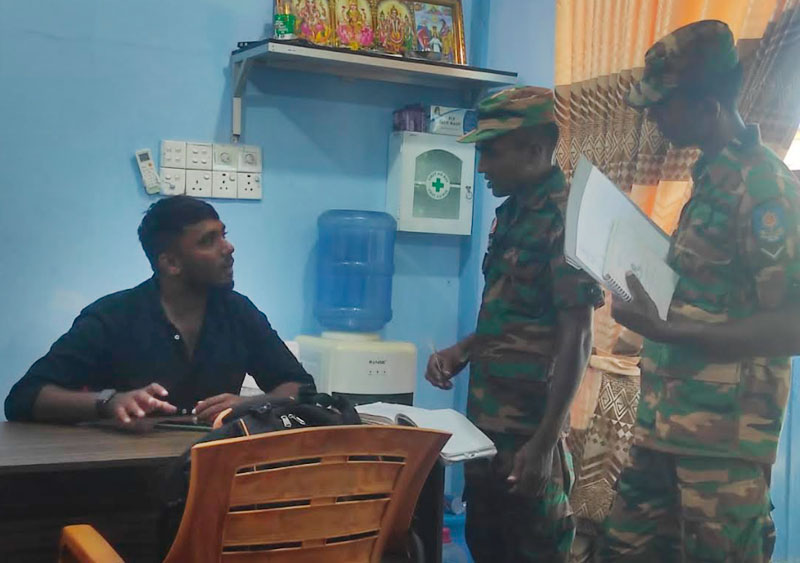
Relatives of missing persons have claimed that individuals manning their office in Kilinochchi are being subjected to constant and unnecessary questioning by the security forces, particularly the Criminal Investigations Department (CID).

Speaking to The Morning, Kathirgamanathan Kokilavani, whose eldest son had gone missing in December 2008, said that in 2017, the families of missing persons had staged a protest in the Kilinochchi town, as their longstanding demands from successive governments for justice for the people who disappeared during the war did not receive a reasonable response. Following the protest, she said that they had established an office in Kilinochchi town for the relatives of missing persons in the Kilinochchi area.

“In the Kilinochchi District alone, more than 1,600 people disappeared during the war. This office was established for all those people. Every day, a relative of a certain missing person comes and stays at this office from morning to evening. They are here for their relatives and not for any illegal activity. All they are doing here is making flower wreaths and performing religious activities for their disappeared relatives.”

However, she claimed that those at the said office are being subjected to constant and unnecessary interrogation by the security forces, mainly the CID.

“When someone comes to meet us here, members of the security forces would arrive at this place or call us on the phone and interrogate us regarding who came and why they visited the office. Even when a vehicle is parked here, they question us as to why the vehicle was there and who arrived in it. Despite knowing that nothing illegal is happening here, they question us unnecessarily,” she said.

Meanwhile, Yogeswaram Wijayalakshmi, who is at the office in Kilinochchi for her daughter who disappeared during the war, told The Morning that she too has been questioned by the security forces on several occasions for being at the said location. She said that she had informed the security forces that she was not engaging in anything illegal in the office and that she is ready to leave the office immediately if the Government makes an official statement regarding what happened to her missing daughter.

The issue of missing persons in the Northern and Eastern provinces has long been a matter of attention both locally and internationally. Families of missing persons engage in various activities such as holding protests and filing complaints with local and foreign institutions to determine what had happened to them. Although various governments have implemented programmes such as the establishment of the Office on Missing Persons to provide justice for missing persons, their families have criticised such measures and questioned the sincerity of the same for a variety of reasons.

Renovation of the Northern railway track to begin next week

Renovation activities of the Northern railway track between Anuradhapura and Omanthai will begin next week.

The Ministry of Transport said the renovation will be carried out from the 5th of January by an Indian company.

Accordingly, the track which was declared opened in 1905 will be closed between Anuradhapura and Omanthai for a period of five months.

Trains will continue to function between Colombo and Anuradhapura while special bus services will be introduced to transport people who travel to Jaffna and Kankesanturai.

The Minister said the section of the track has 213 culverts and 90 bridges and following the completion of renovations, train will be able to increase the speed limits to up to 70kmph.

Accordingly, the journey time between Colombo and Jaffna will be reduced considerably.

Although the renovation activities were due to commence in 2019, due to the COVID-19 crisis and several other issues, they were delayed.

Sri Lanka’s inflation at 57.2-pct in December 2022

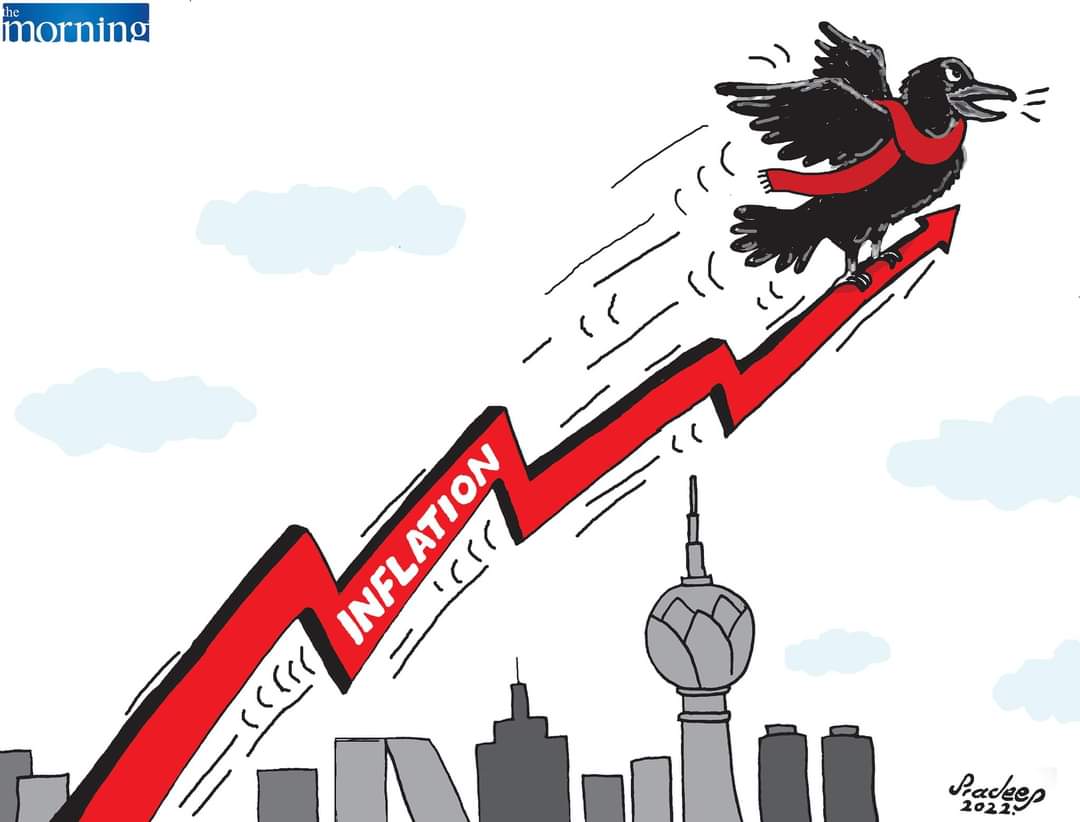
Sri Lanka’s 12-month inflation in the capital Colombo ease to 57.2 percent in December 2022 from 61 percent in November as prices started to stabilize after interest rates were allowed to go up and the exchange rate was pegged around 360 to the US dollar.

The widely watched Colombo Consumer Price Index fell absolutely 0.2 percent to 243.2 points in November after falling 0.5 percent in the November.

Food prices fell 9.3 percent after falling 1.5 percent a month earlier. The sub-index containing gas fell 1.1 percent.

But clothing, footwear and recreation prices have continued to go up, as relative prices adjusted to the steep fall in the currency after two years of money printing to suppress rates.

Sri Lanka’s central bank hiked policy rates to 15.5 percent in April and pulled back on longer term money printing, allowing market rates to go to around 30 percent.

The exchange rater is pegged around 363 rupees with a surrender rule where banks are forced to sell dollars to the central bank for new liquidity.

The ongoing currency and inflation crisis is the worst in the history of the central bank.

Sri Lanka’s Latin America style central bank was set up in 1950 giving powers to the country’s macro-economists the power to mis-target rates, create currency crisis and high inflation.

Posted in Uncategorized

Indian PM Modi’s mother dies aged 99

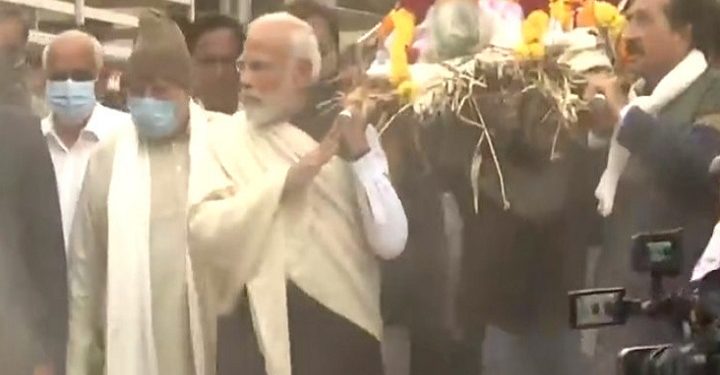
Indian Prime Minister Narendra Modi’s mother Heeraben Modi has died at the age of 99.

She had been admitted to hospital in the western state of Gujarat, where she lived, after her health deteriorated.

“A glorious century rests at the feet of God,” Mr Modi tweeted. He had flown from Delhi to visit her at the hospital on Wednesday evening.

The Indian prime minister often visited his mother to seek her blessings on important occasions and festivals.

Her life and sacrifices had “shaped” his mind, personality and self-confidence, Mr Modi wrote on 18 June when Heeraben turned 99.

“My Mother is as simple as she is extraordinary. Just like all mothers,” he wrote.

They were last seen together in public on 4 December when Mr Modi visited her house during the assembly election in Gujarat, his home state.

Heeraben lived with Mr Modi’s younger brother and his family.

She was born in Visnagar in Gujarat’s Mehsana district in 1923.

“Her childhood was one of poverty and deprivation,” Mr Modi wrote.

As a teen, she was married to Damodardas Mulchand Modi and moved to the town of Vadnagar a few kilometres away.

“In Vadnagar, our family used to stay in a tiny house which did not even have a window, let alone a luxury like a toilet or a bathroom,” Mr Modi wrote in his blog.

He described his mother as punctual, neat and a hard worker. “While working, she would hum her favourite bhajans and hymns,” he wrote.

Heeraben never attended public programmes, Mr Modi wrote, adding that she had only accompanied him to two events – the second one was in 2001, when he first took oath as the chief minister of Gujarat.

“Since then, she has never accompanied me to a single public event,” he wrote.

Though he became India’s prime minister in 2014, Heeraben visited him in Delhi only two years later. Mr Modi had tweeted photos of himself showing her around his official residence.

Months later, when Mr Modi’s government controversially banned 500 and 1,000 rupee notes in a bid to crack down on undeclared wealth, Heeraben was photographed visiting a bank, like millions of Indians, to exchange old notes.

(BBC)

Posted in Uncategorized

Provincial letters to be removed from number plates

The English letters indicating the province on vehicle number plates will be removed when registering a new vehicle and transferring the ownership of a vehicle.

This will come into effect from January 01, 2023, the Commissioner-General of Motor Traffic Nishantha Anuruddha Weerasingha said addressing a media briefing today.

The letters to identify provinces are added to the number plates when registering vehicles to minimize the inconveniences at vehicular emission tests and annual revenue licence issuance.

However, both customers, as well as the Motor Traffic Department, have encountered many difficulties since the number plates have to be changed at each instance the right of the ownership of the vehicles are transferred between provinces.

Meanwhile, speaking on the demerit point system to be introduced for drivers, Mr. Weerasinghe stated that this initiative is expected to be implemented in the first quarter of 2023.

Accordingly, the proposed demerit point system will be forwarded to the Cabinet of Ministers for its approval after it is published in the government gazette in the first week of January.

The relevant points of the demerit points system will be deducted over traffic offences and it 24 such points are deducted, the driving license of the concerned driver will be suspended for a period of one year.

Following the end of the suspension period, the drivers will have to go through the procedure from the beginning to obtain the driving license once again, he said further, adding that this is intended to reduce the number of lives claimed in motor accidents.

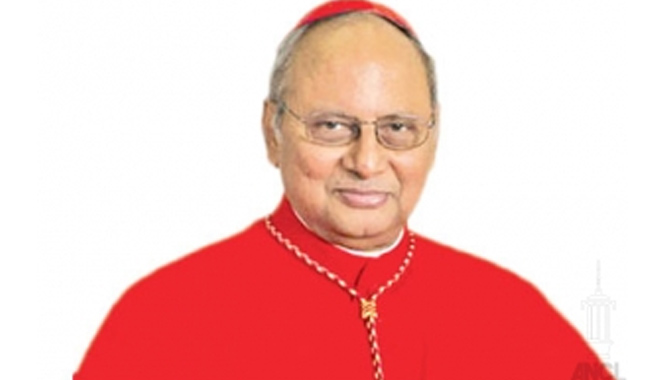
SL shouldn’t go around the world with begging bowl in 2023: Cardinal

Sri Lanka should not go around the world with a begging bowl in 2023, but should establish a new structure to build up the nation, Archbishop of Colombo His Eminence Cardinal Malcolm Ranjith said today.

“We should work towards creating a new structure for the country to move ahead in the New year and we must stop going around the world with a begging bowl. If we don’t do it, the nation will be lost.” The Cardinal said in a special statement.

“Sri Lanka will be marking its 75th year since independence in 2023. Many other nations which became independent alongside Sri Lanka, have moved forward but Sri Lanka has earned the image of being a poor country. We have fallen into such state because of the wrong decisions made by those who have ruled the nation from time to time,” he said.

“Sri Lanka should preserve unity, its people should forget differences and must be united for the sake of the nation during the new year,” Archbishop Ranjith said.

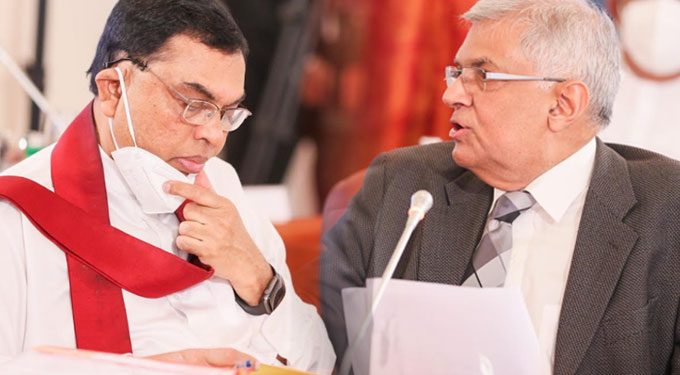
Sri Lanka’s Ranil Wickremesinghe is president. But who’s in charge: him, or the Rajapaksas?

Almost six months after Sri Lanka’s ex-leader Gotabaya Rajapaksa fled overseas after mass anti-government protests demanding his resignation, critics say reforms have yet to materialise amid concerns the powerful and wealthy family still controls the nation through someone many say is their proxy, President Ranil Wickremesinghe.

Amid huge demonstrations, which erupted over economic mismanagement that drove the island to bankruptcy and left its citizens grappling with out-of-control living costs and shortages, protesters, also furious at endemic corruption, were clear this year that at least someone from the Rajapaksa family should step down.

Gotabaya, the nation’s first president with a military background – and the first elected president who had never held an elected office before – duly asked his brother Mahinda, the prime minister, to step aside in May. Ranil Wickremesinghe, a former lawyer, was then appointed in his place, a position he had held several times before.

He became acting president, according to constitutional procedures, when Gotabaya fled for the Maldives, then Singapore – he returned to Sri Lanka a few weeks later, although he has headed in recent days to the US.

With Gotabaya apparently, or at least temporarily, gone, parliament formally appointed Wickremasinghe, 73, to lead the nation through some of its darkest days on the back of the votes of the SLPP – led by Mahinda Rajapaksa – a party commanding two thirds of lawmakers.

It has split since the May-July uprising and Mahinda’s brother Basil is now believed to control a major component of it. Among the family, he is the most tainted with corruption allegations.

Ironically, the SLPP had won a landslide victory at the August 2020 polls campaigning against Wickremasinghe, painting him as a national security risk.

Now, though, he is seemingly in charge, but despite this year’s uprising and political shenanigans, many reforms the public wanted are not in sight, including an interim government (not an SLPP-controlled one), a new constitution and a reduction in the president’s executive powers.
“The system change … has not happened,” said Harsha de Silva, an economist and senior member of the opposition Samagi Jana Balavegaya (SJB).

“In fact, it is ironic that the people who ran away are back now … the president, the prime minister and [his brother Basil] the finance minister.” None of the family hold ministerial portfolios, but because they largely control the SLPP since its split, they are believed to be pulling the strings.

“They [the family] are saying that they still have the votes of 6.9 million who voted for them (in 2019) … [that] only maybe 200 to 300 of them [SLPP voters, involved in the protest] at most were associated with the Aragalaya [struggle],” he said.

The SLPP claimed back in 2020 that Wickremasinghe was negotiating secretly with Washington to provide base facilities for US marines in Sri Lanka and sign a deal with the US-controlled Millennium Challenge Corporation (MCC) to pave the way for easier acquisition of state land – especially farming land – by foreign corporations. Wickremasinghe denied the allegations.
However, he not only lost his seat but his UNP party – Sri Lanka’s oldest political party – lost all its seats in parliament. He was only able to ‘sneak’ into parliament through a token seat available for the UNP through the proportional voting system, meaning he is dependent on the SLPP to keep his job.

In other words, like de Silva and others say, there has been no real change of government in Sri Lanka. He says Wickremasinghe “has to ensure that he keeps these guys [the Rajapaksas] afloat” to keep his job.

Meanwhile, none of the family or their allies have been charged with any wrongdoing, and they have often said the nation’s financial difficulties stemmed from the pandemic.

But leaders of the uprising have been charged with damaging and stealing public property during the occupation of government institutions, and police are investigating whether they can be charged under the Prevention of Terrorism Act, enacted in 1979, which rights activists have claimed is “draconian”. The UN wants it repealed but Sri Lanka has refused to do so.

De Silva says Sri Lanka’s political situation is now “utterly confusing because [the Rajapaksas] have found a simple way to be in power by creating a facade. No one has been charged … even though the [UN’s] Human Rights Commission talked about economic crimes against the people of Sri Lanka,” he added.

Many Sri Lankans believe the country has become a pawn in the regional geopolitical contest, with media messaging often about a Chinese “debt-trap” narrative.

In reality, though, Chinese loans only account for about 10 per cent of Sri Lanka’s debts, while those relating to Japan and the Asian Development Bank together constitute over 20 per cent, and international bond markets around 47 per cent, according to Colombo’s Department of External Resources.

A route out of the economic nightmare in the form of a US$2.9 billion International Monetary Fund (IMF) loan has been provisionally agreed, but not signed, delayed due to tricky debt restructuring negotiations with the nation’s creditors, said Shehan Semasinghe, junior finance minister.

Wickremasinghe has not presented any IMF agreement to parliament, as required by democratic norms, said De Silva. “There has been no information … on any specifics of what they have agreed upon even though it has been requested by many in the opposition for a long period of time.”

However, the budget presented to parliament in November by Wickremasinghe, who is also finance minister, includes various things detailed in September’s so-called “staff-level” agreement between the IMF and the nation’s Central Bank.

In a recent commentary published by the Daily Mirror, Jaffna University’s political economist Ahilan Kadirgamar argued that Sri Lankan policymakers are following an IMF prescription of an austerity route that suits Western interests, with the aim of facilitating Sri Lanka to pay off debts to international bond markets.

“Sri Lanka’s debt restructuring is caught in a geopolitical game with global consequences … egged on by neoliberal think tanks and advisers,” he said.

Not everyone thinks the Rajapaksas are pulling a lot of strings behind the scenes. Colombo University’s political sociology and history professor Nirmal Dewasiri agrees there is political confusion. But, he added, even though people say the Rajapaksas are still in power, “the question is, what do you mean by power?”

He said the family “is a massively powerful entity that dominated the entire political landscape in Sri Lanka, since 2005 … but now I don’t think they have the same capacity to dominate [the landscape], it is completely destroyed. You observe that they are still in control simply because of a very technical issue [where the] majority of members in parliament [elected in 2020] are their party [SLPP] people”.

The Rajapaksas were major players in Sri Lankan politics for two decades, subscribing to a Sinhala-Buddhist nationalist ideology that feels Buddhism is under threat by a rising wave of Christian and Islamist forces. Following the 2019 Easter Sunday attacks by alleged Islamic terrorists, there was a huge and successful Sinhala-Buddhist mobilisation to bring the Rajapaksas back to power.

Omalphe Sobitha Mahathera was a leading light of this movement, but later turned against the family and became an outspoken advocate for their removal. He said many Buddhists lost their enthusiasm for Gotabaya because he did not keep his promises.

People also think he had corrupt people around him and damaged the farming sector, the main base of the Sinhala Buddhist vote, through a badly implemented organic farming policy.

Sobitha also said, though, that Aragala was not a religious-based uprising, with citizens across the board, not just Buddhists, understanding “that they need to be saved from these corrupt, lying and manipulative politicians”.

De Silva said that, in the final analysis, Wickremasinghe could dissolve parliament by March next year and call for new elections. But many think he is unlikely to do so and will aim to serve out the rest of his (in fact, Gotabaya’s) term, until November 2024.

Meanwhile, Gotabaya left with his family for the US on December 26; he was a US citizen until 2019 when he relinquished his citizenship to contest the presidency and his son still lives there.
Many young protesters are now threatening to take to the streets again, if the way forward for elections, soon, is not clear. While it cannot be known just how much clout the Rajapaksa clan actually has behind the scenes, what is clear is that they still have the ability to make a lot of people’s blood boil.

Source:South China Morning Post

Posted in Uncategorized

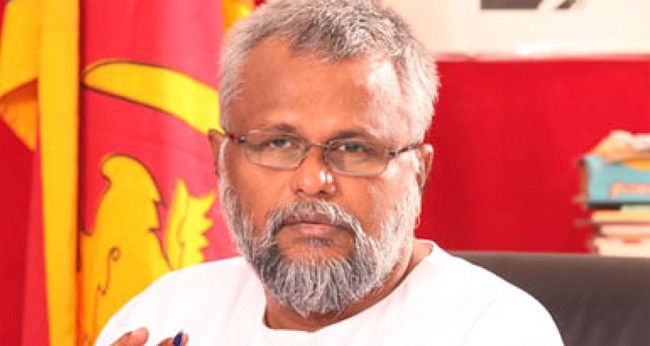
Douglas tells Prez to devolve all Provincial powers

Minister of Fisheries and Eelam People’s Democratic Party (EPDP) Leader Douglas Devananda yesterday (28) said in Jaffna that he had urged President Ranil Wickremesinghe to devolve all powers to the provincial level.

While addressing a media briefing, he further stated that all the powers of the provinces that were taken over with the Executive power granted to the President should be handed back to the Provincial Councils.

Furthermore, Devananda stated that he has a dual role in this regard, as both a representative of the Cabinet sub-committee to resolve the Tamil national ethnic question, and as a leader of a political party at the all-party conference.

“I have emphasised to the President that powers that were devolved when the 13th Amendment to the Constitution was created should be handed back to the provinces,” he added.

Devananda also noted that he is ready to work with the Tamil parties who can act in a transparent and practical manner in matters related to the political aspirations of the Tamil people.

“It is a success to my political career since the 35-year approach of the EPDP is now being followed by the other Tamil parties as well, which is that a political solution to the national ethnic question should start with the 13th Amendment and be taken forward,” he added.

Meanwhile, addressing the all party conference on 13 December, Devananda said: “I strongly believe that I have the right to talk on behalf of the Tamil community because for more than 45 years I have been involved in that. So, I have the right to talk. First, I agree with Tamil National Alliance Leader MP R. Sampanthan that until May 1987, I had one opinion, and that I now harbour a different opinion. Now, discussing reconciliation, I want to term it national reconciliation. After the Indo-Sri Lanka agreement, the Tamil community received many opportunities. Unfortunately, they have misused these. I have the right to talk about that.

“We have to settle these issues with the 13th Amendment. For the last 35 years, we have been advocating to start with a political solution, with the 13th Amendment. First, we should start the reconciliation with all communities and then we should go further. We don’t need to go for a new Constitution because if you want to go for a new Constitution, we need a two-thirds majority and a referendum. At this juncture, for this country, it is impossible. First, we should start with the implementation of the 13th Amendment and through that, we can settle all issues.”

Accordingly, further discussions are scheduled to be held on the matter from 10 to 13 January 2023.