Why only politicians, why not the clergy, too? By N Sathiya Moorthy

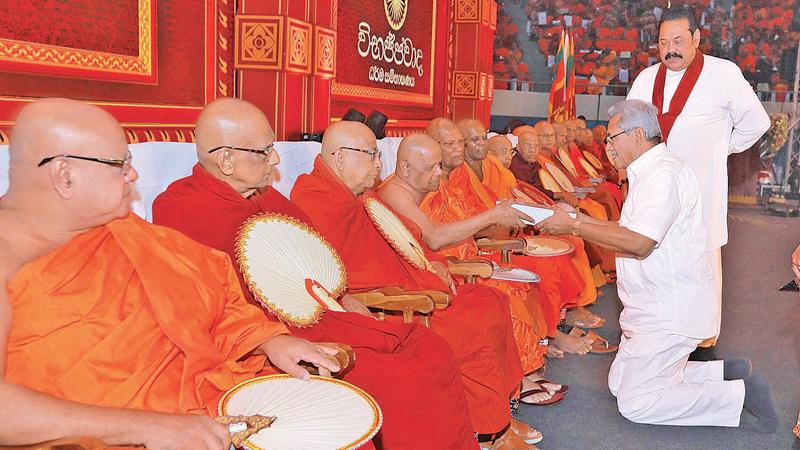
Recently, Ven Kappitiyagoda Sirivimala Thera, Anunayake of the Rajopavanaramadhipati Ramanna Nikaya of Gatambe, reportedly asked politicians to take to voluntary retirement at 60 and make way for the younger generation.

He cited a recent official circular on the matter, and President Ranil Wickremesinghe’s defence of the same and asked if doctors, engineers and other professionals should retire at 60, the same law should apply to the political class as well.

“The Prime Minister has issued a circular in this regard stating that at the age of sixty, all State employees should retire. This means that after the age of 60, people experience physical, mental, and health problems, as well as other weaknesses, so the retirement age has been set at 60 years, as recommended by doctors. How can politicians work after sixty years?” he asked at a local function. He went on to add that it was a grave injustice that only state employees have to retire at sixty.

“How can politicians work if state employees cannot?” the Thera asked. “This is an amusing fact. We, the Maha Sangha, believe that politicians in this country should voluntarily retire at the age of 60 and make opportunities available to young people who can work. Otherwise, there is no reason to stay in Parliament until you walk with a walking stick. Many people define public service as serving themselves. Because of the privileges, many do not even consider retiring from Parliament,” he said.

Parliament was the most powerful place in the country to take decisions and make laws, the Thera underlined “How can people who can’t think and whose health has deteriorated work to build a country?” he queried. “If there are academics or other people over the age of sixty, they can get their services by forming a voluntary parliamentary advisory council,” he opined.

As the Thera pointed out, “Despite claims that there is no money to do anything in the country, the number of ministers continues to grow. They are attempting to spend and sell the country’s resources to accomplish this.” He wanted all such tings to stop, and that everyone should come together and work to lift the country out of the abyss it has fallen into, even if only for a short time.

Wresting the initiative

At first reading, the Thera’s proposal sounds not only interesting but also welcome. Given the nebulous public opinion that is yet to settle down after the nation-wide Aragalaya protests and the shortages that caused it, there may be many unthinking takers for the idea.

That is because there is a prevailing opinion that the Aragalaya was against the political class, ageing or otherwise. Some reduce it to a protest against the ruling Rajapaksas of the time. The truth, as it is unfolding, is that the Aragalaya protests were caused by shortages.

Whether it was the Rajapaksas or any other ‘corrupt’ politician at the helm, people would have continued to mind their business as always but for the sudden shock administered by shortage of food and forex and consequent price rises that too became uncontrollable. In the end, only the experienced political class that restored some sense to the madness that was unfolding in the Aragalaya’s fringes and threatened to take over the core. Because Parliament was near-united in wresting back the political and constitutional initiatives from the streets, democracy has possibly survived inn the country, to this day.

Yet, nothing explains the way protestors burnt down the homes and businesses of about 80 politicians across the country, laid siege on the President’s office, forcibly occupied the official residence of the President, and later set then Prime Minister’s personal residence afire. Waking up belatedly – or, it seemed so, then and since – the security forces stalled the protestors’ repeated attempts to take over Parliament as the seat of power, about which alone the Thera has spoken.

Unsustainable, impractical

The Thera’s is an unsustainable argument and impractical suggestion. The youth, about whom the Thera has spoken, were at the vanguard of the Aragalaya protests, wherever held. The majority of arsonists and other violent violators belonged among them. That at least goes by the relative age-profile of the protestors that the police have since arrested for specific offences, including arson and squatting in the President’s office and residence, which in a way are national symbols.

Yes, there is a point in what the Thera has said about the old not willing to give the young their space, and preparing them to take over from them in their time. Whether coincidence or otherwise, this has increased so much under the Executive Presidential system, though it is not directly linked.

Though the Provincial Councils and provincial administrations were hoped to become the training ground for future generation leaders just as local government institutions were thought to be recruiting agencies for political parties, neither have actually led to the emergence of national-level leaders with live grassroots-level contacts and continuing connect. Instead, national leaders are born straight as such, whether or not they are born into ‘ruling families’ like the Wijewardenes, Bandaranaikes, Rajapaksas and also the Premadasas.

The list of ‘political families’ in the country is legion. The irony is as much as the majority Sinhala polity, even minority Tamil, Upcountry Tamil and Muslim polity has leaders who have grown roots and refuse to allow a second generation to grow under their guidance and care. The fact is that already the third and fourth generation are ready to come up, but have no space or encouragement. Suffice is to point out, LTTE’s Prabhakaran went as far as to physically eliminate competition, present and future.

Politicians, influencers

Yet, the question remains if the oldies among our political class should be forcibly recruited. Or, if the Thera should have advised professionals that are retiring from government service to join active public life, whether as politicians or opinion-makers or influencers, so that their vast and varied experience and expertise could guide the people and force the policy-makers to do the right thing, the right way.

They could train the younger minds in the right direction, again in the right way. All of it takes time, effort and commitment – which the retirees should be prepared to offer the nation. But then, they should also give up the old ‘my-way-or-the-highway’ attitude, which is what differentiates the political class from the professionals.

The problem is that in the name of accommodation, the political class has made defection and corruption a part of their being. A near-permanent influencer group, in the place of an eruptive Aragalaya protestors, could make the actual and lasting difference. At least, there is no harm in trying.

God and King

This is where the question also arises if religion and religious leaders should get involved in politics and policy-making on a daily and hourly basis. Yes, the majority Sinhala-Buddhist clergy, starting with the prelates and the Maha Sangha are known to influence the rural voters, and hence the top politicians, in turn.

Why, all through, Buddhist monks, especially those that are in normal universities, have been constantly taking sides in political and politicised protests on campuses and outside, too. It is pertinent to note that among the few that have been detained under the otherwise dreaded Prevention of Terrorism Act (PTA), there are young men of robes, too. No one has contested it in any serious manner, as possibly the police have their video-shots while in action.

It is one thing for Buddhism being the ‘State religion’ (which itself the Tamils in particular contest vehemently) but it is another issue altogether for the Buddhist clergy to be seen as influencing political decisions, whether they are constitutional matters like ‘official religion’ and ‘official language’ or any other, where the dividing red-line between God and King have to be drawn, thick and clear. The line between Lord Spiritual and Lord Temporal, so to say, should be inviolable, and it is the former that has to ensure that they remain on the right side of the crease.

As things have unfolded since the Easter Sunday terror-attacks, the Catholic Church, especially Malcolm Cardinal Ranjith, the Archbishop of Colombo, has become both vocal and vociferous on everything politics. The issues that caused the Aragalaya protests has become a convenient tool for His Eminence to espouse his cause on multiple issues unconnected to God, religion and theosophy.

To be fair to the nation’s Muslims and their mullahs (otherwise ridiculed elsewhere in the world), it is now on record that they were the ones who had egged on their politicos and also the Government of the day about the suspicious movements and activities of Zahran & Co in the long run-up to the Easter attacks. No one wants to give them the credit that is due to either the Muslim clergy or the community at large, though there are also errant elements, especially young, who needed to be straightened up, one way or the other.

Last words

The Tamils do not have an organised religious structure, unlike in the other three communities. Whether it is the Sri Lankan Tamil (SLT) community or the Upcountry Tamils, their ‘kovils’ and their priests are not institutionalised in a way of the other three religions for them to issue sermons or fatwas or whatever to their laity.

Yes, during the LTTE days, many of the kovil priests might have sympathised with the cause and even the methods, but they could not have recruited even one cadre, militant or otherwise, even if they had desired or tried. The Hindu social structure is such that the division is very clearly laid out. Attempts by the likes of Velan Swamigal, a mutt/monastery head in the Tamil to create a new political space, has not succeeded beyond creating a few momentary ripples.

Independent of faiths and their clergy, Thomas Cardinal Wolsey’s last words in Shakespeare’s ‘Henry VIII’ should hold a candle, prophetic, for all times and for all-comers: “Had I but served my God with half the zeal I served my King, He would not have in my age have left me naked to mine enemies…”

And thereby hangs a tale!

(The writer is a policy analyst & political commentator, based in Chennai, India. Email: sathiyam54@nsathiyamoorthy.com)
Posted in Uncategorized

Submitting arrival and departure cards made available online

The Department of Immigration & Emigration has facilitated the arrival and departure cards, required to be filled by inbound foreigners and outbound Sri Lankans, to be submitted online.

Accordingly, all foreign travellers arriving in Sri Lanka and locals departing the country can complete the cards online via the official website of the department or the following link: https://eservices.immigration.gov.lk/emb/eEmbarkation/

This facility is available with effect from January 01, 2023, according to the Government Information Department.

Air travellers are required to submit the arrival and departure cards three days prior to their journey.

This facility was made available to minimize the inconveniences experienced by air passengers at the airport when completing their immigration and emigration formalities, the Controller General of Immigration and Emigration, Harsha Illukpitiya stated.

IS member connected with Zahran held for links with Coimbatore blast suspects: NIA

The National Investigation Agency (NIA) on Wednesday arrested a member of terrorist organisation Islamic State (IS) who was in touch with the mastermind of 2019 Easter Day bombings in Sri Lanka, for his alleged links with suspects in the October 23 blast in Tamil Nadu’s Coimbatore.

The federal agency also arrested another man, identified as Sanofar Ali, for allegedly taking part in plans to carry out terror attacksin the country.

NIA officers familiar with the developments said IS member Sheikh Hidayatullah was allegedly in touch with Maulvi Zahran bin Hashim, the mastermind of the deadly Easter Sunday bombings in Sri Lanka on April 21, 2019 that claimed over 250 lives.

Both Hidayatullah and Sanofar Ali were arrested from Tamil Nadu, an NIA officer said.

“Investigations have revealed that the accused persons had entered into a criminal conspiracy in the interior of forested regions of Asanoor and Kadambur areas of Sathyamangalam forest, Erode district, in February 2022,” NIA said in a statement. “The meetings were led by previously arrested accused Umar Farooq and participated by deceased accused Jameesha Mubeen (died in Coimbatore blast), along with Mohammed Azharuddin ,Sheikh Hidayatullah and Sanofar Ali, where they conspired to prepare for and execute terror acts.”

Jameesha Mubeen, who was questioned by NIA in 2019 for alleged terror links, was charred to death in suspicious circumstances after the LPG cylinder inside a Maruti 800 he was driving exploded near Kottai Eswaran temple in Coimbatore’s Ukkadam on the morning of October 23. The incident took place around 200 metres from a police patrol.

The deceased was registered as the prime accused in the blast case. The state police had invoked the stringent Unlawful Activities (Prevention) Act (UAPA) in the case, which was later handed over to NIA.

According to NIA officers cited above, Hidayatullah, who has been propagating IS ideology since 2017, was earlier arrested along with Azharuddin in June 2019. He was released on bail in 2020. Azharuddin from Ukkadam and leader of Kerala-Tamil Nadu IS module is currently in jail for the Sri Lanka bombings.

All the above accused were inspired by Hashim, who masterminded and executed the Sri Lanka bombings — in which 252 people were killed — and planned to carry out similar attacks in two south Indian states at that time.

Prior to the Sri Lanka bombings, Hidayatullah and Hashim were in touch through a Facebook page “KhilafahGFX”, according to NIA’s charge sheet filed against Hidayatullah in 2019.

(Hindustan Times)

Another announcement on LG Polls

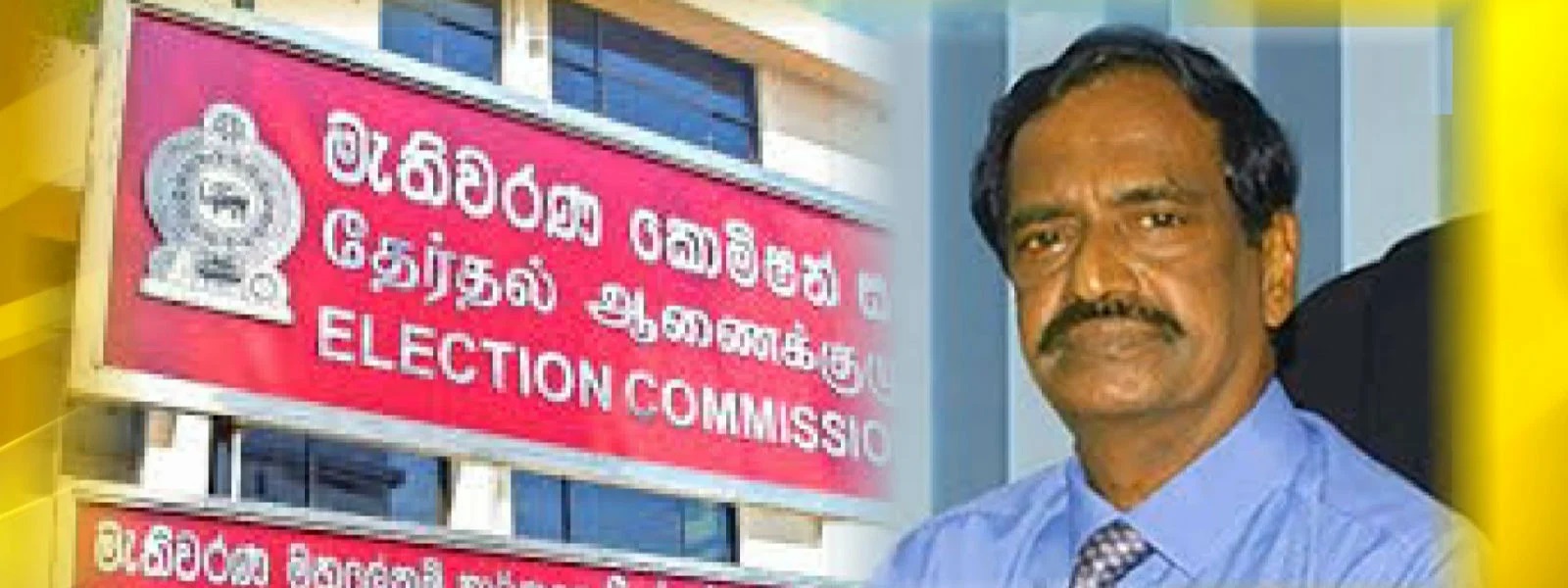
Chairman of the National Election Commission Nimal Punchihewa says they are hoping to complete the conduct of the Local Authorities Election before the 10th of March.

The Commission has also said it will issue the gazette calling for nominations for the election before the 5th of January.

Elections Chief Nimal Punchihewa added that they are taking preparations to complete the conduct of the election and publish the names of the elected councilors before the 20th of March.

Posted in Uncategorized

‘US has granted more than USD 240M to support SL in 2022’

The United States says additional cash assistance, fertiliser and other help will be granted to Sri Lankans in need.

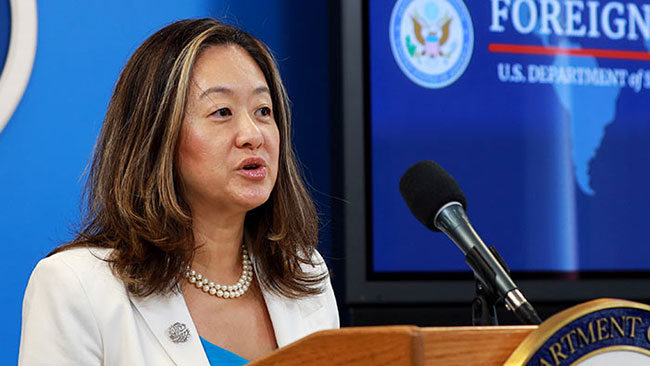
US Ambassador to Sri Lanka Julie Chung said the cash assistance was provided by USAID yesterday, to reach smallholder farmers in select districts across Sri Lanka.

Chung noted that the cash grants reported this week, are just one part of the more than USD 240 million in assistance that the United States has committed this year alone to supporting the Sri Lankan people as they emerge from this difficult crisis period.

She noted that US assistance supports basic food security and addresses the needs of the most vulnerable communities, including bolstering the national school meal programme, equipping approximately one million farmers with fertiliser, and providing cash to both new and expectant mothers.

The Ambassador said the US is proud of partnerships with the Ministry of Agriculture, the Food and Agriculture Organisation Sri Lanka, UNICEF Sri Lanka, the World Food Programme Sri Lanka, Save the Children Sri Lanka and other organisations to deliver assistance, with diligent monitoring and evaluation to ensure it reaches its intended recipients.

Posted in Uncategorized

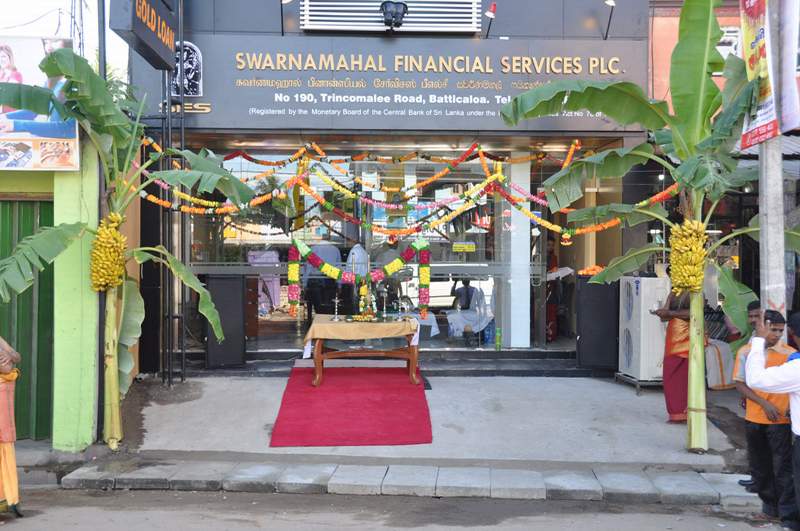
Sri Lanka cancels license of Swarnamahal Financial Services

Sri Lanka’s central bank has cancelled the finance business license and the business registration of Swarnamahal Financial Services after a year since it suspended it’s activities.

The license was cancelled on December 28.

In 2021, the Central bank suspended the business activity of Swarnamahal Financial after its financial condition continued to worsen while the company failed to provide a revival plan.

Full Statement reproduced below:

Swarnamahal Financial Services PLC – Cancellation of the Licence

The Monetary Board of the Central Bank of Sri Lanka decided to cancel the Finance Business Licence issued to Swarnamahal Financial Services PLC (SFSP), in terms of Section 37(3) of the Finance Business Act, No. 42 of 2011 (FBA) with effect from 28th December 2022. Accordingly, SFSP is not permitted to engage in Finance Business under the FBA with effect from 28th December 2022. Further, the Director of the Department of Supervision of Non- Bank Financial Institutions of the Central Bank of Sri Lanka has decided to cancel the Certificate of Registration of SFSP as a Registered Finance Leasing Establishment under the provisions of the Finance Leasing Act, No. 56 of 2000.

In view of the contribution made by SMB Finance PLC (SMBF) (then SMB Leasing PLC) to repay the remaining deposits of SFSP, as per the directions of the “Masterplan for Consolidation of Non-Bank Financial Institutions Sector”, unclaimed deposit liability of SFSP will be transferred to SMBF along with the corresponding assets value and relevant depositor information.

Further, Sri Lanka Deposit Insurance and Liquidity Support Scheme (SLDILSS) will take necessary actions to pay compensation to the outstanding insured depositors of SFSP up to a maximum of Rs. 1,100,000/- per depositor as per the regulations of the SLDILSS in due course. Upon the transfer of unclaimed deposit to SMBF and payment of compensation through SLDILSS, the entirety of the deposit liability of SFSP will be settled.

Over 150 illegal Sri Lankan migrants return from Viet Nam

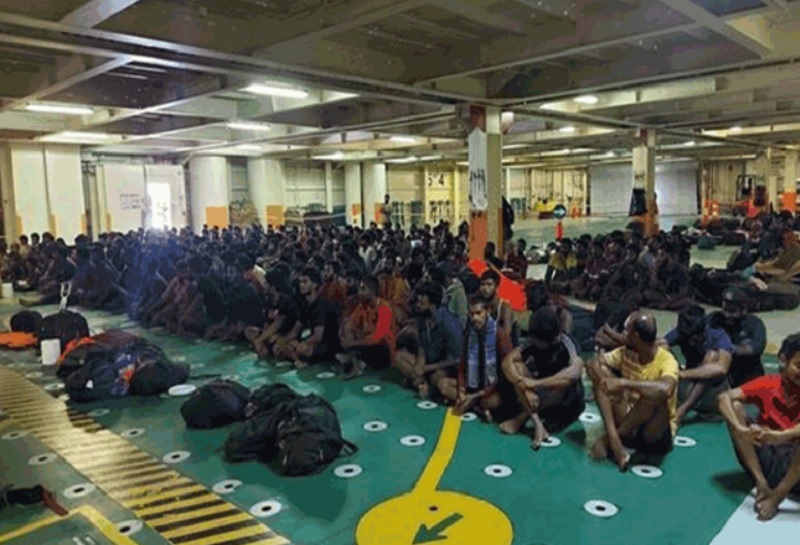
Over 150 Sri Lankan migrants who were rescued from a boat off the coast of Viet Nam last month, returned to the country on a chartered flight from Ho Chi Minh City late last night (Tuesday).

The Ministry of Foreign Affairs of Sri Lanka and the International Organization for Migration (IOM) facilitated the voluntary humanitarian return of 152 Sri Lankan migrants through a chartered flight from Ho Chi Minh City, Viet Nam following their rescue when a boat capsized off the coast of Viet Nam on 8 November 2022.

“Addressing the issue of irregular migration requires a multi-agency effort and IOM records its appreciation to the Ministry of Foreign Affairs for facilitating the return process and considers this to be a good example of teamwork involving the Governments of Sri Lanka and Viet Nam, the Sri Lanka Embassy in Ha Noi and IOM missions in Colombo, Ha Noi and Ghana,” said Sarat Dash, Chief of Mission to IOM Sri Lanka and Maldives.

The Ministry of Foreign Affairs, in coordination with the Sri Lanka Navy and the Sri Lanka Missions in the Philippines, Singapore and Viet Nam, together with the regional Maritime Rescue Coordination Centers (MRCC) based in Singapore, coordinated rescue efforts for the migrants. Since 8 November 2022, a total of 302 migrants were accommodated in three different Viet Nam military accommodation facilities situated in the city of Vung Tau.

For over a month, IOM in coordination with the Government of Vietnam and the Sri Lanka Embassy in Ha Noi ensured the provision of basic necessities, including food, medical aid, hygiene kits and counselling support for all the migrants. A team of officials attached to the Protection Unit of IOM Sri Lanka travelled to Vietnam to undertake protection screenings/vulnerability assessments of all rescued migrants in collaboration with IOM Vietnam. The Honorary Consul of Sri Lanka in Ho Chi Minh City, under the guidance of the Embassy of Sri Lanka in Ha Noi provided the migrants with initial Consular assistance, basic food and facilitation of other disposables and required items for the children.

The Ministry of Foreign Affairs and IOM appreciates the Government of Viet Nam’s willingness to offer a place of safety for over a month and assist the 302 vulnerable Sri Lankan migrants rescued at sea while repatriation work was being coordinated from Sri Lanka’s end.

The Ministry of Foreign Affairs convened a stakeholder meeting on 2 December 2022 with representatives from government agencies and IOM to make necessary arrangements for the smooth and safe return of the migrants.

The special charter flight organized by IOM Sri Lanka which brought back 152 rescued migrants was coordinated with the Ministry of Foreign Affairs and relevant Government authorities in Sri Lanka, the Embassy of Sri Lanka in Viet Nam, and the Vietnamese authorities.

IOM’s assistance addressing the immediate needs of the stranded migrants, repatriation through a special charter flight, onward transportation to their homes and comprehensive reintegration assistance in Sri Lanka totals over USD 600,000.

Minister of Foreign Affairs, Ali Sabry thanked IOM for its generous support in the process of repatriation and reintegration of Sri Lankan migrants who are attempting to cross borders in irregular ways.

Posted in Uncategorized

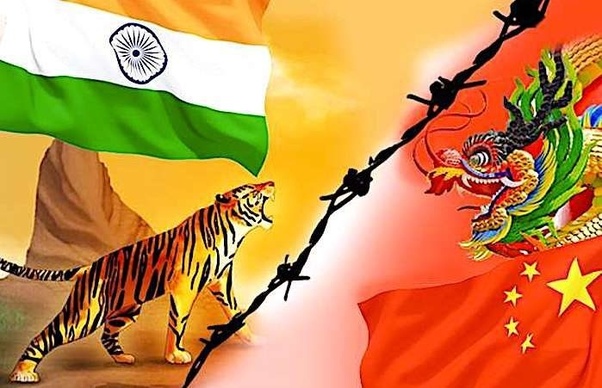
India makes inroads into Sri Lanka under China’s long shadow – report

When Sri Lanka slid into its worst economic crisis in seven decades leading to deadly riots and alarming shortages of fuel, food and medicines earlier this year, its giant northern neighbour stepped into the breach.

India provided about $4 billion in rapid assistance between January and July, including credit lines, a currency swap arrangement and deferred import payments, and sent a warship carrying essential drugs for the island’s 22 million people.

Now, as Sri Lanka closes in on a $2.9 billion loan deal from the International Monetary Fund (IMF) and its economy stabilises, India is seeking to land ambitious long-term investments, with an eye on countering the influence of regional rival China, a government minister and three sources said.

“What we are looking at right now is investment from them,” Sri Lankan Foreign Minister Ali Sabry said in an interview this month, referring to a range of projects worth over $1 billion currently under discussion that would help bolster India’s presence in Sri Lanka. “They’re willing to invest as much as it takes.”

“India is probably strategically looking at that…because of their security concerns,” Sabry said.

India’s foreign ministry did not respond to questions from Reuters on its plans and strategic aims in Sri Lanka.

Regional security would always be a focus for New Delhi, a source with knowledge of the matter told Reuters, at a time of persistent friction with China along their Himalayan frontier.

“There are no two ways about security concerns,” the source said, asking not to be named because of the sensitivity of the issue. “In terms of long-term engagement, it is investment that is being focused on.”

Besides seeking Indian investments to set up renewable energy and power projects in the north of the island, Sri Lanka is also keen to work with New Delhi on expanding and developing the harbour at Trincomalee in the northeast into a major port, several officials said.

Taking advantage of northern Sri Lanka’s proximity to India, these projects could help New Delhi balance China’s extensive infrastructure projects in the south of the island that have been built up over the last 15 years.

Sri Lanka’s Tamil-dominated north also shares ethnic ties with southern India’s Tamil Nadu state.

CONCERN ABOUT CHINA

The talks, and the scale of Indian aid this year that far exceeds other donors, underline New Delhi’s efforts to claw back influence in the island located just a few miles off its southern tip along busy waterways linking Asia to Europe.

In late June, a fortnight before tens of thousands of angry Sri Lankans took to the streets and forced President Gotabaya Rajapaksa to flee the country, India’s top diplomat flew into the island nation’s main city of Colombo for meetings.

Foreign Secretary Vinay Kwatra, who was accompanied by officials from India’s finance ministry, met Rajapaksa and Prime Minister Ranil Wickremesinghe, among others.

In their conversations with the Sri Lankan leadership, Kwatra and other Indian officials flagged China’s position as a key geopolitical concern, according to a Sri Lankan government source with direct knowledge of the discussions.

The source, who declined to be named because he was not authorised to speak to the press, said China’s huge role in the island’s economy, which had mushroomed under previous Rajapaksa administrations, was troubling India more than anything else.

Details of the June meeting have not previously been reported.

Kwatra and the Indian and Sri Lankan foreign ministries did not respond to questions from Reuters on the June meetings.

In a statement released immediately after Kwatra’s visit, the Indian foreign ministry said that talks had mainly focused on economic issues, including deepening investments. It made no mention of China.

New Delhi has long been concerned about China’s clout in its neighbourhood, including Nepal, Bangladesh and Sri Lanka. Sensitivities have been heightened, and diplomatic relations frayed, since Indian and Chinese troops clashed along a remote Himalayan border in 2020, leaving dozens of soldiers dead.

“We understand that it is their prerogative to look after their security,” Sabry said, referring to India. “And as far as Sri Lanka is concerned, we don’t want to contribute to any escalation of tension between any countries.”

China, meanwhile, has engaged with the Sri Lankan government on debt restructuring that is required for the IMF deal to go through, besides sending shipments of medicine, fuel and rice.

The World Bank estimates Beijing’s lending stands at around $7 billion, or 12% of Sri Lanka’s $63 billion external debt.

“We are willing to work with relevant countries and international financial institutions to continue to play a positive role in helping Sri Lanka,” China’s foreign ministry said in response to written questions from Reuters.

The ministry said it did not have details of India’s assistance and investment in Sri Lanka and that its own support of Sri Lanka was “not targeted at third parties”.

PERFECT STORM

Sri Lanka sank into a financial crisis after the COVID-19 pandemic decimated tourism and remittances from citizens working abroad fell. The war in Ukraine pushed prices for imports, particularly fuel, sharply higher.

Rajapaksa’s administration also resisted help from the IMF, meaning foreign exchange reserves dwindled, worsening fuel and medicine shortages.

Violent protests broke out as tens of thousands of people took to the streets and stormed government buildings.

The president fled the country in July, and resigned. By then, Sri Lanka finally engaged with the IMF and the two sides have since struck a preliminary $2.9 billion loan deal.

But it was Indian assistance that helped Sri Lanka buy time.

“Without India, Sri Lanka would have unravelled as Lebanon did,” said Uditha Devapriya, chief international relations analyst at Factum, a Colombo-based foreign policy think-tank.

“Sri Lanka has clearly benefited from being the closest neighbour to the most powerful country in the region. It is also in India’s interest to ensure stability in its backyard.”

In October, Wickremesinghe – who took over as president in July after Rajapaksa quit – unveiled a blueprint for Trincomalee, which has a natural deep-water harbour, including a proposal to work with India to develop a strategic port there besides setting-up a new industrial zone and an energy hub, according to details released by his office.

India and Sri Lanka are also in preliminary discussions on an undersea cable to connect the power grids of both countries and a fuel pipeline from southern India’s mainland to northern Sri Lanka – projects that could together cost at least $4 billion, according to officials on both sides.

In the energy sector, India’s state-run NTPC is working on a 100-megawatt solar power plant in Sampur in Trincomalee district after the two countries signed an agreement in March.

In the northwest of Sri Lanka, India’s Adani Group is awaiting regulatory approvals for two wind power projects worth $500m in Mannar region, Sri Lanka’s Power Minister Kanchana Wijesekera said in August.

Off the northwestern coast, ONGC Videsh Limited (OVL), the overseas arm of Delhi’s state-run Oil and Natural Gas Corporation, has set its sights on exploration licences, and has had multiple discussions with Sri Lankan authorities who are finalising regulations ahead of inviting bids from global companies, two Sri Lanka energy ministry officials said.

Both asked not to be named because discussions were ongoing.

Adani, NTPC and OVL did not respond to questions from Reuters on their projects in Sri Lanka.

The push for oil and gas exploration was part of the discussions in June, the source with knowledge of the talks said.

YUAN WANG 5

Foreign Minister Sabry said the Sri Lankan government was keen on capitalising on India’s growing economic prowess, particularly through renewable energy and infrastructure projects, while maintaining key relationships with other major allies, including China and Japan.

Despite India’s recent goodwill in Sri Lanka, New Delhi remains wary of China’s presence.

In July and August, the regional rivals became embroiled in a diplomatic spat over a Chinese military survey ship, Yuan Wang 5, that stopped at southern Sri Lanka’s Hambantota port.

At that time, Indian Foreign Ministry Spokesman Arindam Bagchi said that although India had given “unprecedented” support to Sri Lanka during the economic crisis, New Delhi would not back down from its security needs.

Despite India’s crucial help during the financial crisis this year, Sri Lanka still needs China – one of its biggest creditors – to agree to a debt restructuring plan, along with India and Japan, to clinch the IMF loan deal, Sri Lankan officials said.

“Chinese investment is very important, Chinese relationship is very important,” Sabry said.

“So I don’t think even India or anybody expects Sri Lanka not to work with China. To be fair by them, none of them have asked us.”

Source – Reuters

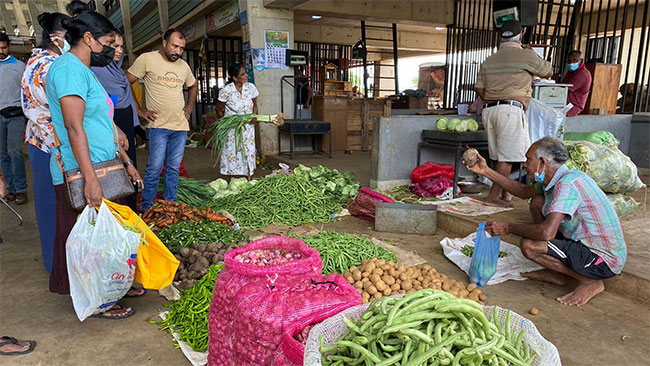
Economic crisis worsens Sri Lanka’s food insecurity levels – Report

Sri Lanka’s economic crisis has deepened the risk of food insecurity, a report released by the World Food Programme (WFP) revealed.

Accordingly, while 36% of households are food insecure, 76% have resorted to food-based coping strategies, WFP stated.

Despite having remained at relatively stabilized levels over the past three months, food security levels still remain concerningly high the report indicated, with nearly eight in ten households regularly turning to food-based coping strategies and over five in ten households pawning items or formally borrowing money in order to eat.

Food prices also remain a primary concern for nine out ten households.
“With limited purchasing power, over 50% of households are purchasing food on credit. Consumption of adequate diets remains low.

Thirty five percent of households are facing insufficient food consumption, with many consuming far less diverse and nutritious diets”, the report read, emphasizing that the crisis continues to disproportionately impact different segments of society.

Female-headed households (44%) are faring worse than male-headed households, while those in the estate areas (43%) consistently experience higher levels of acute food insecurity than those in urban and rural areas.

Food insecurity saw an increase of 4% in October, compared to the figures seen in September, with almost half of the households (48%) in the Southern province being deemed food insecure, followed closely by Sabaragamuwa province (45%).

Those in the East and the North recorded the lowest food insecurity scores in October, with the former having recorded a score of 26%, and the latter coming in just a percentage lower at 25%.

Six out of nine provinces saw a rise in food insecurity between September and October, namely Uva, Southern, North Central, Central, North Western and Eastern provinces, while there was a reduction in food insecurity in the Northern province of 8 percentage points from September.

SJB charging full steam ahead in preparation for LG polls

MP Tissa Attanayake says the Samagi Jana Balawegaya (SJB) is now in full preparation mode for the Local Government elections that are expected to take place in early 2023.

Attanayake who is also the national organiser of the party said the Government is attempting various tactics to delay polls while Ministers are claiming there is no need for an election at this juncture. He also pointed out that the rival United National Party and its members are also claiming the Government does not have the necessary funds to hold a vote.

“This is because they are in fear. A Government must be able to face the mandate of the people fearlessly. But the SJB is ready to face an election at any given moment,” the MP said.

Attanayake made these comments during a press conference held yesterday at the office of the Opposition Leader in Colombo.

The MP said the party expects the Election Commission of Sri Lanka to release a Gazette announcing the date for nominations as well as other necessary instructions. He said the Samagi Jana Sandhanaya, consisting of several supporting political parties, are currently in discussion to face the polls as an alliance.

“This week a meeting between the party organisers will be held and interviews will also be held for those who requested nominations,” he added. According to Attanayake, the party has already received a large number of applications.

He said the SJB will focus on giving more representation for youth and women which will reflect in its nominations list.

“We are not afraid to face an election. We want to see the people’s decision and their opinion through this poll. Therefore we warn the Government to refrain from attempting to delay it. We have already gone to court over this. We are awaiting the decision of the courts and we are also preparing to hold public protests.

“We will bring together all parties of the opposition to form a people’s movement pushing for elections. Therefore we ask the Government to not give various excuses to avoid a vote. We challenge the Government to hold elections as scheduled,” he said.