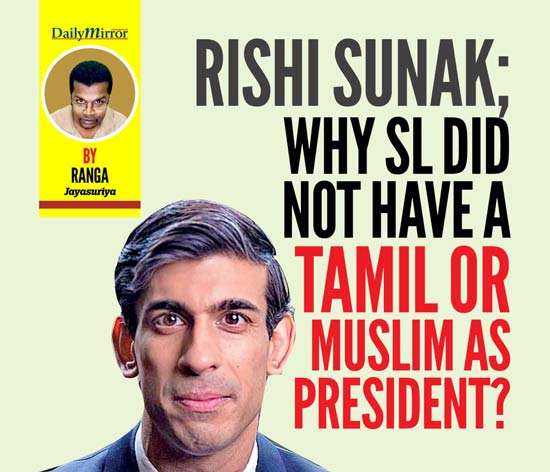
Rishi Sunak; why SL did not have a Tamil or Muslim as President?

Britain now has a British Asian, Hindu Prime Minister, though Rishi Sunak is whiter than White in his policies and richer than the British Royalty. That would make, at least those who see beyond the colour of the skin, question whether the new Prime minister is a representation of the average British Asian life.

The rise of Rishi Sunak to the helm of the Conservative Party – he dodged a membership vote thanks to Penny Mordaunt’s last-minute withdrawal from the race, which could otherwise have produced quite a different result – has made many ponder as to why Sri Lanka cannot have a Tamil or Muslim prime minister or a president.
Many commentators have blamed the perceived ethno-nationalistic nature of the Sri Lankan state, a yet another perceived act of discrimination at the hand of the state. Though, not being able to get elected as the head of the state through a majority vote is not necessarily a grievance. At best it is an aspiration. Unfulfilled.
But, why didn’t Sri Lanka have an ethnic minority member as the head of the state or the head of the government?
Probably, the issue is not with the structure – or the state, but with the strategy.

One might start looking at how those who succeeded in breaking this glass ceiling did it elsewhere. Rishi Sunak did not contest from the ‘British Indian Party’, but under the Tories. Barak Obama did not run under the Black Panthers, but from the Democratic Party, the mainstream political parties in a duopoly of political systems, that focused on national issues, much less on particular ethnic or religious aspirations.

In contrast, the minority political leaders in Sri Lanka have historically found it more electorally convenient to form race-based political parties. That it was a reaction to the perceived ethno-nationalism of the Sinhalese is the standard argument, with the 1956 electoral victory of SWRD Bandaranaike and subsequent Sinhala-only Act, being described as the watershed events in majoritarian politics.

However, progenitors of ethnic Tamil Nationalist politics, All Ceylon Tamil Congress (ACTC) – founded in 1944, and Illangai Tamil Arasu Kachchi (Federal Party) in 1949, were in politics long before Bandaranaike defected from the UNP and formed the SLFP in 1951. GG Ponnambalam, the ACTC leader, campaigned for guarantees of 50-50 representation for minorities under the Soulbury Constitution. The ACTC then joined DS Senanayake’s UNP-led government, but his detractors within ACTC, led by SJV Chelvanayagam detested the collaboration with the Sinhalese political parties and parted ways to form the Federal Party in 1949.

Ethnic Tamil politics in the early stage was not a reaction to Sinhala Buddhist majoritarianism, as it is often alleged, it is in-built into the Dravidian social-political exceptionalism, they adopted as the governing ideology. That effectively set off a race to the bottom as the competitors for the Tamil vote schemed to present themselves as more nationalistic than the other, until three decades down the line, the LTTE prevailed as the sole representatives of the Tamils.

Also, the ethnic minority politics at that stage was a reaction to the demographic reality as the minority elites feared being submerged by a numerically large Sinhalese Buddhist majority in the newly independent state. The state building also entailed the rearrangement of the state for all its people to benefit from it, which itself had its toll over time, especially on the disproportionate representation of Northern Tamils in various aspects of the state, ranging from bureaucracy to standardization of the university admission. Though the latter has been cited as ethnically motivated, Sri Lanka is not the only country to opt for affirmative action to provide more equitable opportunities in education.

The British tradition of divide and rule might also have its effect. A small group of elites who thrived in that system, rather than assimilating to the new state, thought to perpetuate the old model by other means. Thus their unfilled aspirations were masqueraded as grievances and the indifference of the majority Sinhala-dominated parties to these demands hardened their struggle, finally leading to the Vattukkottai resolution, a separatist campaign and finally the LTTE terrorism. None of that makes you a palatable candidate for the majority if you stand for the dissection of the state.

That is not to say, minorities have not succeeded in politics. From Sirimavo Bandaranaike’s influential education minister Badiuddin Mahmood to a host of UNP stalwarts, ranging from ACS Hameed, and Bakeer Marker to MH Mohammed were influential within their parties and in national politics. Colombo Municipal Council has had more ethnic minority mayors, long before Sadiq Khan became the London Mayor in 2016.

Also, it is disingenuous to dismiss the two main political parties, especially the UNP or the SJB, as ethno-majoritarian, though any political party worth its salt should be mindful of the demographic reality of its electorate. Until the breakup of the UNP, Kabir Hashim, a Muslim was the General secretary of the UNP.

Then there is another problem. Ethnic minority members who managed to rise above the ethnic lines and were adopted by the Sinhalese mainstream have often been discredited and delegitimized by some of the most articulate quarters of minorities, the type of people foreign embassy staff consult to have a grasp of Sri Lankan politics.

Consider Lakshman Kadirgamar or even Muttiah Muralitharan – or now Ali Sabri, the latter, though one could detest his political party of choice – Pohottuwa – is a true Sri Lankan patriot than most Sri Lankans. The problem with the ethnic minority political project is that Sri Lankan patriotism is made subordinate to ethnic allegiance.
There is an interesting element in the British Asian upstaters of the Conservative Party. Rishi Sunak, Suella Braverman and Priti Patel are more anti-immigrant Brexiters and devotees of British colonial legacy than average White British. That might be a political survival instinct or an engrained trait of the colonial experience, where some ethnic minorities in the British Colonies were more than happy to play the second fiddle to the White Europeans, as long as they are above the majority. This illustrious list includes young Mohandas Gandhi in South Africa, who in a series of letters to the colonial administration ranted at the ‘mixing of Indians with native savages.’
Recently, Aragalaya offered an example of non-racial political activism. A few, except an extreme bigot, cared about the race or religion of Aragalaya activists, indeed, much less than their long hair and uncut beards. Many of the prominent and vocal members in Aragalaya were Muslims and Tamils and were accepted as leaders for their commitment to the cause, much less for their race.

That non-racial inclusivity and activism could be the model if Sri Lanka is to have a minority prime minister or a president.

Written by Ranga Jayasuriya
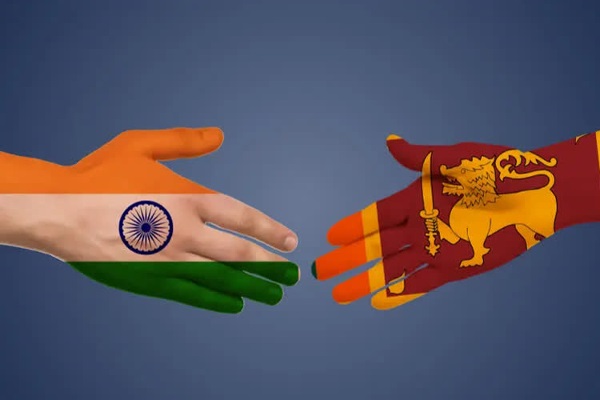
Sri Lanka & India hold talks to expedite $15mn grant projects

Sri Lanka and India have agreed to expedite projects, including promoting Buddhist ties, under a special Indian grant of $15 million.

The Indian High Commission in Colombo said in a statement, High Commissioner Gopal Baglay and Minister of Buddhasasana, Religious, and Cultural Affairs Vidura Wickramanayaka held talks to expedite jointly-identified priority projects including promotion of Buddhist ties and functioning of the Jaffna Cultural Centre (JCC).

Discussions were held on the installation of solar power facilities in places of worship and Pirivenas or schools where monks are trained around the country from the grant.

The High Commission statement said, “The meeting on JCC focused on the establishment of an enabling joint-framework to make the state-of-the-art facility available for regular use by common public. This glowing example of India-Sri Lanka development partnership, which has been constructed under a government of India grant of more than $11 million, consists of multiple facilities such as a museum of two floors, a latest theatre style auditorium for more than 600 people, a 11-storeyed learning tower, and a public square which could also act as an amphitheatre, among others.”

The statement also noted that the meetings with Minister Vidura Wickramanayaka underscored India’s abiding commitment to bring about an impact to the daily lives of the people of Sri Lanka through the implementation of people-centric grant projects.

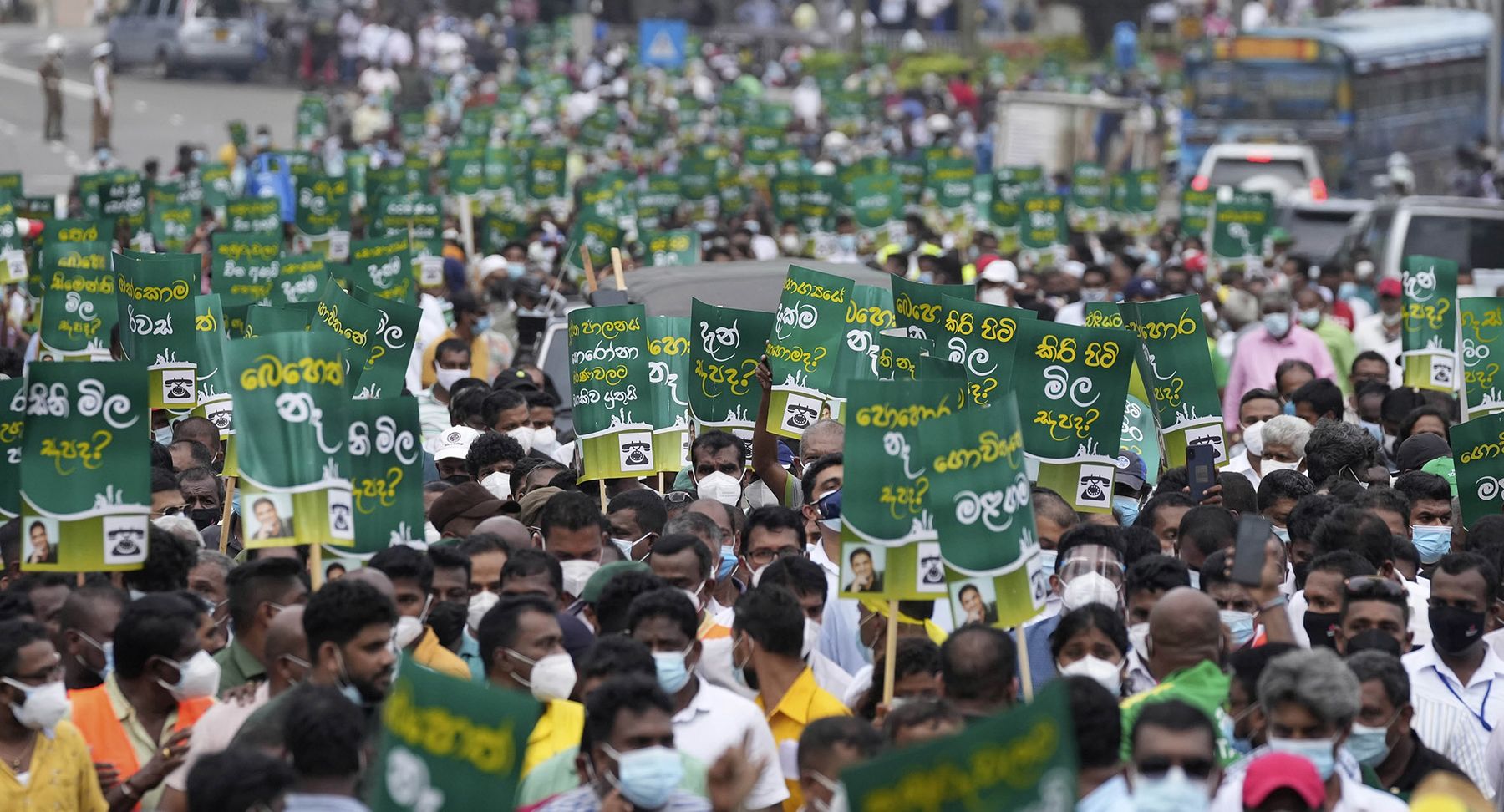
Protest in Colombo against suppression today (2)

A peaceful protest against state suppression is to be held in Colombo today (2).

Trade Unions, and Students Movements, supported by political parties will march from Maradana to Fort, where a rally will take place.

Participants will march from Elphinstone Theatre to central Colombo. Potential stops or endpoints include De Soysa/Liberty Circus intersections, Galle Face Green, and Fort Railway Station.

The Human Rights Commission of Sri Lanka reiterates that the Police must NOT use the provisions of the Police Ordinance to violate the fundamental rights declared and recognized by the Constitution of Sri Lanka.

The HRCSL made this statement in response to a letter submitted to the Commission by trade unions and mass organizations, informing that the Police had illegally notified them to obtain permission for the peaceful protest set to be held on Wednesday (2).

The HRCSL highlights that peaceful protests are permitted according to Section 77 of the Police Ordinance.

It warned the Police that the Constitution of Sri Lanka is the supreme law of the country, adding that violating fundamental rights would result in serious consequences.

The HRCSL also reminds the Police to pay attention to the recommendations made by the Commission to the Public Security Minister on the 28th of September.

According to the statement, a team attached to the Human Rights Commission will also be deployed to monitor the peaceful protest march.

Six major business chambers in Sri Lanka have called for the halting of anti-government protests that they say could undermine efforts taken to stabilize the economy.

In a joint statement, the chambers added that negative publicity could seriously derail actions that are being taken to revive the economy, particularly the efforts taken to revive tourism.

‘Any act of destabilization taking place at this time and any negative publicity arising from it would seriously derail actions that are being taken to revive the economy including the efforts being taken to promote tourism’ the statement read.

Pointing out that a few airlines have agreed to commence flights to Sri Lanka and given the high cost of energy in Europe during the winter, Sri Lanka will have an ideal opportunity to attract tourists which will support the Hospitality industry, the Chambers say that any instability can affect the recovery process for exports and foreign investment too.

‘We appeal to all parties to divert their energies and resources towards encouraging positive reforms and focus on how we recover as a nation instead of engaging in acts that can further damage the economy and place more burdens on the people of this country the statement mentioned.

This statement has been issued by the following Chambers:

Ceylon Chamber of Commerce (CCC)

Chamber of Young Lanka Entrepreneurs (COYLE)

Federation of Chambers of Commerce and Industry of Sri Lanka (FCCISL)

International Chamber of Commerce Sri Lanka (ICCSL)

National Chamber of Exporters of Sri Lanka (NCE)

Women’s Chamber of Industry and Commerce (WCIC)

Posted in Uncategorized

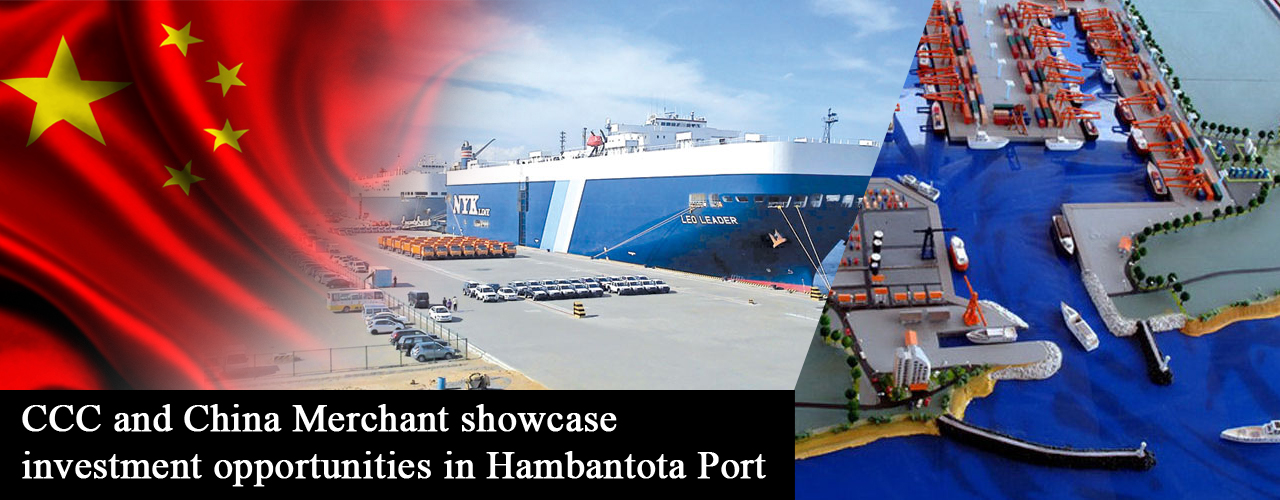
Sri Lanka’s China-backed Hambantota Port enters bonded fertilizer business

Sri Lanka’s China-backed Hambanota Port is entering fertilizer and cement storage and handling services, Nishantha Gamage, Senior Manager, Commercial & Marketing, Hambantota International Port Group said.

A 10,000 square metre bonded cargo warehouse for fertilizer built with an investment of 2.2 million US dollars by a private investors will come on stream in the first quarter of 2023.

It will cater to Sri Lanka and the region, Gamage told the Colombo International Maritime & Logistics Conference.

A 3 million US dollar dry bulk warehouse built by another investor to store cement raw material will be completed by the end of the year.

Hambantota Port is also unloading raw material for another cement factory in Mirijawila where materials are transported by a covered conveyor.

The Port is run by Hambantota International Port Group (HIPG) which is a joint venture between China’s CMPorts group and state-run Sri Lanka Ports Authority.

All tight lipped; Speaker to seek legal notice to get names of dual citizens

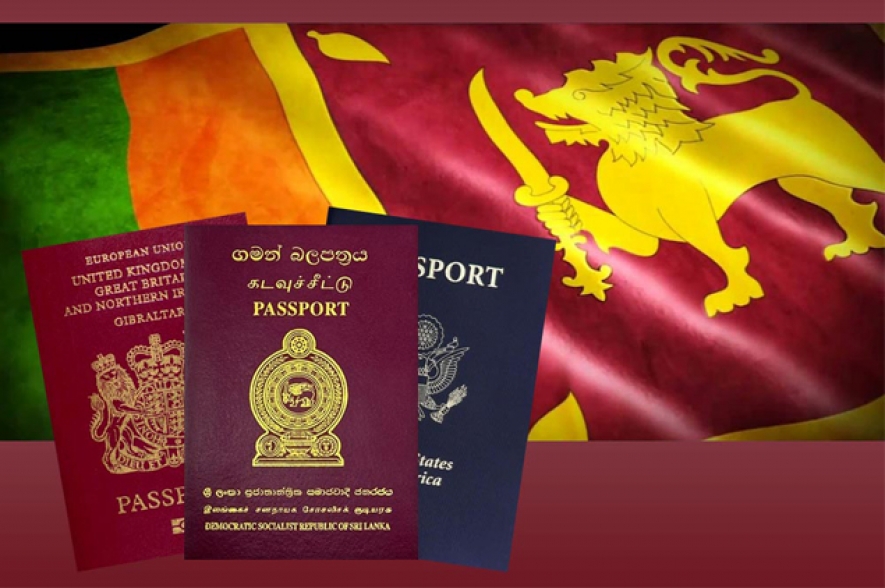
As the 21st amendment was passed in Parliament recently, the question which has now hit the House by storm is which MP is a dual citizen? While silent whispers and internal talks continue among the parliamentarians, no name has still come to light with almost all departments remaining tight lipped over it.

The Department of Immigration and Emigration launched a special investigation last week following a request made under the Right to Information Act, to identify which MPs are dual citizens.

The Department is yet to finalize its investigations stating that the probe was conducted based on a document containing the date of birth, name and National Identity Number referred by Parliament.

Sources within the Parliament however said they had no idea as to who the MPs are who are dual citizens as such information was not required to be registered by Parliament.

There was no legal provision for it, and none of the 225 MPs have declared themselves to be dual citizens to the House.

The only name that became publicized in recent months is that of Basil Rajapaksa who is no longer an MP and due to his firm belief to remain an American will not have any place to contest in a Sri Lankan election or hold a parliamentary seat in the future.

Speaker Mahinda Yapa Abeywardena who has been under pressure to divulge the names is yet to get any indication from the Immigration and Emigration Department.

Sources close to the Speaker told Daily Mirror that Abeywardena will seek a legal notice to obtain the names from the Immigration and Emigration Department and will also seek the advice of the Attorney General and the Justice Ministry.

After this, the names are likely to be made public. According to sources, it is possible that over 6 names of MPs may surface once the probe is completed but to date the names are running on speculation only.

MP Udaya Gammanpila has already alleged that State Minister of Tourism Diana Gamage was a dual citizen as she was a UK citizen to which Diana has challenged Gammanpila to go to court to prove his claim that she was not a Sri Lankan citizen.

Rumors were also afloat that some MPs from within the TNA may also be dual citizen holders but this allegation was shot down by senior TNA MP M.A. Sumanthiran, who stated that there were no dual citizens within the TNA.

He however said that they had heard there were many dual citizens in Parliament and if so this should be investigated and action should be taken to remove them.

Some FR petitions are also likely to be filed in the coming weeks to get more information on who the possible dual citizens are and according to sources those MPs who are likely to be exposed are also preparing to challenge their stand.

Posted in Uncategorized

Missing persons’ families look to int’l community

Relatives of missing persons yesterday (1) said that only the international community could ensure accountability to their long-standing grievances, and pointed out that they do not want to accept the compensation and certificate of absence provided by the relevant local authorities.

Association for the Relatives of Enforced Disappearances Jaffna District Leader Sivapatham Ilankothai told The Morning yesterday that only the international community could ensure accountability in the issue of missing persons.

“We held a protest at the Jaffna District Secretariat on Monday (31 October) to show that we are not happy with the recent comments made by the Office on Missing Persons (OMP) Chairman that there is no evidence that our relatives were handed over to the Security Forces during the end of war. At the same time, we want to convey the message to the Minister of Justice President’s Counsel Dr. Wijeyadasa Rajapakshe that we do not want any compensation or a certificate of absence. We want to know the whereabouts of our loved ones. It is quite disheartening when such moves are being taken by the Government to just end this issue,” she added.

She further noted that for many years, the relatives of missing persons were waiting patiently, hoping that the OMP would resolve the issues.

“We went before many commissions appointed by the Government for many years. There was no solution. We waited for many years; now, we feel that there is no justice to our long-standing issue, and therefore, we have decided to appeal to the international community,” she added.

Ilankothai also said: “Initially, the Government proposed to give Rs. 100,000 as compensation, and then raised the amount to Rs. 200,000. Do not cheat us. We want justice. Find the whereabouts of our loved ones. That is why we protested on Monday.”

On Monday, the relatives of missing persons staged a protest and forcibly entered the Jaffna District Secretariat premises, showing their displeasure against the Government and the OMP during the visit of Dr. Rajapakshe. The protestors shouted slogans such as “We don’t want the OMP and we don’t want Rs. 200,000 compensation, we need an international mechanism”.

Protestors also claimed that the OMP is cheating and disappointing the relatives of missing persons. They also raised slogans against Dr. Rajapakshe who participated in the mobile service launched by the Ministry of Justice to issue birth and other certificates to returnees from India, at the Jaffna District Secretariat on Monday.

Posted in Uncategorized

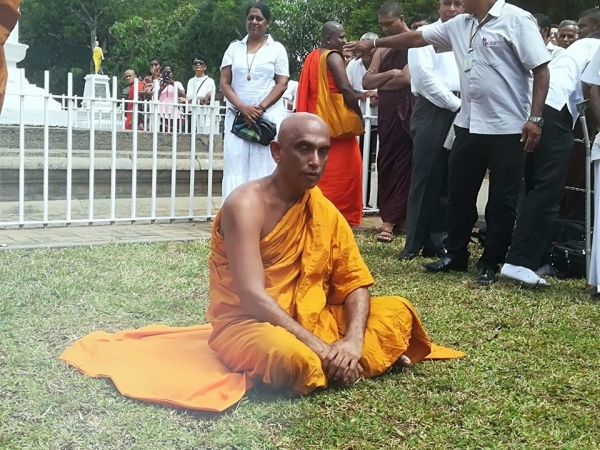
Rathana Thera says IMF not the solution for SL, advocates money printing

Ape Jana Bala Pakshaya (Our Power of People Party) MP Ven. Athuraliye Rathana Thera stated yesterday (1) that the International Monetary Fund (IMF) is not the answer to Sri Lanka’s present crisis, claiming that it has not succeeded in saving a single country over the past few years, and that it will therefore, not succeed in saving Sri Lanka either.

“From 2015 to date, the IMF has not been able to save a single country. The result of dealing with the IMF will be that any independent strategy that is available to Sri Lanka to emerge from this crisis will be blocked.”

The monk observed that one such independent strategy is printing money, and pointed out that the IMF cannot impose any conditions on countries like Myanmar, the Republic of Korea (South Korea), and Cuba, because they print their own money.

“I am not in favour of a military Government, but Myanmar does not face starvation, addictive drug problems, or the collapse of the State machinery. I am not saying that we need to form a Government like Myanmar, I am only saying that there are countries surviving without the conditions of the IMF.”

Rathana Thera also indicated that the IMF targets countries like Sri Lanka because of its inability to control the US and all countries belonging to Europe excluding England that print their own money.

“Does the IMF give permission to America to print US dollars? What right does America have to maintain the US dollar at such a high rate? The IMF cannot impose any conditions on the use of Euros in Europe, because that authority lies with the European Parliament.”

He also noted that while it was possible for the IMF to limit and impose restrictions on countries like Sri Lanka three decades ago, it is no longer possible to do the same because they do not hold the monopoly power anymore.

“The IMF cannot restrict or control countries like us anymore because they can no longer rely on the support and empowerment of the US and Europe because they are economically struggling. Organisations like the World Health Organisation and other financial institutions are gradually becoming Asian-based, as they are relying on Asian funding.”

The Government of Sri Lanka is currently engaged in debt restructuring negotiations with creditors in hopes of obtaining IMF Board approval for a $ 3.9 billion bailout programme, for which it has only reached a verbal staff-level IMF agreement.

Posted in Uncategorized

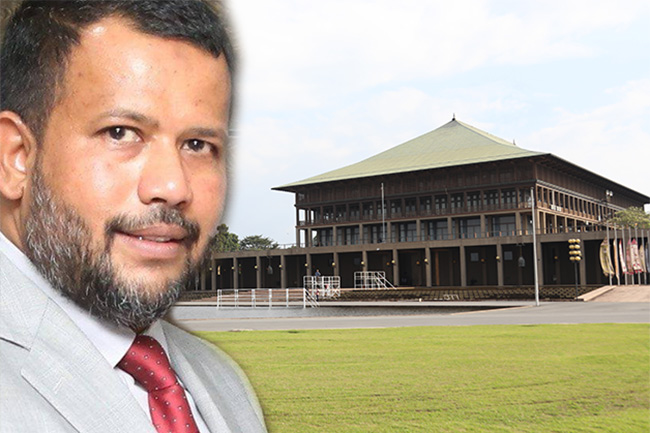
Rishad Bathiudeen acquitted in case filed over Easter Sunday attacks

Colombo Fort Magistrate Thilina Gamage today (02) ordered the acquittal of Parliamentarian Rishad Bathiudeen, who was named a suspect in a case filed over Easter Sunday terror attacks, from the case in accordance with the instructions of the Attorney General.

The magistrate issued the order when the magisterial inquiry related to the case was taken up again today.

The former Minister and Wanni District Parliamentarian was arrested by the Criminal Investigation Department (CID) of Sri Lanka Police on 24 April 2021 and remanded under the Prevention of Terrorism Act for over six months until he was granted bail on 14 October 2021.

Posted in Uncategorized

Sri Lanka Inflation Slows for First Time in Year in October

Sri Lanka’s inflation slowed in October for the first time in a year as shortages of food and fuel eased.

The consumer price index in the capital Colombo cooled to 66% from a year ago, the statistics department said in a statement Monday. That’s down from 69.8% in September and a median of 68.5% in a Bloomberg survey.

Transport costs stood at 150.4% and food prices came in at 94.9%, the data showed.

The numbers are a welcome development for Sri Lanka’s monetary authority, which expected inflation to peak this month. The Central Bank of Sri Lanka has kept the benchmark rate steady at 15.5% for the last two meetings after hiking borrowing costs by 9.5 percentage points this year. The next monetary policy review is scheduled for November 24.

Falling global commodity prices, assistance from friendly countries and re-purposed funds from multilateral lenders have helped Sri Lanka stabilize its finances in the short run. Supplies of food, fuel and medicines are trickling in as officials pursue a debt restructuring deal with global creditors, that’s key to unlock the International Monetary Fund’s $2.9 billion bailout package.

Sri Lanka opposition SJB demands elections, warns of protests against delay tactics

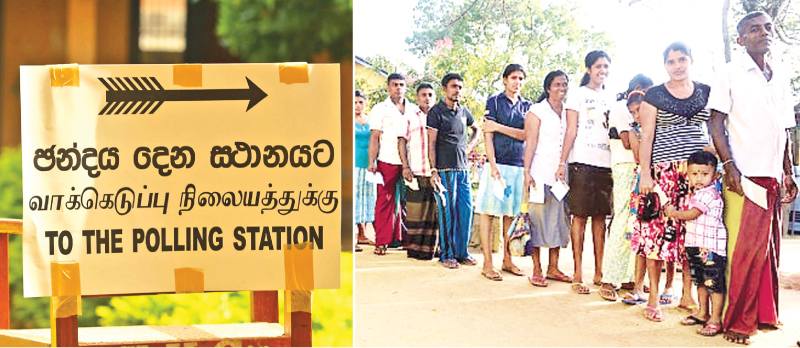
A proposal by Sri Lanka’s minister of justice for a special committee in parliament on election reforms is being challenged by the main opposition Samagi Jana Balawegaya (SJB) which claims that the proposal is an attempt to delay elections.

SJB general secretary Ranjith Madduma Bandara speaking at an event said on Monday October 31 claimed that President Ranil Wickremesinghe had given an assurance to ruling Sri Lanka Podujana Peramuna (SLPP) legislators that elections will not be held.

“We are working against the president’s plan,” said Madduma Bandara.

The MP said his party plans to educate the public and raise the matter in and outside parliament to “hold elections and protect democracy”.

His SJB colleague MP S M Marikkar said at a different event that the SJB will take to the streets if elections are postponed.

“We will get on the streets to send both President Wickremesinghe and the government home, secure an election, and form a government,” said Marikkar.

The MP also claimed that the International Monetary Fund, the Asian Development Bank, the World Bank and other international organisations have said they will assist Sri Lanka in debt restructuring after the people have elected a government.

There is no evidence, however, that any of those institutions have laid down a condition that elections be held in order to receive assistance in debt restructuring.

Sri Lanka is going through its worst currency crisis in decades, and the IMF has reached a staff level agreement with the government on a 2.9 billion US dollar bailout package if Sri Lanka successfully restructures its debt.

“Without [holding an election], we cannot overcome this crisis. We ask the president not to bring in false committees to postpone elections,” said Marikkar.

Justice Minister Wijeyadasa Rajapakshe had requested Speaker Mahinda Yapa Abeywardena last week that a special parliamentary committee be appointed to propose electoral reforms for local government bodies, provincial councils and parliament and recommend a homogeneous system for all three, reports said

A parliamentary election in the island nation is not due till 2024. But the president may dissolve parliament and call an early election from March 2023. The recently passed 21st amendment to the constitution has retained the president’s power to dissolve parliament two and a half years after its commencement.

The opposition Janatha Vimukthi Peramuna (JVP) too has called for elections. Former JVP MP K D Lal Kantha speaking at a rally said the government is not going for elections because it knows it doesn’t stand a chance.

State Minister Shantha Bandara speaking to reporters on Monday claimed that the opposition is demanding elections to destabilise Sri Lanka’s economic recovery by signalling to the world and to potential foreign investors that a change in government is due next year.

The SLPP’s popularity has waned considerably since the popular people’s protests that erupted in Sri Lanka in April this year over the country’s currency crisis. A wave of protests around the country saw the ouster of then president Gotabaya Rajapaksa, who was succeeded by President Wickremesinghe – a former arch rival – with the unlikely support of 134 SLPP legislators.

Opposition parties have claimed that, in return for their support, Wickremesinghe offered sanctuary to the almost universally reviled SLPP and a delay in elections.

However, the government’s approval rating under Wickremesinghe had moved up to 10 per cent in October 2022 from 3 per cent in June, a survey by Verité Research, a Colombo-based think tank found.

Meanwhile, Palitha Range Bandara, the general secretary of the United National Party (UNP) – the party Wickremesinghe leads and is represented in parliament by a solitary MP, has said Wickremesinghe is not in it to do anyone’s bidding.