TUI cancels all holidays to Sri Lanka as Foreign Office issues urgent warning to Brits not to go

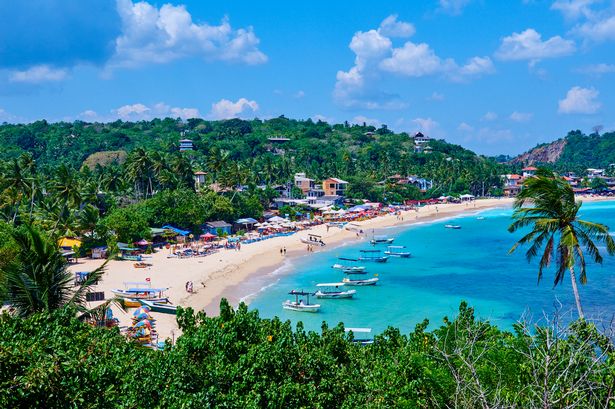
TUI has cancelled all holidays to Sri Lanka departing up to and including 31 May 2022. This comes as the Foreign Office updated its travel advice for Sri Lanka, urging Brits not to go to the country unless it’s absolutely necessary.

The change in advice comes after protests have been taking place across Sri Lanka as the country faces an economic crisis. It includes shortages of medicines, fuel and food. Locals are also suffering from power cuts every day due to electricity rationing.

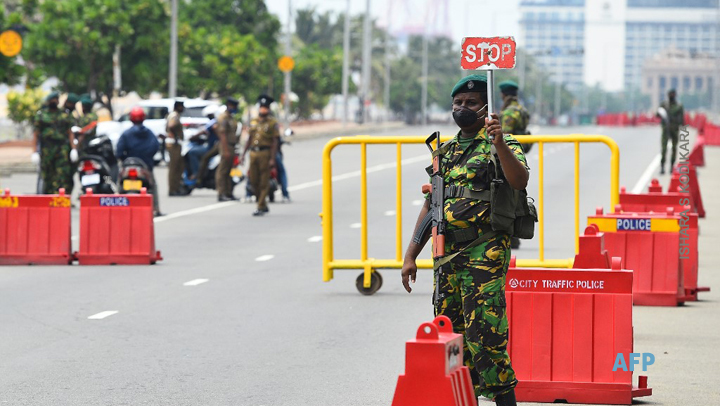
Protests have been taking place since March 31, while a state of emergency has been declared in May, alongside an island-wide curfew. Violence against those peacefully protesting in recent days has prompted the Foreign Office to update its travel advice to warn UK travellers not to travel unless they have an essential reason.

TUI has released a statement regarding the decision to stop all flights to Sri Lanka. A spokesperson wrote: “Due to the ongoing political and economic instability in Sri Lanka, the Foreign, Commonwealth & Development Office (FCDO) have advised against all but essential travel.

“As a result, we’ve unfortunately had to cancel all holidays to Sri Lanka departing up to and including 31 May 2022. We will be proactively contacting all impacted customers in departure date order to discuss their options.

“Please note this advice does not apply to customers transiting through Sri Lanka’s international airport and customers currently in resort can continue to enjoy their holiday as planned.

“We will continue to monitor the situation and update customers should there be any further updates. We would like to thank our customers for their understanding at this time.”

The Foreign Office warns that “several incidents took place on 9 May involving violence against peaceful protesters” including areas in Colombo and Kandy, and that “further incidents could take place.”

If you have a holiday or trip booked to Sri Lanka, you’ll need to get in touch with your tour operator and airline directly.

When the Foreign Office advises against all but essential travel, travel firms such as TUI, will usually cancel any trips they are operating and offer customers options such as rebooking to a later date, or receiving a full refund. They may also offer you an alternative holiday for the same dates you were due to travel on, which you can also choose if you wish.

If you have booked your flights and hotel separately, you’ll need to get in touch with your airline and accommodation directly. As flights to Sri Lanka aren’t banned, it could be that your flight is still scheduled to go ahead – in which case receiving a refund isn’t guaranteed.

In this case, you may need to compromise such as accepting vouchers, rebooking to a later date, or switching flights to a different destination (although you may need to pay a difference in fare if this applies). As for your accommodation, this will depend on the terms and conditions of your booking policy – again, you may need to compromise with a rebooking instead of a refund.

It’s worth noting that if you choose to travel against Foreign Office advice, your travel insurance will be void – so if anything goes wrong such as lost luggage or illness, you could end up facing some hefty bills.

PM Ranil Wickremesinghe’s special address to the nation

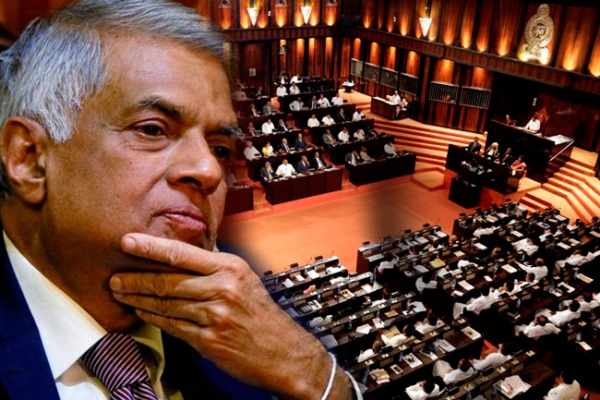
Prime Minister Ranil Wickremesinghe delivered a special statement to the nation today.

Full statament:

Last Thursday, I accepted office as the Prime Minister. I did not request this position. In face of the challenging situation facing the country, the President invited me to take up this position. I assumed this duty not only as a political leader, but also as national leader who has benefited from free education at the Faculty of Law of the University of Colombo.

At present, the Sri Lankan economy is extremely precarious. Although the former government’s budget projected a revenue of SLR 2.3 trillion, SLR 1.6 trillion is the realistic projection of this year’s revenue.

The estimated government expenditure for this year is SLR 3.3 trillion. However, due to the increase in interest rates and additional expenditure of the former government, the total government expenditure is SLR 4 trillion. The budget deficit for the year is SLR 2.4 trillion. This amount equals 13% of the GDP.

The approved debt ceiling is SLR 3200 billion. By the second week of May, we had spent 1950 billion. Therefore, the remainder is SLR 1250 billion. Yesterday, a cabinet decision was made to present a proposal to parliament to increase the approved limit for issuing treasury bills from 3000 billion to 4000 billion.

In November 2019, our foreign exchange reserves were at USD 7.5 billion. However, today, it is a challenge for the treasury to find USD 1 million. The Ministry of finance is finding it difficult to raise USD 5 million required to import gas.

Amidst all these issues we are faced with several grave concerns. To ease the queues, we must obtain approximately USD 75 million within the next couple of days. At the moment, we only have petrol stocks for a single day. Due to the diesel shipment that arrived yesterday, the diesel lack of diesel will be resolved to some extent. Under the Indian credit line, two more diesel shipments are due to arrive on the 18th May and 1st June. In addition, two petrol shipments are expected on 18th and 29th May. For over 40 days 3 ships with crude oil and furnace oil have been anchored within the maritime zone of Sri Lanka. We are working to obtain dollars in the open market to pay for these shipments.

A quarter of electricity is generated through oil. Therefore, there is a possibility that the daily power outages will increase to 15 hours a day. However, we have already obtained money to avert this crisis. We must also immediately obtain USD 20 million to provide gas to consumers. The situation of kerosene and furnace oil is even more urgent. At present, the Central Bank, local state and private banks, and foreign banks functioning in Sri Lanka are all facing a dollar shortage. As you are already aware, we possess a very low amount of US dollars. Nevertheless, we succeeded in bringing in a diesel shipment yesterday despite these adverse circumstances with Indian assistance. Therefore, you can obtain that diesel from today onwards. We will also work towards making a payment for the gas shipment that arrived on Tuesday. Therefore, you will have some respite from the gas shortage.

Another grave concern is the lack of medicine. There is a severe shortage of a number of medicines including medicine required for heart disease as well as surgical equipment. Payments have not been made for four months to suppliers of medicine, medical equipment, and food for patients. The payment owed to them amounts to SLR 34 billion. In addition, payments have not been made for four months for medicine imported by the State Pharmaceuticals Corporation. As a result, pharmaceutical companies are taking steps to blacklist the SPC. Unfortunately, our Medical Supplies Division is unable to provide even two critical items of the 14 essential medicines that we currently need. These two are a medicine used in treating heart disease and the anti-rabies vaccine. The latter has no alternative treatment.

We have planned to present a new alternative budget to the development budget proposed for 2022. Intend to present it as a concessionary budget.

I further propose to privatise Sri Lankan Airlines which is incurring extensive losses. The loss for the year 2020-2021 alone amounts to SLR 45 billion. By 31st March 2021, the total loss was at 372 billion. Even if we privatise Sri Lankan Airlines, this is a loss that we must bear. You must be aware that this is a loss that must be borne even by the poor people of this country who have never stepped on an airplane.

In the short term we will have to face an even more difficult time period. There is a possibility that inflation will increase further.

At present, the government incurs a loss of SLR 84.38 per liter of 92 octane petrol, 71.19 per liter of 95 octane petrol, 131.55 per liter of diesel, 136.31 per liter of super diesel, and 294.50 per liter of kerosene oil. The Petroleum Corporation can no longer bear this loss. Similarly, although the Electricity Board charges SLR 17 per unit of electricity the cost of production is at around SLR 48 amounting to a loss of about SLR 30 per unit. This is also a serious problem.

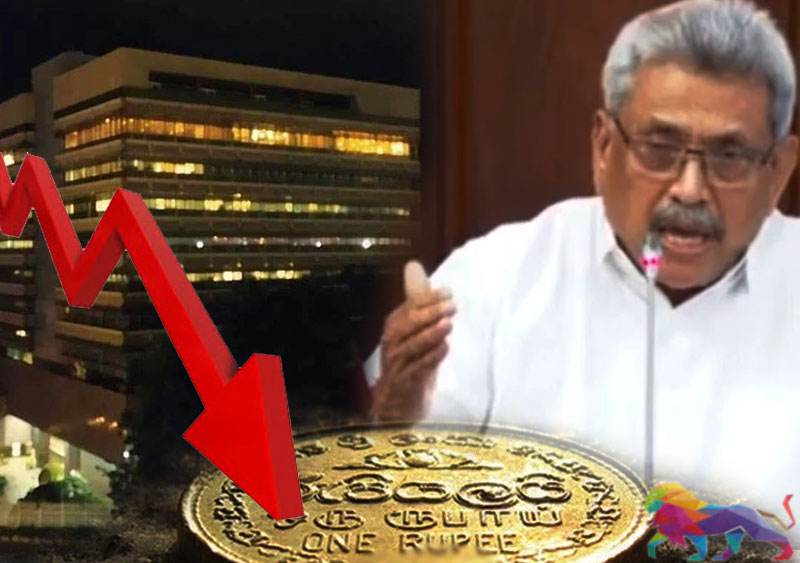
Against my own wishes, I am compelled to permit printing money in order to pay state-sector employees and to pay for essential goods and services. However, we must remember that printing money leads to the depreciation of the rupee. Under the current circumstances, even the Petroleum Corporation and the Electricity Board are unable to obtain rupees.

The next couple of months will be the most difficult ones of our lives. We must prepare ourselves to make some sacrifices and face the challenges of this period.

I have no desire to hide the truth and to lie to the public. Although these facts are unpleasant and terrifying, this is the true situation. For a short period, our future will be even more difficult than the tough times that we have passed. We will face considerable challenges and adversity. However, this period will not be long. In the coming months, our foreign allies will assist us. They have already pledged their support. Therefore, we will have to patiently bear the next couple of months. However, we can overcome this situation. Doing so will require taking a new path.

I thank the opposition leader and the leaders of the political parties who replied to the letters that I sent them informing them of the current situation.

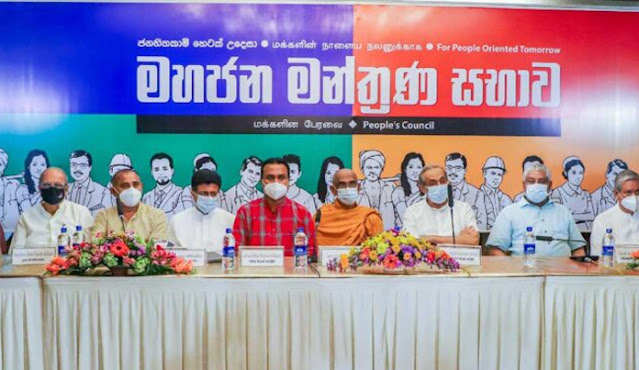
We must immediately establish a national assembly or political body with the participation of all political parties to find solutions for the present crisis. This will enable us to discuss with all parties and to arrive at decisions for short-, medium-, and long-term action plans that will enable us to rebuild our nation within a specified time frame.

We will build a nation without queues for kerosene, gas, and fuel; a nation free of power outages, a nation with plentiful resources where agriculture can freely flourish; a nation where the future of the youth is secure; a nation where people’s labour need not be wasted in queues and in struggles; a nation where everyone can lead their lives freely with three square meals a day.

I am undertaking a dangerous challenge. In the Caucasian Chalk Circle, Grusha crossed the broken rope bridge carrying a child that was not her own. This is an even more difficult undertaking. The precipice is deep and its bottom cannot be seen. The bridge is made of thin glass and there is no handrail. I am wearing shoes with sharp nails that cannot be removed. My task is to safely take the child to the other side. I am accepting this challenge for our nation. My goal and dedication is not to save an individual, a family, or a party. My objective is to save all the people of this country and the future of our younger generation. I will undertake this task willingly risking my life if needed and will overcome the challenges facing us. I ask you to extend your support to me in this endeavour.

I will fulfill my duty towards our nation.

That is my promise to you.

Prime Minister Ranil Wickremesinghe.

NPP will NOT support Ranil’s Govt

The Janatha Vimukthi Peramuna (JVP) has stated that it will NOT join any Government under Ranil Wickremesinghe as the Prime Minister.

“The National People’s Power will not involve itself with a puppet government that recruited those involved in the Sugar Scam, and the Bond Scam,’ JVP MP told reporters on Monday (16).

Vijitha Herath said though a government was formed, the ruling faction is still searching for Cabinet Ministers.

“Some SLFP members have said they will accept ministries. They are shifting their stance. As a political party, we need to make this clear. This puppet Government does not have the people’s mandate. We won’t be a part of it,” he added.

Posted in Uncategorized

Sri Lanka sliding into default as grace period for 2 bonds nears end

Sri Lanka is sliding into a default as the grace period on two unpaid foreign bonds ends on Wednesday, the latest blow to a country rattled by economic pain and social unrest.

Prime Minister Ranil Wickremesinghe, who was appointed last week following violent unrest, will provide a “full explanation” of Sri Lanka’s financial crisis on Monday.

He is expected to hold discussions with the attorney general’s department on curbing President Gotabaya Rajapaksa’s sweeping executive powers and the proposals will be presented to cabinet for approval.

The Sri Lanka Freedom Party, once allied with President Rajapaksa’s government but now independent, has now decided to join the new administration by putting forward lawmakers for cabinet positions. The main opposition Samagi Jana Balawegaya party said it won’t join government.

The island nation could be formally declared in default if it fails to make an interest payment to bondholders before Wednesday, when the 30-day grace period for missed coupons on dollar bonds ends. That would mark its first default.

Sri Lanka’s government announced in mid-April it would stop paying back its foreign debt to preserve cash for food and fuel imports as it struggled with a dollar crunch that’s led officials to implement capital controls and import curbs. A few days later, it failed to service a $78 million coupon on its dollar bonds due in 2023 and 2028, leading S&P Global Ratings to declare a selective default.

Prime Minister Ranil Wickremesinghe will discuss constitutional amendments to curb the powers of the executive presidency in a meeting with the attorney general’s department. Any suggestions and proposals will be presented to the cabinet for approval, he said in a series of tweets.

Wickremesinghe will also give a full explanation of the financial crisis. He also said Sri Lanka is in the process of exploring other options of securing funds to pay for the coming week’s fuel requirements given the dollar scarcity in banks.

The Sri Lankan Freedom Party has changed its position and will now back the formation of the unity government, local media reported, citing a letter from the party chairman to Wickremesinghe.

A meeting between the party lawmakers and the prime minister will be held on Monday.

India’s diplomatic mission in Sri Lanka said that 12 shipments of diesel, or more than 400,000 metric tonnes, were delivered to Colombo on Sunday under a credit line between the two nations.

For weeks Sri Lanka has been grappling with major fuel shortages that have seen drivers queue for hours outside gasoline pumps and businesses struggle to secure diesel for power generators amid hours-long power cuts.

Wickremesinghe said he held discussions with officials from the ADB and World Bank in an attempt to mobilize desperately needed funding and stocks of food, fertilizer and medicines — all of which have been rapidly depleted in recent weeks. (Courtesy Bloomberg)

Ten independent groups to support new Government

The 10 independent groups that left the Government when Mahinda Rajapaksa was Prime Minister, have decided to support the new Government to address the current crisis.

However, the independent groups will not accept any Cabinet portfolios.

The decision was taken following talks with Prime Minister Ranil Wickremesinghe today.

Wickremesinghe had yesterday written to former Minister Udaya Gammanpila, who is part of the 10 independent groups, seeking his support.

In a letter to Gammanpila, the Prime Minister said that the call from the public is for a system change.

He said that all political parties must come together to help the country recover from its current crisis.

The Prime Minister urged Gammanpila and his political party to support the Government revive the economy and also ensure political stability.

The 10 independent political parties had decided last week not to join the Government.

However, they said they will support the Government in any positive steps it takes.

Former Minister Wimal Weerawansa said last week that the 10 independent political parties will not join the Government as a result of the appointment of Ranil Wickremesinghe as Prime Minister.

Posted in Uncategorized

Sri Lanka’s main opposition decides to conditionally support to new government

Sri Lanka’s main opposition Samagi Jana Balawegaya (SJB) on Monday has decided to support the new government under Prime Minister Ranil Wickremesinghe for its economic recovery, the party said.

However, the support was offered with a warning of withdrawal if the government tries accommodate defections from the SJB or connecting them to any policies agains the SJB principles.

“As a responsible political party, Samagi Jana Balawegaya believes saving the country from the current crisis is the utmost importance,” the SJB said in a statement.

“Accordingly, without taking any portfolio and on behalf of the betterment of the country, SJB in its parliamentary group discussion today decided to fully support the current government in its efforts on economic recovery.”

“However, if the government groups try to accommodate defections from SJB or connect SJB parliamentarians for activities that are against the SJB principles, the parliamentary group has decided to unconditionally withdraw this support.”

The SJB earlier declined to support Wickremesinghe government citing the new prime minister has no mandate to become the prime minister as he was a solo representative of his party.

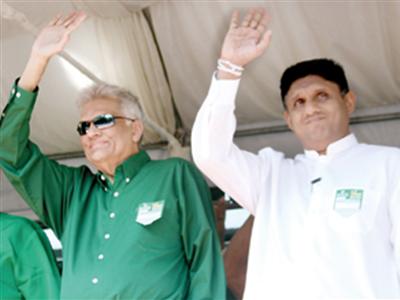
Wickremesinghe wrote to SJB and the opposition leader Sajith Premadasa asking to support the new government to face the current economic crisis. Premadasa earlier had responded him saying that the party would support for “correct” policies.

President Gotabaya Rajapaksa offered the prime minister post to Premadasa before offered to Wickremesinghe. However, Premadasa put forward four conditions including the resignation of the president.

Later, President Rajapaksa appointed Wickremesinge despite Premadasa agreed to take the offer with softened conditions.

Wickremesinghe needs parliament majority for sweeping economic, public sector, and tax reforms to deal with an International Monetary Fund loan programme in his economic recover plans.

Posted in Uncategorized

AG Directs IGP To Arrest 22 SLPP Activists Including Johnston And Sanath Nishantha

The Attorney General has directed the IGP and DIG-CID to arrest 22 SLPP activists and members including Johnston Fernando, Sanath Nishantha, Sanjeewa Edirimanna, Milan Jayathilake and Saman Lal Fernando.

They were instrumental is organizing a meeting at Temple Trees which led to violent clashes opposite the Prime Minister’s official residence and at Galle Face Green.

The gathering was held under the patronage of former Prime Minister Mahinda Rajapaksa. Protestors have also called for the former Prime Minister in connection with the incident.

Meanwhile, DIG Deshabandu Tennakoon who was photographed with pro-government goons at Galle Face Green during the attack is also likely to be arrested.

Posted in Uncategorized

Island-wide curfew from 11 pm tonight

Curfew will be imposed on the entire country from 11.00 pm today (16) to 5.00 am tomorrow(17) in accordance with the provisions of Section 16 of the Public Security Ordinance.

This was made known via a media release by the President’s Media Division today (16).

Accordingly, no person is allowed to be on any public road, railway, public park, public recreation ground or other public ground or the seashore except under the authority of a written permit granted by an authorised officer, the statement read.

Posted in Uncategorized

Despite jibes and invectives, Wickremesinghe may survive and hopefully deliver By P.K.Balachandran

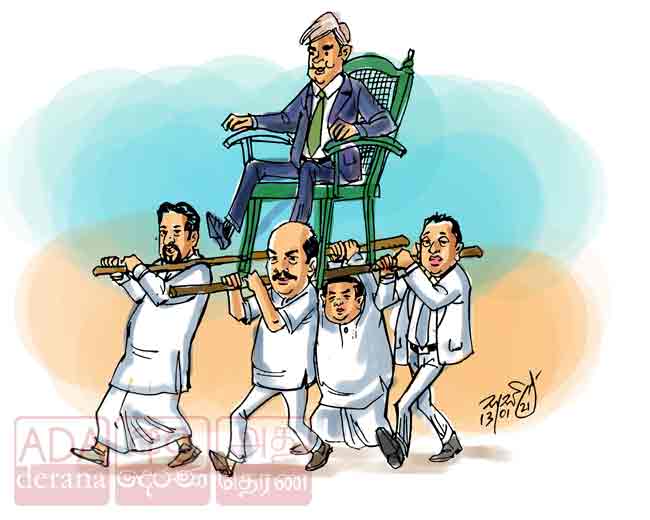
Sri Lanka’s new Prime Minister, Ranil Wickremesinghe, has been subjected to jibes and invectives from political opponents, armchair pundits and the media, both mainstream and social. But political realties being what they are, the 73 year-old sixth time Prime Minister is more likely to survive in office than be hounded out of it.

In fact, he is expected to get majority support in parliament, though his party, United National Party (UNP), has only one MP (that is himself). When his support base is tested in parliament on May 17, he might romp home with a comfortable majority. Many political parties and groups have now come round to accepting him as PM if only to have a stable government to tackle the grave economic crisis. MPs, across the board, are now realizing that the major powers of the world, who are also the donors or potential donors, are watching their antics with increasing anxiety, and the flow of funds from abroad might stop if instability continues.

Be that as it may, Wickremesinghe’s real challenge is not so much within parliament, but outside parliament, on the economic front. The country’s forex reserves continue to be abysmally low – US$ 50 million according to the Central Bank Governor Nandala Weerasinghe. But US$ 70 million is immediately required to offload a consignment of fuel which has arrived. Indian aid, now notching up to US$ 3.5 billion, is keeping the economy from sinking, but in three months’ time, that flow will come to a halt. The promised Chinese aid of US$ 2.5 billion is yet to materialize due to some conditions placed by Beijing, according to Sunday Times. Reportedly Sri Lanka immediately needs US$ 1 to billion.

The expected IMF facility will take six months to be extended, according to the Governor of the Central Bank. But once the Staff Level Agreement with the IMF is signed, the World Bank and the ADB will extend help it is said. The World Bank has already given US$ 600 million.

Western countries have not even offered bilateral or multilateral help. As a Sri Lankan academic once out, the “Americans come with a bagful of advice not money.” Japan is the only country from the Western camp which is likely to help because of its long-standing position as a leading donor. Even now, its loans to Sri Lanka are slightly more than China’s, accounting for 10.8% of the total Sri Lankan external debt of US$ 51 billion.

Wickremesinghe is keenly aware of the dire economic situation and has told the media that his first task will be to see that the public get their basic needs such as food and fuel. “I will see that every Sri Lankan has three meals a day,” he said.

Towards this end, he has set up a small task force and held preliminary talks with the envoys of India, China, the US and Japan, which have resulted in promises of cooperation. The West and India have welcomed his appointment as Prime Minister as they view him as their friend. He is Right of Center in ideology and is pro-West, though not antagonistic China. He is a known advocate of integrating Sri Lanka’s economy with India, especially, the five South Indian States of Tamil Nadu, Kerala, Telangana, Karnataka and Andhra Pradesh. He was keen on giving the contract to build and run the Easter Container Terminal in Colombo port to India, but President Maithripala Sirisena thwarted it.

Wickremesihghe’s relations with China were frosty in the initial stages of his last stint as Prime Minister. He called a halt to the Chinese-funded and executed Colombo Port City project, but after a year and a half, entered into a deal with the Chinese, re-naming the project as the Colombo Financial City and giving them a give piece of land there for their exclusive use. He gave the Hambantota port to China on a 99-year lease for US$ 1.1 billion, terms deemed very favorable to the Chinese.

However, China appears to be a bit wary about recent developments in Sri Lanka, mainly due to the active role being taken by India with the active cooperation of the Sri Lankan government. But India stepped in partly because the Chinese were prevaricating on helping Sri Lanka. Beijing wanted Colombo to go by its advice on how to tackle the economic problem. Beijing was overlooking the fact that what Sri Lanka was facing was an economic emergency needing an urgent infusion of loads of cash. India understood the Lankans’ plight better and responded with alacrity and generously, earning the gratitude of the powers-that-be in Colombo as well as the man-in-the-street.

Eventually, China may come up with an aid package if only to keep its place in Sri Lanka which in terms of investment is substantial (over US$ 5 billion). China is especially interested in checkmating India geo-politically in the island, including the Tamil-speaking Northern and Eastern provinces. The Chinese Ambassador Qi Zhenhong had had a much publicized visit to the North. He is now eying the East, where India has a strategic interest, especially in Trincomalee.

On the domestic political front, matters are now going Wickremesinghe’s way. He has already secured the full support of the biggest party in parliament, the Sri Lanka Podujana Peramuna (SLPP). Rebels from the SLPP-led ruling alliance, who are sitting in parliament as Independents, have stated that they will support Wickremesinghe’s good policies and oppose the bad ones. The main opposition party, the Samage Jana Balawegaya (SJB) has come round to saying the same thing. The Tamil National Alliance (TNA) and the Tamil Progressive Alliance (TPA) have also joined the chorus on giving selective and principled support to tide over the economic crisis. The Sri Lanka Freedom Party (SLFP), led by former President Maithripala Sirisenam has also said that it will support the government.

Only the Janatha Vimukthi Peramuna (JVP) with 3 MPs is adamant about opposing the government as it feels that President Gotabaya Rajapaksa should not have made Wickremesinghe Prime Minister when the latter’s party had been wiped out in the last elections and Wickremesinghe himself had entered parliament only as a nominated member.

Though political circles give many reasons for President’s decision to make Wickremesinghe Prime Minister, the most cited reason is that he has entered into a deal with Wickremesinghe to run the administration smoothly and successfully so that, at a suitable time, he will be given a safe exit from power and perhaps the country itself. It is said that the President had agreed to assist the repeal of the 20 th.Amendment of 2020 which had given him dictatorial powers and substitute it with the 21 st.Amendment which will be a new avatar of the 19 th.Amendment under which the President would only be a figurehead and not a functioning Executive President. Reportedly, Gotabaya Rajapaksa had also told Wickremesinghe to take all decisions and promised to sign on the dotted line.

With the political decks cleared or about to be cleared, Wickremesinghe will be able attend to the urgent task of ensuring a steady flow of foreign exchange. He would engage in intensive diplomacy with all major powers and international financial institutions to meet the basic needs of the much deprived and helpless people of Sri Lanka and also put the derailed Lankan economy back on the rails.

21A to be discussed on Monday (16)

Prime Minister Ranil Wickremesinghe says that the 21st Amendment to the Constitution will be discussed on Monday (16), and will be produced to Cabinet for approval.

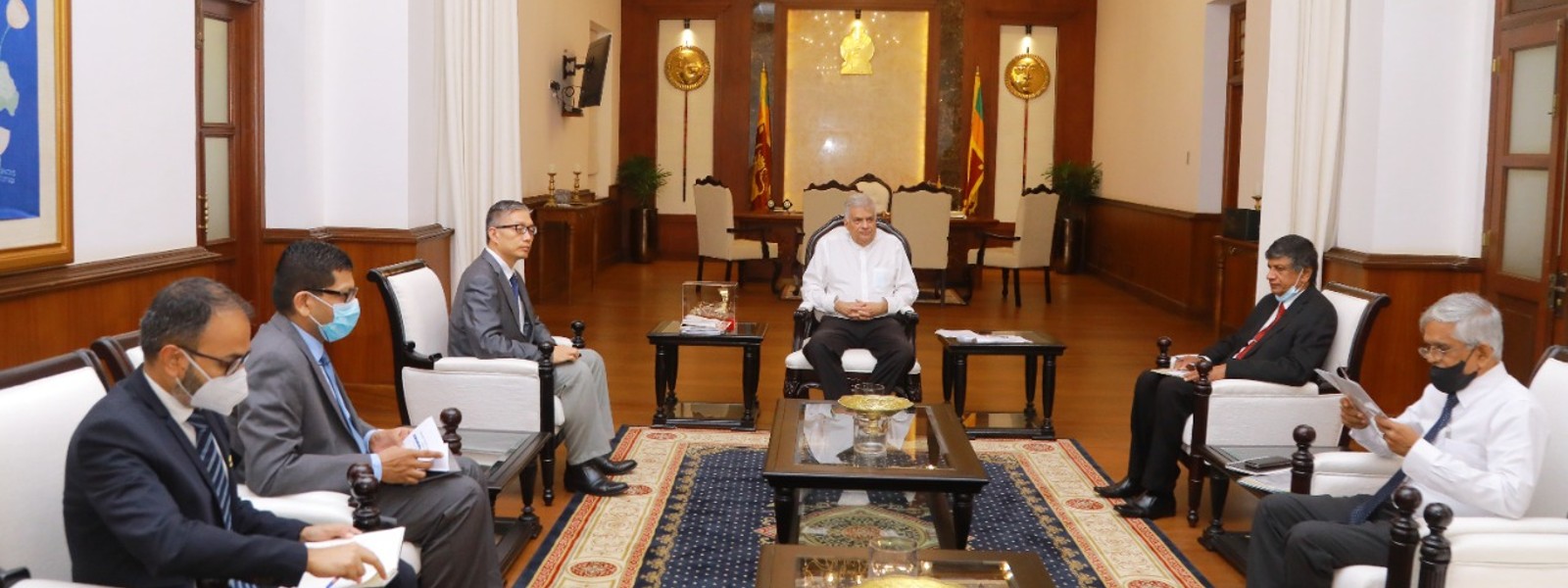
Prime Minister Ranil Wickremesinghe held discussions with representatives of the World Bank and the Asian Development Bank on the current economic crisis in the country, and the discussions focused on support for drug, food and fertilizer supply issues.

The Prime Minister said in a statement that discussions have also been held with foreign representatives regarding the establishment of a foreign consortium for financial assistance to coincide with the meeting of the two international financial institutions.

Emphasizing that the talks have been positive, the Prime Minister said that the immediate challenge for the Government is to obtain the funds required to pay for the fuel requirements for the coming week.

Due to the dollar shortage in the banks, the Government is now looking at other alternatives to raise the required funds, he stated.