Sri Lanka needs US$1,285mn for three months of oil, US$500mn from India: Minister

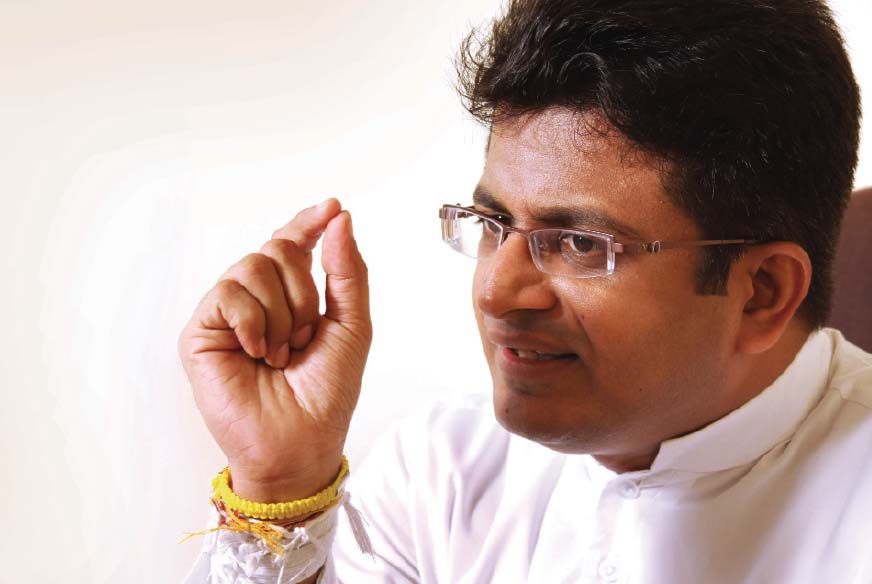
Sri Lanka needs 1,285 million US dollar for oil imports in the next three months, of which 500 million will come from an Indian credit line, Energy Minister Udaya Gammanpila said, as the country grappled with forex shortages and global prices went up.

“For the next three months we have forecasted 1,285.5 million US dollars for oil imports,” Energy Minister Udaya Gammanpila said.

“We hope to get 500 million dollars from the credit line from India. We are talking to others we will tell parliament when we finalize them.”

The 500 million dollar credit line to be activated in April is a one year facility at 2.5 percent.

India this month gave consignment of diesel on an appeal by Sri Lanka ahead of the credit line being used officially.

He said oil prices were around 40 to 45 US dollars a barrel in 2020, about 55 to 65 in 2021 are around 90 to 100 million dollars in 2022 so far with Russian invasion of Ukraine pushing prices up, he said.

Brent crude had moved up to 101.40 dollars as he spoke.

As of February 24, Sri Lanka had following stocks of fuel:

Petrol 92 – for 10 days

Petrol 95 -for 40 days

Lanka Auto Diesel 08 days

Super Diesel – 8 days

From a ship that is now being unloaded 5000 metric tonnes of diesel would be given to the Ceylon Electricity Board and 4,200 MT to the Sojitz power plant, which would be enough to run it for six days, he said.

“Some stocks are also coming in the future,” he said.

Each week two to three ship come based on the projected fuel needs of the country, based on which tenders have been floated. However unloading of tankers have been delayed due to forex shortages.

Sri Lanka usually has stocks for 15 to 21 days before the forex crisis, Energy Ministry Secretary K D Olga has said.

Sri Lanka has been struggling to find foreign exchange to pay for oil with liquidity injections being made to keep interest rates down after giving reserves for imports.

When foreign reserves of a pegged central bank (which are savings) are given for imports, an equivalent fall in rupee reserves must take place in commercial banks to keep the economy in balance.

However in a pegged central bank with a policy rates, money is printed an re-inserted to banking system (sterilized reserve sale) preventing a correction in credit, the balance of payments and driving imports and economic activity to an unsustainable level.

Sri Lanka is now trying to get credit lines for fuel, instead of market pricing and offsetting domestic consumption and non-oil imports.

Credit lines (domestic consumption financed by foreign borrowings) will further widen the external current account deficit and national debt.

The Mercantilists who print money or finances budget deficits with foreign borrowings and state enterprises with credit lines then jump up and say there is a current account deficit or a ‘twin deficit’ in a country where private citizens are net savers.

Posted in Uncategorized

Ukrainian tourists visiting Sri Lanka request extended stay

Ukrainian tourists visiting Sri Lanka have been severely inconvenienced by the current Russian-Ukrainian crisis.

As a result of this issue, they are currently resorted to staying at hotels in Bettota area and are unable to travel to their home country.

They are requesting that they be allowed to remain in Sri Lanka until the war situation in Ukraine is resolved.

The war in Ukraine has resulted in 198 people being killed with 3 of them being children and 1,115 wounded, with 33 of them being children.

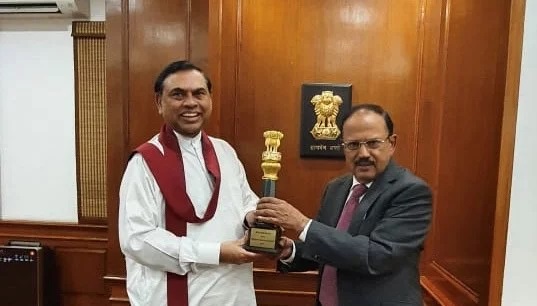
Basil’s visit to India postponed

Finance Minister Basil Rajapaksa’s visit to India has been postponed, Daily Mirror learns.

The Minister was supposed to land in New Delhi today for meetings with his Indian counterpart Nirmala Sitharaman and External Affairs Minister Dr. S. Jaishankar to finalise on financial cooperation for Sri Lanka, to secure supplies of essential foods and fuel in the midst of the foreign exchange crisis.

According to informed sources, the visit will be rescheduled for a future date shortly.

India has already offered US $ 500 million credit line for fuel and US $ 1 billion facility for the import of food items and pharmaceuticals.

Foreign Secy Slams Bachelet’s Decision By Sulochana Ramiah Mhhan

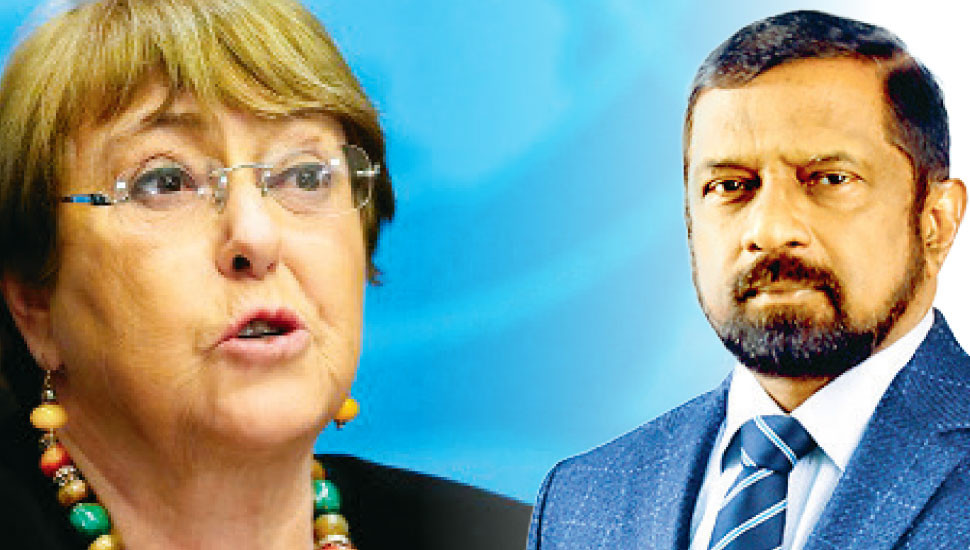
Foreign Secretary Admiral Jayanath Colombage slammed UN High Commissioner for Human Rights Michelle Bachelet’s new report, which claims the UN has decided to set up an evidence-gathering mechanism for Sri Lanka.

Bachelet stated in her report that her office has decided to open an office in Sri Lanka for evidence collection, and that her office has begun implementing the aspects of Resolution 46/1, with a start-up team carrying out preparatory work since April 2021.

“We are not going to allow that to be operating in Sri Lanka,” he said adding that this mechanism run by outsiders will not be allowed in Sri Lanka.

“It’s against the UN mandate, and the United Nations Human Rights Commission has no entitlement to run an evidence gathering mechanism in other countries,” he stressed.

Colombage asserted that since a domestic mechanism is taking shape and the process is on-going, Sri Lanka cannot allow another parallel mechanism introduced from outside and that would never occur.

He pointed out that this matter has been explained clearly to the Rights Chief. “We will do everything locally and no international mechanism of that nature will be allowed,” he reiterated.

He recalled how the 2015, the Government of the time had co-sponsored a hybrid mechanism to probe war crimes allegations, agreed and tried to allow foreign judges to set up a special Court in Sri Lanka. But such mechanism was also rejected then and that will never be allowed too, he reiterated.

He also said this Government is ready to face the UNHRC session and challenge what comes may. The UNHRC raised various allegations related to human rights on Sri Lanka, adding that however, about 95 per cent of matters are related to domestic politics and affairs. “We have a Parliament, a Cabinet, a President elected by the people and we are a democratically elected Government. There is no dictatorship or a military run government in Sri Lanka, so the country has the right to take decisions on the behest of the elected government and the people of the country. But when the very domestic policies are being questioned by the UNHRC, a conflict erupts. We have clearly stated to the UNHRC Commissioner, that a country’s internal or domestic affairs cannot be challenged by the UNHRC and it has no relevance to her Office.

Call for abolishing PTA: Sabry acknowledges HRCSL’s right to take stand, reiterates Cabinet will take final decision

Justice Minister Ali Sabry, PC, says a decision on the Prevention of Terrorism Act (PTA) will be taken by the Cabinet of ministers and Parliament.

Minister Sabry said so when The Island sought his response to the declaration by the HRCSL (Human Rights Commission of Sri Lanka) that the PTA should be abolished. He said, “Any individual or an organisation is free to express opinions. Ultimately, the Cabinet of ministers and the parliament shall decide taking all concerns into account.”

The five member-HRCSL, in a statement issued on 15 Feb, following consultations with the Colombo-based diplomatic community, declared: “Notwithstanding the amendments already suggested by the government, the HRCSL advocates the complete abolition of the PTA. The Commission believes that the offence of terrorism should be included in the Penal Code with a new definition for terrorism. It is explicitly for those who threaten or use violence unlawfully to target the civilian population by spreading fear thereof to further a political-ideological or religious cause. The Commission advocates that terrorism should be investigated under the General Law of the country with necessary amendments. The Commission also supports that it is not required to exclude the application of the Evidence Ordinance for the offence of terrorism. The indefinite period of detention violates the Constitution. “Deprivation of liberty of a person pending investigation or trial shall not constitute punishment” (Article 13 (4). Amendments to the Penal Code, the Code of Criminal Procedure Code. Judicature Act and the Bail Act require modifications for this purpose.”

Foreign Minister and former internationally recognised law professor G.L. Peiris said that the PTA was being amended with the objective of bringing it in line with international norms and best practices. According to the academic the PTA was being amended after lengthy deliberations over several months and the proposed amendments were an initial step towards the promulgation of a more comprehensive anti-terror legislation.

The FM explained that substantive amendments to the PTA included amendments to the sections on detention orders, restriction orders, expressly recognizing judicial review of orders, expeditious disposal of cases of those charged to avoid long term detention, repealing sections impinging on freedom of expression and introduction of provisions on access by magistrates and judicial medical officers, prevention of maltreatment and torture during the detention period, right to communicate with the family, grant of bail to long term detainees and day to day hearing of cases.

Posted in Uncategorized

Sri Lanka in talks with Middle East banks for 2 billion US dollars: Minister

Sri Lanka is in talks with banks in the Middle East for financial facilities amounting to two billion US dollars, State Minister for Samurdhi and Micro-Finance Shehan Semasinghe said.

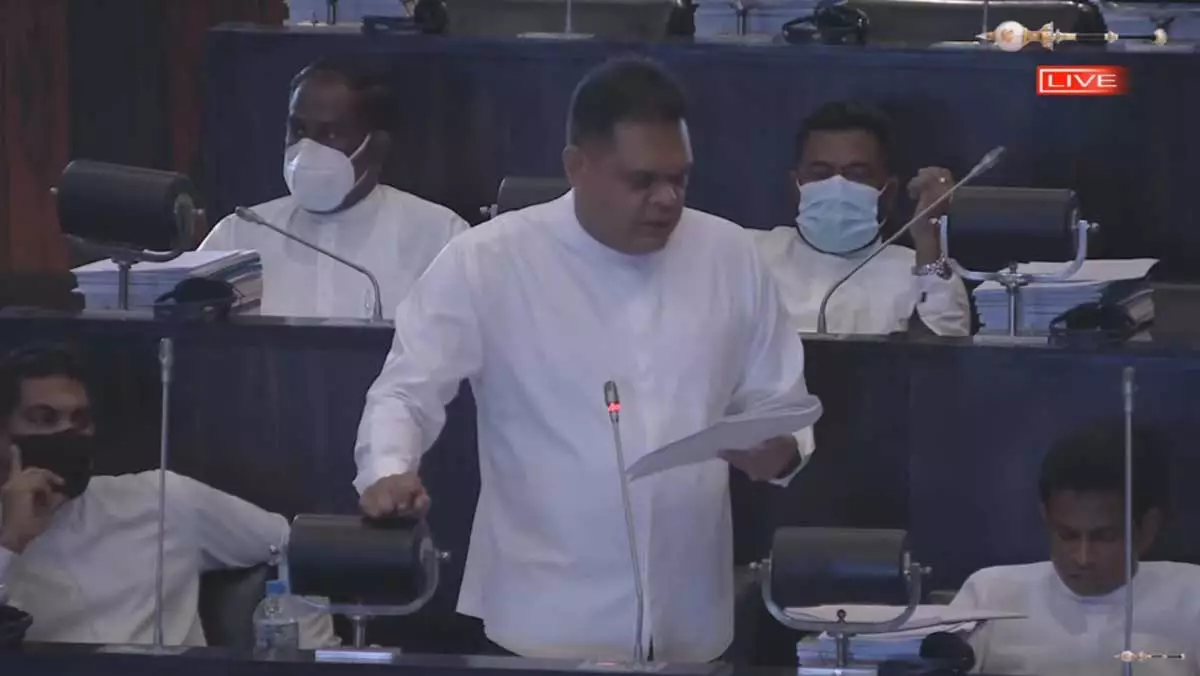
“Discussions have been initiated with banks in the Middle East for 2.0 billion dollars in financial facilities,” Minister Samarasinghe told parliament.

“Successful results are starting to emerge.”

Sri Lanka is seeing pressure on the rupee peg of 200 to the US dollar, depletion of foreign reserves and parallel exchange amid liquidity injection made to maintain low interest rates.

Sri Lanka has 6.9 billion US dollars of foreign exchange denominated debt to be paid, including to domestic holders.

Sri Lanka repaid a 500 million US dollar sovereign bond in January and a billion dollar bond remains to be paid in July.

Gross foreign reserves were down to 2.3 billion US dollars in January. From October, foreign reserves started to be used for imports, which requires more money printing to keep rates down. Fuel shortages have started to emerge.

Posted in Uncategorized

India, Lanka close to sealing 3 defence-related pacts to boost maritime security

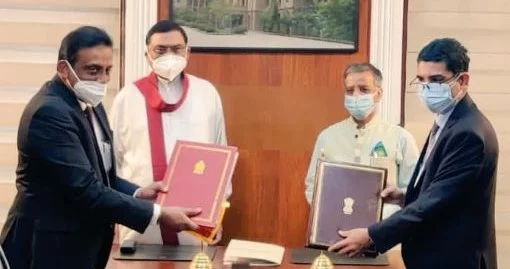
India and Sri Lanka had close to firming up three defence-related pacts and arrangements to boost maritime security ahead of Sri Lanka finance minister Basil Rajapaksa’s visit this week.

Ahead of a visit by Sri Lanka finance minister Basil Rajapaksa to India this week, the two countries are close to finalising three defence-related agreements and arrangements that are expected to boost cooperation for maritime security.

Rajapaksa, the younger brother of President Gotabaya Rajapaksa and Prime Minister Mahinda Rajapaksa, has been coordinating with the Indian side to firm up an economic assistance package to help Sri Lanka tide over a severe balance of payments crisis. He is expected to visit New Delhi during February 25-26, his second trip to the Indian capital since December.

While a $1-billion line of credit to be provided by India to Sri Lanka to purchase food, medicines and essential items will be the focus of Rajapaksa’s visit, the two sides are close to finalising three defence-related agreements and arrangements that will bolster the capabilities of Sri Lanka’s armed forces and boost cooperation for maritime security.

In addition to agreements for the purchase of two Dornier aircraft and the acquisition of a 4,000-tonne naval floating dock by Sri Lanka, Colombo has agreed to post a naval liaison officer at the Indian Navy’s Information Fusion Centre-Indian Ocean Region (IFC-IOR) in Gurugram, people familiar with the matter said.

Tense situation in Parliament as Harin attempts to shed light into power crisis

The Parliamentary debate was adjourned for 10 minutes on 24th February due to MP Harin Fernando’s attempt to convince the Parliament of the impact of power cuts on the public, by bringing a torch to the Parliament.

The Leader of the House, Dinesh Gunawardana informed the House that a confrontation broke out when the Police had requested to examine an object brought by an MP to the Parliament and emphasized that such actions can have consequences as MPs are not permitted to bring such objects.

SJB MP Fernando, responded to the allegations stated that a power cut could occur when he is using the washroom, and that is the reason why he brought three torches to use.

Minister Gunawardana responded stating that an investigation should be conducted as such objects are not permitted within the Parliament, and even if there is a power cut, it’s clear that this action is unlawful and goes against parliamentary practices.

This object could prove to be a security risk and must be banned, he added.

Swiss Bank Exposé: Names of 40 Lankans Revealed; US$ 50 Million in Secret Accounts

Some 40 Sri Lankans stashed away around US$ 50 million in secret Swiss bank accounts, according to details made available exclusively to the Sunday Times by the US based International Consortium of Investigative Journalists (ICIJ). The details were obtained by the ICIJ from the French newspaper Le Monde and led to many collaborative projects by the ICIJ in what came to be known as Swiss Leaks. The Sri Lankans are among 100,000 clients of the HSBC Private Bank (Suisse) worldwide. The names and account details are in a trove of 60,000 leaked files covering up to 2007. The highest amounts remaining in the accounts during 2006-2007 under different Sri Lankan names are available.

The largest amount is in the name of Edmund Wijenaike Balasuriya and members of his family. Mr. Balasuriya is described in bank documents as the “owner of a shop of games” with an address in Colombo north. The Balasuriya family amounts listed in the balances add up to US$ 16,325,742 which at today’s exchange rate works out at more than two billion rupees. Together with his wife, his account balance is shown as US$ 10,668,094. The balance in the name of his daughter Lakshmi Fernando is listed as US$ 1,989,370. His son Rohan Balasuriya, the records show, has a balance of US$ 1,975,594. Three other sons – Mahendra, Lakshman and Asoka – reflect the same balance of US$ 1,975,319 each in accounts under their names.

Documents from the HSBC describe the Balasuriya family as being “good clients of ours for many years and retain an account in Barclays Bank Suisse holding several million dollars.” Among some 17 Sri Lankans whose names appear as having closed their accounts are Jeevaka Lalith Bhupendra Kotelawala, the holder of the country’s highest national honour – Deshamanya — and head of the beleaguered Ceylinco Consolidated. His Golden Key Credit Card Company collapsed in 2008 owing millions of rupees to clients who are still fighting court action.

Mr. Kotelawala opened his account on December 21, 1988 and closed it on March 3, 1997. Also opened and closed on the same dates was an account in the name of Daya Ranjit Senanayake, described in Colombo business circles as Mr. Kotelawala’s deputy at one time. The Sunday Times is in possession of all details related to the Sri Lankan secret account holders. They include their IBAN (International Bank Account Numbers), dates of birth, listed addresses, dates of opening of account, dates of closure and other related details. Whilst some operated accounts giving Sri Lankan addresses, they were found to be residents in countries including Australia, Britain and Canada. At least one was an attorney representing a ‘client.’

Exchange Controller D.M. Rupasinghe declined to comment when the Sunday Times asked whether Sri Lankans were allowed to open bank accounts overseas, particularly secret offshore accounts. He only cited the Exchange Control Act which requires the permission of the Central Bank (CB). Another high ranking CB official who spoke on grounds of anonymity said no clearance was given for any Sri Lankan to operate offshore “secret” accounts since they were illegal and a mechanism to avoid tax payments.

The HSBC Private Bank (Suisse) was accused of knowingly aiding thousands of individuals to evade taxes and break other financial laws of a number of countries. The bank’s Chief Executive Officer, Stuart Gulliver, extended his “sincerest apologies” after his bank was charged with helping clients conceal their identities to avoid taxes on deposits. The apology was printed as large advertisements in British and other foreign newspapers.

The second highest amount in the secret accounts is held in the name of Subramaniam Surendran, a Colombo businessman and his wife. He is described in local trade circles as one who did a large volume of business with the Ceylon Electricity Board (CEB). They are shown together in two separate accounts as holding US$ 13,129,904. While his balance is reflected as US$ 6,564,952 in two accounts, his wife Charlotte Ranjitha, described as a ‘housewife’ held a balance of US$ 6,495,287.

The names of others who are listed as holding large sums are Anura Leslie Perera (Bandarawela) US$ 1,692,959. He is described as an attorney and was reportedly representing an account holder. Others are Aruna Rajendran Vasvani (Colombo) US$ 1,384,149, Nikhil Kishore Hirdaramani (Colombo) US$ 817,446, Vinod Kishore Hirdaramani (Colombo) together with Leena Vinod Hirdaramani US$ 646,243

Posted in Uncategorized

Man arrested by Met’s War Crimes team as part of Sri Lankan murder investigation

The Met’s War Crimes team are appealing for information as part of an ongoing investigation into a murder committed in Sri Lanka more than 20 years ago.

Officers from the War Crimes Team – part of the Counter Terrorism Command – arrested a 48-year-old man at an address in Northamptonshire on Tuesday, 22 February as part of a proactive operation.

He was arrested on suspicion of offences under Section 51 of the International Criminal Court Act 2001. He was taken into custody, and has since been released under investigation.

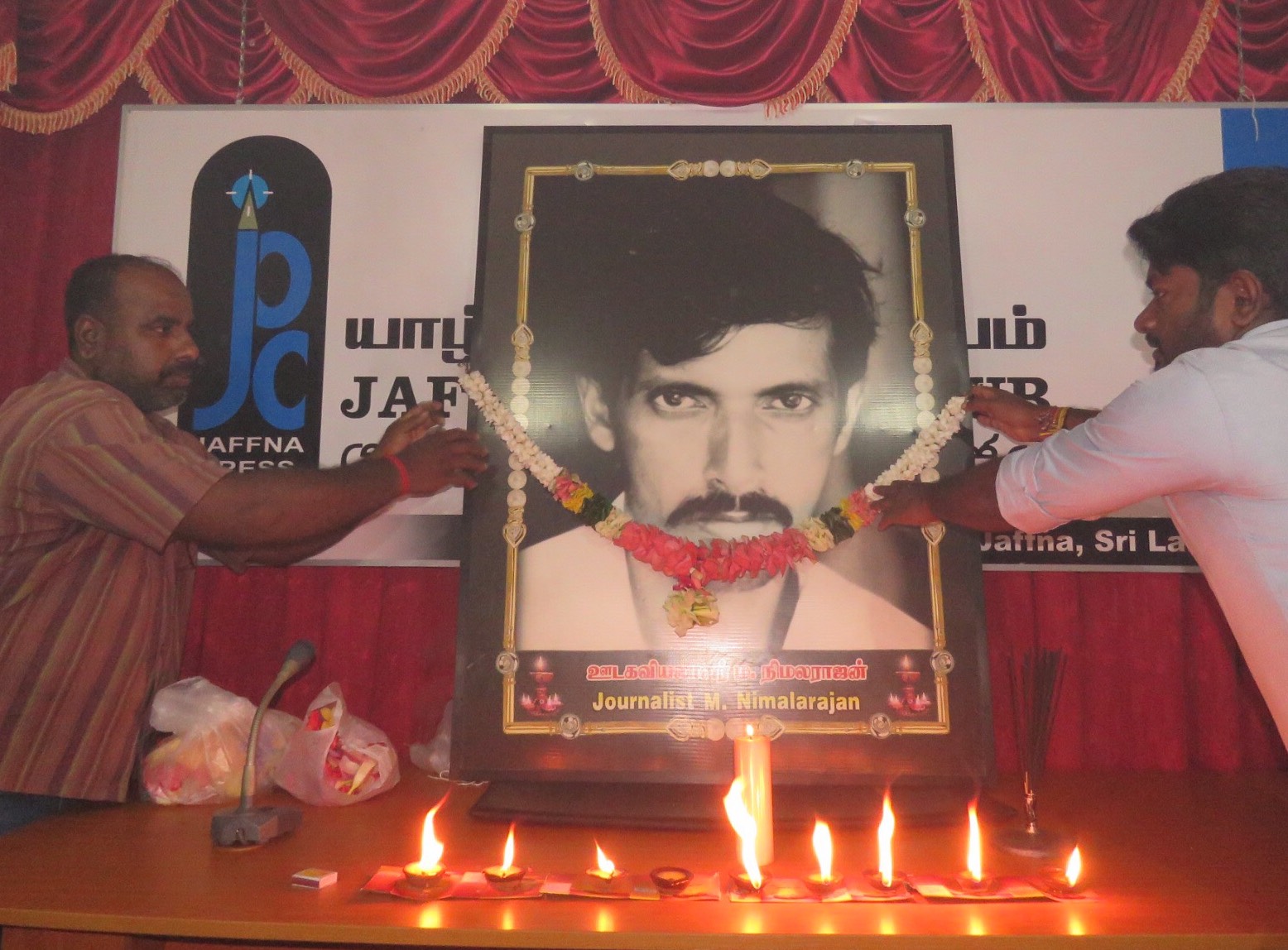
The arrest relates to the murder of journalist Mylvaganam Nimalarajan who was killed in 2000.

Mr Nimalarajan’s family have been informed of this development, and they are being supported by specialist officers.

Enquiries continue, and officers are eager to hear from anyone who may have information that could assist the investigation – particularly members of the Sri Lankan community who emigrated to, and now reside in, the UK.

Commander Richard Smith, who leads the Met’s Counter Terrorism Command, said: “This is a significant update in what is a sensitive, complex investigation.

“There will still be people who may have information, particularly in relation to the murder of Mr Nimalarajan, and we would urge those people to come forward and help achieve justice for Mr Nimalarajan’s family.”

The Met Police War Crimes Unit sits within the Met Police Counter Terrorism Command. It is committed to investigating and bringing to justice anyone who may fall under the UK’s jurisdiction and who is suspected of committing war crimes, crimes against humanity, genocide or torture anywhere in the world. This approach directly supports the UK Government’s ‘no safe haven’ policy.

Such investigations often require enquiries to be made overseas and evidence to be secured from abroad, so they can be very complex and lengthy.

All allegations of war crimes referred to the War Crimes Team are considered, assessed and dealt with in line with the War Crimes/Crimes Against Humanity referral guidelines, which are jointly agreed with the Crown Prosecution Service (CPS).

The War Crimes Team is part of the UK War Crimes Network, which is comprised of a number of key bodies, including the Foreign, Commonwealth and Development Office, Crown Prosecution Service and other government and non-government organisations, all working together to ensure the UK is not a safe haven for war criminals.