Basil Rajapaksa wants local govt polls, Ministers shoot it down amidst crisis

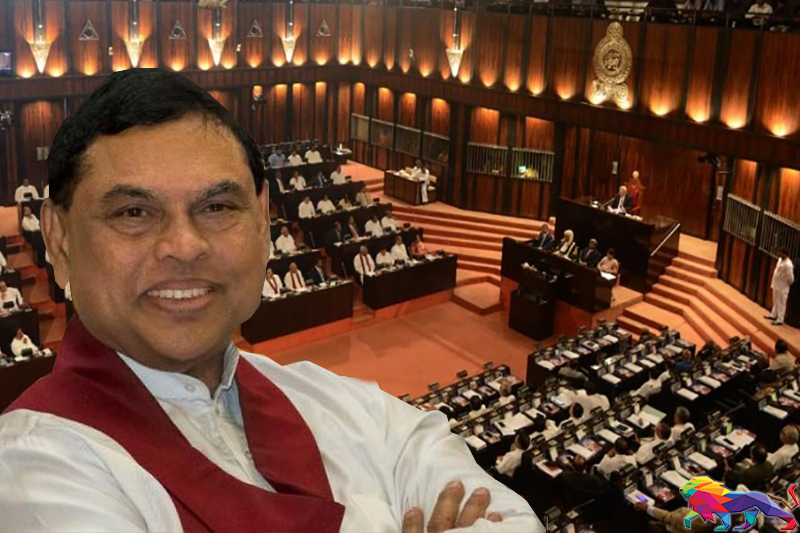
Finance Minister Basil Rajapaksa who has strengthened his power in the present government since taking over his new portfolio has called for local government elections to be held first so that the SLPP could strengthen itself at grassroot level, but his request had been shot down by other senior ministers who said the government is not ready for an election amidst burning issues.

The Daily Mirror learns that amidst talks that a parliamentary election may be held at the end of this year or next year, Basil had said that it was the local government elections that should be held first as this would strengthen the SLPP’S base.

For similar articles, join our Telegram channel for the latest updates. – click here

However senior SLPP ministers who have acknowledged that the country is in turmoil with the forex crisis, high cost of living and the fuel issue say the country is not ready to face any election and this might end by the SLPP weakening itself further.

In fact even the opposition parties including a majority in the SJB have voiced concerns within the parties that they were not ready for an election anytime soon due to uncertainties and splits within political parties, the Daily Mirror learns.

Prime Minister Mahinda Rajapaksa attending the recently held SLPP convention had challenged the opposition to an election to which some

SJB members had vaguely accepted, but senior political sources in the government and opposition said these were mere words and political threats as neither parties were ready for an election anytime soon with some ruling out any election to be held this year.

“If at all the local government elections maybe held next year as this year it seems impossible. The people also need to be ready to vote,” senior political sources said.

In fact the struggles of the parties are widening with new alliances forming from next month within the opposition and government signaling that all major political parties including SLPP, SLFP and SJB were struggling to remain intact.

Assaults on journalists have a fairly long history in Sri Lanka

By Sugeeswara Senadhira
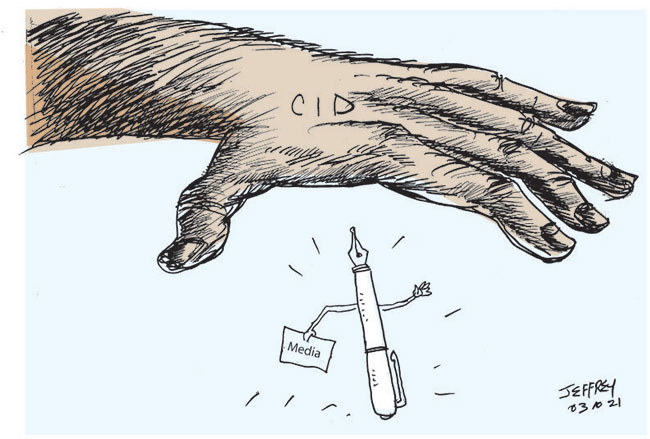
Last week a cowardly attack on a leading media personality took place shocking all who believe in freedom of expression, media rights and democracy. The residence of Chamuditha Samarawickrema came under a foul attack by at least three persons who reportedly came in a white car.

Chamuditha told the media that he was unable to name any party as there were scores of persons angered by his reports for Hiru television as well as the popular social media platform ‘Truth with Chamuditha.’

He added that the status of the police investigation into an earlier death threat received by him remained unclear.

“Although, the Police recorded my statement, I really do not know the outcome of the investigation.” Displaying a desire to bring the culprits to book, the Hiru TV offered a reward of Rs. 500,000 to anyone providing information leading to the arrest of those responsible for the attack.

Attempts to control the press in Sri Lanka are not new. During the colonial era, in 1857, prohibitions on publications were enacted in India and Ceylon in the wake of the mutiny of Indian soldiers in the British Indian Army. In the recent past horrendous attacks on media personalities took place during insurgencies spearheaded by the Janatha Vimukthi Peramuna (JVP) and the Tamil Tigers (LTTE).

Disloyalty results in death

The LTTE leadership ordered the assassination of any media persons who exposed the cruelties of the organization and their young cadres carried out the orders. The Human Rights Watch, in its publication, ‘A Culture of Fear: LTTE Intimidation, Threats and Violence’, stated that since the beginning of the ceasefire in 2002, over 200 people, mostly Tamil, have been killed apparently for political reasons, mainly at the hands of the LTTE. Those killed included teachers, journalists, individuals linked with opposition parties, and others perceived as critical of the LTTE. Some apparently have been killed solely for working in educational, social or religious program funded by the Sri Lanka government. For many Tamils in the West with family members remaining in Sri Lanka, the message was that any act of disloyalty may result in death.

Among the media persons killed by the Tigers are Chelvy Thiyagarajah, founder of a feminist journal called Tholi. She had won the prestigious International PEN award in 1992; Balanadaraja Iyer, Sri Lankan Tamil activist, writer and poet; Kethesh Loganathan, former Editorial Consultant of the Weekend Express, Tamil political activist, Human Rights advocate and Deputy Secretary General of the Secretariat for Coordinating the Peace Process (SCOPP); Rajani Thiranagama, University Lecturer, Author, Tamil human rights activist and feminist and Relangi Selvarajah, Tamil broadcaster and actress.

The JVP too was also responsible for many killings of media personnel. Top media personnel killed by the JVP include Thevis Guruge, Chairman of Sri Lanka Broadcasting Corporation (SLBC); Premakeerthi de Alwis, lyricist and radio and television announcer at SLBC; Kulasiri Amaratunge, News Editor of Sri Lanka Rupavahini Corporation (SLRC); Sagarika Gomes, announcer at SLRC and Jinasena Kasthriarachchi, newspaper correspondent.

The 1989-1991 period saw a rise in the killing of media personnel. While the above assassinations were conducted by armed insurgents, there were several murders for which State agencies or politicians were blamed. The most prominent of one, which came under international limelight was the murder of Richard de Zoysa, journalist, actor, television personality and correspondent for Inter Press Service.

On 18 February 1990 Richard de Zoysa was abducted and murdered by an armed gang, believed to be a State sponsored death squad. He was 32 at the time of his death. Richard was posthumously awarded the 1990 IPS International Achievement Award and the IPS Award for Excellence in Independent Journalism was renamed in his honour.

Media intimidation

Richard’s gruesome killing spurred his mother, Dr. Manorani Saravanamuttu, to launch a campaign for justice for the ‘disappeared’ on behalf of the mothers who had lost their sons, wives who had lost their husbands and sisters who had lost their brothers. Dr. Saravanamuttu’s relentless campaign attracted international attention towards the plight of victims who disappeared without a trace during the 1988-90 terror period. In 1996, she was awarded the ‘Weera Mathru’ title.

The intimidation of media persons continued and some of them had to keep changing their residences for safety. Jiffry Yoonus, popular cartoonist of the Communist Party newspaper, ‘Aththa’ edited by the firebrand B.A. Siriwardena was attacked in 1992. His popular cartoons usually triggered controversy among politicians of the day. But despite harassment and intimidation, he continued his work undeterred for over 50 years. Yoonus described the most harrowing experience faced by him in an interview to ‘Illustrating Asia’ a book edited by American author John Lent in 2001.

“One day in August 1992, three vehicles with about 20 thugs came to my house. A minister’s bodyguard shoved a pistol into my mouth, broke a tooth, and then pointed the gun at my head. He threatened to kill me in front of my wife if I did more cartoons against His Excellency (President Ranasinghe Premadasa). The next day they returned, smashed up my furniture and stabbed me. At the hospital, doctors put 16 stitches to treat the wounds,” Yoonus said.

After this incident, Yoonus vacated his house for safety and lived in a small room in the ‘Aththa’ office building on Cotta Road, Borella.

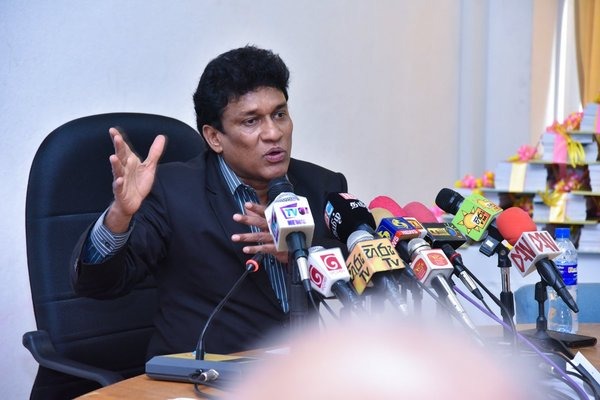
Last week’s attack on Chamuditha’s residence was condemned by Media Minister Dullas Alahapperuma. “This incident only reveals the pathetic nature of a pathetic faction in society. We condemn this attack as it was an assault on the media as well. The government is committed to exposing the criminals who launched this heinous attack who may now be in hiding. As a responsible politician, I am of the view that the four thugs involved in the attack on Chamuditha’s house must be exposed before long,” he stressed.

Alahapperuma, who has always been a stout defender of media freedom, has assured a transparent investigation and said: “It is my responsibility as the Mass Media Minister to create an environment of media freedom.”

Those who believe in democratic values await a fair and transparent probe as promised.

Scotland training to continue with Sri Lankan instructors

The Police Scotland officials who had come to Sri Lanka to train Police officers have left in the wake of the Covid-19 pandemic, but the relevant modules will be covered by local instructors, according to the Police Media Unit.

The Sri Lanka Police recently stated that bilateral discussions were ongoing to resume training which had been temporarily halted due to the Covid-19 pandemic.

Accordingly, when contacted by The Morning yesterday to inquire into the progress of the rPoliceelevant training programmes, an official of the Police Media Unit said that the Police Scotland officials who had come to train local Police officers have left the country due to the Covid-19 pandemic.

“The Police Scotland officials have left Sri Lanka. However, the relevant training modules are being covered at Police training schools by local instructors,” he added.

Despite the Chief Constable of Police Scotland being quoted in the Scottish media stating that Police Scotland has stopped training officers of the Sri Lanka Police over human rights-related concerns, the Sri Lanka Police has denied this, stating that bilateral discussions are ongoing to resume training which had been temporarily halted due to the prevalent Covid-19 pandemic situation.

According to Scotland’s The Sunday Post, the demand for a Parliamentary inquiry into the services and international clients of Police Scotland came after Police Scotland Chief Constable Iain Livingstone confirmed that a controversial Sri Lankan training contract would end. The announcement had come after concerns of a leading human rights lawyer, a United Nations (UN) rapporteur, and the testimony of torture victims who had allegedly been raped, beaten, and asphyxiated by the Sri Lankan Police and security forces.

They accused Police Scotland of being naïve in continuing to train Sri Lankan officers despite damning UN reports into human rights abuses in the country. Campaigners claimed that the national force was giving credibility to an administration linked to violence, torture, and disappearances.

However, when contacted at that time, Police Media Spokesman and Senior Superintendent of Police Nihal Thalduwa claimed that the reports that the training given by the Scottish Police to the Sri Lankan Police officers had been stopped were untrue.

“Certain reports that the Scottish Police has halted training programmes for the Sri Lanka Police Department officers are erroneous. We have not been notified of such by the Scottish authorities,” he added.

Thalduwa said that even though such a halt has not taken place due to concerns over the human rights record, the Covid-19 pandemic has resulted in a halt of not only the Scottish training, but many other training programmes. He added that due to the Covid-19 pandemic situation, Sri Lankan Police officers have not left for Scotland since 2020.

Posted in Uncategorized

Mano Ganesan to take Indian Tamils’ issues to Modi

Finalising a document with the political aspirations of Tamils of Indian origin in Sri Lanka, Tamil Progressive Alliance (TPA) Leader and Samagi Jana Balawegeya (SJB) Opposition Parliamentarian Mano Ganesan said that the said document will be first handed over to President Gotabaya Rajapaksa and then sent to Indian Prime Minister Narendra Modi.

“Towards mainstreaming as full citizens in the Sri Lankan polity, the TPA and civil activists have finalised a document with the political aspirations of the Tamil people of Indian origin in Sri Lanka (Malayaha Thamils). The document would be submitted to all stakeholders,” Ganesan said in a Tweet yesterday.

In a statement to the media, Ganesan said: “The political, cultural, economic, and social spheres of our people should be brought into the Sri Lankan political and administrative structure. There are areas where large gaps remain where our people are sidelined, discriminated against, ignored, and disregarded in the national mainstream. This regretful reality should change. We will work with all parties including the Government to achieve our community’s Sri Lankan goal.”

Adding that the document compiles grievances and remedy-related appeals, Ganesan said that it will be submitted to all stakeholders, beginning with President Gotabaya Rajapaksa.

“Thereafter, we will submit it to Modi, as India is the signatory to the first three pacts entered into between the Leaders of Sri Lanka and India in 1954, 1964, and1974, which decided our lives. Further, we will take it up with the Government of the UK, which we believe has a large share in the set of obligations towards Indian-origin Tamil Sri Lankans.”

Furthermore, he said that the TPA will conduct talks with Opposition and Samagi Jana Balawegaya (SJB) Leader Sajith Premadasa, and plans to visit Tamil Nadu to meet its Chief Minister (CM) M.K. Stalin and other political parties.

Meanwhile, seven other Tamil political parties, led by the TNA wrote to Modi last month, requesting him to urge the Government of Sri Lanka to fully implement the 13th Amendment to the Constitution. The TNA further wrote to Stalin last week, where they requested direct engagement with Tamil Nadu in order to ensure that a new constitution in Sri Lanka would not affect the goal of the devolution of power to the Northern and Eastern Provinces.

Sri Lanka reports 31 Covid-19 deaths on Tuesday, toll rises to 16,055

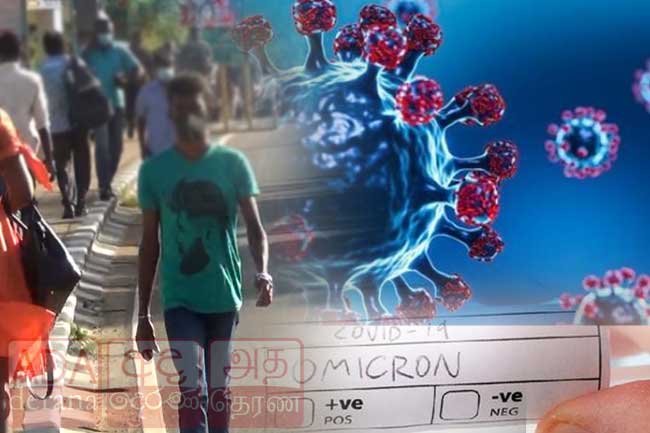
Sri Lanka Tuesday reported another 31 deaths due to COVID-19 after the figures were confirmed by the Director General of Health Services on Monday, February 21.

Among the deaths reported today, 19 are of males and 12 of females.

While 24 deaths are of elderly people in the 60 years and above age group, five people in the 30-59 years age group and two people below 30 years of age have also succumbed to the disease.

According to the data reported by the Epidemiology Unit, the total deaths due to Covid-19 since the pandemic began has now risen to 16,055.

Posted in Uncategorized

Security, defense cooperation key component of Pakistan-Sri Lanka relations: PM Imran Khan

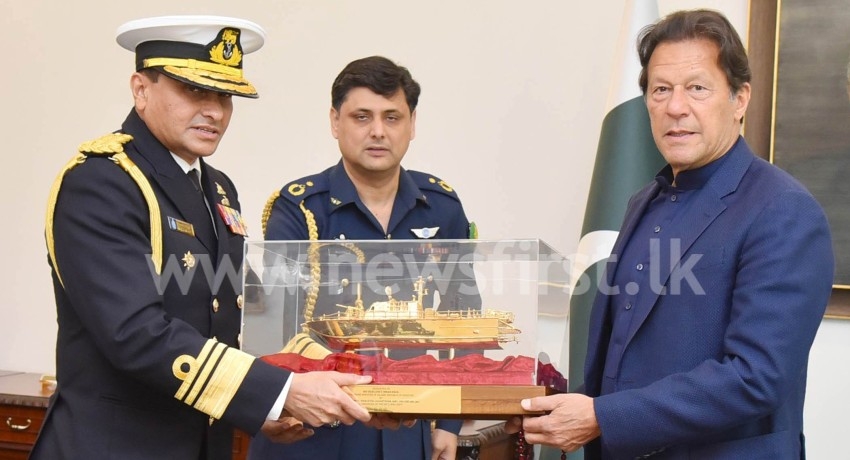
Vice Admiral Nishantha Ulugetenne, Commander of the Sri Lanka Navy, called on Pakistani Prime Minister Imran Khan on Tuesday (22).

The prime minister stated that Pakistan attaches immense importance to its relations with Sri Lanka as a reliable friend and partner.

Fondly recalling his visit to Sri Lanka in February 2021, the prime minister reaffirmed the strong fraternal bonds between the two countries and Pakistan’s desire to comprehensively upgrade bilateral relations in all fields.

Imran Khan added that security and defense cooperation had been a key component of Pakistan-Sri Lanka relations and a factor of peace and stability in the region.

He said that he looked forward to the visit of Sri Lankan leadership to Pakistan.

Vice Admiral Nishantha Ulugetenne underlined the close cooperative ties between the two countries and expressed gratitude for Pakistan’s support at international and regional fora. He reaffirmed the commitment to work together for the promotion of shared goals.

Posted in Uncategorized

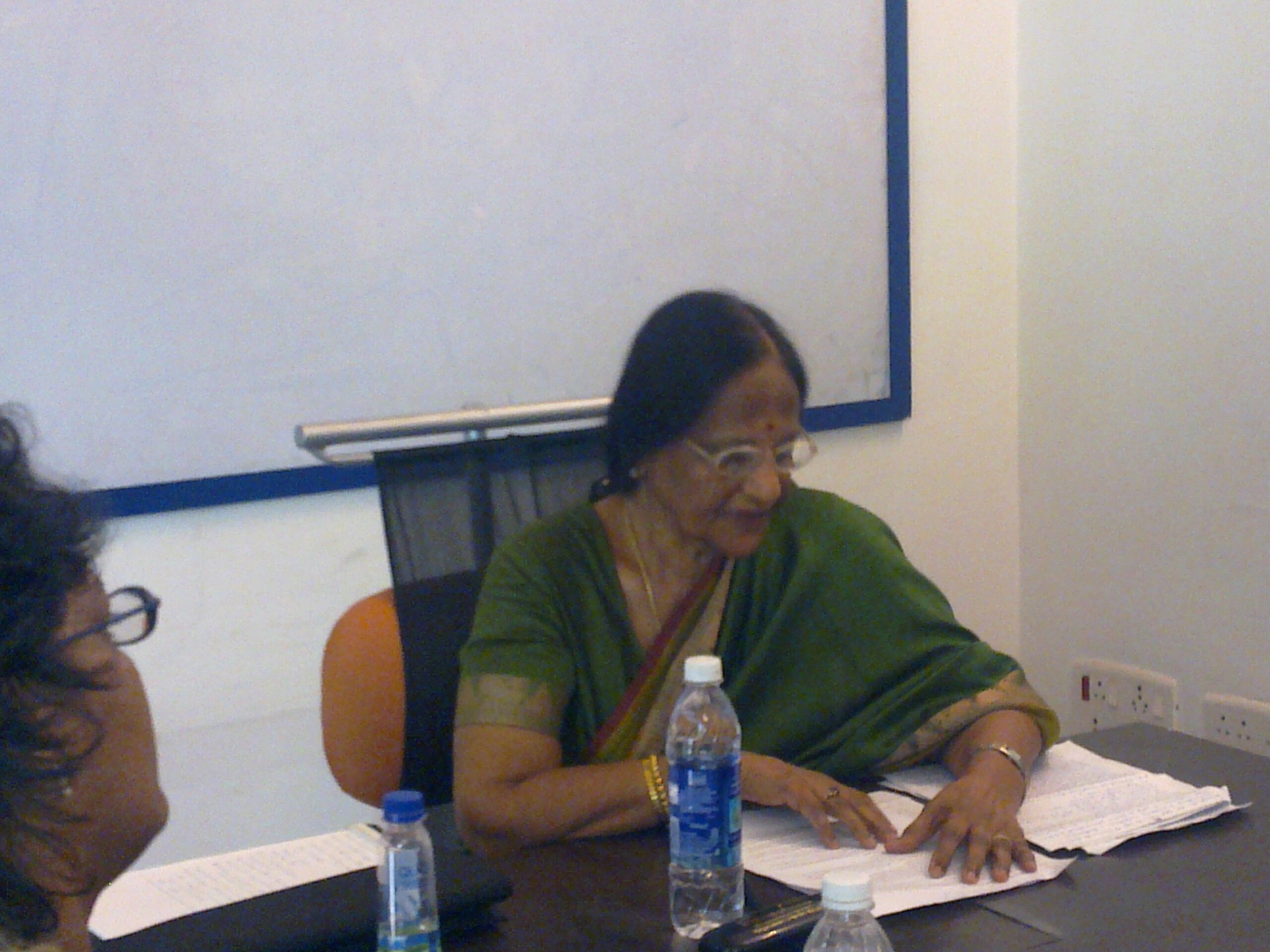
The 13th Amendment and the Tamil Polity – A pragmatic approach-Dr Nirmala Chandrahasan

There is much speculation in the Tamil political circles as to the usefulness or otherwise of the 13th Amendment to the Constitution and whether the Provincial Council system set up under its aegis gives a measure of power sharing or devolution of powers to the Tamil speaking provinces, or whether it is an ineffective institution which blocks out any greater devolution under the exercise of internal self- determination. This debate has been sparked by the decision of Tamil speaking parties including the TNA, to send a letter to the Prime minister of India Shri Narendra Mody, requesting him to use his good offices to induce the Government of Sri Lanka to implement the 13th Amendment fully, in the context that the 13th Amendment arose out of the provisions of the Indo -Sri Lanka Peace Accord of July 1987, to which treaty India and Sir Lanka are signatories. The letter was duly signed by six Tamil party leaders and handed over to the Indian high Commissioner, triggering some protests by those opposing the 13th Amendment. This debate takes on even greater urgency in the context of the impending new constitutional proposals of the Experts Committee appointed by the Gotabaya Government to be tabled in Parliament shortly.

In order to determine which is the better view we have to take a look at the provisions of the 13th Amendment and the workings of the Provincial Councils set up under them, which have been in operation from 1988 onwards in most parts of the Country. Although the PCs as originally envisaged were intended to be set up for the amalgamated Northern and Eastern provinces, to give expression to the long standing demand of the Tamil speaking people since independence, for devolution and power sharing within a Federal framework, it was extended to the Sinhala majority provinces as well although there had been no demand for them in these provinces.

The first Provincial Council elections were held in April 1988 for the North Central, North Western, Sabragamuva and Uva provinces, and subsequently for the other provinces. In September 1988 the Northern and Eastern provinces were made one administrative unit in accordance with the provisions of the Indo -Sri Lanka Treaty, and in November 1988 elections were held for the North East Provincial Council. In 1990 the PC was dissolved. Thereafter the North East Province was directly administered by the Central government. During the civil war it was not possible to hold PC elections In the northern and eastern parts of the Country. In 2006 pursuant to a Court decision the two provinces were separated.

It was only in May 2008 that the Eastern province, Provincial Council election was held. Subsequently after the termination of the war in the north, the Northern province, Provincial Council election was held on 21st September 2013. We can see that this institution has been operating over a long period of time but during this long period certain sections of the 13th Amendment dealing with the powers conferred on the Provincial Councils, set out in the 3 Appendixes to the 9th Schedule of List 1 Provincial Council List, are yet to be activated and are in abeyance. These Appendixes deal with the following subjects; Appendix 1, law and order which has to do mainly with Police powers and institution of a Provincial Division of the Police Force alongside the National Division of the Force. Appendix 11 Land and land settlement, and Appendix 111 Education.

Apart from the above, the Provincial Council exercises powers in respect of the subjects assigned to it, over which it has both legislative and executive powers. The subjects assigned to the Province and set out in the provincial List, List 1 include interalia Provincial housing and construction, Agriculture and Agrarian services ,Rural development ,health, land, Irrigation, Roads bridges and ferries within the Province, Planning,and Plan implementation of Provincial economic plans ,Educational services, and supervision and administration of Local Government Authorities. The List even includes Ancient and historical monuments other than those declared to be of national importance. I mention this in the context of the Archaeological explorations being made in the northern and eastern provinces by the recently appointed task force on Archeology without any representation from the Tamil and Muslim communities.

There is also a concurrent List , List 111, over which both the Provincial Council and the Centre can exercise powers, these include planning and appraisal of plan implementation strategies at the provincial level, education and educational services, higher education, agriculture and agrarian services, health, irrigation, Tourism etc. In these areas there can be overlapping powers and hence disputes. The Provincial Council can pass statutes and exercise executive powers in respect of the subjects set out in the Provincial and Concurrent Lists. These powers are largely based on the powers conferred on the States in the Indian Constitution part VI. The States in India are running efficiently and providing the people with the services that they need.

Tamil Nadu for example is recognized as having a very efficient administration presently under the Chief -Minister M.K Stalin. The question has to be posed as to why the Provincial Council system in Sri Lanka is generally regarded as a white elephant and as not effective in providing services to the people. For this we must examine the road blocks in the system and make the necessary adjustments, rather than just dismantling the entire system, and throwing the baby away with the bath water so to speak.

An appraisal of the workings show that most of the stumbling blocks to the smooth functioning of the Provincial Councils are as a result of the provisions of the Provincial Councils Act no 42 of 1987, which was passed alongside the 13th Amendment. Under this Act the Governor is given powers over the finances of the PCs and is given control of the Provincial Public service as well as the Provincial Public Service commission. The 13th Amendment provides that the executive power of the Provincial Council is vested in the Governor and he acts through the Board of ministers or through members of the provincial public service. The Chief Minister and the Board of Ministers aid and advise the Governor in the exercise of his functions and the Governor Shall act in accordance with the advice except where he is required under the Constitution to exercise his discretion.

In the Indian Constitution similarly in respect of the States ,the executive power is vested in the Governor but as in the Westminster scheme of governance the Governor acts on the advice of the Chief Ministers and is a nominal head .On the other hand in Sri Lanka we find many instances of Governors exercising these powers like executive heads and not as nominal heads, particularly in the Tamil majority provinces and not so much in the Sinhalese majority provinces.

The Governors stranglehold over the functioning of the PCs is most clearly demonstrated in his power over the finances of the province. To run the PCs money is required and this is where the Councils have been most hamstrung as the Provincial Councils Act gives the Governor controlling power over the finances of the Province. The custody of the Provincial Fund is with the Governor. The PC cannot pass any statute imposing or abolishing taxes without the consent of the Governor. More over the constitutional framework severely limits the revenue raising capacity of the PCS, as pointed out in the Report of the Parliamentary subcommittee on Centre- Periphery relations of November 2016. Hence the PCs have to depend largely on Central grants for their funds.

Another area which needs to be redesigned is the Administrative system. To run the Provincial Councils effectively the Council requires control not only over its funds but also an effective administrative system and defined areas of competence. At present the District Secretary and the Divisional Secretary as well as the Grama Niladaris come under the Central Government These officers perform administrative functions within the territory of the province but without any control from the provincial administration. Also although the Local Authorities are under the supervisory control of the Provincial Councils as per the devolved List, most of the power at the local level remains with the Central Government.

For efficient administration of the province there has to be defined areas of competence. But in effect the Centre has been encroaching on the areas assigned to the provincial administration. The reserved List of the Centre List 11, starts with the Rubric” National policy on all subjects”. This has enabled the Centre to take over subjects which it designates as National. To remedy this, what is National policy or National standards should be laid down through a participatory process with the involvement of the Provinces culminating in framework legislation passed by Parliament to which both Centre and Provinces should adhere. This has been proposed in the Report of the Experts Committee on the Constitution,2006. Another matter which has to be amended is the Concurrent list. Here too it has been recommended that the List be eliminated and the relevant subjects be divided between the Centre and the Province, so that they each have defined areas.

In an article of this nature it is not possible to do a more in depth study but I have outlined what are the important issues to be addressed if the Provincial Councils are to provide meaningful Devolution. Some of the areas which need amendment are as follows. The Governors role has so far tended to be an obstruction to the functioning of the PCs. The Governor should continue as a nominal head and leave the running of PC to the elected representatives. This is also a recommendation of the Parliamentary subcommittee in its 2016 report.

Hence the Governor’s powers have to be pruned and the Provincial Councils Act suitably amended. The revenue raising capacity of the PCs must be enhanced . It is suggested that they be given the power to obtain loans from foreign sources or at least have the power to administer projects financed by foreign aid. Another important issue is to put in place an administrative structure that can carry out the functions of the Provincial Council in services delivery to the people and for this the administration has to be redesigned so as to bring the District Secretary , the Divisional Secretary and the Grama Niladaris, under the Provincial administration while they still carry out agency services for the Centre. Furthermore although local Authorities are under the Authority of the PC, as per the devolved List, this provision is being undermined by the Centre using the Urban Development Authority (UDA), Mahaweli Authority and other Central bodies operating within the Province. Hence it must be mandated that such bodies operate within the Province only with the consent and in conjunction with the Provincial and Local Government Authorities. As for the powers in respect of Law and Order and Police powers contained in Appendix 1 of List 1 the 9th schedule , they could be transferred to those PCs which request them as for example in the case of the Northern Ireland Assembly in the UK , where these powers were initially with the Centre, but there was a provision that allowed them to be released on request. In 2010 they were transferred to the Assembly under the Hillsborough Agreement. Until such time as Appendix 1, comes to be activated other provisions can be put in place, such as a policy of recruiting a percentage of the Police cadre stationed in the northern and eastern provinces from these provinces and mandate that they have an O level pass in the Tamil language so that they could operate efficiently in the Tamil speaking areas. I would suggest some similar provision in respect of some areas in the Central provinces so that the upcountry Malayaha Tamils, are also benefited. It is submitted that the Appendix 11 on land be fully implemented as it is essential for the land security of these provinces that the utilization of state land as well as alienation of such land under Presidential order be done in consultation with, or advise of the Provincial Council . The provision in Appendix 11 on the constitution of a National Land Commission with members being appointed from all 3 communities should be carried out forthwith.

I would suggest that the Tamil parties take up the proposed reforms with the Government of Sri Lanka in a negotiated process. As the Government of India was the other party to the Indo Sri Lanka Treaty, India can legitimately demand that the obligations undertaken in the treaty be carried out and the provisions of 13 A be implemented fully so that meaningful devolution is assured to the Tamil speaking people whom the Treaty specifically denotes as the historical inhabitants of the northern and eastern provinces of Sri Lanka. In line with the UNHCR resolution the Sri Lankan Government should also hold the Provincial Council elections so that these institutions can be functioning and not in abeyance as they have been for some years. The Provincial Councils in the South will also benefit from the reforms proposed as it will provide the citizens of the entire Country a stream lined system which is a service provider to the people. I note that the President in his Budget speech has advised the Tamil parties to look to their peoples’ needs and concentrate on economic development of their areas. This can best be done when there is true democracy and the people are taken into the process of consultation as to the strategies for economic development and this is best done at the local level through the Provincial Councils, and local Government Authorities, rather than through bureaucrats sitting in Colombo who have no knowledge of the local conditions or the needs of the people. In my view the Province remains the best unit of devolution at present to serve the needs of the Tamil speaking people. It gives them some measure of autonomy in their traditional areas of inhabitancy. Similarly in the United kingdom which is a Unitary State, Scotland, Wales and Northern Ireland which are ethnically distinct have their own Legislative Assemblies, in the case of Scotland it is called a Parliament, and exercise similar powers to those set out in the 13th Amendment.

I would like to point out that all the major changes suggested in this article respecting the Governors powers, Financing of the Provincial Councils and the Re-designing of the Administrative system in the Provinces have been recommended in the following Reports: Report of the Experts Committee advising the APRC on Constitutional matters and resolution of the National Question 2006, the Report of the APRC( All party Representative Committee) on a new Home grown Constitution 2010, Report of the Parliamentary sub- committee on Centre -Periphery relations 2016 , presented to the Steering Committee of the Constitutional Assembly which was engaged in producing a new Constitution during the tenure of the previous government. In the circumstances the proposed new Constitution could incorporate these features and there is no need to reinvent the wheel. I would submit that the Provincial Council system can be an efficient and successful system if all the short comings referred to above are eliminated and the necessary amendments made. These changes will not require any major constitutional procedures, and can be accomplished by legislation in Parliament with a simple majority ,and the administrative changes by Presidential gazette notification under the provisions of the 13th Amendment itself.

*The writer was a member of the Experts Committee 2006, and a signatory to the Majority Report of this Committee.

Posted in Uncategorized

Indian AC rail coach has a successful trial run in Sri Lanka

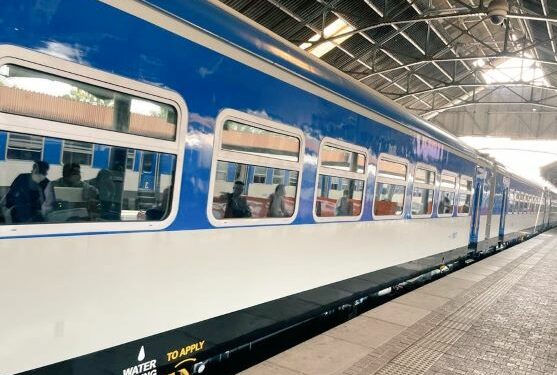
Officials from the High Commission of India accompanied by representatives from the Indian railway organization RITES and the Sri Lanka Railways travelled aboard an air-conditioned train [AC Diesel Multiple Unit (DMU)] on its successful trial run in Sri Lanka on 18 February 2022.

This AC DMU had been supplied under a US$ 318 million Line of Credit (LoC) from India. The first AC DMU supplied under this LoC was put into operation on 09 January 2022.

The US$ 318 million LoC was finalized in 2014-15 for the supply of railway rolling stock to Sri Lanka, upgrading railway tracks and other mutually agreed projects in accordance with the request and requirements of the Government of Sri Lanka.

Since then, high-quality railway coaches and AC DMUs supplied from India have helped strengthen the railway infrastructure as well as travel experience in Sri Lanka. Various other projects under this LoC including the upgrading of railway tracks are at different stages of implementation.

Lines of Credit from India have contributed to the upgrading of the railway line from Colombo to Matara, track laying on sectors such as Omanthai-Pallai; Madhu Church-Tallaimannar; Medawachchiya-Madhu; and Pallai-Kankesanthurai, installing signalling systems, and supply of rolling stock to Sri Lanka railways.

India looks forward to continue mutually beneficial cooperation in the transport sector, including in railways where India’s world-class capabilities and assistance have contributed significantly to the development of railway infrastructure and facilities, job creation, economic growth, enhanced connectivity and passenger comfort and safety in Sri Lanka.

Posted in Uncategorized

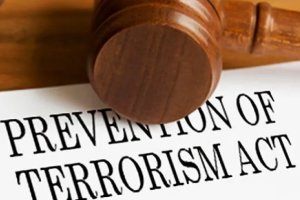
PTA: Repeal or Amend?

The former Secretary General of the UN, Kofi Annan, emphasized that terrorism strikes at the very heart of everything the UN stood for and it was a global threat to democracy, the rule of law, human rights and stability and therefore required a global response. From a global perspective, it can be narrowed down to country-specific situations.

His concerns are ours too and thus we need to legally manage counterterrorism domestically. However, such laws should not annihilate the core values in Kofi Annan’s statement, i.e., threatening democracy, rule of law, human rights and stability. We have the Prevention of Terrorism Act (PTA), which is criticized as draconian, violating human rights, anti-rule of law and undemocratic.

Solution

The best solution for the criticism was considered repealing the PTA. Successive governments thought it should be amended and not repealed. Among other reasons for repeal was because the PTA was used to harass political opponents. It was true too. The demand for repeal is mostly from human rights activists, media, foreign bilateral and multilateral organizations. The minority community groups were at the forefront demanding repeal. This highlighted it as a minority requirement. Therefore, creating a majority view against it was easy. Since the law was anti-terrorist, anyone demanding repeal was tagged pro-terrorist.

I observe this issue cautiously since the economic fallout of repealing or not repealing would affect economic performances because GSP+ is tagged to the PTA. We have experienced the negative economic effects of GSP+ during Mahinda Rajapaksa’s presidency, later cleared during the Yahapalana regime. Now we are in the throes of crisis again.

Constitutional obligations

Violation of fundamental rights was complained of on operationalizing PTA. However, even ignoring international pressures, we should respect our citizens’ fundamental rights. Our Constitution has enshrined protection of rights by Article 10 the freedom of thought, Article 11 freedom from torture, Article 12 equality and Article 13 arbitrary arrest, detention and punishment. These were the very violations pinpointed about by PTA.

Mixed political responses

As usual, we hear mixed responses from government authorities on the issue. Prof. G.L .Pieris said that the PTA would not be repealed due to the continuing security needs. True, security is important. When the amendments were presented, Parliamentarian M.A. Sumanthiran questioned him why amendments are made when the Justice Minister has announced the PTA would be repealed totally and a Counter-Terrorism Act would be introduced. Minister Peiris responded that the Amendment Bill is presented based on Standing Orders and anyone opposing could move the Supreme Court. Very slippery!

Ray of hope

While repealing is rejected by Minister Pieris, a ray of hope shone when the Human Rights Commission of Sri Lanka (HRCSL) stated that notwithstanding the proposed amendments, it advocates the abolition of the PTA. Since the President has spoken supportive of human rights, the HRCSL’s response could be reinforcement of such attractive political rhetoric.

The HRCSL supports investigating terrorism under the general laws with necessary amendments and redefining terrorism. It states that it is not required to exclude the application of the Evidence Ordinance for terrorist offenses. It proposes modifying the Penal Code, the Code of Criminal Procedure Code, the Judicature Act and the Bail Act.

If the HRCSL genuinely and independently deviated from Minister Pieris’s standpoint, it ought to create trepidation. I remember previous HRCSL Chairperson Dr. Deepika Udagama reporting to the UN Committee Against Torture, which created consternation and criticisms at the Presidential Secretariat. As an Advisor to the President, I intervened for pacification. Let’s hope current chairperson Justice Rohini Marasinghe’s positive stance will not result in similar trepidation and push pacifiers to indulge in pacification.

Another HRCSL document from Dr. Udagama was the proposal submitted to the Committee on Constitutional Reform wherein a draft Charter of Rights was incorporated. It carried constitutional obligations. Knowingly or not, the incumbent HRCSL also has endorsed these contents. Minister Pieris’s hardnosed approach shows that the required prior consultations with the HRCSL have not been tapped, thus forcing him to submit controversial solutions to a grave problem.

UNHRC- the pathfinder?

The PTA issues were addressed by the UN Human Rights Council resolutions from Yahapalanaya days and latest in Resolution 46/1. Criticisms are regarding arrest, torture, custody, movement from locations for interrogation and indicting. These have been studied also by others. I quote the HRCSL Study on Prisons. “Despite the directives and safeguards in law, without an oversight or accountability mechanism in place for arresting authorities, or effective judicial oversight, protecting the wellbeing of detainees arrested under PTA will not be possible.”

Sad admittance, endorsing the critics of PTA. One may question why to bother about the well-being of the “anti-state terrorists” arrested under PTA. It is because a person is presumed innocent until proven guilty. [Constitution Article 13(5)].

The study says, “As this chapter will illustrate, violence is used in prisons as a ritual of humiliation and degradation, to subjugate and control the person, i.e., it is used to construct ‘regimes of power and domination’ in which the state officials have the upper hand, and the individual is most often rendered powerless…Violence, when used in this manner, becomes ‘casual yet endemic’, i.e., it becomes so normalized that it becomes entrenched and its use will not be questioned nor even elicit surprise either from within the system, the state, or sometimes even the public.

The report goes into detail about violence and torture with witnesses’ statements. If it is the way for ordinary prisoners, one could imagine the manner how the anti-state terror suspects are treated.

I quote from the Executive Summary where the specific focus is on PTA prisoners.

PTA curtails certain rights and freedoms guaranteed by the Constitution and by international human rights norms.
PTA prisoners are at risk of suffering violations of rights to enjoy due process safeguards, impacted by a prolonged period in remand.
In many ways, the detention of PTA prisoners causes adverse impacts.
Suffering discrimination caused by being minorities, language barriers, anti-state consideration.
Continued risk of harassment or abuse by fellow prisoners and even Prison officers.
Consequentially all PTA prisoners prefer to be housed with other PTA prisoners.
Restrictions for access to some entitlements due to special security requirements, (e.g., medical care, clinics), and sometimes due to staff shortage, limitations of language options.
PTA prisoners’ conditions become difficult since most originate from the North and East and are held in southern prisons.
Financial difficulties for many PTA prisoners to retain legal counsel, due to stigma attached to representing them, as well delays filing indictments and the commencement of the trial.
Qualitative and quantitative data highlight the negative effects of long-term incarceration (15-20 years) of PTA inmates.
The prisoner narratives illustrate that PTA Section 7 (3) allows change of location for interrogation creating space for the continued violation of their rights, (e.g., torture, undermining protections in judicial custody, and the purpose of judicial oversight of detention.)
The role of the Judicial Medical Officer (JMO) is critical for PTA detainees, to prove that forced signed confessions under physical duress had happened. (However, the Commission claimed to have received numerous allegations of alleged collusions between Police officers and JMOs, or JMOs failing to communicate with PTA prisoners due to language barriers.)
Thus, PTA prisoners would not enjoy the right to a fair trial due to the ineffective safeguards during periods of administrative detention, which would enable forced confessions under torture to be admissible in court.
During the trial process too, PTA prisoners reported facing numerous challenges to the full enjoyment of their right to a fair trial, including long delays and the inability to understand the language of the court proceeding.
These issues are in a study by a government institution. Even if they are exaggerated, the gist should have been focused on by lawmaking legal luminaries in the Cabinet before the bill was tabled in the Parliament, especially because UN institutions and the European Union have funded this study.

When events such as a State Minister wielding a firearm and threatening PTA prisoners pass by default, criticisms and demands for safeguards increase. When a DIG was in custody related to murder, asking a terror suspect to confess with a lesser-designated policeman becomes a roaring joke.

Judicial oversight becomes a serious issue then. The demand for liberty from arrest or detention with judicial intervention on reasonable grounds must be an entitlement. When all politicians from the government and opposition try to skip custody, remand and prison through various legal means, to serve others inhumanly is discriminatory.

Special UN interventions

We are aware that in December 2021, the U.N. Special Rapporteurs and the Working Group on Enforced or Involuntary Disappearances listed prerequisites for the government to make the PTA comply with international legal standards. The advice received listed was to narrowly define terrorism to safeguard freedoms of expression, association, opinion, religion or belief. They recommended protections to prevent arbitrary deprivation of liberty, torture and enforced disappearance and suggested due process and fair trial guarantees through improved judicial oversight and access to counsel. The UN’s four Ps of counterterrorism speak of prevent, pursue, protect and prepare. It is noted such approaches are scant in the draft law.

Firstly, critics show loopholes in operations (e.g., Section 9). Secondly, anti-judicial approaches are not changed [e.g., confessions (Sections 16 and 17) provoking to study Mariadas vs. the State case record, location movement and nonacceptance of Evidence Ordinance provisions. Thirdly, the definition of terrorism remains unchanged. Fourthly, Section 2(h) of the PTA permits the arrest of any person whose speech, writings, signs, or visible representations. “causes or intends to cause the commission of acts of violence or religious, racial or communal disharmony or feelings of ill-will or hostility between different communities or racial or religious groups.” The criticism extends to some hate mongering clergy who are not pursued, tracked by authorities, while some suffer PTA stipulations discriminatorily. The recent case against Ahnaf Jazeem is an interesting case to show current trends.

General criticisms

An important change in the bill is the reduction of the maximum period of detention without trial from 18 months to 12 and permitting access to judicial review, though expensive.

If a person is unjustly detained, it will cause a severe drain on his family. Moreover, neither the PTA nor the bill offers any compensation for those wrongfully arrested or detained as required by ICCPR article 9.5, which could be a deterrent on revenging, unaccountable, investigators and officials.

Instead, the bill gives blanket immunity under Section 26 of the PTA for claims against any officer or person for any act or thing done in good faith or purported to be done in pursuance or supposed pursuance of an Order given under this Act. Unfortunately, the criticism is that this good faith is driven by political maliciousness.

The proposal to involve magistrates is positive but cannot be considered effective when one considers the workload of magistrates. The whole operation is connected to time management. Further, this power is freely available even now on representations. A question in Parliament regarding the number of magistrates’ visits to police cells in a month will prove the ineffectiveness of this provision.

The PTA (Amendment) Bill repeals the prohibition on publications and the definitions of ‘newspaper’ and ‘printing press’ are deleted, a welcome move.

Is prevention of terrorism addressed fully?

Another aspect that has not been probably considered by draftsmen and critics is how terrorism operates. The PTA and the proposed bill both focus on a suspected terrorist in custody and how to handle him until judicial review. That is why arrests without warrants, long term detention and confessions become so crucial. But does the law or the bill seriously consider terrorist operational angles that should be countered for prevention? Similarly, critics must consider the need for laws to handle terrorists.

For example, terrorism has international ramifications. Going by the UN’s Counter-Terrorism ingredients prevention from these possibilities should have been considered by the government when amending the PTA.

Having fought the LTTE that used its naval power to kill with its capacity to perform at sea, the lessons learned should have been incorporated into PTA Section 24, which speaks of naval and aerial interventions in three lines.

For example, it limits an offense committed to an act “in relation to any vessel or aircraft registered in Sri Lanka.” My experience with the LTTE was their vessels transferred arms and ammunition either sailing under other flags or sometimes without any flag. Therefore, they become non-offensive sailors, not covered under the PTA.

Cyber security has become extremely important and non-inclusion can be considered a bad miss. The draftsmen need to study the counter-terrorism law proposed by Yahapalanaya for wider enlightenment. I would have expected the transfer of innovative thinking, especially from the Ministers and Secretaries of Defense and Public Security, who possess vast military experience.

Although everyone criticized LTTE’s Kumaran Pathmanathan for investing laundered money in the LTTE armory and Sea Tigers, the PTA Act or the amendments do not touch upon money laundering connected to terrorism. Connecting money laundering laws to prevent terrorism needs endorsement in anti-terror laws. Doing such will support the UN’s counter-terrorism pillars by pursuing, protecting and preparing the relevant institutions.

Conclusion

No PTA critic says that there should not be legal elements governing preventing terrorism. The HRCSL’s view seems to be a good foundation to balance national security with constitutional rights. It supports repealing the PTA and to modify the Penal Code, Code of Criminal Procedure, Judicature Act and the Bail Act.

Concurrently, the demand for a moratorium on the PTA is proposed by some civil society activists. High Commissioner for Human Rights Michelle Bachelet also has called for an immediate moratorium on the use of the Act and a clear timeline for a comprehensive review or repeal of the PTA. Experts must study to find whether a moratorium could be accommodated by expanding the HRCSL’s propositions.

A moratorium on the usage of PTA, if decided, has to consider the plight of the affected (a) whose investigations are incomplete
(b) against whom the Attorney General is ready to indict, and
(c) those who are already indicted. The yardstick could be the weight of cases and duration of detention. Concurrently, necessary legal reviews should happen. Hence, an action plan is essential.

As long as the PTA is in force, all alleged “sins” may happen “legally”. It is painful. Blaming the police or the Attorney General or the Judiciary is unfair, in that context. Though national security is a priority, the government must not insist only on national security while negating the constitutionally provided fundamental rights. The need of the hour is to genuinely stretch the first step to balance the competing interests.


Lankan embassy goes TikTok in Beijing; but why did Chinese company fund it?

For the Sri Lankan embassy in Beijing, China, this year is special for many reasons. First, this year marks the 65th anniversary of establishing diplomatic relations with China and the 70th anniversary of the Rubber-Rice Pact.

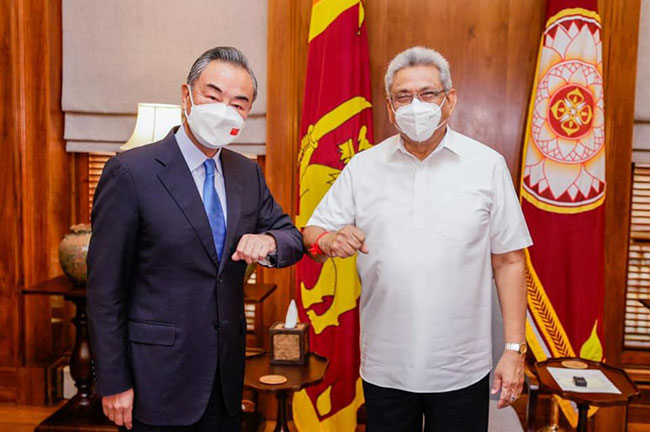
In addition to that, Sri Lanka’s ambassador Palitha Kohona is actively promoting Chinese investment in the country and played a critical role in facilitating the recent Chinese currency swap deals to boost the struggling economy.

The latest move by the embassy to take Sino-Lanka relations to the “next level” was the setting up of an official TikTok account for the embassy with financial assistance from a Chinese company — CITS Overseas Economic Cooperation Co., Ltd.

TikTok is the most popular social media platform in China. About 2.4 billion people around the world access TikTok daily.

Addressing the event to launch the TikTok account on Friday, Ambassador Kohona said this account would be helpful to increase awareness of Sri Lanka, especially the culture and the tourism potential among the Chinese people, a statement from the Lankan embassy in Beijing said.

This would be the first official TikTok account of a Sri Lankan foreign mission, if not a first of its kind of a government institution in the country. The question remains as to why a Chinese company came forward to pay the expenses of setting it up, and who would operate it, and also, what kind of contents would be disseminated.