HRCSL asks IGP to inform about PTA arrests within 48 hours

The Human Rights Commission of Sri Lanka (HRCSL) has written to Inspector General of Police (IGP) C.D. Wickramaratne last week, requesting that the Police inform the HRCSL about an individual who is arrested or detained under the Prevention of Terrorism Act (PTA) within 48 hours to the HRCSL.

In the letter addressed to IGP Wickramaratne, HRCSL Chairperson Supreme Court Judge (Retd.) Justice Rohini Perera Marasinghe had pointed out that this request is made within the powers mandated to the HRCSL under Section 28 of the HRCSL Act No. 28 of 1996 (duty to inform Commission of arrest and power of Commission to inspect to obtain information).

She had further pointed out a number of steps that the Police must take with regard to those who are arrested under the PTA, including informing the HRCSL of their release or transfer. She had claimed that this information was not duly received by the HRCSL, and had requested IGP Wickramaratne to inform police officers of this requirement.

Moreover, the HRCSL has requested that a monthly list of those who are arrested under the PTA, released or transferred be sent to the HRCSL from all police stations, for better monitoring by the Commission.

On 29 December, Marasinghe, along with the other commissioners, met the heads of the Criminal Investigation Department (CID), Terrorism Investigation Division (TID), and the Police Legal Division, where detainees currently being held under the PTA had been discussed.

Calls to repeal the PTA grew last year, both locally and internationally, with UN High Commissioner for Human Rights Michelle Bachelet emphasising the need for its repeal in her oral update about Sri Lanka earlier last year.

The European Parliament, earlier last year, called on the Government of Sri Lanka to repeal the PTA and the European Commission to consider the temporary withdrawal of the Generalised Scheme of Preferences Plus (GSP+) trade concession from Sri Lanka if it is not done. The GSP+ Monitoring Mission for the Third Cycle visited Sri Lanka during the months of September and October, meeting civil society members, politicians, and other stakeholders about a number of issues including the PTA.

The Morning reported at the time that the Ministry of Justice, in its discussions with the European Union (EU) delegation, had assured them that necessary amendments will be made to the PTA within the next six months. The 24th Session of the EU-Sri Lanka Joint Commission in the first quarter of 2022 will witness the review of all aspects of bilateral co-operation.

Last year, President Gotabaya Rajapaksa also appointed a three-member Advisory Board under Section 13 of the PTA, to make recommendations on actions to be taken on detainees and remand prisoners held under the PTA.

The first draft of the renewed PTA report was presented to President Rajapaksa on 15 November by Committee Chairman and Defence Secretary Gen. (Retd.) Kamal Gunaratne.

Ten Tamils who were arrested by the Sri Lanka Police on 18 May under the provisions of the PTA were released on bail on 8 December by the Valaichchenai District Magistrate’s Court. According to the Journalists for Democracy in Sri Lanka (JDS), the party had been arrested for lighting a flame of remembrance for war victims at Kiran beach in Kalkudah, Batticaloa. It was reported that these individuals were held under the PTA for a period of seven months.

Posted in Uncategorized

Will the SLFP remain or leave the government?

Nobody will make the decision for the Sri Lanka Freedom Party (SLFP) to leave the Government, and it will be a decision taken after discussions between the SLFP and the President himself, says the Deputy Chairman of the SLFP, Mahinda Amaraweera.

Speaking to media on Monday (10), SLPP and SLFP members expressed opinions on whether or not the Government would lose its 2/3rd majority as a result of its own factions criticizing the Government.

Citing the reports of the former President himself criticizing the Government, the State Minister of Transport, Dilum Amunugama stated that it is not an issue for the Government, and the assistance of the SLFP is not necessary for a party that was able to elect the President and the Prime Minister.

Speaking further, the State Minister reminded that the SLPP is a party that rules with an additional one seat at the Parliament and that they do not need a 2/3rds majority to govern.

“Mark my word, just because they are part of the 2/3rds majority we cannot be patient every time, they will finally leave us,” he added, speaking to media.

Meanwhile, the Deputy Chairman of the Sri Lanka Freedom Party (SLFP), Mahinda Amaraweera stated that the SLFP is not owned by anyone, and is a party that assisted in forming the Government,

“It was the President who we supported and formed a Government which obtained 2/3rds majority with our assistance,”

Furthermore, the SLFP Deputy Chairman stated that the party came and joined with the Government based on the request by President Gotabaya Rajapaksa.

“We don’t let anyone make a decision about us on joining or leaving the Government, it will be a decision that we will make,” he added.

Chinese Ambassador asks SL Govt why talks halted on FTA

As Sri Lanka is facing an economic crisis mainly due to the Covid-19 pandemic, China has expressed its desire to resume the stalled Free Trade Agreement with Sri Lanka in order to boost exports, China’s Ambassador to Sri Lanka Qi Zhenhong said yesterday.

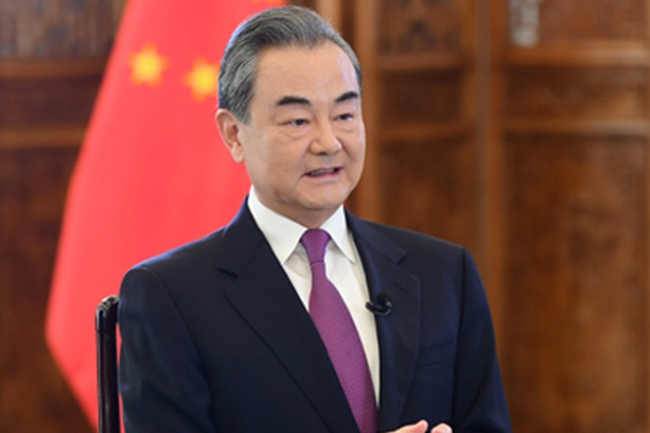
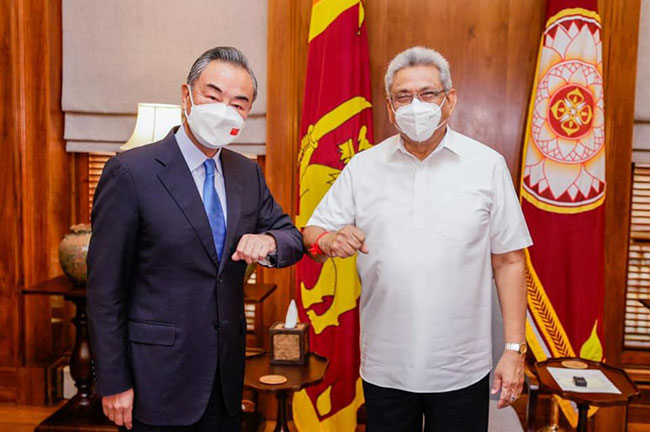
He said that visiting State Councillor and Foreign Minister Wang Yi held positive discussions with the Sri Lankan government leaders on the FTA.

“During the State Councillor’s visit this time, he himself and leaders of Sri Lanka’s government had a very good discussion on the Free Trade Agreement (FTA) as well as Comprehensive Economic and Technical Framework Corporation,” the ambassador told a group of newspaper editors last evening.

He also questioned why the Sri Lankan government halted talks with the Chinese government on the FTA. “Already we had six rounds. I would like to ask the Sri Lankan government why the talks were halted. I don’t know why,”the ambassador said.

Since 2017, during the last regime, ministerial level discussions were held on the possible FTA between two nations but halted reportedly due to some conditions in the proposed FTA. Ambassador Qi Zhenhong also said if Sri Lanka is able to have this FTA, it can export products to a market of 1.4 billion population in China.

The ambassador also said that when State Counsellor Wang Yi had discussions with the Sri Lankan leaders, he explained that “we should encourage exports and professionals to study the FTA discussions very soon.” “Wang said any questions or concerns on the FTA from the Sri Lanka side can be raised.we are open for that,”adding to that the ambassador said that “if one particular item is not good enough for Sri Lanka, you can ask more and we will do the study, as we have a flexible policy.”

SL and China ink RMB800 Mn agreement on economic & technical cooperation

The Governments of Sri Lanka and China signed several agreements today (09), including an Agreement on Economic and Technical Cooperation, which is an 800 million Yuan project financing facility.

Treasury Secretary SR. Attygalle signed from the Sri Lankan side and China International Development Cooperation Vice Chairman Zhang Maoyu represented China.

In addition, several more agreements were signed as well:

Letter of Exchange on the Project of Subsidized Housing for Low Income Category in Colombo
Handover Certificate of the Technical Cooperation Project for BMICH
Handover Certificate of the Technical Cooperation Project for the Kidney Disease Mobile Screening Ambulance Vehicles.
These developments come in the backdrop China’s State Councillor and Foreign Minister Wang Yi being present in the country on a two day official visit.

Posted in Uncategorized

Lanka has no room for manoeuver says Pathfinder Foundation

The Colombo-based Pathfinder Foundations issued a statement on Sunday saying that Sri Lanka’s economic crisis is so severe that it has no room for maneuver and that it should go for debt restructuring and begin talks with the IMF.

Here is the statement in full:

The Government has spoken of both Rupee and Dollar shortages. The severity of these problems is reflected in the following startling data points.

On the lack of Rupees (or fiscal space) for the government, interest payments alone account for over 70% of revenue. This is possibly the highest in the world. In addition, salaries and pensions account for over 90% of revenue. So, interest and salaries/pensions together amount to over 160% of revenue. It is hardly surprising, therefore that the Central Bank’s net credit to government (money printing) amounts to Rs. 1.1 trillion as at November 2021. This vast amount of money printing inevitably fuels inflation; exerts pressure on the balance of payments by boosting imports; and undermines exchange rate stability.

As for the Dollar illiquidity, net foreign assets of the Central Bank recorded a deficit of $1.6 billion as at the end of November 2021. The net foreign assets of the total banking system amounted to a deficit of US$ 4.1 billion. This explains vividly the cause of the large scale scarring of the economy that is arising from the massive shortage of dollars. Turning this around will require radical action, including a debt restructuring and decisive measures to attract foreign inflows.

The consequences of these twin problems have already been severe. Inflation, particularly food inflation, has been rising sharply. There have been shortages in food items, including milk food; fuel; gas; and medicines. There is also a rampant black market in foreign exchange. Businesses have collapsed and livelihoods have been lost.

The Pathfinder Foundation in its previous articles has urged that immediate priority be given to: (1) restructuring external debt; (2) negotiating an arrangement with the IMF; and (3) mobilizing bridging finance to meet the external financing gap in the next six months.

A debt re-structuring will provide breathing space to stabilize the economy. An IMF arrangement can catalyze much needed foreign exchange both directly from multilateral institutions and some bilateral donors; and indirectly by increasing confidence among investors and creditors. The bridging finance is necessary to fund essential imports and meet immediate obligations until the negotiations on the debt re-structuring and the IMF programme are completed.

The package of relief from India that is now expected is an encouraging beginning in terms of a bridging arrangement. However, it will only buy a couple of months’ time. This positive initiative needs to be supplemented by negotiating support from other friendly countries, including Japan, to obtain bridging finance that would be required during the time it takes to negotiate a debt restructuring and an IMF programme (about six months).

Action on all three fronts identified above needs to be initiated immediately to stem the ever deepening crisis and support sustainable recovery.

This is A Pathfinder Perspective issued by the Pathfinder Foundation can view on https://pathfinderfoundation.org/ Readers’ comments via email to pm@pathfinderfoundation.org are welcome.

Posted in Uncategorized

Sri Lanka President seeks debt relief, import credit from China

Sri Lanka’s President Gotabaya Rajapaksa has sought debt relief and import credit from China, following a meeting with visiting Chinese foreign minister Wang Yi, his office said.

“The President pointed out that it would be a great relief to the country if the attention could be paid on restructuring the debt repayments as a solution to the economic crisis that has arisen in the face of the Covid-19 pandemic,” a statement from the President’s media office said.

“The President also said that if a concessional trade credit scheme could be initiated for imports from China, it would enable the industries to operate smoothly.”

Sri Lanka is facing forex shortages and lost reserves due to money printed to keep interest rates down after cutting taxes in a fiscal and monetary ‘stimulus’ amid a Coronavirus pandemic.

Sri Lanka had also signed several grant agreements for housing, medical and refurbishing a conference hall in Colombo gifted by China.

Sri Lanka had about 3.5 billion US dollars in central government debt from China by the end of 2020, not counting loans to state enterprises.

China’s Foreign Minister arrived in Sri Lanka after an escalating dispute over a contaminated organic fertilizer was settled.

An International Monetary Fund report in 2019 said about 9.1 percent of external central government debt was owed to China and when counting SOEs it was about 15 percent by the end of 2018.

Sri Lanka’s central bank also drew down on a 1.5 billion US dollar equivalent Renminbi swap in December 2021 to boost year end reserves to 3.1 billion US dollars or about 2 months of imports.

India is also expected to give around 400 million US dollars through a swap, and a 500 million US dollar credit line for fuel. Another billion dollars of credits are expected from India.

China and Sri Lanka sign four agreements, discuss wide range of cooperation

Following a special request by Prime Minister Mahinda Rajapaksa on behalf of Sri Lankan medical students awaiting to return to China to complete their studies, State Councillor and Foreign Minister Wang Yi immediately instructed the Ambassador of China in Sri Lanka to work closely with the Foreign Ministry to facilitate the return of Sri Lankan medical students.

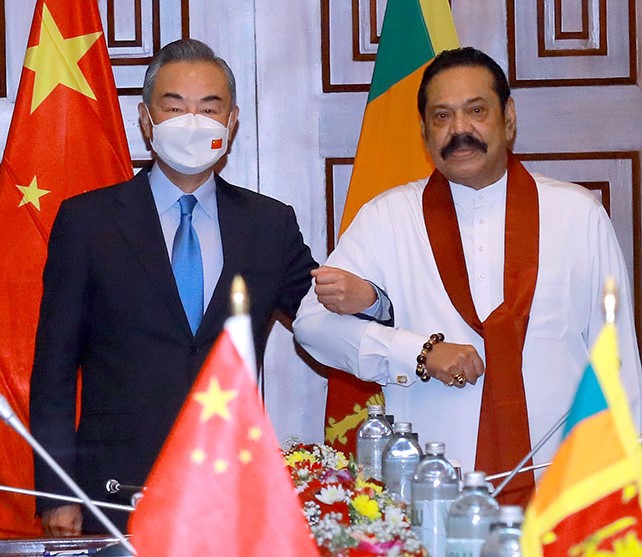
The matter was discussed during the bilateral meeting between Prime Minister Rajapaksa and the visiting Foreign Minister at Temple Trees this morning (09), the PM’s Office said.

Currently, approximately 1,200 medical students, including 400 final-year students, who were studying at Chinese medical institutions, are waiting to return to China to complete their studies.

They have been unable to return due to restrictions imposed as a result of the pandemic. In response to the Prime Minister’s special request, Foreign Minister Yi assured that Sri Lankan students will be given highest priority.

During the bilateral discussions between the two delegations, a host of other matters were also discussed, including further support for the vaccine program, attracting investments to the Port City and the Hambantota Industrial Zone, increasing tourism from China to Sri Lanka, increasing Sri Lankan exports to China and enhancing cultural cooperation, especially in the area of Buddhist ties.

Following the discussions, the delegations signed the following agreements:

Agreement on Economic and Technical Cooperation
Letter of Exchange on the Project of Subsidized Housing for Low Income Category in Colombo
Handover Certificate of the Technical Cooperation Project for BMICH
Handover Certificate of the Technical Cooperation Project for the Kidney Disease Mobile Screening Ambulance Vehicles
Foreign Minister Yi is on a one-day visit to Sri Lanka to launch the celebrations marking the 65th anniversary of Sri Lanka—China bilateral relations.

Last year the Central Bank of Sri Lanka issued a commemorative coin to mark the 65th anniversary as well as the 100th anniversary of the founding of the Communist Party of China. A set of the coins were gifted to the visiting Foreign Minister by the Prime Minister.

Conveying best wishes from the President and Premier of China to Prime Minister Rajapaksa, Foreign Minister Yi said, “China will continue to do its best to provide all the necessary help and support [to Sri Lanka].”

Prime Minister Mahinda Rajapaksa’s Opening Remarks:

“Good morning, Your Excellency and welcome once again to Sri Lanka. Your last visit to Sri Lanka was exactly two years ago, and I’m happy to see you return. I believe these regular high-level visits help reaffirm our strong and friendly relations.

This year is an important year for our two countries. It marks the 65th anniversary of establishing diplomatic relations and 70 years of signing the Rubber-Rice Pact. Allow me to also congratulate the Communist Party of China on its 100th anniversary. As you know, the Central Bank of Sri Lanka issued a commemorative coin to mark these important milestones.

Excellency, I want to thank the Government and the friendly people of China for the generous support towards fighting the COVID-19 pandemic. The consistent supply of the Sinopharm vaccines made a significant contribution to our successful vaccine program.

As you know, similar to many other countries, Sri Lanka’s economy was also greatly impacted by the pandemic. We appreciate China’s assistance towards our economic revival and financial stability. There is still a long way to go in establishing normalcy, but we’re confident that with support from friendly countries like China, we will be able to overcome these challenges soon. I look forward to continue working closely with you and the Government of China in addressing common challenges.”

Posted in Uncategorized

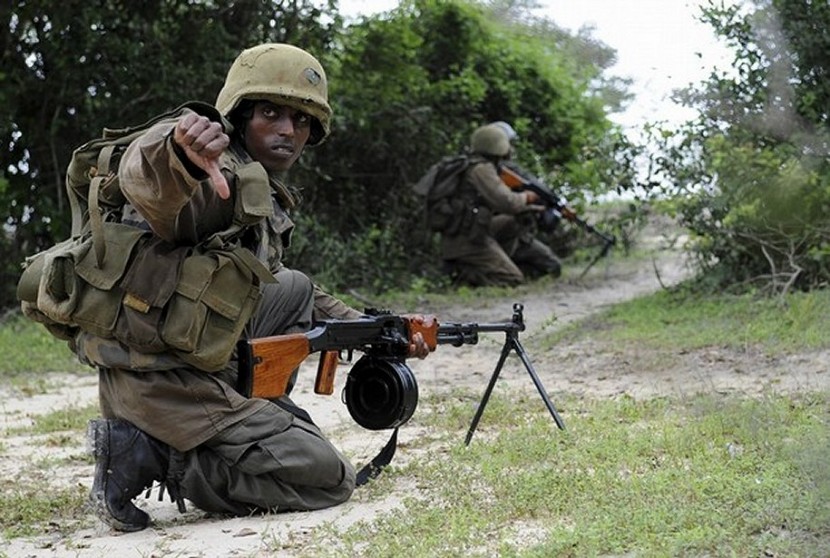
Military deployed for organic farming

The Army has been sent in to implement government policy on organic farming by monitoring and educating farmers on the job they have to do. The Maha season is likely to see a 30 per cent drop in yields but the authorities are convinced the people will not starve.

Army deployment towards this project was mooted by President Gotabaya Rajapaksa since he believed the agriculture state sector officials were not supportive of the green agriculture concept for organic farming, Agriculture Minister Mahindananda Aluthgamage told the Business Times on Thursday.

He noted that the officials were part of a “chemical mafia”, on the contrary the Army is said to be disciplined enough to carry out any task given to them and implement government policy.

The minister also noted that there would be a yield drop of about 30 per cent as predicted by the agriculture officials, even so the government will not cause a shortage of food in the country.

Compost once produced by the Army will be bought by the state fertiliser companies and distributed to farmers alongside the other organic bio fertilisers produced by the local manufacturers.

Compost contains one of the lowest amounts of the nitrogen source but the application of this will help to condition the soil, Crop and Weed Scientist Peradeniya University Senior Prof. Buddhi Marambe explained.

He pointed out that one of the best ways to carry out waste management is to convert it to compost that could be used for agriculture.

Monitoring of the farming methods is the agriculture instructor’s job, Prof. Marambe explained adding that monitoring alone will not help but feedback is also important.

Farmers this season were concerned whether they would be able to produce sufficient crop for their own consumption. Usually at the end of the season, farmers would retain 25-30 per cent of the harvest for their own consumption and as seed paddy and then sell the rest.

The lower yields will mean there will be a drop in the product sent to the market as well.

Prof. Marambe explained that according to published data following a 11-year research in Sri Lanka by the Agriculture Department it has been found that applying organic fertiliser alone was able to generate a yield 21-31.5 per cent lower compared to plots that received only chemical fertiliser. But the paddy cultivation carried out using both chemical and organic fertilisers were able to generate the highest yield.

The Army is being deployed to assist the Ministries of Agriculture and Fertiliser in purchasing and distributing the required organic fertiliser for the next season, Agriculture Department Director General Dr. Ajantha De Silva explained.

Commenting on a possible yield drop, he noted that farmers will be duly compensated to ensure their incomes are stable. Yield estimations will be released by the middle of this month, he said.

He also noted that the local organic fertilisers have not gone through two seasons of trials but these will be tested at Batalagoda, Samanthurai and Paranthan; and in addition to this another international tender will be called to procure organic fertiliser.

Chemical fertiliser imports recommence

Fertiliser companies have been issued with another part payment of Rs.300 million to pay off the government subsidy bill of Rs.27 billon as a result of which another batch of fertiliser will be imported.
All fertiliser companies will bring in a total of another 30,000 MT of Sulphate of Ammonia (SOA) for which Letters of Credit have been opened with the banks. This is the second consignment of the total fertiliser requirement of 98,000 MT for the tea sector.

However, companies are concerned about bringing down large stocks and as a result will only bring this 30,000 MT as there is uncertainty regarding the demand for these purchases.

Forex crisis: Severe pharmaceuticals shortage in the offing

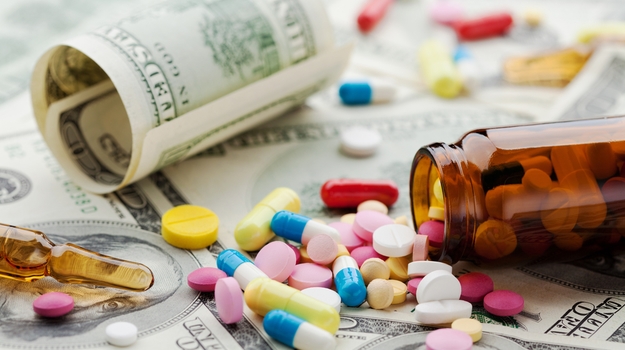
An acute shortage of essential medicinal drugs has been reported around the country as pharmaceutical companies are struggling to secure necessary imports due to the ongoing dollar crisis.

The Sunday Morning learns that both Government and private sectors have been affected and are expecting a severe shortage of essential medicines in a month’s time unless the Government prioritises the pharmaceutical sector and releases funds to pay for Letters of Credit (LCs) already opened by importers.

Accordingly, it is learnt that a request has been made to the Treasury as well as the Central Bank of Sri Lanka (CBSL) and Foreign Ministry to make funds available immediately.

State Pharmaceutical Corporation (SPC) General Manager Dinusha Dassanayake said the dollar crisis had affected pharmaceutical imports as it had affected all other sectors and SPC was also experiencing a shortage.

Therefore, it had already informed the Health Ministry’s Medical Supplies Division (MSD) and necessary arrangements would be made by them, Dassanayake noted.

Prior to the shortage reported recently, prices of all pharmaceuticals were increased to reflect the falling rupee.

Health Minister Keheliya Rambukwella issuing an extraordinary gazette notification last August amended the Medicines (Ceiling on Prices) Regulations of 2019 published in the Gazette Extraordinary No.2123/35 of 15 May 2019 by increasing the Maximum Retail Prices (MRP) of 60 essential medicines, 38 intraocular lenses/lenses with delivery system (preloaded provided with cartridge) by amending the Medical Devices Pricing Regulations No. 1 of 2017 published in the Gazette Extraordinary No.2006/45 of 17 February 2017 as amended by regulations published in the Gazette Extraordinary No.2114/54 of 15 March 2019.

Further, the MRP of two selected medical devices including blood glucose monitoring system and test strips for blood glucose monitoring system have also been revised by amending the Medical Devices (Pricing) Regulations of 2018 published in the Gazette Extraordinary No. 2086/37 of 31 August 2018 as amended by regulations published in the Gazette Extraordinary No. 2114/54 of 15 March 2020. The last price revision was made in May 2019 when the exchange rate was at Rs. 178 per United States Dollar (USD).

But, as claimed by pharmacists, consumers are facing difficulties as they cannot find some common medicines in the market.

“Several medicines are in short supply. Some of the most essential medicines are out of stock. We were not given an exact date on when they will be restocked,” All Ceylon Private Pharmacy Owners’ Association (ACPPOA) President Chandika Gankanda told The Sunday Morning. “If this continues, most items will be in short supply.”

According to available data, in 2017, pharmaceutical expenditure in Sri Lanka (hospital and pharmacy medicine sales at consumer prices) reached a value of $ 642 million and by 2022, the market is expected to reach a value of $ 787 million. Sri Lanka imports medicines worth Rs. 130 billion annually, comprising some 85% of its annual requirement. Local State and private sectors produce only 15% of the requirement.

The State Pharmaceuticals Manufacturing Corporation (SPMC) owns a plant in Ratmalana and along with several private pharmaceutical manufacturing factories produces medicines required for the country.

Sri Lanka Chamber of Pharmaceutical Industry (SLCPI) President Sanjeewa Wijesekera said: “There is a dollar crisis and we are also in difficulty when establishing LCs. There could be a delay in shipments as we are unable to establish LCs.”

“Previously, priority was given to oil and pharmaceuticals and our industry has facilities with the two State banks. Unfortunately I feel like they have been assigned to establish LCs for petroleum importation. We were asked wherever possible to channel public banks to establish LCs,” he noted.

“In the private sector there isn’t much of a shortage. If this continues there could be a shortage,” Wijesekera added.

Generally, about 14 days to one month’s stocks are available with retailers, so importers carry about one- or two-and-a-half months’ worth of stocks. There should be an ongoing process of establishing LCs and getting stocks and any lag would become an issue later, he explained.

State Ministry of Production, Supply, and Regulation of Pharmaceuticals Secretary Dr. R.M.S.K. Ratnayake said a discussion had been held with stakeholders on Thursday (6) and they had decided to send a list of essentials with shortage timings to the Finance Ministry to prioritise accordingly.

“We have prepared a list with the dates from which the respective stocks of the medicines will be in short supply and the Government will release funds accordingly.”

Meanwhile, Rambukwella said the Government was looking at all possible methods to secure stocks and maintain uninterrupted supplies. “We have held discussions with stakeholders and informed the CBSL too; necessary arrangements will be made to release funds to import essential medicines.”

When asked how long it would take to recover from the ongoing crisis, Minister Ramkuwella said at present dollars had started to come in through tourism and foreign employment.

“We hope the ongoing crisis will end in six months to a year. The Government is focusing on diversifying methods of bringing down dollars, including by expanding the foreign employment sector.”

Wang’s visit and Jaishankar’s phone call could lift Lanka’s spirits By P.K.Balachandran

The visit of the Chinese Foreign Minister Wang Yi to Sri Lanka from January 8 to 9, and the Indian Foreign Minister S.Jaishankar’s recent phone call to his Lankan counterpart G.L.Peiris, have given the impression that both Asian giants are keen on helping Sri Lanka come out of the economic woods it has been in in the past year.

Due to a variety of factors, including COVID-19 and gross mismanagement, Sri Lanka is now frightfully short of dollars even to import essentials. The disastrous decision to shift wholesale to organic farming immediately, has led to predictions of a food shortage in April 2022. Government’s callousness has led to an unprecedented rise in prices of essentials.

The EconomyNext website quoted the Central Bank Governor, Ajith Nivard Cabraal, to say that the bank had sold about 3.6 tonnes of gold out of a 6.69 tonne stockpile it had at the beginning of 2021, leaving it with around 3.0 to 3.1 tonnes of gold. The gold sale was to boost liquid reserves, Governor Cabraal said.

Sri Lanka’s gross foreign reserves had dropped to US$ 1.5 billion in November 2021 but recovered in December to touch US$ 3.1 billion. And yet the demand on the dollar remains high in an import dependent economy.

Wang’s Visit

While it is still not known precisely what the visiting Chinese Foreign Minister will bring to the table, Colombo is expecting big ticket investments. Both China and Sri Lanka had brushed the nasty organic fertilizer import row under the carpet. The row over the allegedly contaminated fertilizer consignment had led to the Chinese company’s threating to go for international arbitration and Sri Lanka’s going to court. Eventually, Sri Lanka coughed up US$ 6.9 billion to settle the matter out of court.

According to the Sri Lankan Ambassador to China, Dr. Palitha Kohona, two big Chinese companies have sent their representatives to Sri Lanka. He told Daily Mirror: “Power China is one. KY Electric is another. Power China is interested in building residential units in Colombo and outside. KY Electric is interested in renewable energy. We held talks with China Harbor, China Great Wall, Power Steel, etc. These are only a few of them. All of them have shown keen interest in investing in Sri Lanka catering not only to the domestic market but also to the wider regional markets. We have been encouraging them.”

Kohona further said: “One of the reasons for nothing tangible to be eventuated so far is the inability to send their specialists to Sri Lanka to assess the situation at ground levels. Once travel is restored to some extent, we can expect many of these companies to show greater interest in Sri Lanka. We have also encouraged travel companies to invest in Sri Lanka. One company with a client base of over 40 million is interested in developing resorts in Sri Lanka, like the resorts in southern Europe or Hainan Island. We can expect it once things return to some sort of normalcy. Many other companies will make a beeline to Sri Lanka.”

These investments may work as catalysts for investors from elsewhere, whether they are from the United States, Europe, Russia, Australia, Japan and Korea, Kohona added. As regards investment in the China-built Colombo Port City, the envoy said: “ A very serious offer has been made by Power China and China Harbor. It is quite likely that over the next few months, they will invest substantial amounts in the Port City. Again, this will be a flagship investment which will hopefully be an attraction to others to follow-suit. We are hopeful that companies from India, Europe and the United States will follow these big investments in the financial center, the Marina and in the Convention Center.”

Indian Interest

India’s interest in giving a helping hand to Sri Lanka was evident when its Foreign Minister, S.Jaishankar, called his Lankan counterpart, G.L.Peiris, on the phone to say that “India will support Sri Lanka in these difficult times.” This has heightened hopes that India will, at the earliest, deliver a US$ 1.9 billion financial aid package to Sri Lanka.

In the first week of December 2021, the Lankan Finance Minister Basil Rajapaksa had had two sessions spread over two days with the Indian Finance Minister Nirmala Sitaraman and Foreign Minister Jaishankar in New Delhi. Though the expected meeting with Prime Minister Narendra Modi did not come through, the Lankan Finance Minister came back to Colombo with a four-point economic cooperation plan.

India indicated that, apart from the existing US$ 400 million swap, there will be a US$ 500 million line of credit for the purchase of oil, and a US$ 1 billion credit line for purchases of medicines and food. It was agreed that the issue of the refurbishing and running of the 99 giant oil tanks in Trincomalee would be settled to mutual satisfaction. The two sides further agreed that modalities to realize the four-point package would be “finalized early, within a mutually agreed timeline.”

Trinco Tanks Deal

As planned, India and Sri Lanka reached an agreement on the oil tanks and signed an agreement after securing cabinet approval. Giving the basic contours of the agreement, the Lankan Minister of Energy, Udaya Gmmanpila said that out of the 99 tanks, each with a capacity of 12,000 mt, the State-owned Ceylon Petroleum Corporation (CPC) will get 24 tanks to develop and use independently of the Lanka Indian Oil Corporation (LIOC); 14 of the tanks, currently used by the LIOC, will be leased to the LIOC for 50 years; and the balance of 61 tanks will be managed by the Trinco Petroleum Terminal Ltd.,(TPTL), a joint venture of the CPC and LIOC to be launched soon. In the TPTL, the CPC will own 51% of the shares and the LIOC will hold 49%. The TPTL will be a subsidiary of the CPC.

In effect, 85 out of the 99 tanks will be under the control of the CPC directly or indirectly. And the LIOC will manage only 14 tanks, Gammanpila said.

A leading Buddhist monk has challenged the agreement in the Supreme Court, and the opposition has called it a sell because it wants the government to nationalize the tanks given to India in 2003. But the government is confident of seeing the deal through parliament later this month.

The Lankan Energy minister considers it a “historic” agreement since no government before had been able to get the tanks that were given wholesale to India in 2003. The Indian government has described the deal as a “milestone”. India did not consider the new agreement as a loss because it was committed to run the tanks as a joint venture way back in July 1987 as part of the Indo-Lanka Accord. This commitment found fruition 35 years later.

A regards the other elements in the four-point package agreed to during Basil Rajapaksa’s New Delhi visit, including the credit lines, both countries are working on the technicalities and modalities. Officials are not certain when each of them will see fruition, but work is in progress.

Therefore, while China has ambitious plans to boost the Lankan economy through investments and credit lines, so is India. The international competition to woo Sri Lanka, given its strategic location in the Indian Ocean, should help it come out economic distress in 2022.