Coming crack-up, President’s plans and Tamil timing – DR Dayan Jayatilleka

Susil Premjayanth is one of the good ones; educated, intelligent, experienced, a fine speaker and debater be it in parliament or on TV. He is not one of those the protesting peasants refer to rudely as “the buffaloes in Parliament”. An SLPP member, he represents what is best in the SLFP tradition: he is a moderate, progressive centrist. Someone who should have wielded a top portfolio, he has been deprived of his State Ministry by President Gotabaya. By so doing, President GR has fired a stalwart of the political culture and tradition of which his late father was a co-founder.

It won’t help. Not only will Premjayanth get more publicity than before; he will be more openly critical than before. President Gotabaya may have thought he was removing a pebble from his shoe, but he may well have set rolling the pebble which will precede the coming landslide of the SLFP and part of the SLPP—one notes Vidura Wickramanayake’s critical voice—as the economic crisis worsens, the harvest fails, and the SLPP-SLFP’s vote base, the peasantry, hits the streets demanding economic justice and reparation.

Beat the Regime in 2022

The best political satire I’ve seen in recent months doesn’t contain even one clever punchline. It is a new genre, a cross between a silent movie (no dialogue), a news documentary and reality TV. It is shot from within a four-wheel drive, which moves at a moderate pace on a single continuous but short trip, with the camera focusing on the sidewalks with unending lines of grim-faced and often vociferous citizens, waiting for gas, kerosene, milk, etc. From inside the vehicle, the speakers blare Gotabaya Rajapaksa’s campaign song. When the chorus comes along, young voices inside the vehicle join in, and yell out in unison “Goh-taa-bhaya!”. A passenger in the front seat, who isn’t yelling, laughs and places his palm on his forehead after gazing at the queues. It is black humour at its best.

You’ve heard of the classification and category ‘backsliding democracy’. Democracy isn’t the only thing that’s backsliding in Sri Lanka. So too are farming, cooking and nutrition. When Andre Gunder Frank wrote of the “development of underdevelopment”, he didn’t know the half of it.

In his chat with the newspaper editors, President Gotabaya spoke critically of the media coverage of the explosions of gas-cookers, without once acknowledging the report of his own panel of experts who traced the cause to the change in ratio of the gases. Who is accountable?

Sri Lankan analysts of the economic crisis are roughly divisible into two: those who place the greatest emphasis on the debt and foreign exchange crisis, and those, like me, who place the greatest emphasis on the crisis of agrarian production and the likelihood of a food shortage, due entirely to the President’s blindly insensitive, arrogant and unscientific fertiliser-weedicide-pesticide policy.

Though I did work with Immanuel Wallerstein, the iconic thinker on world systems and world economy, I’m no economist. However, I am a student of conflict, revolution and wars, and I know of far fewer internal conflicts triggered by debt and forex crises and far more detonated by the collapse of harvests and resultant famines or extreme food shortages. This is more so when those crashes of harvests, the resultant shortages and mass misery are seen as avoidable and ruler/ruling elite-created.

There are countries which have experienced crisis due to debt repayment, a hard-cash crunch or sanctions, but almost all of them have peasant agriculture to fall back on. Russia faced Western sanctions by boosting agricultural productivity, and it was certainly not through conversion to organic fertiliser but through redoubled efforts in scientific agriculture. If it was the cash crunch that triggered the cutback in fertiliser imports, contracts should have been given to local and foreign industrialists to produce chemical fertiliser, pesticides and weedicide in Sri Lanka well before embarking on this program of ‘agricide’ (or ‘peasanticide’) through a ‘shock-and awe’ ban.

There is a possibility of defeating the regime in 2022, which doesn’t necessitate the interesting proposal of lawyer Sunil Watagala of the JVP, of the early dissolution of Parliament, nor does it depend entirely on ceaseless street demonstrations over economic grievances.

That possibility will be provided by the President’s project of a new Constitution. It will be perfectly possible to call for and win a massive ‘No’ vote at a referendum in this year of the avoidable economic torture of the citizenry. Not even Augusto Pinochet was able to survive defeat at a Referendum.

No more Mr. Nice Guy?

The Spanish term “querencia” refers to the patch of ground that the besieged bull stakes out in the bull-ring during a bull fight. It is the place where the bull makes his stand and from which he charges. More generally, “querencia” has come to mean a spot from which a personality chooses to make his/her stand. Besieged President Gotabaya Rajapaksa has just demarcated his querencia, and there are no surprises as to the space he has demarcated and has chosen to place himself. It is his home-ground.

He also gives a valuable clue as to his future intentions.

The evidence is in the text of his speech of 2 January 2022 at the ceremony to confer honorary title of “Sri Lankadheeshwara Padma Vibhushana” on President GR by the Kotte Sri Kalyani Samagri Dharma Maha Sangha Sabha.

“…I would like to specially mention the fact that I was born into a Buddhist family, the disciplines I received when I was studying at Ananda College, Colombo, one of the leading Buddhist schools in the country, the inspiration I received from following the advices (sic) of the Maha Sangha and the discipline I received from serving in the Army were the factors that made my life better.

“Today the Maha Sangha bestowed on me an honorary title in recognition of my service towards the country as a military officer and Secretary of Defence. During my twenty years of military service, I had been involved in military operations carried out in the initial stages of the Eelam War and Second Eelam War as well as operations carried out in the north and east areas. Before the arrival of the Indian Peace Keeping Force, I commanded one of the four brigades in the Vadamarachchi operation, the largest operation of the time. At the outbreak of the Second Eelam War, I commanded one of the two main brigades to liberate Jaffna Fort. I carried out several operations in areas like Welioya, Vavuniya and Trincomalee. In recognition of those services, I received the Ranashura and Ranawickrama medals and President’s Award. The Maha Sangha is fully aware of the service rendered by me directly as the Defence Secretary to the end of the thirty years of war.

“…On the day I was sworn-in as the country’s President at the Ruwanweli Seya, I declared that I was a President elected by the majority of Sinhalese. I firmly believe that the protection of Sinhala Buddhists, who have made so many sacrifices to elect me as the first citizen of this country and that heritage is my foremost responsibility…” (Ada Derana/PMD)

Here comes his crucially significant signal as to the strategic direction he has decided to move in:

“I am ready to embark on a new journey by overcoming the obstacles we have encountered so far, and to fulfil the aspirations of the people who elected me as President of this country. I responsibly declare before this Most Venerable Sangha community that I am ready to take any tough or bold decisions that need to be taken in this regard…” (Ibid)

What the speech tells us is that the President is sticking to his hard-core Sinhala Buddhist discourse and base. The obvious problem with playing this card is that most of the angry rice farmers are Sinhala Buddhists, as are most in the queues for milk-food, cooking gas and kerosene. They are mad at him and the ruling elite (starting with the ruling family), and they are angry not as Sinhala Buddhists but as human beings. The President must understand at least now, why the Buddha advised against preaching the Dhamma to those with an empty stomach.

Going by his declaration of intent, the President initially hopes to move forward with those Sinhala Buddhists who are not suffering the same economic hardships as the rest of the citizenry. That would range from the uber-rich ultra-right, to the military brass. Furthermore, he hopes to rekindle the Sinhala Buddhist identity consciousness among those Sinhala Buddhists who are embittered towards him over socioeconomic pain generated by his policies.

How does he hope to do this? There are some clues in his words: “…a new journey…to fulfil the aspirations of the people who elected me as President …I am ready to take any tough or bold decisions that need to be taken in this regard…”

What kind of “new journey” and “tough and bold decisions” might he have in mind? Given the President’s known agenda, it is reasonable to assume that in the first instance he means the new Constitution, in which the primacy of Sinhala Buddhist identity and heritage will be given unprecedentedly hegemonic status, thereby either flipping the Sinhala Buddhists from economic grievances back to an ethno-religious majoritarian consciousness, or at the least, causing a split among the Sinhala Buddhists on the lines of economics versus ethno-religiosity.

Or could it be an enhanced role, perhaps even the ultimate enhanced role, for the sword and shield, if not the martial custodian, of that “heritage” and those “aspirations”, i.e., the military?

I do not know whether Minister Basil Rajapaksa is to be made Prime Minister as is rumoured in the media. Given that Mahinda Rajapaksa is the sole sentimental adhesive keeping the coalition and even the ruling SLPP going, that may not be on the cards. What I do know is that Basil Rajapaksa’s territory of economic development is already being invaded. In his address of 30 December 2021 to the tri-forces based in Mullaitivu, Army chief, Gen. Shavendra Silva announced that the economic development of the area has been entrusted to the Army by President Gotabaya Rajapaksa. This was aired on the TV newscasts. (Watch from minute 19, https://m.youtube.com/watch?v=qgE7mO0y_Ls) Where does that leave Minister Basil Rajapaksa and the Sri Lankan Cabinet Ministers?

Meanwhile the Army chief who seized power in Sudan has had to step down due to unremitting street protests by the Sudanese people. There’s a lesson in there somewhere.

Tamil talks: Last train

The process of negotiation among the Tamil and Muslim parties over a consensus document to be addressed to India with regard to the Accord and the 13th amendment in light of the coming Constitution, has not been brought to a closure at the time of writing this column, though it was to be finalised around New Year.

The delay deprives the Tamil side of the chance of insinuating its issues into the subtext of, or the trade-offs in, what might well be the Indo-Sri Lanka Economic Accord. The economic package could also be considered Indo-Sri Lanka Accord 2 or the completion of the original Indo-Sri Lanka Accord, with reference to the economic footprint in Trincomalee. The closure on that issue may by-pass or supersede the original reason for the 1987 Accord, the Tamil Question, because the dominant Tamil party seems not to know or care that the Tamil autonomy project is in the Last Chance Saloon.

If signing-off on a basic Tamil consensus is quite so fraught even when time is of the essence and the stakes and the odds are at their historical highest, then it is no surprise that the Tamils find themselves in the dead-end they do, and it will be no surprise if they lose everything that India obtained for them and are left with no semi-autonomous sub-state political space – even on paper – in their “historical habitation” which is now pretty much controlled by the military.

The delay on the Tamil political side may cause forfeiture of the residual return that may accrue to it with India’s economic backstop – though that Indian input may be matched or offset by whatever generosity China’s Foreign Minister Wang Yi brings in his wallet.

In geometry, especially political geometry, the higher your apex, the narrower your base. The broader you wish the buy-in to be, the more stakeholders you hope to attract, the lower must be your apex. The higher you pitch your political stand and thicken your discourse, the more difficult to get the SLMC on board. Since the SLMC has been part of the ongoing discussion process from its earliest days, some Tamil parties are loathe to let it go and be content with a Tamil consensus. This means that a Tamil consensus itself may have to be limited to the north and part of the east (the 1977 electoral map), losing those Tamil organisations representing the Tamils of recent Indian origin, based outside the north and east.

If the ITAK had been reasonable enough to accommodate the SLMC, it could have stood at the head of a bloc of Tamil-speaking people(s), also incorporating the Tamil parties outside the north and east. Now, with the window of opportunity about to shut, it is imperative to clinch a northern and eastern Tamil ‘heartland’ consensus.

In the currently ongoing process, the more pragmatic position around the full implementation of the 13th amendment was arrived at by the Tamil parties which had done the hard yards from the 1970s as militant organisations; the ones who belonged to the “Iyekkam” (The Movement). They have (belatedly) displayed a Sinn Fein-type pragmatism.

The ITAK behaves like the Palestinian Authority (PA) but without the Authority.

The demagogic counterview to the effect that “the Tamil people did not shed so much blood to seek and accept the full implementation of the 13th amendment; if so, we could have settled everything back in 1987; we should await a new US initiative” came, ironically enough, from the purely parliamentarian Tamil nationalist wing, which had not taken the risks and made the sacrifices of militant engagement and experience.

Had the Yahapalanaya Government of 2015 embarked on the full implementation of the 13th amendment, who would have opposed it? Not President Sirisena, PM Wickremesinghe or de facto Opposition leader Mahinda Rajapaksa. Instead, the TNA/ITAK’s push for a brand-new Constitution with a non-unitary character helped fissure the hybrid government, split the SLFP, provoke the emergence of the SLPP, catalyse the hawkish candidacy of Gotabaya and electorally extinguish the UNP. The ITAK/TNA also helped jam-up the holding of Provincial Council elections.

Had the Yahapalanaya Government of 2015 embarked on the full implementation of the 13th amendment, who would have opposed it? Not President Sirisena, PM Wickremesinghe or de facto Opposition leader Mahinda Rajapaksa. Instead, the TNA/ITAK’s push for a brand-new Constitution with a non-unitary character helped fissure the hybrid government, split the SLFP, provoke the emergence of the SLPP, catalyse the hawkish candidacy of Gotabaya and electorally extinguish the UNP. The ITAK/TNA also helped jam-up the holding of Provincial Council elections

With traditional inter-state interactions (India-China-Sri Lanka) and economic diplomacy about to decisively eclipse sub-state political nationalism, the Tamil leaders must decide whether the only tangible political gain of 70+ years of the Tamil struggle i.e., the Accord/13A/PCs, will be buried by their own grand-standing and dithering. Now that’s an exercise in self-determination. Perhaps the last there will be time and space for.
South Korea responds positively to SL’s call for enhanced dollar assistance

Sri Lanka has reached out to South Korea to obtain enhanced dollar assistance from its EXIM Bank and greater development assistance from KOICA, as the island nation continues to struggle with low levels of foreign exchange.

According to Sri Lanka’s Foreign Affairs Ministry, the response from South Korea was positive with the Republic of Korea Foreign Affairs Minister Chung Eui-Yong agreeing to the request put forward by Foreign Affairs Minister G.L. Peiris.

In the fresh round of discussions held in Seoul by the two ministers yesterday, the areas of trade and investment, political cooperation, defence initiatives, tourism and labour issues took the centre stage.

Prof. Peiris paid tribute to the multi-faceted relationship, which had developed between the two countries during their 44-year relationship and its present robust character. In addition to seeking assistance, the ministers reviewed what was acknowledged as the “very beneficial impact of South Korean development programmes” in Sri Lanka, especially in the fields of water management, waste disposal and secondary education.

Eui-yong said that to increase the commitment to Sri Lanka, his ministry will engage with the private sector to consider greater assistance in Sri Lanka, especially in the fields of computer technology, electronics and pharmaceutical products.

In return, Sri Lanka will set up a special investment zone for South Korea, which will be the revival of an initiative that was embarked upon previously.

The balance of trade between the two countries is significantly in South Korea’s favour. Exports into South Korea are approximately US $ 71 million, while imports into Sri Lanka are at the threshold of about US $ 192 million. Furthermore, the ministers agreed on exploring “practical ways” of overcoming some of the significant trade barriers, including customs levies on value-added products such as flavoured teas.

Posted in Uncategorized

Sri Lanka sells down monetary gold as forex reserves drop

Sri Lanka has liquidated a part of its gold holdings in December 2020 to boost liquid foreign assets in line with a drop in annual foreign reserves holdings, Central Bank Governor Nivard Cabraal said even as year-end reserves were boosted with a swap from China.

The central bank is estimated to have sold about 3.6 tonnes out of a 6.69 tonne stock pile of gold (about 215,000 troy ounces) it had at the beginning of 2021, leaving it with around 3.0 to 3.1 tonnes of gold.

In 2020 also the central bank also sold 12.3 tonnes of gold after starting the year with 19.6 tonnes of gold.

The gold sales was to boost liquid reserves, Governor Cabraal said.

“When reserves reduce we reduce the gold holding,” Cabraal said. “We bought gold when foreign reserves were going up.

“Once the reserve levels increase over 5 billion US dollars CBSL will consider increasing the gold holdings.

Sri Lanka’s gross foreign reserves picked up to 3,137 million US dollars in December, after dropping to 1,588 million US dollars in November, though reserves are down from 5,665 million dollars at end of 2020.

It is the fourth year running that Sri Lanka has sold gold.

Sri Lanka started to buy gold aggressively when Governor Cabraal was running the agency in a previous term.

In 2009, Sri Lanka bought 15.8 tonnes of gold from the International Monetary Fund. After selling in 2010 and 2011, Cabraal bought 3.6 tonnes of gold in 2012 and 9.3 tonnes in 2014 as reserves recovered amid deflationary policy (sterilized purchases of forex).

However from 2014 September Sri Lanka’s monetary policy deteriorated with large liquidity injections made to target a call money rate, despite operating a peg and sharply less rule based policy being followed under ‘flexible’ inflation targeting and ‘flexible’ exchange rate.

Sri Lanka sold gold in 2015, 2018 and 2019 but did not buy any back as reserves fell in line with liquidity injections.

A central bank that targets an exchange rate cannot also control short term interest rates by printing money (inflationary policy), when economic activity (private credit in particular) recovers without selling a similar equivalent in dollars.

Sri Lanka started the current bout of inflationary policy around August 2019 re-purchasing bonds from the market (re-monetizing past deficits) when foreign reserves were 8.5 billion US dollars.

Such soft-pegs end up at the International Monetary Fund until laws to end the discretionary injections are brought or there is a shift to a clean floating regime.

SLFP Hints at Quitting SLPP-led Coalition

The SLFP hinted that it would be leaving the SLPP-led coalition and will contest all the upcoming elections through a new alliance. Senior Vice President of the SLFP, Prof. Rohana Lakshman Piyadasa stated that those in the SLPP, who charge that coalition governments had collapsed due to differences with coalition partners, would do well to study the historical context.

Prof. Piyadasa mentioned that a political rift had developed between the SLPP and the SLFP, which is the largest coalition partner in the alliance.

He explained that the SLFP was ready to contest all future national polls from a new political alliance and is of the view that without the 1.8 million votes pulled by the SLFP it would have been impossible for the current President to win the last Presidential Poll.

Speaking further, he said that all SLPP backbenchers should desist from pointing the finger at the SLFP and instead devote that time to resolving most of the pressing problems of the people.

He alleged that ahead of the formation of the present Government, the SLFP had consented to three agreements with the SLPP, but lamented the fact that the latter had failed to honour those agreements.

Prof. Piyadasa added that as promised the SLPP had reneged on its promise to hand over the requisite amount of Ministerial, State Ministerial and National List MP posts to the SLFP and charged that all those positions had been arbitrarily taken over by the SLPP.

He remarked that smaller parties, such as the Communist Party of Sri Lanka, the Lanka Sama Samaja Party (LSSP) and a few other coalition parties had suffered a similar predicament at the hands of the SLPP.

Meanwhile, the SLPP backbenchers have reportedly urged the party leadership to take a prompt decision regarding the present conduct of the SLFP, saying that each time political parties had signed pacts with the SLFP such parties had faced political ruination.

They have informed the SLPP leadership that the present Government had assumed power on the promise of prosecuting those responsible for the 2019 Easter Sunday terror attacks.

They had stated that in such a situation allowing SLFP leader Maithripala Sirisena to remain with the SLPP Government is questionable and they have urged the SLPP leaders to consider the situation deeply.

The backbenchers have also requested their leaders to take action regarding their own MPs who continue to direct virulent criticism at the Government, while enjoying perks and privileges, before things could get out of hand.

They have also decided to discuss these urgent matters more seriously during the next fortnight with a planned meeting with the President and the PM and this was revealed by SLPP MP Pramitha Bandara Tennakoon and confirmed by SLPP General Secretary MP Sagara Kariyawasam.

Posted in Uncategorized

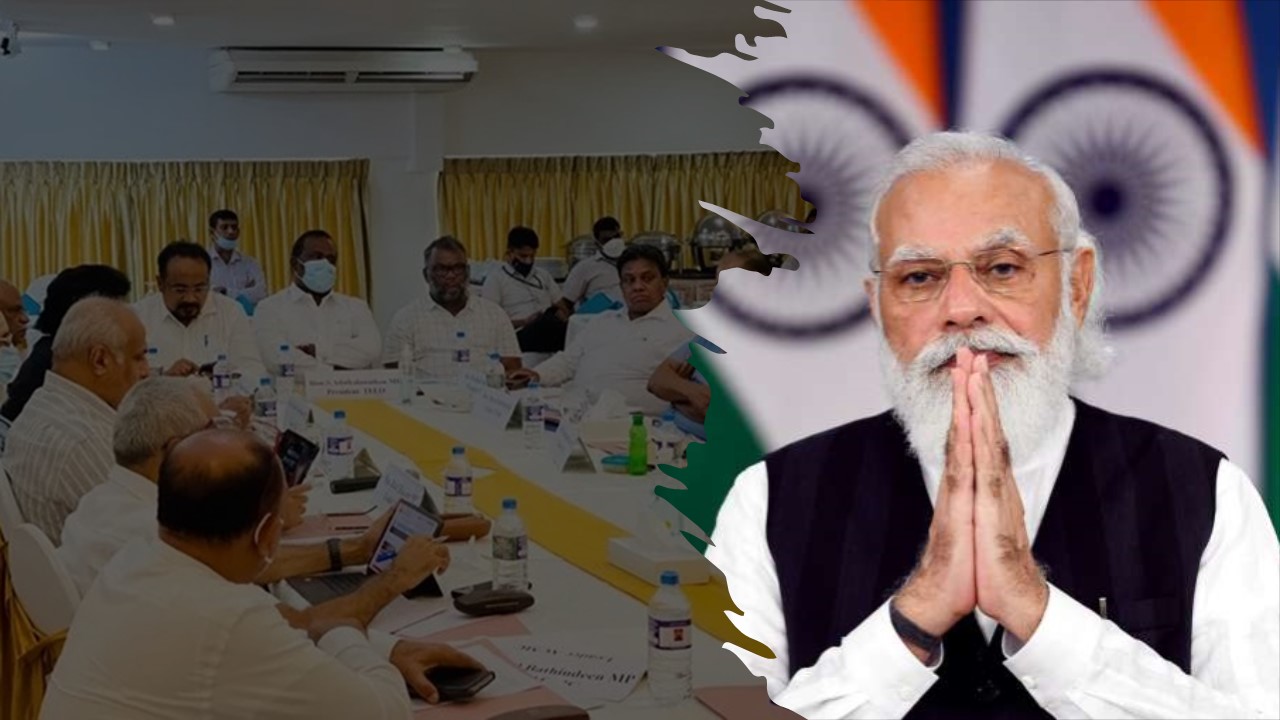
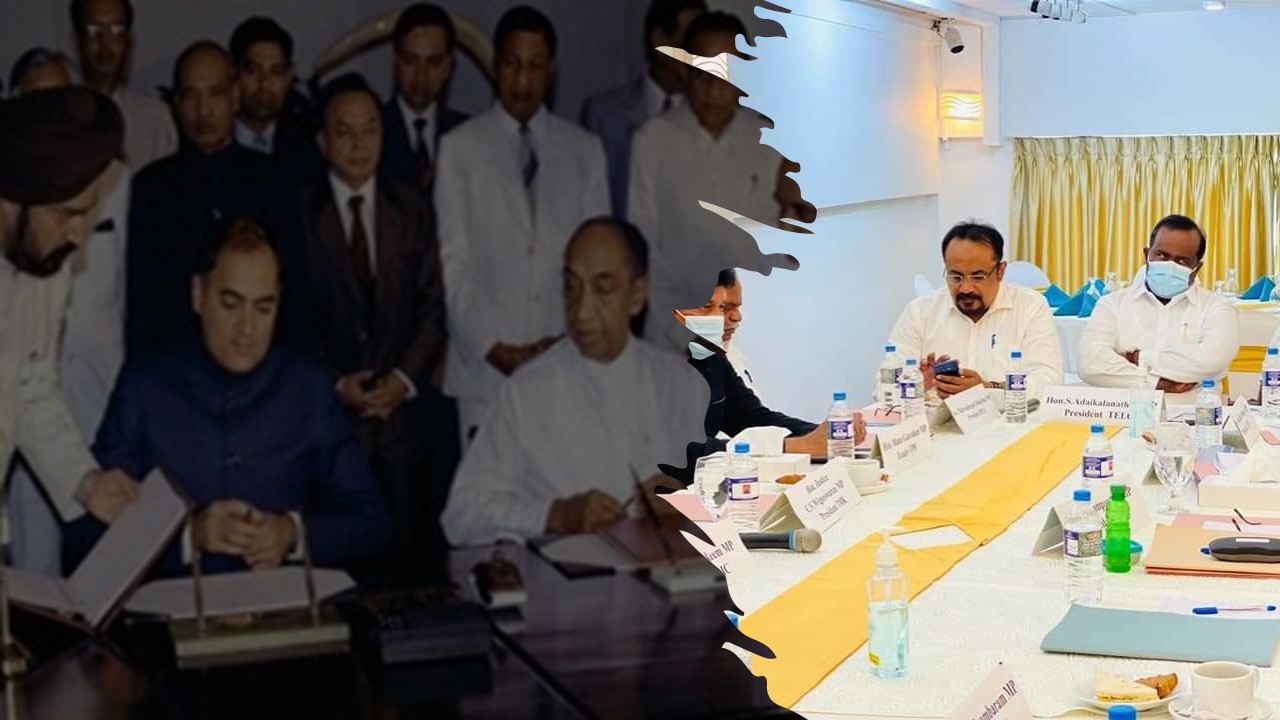
Several Tamil leaders have signed the document to Modi –TELO Leader Selvam

Selvam Adaikalanathan, Member of Parliamentarian and leader of the Tamil Eelam Liberation Organisation (TELO), said leaders of several political parties had signed the document to be sent to the Indian prime minister.‎

He said that he signed a document along with Tamil National Allaince leader, R. Sambanthan, Tamil People’s National Alliance leader, C. V. Vigneswaran, Eelam People’s Revolutionary Liberation Front leader (EPRLF), Suresh Premachandiran, Tamil National Party leader, N. Sri Kaantha, and People’s Liberation Organisation of Tamil Eeelam (PLOTE) leader, Tharmalingam Sitharthan.

The leader of Tamil Progressive Alliance (TPA), Mano Ganesan and the leader of Sri Lanka Muslim Congress, Rauf Hakeem have said to provide support from outside, Selvam Adaikalanathan further said.

It is understood that Illankai Tamil Arasu Kachchi (ITAK) leader Maavai Senathirajah will also be signing the document on 7th January.

Posted in Uncategorized

Lankan dollar salary earners face forcible conversions by banks

A state of confusion appears to have been created by the instructions issued to banks by the Central Bank with regard to conversion of bank balances of resident Sri Lankans who earn in dollars and Lankan migrant workers who remit money to their foreign currency bank accounts.

Some claim that balances in their foreign currency accounts are being forcibly converted into Sri Lankan rupees by banks citing the new conversion rules are ordered by the Central Bank.

They say some banks have resorted to convert the balances in their foreign currency accounts upon seeking their consent, while others have done so without prior notice.

While the people who receive income in foreign currency expressed their dismay over this practice, some irate migrant workers have said they wouldn’t send back money hereafter except for a bear minimum, until the authorities scrap the new conversion rules.

Meanwhile the Central Bank Governor, Ajith Nivard Cabraal who took to Twitter to respond to such claims categorically denied them, calling them both, “rumours”, and “total false”.

“Rumors spread by some mischievous elements that Sri Lankan #banks have been ordered by @CBSL to forcibly convert balances in their customers’ #Forex accounts are totally false. #SriLanka #Fakenews,” he said yesterday.
The extraordinary gazette notification issued on October 28 titled ‘Repatriation of Export Proceeds into Sri Lanka’, covered the services receipts including, “professional/ vocational, occupational, and business services provided to persons resident outside Sri Lanka by persons resident in Sri Lanka”.

It also said the residual amounts of such services income receipts, after meeting several allowable expenses and commitments up to a month are subjected to conversion into Sri Lankan rupees on the 7th day of the following month.

However, “these rules do not apply to inward remittances (worker remittances) to the country by Sri Lankans working abroad,” an explanatory note issued by the Central Bank subsequent to the circular said.

Hence, it begs the question as to how some of the migrant workers, who repatriate their foreign currency earnings,were subjected to these conversion rules as claimed by them.

Further, “proceeds received by non-residents to the accounts maintained in the Offshore Banking Unit solely for collection purposes, where exports are not originating from Sri Lanka, are also not subject to these rules,” the gazette stated.

If instructions from customers were not received by the 7th day of next month for conversion, “banks are required to convert export proceeds by the due date in the absence of documentary evidence from the exporter.”

In December last year, the Bar Association of Sri Lanka filed a writ petition at the Court of Appeal, challenging this rule which gives powers to convert professional fees received in foreign currency.

Posted in Uncategorized

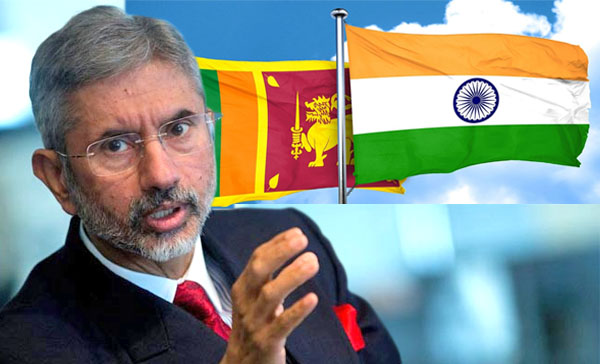
India will support Sri Lanka in these difficult times: Jaishankar

India on Thursday (6) assured Sri Lanka of its support to tide over “difficult times”.

India also welcomed the Trincomalee tank farms project saying it will augment bilateral energy security.

After a phone conversation with his Sri Lankan counterpart Professor G. L. Peiris, Indian External Affairs Minister S. Jaishankar said India will support Sri Lanka in “these difficult times”.

“Greeted FM G.L. Peiris of Sri Lanka in the New Year. A reliable friend, India will support Sri Lanka in these difficult times. Agreed to remain in close touch,” Jaishankar tweeted.


Indian External Affairs Ministry Spokesperson Arindam Bagchi, when asked on the possibility of India extending the credit line to help Sri Lanka overcome its economic crisis, said it has always stood by the people of that country.

On the fishermen issue, Bagchi said that the Indian High Commission in Colombo has been making efforts to ensure the early release of the remaining Indian fishermen detained by Sri Lankan authorities last month.

Sri Lanka had detained a total of 68 fishermen and 10 boats, and 12 of these fishermen have already been released, and the India High Commission is working on the release of the rest, said the spokesperson.

He said both sides are in consultation for the early holding of a meeting of the joint working group on fisheries.

On Sri Lanka’s Cabinet approving the deal to jointly develop the Trincomalee oil tank farm with India, Bagchi said it will boost bilateral energy cooperation.

“We have seen reports that the Sri Lankan Cabinet has approved the development of the Trincomalee tank farms. Energy security is an important area of our bilateral cooperation with Sri Lanka,” he said.

“We are in consultation with the Government of Sri Lanka for the modernization of the Trincomalee tank farms. This will allow for the storage of fuel and will augment bilateral energy security,” Bagchi added.

The agreements to develop Trinco Oil Tank Farm were signed on Thursday (6), said Energy Ministry Udaya Gammanpila.

The Office of the Minister of Energy in a statement late Thursday (6) said that a majority of the tanks at the Trinco Oil Tank Farm which were under Lanka IOC will now be under the Ceylon Petroleum Corporation as a development project.

On the query on extending the credit line by India, Bagchi referred to the visit to New Delhi by Sri Lankan Finance Minister Basil Rajapaksa last month.

“He briefed the Indian side on the economic situation in Sri Lanka and his government’s approach in addressing these challenges. India has always stood by the Sri Lankan people and Sri Lanka is an important part of our neighborhood first policy,” he said.

He said during Rajapaksa’s visit, discussions took place on deepening cooperation in areas of food and health security, energy security, the balance of payment issues, and Indian investments in Sri Lanka among others.

“I understand that further consultations are ongoing,” Bagchi said.

Posted in Uncategorized

Banks in India cautious in dealing with Sri Lanka because of Forex issue

As Sri Lanka grapples with a severe foreign exchange crunch, high street banks in India have turned cautious and selective about their exposures to the island nation.

Several institutions have reduced discounting letters of credit (LC) – the basic instrument for financing trade – issued by many Lanka lenders while others are giving credit to exporters based on the standing of the party, amount, the tenor of the credit, and standing of the bank issuing LCs.

Given the long trade relations, Sri Lanka’s dependence on imports and expectations of credit lines (from India and other countries), and possible currency arrangements, bankers hope that the country would be able to tide over the crisis in the medium term.

At the beginning of December, Sri Lanka’s forex reserves were just enough for a month of imports.

“We have not put a complete embargo on discounting export bills to Sri Lanka. It’s done on the basis of limits available with LC issuing banks,” said a senior official of the State Bank of India, the country’s largest lender.

Among other large banks, HDFC Bank was going slow on handling LCs for exports to Sri Lanka, Axis that has financed many Indian companies with exports to Sri Lanka is being selective, while ICICI Bank has cut limits for Sri Lanka along with some of the other smaller countries for quite some time now. IndusInd, said an official of the bank, is closely monitoring the developments and has been selective in the transactions undertaken.

“There is nothing wrong with banks in Sri Lanka. But when the payment falls due, there may not be enough dollars available in the forex market there,” said a banker.

India’s total exports to Sri Lanka was $3.2 billion in 2020. Oil, ships, boats, pharmaceutical products, sugar, iron and steel, cotton and machinery are among the top export items.

Under the normal trade finance arrangement, an exporter is paid by its bank which discounts the bill after documents like shipping bills, commercial invoices, and bills of lading are submitted to the bank. The bank is paid after a certain time – the credit period which could be up to six months (or a year or more for capital goods) – by the importer’s (here, the Sri Lankan buyer’s) bank.

Banks discounting bills have turned edgy as Sri Lanka is starved of dollars and the Sri Lankan central bank may not be in a position to supply dollars when importers’ banks have to make payments to exporters’ banks in India.

Payments against sight bills, where (under normal circumstances) funds are transferred within five working days, are taking more than a month, said an official with a leading export promotion organisation. Some exporters, said an official of a consumer goods company, are giving 6 to 7-month lines of credit to distributors who undertake exports to Sri Lanka.

Though large MNC banks like HSBC, Citi, and Standard Chartered, which have a long presence in Sri Lanka, continue to extend trade finance with certain precautions, they have the comfort of dealing with their respective Lanka office as the counterparty.

“Some banks are simply not giving any credit, but are simply operating on a collection basis. They are releasing money only after receiving it from the bank in Sri Lanka,” said a mid-sized exporter.

Banks as well as Indian exporters are awaiting the $1.5 billion line of credit. Of this, it is understood that a $500 million line would be issued by Exim Bank of India to Sri Lanka very soon. “Negotiations are on between India and Sri Lanka over how the money would be used. In all likelihood, the use could be restricted to import of oil and other essentials by Lanka,” said a banker. Exim Bank has so far extended 11 credit lines to Sri Lanka aggregating to over $2.12 billion.

Since tourism – which suffered badly after the Easter terror attack and the Covid-19 pandemic – has been the prime source of hard currency for Sri Lanka, banking circles think the country may have to enter into other arrangements if a balance of payment problem persists. “Maybe, the kind of deal that exists between India and Nepal. If tourists from India can spend the Indian rupee in Sri Lanka, it would ensure a supply of rupees that could be used to buy stuff from India. But this may have central banking and regulatory implications and can be put in place only after the pandemic is over and travel restrictions are lifted,” said another person. (Courtesy Economic Times)

SJB Challenges Government To Conduct PC Election: “Public Cannot Be Hoodwinked By Relief Package”

The Samagi Jana Balawegaya today challenged the government to conduct the Provincial Council election.

Addressing a press conference in Colombo, SJB General Secretary Ranjith Madduma Bandara said the govenrment could not hoodwink the public by giving a relief package.

He said the SJB would take the first step in forming a new government at the Provincial Council election.

The PC election has been delayed indefinitely until the report of the Parliamentary Select Commitee (PSC) on electoral reforms.

People’s Bank to pay USD 6.9 million to Chinese fertilizer company today

The People’s Bank has decided to pay USD 6.9 million to the Chinese company that shipped a much-disputed consignment of organic fertilizer to Sri Lanka.

The decision was taken after the Colombo Commercial High Court dissolved the enjoining order preventing the payment on Letter of Credit to China-based Qingdao Seawin Biotech Group Co., Ltd.

On January 03, the enjoining order in question was dismissed as all parties had agreed for a settlement to ship a new stock of standardized fertilizer although the controversial organic fertilizer shipment was not accepted by the island nation.

As per reports, the People’s Bank is expected to make the payment to the Chinese fertilizer firm later today.

Last year, the Ceylon Fertilizer Company (CFC) had secured two enjoining orders from the Colombo Commercial High Court against Seawin Biotech, its local agent and the state-run People’s Bank, preventing the payment on Letter of Credit.

The first court order against the Chinese firm in question was secured on October 23, blocking the People’s Bank from making any payment under a Letter of Credit opened in favour of the Chinese company.

During a previous court proceeding, Additional Solicitor General Susantha Balapatabendi, who appeared on behalf of the CFC, told the judge bench that the Seawin Biotech had shipped a fertilizer consignment, which is a partial shipment worth more than a billion rupees that was procured through a tender process initiated by the Agriculture Ministry.

Although the said Chinese firm was required to ship sterile organic fertilizer under the tender contract, it had admitted in its shipping advice that the consignment may contain microorganisms, he had further told the court.

The National Plant Quarantine Services (NPQS), which tested the sample sent to them, had confirmed the presence of organisms, including certain types of harmful bacteria, the Additional Solicitor General had said, adding that, in this context, the Chinese firm in question had failed to complete the accepted terms of the tender.

As per the terms of the contracts, the payment for the controversial organic fertilizer shipment was slated to be made through a Letter of Credit established via the People’s Bank.

However, on December 14, the Sri Lankan government said it has decided to pay USD 6.7 million to the Chinese fertilizer company, on the advice of the Attorney General’s Department.

According to Agriculture Minister Mahindananda Aluthgamage, the payment includes the cash deposit of USD 5 million placed by the company.

Posted in Uncategorized