China’s loan books carry crucial lessons Sri Lanka By Jeevan Kelum

In our last column published on 24 June titled “Are Sri Lankan banks failing the production economy?”, we wrote about how Sri Lanka’s banks have been failing the production economy due to their risk aversion and lack of lending towards productive sectors of the economy.

To briefly recap, we argued that the banking system plays a significant role in bridging gaps in financial resources and allocating resources in an economy. Lending plays an important role in balancing the structure of the economy and providing credit for capital formation in strategic economic sectors for sustainable and inclusive growth.

This week, we offer the contrasting example of China – an Asian economy which started out as one of the poorest in the world but has since grown to become the largest economy in the world in purchasing power parity terms, lifting 850 million people out of extreme poverty in the process.

Post-Covid stimulus

This analysis looks at data from six of China’s biggest banks which account for over 50% of the sector’s market capitalisation. The banks include Agricultural Bank of China, Bank of China, China Construction Bank Corporation, China Merchants Bank, Industrial and Commercial Bank of China, and Ping An Insurance.

Figure 1 depicts the total volume of loans and advances and their spread between personal and corporate. In 2020, the total stock of personal loans was $ 4.4 trillion, while the total stock of corporate loans was $ 5.7 trillion. This means that 44% of total loans and advances were for personal loans and the remaining 56% was corporate lending.

It is clear from the data that both corporate and personal lending have been increasing since 2017. However, corporate lending in particular has grown by 13% in 2020, perhaps as a response to the Covid-19 outbreak. As mainstream economic theory argues that such lending can be inflationary, it is important to understand how (if at all) this liquidity is being used to support production.

Personal loans and advances

Figures 2 and 3 depict the sector-wise composition of personal and corporate loans in 2020.

In the last four years, residential mortgages have comprised around 74% of the total loan stock. This is parallel to the 11% of corporate loans given to real estate, and 37% of corporate loans given to infrastructural sectors such as “Water, environment, and public utility management”, “Production and supply of electric power, heat, gas, and water, “ and “Transportation, storage, and postal services”. These trends reflect China’s rapid urbanisation and an over 90% home ownership rate which is higher than most advanced economies in the west. This synergy between personal and corporate lending has helped spur the development of the housing industry.

When compared to Sri Lanka, it is noteworthy that loans and advances for personal consumption (including credit card loans) account for 21% of total personal loans and less than 10% of the combined loan book of the six Chinese banks. When considering the loan books of the top eight banks of Sri Lanka, loans for personal consumption account for 25%. This indicates that a significant portion of Sri Lanka’s credit has been directed to consumption (most likely on imports), instead of growth enhancing capital formation.

Facilitating consumption while neglecting production can push a country like Sri Lanka further towards imports dependency, placing pressure on the exchange rate, and therefore the inflation rate too. Sri Lanka is dealing with the legacy and consequences of such policies today.

Corporate loans and advances

Five main sectors account for about 75% of corporate loans and advances in the six Chinese banks under study. These sectors are “Transportation, storage, and postal services”, “Manufacturing”, “Leasing and commercial services”, “Real estate”, and “Production and supply of electric power, heat, gas, and water”. China’s developmental goals of maintaining the production base and strengthening supportive and connective infrastructure are clearly reflected in this spread.

The vast amount of credit provided to infrastructure, combined with China’s low external debt and well developed infrastructure, indicates that the country has been largely self-reliant in terms of financing infrastructure. By contrast, Sri Lanka’s infrastructure development has historically been dependent on financing from foreign multilateral agencies like the World Bank and Asia Development Bank, or bilateral partners like Japan and China. Local private commercial banks’ lending for transport and energy infrastructure is virtually negligible compared to China. Meanwhile, Sri Lanka’s external debt to gross national income (GNI) is 69% compared to China’s 15%.

Long-term lending, long-sighted development

A stand-out feature of the loan books of Chinese banks is the relatively long maturity periods of the majority of loans and advances. Figure 4 shows the maturity period of respective loan stocks as at the end of the year 2020 of six major financial institutions in China. About 50% of the Chinese corporate loans are due after five years, and another 22% due in the one-to-five-year period. In other words, about 70% of loans and advances granted by Chinese banks are medium to long term. Businesses in China therefore enjoy patient financial support to expand the production and sustain growth.

By comparison, most loans and advances by Sri Lankan banks are concentrated in the five-year category. This tends to drive Sri Lankan businesses towards the pursuit of short-term profits, which in turn contributes to macroeconomic instability and poor economic planning. Short-term lending is fundamentally incompatible with policy goals of developing infrastructure and technology – both of which require patient, long-term financial support.

Running with a balance sheet mismatch

When banks start to fund long-term projects and offer grace periods and extended credit terms, a balance sheet mismatch is one of the major concerns of many treasury managers (Figure 5). Depending on the economic condition in the country, many risk-averse bankers resort to minimise this risk by encouraging short-term trade-oriented investments. However, bankers have a fiduciary duty to secure the depositor’s money and pay the return. So, how do China’s banks manage this mismatch while contributing to growth?

In total, we can see a significant net liability position in the on-demand category, and after the three-month category, it turns to a net asset position. Theoretically, these banks have funded long-term projects using short-term financing and therefore have critical liquidity risks. However, these banks manage their liquidity and continue to maintain loan books to fund strategic sectors. A comprehensive study on this area will help Sri Lankan banks learn strategies and best practices for risk mitigation and liquidity management.

Maintaining policy consistency

China’s domestic credit to the private sector by banks (Figure 6) has been increasing rapidly over the years and crossed 180% of gross domestic product (GDP) by 2020. By contrast, Sri Lanka’s risk-averse banking sector has a much lower leverage, with bank credit to the private sector amounting to about 50%.

One of the main contributors to the success of the Chinese economy, and the high volume of credit to the private sector, is policy consistency. Since 1978, China’s policy rates have been maintained in single-digit figures except on a few occasions (Figure 7). As the regulatory body of the banking system and the facilitator of economic development, People’s Bank of China (central bank of China) maintains low policy interest rates to reduce the cost of financing corporations and to direct resources to strategic sectors. Post-2000, the country’s exponential economic growth has been fuelled by low interest rates. The policy rate was reduced even after the Covid-19 outbreak, with an intention of heating up the economy. Strong economic policy consistency led by political stability in the country is the key to push the economy where it is now today.

Conclusion

Over the past decades, Sri Lanka’s policymakers have lacked a strategic plan to shift the economy from a services and consumption base to a manufacturing and production base. The few Asian countries that managed this transition did so through bold policy moves, including harnessing the banking system to re-engineer the structure of the economy. Countries like China, Singapore, South Korea, and to an extent even Bangladesh, have done what Sri Lanka has failed to do, thereby ensuring social stability and a higher standard of living for their people.
Sri Lankan policymakers and bureaucrats have to take a holistic approach to align all elements of the economy towards well-defined national economic objectives. When the Central Bank reduces the policy rates to increase liquidity, with the objective increasing investment and production, measures such as targeted lending must be put in place to ensure that commercial banks pump this liquidity towards strategic sectors.
Moreover, it is important that such policies are consistent and maintained for a period of time sufficient to allow investments to mature and generate profits.

(The writer holds a BSc. in Accountancy (Sp), FCA, ACMA, and MBA-PIM (SJP) and is Vice President (Finance, Research, and Strategic Development) at Econsult Asia, which is an economic research and management consultancy firm with an alternative development outlook)
Posted in Uncategorized

In Sri Lanka, teachers resist Bill ‘militarising’ education

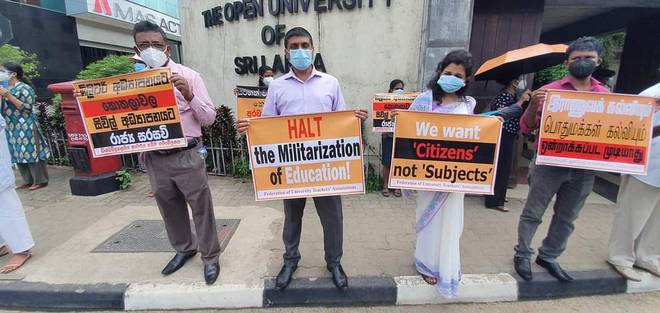
Academics from Sri Lanka’s state universities on Wednesday withdrew from online teaching and administrative duties in resistance to a government Bill that, they say, threatens to “militarise” education.

University teachers also held a silent protest across campuses on the island, according to Harshana Rambukwella, a spokesman for the Federation of University Teachers Associations’ (FUTA) campaign against the General Sir John Kotelawala National Defence University (or KDU) Bill.

“The FUTA’s main demand is that the government keep military and civilian education separate,” Prof. Rambukwella said. “This Bill is not just about one university, it is essentially a model of private education, subsidised by the government and run by the military. It is an assault on the country’s public education system,” he said.

The KDU Bill, scheduled for parliamentary debate on August 6, seeks to change the governance structure of the University that was set up in 1980 as an Academy exclusively for the tri-forces, and named after Sri Lanka’s former Prime Minister. The proposed changes could pave way for a greater military role in education policy and administration, academics warn.

With their symbolic action, the university teachers joined other teacher and student groups calling for withdrawal of the controversial Bill. The Ceylon Teachers’ Union (CTU), a body of school teachers across the country, and the Inter University Students’ Federation (IUSF), one of the largest student bodies in Sri Lanka, are also opposing the Bill. Earlier this month, dozens, including CTU general secretary Joseph Stalin, were arrested during a protest against the Bill, on charges of violating “health regulations”. They were forcibly quarantined for a week.

Following wide condemnation of the arrest, including by the Bar Association of Sri Lanka, they were released. “Discussions with the government have been very disappointing so far, we will continue our strike action,” Mr. Stalin told The Hindu, of the CTU’s ongoing protests against both, the KDU Bill and for a “long-pending” salary hike.

‘Growing militarisation’

Concerns over militarisation in Sri Lanka grew following the election of ex-military officer Gotabaya Rajapaksa as President in November 2019. In her report in January this year, UN Human Rights Chief Michelle Bachelet referred to “the accelerating militarisation of civilian governmental functions”, citing the appointment of at least 28 serving or former military and intelligence personnel to key administrative posts.

For a decade now, the Tamil people living in the north and east, who have faced the brunt of post-war militarisation, have repeatedly objected to the visible presence and participation of the army in civilian activities, including agriculture. The growing momentum and media coverage of the ongoing protests against the KDU Bill lately have put militarisation in the spotlight in the country’s Sinhala-majority south.

Those slamming the Bill are flagging the possibility of a military-run, parallel structure of higher education, with provisions to quell students’ right to free expression and dissent. In a recent Oped article, Opposition legislator and former professor Harini Amarasuriya wrote: “The proposed KDU Bill offers a privatised, military model of higher education, which will take Sri Lanka on a trajectory towards militarisation of society as a whole.”

President Gotabaya Rajapaksa told the politically influential Maha Sangha [Buddhist clergy] recently that the “obstacles” in the “University Grants Commission Act” would be removed, and the KDU would be brought under its purview. “It is a mistaken reference to Sri Lanka’s Universities Act, as there is no UGC Act,” Prof. Rambukwella said. Questioning the “ad hoc” amendment of laws governing the University system without wider consultation, he said: “Even this move is a back door attempt to bring the KDU under the purview of the University Grants Commission, which has neither the authority nor competence to oversee military education. The objective of both will only get diluted.”

Source:The Hindu

Vaccine card to be made compulsory for inter-provincial travel from August 1 – LPBOA

The Lanka Private Bus Owners’ Association (LPBOA) has decided to make COVID vaccine cards compulsory for inter provincial travelling from August 1.

LPBOA President Gemunu Wijeratne said requests in this regard have already been sent to the President and Transport Minister.

He also requested the government to issue an identification card as proof of vaccination and such document would be treated as a pass for inter-provincial travelling.

Wijerathne further said that all bus operators in the Western Province (WP) should ensure they are inoculated by August 15. If not, permission will not be granted for them.

A relief period will be allowed until the end of August for the bus crew to get their vaccines those who operate outside WP, Wijerathne added.

Sri Lanka rupee dollar swaps turn positive at the short end

Sri Lanka’s short end swap rates turned positive after dollars flowed into banks from government debt repayments, thought the interbank market for outright trades is mostly inactive, while bond yields were mostly flat, market participants said.

The kerb market for US dollar was around 222.70/223.50 rupees, traders said.

In the swap market spot/1 month was quoted at 00/60 cents positive for the first time this week since.

Spot/2 months was 00/05 positive

Spot/3 months was negative 15/00

Spot/6 months was -300/-200

Spot/12 months was -650/-500

Sri Lanka’s forward rates inverted in late 2020 as downgrades made it harder for banks to borrow abroad and counterparties cut lines. Authorities were unable to fully roll over Sri Lanka Development Bond maturities.

This week a billion dollar bond was repaid, with 310 million dollars to come back to resident holders.

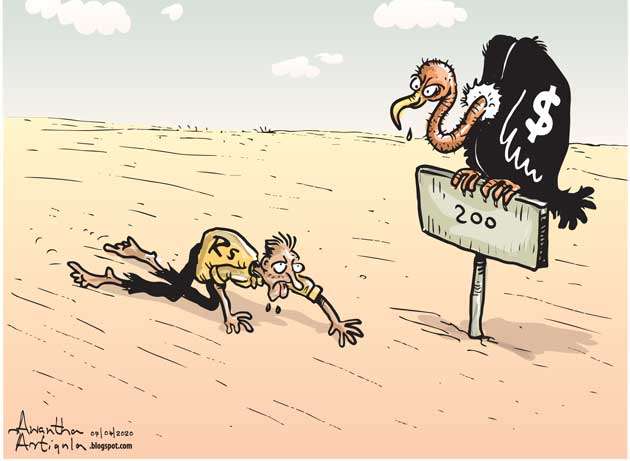
Sri Lanka’s interbank forex markets are not allowed to deal above 200 to the US dollar and import customers are not allowed to be given dollars above 203 to the US dollar in curbs announced after money printing triggered forex shortages.

However parallel markets have developed, with foreign and some smaller banks paying higher rates of around 206 for negotiated deals.

The central bank’s indicative spot rate was 199.9033 on July 28, down from 199.9000 on July 28.

The buying rate for telegraphic transfers was 197.6023 and the selling rate was at 202.8977 on Thursday from 197.9023 and the selling rate was at 202.8977 on Wednesday

In bond markets, short tenor gilt yields were steady while the long tenors remained unchanged.

A 2-year bond maturing on 15.12.2022 closed at 5.65/75 per cent down on Thursday, from 5.68/75 on Wednesday.

A bond maturing on 15.11.2023 closed at 6.35/38 per cent on Thursday, steady from 6.35/40 per cent at Wednesday’s closing.

A bond maturing on 1.12.2024 closed at 6.85/88 per cent Thursday, up from 6.78/87 percent on Wednesday.

A bond maturing on 01.02.2026 closed at 7.40/50 per cent on Thursday, up from 7.35/50 per cent on Wednesday.

A newly auctioned bond maturing on 01.05.2028 closed at 8.10/20 on Thursday.

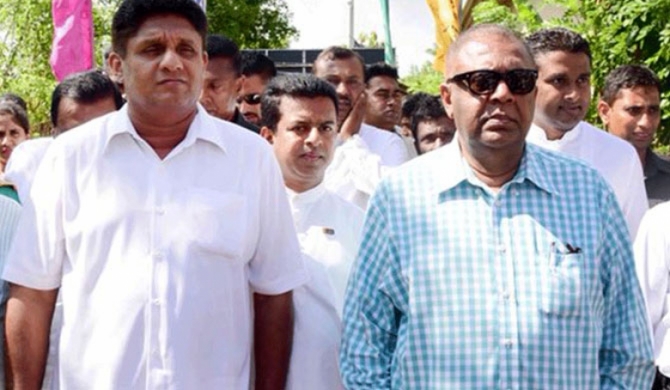
Mangala rejects invite saying SJB and SLPP two sides of same coin

Former Minister Mangala Samaraweera has rejected an invitation to consider rejoining the Samagi Jana Balawegaya (SJB) saying the SJB and the Sri Lanka Podujana Peramuna (SLPP) are two sides of the same coin.

SJB Working Committee member Rehan Jayawickrama had said yesterday that if Samaraweera is interested in rejoining the party then he is willing to raise the matter with party leader Sajith Premadasa.

In a brief statement posted on Facebook in response to a news published on Colombo Gazette, Samaraweera said that he decided to enter active politics in 1988 from the Sri Lanka Freedom Party (SLFP) which he felt was the most ‘liberal’ political party at the time.

He said he joined the SLFP despite some of its dubious past policies especially in 1956 and 1970, in the face of extra-judicial killings carried out by killer squads in the south from both ends of the divide.

“In 1994, the country elected Chandrika Bandaranaike Kumaratunga, the most liberal minded President so far and in 2005, I actively participated in Mahinda Rajapaksa’s campaign believing that he would continue with the earlier policies,” Samaraweera said.

However, he said that when he was sacked from the Cabinet in 2007 and then invited to rejoin the Government several times, he regretted all such invitations because the new SLFP under Mahinda Rajapaksa was taking the country in a direction his conscience nor his political beliefs could possibly endorse as with the SJB today.

“Sri Lanka Podujana Peramuna and Samagi Jana Balawegaya are two sides of the same coin. Our country is desperately gasping for a total u-turn in its policy direction. Thank you, Rehan but I have to regret your kind invitation; fondest regards to your leader,” Samaraweera said.

Recently Samaraweera spearheaded the launch of an apolitical movement called the ‘Radical Centre’ by a group of multifaceted multi-ethnic youth calling themselves true patriots.

Speaking at the launch Samaraweera was quoted as saying that the present Opposition has failed as it has gone beyond ‘Sir’ in proposing an ideology containing racism and majoritarianism as a solution.

Posted in Uncategorized

No passenger number limitations for flights carrying fully vaccinated passengers

Permission has been granted to all airlines for the carriage of fully vaccinated passengers without any limitation to the number of passengers allowed per flight.

This decision will not apply to restricted countries, the Chairman of the Civil Aviation Authority of Sri Lanka (CAASL) stated.

Accordingly, flights arriving in Sri Lanka may carry passengers without any limitations to the number, if the passengers have passed 14 days since full vaccination.

The passengers are required to be in possession of their vaccine certificates.

This will also include passengers arriving for hotel or government quarantine and passengers arriving via the Sri Lanka Tourism Bio Bubble.

However, the limitation of 75 passengers per flight will still apply for passengers not arriving through the Sri Lanka Tourism Bio Bubble and passengers who are not vaccinated or only partially vaccinated.

This, too, will apply to unvaccinated or half-vaccinated passengers arriving for hotel and government quarantine.

Posted in Uncategorized

Japan provides Rs.488 million grant aid for Human Resource Development

The Government of Japan has provided a grant aid worth approximately Rs.488 million for the Human Resource Development Scholarship (JDS) project to enhance the capacity building of public sector officials.

The sum of Japanese Yen 271 million (approximately Rs.488 million) grant will be extended to train young executive officers in the public sector at various universities in Japan and develop their skills in order to qualify them as future national leaders in their respective fields.

Under the project, 17 public sector officials will be sent to pursue a 2-year Master or PhD degree from 2022 to 2024. Areas of their degrees cover Public Policy, Public Finance, Economics, Business Management, Environmental Management, Disaster Management and Climate Change.

The Exchange of Notes for this project was signed on 29th July 2021 at the Ministry of Finance between H.E. SUGIYAMA Akira, Ambassador of Japan to Sri Lanka and Mr. S R Attygalle, Secretary, Ministry of Finance.

As a long-standing friend, Japan has placed great emphasis on assistance in human resource development via many capacity building and skills development programs in order to accelerate long-term sustainable economic development.

Since its inception in 2010, the JDS project has supported 171 public sector officials in Sri Lanka. The project will contribute not only to enhancing individual capacities but also to improving the institutional capacity of the public sector in Sri Lanka, which is the foundation for the prosperity and further development of Sri Lanka.

JDS fellows are also expected to solidify foundations to further bilateral relations with Japan by utilizing their human network developed through academic and social activities while in Japan.

US Ambassador keen on conclusion of New Fortress’s energy deal in Sri Lanka

U.S. Ambassador Alaina B. Teplitz, who commented on the proposed investment by the U.S. based New Fortress Energy (New Fortress”) in Sri Lanka’s energy sector, said she would argue for it as a crucial project for Sri Lanka needing capacity improvement and new technology in the related field.

The company announced earlier that it signed a Framework Agreement with the Sri Lankan government to construct a new offshore liquefied natural gas (LNG) receiving, storage and regasification terminal (the “Terminal”). The Terminal will be located off the coast of Colombo to supply gas to the country’s power plants located in the Kerawalapitiya Power Complex.

Making her remarks during a round-table with a team of journalists yesterday, she said it was a private investment, and the company would bring its own money, not a loan, to be put on the ground in Sri Lanka.

The ambassador expressed optimism that it could be completely.

“We absolutely support having a fair, clear, consistent framework. We absolutely support ensuring that business deals are not made around corrupt practices. The importance of the investment is meeting the highest environmental, labour standards. That is something American companies bring to the table as well as innovation and good technology,” she said.

She added that training and education of the workforce were important.

The U.S. ambassador also emphasised the need for Sri Lanka to work out a programme with the International Monetary Fund (IMF) to revive the economy which, she said, is in crisis. She said no other alternate method would provide foundational requirements for the economy to regain health to grow at an accelerated pace. Therefore,she said an arrangement with the IMF would be the best solution.

Sri Lanka’s import ban puts hundreds of businesses in jeopardy

COLOMBO — Amid a deepening foreign exchange crisis that forced the Sri Lankan government to impose an indefinite import ban last year to save hard currency, hundreds of businesses are fighting for survival. Smaller ones have shut down, costing many their livelihoods.

Since March last year, the government has banned imports ranging from motor vehicles and air conditioners, to beer, clothing items, cosmetics and even spices such as turmeric — an essential cooking item for most of local households.

Sri Lanka’s economy took a thumping last year after the country was forced to lock down following the spread of COVID-19. Tourism is one of the country’s main foreign exchange earners, but with global and local travel restrictions tourism earnings plunged to just $957 million in 2020, down from $3.6 billion the previous year.

Steve Chi, who ran a successful motorcycle dealership as an authorized seller of Suzuki motorbikes in the west coast city of Negombo, has fallen victim to the import ban and was forced to shut down his business last year. “They imposed the ban in March and by around the sixth month we didn’t have stocks to [stay in] business,” he told Nikkei Asia.

According to Chi, the import ban has caused the secondhand market to skyrocket. Used scooters sell for more than 500,000 Sri Lankan rupees ($2,510), where a brand-new scooter of the same model used to go for 350,000 rupees before the ban. He expressed disappointment over the government’s failure to take care of businesses, their owners, and employees who have fallen victim to the ban.

“COVID has [had] a massive impact, but the import ban is a bigger issue for us,” he said.

The country’s leading automotive association, the Ceylon Motor Traders Association (CMTA), is echoing the sentiments of many other businesses that rely on imports. Yasendra Amerasinghe, the group’s chairman, said the impact on the industry has been “drastic.”

“It has been difficult on all our members … because we can’t plan ahead as we don’t know how much longer it will take for normalcy to be restored,” he said. CMTA members directly and indirectly employ over 32,000 people. Sri Lanka typically imports around 50,000 to 60,000 vehicles a year.

“It has been quite a challenge to continue to operate without resorting to mass-scale layoffs, but already we have small dealerships in rural areas who have been forced to close up for now and are engaged in other businesses to survive,” Amerasinghe said.

The country’s foreign reserves stood at $4 billion at the end of June, down from $5.6 billion at the end of 2020. To boost reserves, Sri Lanka obtained a $1.5 billion currency swap from China early this year, a $250 million swap from Bangladesh and a $400 million swap from India, which will be available in August.

In a statement issued on July 27, Money, Capital Market and Public Enterprises State Minister Ajith Nivard Cabraal said after the repayment of the international sovereign bonds of $1 billion on the day, Sri Lanka’s foreign reserves total around $3 billion now.

W.A. Wijewardena, a former deputy governor at the central bank, said that reserves in Sri Lanka have fallen to a critically low level, causing forex to disappear from the formal market and sowing the seeds for a lucrative black market. The official exchange rate is 202 rupees to the dollar, while the black market offers up to 236 rupees per dollar. “Normally, in a healthy market, that margin should be about 1 to 2 rupees,” he told Nikkei.

Last week, Moody’s Investors Service placed Sri Lanka’s Caa1 foreign currency long-term issuer and senior unsecured debt ratings under review for a downgrade, while earlier this month Fitch Ratings downgraded Sri Lanka to the CCC category and disclosed that over the next five years, the country has to find $29 billion to service its debts.

After a quarter century-long war ended in 2009, Mahinda Rajapaksa, Sri Lanka’s former president, turned to China to fund various infrastructure projects, especially in Colombo and his hometown, Hambantota. Some projects in Colombo, including Mattala International Airport and the Lotus Tower, were seen as a colossal waste of public money. The tower remains closed to the public despite the completion of construction.

Sri Lanka’s trading partners have sounded the alarm over the import ban. The value of European Union exports to Sri Lanka fell from 1.24 billion euros in 2019 to 904 million euros in 2020, a decline of 27% and the lowest figure in 10 years. Sri Lanka mainly imports machinery, pharmaceuticals, iron and steel products, and vehicles from Europe.

“The EU continues to have serious concerns with the broad import restrictions imposed by Sri Lanka, in various forms, since last year,” a representative from the Delegation of the European Union to Sri Lanka and Maldives told Nikkei, adding, “The EU has repeatedly called upon the Sri Lankan authorities to uphold [their] World Trade Organization commitments and the EU has raised this issue again at the WTO Committee on Trade in Goods earlier in July 2021.”

In April, President Gotabaya Rajapaksa announced the government will ban imports of chemical fertilizers, which cost the country $400 million annually. However, the former chairman of the Sri Lanka Tea Board, Rohan Pethiyagoda, warns that barring fertilizer imports will hurt Sri Lanka’s tea production and exports.

After apparel, tea is among the country’s top exports. Tea grown in Sri Lanka is popularly known as Ceylon Tea. The industry employs over 1 million people, directly and indirectly. Export earnings from tea also contribute 2% to Sri Lanka’s gross domestic product.

Pethiyagoda stressed that changing agricultural policy in an ad hoc manner could make problems affecting the sector even worse. “We can say we are going to use organic fertilizer, but there is no clear definition as to what constitutes an organic fertilizer,” he said.

He expressed concern for the country’s tea exports because the ban extends to other agrichemiccals. He said that the chemicals that are used in Sri Lanka are approved by the World Health Organization and the Food and Agriculture Organization. “When you suddenly change a policy, you have to be very careful about what the impact of the change will be,” he said.

Sri Lanka’s tea exports brought in 230 billion rupees last year. This year, from January to June, shipments amounted to 136 million kilograms worth 127.83 billion rupees, compared with 106 billion rupees during the same period in 2020.

Source:asia.nikkei

Posted in Uncategorized

Body of teen who died at Rishad’s house to be exhumed on Friday

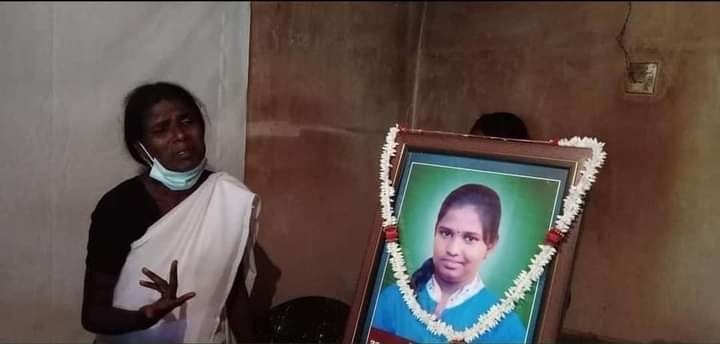
The body of the 16-year-old girl who died while being employed at the residence of former Minister Rishad Bathiudeen, is to be exhumed on Friday.

According to the Police, a special medical team has been appointed to conduct a second post-mortem after the body is exhumed at the Dayagama Cemetery.

The Colombo Magistrates’ Court had this week issued an order to exhume the body to conduct the fresh post-mortem.

The court also ordered the wife of the former Minister, his father-in-law and brother-in-law and a broker to be remanded until 9th August.

The wife and father-in-law of the Parliamentarian and a broker were arrested over the death of the 16-year-old girl at the residence of the former Minister in Colombo. The broker had introduced the child to the family.

Meanwhile, the MP’s brother-in-law was arrested over allegations of sexually abusing a 22-year-old domestic worker at the residence of the MP between 2015-2019.

The girl had claimed she was sexually abused twice by the MP’s brother-in-law.