

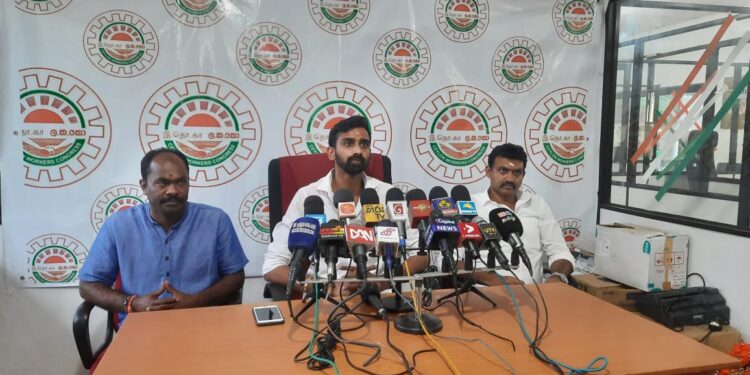
The announcement has fuelled widespread debate over whether the new platform marks the emergence of a new political force or simply an issue-based coalition within the Opposition. On 13 July, six minority parties announced the formation of a common platform comprising Ceylon Workers’ Congress (CWC) General Secretary Jeevan Thondaman, Ilankai Tamil Arasu Kachchi (ITAK) M.A. Sumanthiran, Tamil Progressive Alliance (TPA) Leader Mano Ganesan, Sri Lanka Muslim Congress (SLMC) Leader Rauff Hakeem, All Ceylon Makkal Congress (ACMC) Leader Rishad Bathiudeen, and Democratic Tamil National Alliance (DTNA) Leader Selvam Adaikkalanathan. The move has intensified speculation over the alliance’s political significance, its ability to bridge the differing priorities of Tamil-speaking communities, and its implications for the future of the Opposition.
In an interview with Ceylon Today, CWC’s Jeevan Thondaman addressed questions over the alliance’s objectives, its relationship with the Opposition, how it intends to bridge the differing priorities of the Northern, Eastern, Hill Country Tamil and Muslim communities, and whether the platform can move beyond identity politics to deliver meaningful outcomes for Tamil-speaking people across Sri Lanka.
Excerpts of the interview follow:
The Alliance was not prompted by one particular event or election
What prompted the formation of this six-party alliance at this particular moment?
A: This alliance was formed because we believe Sri Lanka is at an important stage. While the country has made progress since the economic crisis, many long-standing political and governance issues affecting Tamil-speaking communities remain unresolved.
This was not prompted by one particular event or election. It is the result of continued discussions and a shared belief that cooperation will always achieve more than fragmentation. When we speak together on issues that affect our communities, our voice becomes stronger and more constructive.
Is this primarily a pressure group within the Opposition, or the beginning of a new political front?
A: It is neither. This is a platform for cooperation among parties representing Tamil-speaking communities. Each party continues to retain its own identity, leadership and political independence. We have simply agreed to coordinate on matters where we share common concerns. Our immediate focus is effective cooperation and better representation, not creating another political party or political front.
What gap do you believe this alliance fills that existing Opposition structures have failed to address?
A: The parties represented on this platform have different constituencies and political histories, but we also face several common issues that require a coordinated approach. We have agreed to work together on three immediate priorities, introducing a new Constitution, the early conduct of Provincial Council Elections and addressing land-related issues affecting Tamil-speaking communities. Speaking together on these matters gives greater weight to the concerns of the people we represent.
Could this eventually evolve into a formal political alliance with a common candidate at future national elections?
A: It is far too early to discuss electoral arrangements. Today, our focus is on working together in Parliament and on issues affecting the communities we represent. Political decisions relating to future elections can be considered when the time comes. Our success should be measured by what we deliver for the people rather than speculation about future candidates.
The common thread is not that we agree on everything
The six parties have different political histories and priorities. What is the common thread that binds you together?
A: We share several core principles. We believe in democracy, equal citizenship, social justice, constitutional governance, peaceful political engagement and protecting the rights of the people we represent. Our political histories may differ, but our commitment to these principles is what brings us together. The common thread is not that we agree on everything. It is that we agree on the key issues that require immediate attention. We are united in calling for a new Constitution, the early conduct of Provincial Council Elections and meaningful solutions to longstanding land issues affecting Tamil-speaking communities. These are concerns shared across the North, East, Hill Country and Muslim communities.
We have also agreed that each constituent party will nominate two representatives to analyse, review and submit a comprehensive report setting out their objectives and priorities. That process will help us identify areas of consensus and, in due course, develop a common roadmap for the platform.
Beyond that, every party retains its own identity and political position, but on the issues where we agree, we believe our collective voice is stronger than individual efforts.
How will this alliance function when its members have disagreed on major national issues in the past?
A: Differences are normal in any democracy. What matters is that we now have a mechanism to consult one another before taking positions on issues affecting our shared interests. We do not expect everyone to agree on everything, but we do expect mature discussion and mutual respect.
What mechanisms have you established to resolve disagreements and prevent internal conflicts?
A: The alliance will function through regular consultation and consensus. There will be continuous discussions among party leaders and representatives before major decisions are made. Open communication and mutual respect will be the foundation of this partnership.
Are there issues on which the alliance has deliberately agreed to disagree?
A: Yes. Every party retains its own identity and political position. Where issues fall outside our common agenda, parties remain free to express their own views. This platform is based on cooperation, not uniformity.
Beyond minority issues, what common positions have you reached on the economy, education, governance and constitutional reform?
A: At this stage, our common agenda is focused on the priorities we announced publicly, namely a new Constitution, early Provincial Council Elections and resolving land-related issues. As discussions continue, we hope to expand cooperation into other national issues such as economic development, education and governance where there is common ground.
Will the alliance publish a common policy document or roadmap?
A: We have already outlined our immediate priorities publicly. As this platform develops, we will certainly consider publishing a broader framework that reflects the areas where all constituent parties have reached consensus.
We reject extremist politics
Sri Lanka has long struggled with politics based on ethnicity. How will this alliance avoid reinforcing ethnic divisions?
A: Our intention is exactly the opposite. Recognising the concerns of different communities does not divide the country. Ignoring those concerns often creates greater division. This alliance is committed to constitutional democracy, equality, reconciliation and inclusive development. We reject extremist politics. Our objective is to strengthen dialogue between communities while ensuring every citizen feels equally represented.
Many Sri Lankans are looking beyond identity politics towards economic recovery and good governance. Why should voters see this alliance as a step towards national unity rather than another ethnic based grouping?
A: Economic recovery and national unity cannot exist without inclusion. This platform is built around constitutional democracy, equal citizenship and ensuring that every community has confidence in the institutions of the country. We believe a united Sri Lanka is built by ensuring every citizen feels respected and included in the country’s progress.
Can a platform built around Tamil-speaking communities eventually evolve into a genuinely national political movement?
A: Every national movement begins by addressing the real concerns of people. If we demonstrate responsible leadership and practical solutions, there is no reason why our ideas cannot appeal more broadly. Our values are based on equality, democracy and shared national progress, which benefit every Sri Lankan.
The CWC joins this platform as an equal partner
How will you build a meaningful common agenda without one group’s concerns overshadowing another’s?
A: Every community has its own history and priorities. This platform respects those differences while recognising that many challenges are shared. Every constituent party has an equal voice, and every community’s concerns will receive equal attention. Cooperation works best when it is based on mutual respect.
Plantation leaders have long complained that Hill Country Tamil concerns, including representation in areas such as Vavuniya, have often been ignored by Northern Tamil political leadership. What guarantees do you have that this alliance will be different?
A: The strongest guarantee is equal partnership. The CWC joins this platform as an equal partner and will continue to speak directly on behalf of the Hill Country Tamil community. Our priorities will be represented by us and not through anyone else.
Why should Hill Country Tamils trust that their issues will receive equal attention within this platform?
A: Because our participation ensures that those issues remain at the centre of the discussion. Housing, land ownership, education, employment, estate infrastructure and political representation will continue to be priorities. We joined this platform because we believe it strengthens our ability to advocate for our people.
Is the current government attending to the plantation sector as expected?
A: There have been some positive initiatives, and we will always acknowledge progress where it happens. However, many long-standing issues remain unresolved. Land ownership, infrastructure, education, healthcare and sustainable livelihoods still require much greater attention. We will continue to engage constructively while holding the government accountable where necessary.
Were the Dimbula and Watawala cyclone-affected people given their welfare by the Government?
A: Relief assistance was provided, and we appreciate the efforts of officials who worked during a very difficult period. However, many families still require long-term support, including permanent housing, livelihood assistance and proper rehabilitation. We will continue to raise these issues until affected families receive the support they deserve.
Did the Government want the CWC to support any of their initiatives for the plantation sector?
A: Governments often engage political parties on matters affecting national development. Our position has always been consistent. If a proposal benefits the plantation community, we are prepared to support it regardless of who presents it. Our decisions are based on the interests of our people, not politics.
What specifically can this alliance achieve for the Hill Country Tamil community that previous political platforms could not?
A: It gives Hill Country Tamil issues a stronger collective voice alongside those of the Northern, Eastern and Muslim communities. Whether it is constitutional reform, land rights or strengthening democratic institutions such as the Provincial Councils, our concerns will now be advanced through a united platform while ensuring that the unique needs of the Hill Country continue to be articulated by us.
This, however, is not an electoral alliance
Critics argue that only selected Hill Country Tamil leaders have been included while others were left out. Why was this approach taken?
This is not a closed platform. Every alliance has to begin somewhere. We remain open to engaging with others who share the same objectives and want to work constructively for the benefit of our communities.
Was there an attempt to include all Hill Country Tamil political parties? If not, why?
The TPA has also joined this platform, and together the CWC and TPA are the two parliamentary parties that primarily represent the interests of the Hill Country Tamil community. This is not a closed platform. Discussions have already begun, and we welcome others who share our objectives to join and strengthen this collective effort.
Does this alliance genuinely represent all Tamil-speaking communities, or only the political parties that have joined it?
No alliance can claim to represent every individual. We represent the parties that have voluntarily come together while remaining committed to engaging civil society, religious leaders, youth organisations, women’s groups and professionals. Our aim is to broaden participation over time.
Has the Ceylon Workers’ Congress obtained the support of its members and grassroots before joining this initiative?
A formal political alliance would require approval through the CWC National Council. This, however, is not an electoral alliance. It is a parliamentary platform that was discussed over a long period with the party’s senior leadership to enable us to speak with a common voice on issues that affect our people while each party retains its own identity.
If, in the future, this were to evolve into an electoral alliance, we would follow the CWC’s formal decision-making process through the National Council.
Does this alliance have the confidence and support of Opposition Leader Sajith Premadasa?
This platform is independent of any single political party. At the same time, the CWC continues to function as part of the Parliamentary Opposition. This initiative is intended to strengthen cooperation on issues affecting Tamil-speaking communities and should not be viewed as being directed against anyone.
Will you continue to function within the SJB-led Opposition in Parliament, or independently?
The CWC remains part of the Parliamentary Opposition. Our role in Parliament remains unchanged. This platform simply allows parties representing Tamil-speaking communities to coordinate more effectively on issues of common concern.
NPP Minister Ramalingam Chandrasekar has said that no alliance can shake the current Government, and we believe it’s over this new alliance. What is your response?
A: We did not come together to shake any government. We came together to ensure that commitments already made to the people, including a new Constitution and Provincial Council Elections, are implemented. If the Government fulfils those promises, we will acknowledge it. If it delays them, we have a responsibility to raise those concerns democratically.
Critics argue that Tamil and Muslim parties have not always supported each other’s key political demands in the past. What assurances can you give voters that this partnership is based on genuine long-term cooperation rather than short-term political calculations?
A: History has had its differences, but it has also shown that cooperation is possible when there is trust and mutual respect. This partnership is based on the understanding that many of the challenges facing our communities require collective solutions. Ultimately, people will judge us not by our words but by our actions. Our commitment is to work together responsibly, deliver practical results and contribute to a more inclusive and united Sri Lanka.