

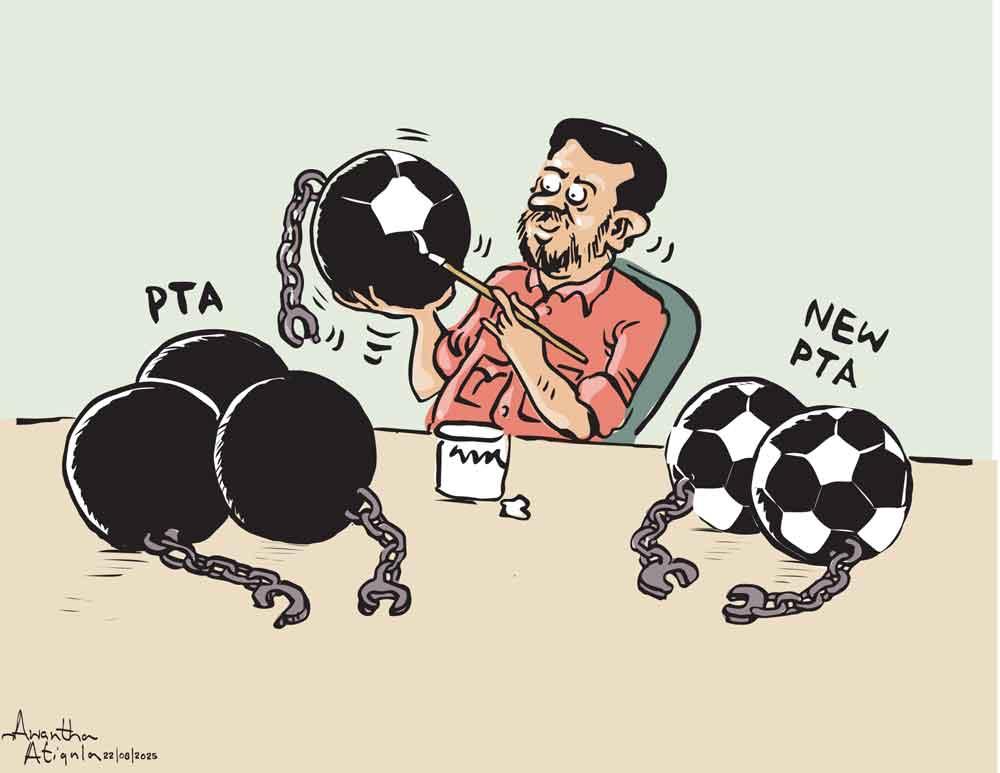
Sri Lanka has gazetted a new Protection of the State from Terrorism Bill, which will repeal its controversial Prevention of Terrorism Act (PTA) and replace it with a legal framework that introduces judicial oversight, detention limits, review mechanisms and safeguards for media, protest and dissent.
The bill was published in a Gazette Supplement dated September 22.
If enacted, offences causing death could carry life imprisonment, while other terrorism offences could attract prison terms of up to 20 years and fines of up to 20 million rupees.
The proposed law criminalises joining or supporting proscribed organisations, recruitment, funding, terrorist training, dissemination of publications intended to induce terrorism and withholding information relating to terrorist offences.
Participation in protests, advocacy, dissent, strikes, lockouts or humanitarian and medical activities would not by itself be sufficient grounds to infer terrorism-related intent.
Arrested suspects must be produced before a magistrate within 48 hours, unlike under the PTA.
Detention orders can be issued for up to two months at a time by the Defence Ministry Secretary, but extension beyond two months needs High Court approval.
The total detention period under detention orders cannot exceed one year from the date of the initial order.
The bill also establishes an Independent Review Committee, chaired by a retired Supreme Court or Court of Appeal judge, to review detention orders and recommend whether they should be confirmed, varied or revoked.
Magistrates would be required to see suspects in camera, monitor their wellbeing and order medical examinations where there are allegations or suspicions of torture or ill-treatment.
Authorities would be required to notify next of kin, the Human Rights Commission and the Inspector General of Police of arrests.
The Human Rights Commission would be entitled to make unannounced inspections of approved detention facilities, while magistrates would be required to visit detention centres monthly.
The bill states that suspects must be treated humanely and granted access to lawyers and relatives.
Statements made to magistrates would be admissible only if procedural safeguards are met, including judicial medical examinations before and after recording statements.
The bill provides exemptions for journalism, academic research, legal proceedings, artistic expression and public-interest communications.
It states that ‘fair’ and ‘accurate’ reporting, commentary or analysis by journalists and media organisations, academic work, civil society advocacy and legitimate political discourse should not in themselves constitute offences under provisions dealing with inducement to terrorism or terrorist publications.
The bill retains powers for the President to proscribe organisations believed to be engaged in acts amounting to terrorism.
The bill formally repeals the Prevention of Terrorism (Temporary Provisions) Act No. 48 of 1979, though ongoing investigations, trials and prosecutions initiated under the PTA would continue under transitional provisions.
The government says the new legislation seeks to balance national security requirements with constitutional rights, judicial oversight and international human rights standards.
Parliament will have to debate and approve the bill before it becomes law.