

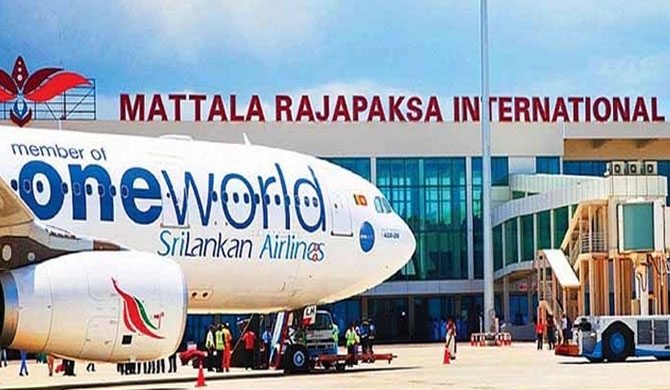
Sri Lanka’s Mattala Rajapaksa International Airport (MRIA) is bleeding between Rs 6-7 million every single day, bringing the country’s public financial management back under the spotlight alongside fresh legal investigations into the 2013 Airbus aircraft procurement deal involving SriLankan Airlines.
The growing fallout covers both the long-standing financial burden of the underused airport and separate bribery and money laundering allegations tied to the national carrier’s aircraft purchase, with legal proceedings currently before the Colombo Chief Magistrate’s Court.
The real cost of the Mattala investment
The MRIA was opened in 2013 as a transport and economic hub for the Southern Province, with construction originally estimated at USD 209 million.
However, that figure eventually rose to USD 243.7 million by the time the project was completed using loan facilities from the Export-Import Bank of China.
Although the airport was designed to handle one million passengers and 45,000 metric tonnes of cargo annually, only 321,577 passengers passed through its terminals over the past six years combined.
In 2024 alone, the airport recorded operational costs of RS. 3.6 billion against revenue of just Rs. 242 million, leaving the Treasury to continue paying an annual interest instalment of Rs. 2.05 billion on the construction loans.
The clearing of forest land within a traditional elephant migration corridor to build the airport has also resulted in long-term environmental damage.
SriLankan Airlines was drawn deeper into the crisis when it was directed to route flights through Mattala in an effort to attract commercial traffic to the underperforming airport, a decision that cost the national carrier an additional Rs. 740 million in losses between 2013 and 2015 alone.
Years of non-commercial decisions and management shortcomings have since pushed the airline’s cumulative losses beyond 500 million US dollars, placing a heavy burden on the national economy.
Airbus deal
A separate but related dimension of the crisis concerns the USD 2.5 billion aircraft purchase agreement signed between SriLankan Airlines and Airbus in 2013.
The UK Serious Fraud Office and other international investigative agencies disclosed that a bribe of USD 16.84 million had been promised to intermediaries to secure the deal, with a portion allegedly laundered through bank accounts in Brunei and Singapore.
The government was ultimately forced to cancel the A350 aircraft order in 2015, incurring compensation payments of Rs. 18.8 billion.
The Commission to Investigate Allegations of Bribery or Corruption (CIABOC), together with the Attorney General’s Department, has since launched comprehensive legal inquiries into the money laundering and bribery allegations surrounding the transaction.
Member of Parliament Namal Rajapaksa was produced before the Colombo Chief Magistrate’s Court and remanded until 29 September, based on evidence indicating that he had received RS. 100 million in connection with the deal.
His defence lawyers argued before court that the allegations were baseless and challenged the credibility of the witness statements presented against him, with the ruling on his bail application also expected on 29 September.
Statements have separately been recorded from former President Mahinda Rajapaksa regarding the transaction, while investigations continue into the death of former SriLankan Airlines Chief Executive Officer Kapila Chandrasena, a key suspect in the case.
Efforts to resolve Mattala’s financial burden have included an earlier attempt to hand over airport operations to a joint venture involving India’s Shaurya Aeronautics, though international sanctions on the firm prevented the deal from proceeding.
The government is now examining several Public-Private Partnership proposals to manage the airport’s ground operations and commercial activities in collaboration with private investors, while retaining Air Traffic Control and national security functions under state control.
These efforts run alongside Sri Lanka’s broader external debt restructuring process under its IMF-supported programme, which is also being applied to loan facilities held by the national carrier and has paved the way for renewed international assistance towards infrastructure projects, including the second phase of development at Katunayake International Airport.