

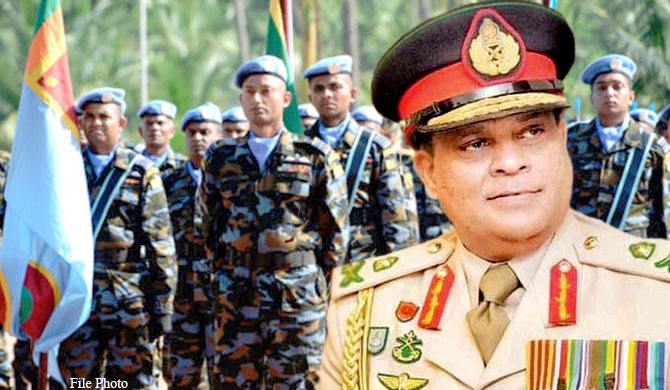
Amnesty International has responded to reports that more than 1,000 personnel from Sri Lanka’s military and police are to be deployed to Haiti as part of the international Gang Suppression Force (GSF).
Renzo Pomi, AI Representative at the United Nations in New York, said, there remain serious and unresolved allegations of widespread sexual abuse of children by Sri Lankan personnel during previous deployments in Haiti.
Sri Lanka’s authorities, along with the GSF leadership, the states part of the Standing Group of Partners, and the UN must be absolutely transparent about how the screening process for this latest deployment has been carried out, what further safeguarding measures have been put in place, and what accountability mechanisms have been established to address any potential new allegations against Sri Lankan and all other deployed forces, he was quoted as saying by amnesty.org.
Senior Sri Lankan military officers suspected of war crimes, crimes against humanity and other international crimes should be excluded from participating in any vetting processes.
In Haiti and beyond, the ongoing lack of accountability for sexual abuse allegations against UN and other peacekeeping forces is lamentable.
Civilians in the most desperate circumstances are the ones who pay the price for this entrenched impunity, he said.
Also raising concerns was the ITJP, which said on X following a meeting on 26 June, “Today, ITJP and partner NGOs met with the UN to raise urgent concerns about Sri Lanka’s proposed deployment to Haiti.”
“We were given no clarity on accountability for past allegations of sexual exploitation and abuse involving Sri Lankan personnel. We were also told the UN has no role in vetting personnel for the Gang Suppression Force,” it said
On the same day, president Anura Kumara Dissanayake joined a ceremony to extend best wishes to the Sri Lankan peacekeeping team.
Here, he said the government is duty-bound to protect and uphold every action taken in defence of the country, people and security of the state.
At the same time, it has a responsibility to investigate any action that may have harmed the reputation of the armed forces or undermined their responsibilities in pursuit of the ambitions of a small group.
I in furtherance of the interests of a very small faction, things inappropriate for the armed forces have been done, or acts have been committed that fall outside what is expected of them, the government is prepared to act, and must act, for the sake of the reputation of the military and the protection of the victims, he said.
Sri Lanka is set to deploy a contingent of 1,132 personnel from the Sri Lanka Army and the Police Special Task Force to Haiti imminently, making this the largest single deployment of Sri Lankan forces for a UN-authorized international force overseas, to date.
Between 2004-2007, more than 100 peacekeepers were repatriated back to Sri Lanka over allegations of sexual abuse and exploitation.
Publicly available information does not indicate that any Sri Lankan peacekeeper has been criminally prosecuted and convicted in connection with the 2007 Haiti sexual exploitation and abuse scandal.
In 2015, a UN investigation on Sri Lanka (the OISL report) found reasonable grounds to believe that rape and sexual violence by security forces personnel was widespread against both males and females during Sri Lanka’s internal armed conflict.
A report released this year by the OHCHR further highlights how the requisite mechanisms to ensure accountability for conflict-related sexual violence are still not in place in Sri Lanka.