Sri Lanka Freedom Party crisis: Enjoining order extended till May 09

The Colombo District Court has extended an enjoining order preventing former president Maithripala Sirisena from serving as chairman of the crisis-riddled Sri Lanka Freedom Party (SLFP).

Attorney-at-law Lakmal Wickramarachchi told reporters on Friday April 18 that objections will be filed on May 09.

“Proxies were filed on behalf of former president Maithripala Sirisena and the general secretary of the party. We obtained dates for filing objections to the enjoining order. We expect to file our objections on May 09 and present facts seeking the removal of the enjoining order,” he said.

The order, made by the court following a case filed by former president Chandrika Bandaranaike Kumaratunga, will be in effect till May 09.

Meanwhile, SLFP acting general secretary Dushmantha Mithrapala has filed objections at the National Election Commission to the new appointments made to the SLFP on April 08, media reports said Friday afternoon.

On Tuesday, Mithrapala accused party stalwarts of attempting to “betray” the party to its traditional rival the United National Party (UNP).

The SLFP last week appointed its incumbent vice president Nimal Siripala de Silva as the party’s acting chairman, amid much controversy. The appointment was made at a politburo meeting held April 08 morning after the the Colombo District Court issued an interim order the previous week preventing former President Maithripala Sirisena from serving as SLFP chairman.

Former President Kumaratunga, whose father S W R D Bandranaike founded the party in the 1950s, also hit out at Sirisena last week.

“When everyone asked me to run for president in 2015, I said no and brought in the SLFP general secretary, with great expectations. He ruined the country and the party too. That mistake was corrected today,” she said.

She added that the party constitution is a mess, which she attributed to Sirisena’s actions as SLFP chairman.

“I will never leave the SLFP,” she said.

Posted in Uncategorized

Retired Army Major arrested for swindling money promising jobs with Russian army

The Criminal Investigations Department (CID) has arrested a retired Major of the Sri Lanka Army and another person for fraudulently obtaining money from individuals on the promise of sending them for employment in the Russian army, police said.

However, on April 01, the Ministry of Defence announced that all members of Sri Lankan tri-forces have been informed not to join Russian or Ukrainian forces by any illegal means.

The Ministry of Defense also mentioned that against a background where there is no agreement between the Sri Lankan army and the Russian army to send Sri Lankan military members to serve in Russia, such incidents will damage the reputation of the country.

Meanwhile in December 2023, it was reported that three Sri Lankan mercenaries were killed in Russian attack while serving in Ukrainian military.

Nevertheless, a report published on Al Jazeera news service which quoted several Sri Lankans living in Russia, highlighted that hundreds of Sri Lankans are now serving with the Russian military in Ukraine, most lured into combat by Russia’s offer of salaries up to $3,000 a month and the prospect of Russian citizenship.

“Many more – mostly retired Sri Lankan soldiers – are also desperately trying to join the Russian army, willing to risk death at the hands of Ukrainian forces in exchange for Moscow’s money amid dire poverty at home in Sri Lanka”, it added.

Tamil writer quizzed over book launch

The CTID has summoned and questioned the head of the Tamil Literary Forum after he organized the launch of a book based on the LTTE’s defeat of the armed forces in Elephant Pass 24 years ago.

Pradeepan Deepachelvan was summoned to its branch at Paranthan in Kilonochchi on 14 April and interrogated for more than 2 ½ hours.

He was especially asked if he intended a revival of the LTTE by introducing the novel in question

’34 Natkalil Neendikkadanda Nerupparu’ (crossing fire river in 34 days) written by N. Yogendran was launched four days earlier.

The organizer of the event replied to the CTID that he had no such intention and that he held it out of respect for its writer.

The speakers at the event too, are to be interrogated, correspondents said.

Sri Lanka debt restructuring stumbles as govt rejects bondholders’ proposal-Reuters

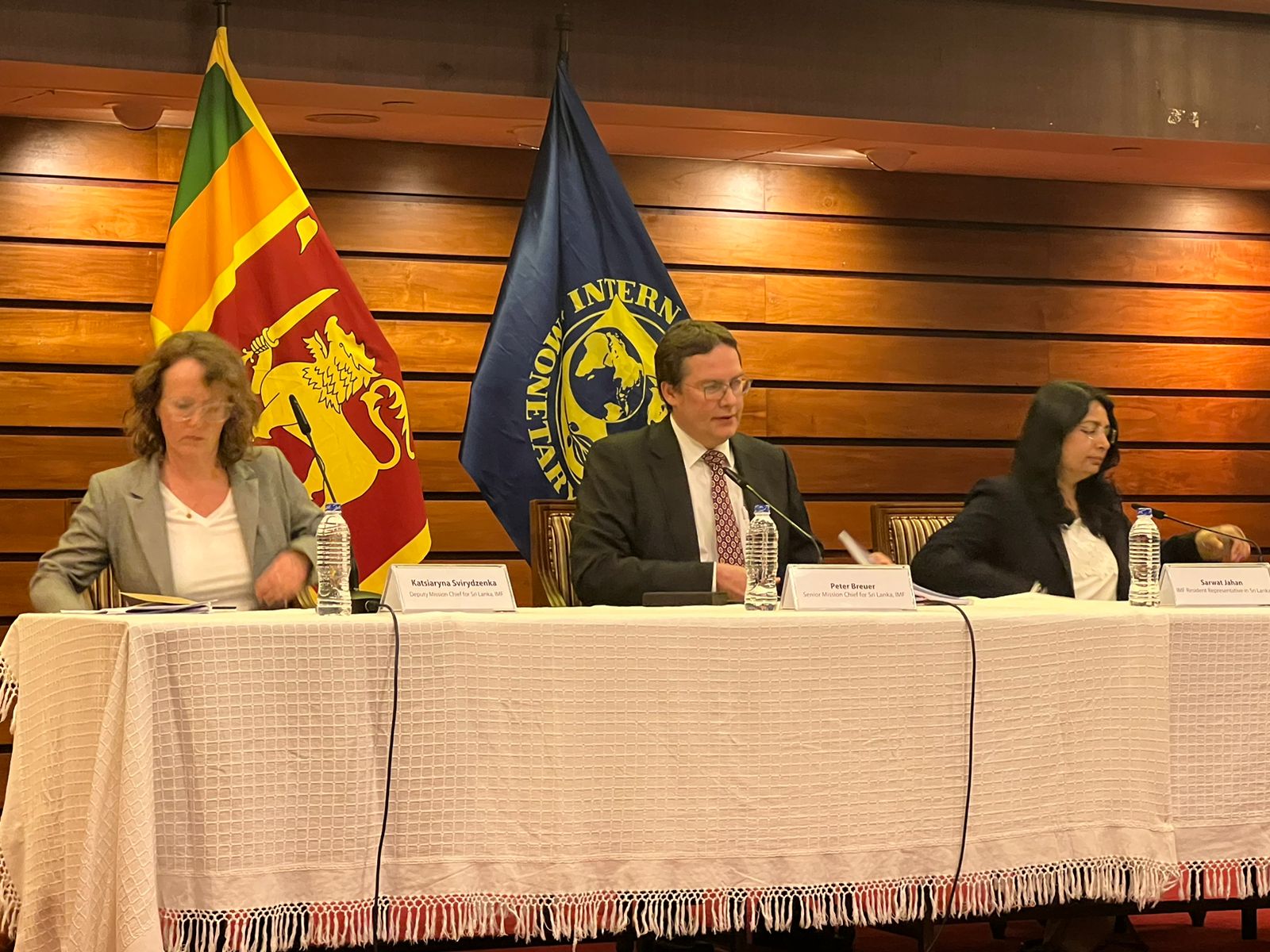
Sri Lanka on Tuesday rejected international bondholders’ proposal to restructure more than $12 billion in debt, putting at risk critical International Monetary Fund support and delaying its efforts to resolve a two-year-long debt crisis.

Some of the proposal’s “baseline” assessments and a lack of a contingency option in the case of continued economic weakness were the two main reasons the deal was not agreed, the government said in a statement.

Colombo said it hoped to hold further talks “as soon as feasible” but the immediate risk was that without a compromise in the coming weeks, the next tranche of all-important IMF support money could potentially get delayed.

Sri Lanka has already struck a deal with its main government creditors, but an “agreement in principle” with bondholders was also needed to secure IMF Board approval for the next $337 million instalment of its $2.9 billion programme.

The government said one of the main stumbling blocks had been that the “baseline parameters” of the bondholders’ plan had not matched those embedded in its IMF programme.

It added that the bondholders’ “steering committee” that it has been negotiating with in recent weeks had not wanted to extend “restricted discussions” – a key part of debt talks where they are held privately, behind closed doors.

Following an initial extension, it would be unusual for big money managers to remain restricted for too long given it also limits their ability to participate in the market.

A source familiar with the process said discussions could continue as early as later on Tuesday, with some interested parties in Washington for the IMF/World Bank meetings.

The source said that, as has been the case in other recent debt negotiations, an asymmetry of information between the parties, including a lack of visibility among bondholders of the terms agreed with both the Paris Club and China, has complicated the negotiations.

CONTENTIOUS MLBs

Sri Lanka also disagreed with a proposal to link future repayments to bondholders to the country’s macroeconomic growth, through “macro-linked bonds” or MLB for short.

It said it was seeking more protections if Sri Lanka’s economy were to underperform IMF growth projections, and a “test” for triggering both the upward and downward adjustments in the MLB.

Disappointment that a deal had not yet been reached sent Sri Lanka’s bonds down about 2.5 cents , , leaving them at just over half their original face value at between 54 and 55.4 cents on the dollar.

“Completing the IMF review by June becomes difficult now because there will have to be more talks,” said Udeeshan Jonas, chief strategist at equity research firm CAL Group.

IN THE RIGHT DIRECTION

Sri Lanka plunged into its worst financial crisis since independence from the British in 1948 after its foreign exchange reserves fell in early 2022 leaving it unable to pay for essentials including fuel, cooking gas, and medicine.

The island nation defaulted on its foreign debt in May 2022 and kicked off negotiations with bilateral creditors several months later, eventually securing an agreement in principle with China, India and the Paris Club last November.

Sri Lanka also needs agreements with each of the bilateral creditors, including the Export-Import Bank of China, to complete the IMF review process.

Supported by the IMF program, Sri Lanka has seen its once soaring inflation moderate to 0.9% in March and its currency strengthen 7.6% so far this year. The economy is expected to return to growth after contracting 2.3% in 2023.

It is one of several poorer countries that have been hit by debt crisis in recent years and were struggling to put it behind.

Ghana this week has also seen its $13 billion restructuring talks stumble after the IMF indicated that the deal it was hoping to strike with bondholders would not be enough to make its debt levels sustainable again.

Viktor Szabo, an emerging market debt portfolio manager at Abrdn in London, said Sri Lanka’s setback was likely to be just a delay rather than a deal-breaker.

“It is moving in the right direction,” Szabo said. “But it is just a bit slower than expected.”

Sri Lanka jacks up tourist visa fees 50-pct, adds another charge to scrap existing ETA

Sri Lanka has hiked tourist visa fees by at least 50 percent to 75 dollars, shifting to a global processing company, which appears to be charging an additional 18.5 dollars, according to information on the new online portal.

Sri Lanka allowed double electronic travel authorization for tourists for 50 dollars with more than one entry allowing them to come to the island and also fly to neighboring destinations through a portal operated by the Department of Immigration.

The ETA has drawn plaudits from Trip Advisor and Lonely Planet as a ‘hassle free’ system.

According to information on the new website, SAARC country tourists will now be charged 35 dollars instead of 20 dollars for the standard visa.

A 30-day single entry visa will be available to India and a few countries without a fee.

According to the online notice, an 18.5 dollar additional fee will be charged from all visa categories.

The website says it is operated by companies called IVS-GBS and VFS Global.

If the 18.5 dollar charge goes to the companies, it adds up to 12.75 billion rupees in 2024 if the tourism target is met.

Sri Lanka is targeting 2.3 million tourists in 2024 not counting other visa categories.

The Immigration Department’s previous ETA system has drawn acclaim from tourists globally for its simplicity.

“Sri Lanka may be known as the teardrop isle (due to its distinctive shape), but the country’s refreshingly straightforward visa system shouldn’t be a source of much anguish for travelers,” according to a feature on visa requirements on LonelyPlanet.com.

Posted in Uncategorized

Revision of Mannar Port Land Boundaries Announced

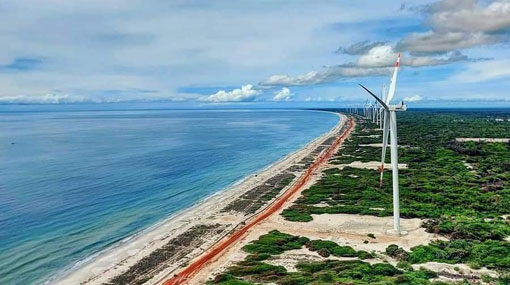
The Ministry of Ports, Shipping, and Aviation has announced plans to revise the land boundaries of Mannar Port due to issues with the previously gazetted limits. Secretary K.D.S. Ruwan Chandra stated that the new boundaries, to be published in the Gazette, will exclude the Mannar Naval Base, unlike the previous limits.

Posted in Uncategorized

Easter attacks: NPP vows to properly institute legal action under its govt.

The National People’s Power (NPP) says that, under its administration, proper legal action will be instituted against those implicated, either directly or indirectly, in the 2019 Easter Sunday terror attacks that killed more than 250 people and injured hundreds of others.

This promise comes days ahead of the fifth anniversary of the coordinated suicide bombings which falls on April 21.

In a statement, the NPP highlighted that the government has an obligation towards the victims of this heinous act while raising questions as to whether this has been properly fulfilled.

The party also presented a 7-point action plan that it intends to implement under a future NPP government to serve justice to the Easter attack victims.

Poverty has increased from 11% to 26% during past four years

Poverty in Sri Lanka has increased over the past four years, from 11 percent in 2019 to 26 percent in 2024, and the country needs ‘robust and credible structural reforms,’ says the latest report released by the World Bank.

The WB report, titled ‘Sri Lanka Development Update 2024: Bridges to Recovery,’ says that more than a quarter of the Sri Lankan population living in poverty and unprecedented economic crisis that engulfed the country in 2022 had affected the masses. “Households have adopted risky coping strategies to deal with lower incomes and price pressures, including using savings, taking on more debt, and limiting their diets. Food insecurity rose during the second half of 2023, with 24 percent of households being food insecure.”

It has found that food insecurity and malnutrition have increased, while poverty has doubled and the inequalities have widened. “Approximately 60 percent of households experienced a decline in income due to reduced work hours or job losses. The implementation of recent structural reforms, including cost-reflective utility pricing and new revenue measures, helped macroeconomic stability but strained household budgets.”

The report indicates that labour market trends in Sri Lanka have been affected by widespread closures of micro-, small- and medium-enterprises. In the third quarter of 2023, the labour force participation rate in the urban sector dropped to 45.2 percent, down from 52.3 percent in 2019. Youth unemployment, especially young adults (aged from 25–29), rose to 17.7 percent between the second and third quarters of 2023.

World Bank Director for Maldives, Nepal and Sri Lanka, Faris Hadad-Zervos noted: “Sri Lanka’s economy is on the road to recovery, but sustained efforts to mitigate the impact of the economic crisis on the poor and vulnerable are critical, alongside a continuation of the path of robust and credible structural reforms. This involves a two-pronged strategy: first, to maintain reforms that contribute to macroeconomic stability and second, to accelerate reforms to stimulate private investment and capital inflows, which are crucial for economic growth and poverty reduction.”

The Sri Lankan government is also in the process of privatising, commercialising or closing loss-making state-owned enterprises which has left many having to seek better-paying jobs. Sri Lanka’s already dilapidated public health and education systems have been plunged into crisis by government funding cuts.

The World Bank report states: “17.5 percent of households indicated that they limited their education expenses (including on stationery and uniforms) to deal with rising costs, and most households have changed their health treatment procedures since March 2022 due to a lack of funds.”

In March, Sri Lanka’s Department of Census and Statistics (DCS) stated that the minimum monthly expenditure per person in Sri Lanka has increased by 144 percent since 2019. The amount is calculated on the basis of what is required to fulfil the basic monthly needs of an individual, which in 2019 was 6,966 rupees ($23). This near-starvation level amount has now catapulted to 17,014 rupees per month.

“The economy contracted by 2.3 percent in 2023, despite growth in third and fourth quarters (1.6 and 4.5 percent, respectively) following six quarters of contraction. This was driven by shrinking construction and mining, financial and IT services, and textile manufacturing, amid weak demand, tight private credit, and shortages of inputs, and was partly offset by growth in transport, accommodation, food, and beverage services, resulting from a rebound in tourism. Inflation remained benign, after declining to single-digit levels in July 2023, supported by currency appreciation and improved supply. However, with the recent spike in food prices and pass-through of fuel and utility prices, headline inflation as measured by the Colombo Consumer Price Index increased to 5.9 percent in February 2024. Labour force participation declined (from 49.8 to 48.8 percent between 2022 and third quarter of 2023), especially in urban areas. Households have adopted risky coping strategies to deal with lower incomes and price pressures, including using savings, taking on more debt, and limiting their diets. Food insecurity rose during the second-half of 2023, with 24 percent of households being food insecure,” says the report.

Received full presidential commission report on Easter Sunday attacks: Cardinal

The Catholic Church has received the remaining parts of the report submitted by the presidential commission which probed the Easter Sunday attacks, Archbishop of Colombo Cardinal Malcolm Ranjith said today.

Cardinal Ranjith said the church had received it three weeks ago. “A team of lawyers are studying the report and we will come up with a statement on it once the study is completed,” he told a briefing.

He said the process of declaring Easter Sunday victims as martyrs will begin on Sunday April 21 2024 when the country commemorates the fifth anniversary of the mayhem.

“All names of those who perished in the explosions at the Katuwapitiya church, Kochchikade church and the Zion church will be handed over to Apostolate Nuncio ( Vatican Ambassador) during the commemoration programmes which are to be held on Sunday. The process of declaring these victims as martyrs will begin on that day,” he said.

“The victims will be initially declared as ‘heroes of faith’ which is the first step towards declaring someone as a martyr. These victims can be called martyrs as they went to church on that fateful day because of their faith,” he added explaining the catholic tradition.

A Prayerful procession has been organized on Saturday April 20 from Kochchikade church to Katuwapitiya church while two commemoration programmes have been organized at Katuwapitiya church and Kochchikade church on Sunday April 21 2024. Another procession has been organized from Maristella College Negombo to Katuwapitiya Church on Sunday afternoon.

Apostolate Nuncio, UN resident representative in Sri Lanka and religious leaders including Buddhist monks are expected to speak at the ceremony which will be held at the Kochchikade church.

“We only want to know as to who was behind the Easter Sunday attacks and we don’t intend to seek revenge from anyone. We would also like to ask the former President Maithripala Sirisena to reveal what he is aware of the attack,” the cardinal remarked.

Posted in Uncategorized

The politics of former Sri Lankan Presidents By Veeragathy Thanabalasingham

One cannot help asking Parliamentarian Dulles Alahapperuma as to why he waited so long to urge former Presidents to bow out of active politics. If anyone puts this question to him, he or she cannot be faulted.

Alahapperuma said last week former Presidents Chandrika Kumaratunga, Mahinda Rajapaksa, Maithripala Sirisena and Gotabaya Rajapaksa should keep away from politics for their own health and for the sake of the people. Public funds which are spent on them should not be used for any political activity, he added.

” One time US President John Quincy Adams contested for the US Congress. He was the only foreign head of state to remain in politics after his retirement from the Presidency,” Alajapperuma recalled.

We in Sri Lanka have four ex-Presidents who have no intention of giving up politics even after serving in the highest office of the country and are eager to return to political office even after being driven out of power by the people.

At least now Alahapperuma is able to understand the futility of their involvement in politics.

Sri Lanka’s first Executive President J.R. Jeyewardene retired from politics after the completion of his two terms in the latter part of 1980s. Until his death, he showed no inclination return to politics and refrained from commenting on political problems publicly.

The second Executive President Ranasinghe Premadasa was killed in a suicide bombing before the end of his first term in mid-1993. D.B. Wijetunga, was in power for the remaining one and a half years of Premadasa’s Presidency but stayed out of politics after his retirement in November 1994.

But, after him, those who have been Presidents during the last three decades are actively involved in politics even after the completion of their terms. Among them Mahinda Rajapaksa and Maithripala Sirisena contested the general elections and came back to Parliament.

As for Mrs. Kumaratunga, her political involvement has largely been aimed at supporting anti- Rajapakasa groups. Apart from that, she almost limited her political activities to issuing occasional statements on important issues affecting the country and giving interviews to the media.

But recently she has intensified her activities with the intention of reviving the Sri Lanka Freedom Party (SLFP ) which has been badly weakened under the leadership of Maithripala Siriseana and turning it around into a party with popular support. It may be an impossible task as there are clear indications of further splits in her party.

After Mahinda Rajapaksa won the 2005 Presidential election he changed the SLFP from being a party controlled by the Bandaranaike family into one under the control of the Rajapaksa family.

Following Mahinda Rajapaksa’s defeat in the 2015 Presidential election, the Rajapaksas were unable to retain the leadership of SLFP. Then they launched their own Sri Lanka Padujana Peramuna (SLPP ) and regained power with the overwhelming support of the people.

Mahinda Rajapaksa had no qualms becoming an ordinary Member of Parliament after holding the highest office in the land. He was elected from Kurunegala district in the 2015 August general elections and was the leader of the Joint Opposition in Parliament. He was re – elected from the same district in August 2020 general elections and was appointed Prime Minister in the government of his younger brother Gotabaya Rajapaksa. What happened after that is recent history.

The Gotabaya Rajapaksa administration has gone down in history as the most discredited government in Sri Lanka. Though Sri Lankan politics had been dominated by certain elite families in the past, people had not taken to the streets and revolted against those families as they did against the Rajapaksa family.

It is a great irony that a family with such historical disrepute can still run the government from behind the scenes and think they can determine the country’s future political direction.

Following Mahinda Rajapaksa, another former President Maithripala Sirisena came back to Parliament after forging an alliance with the Rajapaksa party in the last general elections. The world will really doubt the sanity of the Sri Lankan people who voted for such a person as the Executive President when looking at the way he ruled the country and the controversies created by his irresponsible utterances in recent times.

Meanwhile, a few attempts were made but in vain by Gotabaya Rajapaksa’s loyalists to bring him to parliament after his resignation from the Presidency. But, his brothers are distancing themselves from him by placing the entire blame for the misrule on him.

Some observers said his recently released book on an alleged foreign conspiracy to oust him from the Presidency was but an indication of his return to politics. As the country is bracing for national elections, we will not have to wait for long to ascertain whether Gotabaya will return to active politics or not.

While taking of the politics of our former Presidents we must not fail to observe an important thing which is of great concern for the people. All former presidents including the one who fled the country amidst the popular uprising and resigned from the post while in a foreign land are supported by public funds while the people are facing immense hardship as a result of their misrule. They enjoy many boons such as pension, security details, a fleet of vehicles and luxurious palatial residences in the high end areas in the capital.

In addition to these, Mahinda and Sirisena enjoy the privileges afforded to Members of Parliament.

None of the ex-Presidents sacrificed their wealth for the common good. On the contrary they have amassed huge wealth through politics. In fact there is no need to maintain them at government expense.

People will greatly welcome any new law to make it possible for ex – Presidents to be given pensions and other benefits at government expense only if they do not return to political office such as Members of Parliament.

In this regard, political parties should come forward to make a promise to the people at the coming national elections. Opposition political leaders who are talking about bringing a new political culture and a system change should seriously take note of this.

It could be argued that it is a fundamental right of former Presidents to engage in politics. But, being involved in politics after retiring from the highest office of the country and returning to political office and enjoying additional privileges at government expense are entirely different things.