n 2018, when the second-largest mass grave was discovered in Mannar, a Tamil-dominated coastal town in Sri Lanka, investigators unearthed over 300 skeletons, including those of 28 children. It was a gruesome sight: skulls submerged in hardened mud and rock, with bones piled up and entangled in a morbid embrace. After exhumation, the remains were numbered, logged, stored in plastic and matched to the skeleton they belonged to.
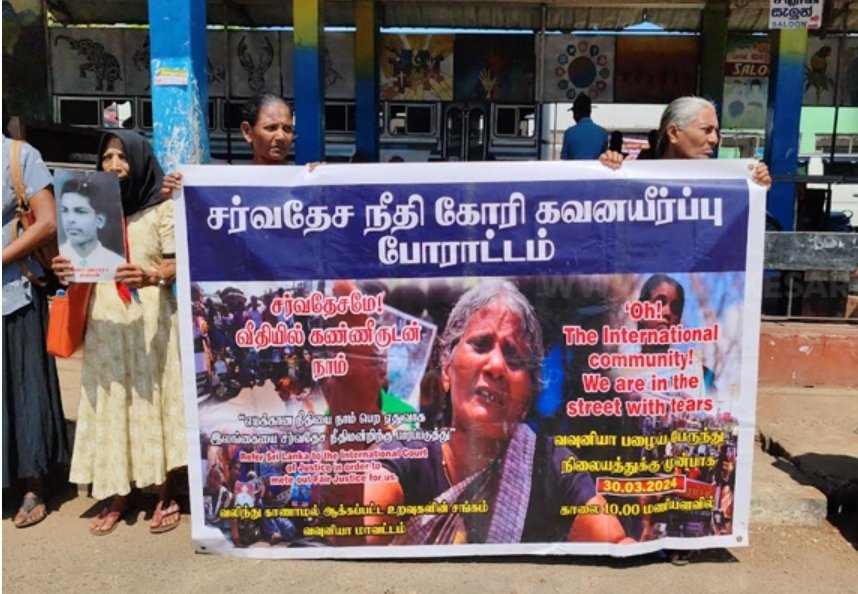
The excavation went on for days, and without fail, a group of local women circled the perimeter of the dig every day. They were mothers, wives and sisters of those who disappeared during the country’s 26-year civil war. They would wait near the yellow police tape and chat among themselves, occasionally wiping tears with a handkerchief. But they never spoke with the authorities. Distrustful by habit, they interacted only with the townspeople and lawyers who accompanied them. Their presence served as a silent protest, demanding to know the whereabouts of their loved ones.
But the investigations hit a roadblock when a carbon-dating analysis by a Florida-based lab, commissioned by the Sri Lankan government, concluded that six skeletal remains dated from the 15th to the 17th centuries. Senior archaeologist Raj Somadeva, who, with his team, had assisted the authorities for months, contested these findings. He believed that the remains were more recent and belonged to local men and women who had been buried haphazardly without their final rites. These controversies have yet to be resolved, and the case is ongoing at a local court in the country.
Last June a group of construction workers discovered the latest — and 33rd — mass grave in Sri Lanka after hitting bones while digging to lay drainage pipes in Mullaitivu, another majority-Tamil town in northern Sri Lanka. Somadeva, who was again assisting with the excavation, was extra careful. Concluding that this was yet another clandestine burial, his findings showed that the remains, which were entangled in torn green overalls, were buried from 1994 to 1996 and belonged to the Tamil Tigers, a rebel group from the ethnic Tamil minority. But again these investigations have not yet reached a conclusion as funds from the government have dried up, while the case to determine the origin of the mass grave continues in a local court.
Sri Lanka, where a civil war raged from 1983 to 2009, has the second-highest number of disappearance cases registered with the United Nations Working Group on Enforced or Involuntary Disappearances (Iraq is the only country with more). Even before the war ended, the U.N. said more than two decades ago that enforced disappearances in the country were among the highest in the world. Since then, the Sri Lankan government and several human rights organizations have given different estimates on the number of disappeared, but in a 2017 report, Amnesty International estimated it is from 60,000 to 100,000 people.
Disappearances occurred during both the civil war and the armed uprisings led by the communist Janatha Vimukthi Peramuna (JVP) party in 1971 and 1988. They continued after the war through “white van abductions,” in which anonymous groups driving unidentifiable white vans picked up civilians — including Tamils, other minorities, dissidents and journalists. Some of those who were arrested under the Prevention of Terrorism Act — which allows arbitrary arrests and detention without charge or evidence — have also gone missing in the country. The law was introduced in 1979 as a temporary measure but was made permanent in 1982, shortly before the civil war started.
Even though no authority would like to acknowledge and accept the presence of mass graves, their discovery adds weight to the claims of families and activists who, for decades, have been sounding the alarm over extrajudicial killings and disappearances. It also provides some hope of finding answers about those missing.
The first mass grave was found in 1994 when families — tipped off by human rights activists and political groups — were led to an abandoned police camp on Mount Sooriya, where excavations unearthed human bones, torn blue school uniforms, sarongs and ballpoint pens. The bones were said to belong to over 25 schoolboys from Embilipitiya high school in southern Sri Lanka. The army had questioned the students for their purported “anti-national activities” at school, such as dissent and destruction of public property. The schoolboys were then allegedly abducted by the army in 1989 and 1990.
When their case went to trial in 1990, activists believed it would become a watershed moment for the country’s disappeared. However, nine years later, the school headmaster and seven army officers, who were charged with murder, abduction and torture, were convicted only of abduction and intention to murder, and were given sentences from five to 10 years. Earlier, the police investigation had not concluded whether the bones belonged to the schoolboys, so the parents did not receive any remains.
Since 1994, mass graves have been found all over the island nation either by accident or tipoff. Out of the 33 mass graves, six belonged to the 2004 tsunami victims (over 8,000 people disappeared during the calamity), and the others are believed to hold those who disappeared during the JVP armed rebellions and the civil war. Their discovery sparks hope for families seeking closure, but the authorities continuously obstruct efforts to uncover the truth. Not much is known about where the exhumed remains are located; hardly any family has received them. Often, as investigations are underway, court magistrates and forensic experts get transferred to other cases, court orders are delayed, families’ and lawyers’ access to grave sites are denied, leading people to perceive the government as apathetic and neglectful. Recent news that government officials and politicians tried to cover their tracks by obstructing investigations and ordering destruction of police records reinforce such views.
Corruption combined with a lack of political will, a weak legal and scientific framework, incoherent policy and insufficient resources have hampered investigations into mass graves in Sri Lanka. The graves are either forgotten or the land is developed. A multitude of reports, studies and expert writing on mass graves has been conducted, concluded and sent to collect dust in a corner, with no definitive outcome. The families that are left behind in these tragedies live and die without answers, without ever seeing their loved ones return home.
One local resident, Mariasuresh Eswari, 49, would regularly visit the Mullaitivu mass grave to look for her husband, Miyadas, a fisher by profession, who was arrested by military intelligence for possession of weapons in 2009.
“I still don’t know where he is,” Eswari told New Lines. “No one is telling me anything.”
Similarly, Jennifer Jamaldeen Weerasinghe, 63, has been going from one courthouse to another for the past 14 years in search of answers about her son, Dilan, who was one of the 11 young men picked up in a white van abduction by Sri Lanka naval officers in 2008 as part of a ransom racket. Popularly referred to as the Navy 11 case, 14 officers, including senior military commanders and leaders, were implicated in 2018, but all charges against them were dropped in 2021, while the whereabouts of the young men remain unknown.
“I know my son is alive,” Weerasinghe told New Lines. “I know the reason why they are not giving him back to me. If they return him to me, they would have to return all the sons and daughters they kidnapped. They would be held responsible; they would have to answer for the crimes. They have to answer me.” Military officials, politicians and former combatants have refused to answer questions about this case in public, which they often interpret as an attack against war veterans. On numerous occasions, senior government politicians have also claimed that the missing are alive and well, that they’re just living abroad under different names.
Jayanthi Amarasinghe, who has been looking for her husband, Newton, and son Janaka for over 30 years is beginning to lose hope. “I think I’ve lived too long now. My husband and son are not coming back.” She was 32 when they were taken from their home in Mirihana, a city close to the capital of Colombo, by a group of men dressed in black, carrying firearms and machetes. Days after the abduction, Amarasinghe learned that two bodies had been found at a nearby cemetery. The groundskeeper’s description matched that of her husband and son, but neither was sure if the remains belonged to them.
“There were pieces of meat scattered around a pile of ash and the wireframe of tires. Whoever was killed had been mounted on tires and burnt. Nothing was left behind,” said Amarasinghe, who collected the flesh and brought it back home. “I wrapped them inside the hem of my frock and I cried all the way home. I remember I buried them in the yard.”
“It’s not about digging up the past. It’s about closure,” said Padmini Handuwala, 72, the mother of Sujeewa, who was the first of the boys at Embilipitiya high school to disappear. “Not a day goes by without the thought of my son in my mind. It’s not just for me but for all the parents who lost their children. Some suffer more than others.”
Over the years, numerous campaigns have been initiated to support the families of the disappeared. Family support groups would lobby at both the national and international levels, with the support of some politicians and other human rights organizations, and take the stories of these families to a wider audience. However, politicians and parties that have raised the issue of enforced disappearances often have their own agendas and have used the issue to gain quick electoral advantage: lobbying against the most heinous human rights violations leads to a marked increase in votes. In 1994, following the discovery of the Mount Sooriya mass grave, the Sri Lanka Freedom Party, which was then in the opposition, led a political campaign calling for justice for the disappeared boys — along with renewed calls to end the civil war — and won that year’s presidential election in a landslide.
Another instance was when former president Mahinda Rajapaksa created “Mother’s Front.” As an up-and-coming parliamentarian and lawyer, Rajapaksa gathered family members of those who disappeared during the JVP armed rebellion in the 1980s to protest. This helped build his voter base in southern Sri Lanka and advanced his political career.
While politicians promise truth and justice to attract votes, many of them have also covered up investigations into mass graves. The most notable was Rajapaksa’s own brother, Gotabaya, who was accused of obstructing investigations into mass graves discovered in Matale when he was a military officer at the height of the JVP armed insurrection in 1989. Later, when Gotabaya was the secretary to the Ministry of Defense from 2005 to 2015 in Rajapaksa’s government, in 2013 he ordered the destruction of all police records older than five years after mass graves were discovered in the Matale district of central Sri Lanka, which yielded over 150 human remains that are yet to be identified. Atop the location of the site now stands a state hospital.
Over the years, even as governments established at least 10 commissions and committees to investigate what happened to the country’s missing, none provided any reliable answers or made their reports public. Even in their pursuit to examine enforced disappearances, the scope of these commissions was limited to particular periods or areas. For instance, the Commissions of Inquiry into the Involuntary Removal or Disappearance of Persons, known locally as the B.G. De Silva Commission, was tasked to investigate only disappearances that took place after January 1991. However, it has been said that disappearances reached their peak in 1989, so a critical period fell outside the commission’s purview. In another example, the Presidential Commission of Inquiry into the Involuntary Removal or Disappearance of Persons established in 1994 was limited to reviewing disappearances that took place after 1988 and only in certain areas. Significantly, this commission did not have the authority to investigate disappearances in the Tamil-majority northern and eastern regions.
In 2013, the prominent Paranagama Commission, established under then-President Mahinda Rajapaksa, was tasked with receiving complaints and investigating abductions and disappearances that occurred between 1990 and 2009 in the northern and eastern provinces. It recorded over 21,000 complaints, but the report offered no answer as to the victims’ fates. Instead it advised that the government must conduct a thorough investigation into their whereabouts.
In 2016, Parliament passed a bill to establish the Office on Missing Persons (OMP) and mandated it to examine disappearances across the country and among all ethnic groups. The state finally appeared to take the matter seriously when, in 2022, the OMP provided a national list of individuals who disappeared from 1971 to 2010. “But there still remains a lot to be done,” Mirak Raheem, a researcher, activist and former commissioner of the OMP, told New Lines. “Seventeen thousand is a very low figure, particularly given that previous commissions like the Paranagama Commission compiled more than that.” The U.N. Working Group also raised concerns about the scarce progress made by OMP, which has resulted in “families and related associations losing trust and confidence in it.”
“We don’t like to go to the OMP. There’s no use in going there now,” said Eswari. “Before the OMP came along there were other commissions. They never helped us either. It’s the same with OMP. They came and asked us what problems we have. What do we need, do you need to build your house, do you need money, and all sorts of other questions. But they never asked me about what happened to my husband. So what hope do we have for something like the OMP?”
Following the 2019 election when Gotabaya was elected president, many inquiries into disappearances were stalled. While the OMP’s mandate and legal parameters remained unchanged under his administration, few actions were taken. For example, after completing the national database, it did not start investigations. Instead, in 2020, Gotabaya went on record saying that all the disappeared “are actually dead” without providing any clarity as to how these deaths occurred or how he came to this conclusion. “In 2019, the overall political context became all the more complicated for even to do any kind of advocacy work on disappearances within the state,” Raheem added. Since then, the situation has not improved.
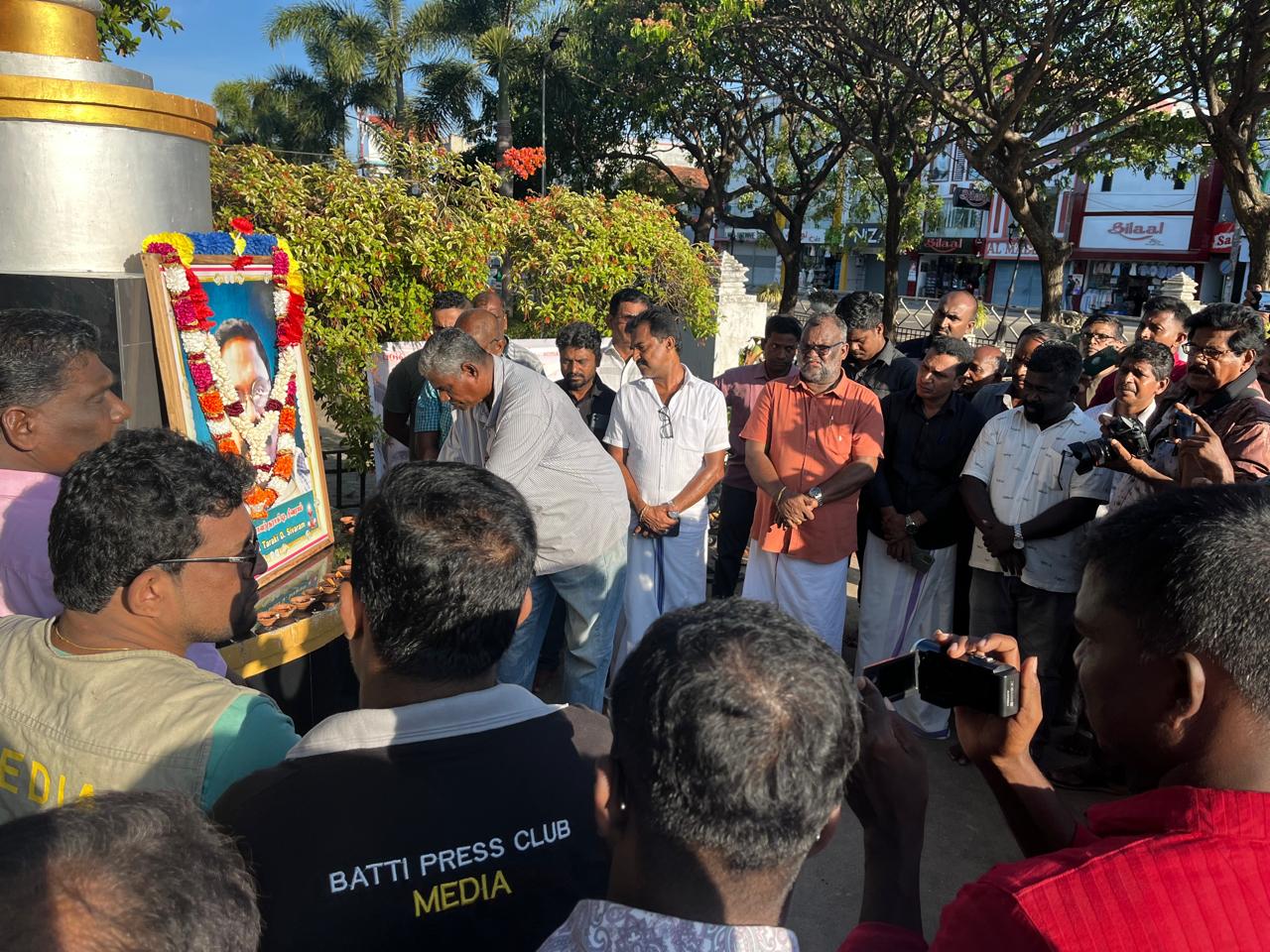
Memorialization of the disappeared has also been a fraught issue in Sri Lanka. There are no graves or tombstones to remember the victims — only a handful of scattered memorials that have been established by friends, families and other support groups. For instance, multidisciplinary artist Chandragupta Thenuwara designed the Monument of the Disappeared, with the support of some activist groups, in Seeduwa village in Raddolugama town, dedicated to 200 people who went missing during the Marxist revolution in the late 1980s. Made of a massive cement block with a human shape removed from it, the monument has photographs of the missing imprinted on a tiled wall in the background. Every year, families light candles, lay flowers and conduct their respective religious observances to remember them. Similarly, the families of the Embilipitiya students built a memorial in Colombo called the “Shrine of the Innocents,” after the trial in the early 2000s. Parents lit lamps every year until Rajapaksa’s government tore it down in 2012 to make way for a public park.
In the Sinhala-dominated south, songs were written about mothers’ laments over sons who never returned home. In the Sinhalese song “Yadamin Banda,” celebrated Sri Lankan singer Nanda Malini sings about a mother’s curse against the authorities who took her son away from her. Films have also documented this pain and agony. For instance, noted filmmaker Visakesa Chandrasekaram’s 2018 courtroom drama “Paangshu” (“Earth”) revolved around a mother’s search for her son, who was abducted by paramilitary forces during the JVP armed rebellion. To this day, questions about the disappeared inspire the work of many artists and filmmakers in the country. Many of them support the collective efforts of the families who continue to lobby for answers and justice.
In contrast, there are no monuments or plaques commemorating the disappeared in the Tamil-majority northern and eastern regions. While the families hold memorials on roadside tents and shacks, their yearly marches are met with police brutality or military resistance, as the Tamil Tigers continue to cast a long shadow and suspicions of terrorism still loom large over the region.
Many fear that the missing will become a mere memory, lost to time when the loved ones who remember them pass away, along with the truth about what happened and any hope for justice.