Government likely to carry out feasibility study for 23-km sea bridge between India, Lanka

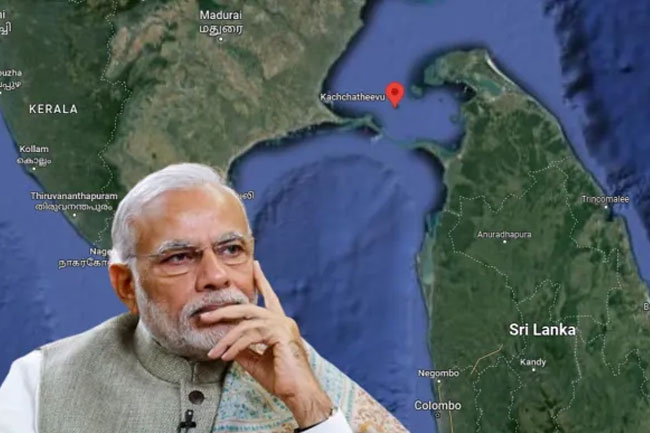
Will the government accelerate the proposal for construction of a sea bridge linking India’s Dhanushkodi— believed to be the place where Lord Ram had ordered Hanumana to build a bridge to carry his army across to Sri Lanka—with Talaimannar? Sources said the government is likely to carry out a feasibility study soon for building the 23-km bridge.

India and Sri Lanka had agreed to examine the viability for developing land access to the ports of Trincomalee and Colombo during Sri Lankan President Ranil Wickremesinghe’s visit to Delhi last July. Following this, the external affairs ministry (MEA) had held a meeting with other ministries and government agencies on this issue. Sources said the MEA officials had informed the meeting about its plan to carry out the feasibility study for the bridge before preparing a detailed plan.

“A host of issues pertaining to other sectors including dairy, oil, power and shipping which came up during Wickremesinghe’s visit were also discussed at the meeting. The long sea bridge would require huge funds, but it will prove to be a boon for bilateral trade. But for that, the government has to evaluate technical, economic, and environmental aspects to see whether it’s viable,” a source said.

The need for this sea bridge has been part of discussions for more than a decade. In December 2015, Union road transport minister Nitin Gadkari had spoken about the plan to build a road-cum rail bridge following his meeting with Wickremesinghe.

Sri Lanka’s main opposition files petition against anti-terrorism bill

Sri Lanka’s main opposition party the Samagi Jana Balawegaya (SJB) has filed a petition against a proposed Anti-Terrorism bill which the party claims is being introduced in an election year to repress opposition parties.

The petition was filed by SJB general secretary Ranjith Madduma Bandara Monday January 22 morning at the Supreme Court.

Speaking to reporters, the MP said the proposed bill is a threat to Sri Lanka’s opposition parties and to democracy itself.

“This bill is being presented not at a time of terrorism prevailing in the country but during an election period. The bill has not defined nor analysed what a terrorist is. Anyone can be arrested,” he said.

“We think this is being done in the face of an election to repress political parties and stifle democracy of this country. That is why we filed a case against this, for democracy,” he added.

The MP said both the anti-terrorism bill and the controversial Online Safety Bill are being introduced in an election year to quell democracy.

Sri Lanka’s proposed new counter-terror law as well as the Online Safety Bill has drawn criticism from various quarters including opposition parties and civil society. Most recently, the Centre for Policy Alternatives (CPA) said in early January that the introduction of the two bills and other measures are some examples where Sri Lanka’s space for dissent is “fast shrinking with fears of increasing authoritarian and militarised trends that erode the rule of law and threaten Sri Lanka’s fragile peace.”

“In such a context, CPA urges the government to withdraw these bills and initiate a process at genuine confidence building measures and reform that addresses the multiple challenges confronting Sri Lanka,” it said.

Human rights activists both local and international have repeatedly called for the repeal of the island nation’s existing Prevention of Terrorism Act (PTA), which critics have called draconian. The proposed new Anti Terrorism Act which was supposed to replace the PTA has also been the target of much criticism both locally and internationally.

The Human Rights Watch (HRW) said in April 2023 that the act, if passed, would empower the authorities to systematically violate fundamental human rights.

The Anti-Terrorism Bill, which was published on March 22, 2023, is intended to replace the “notorious” PTA, HRW said in its statement, which led to “widespread torture and arbitrary detentions since its introduction in 1979”.

Fate of the 13th amendment hangs in the balance By Veeragathy Thanabalasingham

The present Sri Lankan constitution, in place for more than four and a half decades, has seen 21 Amendments. Most of them were brought by incumbent Presidents to suit their political interests and were fundamentally anti-democratic.

But the 13th Amendment, which has a relatively democratic dimension in comparison, has long been the subject of intense political controversy. This write has already discussed several times the controversies surrounding it. It was brought in to create Provincial Councils after the July 1987 India-Sri Lanka Accord, has been a part of the Constitution for three and a half decades.

The author is induced to write about it again by a statement issued this week by former minister and High Commissioner in India Milinda Moragoda.

Moragoda, the founder of the ‘Pathfinder Foundation’, has insisted that the parties should give priority to the abolition of the Provincial Council system in their manifestos for the upcoming national elections.

This is not the first time that he has demanded the abolition of the Provincial Council system. Ahead of the 2020 general elections, he had asked political parties to express their position in manifestoes regarding the repeal of the 13th amendment and the abolition of the provincial council system. But no party did.

Moragoda did not speak much about the abolition of Provincial Councils during his more than two years’ tenure as Sri Lanka’s High Commissioner to India. But after coming back from India, he has started talking about it.

A statement issued by his office reiterated his earlier position that provincial Councils should be abolished and their powers given to reorganized Local Councils.

“Local councils are in a better position to address and solve community-level problems as they work closer to the citizens. A small country of 22 million people does not require another unnecessary layer of administration,” he said.

“Abolition of Provincial Councils should be part of an overall strategy to restructure and modernize Sri Lanka’s governance and economy. Provincial Councils can be replaced by a district-level framework which would consist of relevant Members of Parliament, existing key local government office – bearers and other key stakeholders.”.

” The original intent of the 13th amendment, enacted in 1987, was to create more provincial autonomy to help solve Sri Lanka’ s ethnic problem. Instead this structure has proven to be superfluous, expensive, divisive and fraught with inefficiency.

” Rather than having an unnecessary layer of expensive administration, an empowered Senate / Upper House be set up to address issues concerning ethnic, religious and regional diversity. A representative and properly composed forum of this nature would be best positioned to identify solutions for many of the complex issues facing our nation today ” the statement said.

Despite Moragoda’s arguments, none of the main candidates in the Presidential election is likely to express any position on the 13th Amendment in the manifestoes. To get 50% percent plus one vote in the first round, parties will be concerned about securing additional votes from minority communities. So it can be hoped that they will not listen to Moragoda’s request and not take any position that could damage their chances.

At the same time, we can expect them to focus on a stand that does not alienate the majority Sinhalese community or the minority communities.

President Ranil Wickremesinghe, who met Tamil parliamentarians including veteran leader R Sampanthan last December, said that the parliament to be elected in the next general election will take forward efforts for a political solution through a new constitution.

There is no doubt that he made the announcement with the tactful intention of ensuring that the issue of a political solution does not become a key talking point in the next Presidential election.

Wickremesinghe, who announced early last year that the government would fully implement the 13th Amendment step by step over two years, stopped talking about it following protests in the Sinhala South.

The President said that the 13th Amendment, which is a part of the Constitution, should be implemented or it should be abolished. He also suggested that any member of Parliament could bring a new constitutional amendment as a private member bill to abolish the Amendment. But even members of parliament who are strong Sinhalese nationalists are not willing to do so.

There is an allegation that Wickremesinghe pavde the way for more protests against the 13th Amendment in the South than before by way of his haphazard handling of the issue.

He said at one point that it was up to Parliament to decide on the implementation of the 13th Amendment without police powers, but then decided that nothing could be done through the current Parliament and has now handed over the responsibility to the next Parliament.

During his four-visit to the Northern Province earlier this month, the President, at a dinner with professionals, urged the provinces to utilize the powers granted by 13th amendment for economic development asserting that devolution should not merely be a political concept but an economic reality. He did not mention anything about the ethnic problem or a political solution.

But, it is astonishing to note that hardline Sinhala politicians like Wimal Weerawansa interpreted the President’s comments as an attempt to implement 13 Plus!

The Tamil political parties, who have been saying that the 13th Amendment is not a basis for a lasting political solution to the ethnic problem, have now requested the government to fully implement the amendment and hold Provincial Council elections as an interim measure. This is the latest position of the Tamil parties regarding the amendment.

A suspicion has long been lingering in the people’s minds that someday a Sri Lankan government may do away with the existing devolution arrangement in the form of the 13th Amendment in an attempt to bring in a new constitution. But there is also a belief among Tamil people and Tamil parties that India will never allow it.

One day a question will arise as to why India has to keep insisting on the implementation of an amendment that doesn’t have the support of Tamils and Sinhalese. Another question is how much India will care to prevent the abolition of the devolution arrangement in the midst of changing geopolitical conditions.

New Delhi is well aware that Colombo no longer wants to involve it in issues related to the Tamil problem in bilateral relations.

There is a huge difference between the international political situation that prevailed in the 1980s when India directly intervened in the Sri Lankan ethnic conflict and the situation today. But Tamil parties feel that they have no choice but to appeal to New Delhi. They do not seem to have a proper understanding of India’s current level of concern in the Sri Lankan ethnic problem after a bitter experience of several decades. Still, Sampanthan often says that India would never abandon the Tamils.

The 13th Amendment is the only devolution arrangement in the Sri Lankan Constitution. No one needs to be a political expert to understand that it would never have been possible had it not been for India’s direct intervention. If one day a Sri Lankan government does away with the 13th amendment, can such an arrangement be brought back through the domestic process given the fiercely anti devolution mood in the South?

The Tamil people (not Tamil politicians), cannot help thinking about this question. Interpreting this question as one in favour of the 13th Amendment or not would surely be nothing more than a contrarian approach to the issue that will not bear fruit. There should be a conscious concern for the plight of the Tamils on the part of the Tamils themselves.

Posted in Uncategorized

Cardinal Ranjith Calls for Leaders Aligned with Updated Laws

Cardinal Malcolm Ranjith asserted that Sri Lanka’s issues cannot be solved with outdated laws and leaders who ignore the country’s unique context.

Speaking during the feast at the St. John the Baptist’s Church in Mutwal on Sunday (21) morning, he emphasized the need for leaders with an attitude “that fits the culture and suits the country” to effectively address the nation’s problems.

The Cardinal challenged the notion that simply following the agendas of other parties will bring solutions. He stressed the importance of realistic, locally-tailored approaches.

He argued that societal change is not achieved through strict laws and burdening the people.

He argued that societal change is not achieved through strict laws and burdening the people. He pointed to the current Parliament’s new legislation, citing the Ceylon Electricity Board Act as a prime example. “No one knows the details of the Act,” the Cardinal said, questioning its utility for the people.

He questioned how it serves the people and stressed that the country needs a political framework that allows the people to have meals.

The Archbishop of Colombo said the judiciary should not be interfered with as it affects the respect towards the law, and stressed that leaders have no right to interfere with the law.

Sri Lanka seeks UN help for Vesak celebrations

The government is in discussions to get financial aid from the United Nations for its 2024 State Vesak festival, Minister of Religious and Cultural Affairs Vidura Wickramanayake has said.

The Chinese Cultural Promotion, Buddhist Culture and Art Association had agreed to the minister’s request to facilitate support from the United Nations for the State Vesak festival, Wickramanayake who is in China, was quoted as saying in a statement by the Department of Government Information.

A delegation from the Association will visit Sri Lanka to discuss this further, the statement said.

Wickramanayake had also requested the Association to provide an opportunity for Buddhist monks from Sri Lanka to visit China and study Mahayana Buddhism.

Vesak, a Buddhist religious holiday which marks the birth, enlightenment and death of Lord Buddha is celebrated in Sri Lanka with much fanfare; the construction of pandals and the display of lanterns attract large crowds at night over a few days.

The government generally closes liquor stores during the Vesak week. Last year, this resulted in a tax revenue loss of around one billion rupees for the government, the Department of Excise said at the time.

Posted in Uncategorized

Grave concerns raised over Ranil’s attempt to enforce dictatorship

A number of media rights groups, civil society and trade unions have raised concerns over President Ranil Wickremesinghe’s alleged attempt to take the country into a dictatorship by bringing repressive laws.

Issuing a joint statement, the Media, Civil Society and Trade Union Collective said the new laws will restrict the public’s right to expression, right to organize and space for civil activities quite contrary to the basic values of the democracy.

The joint statement said:

We, as citizens who are expecting a good and profound change in the socio-political system, express our grave concern about the attempts by the government led by President Ranil Wickremesinghe to take the country into a dictatorship by bringing repressive laws restricting the public’s right to expression, right to organize and space for civil activities quite contrary to the basic values of the democracy.

Planning to pass the Online Safety Bill next week, tabling the Anti Terrorism Bill in Parliament and other repressive laws show us that attempts are being made to suppress the public’s right to expression as a narrow effort with the aim of winning the upcoming elections at any cost.

We, as signatories to this statement as citizens, civil activists and trade unionists that hold the sovereignty of the country firmly believe a President who was not elected through a public mandate and a parliament consisting of rejected public representatives does not have a moral right to pass repressive legislation and impose new laws.

The forthcoming election is crucial for the country as it’s going to be held following the people’s struggle, which was triggered due to unbearable pressure mounted on the public, to demand a system change and democratic governance that is not corrupt and people-friendly. It is essential to ensure that the next election is free and fair, providing a public platform for debate and discussion without any censorship to access to information that is accurate, balanced, impartial and non-partisan. All opportunities should be guaranteed for the ruling party as well as for the opposition parties to inform their ideas and policies to the public.

Laws that are silencing and terrifying citizens are causing harm to the people’s friendly environment and democracy. A country which has been brought to the brink of destruction by some politicians and corrupt officials for a long time no longer needs dictatorial rulers sitting above the law. Therefore, as a citizens’ collective force, we urge the President and the government, opposition and all political parties representing the parliament to create a democratic environment.

The Online Safety Bill presented by the government was challenged before the Supreme Court by 45 petitioners. At the outset of the hearing, the Attorney General’s Department submitted over 32 amendments to the bill. Following the hearing, the Supreme Court determined that 31 clauses needed to be amended.

The Asian Internet Coalition, consisting of world-renowned companies pointed out to the subject minister in two long letters; one before the Supreme Court determination and another followed by, that the principles of international regulation had been violated by the bill. The validity of the bill was completely annulled following the Supreme Court ruling. A civilized government should have thrown it into the dustbin. However, the government led by the President has made a shameful attempt to pass the bill with amendments by presenting it to the parliament again on 23 January.

The Attorney General’s Department was disgraced on the first day itself as the Attorney General had to propose amendments to the bill when it was challenged before the Supreme Court. It indicated that the AG had cleared and presented the draft bill, prepared by someone else without doing a proper study of it. In our opinion as a collective, it is that the Attorney General should be resigned in order to compensate for the disgrace caused to the department. Our stand is that the government should immediately withdraw this defect bill without causing further disgrace to the country internationally.

We believe that there is no requirement for a draft bill to control the internet as the country has enough legislation in place to counter crimes occurring on the internet.

Legal experts have pointed out that the amendments recommended by the Supreme Court to the Online Safety Bill were not taken appropriately by the Public Security Minister for the second reading of the bill in the parliament. They are of the view that it’s a serious situation. We urge the government to immediately withdraw the bill without being presented for second reading. If the government still wants a bill, it can be decided upon through a lengthy consultation with stakeholders as requested by the Asian Internet Coalition, embassies and the United Nations.

Acting Inspector General of Police Deshabandu Tennakoon was convicted by the Supreme Court for torture and cruel treatment. However, the President and the government continue to keep him in the position of ignoring and undermining the judiciary, a basic pillar of sovereignty. This shows the government’s desire to move towards a dictatorship. Meanwhile, the government is also attempting to bring a single act named the Employment Bill replacing 13 acts including the Trade Unions Ordinance, Industry Dispute Act and Wages Council Ordinance affecting over 3.6 million private sector employees and without reaching an agreement with trade unions.

We recognize it as another sign of the dictatorship through the various repressive actions by the government against trade unions and civil society against their right to organize and the bill on Non-Governmental Organizations. We demand the government to withdraw all these bills immediately and enter a consultation process with stakeholders.

If the government still attempts to present the bills by ignoring all these factors, we respectfully urge the progressive MPs of the ruling party as well as all MPs in the opposition to defeat them at the second reading. We emphasize as a citizens’ collective; we won’t hesitate to take all measures through democratic means to defeat all the MPs who will vote in favor of the bills without responding to people’s voice.

We condemn the president’s attempt to become a dictator using executive powers amidst all these developments. We urge all political parties and also propose all public representatives to commit to building a democratic country where all citizens can live with respect and dignity by abolishing the executive presidential system before the next election or in a very short period of time.

A list of persons and organization signed the above statement representing the media, civil society, and trade unions are mentioned below.

Free Media Movement

Sri Lanka Working Journalists’ Association

Young Journalists’ Association of Sri Lanka

Media Law Forum

Law and Society Trust

National Cooperative Development Fund

Hashtag Generation

Association of Health Professionals

Sri Lanka Postal and Telecommunication Service Union

All Ceylon Management Service Officers’ Union

South Asia Free Media Association

Ceylon Teachers’ Union

Ceylon Trade Union Federation

United Postal Trade Union Front

Savisthri National Women’s Moment

Uva Wellassa Women’s Organization

Movement for the Defence of Democratic Rights (MDDR)

Free Media Movement Tarde Union (FMMTU)

Ceylon Teachers’ Union

Moment for Land and Agriculture Reform (MONLAR)

National Fisheries Solidarity Movement (NAFSO)

Shramabhimani Center

Dabidu Collective

Women’s Action for Social Justice (WASJ)

United Federation of Labour (UFL)

Federation of Media Employees Trade Unions (FMETU)

Muslim Media Forum

Jaffna Press Club

Tamil Women Journalists Association

Tamil Media Alliance

Transparency International Sri Lanka

Free Trade Zone Union

South Asian Women in Media Network- Sri Lanka

Ceylon Bank Employees Union (CBEU)

South Asian Free Media Association

People’s Commission of Women in Sri Lanka

The Voice of Truth

Stand Up Movement in Sri Lanka

Trade Union to Upliftment of Sri Lanka Railway

Freedom Trade Union Center (FTUC)

Prabha Abhilasha Network

People’s Alliance for Right to Land (PARL)

Voice of the plantation people organization (VoPP)

Sri Lanka All Telecommunication Employees’ Union

Unite – Trade Union and Mass Organization Collective

Media.LK

RED Organization

Nature Foundation

Media Pro-Tech

PEN Sri Lanka

National Movement for Social Justice

Standup Workers Union

Asian Media and Cultural Association

Women Center Sri Lanka

Protect Union

Human Rights Documentation Center (INFORM)

Father Sarath Iddamalgoda

Prof Arjuna Pararkarama

Prof Liyanage Amarakeerthi

Prof Nirmal Ranjith Dewasiri

Prof Vijaya Jayathilaka

Dr Ravindra kariyawasam

Dr Rathna Sri Wijesinghe

Dr Kalpa Rajapaksa

Senior Lecturer Anuruddha Pradeep Karnasuriya

Thusitha Siriwardena, Attorney at Law

D M Dissanayake, Attorney at Law

Journalist Seetha Ranjanee

Journalist Hana Ibrahim

Journalist Upali Kolambage

Journalist Ananda Dharmapriya Jayasekara

Journalist Thimbiriyagama Bandara

Journalist Saroj Pathirana

Journalist T M G Chandrasekara

Senior researcher Sarath Kellapatha

Journalist Tharindu Iranga Jayawardena

Journalist Sujeewa Senarath

Littérateur S Nandalal

Social Activist Jayani Abeysekara

Journalist Jayasiri Jayasekara

Journalist Prasad Poornimal

Journalist Shalika Wimalasena

Civil and Human Rights Activist Cyril Pathirage

Creativist Nandasiri Dhrmaratne

Dramatist and Civil Activist Roy Rodrigo

Journalist Indika Roshan Garusinghe

Journalist Chamara Sampath

Civil and Human Rights Activist Suranga Rupasinghe

Journalist Priyan R Wijebandara

Environmentalist Hemantha Withanage

Environmentalist Sajeewa Chamikara

Trade Unionist Chinthaka Bandara

Dramatist Ranasinghe Adhikari

Lyricist Sudath Gamini Bandara

Social Activist Thamara Dayani Heetimullage

Shrinath Perera, Attorney at Law

Journalist Nayanajeewa Bandara

K.W. Janaranjana, Attorney at Law

Journalist K. Sanjeewa

Journalist Lasantha Ruhunage

Journalist Sunil Jayasekara

Journalists Sakeef

Marine Engineer Kamal Wanniarachchi

Social Activist Manjula Gajanayake

Journalist Manjula Wediwardhana

Social Activist Udaya Kalupathirana

Economist Umesh Moramudali

Social Activist Sandaya Eknaligoda

Journalist Poddala Jayantha

Journalist Thushara Weerarathna

Journalist Jini Jayasekara

Journalist R. Yasiharan

Social Activist Saman Senevirathna

Posted in Uncategorized

JVP wants to deal with IMF in the future despite differences

SJB says it will go ahead with EFF with amendments, JVP critical of ongoing programmes
The Janatha Vimukthi Peramuna (JVP)-led National People’s Power (NPP) has declared it has no issues dealing with the International Monetary Fund (IMF), but the global institution’s programmes should be in keeping with the national interest.

Former MP and JVP’s economic affairs spokesman Sunil Handunneththi, who took part in the discussions with the IMF delegation, told the Sunday Times that the party’s position was that it was not opposed to dealing with the IMF but would call for drastic changes in keeping with national responsibility.

“We told the IMF delegation to have talks with us even if there are differences between us in the future,” Mr. Handunneththi said.

“We pointed out that despite implementing laws such as the anti-corruption act to achieve the targets of the IMF, corrupt

practices continue. Among them have been the sugar scam and the malpractices in the purchases of pharmaceuticals,” he said.

The former MP said they pointed out to the visiting delegation that only the burdens had been heaped on the people, but the objectives had not been achieved. “We also said that if the people are taxed heavily, they should be provided with other benefits as well.”

He said they did not go into discussions about future dealings with the IMF under an NPP-led government.

JVP Leader Anura Kumara Dissanayake was not present at the talks.

Meanwhile, the main opposition, Samagi Jana Balawegaya (SJB), told the IMF delegation that it would go ahead with the existing Extended Fund Facility (EFF) framework signed by the government with the international financier in the future, subject to certain changes if the party were to form a government following elections later this year.

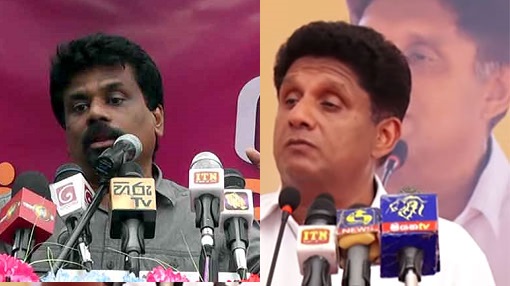
On Thursday, an IMF delegation led by Senior Mission Chief for Sri Lanka, Peter Breuer, met the SJB delegation led by Opposition Leader Sajith Premadasa and representatives of the JVP-led NPP separately as part of their engagements with opposition parties.

During the discussion with the SJB, the IMF delegation directly posed the question of how the party was planning to restructure the current EFF agreement in the wake of Opposition Leader Premadasa declaring at a public meeting that a future SJB government would revisit the programme.

“We have told them, ‘Look, we will make changes based on our party’s proposals to reduce the tax burden on the people,’” SJB MP Dr. Harsha de Silva, who took part in the meeting, told the Sunday Times

He said there was a mutual understanding between the two parties to “continue the exiting programme without major disruptions” in a future SJB government while discussing the alternative proposals the party came up with to reduce the tax burden on the people.

“Both parties also acknowledged the need for and complexities involved in the debt restructuring process and how crucial they were,” Dr. de Silva said.

“We have explained to them in detail our party’s proposals and plans to reduce the tax burden on people by adjusting the tax collection to make it palpable to people while achieving revenue targets. Since we have recalculated the tax collections based on proposals in the economic blueprint of the party, we have already submitted them to Parliament,” the SJB MP said.

Among the key proposals that were discussed at the meeting included amending the current Pay As You Earn (PAYE) tax to 24 percent from the current rate of 36 percent and with regard to Value Added Tax (VAT) which saw an increase up to 18 percent from January 1, the party is sticking to former Finance Minister Mangala Samaraweera’s policy decision of keeping the rate at 15 percent.

The SJB also indicated that ad-hoc tax holidays given to various entities would have to be reconsidered as well.

Neither the NPP nor the SJB issued a formal statement on the talks.

Meanwhile, Mr. Breuer said on Friday that Sri Lanka’s staying in the economic reform process supported by the IMF was necessary for stabilisation to evolve into broad-based and steady growth that would ensure a full and lasting economic recovery benefiting the people.

In this context, sustaining the reform momentum and ensuring timely implementation of all programme commitments were critical to rebuilding confidence and putting the recovery on a firm footing that would benefit all people, he said.

The economic reform programme implemented by the Sri Lankan authorities was yielding the first signs of recovery, with positive real GDP growth in the third quarter of 2023, low inflation, increased revenue collection, and a build-up of external reserves, Mr. Breuer said.

“The authorities have made commendable progress in putting debt on a path towards sustainability. The execution of the domestic debt restructuring was an important milestone,” he told journalists.

“So our understanding is that negotiations are ongoing, proposals are being exchanged, and it is important that the process continue and be completed as quickly as possible. It’s our strong expectation that there would be an agreement in principle by the time of the second review,” he said.

A swift completion of final agreements with official creditors and reaching a resolution with external private creditors remains critical.

“Progress in meeting key commitments under the reform programme has been assessed in the context of the second review of the Extended Fund Facility (EFF) arrangement alongside the forthcoming 2024 Article IV consultation assessing Sri Lanka’s economic health during the IMF team’s eight-day visit in the island.

“However, challenges remain as these improvements need to translate into improved living conditions for Sri Lanka’s people.

“Swift progress towards the introduction of a progressive property tax is key to ensuring fair burden sharing while sustaining revenue-based consolidation,” the senior IMF mission Chief said.

“Tax policy measures need to be accompanied by strengthening tax administration, removing tax exemptions, and actively eliminating tax evasion to make reforms more sustainable and to further build confidence among Sri Lanka’s creditors to regain debt sustainability to gain their support,” he added.

“Swift progress towards the introduction of a progressive property tax next year is key to ensuring fair burden sharing while sustaining the revenue-based consolidation.

“The property tax is to be enforced in 2025 as a progressive way of taxation. Meaning that those who can afford it more, those who have more expensive houses or property, will have to pay a higher tax,” he explained.

Posted in Uncategorized

Suspense over SLPP position on presidential candidate

It was nearly two centuries ago that a British statesman uttered these words about politics. It has since reverberated in the dovecotes of political power although its complete relevance now stands to question.

Henry John Temple, the Third Viscount Palmerston, in the 19th century, declared that in politics, “there are no permanent enemies, and no permanent friends, only permanent interests.”

The axiom seems to have outlived itself. Reflecting a contemporary political scenario that goes beyond applies to the ruling Sri Lanka Podujana Peramuna (SLPP). Their onetime political enemies have become its nowadays friends. Those who became friends by contesting the August 5, 2020, parliamentary elections under the SLPP label are now splintered and become enemies. These have changed what seemed once their permanent interests.

For the ruling coalition, the metamorphosis came in July 2022. Violent protests, mostly in the streets of Colombo, prompted President Gotabaya Rajapaksa to flee Sri Lanka and later resign. His resignation letter, which ended his controversial and authoritarian governance, came from Singapore. Another sample of how that was carried out came in a judgment from the Supreme Court, last Wednesday. It was over the pardon he gave to one of his then confidants, Duminda Silva, and later ensconced him in a government job. The country’s highest judicial institution ruled that Gotabaya Rajapaksa’s “decision is arbitrary, irrational and has been made for the reasons best known to the former President who appears to have not even made any written decision and has not given any reason thereto. Further, no reason can be discerned from any document submitted by Hon. Attorney General as forming part of the record pertaining to the impugned grant of pardon.”

That Parliament voted Ranil Wickremesinghe as President to complete the remaining term of Gotabaya Rajapaksa in July 2022 is now history. Wickremesinghe’s priority was to pull the country out of the bankruptcy his predecessor had plunged. To any discerning observer, it became abundantly clear, he had to veer away from the economic policies of the SLPP government. A string of unpopular decisions came pitting President Wickremesinghe against the public. Electricity rates went up and over half a million consumers have so far asked for disconnection of their power supply. The reason—they just cannot pay the higher tariffs. Amidst other price increases came a spiral in Value Added Tax (VAT) which encompassed a broad range of items. The latest is the proposed introduction of a property tax anytime now. This is on the advice of the International Monetary Fund (IMF).

It was in November last year that Mahinda Rajapaksa, former President, and leader of the SLPP, first struck a discordant note. He blamed the previous United National Party (UNP) government for opting for a “high tax regime” after 2015 thus forcing the decline precipitously ending up at 0.2 below zero by 2019. He pointed out that “due to bad economic management, the period from 2015 to 2019 saw an increase in taxes while at the same time experiencing a precipitous increase in foreign debt. When I was voted out in January 2015, the outstanding International Sovereign Bond debt was only US$ 5,000 million, he pointed out. So, he made out that the cause of the economic crisis lay in the hands of a UNP regime.

A significant paragraph in that statement, which perhaps did not draw much attention then, said: “The SLPP which I lead is part of the government. However, the present Head of the Government and Head of State is the leader of a different political party with different policies. In a situation where this country was faced with complete anarchy, Parliament elected a President to serve the remainder of President Gotabaya Rajapaksa’s term. The new President successfully restored law and order in the country. He is now directing government policy as the Executive President. At this moment, the primary duty of the SLPP is to ensure a stable government until the next national elections.”

Rajapaksa has acknowledged that President Wickremesinghe is the leader of a different political party “with different policies.” Even more importantly, his SLPP parliamentarians have endorsed and helped enforce such policies. Those remarks highlight that the SLPP policies were quite different from those pursued by the President. Those assertions set the mood in the party. It is against this backdrop that the SLPP held its special convention on December 15, last year, at the Sugathadasa Indoor Stadium in what was viewed as the soft launch of its presidential campaign. More so when it had already held its fifth annual convention in November 2021.

This event saw the emergence of millionaire businessman and casino owner Dhammika Perera. Interestingly, at a news conference, SLPP General Secretary Sagara Kariyawasam told reporters that his party had agreed on Dhammika Perera and four others as presidential candidates. One of them would be finally selected, he declared. He, however, did not name the other three. Amidst this, Perera also figured in a media campaign promoting his role as a key player in developing computer technology. The idea was to find more jobs for the youth. He had also initiated a dialogue with politicians of the ruling party to secure its support and to launch a countrywide campaign. This week, he flew to London interrupting all this.

Social media sites backing him reported yesterday that he was taking a “respite” from the Presidential election campaign.

Significant enough, there appears to be a change of position in the SLPP. Notwithstanding what General Secretary Kariyawasam said at a news conference, a new party line was spelled out by Mahinda Rajapaksa, the leader of the SLPP. He declared this week that they had not decided on a candidate. It was made at a ceremony at the Grand Monarch Hotel on January 14. A more important assertion he made was that the SLPP had also not decided whether it would field a candidate. The sting is in this remark. Firstly, in making these remarks, Rajapaksa has made clear party secretary Kariyawasam’s assertions which included the consideration of Dhammika Perera, and three others are no longer valid. In other words, a formal decision, officially spelt out as the party position at a news conference, has been changed. One is not wrong in saying that Rajapaksa has contradicted the claim by his own party’s General Secretary in spelling out a new SLPP position. It goes without saying that SLPP policies will not stand in the way.

How did this shift come about, significantly ahead of the upcoming presidential polls? At least two different sources familiar with the developments confirm that there has been a policy shift on the part of the SLPP. “As things stand now,” one source said, “the party is inclined not to field a presidential candidate.” The idea is to help enhance Wickremesinghe’s vote bank. An unexpected benefit to the SLPP because of the move is keeping the remaining parliamentarians, after some broke away, within the party’s fold. In addition, this will also preclude them from joining the New Alliance that has been formed by Gampaha district parliamentarian Nimal Lanza. Earlier, they were known to have 29 parliamentarians mostly from the SLPP.

The test of strength will come when they hold their first rally in Gampaha on January 27. Former minister Anura Priyadarshana Yapa is the leader of the New Alliance. As previously reported, Lanza has been working from the Presidential Secretariat to garner support for his alliance and has been engaged in wooing those from the SLPP, their trade unions and other bodies.

In such circumstances, why can’t the SLPP support Ranil Wickremesinghe’s candidature openly? The answer came from another source. “Here again, the fear is the prospects of the party being divided in the middle. There are members and followers who do not favour the party supporting the candidature of a leader of another political party who had remained opposed to the SLPP,” said this source. “This way,” the source added, “the likelihood of a greater majority of the SLPPers supporting Wickremesinghe is high.” Nevertheless, a bigger question on whether any of the SLPP leaders will join Wickremesinghe’s campaign, even during the final stages, remains unanswered. He has already won some leverage by not contesting on the UNP ticket and coming forward as the candidate of a “grand alliance.” A name, however, must be found. Another reason for remaining “neutral,” at least officially, is to obviate opposition criticism that Wickremesinghe has been protecting the interests of the Rajapaksas since he became President. Open support to his election campaign, it is argued, will give the opposition parties a handle to claim that the accusations have now been proved.

It is too early for one to discern the final line up of candidates or the different alliances that are being formed. It is known that the main opposition Samagi Jana Balavegaya (SJB) candidate will be Sajith Premadasa, the Leader of the Opposition. He told a series of meetings in the North Central Province that his grouping is ready to face any election. “The President is going around saying he is preparing for the presidential election and is trying to get the views of the public. The UNP and the SLPP are already confused about an independent candidate,” he claimed. Premadasa’s supporters in Parliament have increased with a foursome – G.L. Peiris, Dilan Perera, Nalaka Godahewa and Wasantha Yapa joining the SJB.

There were moments of embarrassment for those in the Freedom People’s Congress (FPC) led by Dullas Allahappereuma. Peiris had sent his car to the Third Lane, Nawala office of the FPC asking for the return of all his belongings. A thoughtful member of the administrative staff formulated a list and ensured that the driver acknowledged the receipt of all items. Among them was a smart TV, a toolset, cables, a TV monitor, a sound system with a sub-woofer, a microphone with a stand and a variety of cables.

With more than seven months to go for the scheduled presidential elections, social media is full of surveys from different organisations, some lesser known. Most of these have been placing the Janatha Vimukthi Peramuna (JVP)-led National People’s Power in the lead followed by the Samagi Jana Balavegaya (SJB). The veracity of some of these surveys remains in doubt and in the case of some others the statistics are not backed up. However, the surveys have influenced the propaganda lines of President Wickremesinghe’s campaign. The soft election campaign by those who are setting up a grand alliance is being directed at the NPP.

With the presidential election in mind, President Wickremesinghe is expected to spell out the measures he adopted to resuscitate a bankrupt economy when he ceremonially opens Parliament on February 7. There was an error in last week’s report in these columns that the prorogation will take place on January 26. It will take place on January 24. The last date for the sitting of Parliament in January has been determined by the Parliamentary Business Committee chaired by Speaker Mahinda Yapa Abeywardena. The Committee met on January 12 and decided that since January 25 is a Poya Day and public holiday, there would be no sittings of Parliament on January 26 or the next day as expected. Thus, the last day of sitting for January was determined as January 24.

Posted in Uncategorized

Mihintale Rajamaha Vihara Chief Incumbent Announces Plans for New Presidential Candidate

In a surprising declaration, the Chief Incumbent of the Mihintale Rajamaha Vihara temple, the Venerable Walawahengunawewe Dhammarathana Thero, has asserted that a new presidential candidate will be unveiled for the upcoming elections. The announcement was made during a gathering at the historic temple, a revered site with deep historical and cultural significance.

According to the venerable monk, all 225 Members of Parliament have been rejected by the people, and in light of this, plans are underway to introduce a fresh candidate once elections are officially declared.

“People of this country have been deceived for 75 years. We will create a new candidate. None of the existing candidates will provide solutions. Ask the President to call for an election. We will bring the candidate,” stated the Thero