Ranil is the next presidential candidate – Sabry

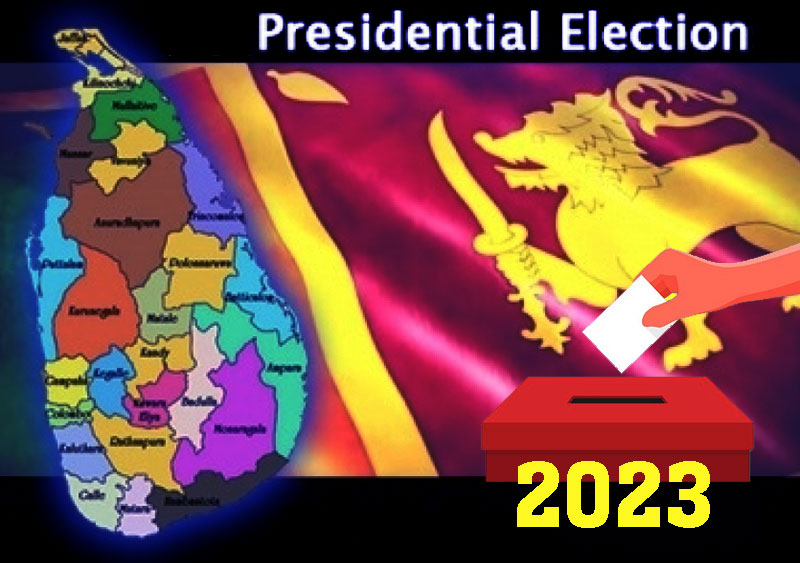
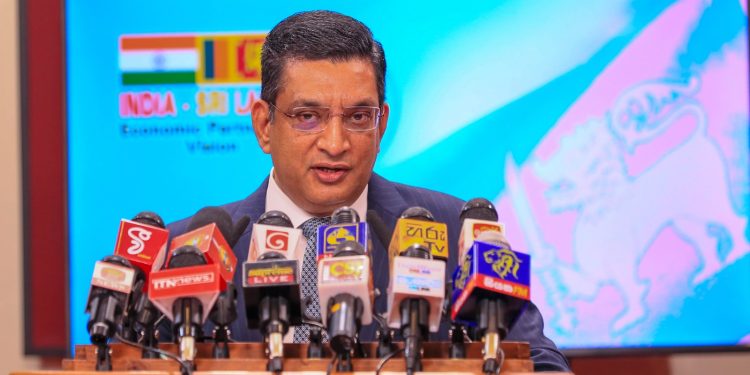
Sri Lanka’s Foreign Minister Ali Sabry told News 1st on Tuesday (25) that incumbent President Ranil Wickremesinghe will be the next Presidential Candidate from the ruling faction.

“Yes, there are those within the party (SLPP) who share a different opinion,” said the Minister adding that given the present state of affairs, focus should not be on an individual but on the ability to carry forward the reforms program.

The Sri Lanka Podujana Peramuna General Secretary recently said that the party has not reached any decision with regard to the Presidential Candidate.

On the 20th of July 2022, Ranil Wickremesinghe was elected as the 8th Executive President of Sri Lanka.

According to the Presidential Elections (Special Provisions) Act (No. 2 of 1981), Ranil Wickremesinghe was elected by majority vote of the Members of Parliament.

Posted in Uncategorized

UN Resident Coordinator and Ranil discuss human rights

Newly appointed United Nations Resident Coordinator in Sri Lanka, Marc-André Franche, discussed a range of issues with President Ranil Wickremesinghe, including reconciliation efforts and human rights in Sri Lanka.

Marc-André Franche presented his Letter of Credence to President Ranil Wickremesinghe in Colombo, the UN and the President’s Office said.

The UN said that Franche expressed his appreciation to President Wickremesinghe for the longstanding partnership between the United Nations and Sri Lanka.

He also reaffirmed the commitment of the UN Country Team to continue working together with the Government and people of Sri Lanka towards the achievement of the 2030 Agenda for Sustainable Development.

Recognizing the challenges of the current situation and pressures on the Sri Lankan people, Franche welcomed the progress that has been made towards stabilizing the economy. Further to the United Nations and its partners supporting the public health response to the COVID-19 pandemic and humanitarian assistance reaching over 3.1 million people during the height of the crisis, he assured that the UN would remain committed to working alongside the Government for an inclusive and sustainable economic recovery, with a particular emphasis on the most vulnerable.

Franche and President Wickremasinghe further discussed the national commitments of Sri Lanka on the climate agenda as well as the continued efforts aimed at reconciliation, human rights and development initiatives that help improve the livelihoods and wellbeing of communities, including in the Northern and Eastern provinces.

United Nations Secretary-General Antonio Guterres appointed Franche as the United Nations Resident Coordinator, with the concurrence from the Government of Sri Lanka, on 8 July, 2023.

Port City Colombo inks MoU with Thai-Sri Lanka Chamber of Commerce

Port City Colombo (PCC), Sri Lanka’s most ambitious integrated development project and the country’s first foreign currency designated Special Economic Zone dedicated to exports of services, has taken a significant step towards fostering stronger ties between the Thai and Sri Lankan business communities.

Accordingly, a Memorandum of Understanding (MoU) was recently signed between Port City Colombo and the Thai-Sri Lanka Chamber of Commerce (TSLCC) in Bangkok, Thailand.

The MOU marks a pivotal moment in promoting bilateral trade and investment opportunities between Sri Lanka and Thailand, through PCC. The objective of the agreement is to facilitate and enhance cooperation, providing a platform for business development and collaboration between the two nations. Sri Lanka and Thailand have a warm history of trade and political cooperation stretching back many centuries, and share similarities between their cultures and aspirations, making for a strong foundation for further international cooperation. Representatives from both entities were present at the signing ceremony.

Representing Port City Colombo were Managing Director Yang Lu, Deputy Managing Director Thulci Aluwihare, General Manager of Investment Promotions and Marketing Stan Li, Director of Investment Promotions and Marketing Radika Obeyesekere and CHEC (Thai) Company Ltd. Director of Investment Sarayut Leklipol.

Participating from TSLCC were; TSLCC General Secretary and Siam Success Solutions Co Ltd. Managing Director Dilan Samarakoon, TSLCC Treasurer and K. Square Co Ltd. Director Lal Silva,

TSLCC Executive Director and Kama Joint Ventures Co Ltd. Executive Director Wichak Suawancharoen, AMCHAM Thailand Business Economics Committee Leader and Bank of America Vice President Corporate Banking Chanin Winayanuwattikun, TSLCC Trade Subcommittee Member and ASL Logistics Co. Ltd Director Shiran Madhawa, TSLCC Trade Subcommittee Leader/ Past President, and Bhagya Enterprises Co Ltd. Managing Director Sisira Mendis, and TSLCC Member and Rockers Auto Import Managing Director Faiz Mohammed.

During the event, discussions focused on the abundant business opportunities within Port City Colombo and the potential for collaboration in various sectors. Both parties expressed their commitment to exploring avenues for mutual growth, trade expansion and investment promotion.

The MoU between Port City Colombo and the Thai-Sri Lanka Chamber of Commerce marks a significant milestone in strengthening economic cooperation and fostering greater connectivity between Sri Lanka and Thailand.

It paves the way for deeper engagement, and opens up a multitude of possibilities for businesses in both countries.

IMF reforms, debt restructuring vital for SL’s economic recovery: Japanese envoy

Ambassador of Japan to Sri Lanka, Mizukoshi Hideaki recently emphasised the importance of Sri Lanka completing the International Monetary Fund (IMF) reforms and finalising debt restructuring negotiations for the economic recovery of the country.

“These things will result in better sovereign credit ratings, access to international capital markets,” the ambassador highlighted while addressing the recently concluded 44th Annual General Meeting of the Sri Lanka-Japan Business Council.

“Over the past several months, we have been witnessing several positive signs regarding the economy, including moderated inflation rates and accumulation of foreign reserves. In particular, the approval of the IMF programme in March, resulting in US$ 3 billion support for Sri Lanka over 48 months, marked an important milestone towards economic recovery.

This approval has catalysed further financial support from bilateral and multilateral creditors, such as the ADB and World Bank, enhancing trust from the international community and investors. Another significant progress is observed in the ongoing debt restructuring process. Japan, alongside France and India, launched and chaired the official creditors’ meeting, providing solid cooperation for the debt restructuring,” ambassador Hideaki said.

“Furthermore, the implementation of these reforms will improve the investment and business climate through financial stabilisation and streamlined administrative procedures via digital transformation,” he noted.

Thus, he requested the people of Sri Lanka to fully recognise the necessity of these reforms and take ownership in seeing them through.

“As such, Japan firmly backs such measures to enhance transparency, efficiency, and consistency. To boost foreign reserves more, it is crucial to revive and bolster foreign exchange and sectors including garment manufacturing, tea cultivation, tourism, and remittances from overseas workers in the immediate term,” the envoy added.

Meanwhile, Mahen Kariyawasan was appointed as the new President of Sri Lanka-Japan Business Council for 2023-2024.

Tamil National Heroes Day

TAMIL NATIONAL HEROES DAY 40TH REMEMBRANCE DAY

Tamil National Heroes Day 25-07-2023

Welikada Prison Massacred 40th Remembrance Day

எமது போராளிகளின் அர்ப்பணிப்பை அர்த்தம் உள்ள அரசியல் தீர்வை நோக்கி நகர்த்துவோம்

40th Anniversary of Black July 83, TELO Leaders and Fifty three Tamil prisoners were murdered in the maximum security Welikade prison, In the July 83 anti-Tamil program Sinhala thugs, ruling UNP party cadres, sections of Sri Lankan troopers, and Sri Lanka Police killed more than 3000 Tamils and destroyed property worth billions of rupees.

Posted in Uncategorized

THE MADRAS HINDU OF 10TH AUGUST 1983

“Selvaraja Yogachandran (TELO), popularly known as Kuttmuni, a nominated member of the Sri Lankan parliament who was one of the 52 prisoners killed in the maximum security Wellikade prison in Colombo two weeks ago, was forced to kneel in his cell, (where he was under solitary confinement), by his assailants and ordered to pray to them. When he refused, his tormentors taunted him about his last wish, when he was sentenced to death. (He had willed that his eyes be donated to someone so that at least that person would see an independent Tamil Eelam.) The assailants then gouged his eyes. He was then stabbed to death and his testicles were wrenched from his body. That was confirmed by one of the doctors who had conducted the post-mortem on the first group of 35 prisoners. According to S.A David,[iii] the thirty-five Tamils were then heaped in front of the statue of Gautama Buddha in the yard of the Welikade prison and when some yet alive raised their heads they were clubbed to death.The second round of killings on July 27 was lead by Sepala Ekanaike, undergoing life imprisonment for the hijacking of an Alitalia plane on its flight from Delhi to Bangkok a year previously. Sinhalese prisoners convicted of murder, rape and burglary charges were handpicked by the warders, who after plying them with liquor, let them loose on the remaining Tamil political prisoners. Seventeen prisoners were killed on this occasion.

Posted in Uncategorized

Remembering Black July – 40 years since the pogrom

Today we mark 40th years from the horrors of the anti-Tamil pogrom of 1983, when Tamils were killed by Sinhala mobs backed by the then UNP government and state forces.

Sinhala rioters halt a minibus searching for Tamils Armed with electoral rolls, Sinhala mobs targeted Tamil homes and businesses looting and ransacking property. Driven from their homes, particularly in Colombo, over 3000 Tamils were massacred, whilst thousands more were effectively deported by the state to the North-East.

Eye witness reports described mobs chasing Tamils down the street with knives and setting them alight alive. Many hundreds of women were raped. Tamil political prisoners locked up in Welikada jail, deep within the island’s south, were also targeted as prison guards allowed Sinhala inmates to slaughter them.

We look back at events through international press coverage at the time:

21 Jul 1983 – The Times:

“The Government yesterday imposed local and foreign press censorship on all news about national security, law and order, essential supplies, and incitement to mutiny, riot or civil commotion.”

23 Jul 1983 – The Montreal Gazette

“The officials said 17 prisoners died in a jailbreak at the Welikada jail in the capital of Colombo, where 35 Hindu Tamil prisoners were massacred Monday by fellow inmates belonging to the nation’s Buddhist Sinhalese majority. Guards also opened fire yesterday on rioting Tamil prisoners in the jail of Jaffna, 386 kilometres north of Colombo killing three of them”

26 Jul 1983 – The Daily Telegraph:

“Motorists were dragged from their cars to be stoned and beaten with sticks. Others were cut down with knives and axes. Mobs of Sinhala youth rampaged through the streets, ransacking homes, shops and offices, looting them and setting them ablaze, as they sought out members of the Tamil ethnic minority. A mob attacked a Tamil cyclist riding near Colombo’s eye hospital. The cyclist was hauled from his bike, drenched with petrol and set alight. As he ran screaming down the street, the mob set on him again and hacked him down with jungle knives.”

27 Jul 1983 – The Times:

“Here in Britain some of the 25,000 Sri Lanka Tamils blamed the start of the fighting on an incident last week in which three teenage girls at a bus-stop near Jaffna in the north of Sri Lanka were allegedly abducted and raped by soldiers. On girl was later said to have committed suicide.

They also claim another atrocity in which six schoolboys were shot and killed by troops and police in the same area. They blame these incidents for prompting the attack by Tamil guerrillas on a Sri Lankan Army vehicle on Saturday, in which 13 soldiers were killed.”

27 Jul 1983 – The Times :

“These mostly involved in the present troubles are the Ceylon Tamils, a highly educated, superior minority, who feel victimized by the Sinhalese. Not only are there fewer industrial opportunities for them in the north but Tamil boys have been discriminated against in winning places at university”

“Despite their minority status the Tamils for years held top jobs in business and administration under the British, jobs they have mostly since lost under Sinhalese rule. The cause of the present violence must therefore be seen in part economic terms”

28 Jul 1983 – The Times :

“Smoke from hundreds of shops, offices, warehouses and homes blew idly over Colombo yesterday. Any business, any house belonging to, or occupied by a Tamil has been attacked by gangs of goondas (hooligans) and the resulting destruction looks like London after a heavy night’s attention from the Luftwaffe.”

“Government officials yesterday estimated that 20,000 business had been attacked in the city and declared that there was a pattern of organisation and planning in the rioting and looting.”

“One of the principal reasons for Britain’s delay in granting independence to its former colony was because of fears that the majority would tyrannize the minority Tamils. But the majority Sinhala speakers feel that they are threatened by 40 million Tamil speakers in India.”

29 Jul 1983 – The Montreal Gazette :


“Addressing the island nation on radio and television for the first time since violent clashes between majority Sinhalese and minority Tamil erupted six days ago, Jayewardene said the Tamil movement “should have been banned long, long ago. The Sinhalese will never agree to the separation of a country that has been a united nation for 2500 years,” Jayewardene said.

People who advocate separatism the president said, would lose all their “civic rights”, be banned from holding any office and preventing from practising a profession.”

A government official also confirmed that 130 Sinhalese sailors of the Sri Lankan navy broke from their barracks in the port city of Trincomalee Monday and burned 175 houses in a Tamil neighbourhood, killing one Tamil and wounding 10 others.

A Norwegian tourist reported seeing a Sinhalese mob pour gasoline on a minibus full of about 20 Tamils in Colombo and set it on fire. From Oslo, Eli Skarstein was quoted as saying, “Colombo was burning when we left. Women, children and old people were slaughtered. Police and soldiers did nothing to stop this genocide.”

Douglas Liyanage, secretary of the ministry of state, acknowledged that Sinhalese passengers on a Colombo-bound train from the central Sri Lanka town of Kandy had attacked Tamil passengers they suspected of carrying weapons. Passengers said one of the Tamils was chased naked and bleeding through the railway cars until he fell dead and was thrown off.

The wave of killings was touched off by the ambush and slaying of 13 Sinhalese soldiers by Tamil insurgent guerillas over the weekend. But the violence grows out of a century of deeply-rooted hatred, along with differences of language and religion between the Buddhist Sinhalese and the Hindu Tamils.”

29 Jul 1983 – The Times :

“Political parties advocating the partition of Sri Lanka will be banned, President J R Jayawardene announced yesterday as news emerged of a second massacre in Colombo’s main jail.

In an attempt to appease the mobs which have attacked Tamil homes and businesses, the President declared that those seeking partition will “lose their civil rights and cannot hold office, cannot practise professions, join movements of organizations”.

Mr Jayewardene said in a nationwide broadcast: “The government has not decided that the time has come to accede to the clamour and the request, the natural request, of the Sinhala people that we do not allow the movement for division to grow any more.”

29 Jul 1983 – The Age :

“Frustrated expectations of increased self-rule for the Tamil community, coupled with Government fears that its support from the majority Sinhalese was slipping, appear to have been the primary combustibles that ignited the worst violence in this scenic island nation since 1948.”

01 Aug 1983 – The Sydney Morning Herald :

“The Sri Lankan Government has cracked down on political opponents and appealed for public support, saying ethnic bloodshed on the island is part of a foreign-inspired plot to overthrow it.”

04 Aug 1983 – The Times:

“Sri Lanka Army personnel actively encouraged arson and the looting of Tamil business establishments and homes in Colombo. … Absolutely no action was taken to apprehend or prevent the criminal elements involved in these activities. In many instances army personnel participated in the looting of shops.”

Black July’s 40th anniversary functions disrupted

Police and a certain group had disrupted the functions in Colombo to mark the 40th anniversary of the Black July of 1983, said organizers.

A function by North-South Brotherhood near Borella cemetery was interrupted by unknown persons, who accused organizers of receiving funds from NGOs to level genocide charges against the military.

In the meantime, the Socialist Youths Union faced a water cannon attack by the police on their protest march near Town Hall, while being accused of trying to hold a procession against the law.

Organizers said these were against the freedom of expression.

Sri Lanka Rupee: Asia’s Best to Worst in Three Weeks

The Sri Lankan rupee has turned into Asia’s worst-performing currency from being the best in the first half of the year, and is poised to extend losses amid headwinds from interest-rate cuts and loosening of import controls.

The currency has tumbled more than 6% this month as it fell a 14th day on Monday, on track for its longest daily losing streak in almost five years.

That’s a stark reversal from its stellar performance in the first six months of this year, when the rupee was Asia’s top performer with a 19% advance. The currency may further weaken by 8% by year-end, according to Natixis SA.

Demand for dollars is rising as the crisis-hit nation eases import controls on more goods such as tiles and medical supplies.

Sri Lanka cut its benchmark rate for the second consecutive meeting early this month amid faster disinflation, a move that’s also weighed on the currency.

“The trade balance will go more negative and more rate cuts may come as inflation is cooling rapidly,” said Haoxin Mu, an economist at Natixis SA in Hong Kong.

Mu forecasts a further 8% depreciation in the rupee to about 355 per dollar by the end of the year.

Posted in Uncategorized

Sri Lanka-born BBC newsreader George Alagiah dies aged 67

BBC newsreader George Alagiah has died at the age of 67, British media reported on Monday.

The Sri Lanka-born journalist – the face of BBC One’s News At Six since 2007 – was diagnosed in 2014 with stage four bowel cancer, which had spread to his liver and lymph nodes.

He endured two rounds of chemotherapy and several operations, including the removal of most of his liver.

In October 2015 he announced his treatment was over and returned to BBC News At Six on 10 November.

Alagiah joined the BBC in 1989 and spent many years as one of the corporation’s leading foreign correspondents before moving to presenting.

In a statement, his agent Mary Greenham said: “I am so terribly sorry to inform you that George Alagiah died peacefully today, surrounded by his family and loved ones.

“George fought until the bitter end but sadly that battle ended earlier today.

“George was deeply loved by everybody who knew him, whether it was a friend, a colleague or a member of the public. He simply was a wonderful human being.

“My thoughts are with Fran, the boys and his wider family.”

BBC director-general Tim Davie said: “George was one of the best and bravest journalists of his generation who reported fearlessly from across the world as well as presenting the news flawlessly.

“He was more than just an outstanding journalist, audiences could sense his kindness, empathy and wonderful humanity. He was loved by all and we will miss him enormously.”

Labour leader Sir Keir Starmer tweeted: “Deeply saddened by the news of George Alagiah’s passing.

“A much-loved face of BBC News for decades, George will also be remembered for his brilliant, fearless journalism as foreign correspondent. He rightly won awards for his evocative, boundary-pushing reporting.

“British journalism has lost a talent. My thoughts are with his family and loved ones.”

Alagiah first began hosting the 6pm news bulletin in early 2003, but stepped up to front it solo four years later following the departure of his co-host, Natasha Kaplinsky.

He was previously a prominent foreign correspondent, often as a specialist in Africa with coverage of civil wars in Somalia and Liberia, as well as the genocide in Rwanda 20 years ago.

Throughout his career, he interviewed central political figures, among them former South African president Nelson Mandela, Archbishop Desmond Tutu, and ex-Zimbabwean leader Robert Mugabe.

Before joining the BBC, Alagiah worked as a print journalist and went on to write a number of books including A Home From Home, which looked at what it means to be British.

Throughout his illustrious career, he also presented other shows such as Mixed Britannia, looking at the UK’s mixed-race population.

He was made an OBE in the 2008 New Year Honours.

Alagiah was born in the Sri Lankan capital of Colombo in 1955 to Tamil and Christian parents. The family relocated to Ghana when Alagiah was six to escape anti-Tamil violence in Sri Lanka.

During the BBC’s coverage of the 2004 Asian tsunami, he returned to the country to find that his grandfather’s former home had been destroyed in the natural disaster.

The journalist spent part his of childhood in Ghana in west Africa where he moved with his engineer father Donald and mother Therese.

The family moved to England when Alagiah turned 11.

It was the landmark Watergate investigation which inspired Alagiah, aged 17, to start a career in media.

Before starting with the BBC in 1989, Alagiah was based in Johannesburg as developing world correspondent for South Magazine.

He was named Amnesty International’s journalist of the year in 1994 for reporting on the civil war in Burundi and also won the Broadcasting Press Guild’s award for television journalist of the year.

He was also part of the BBC team that won a Bafta Award in 2000 for its reporting of the conflict in Kosovo, one of several prizes he received during his broadcasting career.

After first presenting BBC Four News in 2002 he went on to co-anchor the corporations 6pm news bulletin, first alongside Sophie Raworth and then Natasha Kaplinsky.

From 2007 he was the programmes sole presenter while he was also a relief presenter for News at Ten.
He interviewed several world leaders including Nelson Mandela, Robert Mugabe and former UN Secretary-General Kofi Annan.

In 2008, he was made an OBE in the New Year Honours list for services to journalism.

Away from journalism, Alagiah was a published author and his debut novel was shortlisted for a Society Of Authors award.

His thriller The Burning Land, about corruption and homicide in South Africa, was in the running for the Paul Torday memorial prize, which is awarded to a first novel by a writer over 60.

Source: Sky News/Daily Mail