Sri Lanka risks loss of GSP+ unless Anti-terrorism Bill changed

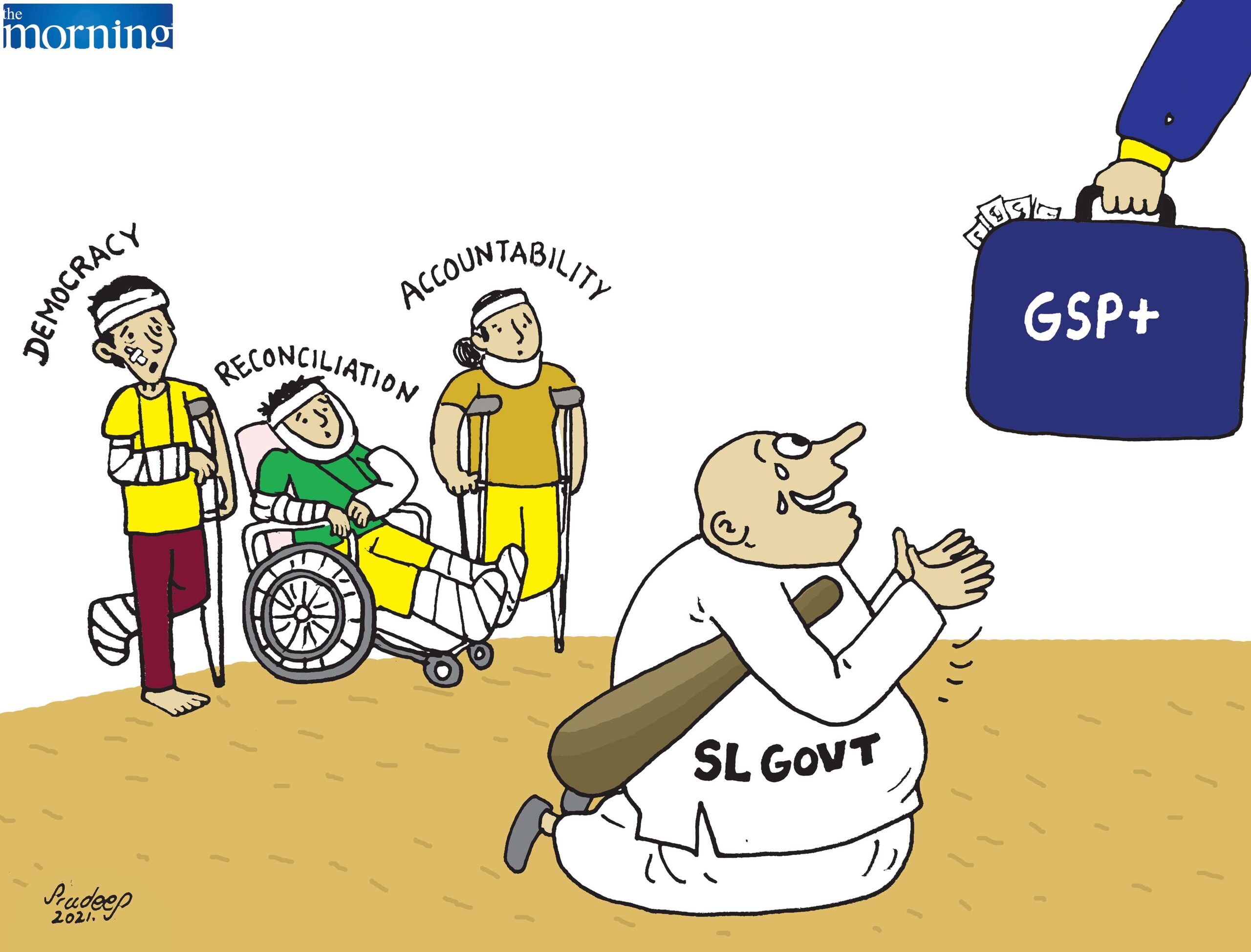
Sri Lanka risks the loss of GSP + trade concessions due to the provisions of the proposed Anti-terrorism Bill as the European Union (EU), the United States (U.S.) and the United Kingdom (UK) have expressed their concerns over it through multiple diplomatic channels, Daily Mirror learns.

Paola Pampaloni, the European External Action Service Deputy Managing Director of Asia and Pacific, wrote to the Foreign Ministry here expressing concerns on the new bill, according to an informed source.

The US has communicated its displeasure over the content of the new bill through Sri Lankan Ambassador in Washington DC Mahinda Samarasinghe. Also, the UK authorities informed Sri Lankan Foreign Secretary Aruni Wijewardane who is there, that this bill, unless changed, will have an impact on trade relations through preferential trading.

Besides, some representatives of the EU member states raised concerns in this regard when they were called for high tea with President Ranil Wickremesinghe and his Chief of Staff Sagala Ratnayake on April 17, 2023. During the brief discussion, they said that the spirit of the bill would have a bearing on decisions regarding GSP + concessions.

According to informed sources, these envoys noted that it will have a particular bearing when Sri Lanka re-applies for the same concession after upcoming reforms of the EU’S GSP + framework next year.

The repeal of the current Prevention of Terrorism Act (PTA) is a commitment made by Sri Lanka to qualify for US $ 500 million Gsp( generalized Scheme of Preferences) + trade concessions in exporting to the markets in the EU region. The European Commission’s report on Sri Lanka is expected to be presented at the end of next month or early June.

However, there is criticism from various quarters like some civil society organizations, political parties in the opposition and trade unions on the new Anti-terrorism Bill introduced to be enacted in place of the PTA. They even call it far more draconian than the PTA.

The government has now delayed the presentation of the bill for discussion with the concerned parties.

Posted in Uncategorized

From the frying pan into the fire of the Anti-Terrorism Law BY Dr. Jehan Perera

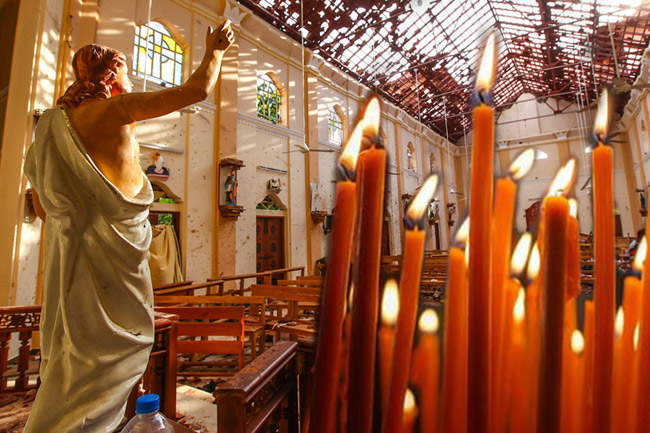
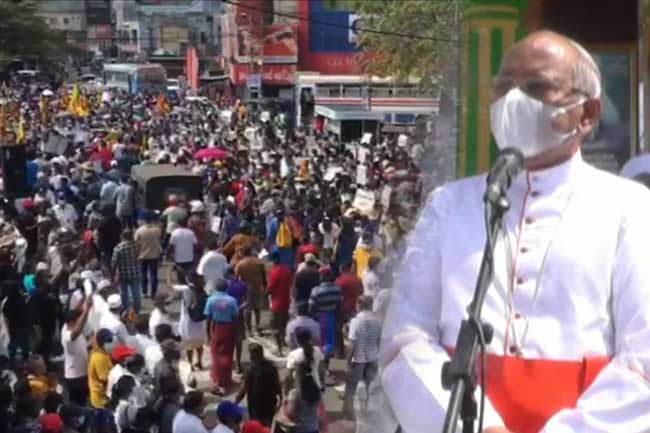
In a recent media interview, Archbishop of Colombo Malcolm Cardinal Ranjith stated that so far, the Government investigations into the Easter Sunday terror attacks on 21 April 2019, had been unsatisfactory and unacceptable. He said: “The official channels of justice have not been fair to us all along. There has never been a serious, committed investigation into the Easter attacks, its’ causes, players, and authors and any other forces.”

He warned that a related application would also be filed in the future in the courts against the current President (Ranil Wickremesinghe) once he leaves office as he currently enjoys immunity. He pointed out that the President would not hold that position for all time but that the Catholic Church would continue and those who came after him (Cardinal Ranjith) would also take up the cause.

The investigations by governments under three successive Presidents (incumbent Opposition Parliamentarian Maithripala Sirisena, Gotabaya Rajapaksa, and Wickremesinghe) even though they were armed with the Prevention of Terrorism (Temporary Provisions) Act as amended (PTA), have not disclosed the truth of who was behind the attacks. The best that has been done so far has been by the Supreme Court. This followed Fundamental Rights cases filed by the Catholic Church and other citizens as no proper investigations were initiated by the Government to provide legal redress. Having perused the investigation reports, it found Sirisena and four senior security officials (then Defence Secretary Hemasiri Fernando, then-Inspector General of Police Pujith Jayasundara, then-State Intelligence Service Director and incumbent Senior Deputy Inspector General of Police [SDIG] Nilantha Jayawardena and then-Chief of National Intelligence and retired DIG Sisira Mendis) guilty of negligence in having failed to act on intelligence information that they had received.

They all were subjected to fines (Sirisena – Rs. 100 million, Fernando – Rs. 50 million, Jayasundara – Rs. 75 million, Jayawardena – Rs. 75 million, and Mendis – Rs. 10 million), running into millions of rupees (Rs. 310 million) which the officials in particular would be hard pressed to pay. But, the Court did not identify who was the mastermind behind the bombings. So, the search for the truth must continue.

In the absence of truth, there is no closure and suspicions only grow deeper. In his most recent statements, Cardinal Ranjith has got more and more outspoken. The Cardinal said during the Easter midnight mass in Colombo: “Now, the Easter attacks. How many years? Four years. Still no justice. Still, no one knows what happened. All kinds of things are being said by people. It is important that we struggle for justice, for truth. That is Christianity.” In addition to demonstrating the unwavering resolve of the Church to obtain justice, this was a clear example of how the PTA that that was in place since 1979 (No. 48 of 1979) failed to prevent the Easter bombings despite its draconian provisions that have led to a very large number of abuses. It is tragic that the present Government seems to have lost sight of this lesson and is now proposing a worse alternative in the form of the draft Anti-Terrorism Act.

Truth Commission

The Government’s announcement that it will be setting up a Truth Commission to look into what happened in the three-decade-long civil war and bring about national reconciliation, will not deal with the Easter bombings. Instead, the Truth Commission will be looking at “the conflict that took place on or after 24 July 1983, and prior to 18 May 2009”. Though not elaborated upon, this is the period of the separatist insurgency by the Liberation Tigers of Tamil Eelam (LTTE) and other armed separatist groups who waged a guerrilla war. The mandate of the Commission will be, among others, the promotion of national unity, peace, the rule of law, coexistence, equality with tolerance and respect for diversity, and reconciliation among the people of Sri Lanka, by establishing a truthful, accurate, impartial, and complete record of the alleged damage and/or harm caused to persons or property in the conflict.“

The period of investigation being limited to 24 July 1983, to 18 May 2009, is an indication that the Truth Commission’s mandate will be a limited one. It will only look at that time period in which the LTTE was the dominant Tamil militant organisation. However, massive human rights violations continued to take place after the war’s end. Busloads of LTTE personnel and their families disappeared days after the war. Over 300,000 civilians were incarcerated in barbed wire camps for over six months in which many of them went missing, some who bribed themselves out and others who were taken away by the security forces. The ethnic conflict preceded the start date and continues after the end date, making the mandate of the Truth Commission an inadequate one.

The specificity of the dates also raises a question as to whether only the ethnic war will be looked at by the Truth Commission or whether the Janatha Vimukthi Peramuna insurrection, which took place during that time frame (between 1987 and 1989) will also be investigated. A very large number of people lost their lives in that conflict which was separate from that of the ethnic conflict. The doubt arises because the formulation of the terms of reference of the Truth Commission has not been a public process and very much a secret one, quite unlike what happened in South Africa, which is the country that the Government is seeking assistance from. In the coming days, the Government may indicate what its intentions are, now that it seems to have decided to go ahead with the process.

The President’s pledge

It is clear that the Easter bombings and its fallout will not be a part of the mandate of the proposed Truth Commission. The mandate of the Truth Commission will only extend up to 18 May 2009, the last day of the war. The exclusion of the Easter bombings from the mandate of the Truth Commission may be justified on the basis that it took place a decade after the war had ended. It was also only a single event, unlike the war which continued over a very long period. But, the need for a Truth Commission to investigate the Easter bombings cannot be ignored as the truth of what happened continues to be veiled and hidden. The puzzle then, and which remains to this day, was the motivation for the attacks and who was behind them.

Cardinal Ranjith’s determination to ensure that the truth will be found may have its origins in the belief that the Christian worshipers were made scapegoats for a deviant political agenda. The dead have no voice to demand justice, so it is the duty of the living to seek the truth. This is one of the reasons for the importance given worldwide to Truth Commissions to investigate controversial events of the past. Instead of working together for accountability and justice, Government leaders have so far shown little or no interest in ensuring the accountability of those who were responsible for the Easter attacks taking place. Unfortunately, it is no different in relation to the present economic crisis. There seems to be no action to explore the making of the crisis and the failure of the Government to address the issue of accountability for those who wrecked the economy and continue to be in seats of power.

In his Easter message, President Wickremesinghe appeared to be aware and sensitive to Cardinal Ranjith’s sentiments which he sought to assuage when he said, “I am very much aware of the extreme pain caused by the Easter Sunday attacks being still fresh in your minds, and I share that pain. I wish to reassure you that the legal proceedings related to this tragic incident are being processed independently and impartially, without any influence. The necessary groundwork towards this end has been laid, to ensure justice for all the victims. I pledge my unwavering commitment to ensuring the security of our country, by preventing any recurrence of such heinous acts.” In addition to restating his commitment, the President can strengthen his credibility by also going back to the past to ensure that those who committed crimes, whether criminal or financial, are soon removed from positions of high office that they do not merit.

(The writer is the Executive Director of the National Peace Council)

Easter Attacks: Cardinal says cannot trust current leadership to deliver justice

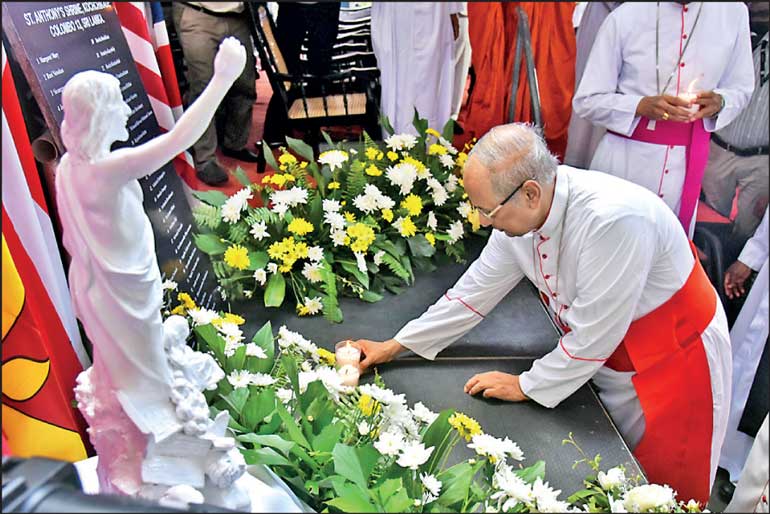
The Archbishop of Colombo, Malcolm Cardinal Ranjith says he along with the victims of the Easter Sunday attack cannot place their trust in the current leadership to deliver justice. He said while President Ranil Wickremesinghe and the Minister of Public Security have expressed their willingness to hold an honest dialogue on the matter, it is questionable if they intend to continue their duplicitous policies during the discussions. “Today dictatorship reigns in the country. We cannot place our trust in the current leadership that has taken steps to dismantle the people’s sovereignty,” he said. The Cardinal made these comments while addressing those gathered at the St. Anthony’s Shrine in Kochchikade to mark the fourth anniversary of the devastating Easter Sunday bombings that took over 260 lives and injured scores more.

A large number of people from all faiths gathered at the Church yesterday to remember the victims of the attacks and call for justice. Many commemoration events were organised by the Church and other groups across the country yesterday. A march of prayer commenced on 20 April from St. Sebastian’s Church in Katuwapitiya to St. Anthony’s Shrine in Kochchikade where the main commemoration event was held with the attendance of religious leaders, diplomats and other dignitaries as well as families of the victims.

Masses were also held in Churches and people were seen forming human chains on the sides of main roads as requested by the Cardinal. Many carried photographs of the victims and held placards demanding justice for the attack and calling the Government to bring the perpetrators to book.

However, the Cardinal, while expressing his doubts about the leaders, called on God to hear the voices of those suffering and reveal the truth behind the attacks. He called on God to safeguard the unity achieved in Sri Lanka. “We alert everyone that we will remain watchful till justice is delivered,” he said. The Cardinal also expressed his displeasure at the Attorney General’s Department and the Police for failing to take action based on the recommendations of the Presidential Commission of Inquiry into the attacks and at the Government for being reluctant to take genuine steps to probe into the incident.

Also addressing those gathered, the Chief Sangha Nayake of Dakshina Lanka Omalpe Sobhitha Thera urged the Cardinal to seek justice through an international mechanism if the domestic mechanism is faltering. “Though we call ourselves a Buddhist country, if there is no justice and fairness here, let us take this to the international community,” he said.

The Thera accused politicians of fuelling terrorism and extremism to achieve their selfish and power-hungry political aims. “But today there is no one answerable for the results of their actions. Providing security is one of the main responsibilities of the ruler. This tragedy took place as they did not fulfil it. This is the only country that has this many rulers who have corrupted the country and failed to fulfil their responsibilities. If the country that declares itself as Buddhist fails to deliver justice and fairness, if there is no Dhamma to be seen in the country declared as the land of the Dhamma, I invite you to take this to the international community. Let us ask them for justice,” Thera said.

Lanka Delimitation Commission proposes cutting oversized Local Government bodies by half

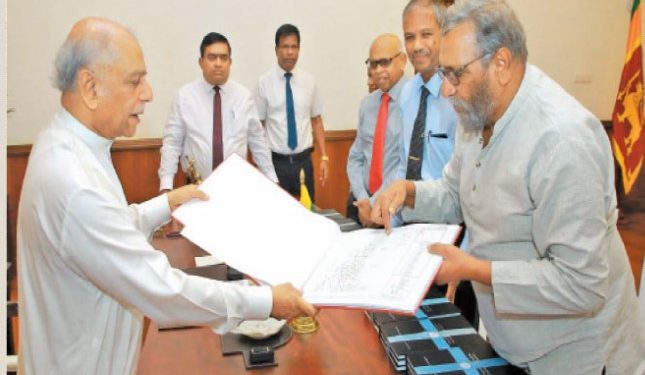
The preliminary draft of the report of the National Committee on Delimitation of Divisions for Local Government bodies was handed over to Prime Minister Dinesh Gunawardena on April 11.

The preliminary draft of the report of the National Committee on Delimitation of Divisions for Local Government bodies was handed over to Prime Minister Dinesh Gunawardena on April 11.

The Delimitation Commission (DC) headed by Mahinda Deshapriya, former Chairman of the Election Commission has made substantial progress in its given task of delimitation of electoral wards of the Local Authorities- Municipal Councils, Urban Councils and Pradeshiya Sabhas.

It is an unenviable and painstaking task as redrawing of constituency boundaries had to be done while taking into consideration many factors such as the number of voters, their ethnicity and the geographical size of the constituency to ensure proper representation of different communities, without marginalising or ignoring any minority groups or minor parties.

Chairman Deshapriya and other members of the Commission managed to complete the first draft report, which was handed over to Prime Minister Dinesh Gunawardena earlier this month. As Deshapriya explained the draft will be dispatched to Distract Secretariats across the country and the Local Authorities and the public will be able to make further recommendations for consideration before the Delimitation Report is finalized by the given date, i.e. April 30, 2023.

The Commission received a considerable number of proposals, suggestions and recommendations from the public, political parties, religious leaders and non-governmental organisations and most of them were incorporated into the draft report. The members of the Commission took extreme care to ensure proper representation of the people in the councils. Their main difficulty was how to accommodate the religious communities scattered in different areas in a district. It was not easy to ensure the representation of some minority communities –Tamil, Muslim and Malay – in some constituencies. Similarly Sinhalese are a minority in some constituencies in the Colombo district. All these factors were taken into consideration while drawing the constituencies. Furthermore, the proportional representation quota as well as bonus seats based on district percentage of votes will also take care of proper representation of minority communities and minor parties unable to get 50% of the cast votes in a constituency to get elected under the first past the post system.

The Delimitation Commission was appointed as there was an outcry over the current enormous size of the Local Government bodies and was a heavy burden on the Treasury. The Local Authorities are divided into three different groups: Municipal Councils, Urban Councils and Divisional Councils (Pradeshiya Sabha). Currently, there are 341 Local Authorities (24 Municipal Councils, 41 Urban Councils and 276 Divisional Councils). The Commission said the number of representatives to be elected will be reduced to 4,714 from 8,400. The number of elected members has been reduced to 2,882 from 5,092 and the number of members from the list has also been reduced to 1,832.

Considering the demand for reforms of the electoral system as well as for re-demarcation of constituencies, Prime Minister Dinesh Gunawardena, in his capacity as Minister of Provincial Councils and Local Government, issued an extraordinary gazette appointing a five-member National Delimitation Committee for the demarcation of wards for Local Authorities. While former Commissioner of Elections, Mahinda Deshapriya Chairs the Committee, Jayalath Dissanayake, W.M.M.R. Adikari, Dr. K. Thavalingam, and I. A. Hameed serve as members. The National Delimitation Committee is effective from November 1, 2022 to February 28, 2023, as per the gazette notification and the term was later extended up to April 30, 2023.

Deshapriya acknowledged that the Commission received some requests for caste-based demarcations of electoral wards of the Local Authorities but they were not entertained. “In the reduction of the current number of wards in the delimitation process, the Commission received requests to retain some such wards directly identified with certain caste groups. We declined to entertain such requests.” Although the issue of caste is more visible in the North and the East, it is seen all across the country. “We find it everywhere, more or less,” he said.

Referring to the large number of representations received from different institutions and the public, he however lamented about the lack of enthusiasm even among the political parties to send proposals to be considered in carving outwards with new boundaries.

Deshapriya said the Commission considered ensuring the representation of numerical minorities, as far as possible. They also proposed 25% representation for women.

According to the Commission sources, the Colombo Municipal Council composition is proposed to be reduced to 67 from the current membership of 110, which includes 66 elected directly and 36 according to PR and 8 members as an overhang. The Commission proposes to eliminate the overhang member quota.

Meanwhile, Opposition MP, S. M. Marikkar proposed to appoint a committee comprising MPs from all parties in Parliament to review the recommendations made by the Delimitation Committee. “This would also set the Sinhala candidate against the Muslim candidate and vice versa. The report also contained recommendations which would create errors and imbalances in representation in the Local Councils. When they were told to bring down the number of 8,400 Local Councillors to 4,800, they slashed the number by half without giving due consideration to practical problems arising thereby. For example, in Kolonnawa there are 20 Local Councillors – 12 of them are elected while there are eight bonus seats. The total number is proposed to be down to 10. The way it is proposed to be done is by electing only six members and allocating four bonus seats,” Marikkar said.

However, Deshapriya said the Committee recommendations are open to amendments. Once the final report is handed over to the Prime Minister on April 30, he, as Minister of Home Affairs and Local Government will appoint a Review Committee to examine the report and propose its recommendations for the required Gazette notification.

Commission Chairman clarified that the Delimitation Report has nothing to do with the scheduled Local Government elections, for which nominations have already been received. “The Government has to pass the bill in Parliament to annul the current nomination papers and that is the only way this delimitation report can have an impact on the current Local Government polls,” he said and pointed out that on three previous occasions, Parliament has passed such bills.

Chief Prelates urge President to remove unsuitable clauses in Anti-Terrorism Bill

The chief prelates of all three Buddhist Chapters have called for the removal of ‘unsuitable clauses’ in the much-disputed Anti-Terrorism Bill after an extensive dialogue with society and through a panel of experts.

It is observed that the controversial and broad definition of ‘terrorism’ in the proposed Anti-Terrorism Bill deem peaceful protests and speaking up about the shortcomings of the incumbent government an act of terror, the chief prelates pointed out in a letter to President Ranil Wickremesinghe.

Passing this Bill will be nationally and internationally adverse for Sri Lanka, as the move can make way for some serious doubts about the democracy in the country, they warned in their communiqué.

Posted in Uncategorized

Agriculture Ministry insists China requested for 100,000 monkeys

The Ministry of Agriculture today confirmed that China had made a request to import 100,000 endangered monkeys from Sri Lanka, amidst protests from environmental groups.

Gunadasa Samarasinghe, the top bureaucrat in Sri Lanka’s Ministry of Agriculture said that a privately-owned Chinese company connected to Zoological Gardens which are animal breeders had made the request to his ministry.

“We will not send the whole 100,000 in one lot. But we considered the request due to crop damages caused by the monkeys in several parts of the country. They will not be taken from conserved areas. The focus will be only in the cultivation areas,” Samarasinghe told reporters.

The toque macaque monkey is endemic to Sri Lanka and classified as endangered on the International Union for Conservation of Nature (IUCN) red list.

Last week, Sri Lanka’s Agriculture Minister Mahinda Amaraweera said that China’s request for 1,00,000 monkeys to be exhibited at over 1,000 Chinese zoos could be considered.

“They want these monkeys for their zoos,” the Minister was quoted as saying.

Sri Lanka bans almost all live animal exports but the proposed sale comes at a time when the country is facing its worst-ever economic crisis.

The cash-strapped island nation has removed several species from its protected list this year, including all three of its monkey species as well as peacocks and wild boars, allowing farmers to kill them.

The toque macaque is known to destroy crops in several parts of Sri Lanka, and even sometimes attacks people.

Authorities in Sri Lanka have pegged the monkey population in the country between two to three million.

Meanwhile, China’s embassy in Colombo said that it is unaware of Sri Lanka exporting “100 thousand” of “endangered” toque macaque monkeys to a Chinese private company for “experimental purposes”.

The mission’s statement said the Chinese National Forestry and Grassland Administration, the regulator handling the import and export of wild animals and plants had not received any such requests to allow the monkey imports from Sri Lanka.

Citing China as one of the top countries in the world in terms of wildlife protection legislation and law enforcement, the embassy said that the country has already adopted its Wildlife Protection Law in 1988 with several amendments afterwards and is a contracting party of the Convention on International Trade in Endangered Species of Wild Fauna and Flora (CITES).

“The Chinese government always attaches great importance to wildlife protection and actively fulfills international obligations,” the embassy said in a statement on Tuesday.

(PTI)

Posted in Uncategorized

Catholic Church continues quest for truth as Sri Lanka marks four years since ghastly Easter attacks

The Catholic Church in Sri Lanka has decided to form a ‘human chain’ (‘Jana Pavura’) as today (April 21) marks the fourth commemoration of the ghastly bombings on Easter Sunday 2019 which claimed the lives of hundreds and left a long-lasting void in the families and friends of terror attack victims.

The ‘human chain’ is organized in support of the Catholic Church’s quest to seek the long overdue truth behind the brutal carnage on April 21, 2019, and justice for the victims.

The Archbishop of Colombo, His Eminence Cardinal Malcolm Ranjith has invited all Sri Lankans to join the campaign today.

The ‘human chain’, themed “We are Watching until Justice is Meted Out”, was initiated at 8.00 a.m. this morning and it will be formed from St. Anthony’s Church in Kochchikade to St. Sebastian’s Church in Katuwapitiya on the Colombo-Negombo main road.

Meanwhile, a march was organized from St. Sebastian’s Church in Katuwapitiya to St. Anthony’s Church in Kochchikade last night and a special church service was also held in parallel with the march.

A special commemoration event and a Mass, led by Cardinal Ranjith and Apostolic Nuncio Archbishop Biran Udaigwe, will be held at the St. Anthony’s Church in Kochchikade from 8.00 a.m.

It is be attended by the ambassadors and high commissioners of several countries including China, the United States and the United Kingdom.

A two-minute silence will also be observed at 8.45 a.m. in memory of the victims of the brutal terror attack.

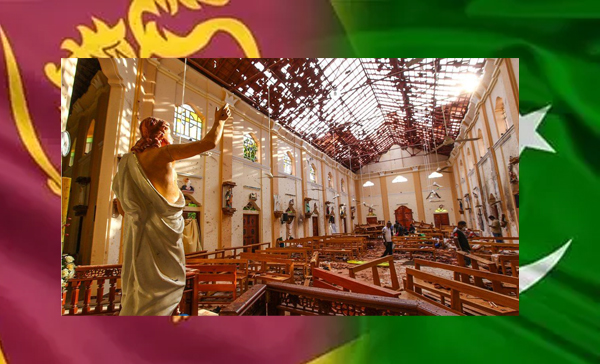
The country was left devastated on April 21, 2019 after a group of suicide attackers of the now-outlawed local Islamic extremist organization National Thowheed Jamaat (NTJ) carried out a series of coordinated bomb blasts at St. Anthony’s Church in Kochchikade, St. Sebastian’s Church in Katuwapitiya, Zion Church in Batticaloa, Cinnamon Grand, Kingsbury and Shangri-La hotels in Colombo and a guest house in Dehiwala, leaving more than 260 people including foreigners dead and at least 500 people injured.

Sri Lanka declared a state of emergency immediately after the bombings and the probes launched into the incident led to the arrest of many who have had links to the suicide bombers.

The Sri Lankan Catholic Church led by Cardinal Ranjith and the families of the victims have continuously raised concerns and doubts about slow progress of the investigations into the attacks, accusing the government of sweeping the truth under the rug for political gains.

Cardinal calls for fresh, transparent probe into Easter Sunday attacks

Archbishop of Colombo His Eminence Cardinal Malcolm Ranjith today called for a fresh and transparent probe into Easter Sunday attacks and said justice cannot be expected from the incumbent President or the government.

“We need a fresh and transparent probe which is directed towards finding out as to why the repeated prior warnings on the Easter Sunday attacks were not taken seriously, to determine as to why the suicide bomber who blew himself up at Dehiwala was allowed to do so, why wasn’t he arrested, to determine who was ‘zonic zonic’ who called ISIS in Indonesia and requested them to claim responsibility for the Easter Sunday attacks. We need a fresh probe to find out answers to these questions, ” he said.

“It looks that justice cannot be expected from the incumbent President and the government, ” he added.

The Apostolic Nuncio Archbishop Brian Udaigwe said Sri Lanka had full blessings of Pope Francis in its efforts to mete out justice for those who were affected by the attacks.” justice cannot be meted out through anger,” he while quoting former President of USA Barack Obama.

He said the Catholic Church does not believe in insulting Buddhist monks and other members of clergy and will not associate with people who insult them.

“We don’t condone insulting clergy and particully the Buddhist monks. Some say catholics are behind the repeated insulting of monks over social media but I would like to say that church is not behind such campaigns,” Cardinal Ranjith said while speaking during a religious service held at St.Anthony’s Church Kochchikade.

“We will not condone insulting monks and will not associate with people who do such things. One should remember that Sri Lanka’s culture is associated with Buddhism.

Anti Terrorism Bill: US expresses concerns over aspects that fall outside of international standards

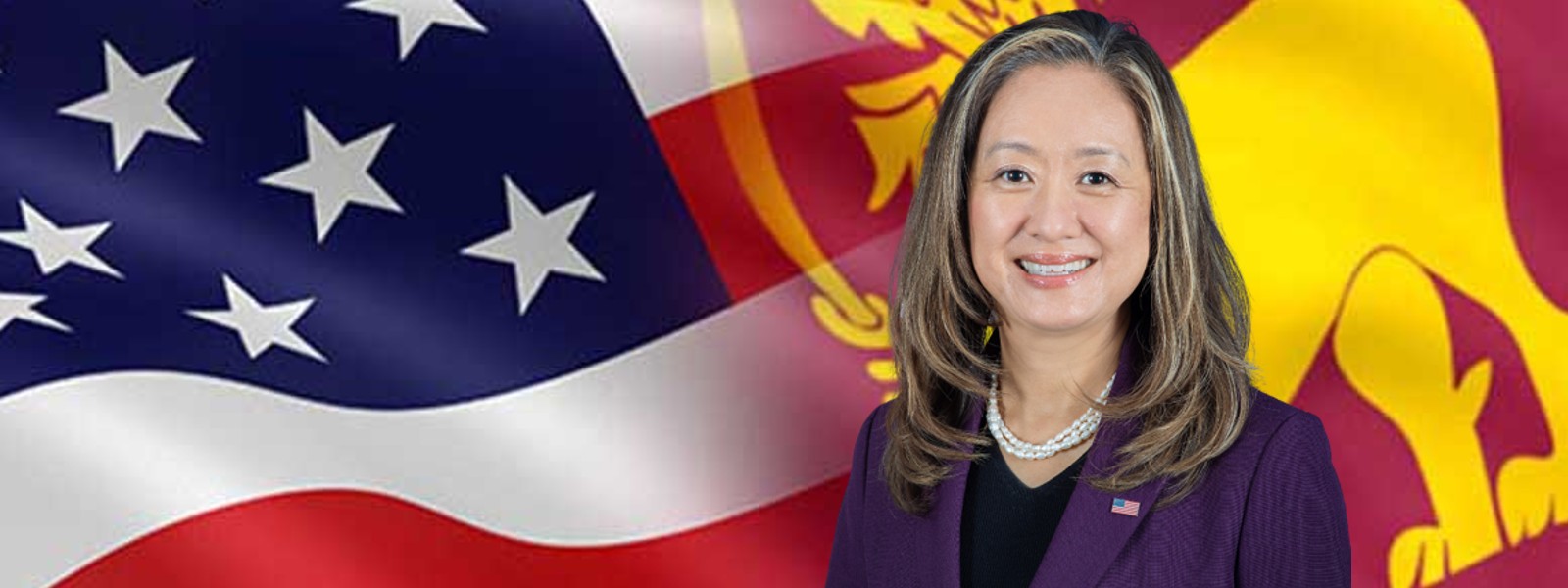
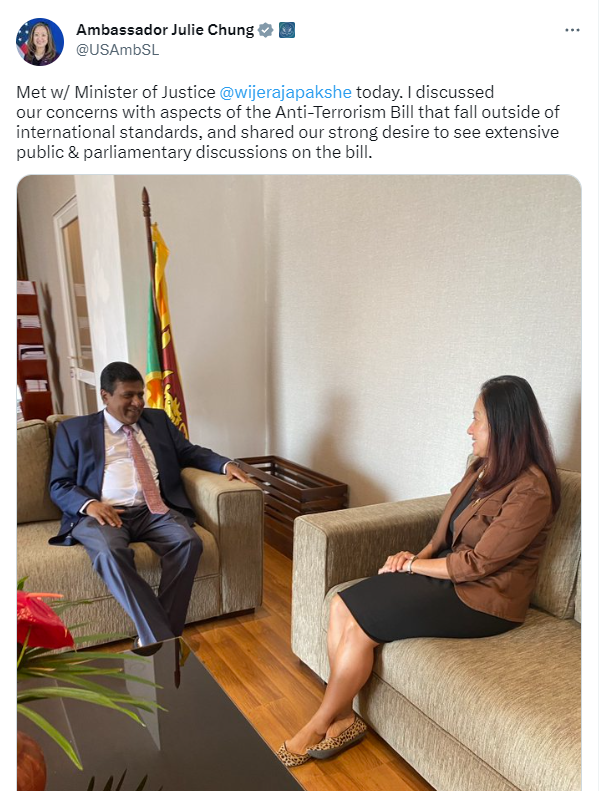
US Ambassador to Sri Lanka Julie Chung has expressed concerns with aspects of the Anti-Terrorism Bill that fall outside of international standards.

She met with Justice Minister Dr. Wijeyadasa Rajapakshe, PC and the US desire to see extensive public & parliamentary discussions on the bill.

The Ambassador tweeted that it is important that all voices – including civil society, academia, and lawmakers – are considered to ensure the legislation serves as an effective tool for combatting terrorism without restricting freedom of expression or assembly.

Posted in Uncategorized

Amid geopolitical concerns, 15 Sri Lanka’s ruling coalition members visit China on CPC’s invitation

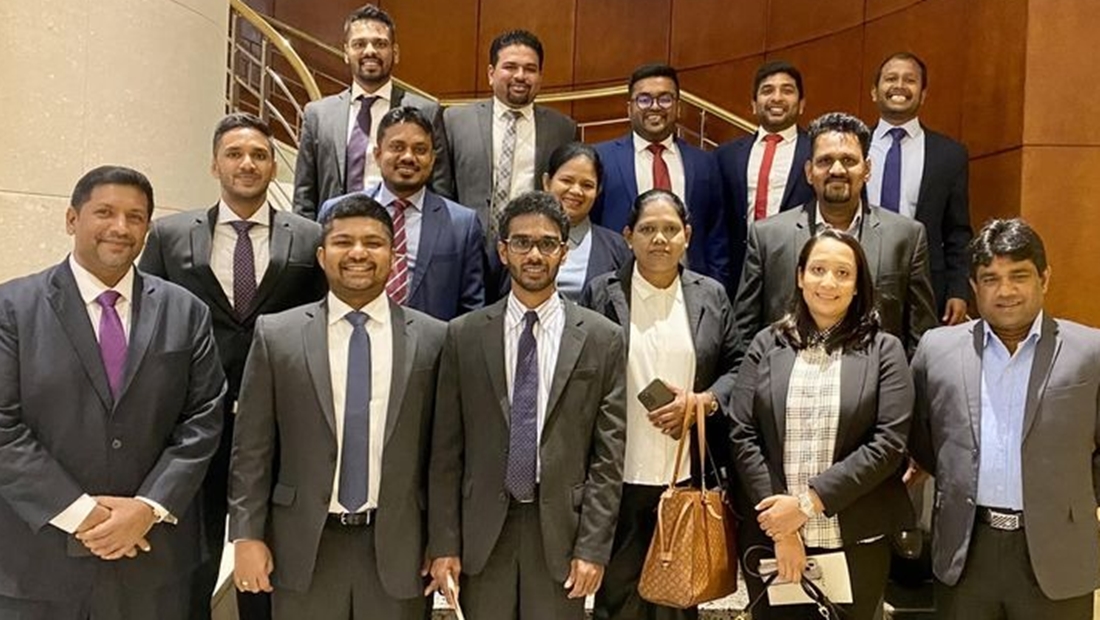
Amid rising geopolitical concerns, fifteen young Sri Lanka’s ruling coalition members including parliamentarians have left for China on a familiarization tour on the invitation of the ruling Communist Party of China (CPC), the island nation’s participants said.

Five members from President Ranil Wickremesinghe-led United National Party (UNP) and 10 from former president Mahinda Rajapaksa-led Sri Lanka Podujana Peramuna (SLPP) have left the country for a 9-day tour which includes visiting two Chinese provinces.

The move is likely to raise more concerns as both India and the United States are keenly watching the moves by China to keep their influence in Sri Lanka, political analysts say. China is one of the biggest lenders to Sri Lanka after the end of a 26-year war ended in 2009 amid criticism that Beijing’s loans have led the island nation to the current unprecedented economic crisis and sovereign debt default.

India and the US have raised concerns over increasing influence of China in Sri Lanka and raised questions over Beijing’s possible intention of establishing military base in the island nation where they own a port in the deep southern district of Hambantota and a Port City in a reclaimed land next to main port in Colombo.

Beijing’s familiarization tours are not unusual as China has offered the same for influential people, professionals, and journalists in the past. The participants in the current tour are some of the young politicians who are aspiring to become legislators in the future.

The group will be in Kunming in the Yunnan province for three days until Saturday where the visitors will meet provincial CPC officials, participate in a seminar on “experience of targeted poverty alleviation and rural revitalization based on local characteristics”, and visit some model villages and modern agricultural base.

BRI Cooperation, Opportunities

During the rest of the tour, the Sri Lankan politicians will visit Fujian province and the capital Beijing. They are scheduled to participate in a seminar in Fujian on high quality Belt Road Initiative (BRI) cooperation and opportunities of development for regional countries.

Sri Lanka is one of the strategic Chinese partners in the BRI and most of the island nation’s Beijing-funded infrastructure comes under the BRI, Sri Lankan government officials have said.

In Beijing, the Sri Lankans will meet experts of the CPC Central Committee.

Sri Lankan legislators D V Chanaka and Nipuna Ranawaka, a nephew of former president Rajapaksa have represented the SLPP.

Following are the other members in the SLPP delegation which has left to China according to the official document signed by the party secretary: Milinda Rajapaksa (former local councilor/ Director at Media Center for National Development), Ravindra Samarawickrama (senior lecturer), Udara Wijesinghe (Chairman – Cashew Corporation), Kanishka Bandara (LLB, London), Sudarma Kulathunga (journalist), Sudima Chandani (Secretary, federation of Local Government Authorities), Thambirajah Thajeevaran, and Gorakapitiyage Chaminda Aruna Shantha.

From the UNP, former state minister Ruwan Wijewardena, Eranthi Ranga Bandara, Jeyaraj Vishnuraj, Sajana Sooriyaarachchi, and Duminda Attygala have joined the delegation.

The delegation will return to Sri Lanka on April 28.