Sri Lanka president recognising Tamil Buddhism positive step: opposition MP

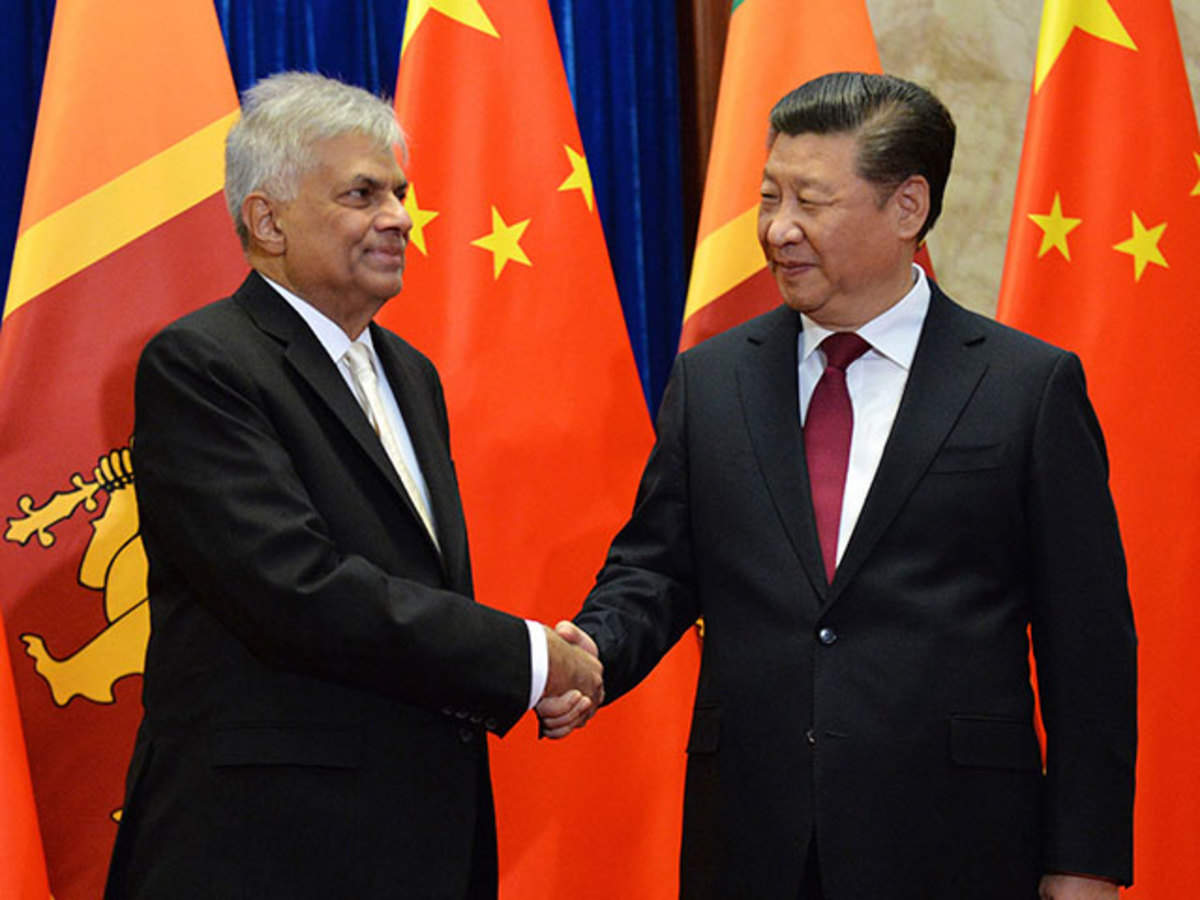
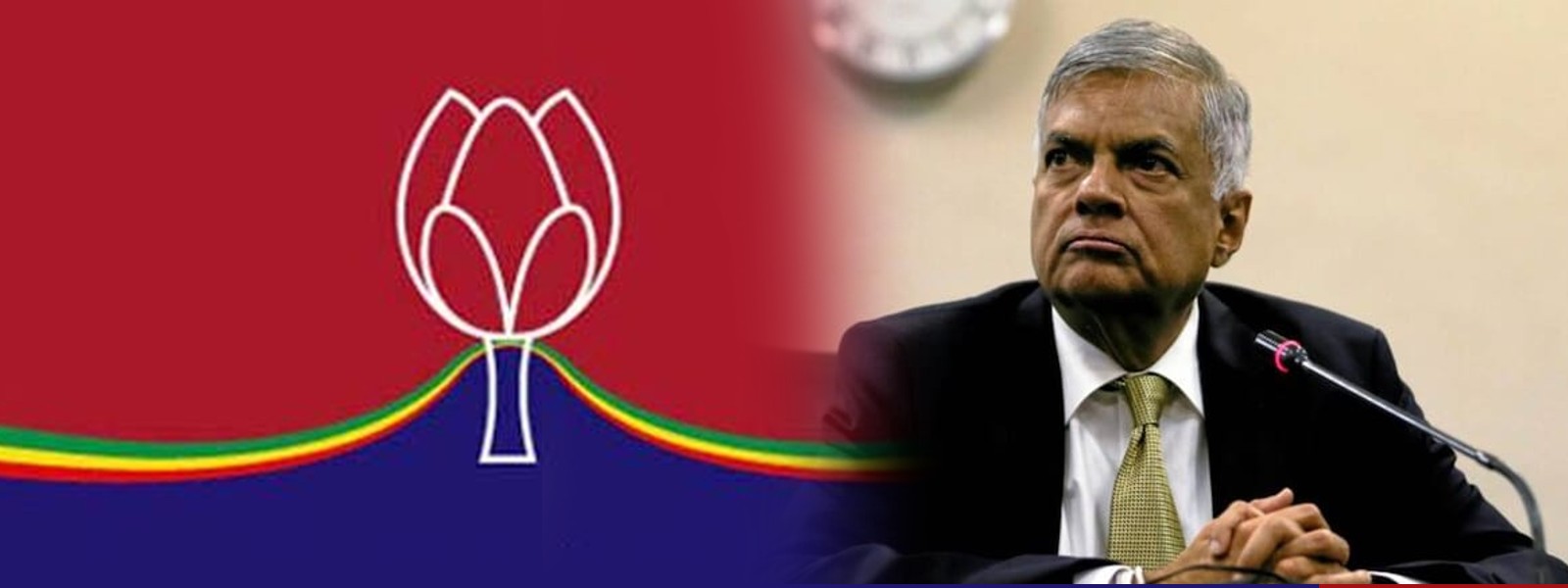
Sri Lanka President Ranil Wickremesinghe publicly recognising Tamil Buddhism is a positive step, opposition MP Mano Ganesan said.

The MP tweeted Tuesday June 13 morning that recognising Tamil Buddhism as historical fact is “the key to many deadlocks”.

Ganesan was commenting on remarks made by President Ranil Wickermesinghe recently in what appeared to be an exchange of words with Director General of the Department of Archaeology Prof Anura Manatunga.

Minister for Buddhasasana, Religious and Cultural Affairs Vidura Wickremanayake confirmed to EconomyNext Monday evening that Manatunga had handed in his resignation. The minister did not provide a reason for the official’s resignation, but it followed the president’s rather public calling out of Archaeology Department officials regarding land acquisition by the department in the country’s north and east, allegedly under the pretext of preserving heritage sites.

A video recording of the exchange went viral on social media on Monday, with some including a number of his critics praising Wickremesinghe for setting the record straight on the matter while others criticised the president for publicly reprimanding a government official and professing to give him a history lesson.

ITAK MP Shanakiyan Rasamanickam who was present at the meeting tweeted that the now-resigned Director General of Archaeology is only part of the problem. He accused the minister in charge of being the “brain behind most of these illegal measures carried out by the DG”.

“However, we look forward to the new national plan for archaeology conservation and restoration which the president has promised,” the MP said.

Historian Shamara Wettimuny tweeted that ethnicity was not ‘fixed’ until the 19th century in the way it is understood and categorised today.

“Meanwhile, there was plenty of religious syncretism between Hindu and Buddhist practices (and this remains today, despite such denial),” she said.

Posted in Uncategorized

Minister discusses progress of Adani’s renewable energy project in Mannar and Pooneryn

Minister of Power and Energy Kanchana Wijesekara has discussed the progress of the 500 MW Renewable Energy Project in Mannar and Pooneryn with Anil Sardana, the Managing Director and the CEO of Adani Transmission Ltd and the project management team, this morning (June 12).

The discussion was held at the Ministry of Power and Energy today.

In a tweet, Minister Wijesekara mentioned that the challenges, road map and the timeline for the project completion were discussed during the meeting.

He said that they also discussed the commitment by Adani Green Energy to complete the project by December 2024.

“We discussed the challenges, road map & timeline for the project completion & the commitment by Adani Green Energy to complete the project by Dec 2024”, he said.

Archaeology DG quits

Days after being severely criticised by the President during a meeting, Director General of the Department of Archaeology, Professor Anura Manatunga, tendered his resignation to the Secretary of the Ministry of Buddhasasana, Religious and Cultural Affairs.

President Ranil Wickremesinghe, during the said meeting on 8 June, asked Prof. Manatunga, when an issue pertaining to the allocation of lands to an archaeological site came up, “Are you trying to teach me history? Or do you want me to teach you?”

Several Tamil politicians from the North and the East, including MPs M.A. Sumanthiran, S. Sritharan, Shanakiyan Rasamanickam and ITAK General Secretary Mavai Senathirajah met Wickremesinghe to discuss various issues related to the Tamil people. During the meeting a team from the Department of Archaeology, headed by Prof. Manatunga, also spoke about the acquisition of lands that they claimed were heritage properties in Thannimurippu and Thiriyaya in the Eastern Province.

During the discussion, the President posed several questions to Prof. Manatunga regarding the alleged acquisition of a massive 300,000-acre land, without the approval of the Archaeology Department. The Professor clarified that they do not have the authority to own such lands, but there is an issue concerning land in the Eastern Province where they have only demarcated the area without taking it over.

The Archaeology Department explained that some portions of the land were originally designated as forest and wildlife areas, but they are currently occupied by a Buddhist temple. They assured that they would revisit the site to take necessary action. The President expressed concern over the occupation of such a large land by a temple on state-owned land. The Professor reiterated that they have not claimed any ownership of the land in question.

The President further questioned whether the Archaeology Department could teach him Sri Lanka’s history, or if he should be the one teaching them. This particular discussion gained significant attention on social media platforms.

The acquisition of land by the Archaeology Department in the North and East has sparked controversy in the region in recent times.

During the meeting the President informed Archaeology Department to follow Cabinet policy and to refrain from seizing lands belonging to the public and to remove border marker stones.

While the specific reasons for Professor Manatunga’s resignation have not been disclosed, Buddhasasana Minister Vidura Wickramanayaka confirmed that he has submitted his resignation letter to the Ministry Secretary.

Seven Sri Lankan fugitives under INTERPOL red notice list

Seven Sri Lankan fugitives are among 6,872 fugitives listed under the INTERPOL’s red notice list, recent statistics have shown.

Out of the seven, four Sri Lankans are listed as ‘wanted’ in Sri Lanka while the other three Sri Lankan fugitives have been issued red notices upon requests made by foreign countries over crimes they had committed in their territories.

A red notice is a request to law enforcement authorities worldwide to locate and provisionally arrest a person pending extradition, surrender, or similar legal action, Interpol sources explained.

According to Interpol statistics posted on its website, four Sri Lankans, 38-year-old De Soyza Jagamuni Sujeewa alias Kosgoda Sujee, Nadaraja Sivarajah (49), Munisamy Tharmaseelan (50) and Viknarasa Selvanthan (35) are wanted by Sri Lankan law enforcement authorities.

The red notices were issued on Kosgoda Sujee over a murder case and on Nadaraja Sivarajah for aiding and abetting to assassinate late Minister Lakshman Kadiragamer. Tharmaseelan is wanted over possession of two hand grenades and 200 rounds of live ammunition while Selvanthan was charged over robbery and murder. Meanwhile, three Sri Lankan nationals, Kumarasamy Navaneethana (52) fromVavuniya is wanted by Romania over a murder while Mohamed Powmi (61) from Elabodagama is wanted by India over counterfeit currency and Manickavasagar Vijayarajah (41) from Jaffna is wanted by Canada over first degree murder.

Meanwhile, the Interpol has issued yellow notices on five other Sri Lankans. Yellow notices are issued to help locate missing persons, often minors, or to help identify persons who are unable to identify themselves. Accordingly, the Interpol noticed that Balakrishan Niresh (31) had disappeared in Vavuniya on January 27,2022 while Weebadde Ralalage Saman Wijesiri (68) disappeared in October 13, 2018.

Also, Gayindu Kithmuka Madurapperuma (20) had disappeared in Colombo when he was 5-years-old.

President to leave for Europe for debt restructuring talks

President Ranil Wickremesinghe departs on June 17 on an European tour that will take him to London and Paris.

While in France, he is due to meet with members of the Paris Club that has already promised to support Sri Lanka in its debt crisis and for credit stability.

President Wickremesinghe will return on June 26.

On July 20, he will leave for a tour of India.

Posted in Uncategorized

Bangladesh’s ruling party angered over claims country like Sri Lanka

Several lawmakers of the ruling Awami League criticised Jatiya Party chairman and deputy leader of opposition in Jatiya Sangsad, Ghulam Muhammed Quader, for saying that Bangladesh had become Sri Lanka in silence.

Participating in the discussion on the proposed budget for the 2023–24 financial year, the AL lawmakers said that the Bangladesh Nationalist Party might criticise the government, but they did not understand why the JP chairman was criticising the government after taking facilities.

Criticising GM Quader’s statement that Bangladesh had quietly become Sri Lanka, AL lawmaker Shafiqur Rahman said, ‘We knew that BNP’s Mirza Fakhrul Islam Alamgir said that Bangladesh had been destroyed, Bangladesh had become fascist. We understand that, but we don’t understand what GM Quader has said.’

His party (JP) takes all the opportunities from Sheikh Hasina and gives such false speeches, Shafiq said.

‘We do not understand that. Allah says in the Qur’an, all the hypocrites are liars. I don’t want to call him [GM Quader] a liar. He might have made a mistake, got the wrong teaching from someone,’ the AL lawmaker said.

AL lawmaker Mostafizur Rahman said, ‘I was surprised. The deputy leader of the opposition said that the country had become Sri Lanka silently. Amir Khasru [BNP leader] is tolerated when he speaks. When Fakhrul [Mirza Fakhrul Islam Alamgir] said this, it was tolerated. GM Quader said that the country had become Sri Lanka silently. No one feels it. It’s quiet. It is supposed to be spontaneous. But I became silent. That is, our progress does not go unnoticed. They are pretending about democracy.’

Claiming that development has touched all parts of the country, he said, those who cannot see, please have their eyes operated on.

‘I pray to Allah to open their eyes and hearts. Let them see well. And pray for the public leader, Sheikh Hasina,’ he added.

Source:New Age Bangladesh

Posted in Uncategorized

33% households ate fewer meals due to Sri Lanka’s economic crisis

A recent nationally representative survey by LIRNEasia, a regional think tank, showed that worryingly, 33% of households in Sri Lanka reduced their food consumption in the 7 days prior to survey implementation due to the economic crisis.

Further, in 27% of households, adults restricted their food consumption to allow their children to eat. Dharshani (name changed), a 37-year-old mother from Nuwara Eliya, whose husband is a casual labourer, shared “It was nice and sunny two days ago, but my husband couldn’t find much work. He travelled all over [the town looking for work] but returned home in the evening with very little money. We cooked some food for the children with that money. I went hungry. I have gone hungry for several days like that. But I don’t show my family that I don’t eat.”

Further, 37% of households sold off their household assets to purchase food, while 50% utilized their savings for this purpose. Ranjini (name changed) a 36-year-old mother from Kandy had explained to the researchers that she pawned her jewellery when she didn’t have enough funds to feed her family.

These findings were shared at an event organized by LIRNEasia on Wednesday, 7 June 2023, in which State Minister of Finance, Hon. Shehan Semasinghe delivered the keynote address. Mr. B. Wijayaratne (Chairman, Welfare Benefits Board), Karin Fernando (Team Lead – Sustainable Development, CEPA), Gayani Hurulle (Senior Research Manager, LIRNEasia), and Tharaka Amarasinghe (Statistician, LIRNEasia) participated in the panel discussion, which was moderated by Dhananath Fernando (CEO, Advocata Institute).

Tharaka Amarasinghe of LIRNEasia commented “The economic crisis has been so severe that 7 million Sri Lankans are living in poverty. Our research highlights the lengths people have had to go to get a meal on the table. We met individuals who have given up eating proteins altogether, and vegetables on most days. They’re surviving on a diet of rice and dhal. We need to continue to reform our social safety nets so that it reaches the most vulnerable in society.”

Changing rules discourage European investors – EU Ambassador

Now, we need a stable, simple procedure so that the people have confidence in Sri Lanka’s investment climate

We need a stable legal environment, which makes it easy for European investors to transfer funds, to convert Rupees, to invest in forex without discriminatory taxation. We need equal access to property, with legal protection and the possibility of being able to be present in Sri Lanka to work

The introduction of a limit of dividends that could be transferred abroad was a blow to investors’ confidence. When the limit was increased, it was another difficult moment for long-term investors

European Union’s Ambassador Denis Chaibi responds to questions from Daily Mirror about Sri Lanka’s reapplication for the GSP + under the revised criterion

next year, bilateral ties, the Indo-Pacific strategy and others. Excerpts:

Q Sri Lanka is going to reapply for the GSP + under the revised category for the next ten-year period in 2024. As the ambassador to Sri Lanka, what is your assessment of Sri Lanka’s legality to qualify for it next year?

It is hard to say beforehand because the new regulations, under which Sri Lanka will have to reapply in 2024, have not been finalized yet. So we don’t know exactly the new conventions that will be added. At the moment, we have 27 conventions. There will be a couple that will be added. We don’t know what the increased conditions will be. The second important element is the assessment report that will come out this summer regarding the final period of the current GSP regulation. It will be an important element for the assessment of Sri Lanka’s candidacy for the next GSP + regulation.
When Sri Lanka got the GSP + back in 2017, it had committed either to repeal or review the Prevention of Terrorism Act (PTA) to align it with international standards. There has been a reform in March, 2022, but it is not sufficient. The government has to review the PTA, or it has to continue with the proposed Anti-Terrorist Bill (ATB). There are some issues with the ATB initial draft. We welcome the fact that the government has proposed the adoption of a new bill and is consulting with stakeholders. We hope the result of that review will be conducive to the granting of GSP + under the next regulation.

Q So my next question is now about Sri Lanka’s strategic positioning in the Indian Ocean. America talks about the Indo-Pacific strategy. We listen to a lot of stories about EU perspective. They talk about the rule-based order. When you say rule-based order, what does it mean? Does it differ from the current international laws governing maritime affairs or something?

There are angles to your question. The EU believes in the supremacy of international law, United Nations and multilateralism in its current structure when it talks about the rule–based order. The EU believes that those precepts are good for the world. Some other countries find this a Western dominated system. But when we look at rule-based order in the Indo-Pacific, it has a wider scope. We have an Indo -Pacific strategy that the EU adopted last year. In it, we have seven areas of cooperation, including prosperity-trade agreements, digital connectivity, security and defense, human security, digital governance and green transition. These are broad areas where we try to develop agreements – trade agreements, digital agreements and others. For example, we have a digital partnership, in which the data from one country is collected with a high degree of privacy and can be transferred to another country thanks to the same standards. The companies can transfer the data because there’s enough safeguards to maintain the users’ privacy.

Q But it is widely interpreted, or perceived by many people as an attempt by the Western powers to contain the Chinese influence in this region. What is your comment as the ambassador here?

The EU and the Swedish Presidency recently organized the Indo-Pacific Forum in Stockholm – the second after Paris last year. Sri Lankan Foreign Minister Ali Sabry was there and moderated a roundtable about prosperity. This really shows the EU’s focus on engagement and cooperation with countries in the Indo-Pacific rather than lining up against a specific actor. China is a systemic rival to the EU and also a fierce economic competitor. But it is also a necessary partner for global issues such as climate change. We need to have China on board in our negotiations. So we look at the different aspects of China. But our strategy is not just about lining up against China. It is more about finding points of engagement and cooperation with all the countries that are interested in that approach in the Indo-Pacific.

Q What kind of assistance will the EU extend for Sri Lanka in its current debt restructuring process?

International debt restructuring is a very complex issue, not an easy one to deal with. The EU Member States that had given loans to Sri Lanka gave their reassurances about Sri Lanka’s economic plans. The EU Member States with seats at the IMF board voted in favour of the IMF decision to disburse last March. So the EU Member States have been so far very proactive. Now, we are moving to the phase where the current debt has to be reviewed – either to be repaid during a longer period or less to be reimbursed. Or both. Member States continue to be pro-active, with France being part of the initiative to constitute a platform for negotiations with India and Japan. There was a first meeting and there will be further meetings. But as you can see, one member state, France, is taking a strong initiative to help Sri Lanka with debt restructuring. As the EU delegation here, we cannot offer macroeconomic support such as significant loans. But what we’ve done is to continue our work with grants. So for the crisis period from 2020 to 2024, there is 65 million Euros repurposed for crisis response. For example, we took action to buy, as an urgent issue, seeds and chemical fertilizers, and to train farmers to move towards organic fertilizers, namely training them to go for something that is more available locally. Another strand of action has been through a 10 million Euro grant to the World Bank, to do public finance management with the government. We are going to have world class experts, contracted by the World Bank, to come and help the Sri Lankan authorities with public finances. We are looking at sectors that are strategic for Sri Lanka to get out of the crisis the fastest way possible.

Q As for the reconciliation process, the government is moving ahead to set up the truth seeking mechanism. It is going to be ready with the proposed legislation soon. So it is a kind of a domestic mechanism which the government is proposing. But at the same time, the parties like the Tamil National Alliance (TNA) call for an international mechanism to bring about transitional justice. Now the EU is a key group of countries that sponsors this resolution. So as the EU ambassador, what is your perspective about Sri Lanka’s initiative in this regard?

The EU has voted in favour of that resolution. The resolution provides for an external mechanism. The government has made it clear that it cannot accept it and that it will work on its own internal mechanism. The resolution is valid for another two years. We have to see the results that will be provided in June, to the UN Human Rights Council (UNHRC), and then how this will move over time. I think that one way or another, internally or externally-induced reconciliation is necessary for the government to grow its economy faster. I have often heard over the last four years that Sri Lanka could be the new Singapore. People often forget that what allowed Singapore to move faster is not only the strong personality of Lee Kuan Yew, but also the fact that the different communities – Indian, the Malay, Muslim, Hindus and Chinese – work together. So for me, reconciliation is absolutely necessary, not only for the communities individually, but for the country as a whole to move forward.

Q What is the direction of bilateral ties in the latest context?

Well, it depends which perspective you take – one year, five years, 10 years, 20 years etc.

Q I mean, in the immediate aftermath of this crisis, for the next couple of years?

Well, I think that the recent years have been quite positive for EU – Sri Lanka relations. If you look at the period during which President Gotabaya Rajapaksa was in charge, people could have predicted difficult relations, which could have led to the withdrawal of the GSP +.
But in the historical context of Sri Lanka, we welcome the fact that the social movements could express itself. We really believe that the EU – Sri Lanka relations remained positive and stable throughout the whole crisis. We are building on that for the future. We just had the Joint Commission between EU and Sri Lanka on May 9, 2023. We had very fruitful discussions on a number of topics, including Sri Lankan plans to revive the economy. It is not only the IMF plan and debt restructuring, but also how to lift part of the import ban. We had fruitful discussion on GSP + and the reapplication process, and the need to look again at the anti- terrorism bill. We had conversations on how to work together on climate change, with EU funding to ensure circular economy efforts and support to them. We agreed that we would move forward with an investor dialogue to see how EU individual member states can be satisfied about the legal environment so that investments in Sri Lanka can be promoted.

Q What is your assessment about the current investment climate?

We believe that European investments would be very good for Sri Lanka because they take into account high environmental, social and governance standards. They’re more focused on helping socially in the host country. Because they have such a long perspective, European investors need to be sure that the legal framework will be stable; that the rules will not change every six months. We need a stable legal environment, which makes it easy for European investors to transfer funds, to convert Rupees, to invest in forex without discriminatory taxation. We need equal access to property, with legal protection and the possibility of being able to be present in Sri Lanka to work. I know that all that is possible with the Board of Investment, or the one stop shop principle. In reality, this is difficult. The rules have often been changed sometimes at short notice. It has discouraged a number of European investors. So now we need a stable, simple procedure so that the people have confidence in Sri Lanka’s investment climate.

Q Can you specify an area where these rules change?

For example, repatriation of profits and convertibility of profits. The introduction of a limit of dividends that could be transferred abroad was a blow to investors’ confidence. When the limit was increased, it was another difficult moment for long-term investors.

Q As part of the reconciliation process, does the EU insist on holding elections?

Provincial, and local elections are stipulated in the Constitution. As such, anyone in Sri Lanka has a legitimate interest in having the Constitution respected. Now, if there are special conditions or circumstances where this is not possible, it is for Sri Lanka to decide. But as outsiders without any wish to interfere in the local life, we have to say every citizen has an interest in having the Constitution being observed.

Q What is your assessment of the Russia-Ukraine war on Sri Lanka?

I know that because of historic links, there is some sympathy in Sri Lanka for Russia. There are a number of tourists from Russia. But this history of strong relations should not make one forget the fact that there’s one invader and one invaded country. All the arguments that there was provocation or that there was no significant attention paid to the needs of a great country like Russia, do not change the fact that tanks and jets and missiles have been sent from one country to another and are causing destruction. There is no justification for territorial aggression, for not respecting the territorial integrity of a neighbour, for killing people, for attacking all the infrastructure in particular linked to energy and transport. This is a very negative development for Sri Lanka. It increases the price of commodities that are essential for Sri Lanka, such as chemical fertilizer, petrol, oil, diesel and grain. A stronger stance by Sri Lanka would be useful. Sri Lanka’s abstention on this matter can be construed by some as condoning the precedent of a territorial aggression.

Q Though the war is over here, people believe LTTE sympathisers are active in the EU region. What have you got to say about it?

I do not have elements to assess the activity of ex-LTTE members in Europe and elsewhere as there are no official figures but it seems to me, based on my very limited knowledge, that the core of the Tamil diaspora that could have some sympathy for the LTTE is not located in the EU territories. The LTTE is a banned organisation. So any member or any structure or any bank account can be investigated and corrective measures can be taken.

Monkey export request: Chinese firm keen to proceed

The Government is awaiting the outcome of several court cases regarding the controversial request to export monkeys to China in order to take a decision, as the importer is keen on proceeding with the request, The Sunday Morning learns.

Ministry of Agriculture Spokesman Dharma Wanninayake told The Sunday Morning that legal cases filed against the Government’s venture to export monkeys to China were proving to be an obstacle and that the Government would decide on its next step once the cases ended.

The Ministry Spokesman said that the relevant Chinese company continued to express interest in the project.

Minister of Agriculture Mahinda Amaraweera, earlier this year, revealed that a proposition had been made by a Chinese company to import toque macaques from Sri Lanka.

According to the Minister, some 100,000 monkeys will be exported to China. He had noted that there was an overpopulation of these monkeys in Sri Lanka, which were a pest to farmers as they destroyed swathes of crops on farmland.

Minister Amaraweera, addressing Parliament last week, said: “A Chinese company approached us and expressed interest in procuring monkeys for a number of zoos under its ownership. We were informed that there were 20 private zoos that required monkeys and were asked if we could provide about 1,000-2,000 monkeys as soon as possible.

“At this point, environmental groups raised objections against this and made various allegations against the Chinese Government as well as the Chinese Embassy in Sri Lanka. The Chinese company is still interested and talks have advanced, but ultimately this venture must be conducted by the Ministry of Wildlife and Forest Resources Conservation.

Minister of Wildlife and Forest Resources Conservation Pavithra Wanniarachchi informed the House that there were a few legal impediments and that the Government was in the process of amending the legislation.

“The necessary amendments have been referred to the Attorney General’s Department,” she said.

Source:TheMorning.lk

Posted in Uncategorized

SRI LANKAN ATHLETE SHRESHAN DANANJAYA GOES MISSING IN SWITZERLAND

Sri Lanka athlete Shreshan Dananjaya has reportedly gone missing in Switzerland, according to the Athletics Association of Sri Lanka.

Shreshan Dhananjaya is the Sri Lanka record holder in the Triple Jump (men) and national champion in the Long Jump.

The athlete went missing during an invitational athletics tournament being held in Geneva, Switzerland, the association said.

It is reported that all three attempts made by Dhananjaya had failed during the event, and that he went missing after participating in his event at the competition.

“This tour was on a private invitation. Sri Lanka Athletics (SLA) is not responsible. He went missing after taking part in the long jump event,” SLA Secretary Saman Kumara Gunawardena said.