SJB Launches Scathing Attack On IMF: Kiriella Says IMF Made “Fundamental Error” By Helping Present Govt.

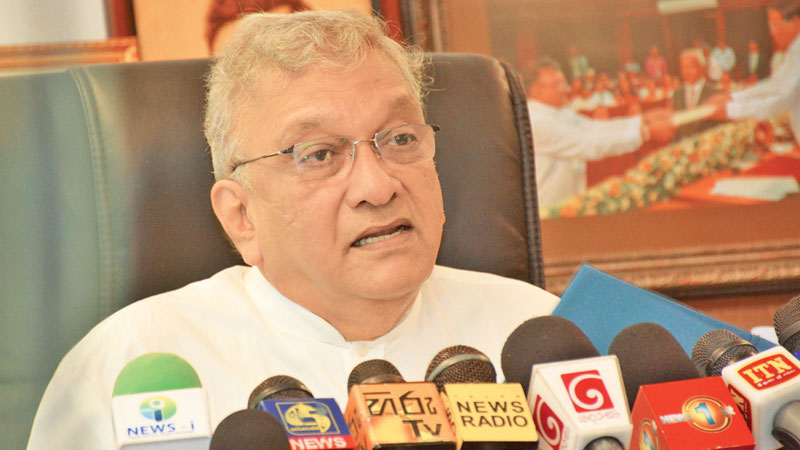
The main opposition Samagi Jana Balawegaya said the International Monetary Fund (IMF) has made a fundamental mistake by helping the Government of Sri Lanka. Kiriella said it was wrong on the part of the IMF to help a government that did not have a mandate to conduct economic reforms. The senior SJB MP made these remarks in an interview with the Lankadeepa newspaper. The MP said that the International Monetary Fund had announced last September that it would help a government with a mandate capable of reforming public institutions and the country hoped that the government would hold an election accordingly and get a new mandate. He also pointed out that if the current government sells public institutions without a mandate, unrest will arise among the employees and the country could experience bloodshed.

Posted in Uncategorized

Amnesty International raises alarm bells over proposed Anti-Terrorism bill

Amnesty International stated it has raised “alarm bells” with the government of Sri Lanka “around the proposed anti-terrorism legislation.”

“We maintained our call that any counter-terrorism provisions must be compliant with international human rights law,” Amnesty stated in an end of mission statement of the high-level Senior Director-led delegation to the country.

The delegation, led by Senior Director Deprose Muchena, conducted an official country visit to Sri Lanka from 27 March to 2 April 2023.

According to an end of mission statement, Deprose Muchena said: “We stand in solidarity with victims of human rights violations from across the island, many of whom I met and heard concerns from over the past few days. Amnesty International will continue to work to uphold and protect their right to freedom of peaceful assembly and freedom of expression. The victims of human rights violations in the context of the civil war and its aftermath as well as organizations working on enforced disappearances, must also urgently and genuinely be engaged by the government to hear their long-standing demands for truth, justice and reparation.

“With the International Monetary Fund (IMF) we reiterated our concerns that the bailout package must meet minimum international human rights standards and not result in cuts to vital public goods and services at a time when Sri Lankans continue to suffer the impacts of an economic crisis. Any agreements and terms and conditions linked to the bailout decision should be made transparent and available for public scrutiny.”

The Amnesty International delegation thanked the Sri Lankan government for their availability during the visit, including President Ranil Wickremesinghe and Minister of Foreign Affairs Ali Sabry. They also extended thanks to the members of Parliament from the opposition who took time to meet them.

The end of mission statement concluded that Amnesty International was “particularly grateful to the mothers of the disappeared from the north and the east, members of the strong and resilient Sri Lankan civil society and Aragalya protest groups, and members of the fishing community for their time and sharing their valuable insights on a gamut of issues including the economic crisis, the right to protest, and transitional justice among others.”

Anura Kumara claims group of SJB MPs will defect to support President

National People’s Power (NPP) Leader Anura Kumara Dissanayake has claimed that a group of parliamentarians belonging to the Samagi Jana Balawegaya (SJB) are expected to join forces with the President in the near future.

Speaking at a rally in Kolonnawa this afternoon (02 Apri), Dissanayake stated that a group of SJB MPs have decided to support the President, and will join the government’s political parties accordingly.

Despite these accusations, however, Opposition Leader Sajith Premadasa emphasised that those within the SJB will not sacrifice their Parliamentary seats for money.

Sri Lankans continue to hold unfavourable views of all political party leaders

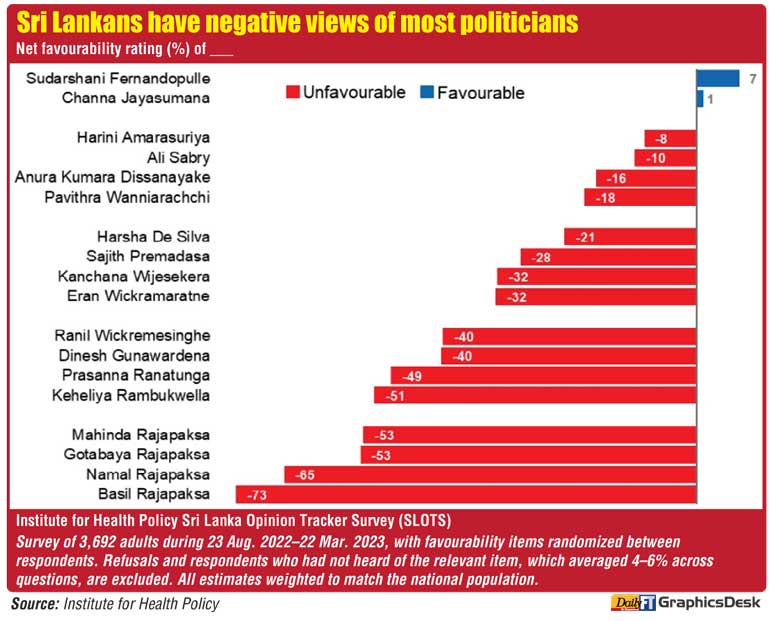
Sri Lankans continue to have deeply unfavourable views of most politicians a year after the economic and political collapse in early 2022, and despite progress in recent months in stabilising the economy and in negotiations with the IMF.

In polling during Sept. 2022 to Mar. 2023, almost all politicians tracked by SLOTS had negative favourability ratings, and most had ratings below -30, which make most Sri Lankan politicians as or more unpopular than French President Macron today.

The most popular politician tracked by SLOTS is Dr. Sudarshini Fernandopulle, former State Minister for COVID-19. She had an average net favourability rating of +7, but this was still substantially down from late 2021 when it was typically +50 – +70. The only other politicians who had positive or neutral net favourability ratings, were also professionals and from both the government and opposition: Professor Channa Jayasumuna (+1), Harini Amarasuriya (-8), and Ali Sabry (-10).

The most unpopular politicians tracked were from the Rajapaksa family, all of whom had net favourability ratings less than -50, with Basil Rajapaksa and Namal Rajapaksa being the most unpopular with ratings of -73 and -65.

Other politicians had ratings of -10 to -50, with government politicians generally doing worse than opposition ones, with the exceptions of Pavithra Wanniarachchi (-18) and Kanchana Wijesekera (-32), although both had significantly negative ratings.

Amongst the other party leaders, as previously reported by SLOTS, Anura Dissanayake (NPP/JVP) was less unpopular (-16) than SJB leader Sajith Premadasa (-28), who was more popular than UNP leader President Ranil Wickremasinghe (-40).

IHP Executive Director and lead investigator Dr. Rannan-Eliya said: “These results suggest that the whole political class is discredited. However, it is notable that the politicians with better ratings tended to be professionals or politicians with a reputation of speaking hard truths to the public – Dr. Sudarshini in the case of COVID-19, or Ali Sabry about the economic crisis and the need for painful measures. I think that most politicians don’t want to say difficult things because they think it would make them unpopular, but the public seems to appreciate politicians who try to be honest, even if it means admitting difficult things.”

This analysis uses data collected by the Sri Lanka Opinion Tracker Survey (SLOTS) between 23 August 2022 and 22 March 2023. SLOTS is a national phone survey that has been tracking public opinion every day since August 2021, interviewing people across the country. Respondents are drawn from a mixed sample of a national representative panel of respondents previously recruited in 2019 through face-to-face interviews from all parts of the country, and others reached by randomly dialling mobile numbers.

Respondents are interviewed in their language of choice: Sinhala, Tamil, or English. The specific question about favourability is worded as follows: “Can you tell me whether you have a favourable or unfavourable view of ______ — or that you are unsure or have no view of [it], or that you have not heard of [it].” When interviewers read out the possible responses, the ordering of “favourable” and “unfavourable” is randomised between respondents to minimise bias. The specific individual or institution that respondents are asked their opinion about are randomised between respondents, so no respondent is asked about all items.

Net favourability is the average rating having scored positive responses as +100, negative ones as – 100, and neutral or no opinion responses as zero.

All reported results are weighted to be representative of all Sri Lankan adults by age, gender, ethnicity, religion, household socioeconomic status ranking, education, and province. The household socioeconomic status ranking of respondents is based on a wealth index computed from ownership of household assets, which is calibrated to match the overall national distribution of assets including households without phones.

Weights are trimmed at the 2nd and 99th percentiles to reduce the loss in precision stemming from variance in the weights. The SLOTS survey cannot reach adults living in households without phones, but the weighting adjustment by socioeconomic status and province substantially compensates for this.

Cannot accept Sarah Jasmine’s DNA report- Father Cyril Gamini

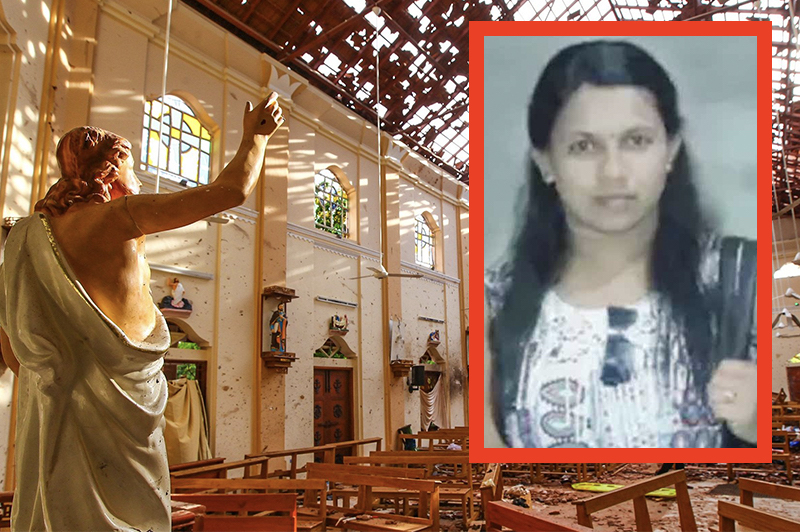
An internationally acceptable report must be submitted on the alleged death of Pulasthini Mahendran, alias Sarah Jasmine, the wife of Katuwapitiya church bomber, Rev. Father Cyril Gamini said.

“The third report from the Government Analyst Department is contradictory to their former reports. We cannot accept this,” he said.

Earlier, police said that the DNA tests revealed that Sarah Jasmine had died during the suicide bomb explosion in a safe house in Sainthamaruthu on April 26, 2019, days after the Easter Sunday bomb attacks.

They said that the Government Analyst Department had conducted the DNA test and submitted the report.

Posted in Uncategorized

Indian higher education scholarships for Lankan estate workers

The Government of India has been extending scholarships for the children of estate workers for G.C.E. Advanced Level, Undergraduate courses and Vocational/Technical education in Government Technical Colleges in Sri Lanka. Students who have passed G.C.E. Ordinary Level (with minimum 6 credit passes) or Advanced Level examination and are aged below 25 years are eligible to apply for this scholarship.

The High Commission of India now invites applications for the award of these scholarships. Application forms could be downloaded from the website – www.hcicolombo.gov.in – or obtained physically from the High Commission (No.36-38, Galle Road, Colombo-03) and the Assistant High Commission of India (01A, Mahamaya Mawatha, P.O. Box 47, Kandy).

Applicants are requested to submit the completed application forms along with photocopies of their birth certificate, result sheet of G.C.E ‘O’ Level or ‘A’ Level, latest salary slip of parents and Estate Superintendent’s certificate regarding parent’s occupation. Duly completed forms may be submitted physically or by post to ‘Honorary Secretary, CEWET c/o High Commission of India, P.O. Box 882, Colombo-03’ before 29 April 2023.

Posted in Uncategorized

Can Postal voting for LG election be held on Time?

Postal voting for the local government election can be held before April 25 , if the required funds are released before April 10, the National Election Commission said.

“Postal ballot papers must be obtained from the government printer by April 10 for postal voting to take place,” Chairman of the Election Commission Attorney Nimal Punchihewa said.

“No decision was made to cancel the election on April 25,” Punchihewa said, “A decision will only be made after April 10, considering the situation”.

In the meantime, the Chairman of the Election Commission has also requested for a meeting with Prime Minister Dinesh Gunawaradena, the Minister of Public Administration, Home Affairs, Provincial Councils and Local Government.

UN body decries violations of civil and political rights in Sri Lanka

The UN Human Rights Committee (CCPR) has noted serious violations of civil and political rights in Sri Lanka and made over 60 recommendations.

The International Federation for Human Rights (FIDH) and the Center for Human Rights and Development (CHRD) welcomed the findings and urged the Government to take immediate steps to address the numerous violations identified by the UN body and implement its recommendations without delay.

The UN Human Rights Committee issued its concluding observations, following the review of the country’s sixth periodic report under the International Covenant on Civil and Political Rights (ICCPR).

The review was held on 8 and 9 March 2023 in Geneva, Switzerland. The CCPR monitors state parties’ compliance with their legal obligations under the ICCPR. Sri Lanka is a state party to this treaty. The CCPR’s findings mirror those included by FIDH and CHRD in their two joint shadow reports submitted to the CCPR in May 2022 and January 2023.

The CCPR identified three priority issues for the government to address: 1) the Human Rights Commission of Sri Lanka (HRCSL); 2) counter-terrorism measures; and 3) liberty and security of persons.

With regard to the HRCSL, the CCPR called on the government to ensure that the body fully complies with the Paris Principles, ensure transparency in the appointment process of its members, and provide sufficient resources to carry out its mandate effectively and independently in all parts of the country.

With regard to counter-terrorism measures, the CCPR was concerned that the Prevention of Terrorism Act (PTA) continued to allow for prolonged pretrial detention without charge of up to 12 months, contained a broad definition of terrorism, and was used to legitimize the targeting of minorities, particularly Muslims and Tamils, government critics, and lesbian, gay, bisexual and transgender individuals, and to extract confessions through torture. The CCPR called on the government to: 1) repeal the PTA and replace it with legislation that contains a narrow definition of terrorism and is compliant with the ICCPR; 2) ensure that the legislative process for enacting a new anti-terrorism or national security law is inclusive and transparent and facilitates participation of a wide range of stakeholders; 3) ensure that those suspected or charged with terrorist acts or related crimes are provided with legal safeguards in line with Article 9 of the ICCPR; and 4) facilitate independent monitoring of all places of detention to inspect the situation of those detained under the PTA.

With regards to liberty and security of persons, the CCPR expressed concern over the arbitrary arrests and detention of anti-government protesters, trade unionists, Tamils, and Muslims. The extensive use of prolonged pretrial detention, inconsistent bail provisions, and ineffective access to non-custodial alternatives, were also of concern to the CCPR.

The rights to freedom of peaceful assembly, freedom of expression, and participation in public affairs were among some of the other issues of concern identified by the CCPR.

With regard to freedom of peaceful assembly, the CCPR noted with concern the use of excessive force in dispersing peaceful assemblies, the application of counter-terrorism legislation against protesters, and the lack of effective investigations and prosecutions in cases of abuses committed by law enforcement personnel. These concerns reflected the findings contained in “Anatomy of a crackdown – The repression of Sri Lanka’s aragalaya protest movement,” a report published by FIDH and CHRD in January 2023.

With regard to freedom of expression, the CCPR highlighted numerous violations, including: harassment, intimidation, surveillance, disappearances and killings of journalists and human rights activists with impunity; the misuse of the International Covenant on Civil and Political Rights Act No. 56 of 2007 to stifle freedom of expression; and the blocking of public access to social media platforms ahead of 2022 nationwide protests.

With regard to participation in public affairs, the CCPR raised concerns over the repeated postponement of local government elections on grounds of lack of funding. It recommended that the government ensure the independence of the Election Commission and that the scheduled local government elections do take place. Regrettably, local elections have now been postponed indefinitely.

Overall, the CCPR made over 60 recommendations to the government and requested it provide information on steps taken towards the implementation of the Committee’s recommendations on the three above-referenced priority issues by March 2026.

South Africa govt. condemned for inviting ‘war crimes linked’ Sri Lankan ministers

Top human rights groups in South Africa have strongly criticized their government for inviting two Sri Lankan ministers accused of links with alleged war criminals for a study tour to Pretoria.

The island nation’s foreign minister Ali Sabry and minister for Prison Affairs and Constitutional Reforms Dr Wijeyadasa Rajapakshe were invited by the South African minister for International Relations and Cooperation Dr. Naledi Pandor.

The purpose of the visit according to Sri Lanka’s foreign ministry was to ‘learn from the South African experience in regard to the establishment of, and work of the Truth and Reconciliation Commission (TRC) to promote reconciliation in Sri Lanka’.

Both these ministers serving under president Ranil Wickremesinghe are closely associated with the Rajapaksa’s and have served under ousted president Gotabaya Rajapaksa who is internationally accused of serious human rights violations and war crimes. He was the ‘all powerful’ defence secretary while his elder brother Mahinda Rajapaksa was the president during whose regime the brutal civil war came to a bloody end with thousands of Tamils being killed, maimed, and seriously wounded. That pain and suffering are still endured by them.

While the war-affected Tamils and the international community including the UN have demanded a credible international mechanism to inquire into the allegations of war crimes and crimes against humanity, the Government of Sri Lanka has gone back on the promise given to the UN Human Rights Council to co-opt with the international community.

The earlier government of president Maithripala Sirisena committed at the UNHRC about cooperating with international bodies. However, the successive government under Gotabaya Rajapaksa negated the commitment given to the UN body.

“While the stated intent is lofty, the invitation to the Sri Lankan officials by the government of South Africa is concerning, in view of allegations of ongoing human rights violations, the suppression of civil society in Sri Lanka and a failure by the Sri Lankan government to ensure criminal accountability for gross human rights violations perpetrated during the 1983 – 2009 civil war” Human Rights groups led by the Foundation for Human Rights (FHR) has said in a statement.

“During the visit, the two Ministers paid a courtesy call on the South African president Cyril Ramaphosa and held bilateral meetings with the minister of International Relations and Cooperation of South Africa Naledi Pandoor and the minister of Justice and Constitutional and Constitutional Development Ronald Lamola.

They also met with former South African president Thabo Mbeki as well as Roelf Meyer, former minister of Constitutional Development and one of the chief negotiators, along with president Ramaphosa, for the end of apartheid in South Africa and paving the way to the first democratic elections in the country,” said a Sri Lanka foreign ministry statement.

“Meetings were also held with officials from the Public Prosecutions Office of South Africa, the Pan African Bar Association of South Africa, “Freedom park”, “In Transformation Initiative” and the “Institute for Justice and Reconciliation” it added.

The United Nations has continuously said that some of these violations may amount to serious crimes such as crimes against humanity and war crimes.

At least 40,000 to 70,000 people died in the final phase of the war between Jan-May 2009 according to the UN. During that final phase internally displaced Tamils were boxed in a small strip of land in the Mullaitivu district which came under heavy artillery shelling and air attack.

FHR led human rights bodies have also pointed out a case brought against ousted president Gotabaya Rajapaksa on the basis of the principle of universal jurisdiction in Singapore for his alleged role in the gross human rights violations and serious international crimes committed in Sri Lanka during the last stages of the civil war.

A separate case was also brought against Gotabaya Rajapaksa in the US in 2019. During his time as the country’s Executive President, he is accused of appointing his close allies to powerful positions- in many cases against established law and convention.

Some of such appointees-mostly his former military colleagues-have been sanctioned by countries including the United States and Canada for their alleged involvement in the commission of gross human rights violations.

South African Human Rights bodies have questioned the credibility of both the ministers who were on a ‘study tour on reconciliation and transitional justice’ given their alleged background.

“Minister of Foreign Affairs, Ali Sabry was the personal lawyer of Gotabaya Rajapaksa and acted on his behalf in multiple corruption cases. Before becoming a Minister of Foreign Affairs, Sabry was the Minister of Justice, which raised serious concerns of a conflict of interest given that Gotabaya Rajapaksa was the President at that time. Dr Wijeyadasa Rajapakshe admitted that he had intervened with the Attorney General to prevent the arrest of Gotabaya Rajapaksa in the Avant Garde floating armoury case”.

The ‘Yahapalana Government’ of Maithripala Sirisena and Ranil Wickremesinghe in October 2015 co-sponsored a United Nations Human Rights Council Resolution, resolution 30/1, in which the government promised to implement measures including four transitional justice processes i.e. a mechanism to search for the disappeared, an office for reparations, a truth commission and a judicial mechanism.

To date, only one of these measures, the Office of the Missing Persons (OMP), has been established, which too has been rejected by the families of the missing persons, who have called it a sham. Although the said OMP has been established, it has not even found one missing person so far and many of its offices in the North and East have been closed. People from the far east in Mullaitivu have to travel to Jaffna in the North to register their complaints or hand over reference material or seek answers from them.

The UNHRC in its concluding observations on the sixth periodic report of Sri Lanka on the 24th of March this year called on the Sri Lanka government to “intensify its efforts to ensure accountability for all past human rights violations” and to “refrain from appointing or promoting alleged perpetrators of human rights violations to high positions in the government”.

“The manner in which the government of Sri Lanka failed to implement its undertaking to establish credible transitional justice mechanisms, in line with the co-sponsored UN resolutions, calls into question its bonafide,” the joint statement issued by the Human Rights bodies of South Africa says.

The collective Human Rights bodies of South Africa have called upon their government to engage with Sri Lanka to ensure that the government ends the prevalent impunity for gross human rights violations and continuing suppression of dissent and repression of civil society organisations, and creates an environment conducive to a meaningful transitional justice process in line with the recommendations by various UN entities.

“Civil Society Organisations are critical role players in the design, setting up and operationalisation of any transitional justice mechanism. And, as such in its interactions with Sri Lanka, the South African government should insist that perception of fairness, transparency, inclusivity and legitimacy of the transitional justice process is critical for its success”.

FHR-led bodies have expressed their disappointment over the invitation to the two Sri Lankan ministers who are accused of having close links with alleged war criminals including the Rajapaksas and a plethora of past and present serving Tri services.

“By extending the invitation to two individuals who are seen as lacking credibility and legitimacy given their close ties with Gotabaya Rajapaksa, the South African government is legitimising a process that is deeply flawed”.

The ministers have now returned back to the country.

“The interactions with the South African Minister of Justice and other experts provided valuable insights with regard to the South African experience in the establishment of their Truth and Reconciliation Commission,” said the statement by the Sri Lankan Ministry of Foreign Affairs.


Posted in Uncategorized

Google’s early April Fool’s Day joke on Sri Lanka

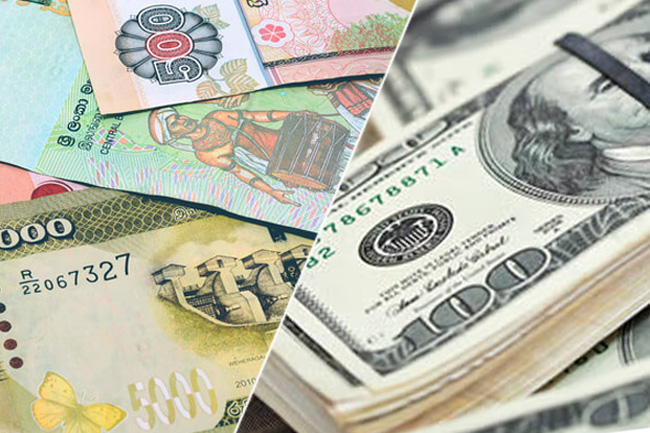
Google users were stunned to see the already volatile Sri Lankan rupee fall to 236.81 to the US dollar this afternoon. This rate remained for some time and caused much excitement and fear among those who saw it.

It isn’t yet clear what happened, but the rate was later changed by Google to the correct level of 329.00.

Google has not yet explained how the wrong rate was uploaded.