Crypto Currency NOT recognized in Sri Lanka, and there are no regulatory safeguards – CBSL

The Central Bank of Sri Lanka has warned Sri Lankans on the use of crypto currency, adding that cryptocurrencies are not considered as legal tender in Sri Lanka.

CBSL said that there are no regulatory safeguards relating to their usage in the country.

“Cryptocurrency operates through informal channels, and therefore, it does not contribute to the national economy and can also cause a loss of valuable foreign currency to the country.” it added.

The public is also warned of the growing number of financial scams operating with the promise of high returns based on crypto-investments.

The Central Bank said that these scams include deceiving individuals and obtaining money from them with the promise of providing a high return by investing money in cryptocurrency, as well as deceiving individuals to invest in fraudulent cryptocurrency projects. Such scams circumvent traditional regulatory and legal protection mechanisms, resulting in individuals losing their hard-earned money.

CBSL strongly advises the public to safeguard their hard-earned money and not to invest or engage in any cryptocurrency scheme offered through the Internet, other forms of media, or directly by any persons.

Full Statement:

Considering the recent public inquiries and the developments observed relating to cryptocurrencies, which are also commonly referred to as “crypto”, the Central Bank of Sri Lanka (CBSL) wishes to reiterate to the public of the significant risks associated with using and investing in cryptocurrency.

Cryptocurrency is a type of virtual currency that is generated by private entities and not by a monetary authority of a country.

The term ‘cryptocurrency’ refers to a digital representation of value that is implemented using cryptography and Distributed Ledger Technology (DLT) or similar technology.

It is observed that crypto-trading is widely promoted by certain entities as a profitable investment. However, recent complaints received by CBSL have shown that members of the public have incurred heavy losses on their crypto-investments and in certain instances have also been subject to financial scams conducted through crypto-related schemes.

CBSL has already highlighted, through Press Releases issued in 2018, 2021, and 2022, the significant financial, operational, legal and security related risks as well as customer protection concerns posed to users of cryptocurrency.

These risks and concerns have already materialised with the recent failures of various global institutions engaged in cryptocurrency businesses, and the collapse and loss of value of some cryptocurrencies.

The public is reminded that cryptocurrencies are unregulated investment instruments which are not recognized as an asset-class in Sri Lanka. Further, cryptocurrencies are not considered as legal tender in Sri Lanka and have no regulatory safeguards relating to their usage in the country. As per the Directions No. 03 of 2021 under Foreign Exchange Act, No. 12 of 2017, Electronic Fund Transfer Cards (EFTCs) such as debit cards and credit cards are not permitted to be used for payments related to cryptocurrency transactions. Cryptocurrency operates through informal channels, and therefore, it does not contribute to the national economy and can also cause a loss of valuable foreign currency to the country.

The public is also warned of the growing number of financial scams operating with the promise of high returns based on crypto-investments. These scams include deceiving individuals and obtaining money from them with the promise of providing a high return by investing money in cryptocurrency, as well as deceiving individuals to invest in fraudulent cryptocurrency projects. Such scams circumvent traditional regulatory and legal protection mechanisms, resulting in individuals losing their hard-earned money.

CBSL strongly advises the public to safeguard their hard-earned money and not to invest or engage in any cryptocurrency scheme offered through the Internet, other forms of media, or directly by any persons. The public is also notified that CBSL has not issued any license or authorized any individual or business to operate schemes involving cryptocurrency, and has not authorized any Initial Coin Offerings (ICOs) or any variant of it, cryptocurrency mining operations, cryptocurrency exchanges, deposit-taking or custody services related to cryptocurrency or any cryptocurrency investment advisory service.

CBSL also urges those who are engaged in promoting and facilitating the promotion of investing and trading in cryptocurrency to refrain from such activities, considering the wide range of risks associated with cryptocurrency and the resulting hardships to the public, including financial losses.

“Unite to Defeat Ranil’s terrifying Anti Terrorism Bill”- CBK

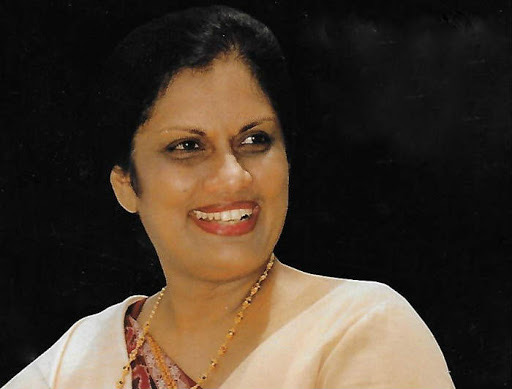
Former President Chandrika Bandaranaike Kumaratunga called the new Anti-terrorism bill “frightening” and called on all citizens to unite to defeat the bill.

Speaking at an event in Colombo on Thursday (29) she said, “Let’s set aside our political allegiances and recognise that we are all social activists in this place. We must unite to defeat this.”

“This is a frightening bill and all the citizens of this country need to be alerted about this,” the former head of state explained.

“At this rate, we will not be able to speak freely like we’re doing here today. Democracy will have no place and they will arrest us all”, she added.

Speaking at the event, which also saw the participation of MP Prof. G.L. Peiris, Mrs. Kumaratunga stated that the Aragalaya taught Sri Lanka a valuable lesson: “If the people unite and strongly demand a change, change can be achieved.”

“So whether it be through an Aragalaya or Revolution, we will have to do something”, she concluded.

Posted in Uncategorized

Sarah Jasmine, wife of Katuwapitiya Church bomber, confirmed dead

DNA tests have revealed that Pulasthini Mahendran, alias Sarah Jasmine, the wife of Katuwapitiya church bomber, had died during the suicide bomb explosion in a safe house in Sainthamaruthu on April 26, 2019, days after the Easter Sunday bomb attacks, Police said.

They said that the Government Analyst Department had conducted the DNA test and submitted the report.

The police will inform court of the latest update, a police statement said.

Sri Lanka: One of many countries that disrupted the right to protest

Sri Lanka was one of the many countries that disrupted the right to protest of the people, said Deprose Muchena, the Senior Director for Human Rights Impact at Amnesty International.

He was in Colombo for the regional launch of Amnesty’s global annual report and was also the key speaker at the event.

“Human rights came under attack, we saw repression of the most calculated order. This repression did not pick and choose where it happened as we saw global protest movements being faced with brute force, with killings, with mass arrests and with all manner of human rights violations, not least in this country, in this region, in this continent,” he said.

“We know that there is a discussion around support from the International Monetary Fund that is being discussed between your government and yourselves. Amnesty International calls for transparency on that deal so that everything that has been debated in within the public purview. Social protection to be prioritized and for human rights to be enhanced because no aid mechanism should diminish human rights. Everything that happens between countries as part of cooperation should enhance the protection of people, their safety and their ability to pursue their own rights,” he added.

Given the current economic crisis and human rights situation in Sri Lanka, Deprose Muchena aims to use his presence to highlight and stress on the urgent need to protect and promote the rights of the island’s 22 million people.

Deprose Muchena is the Senior Director for Regional Human Rights Impact at Amnesty International, where he oversees Amnesty regional offices across the world to lead the mandate of expanding human rights footprint.

He has previously worked with United States Agency for International Development (USAID) and the Open Society Initiative for Southern Africa (OSISA).

Posted in Uncategorized

Sri Lanka in talks with India on oil pipeline to Trinco

Sri Lanka is in talks with India to build an oil pipeline to transport fuel to the Eastern Port of Trincomalee, President Ranil Wickremesinghe had told energy investors, according to a statement from his media office.

There were on-going discussions on “bringing an oil pipeline from India to Trincomalee,” the President had said.

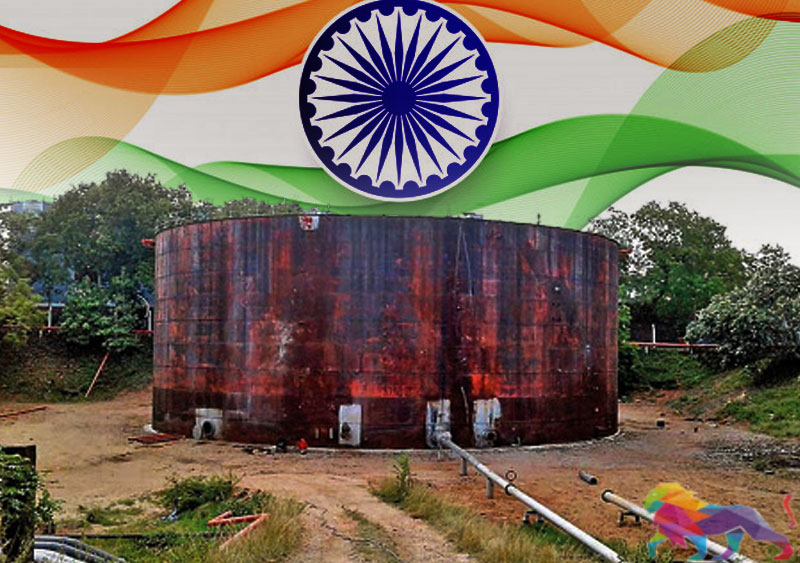
Trincomalee has a a World War II-era 99 tank farm. A part of the tank farm is under the control of Lanka India Oil Corporation. The rest is under joint control of IOC and Ceylon Petroleum Corporation.

LIOC Managing Director Manoj Gupta said high level discussions and studies were underway for a finished product pipeline.

Trincomalee has been identified as a potential port for green hydrogen due to the availability of renewable energy in Northern Sri Lanka, President Wikremesinghe had said.

Green hydrogen is a potential future marine fuel.

Posted in Uncategorized

Solar Power to replace Coal Power in Sampur

Sri Lanka’s Cabinet of Ministers granted approval for the construction of a Solar Power Plant in Sampur, Trincomalee via a Joint Venture between the Ceylon Electricity Board and the National Thermal Power Corporation Limited – India.

The 135 MW Solar Power Plant will be constructed at the site of the previously proposed Sampur Coal Power Plant.

Phase One of the project will see the construction of a 50 MW Solar Power Plant at a cost of US $ 42.5 Million.

In addition, US $ 23.6 Million will be spent for the construction of a 40 km long 220 MW Transmission Line from Sampur to Kappalthurai.

Phase Two of the project will see the construction of an 85 MW Solar Power Plant and 220 MW Transmission Line.

This project is expected to be completed within two years from 2024 to 2025.

Posted in Uncategorized

China spent $240 billion bailing out ’Belt & Road’ countries: Report

China has handed out $240 billion worth of bailout loans to 22 developing countries at risk of default over the past two decades, with the trend accelerating in recent years, a report said Tuesday.

Almost all the funds went to Belt and Road Initiative (BRI) countries such as Sri Lanka, Pakistan and Turkey — mostly low- and middle-income nations that have received Chinese loans for infrastructure development, according to the study.

The 40-page report by the US-based research lab AidData, the World Bank, the Harvard Kennedy School and the Kiel Institute for the World Economy showed bailout loans had accelerated between 2016 and 2021, with Beijing doling out 80 percent of its rescue lending in that period.

Around the world, BRI nations have come under strain as soaring inflation and interest rates, compounded by the lingering impact of the Covid-19 pandemic, have hurt their ability to repay debts.

The bailouts allow the countries to extend their loans and remain solvent, the report said.

China says more than 150 countries have signed up to the BRI, a trillion-dollar global infrastructure push unveiled by President Xi Jinping a decade ago.

Beijing says the initiative aims to deepen friendly trade relations with other nations, particularly in the developing world.

But critics have long accused China of luring lower-income countries into debt traps by offering huge, unaffordable loans.

“China has developed a system of ‘Bailouts on the Belt and Road’ that helps recipient countries to avoid default, and continue servicing their BRI debts, at least in the short run,” the report said.

– Opaque – ========== In comparison to the International Monetary Fund and the vast liquidity support extended by the United States’ Federal Reserve, China’s bailouts remain small but are growing quickly, the report said.

“Beijing has targeted a limited set of potential recipients, as almost all Chinese rescue loans have gone to low- and middle-income BRI countries with significant debts outstanding to Chinese banks,” its authors wrote.

The report warned that Chinese loans tend to be more opaque compared with other international lenders of last resort — and often come at an average interest rate of five percent, compared with a typical two percent rate on an IMF loan.

Many such agreements were so-called “rollovers”, in which the same short-term loans are repeatedly extended to refinance debts about to come due.

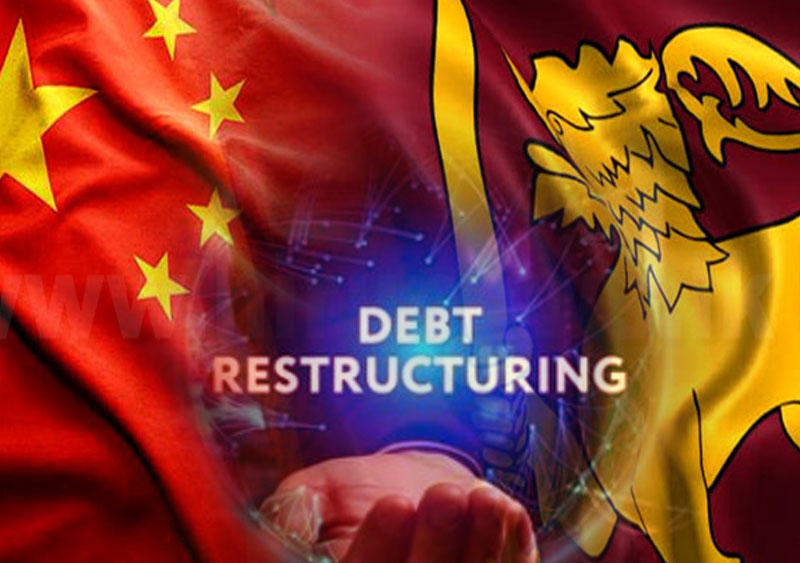
China this month agreed to restructure its loans to Sri Lanka, clearing the way for an IMF bailout of the island nation that lists Beijing as its biggest bilateral creditor.

Posted in Uncategorized

JVP-NPP to challenge Anti-Terror Bill

The Janatha Vimukthi Peramuna (JVP)-led National People’s Power (NPP) of the Parliamentary Opposition will be taking legal action against the recently gazetted Anti-Terrorism Bill as soon as it is tabled in the Parliament.

Speaking to The Daily Morning yesterday (27), Attorney-at-Law affiliated to the JVP led NPP, Sunil Watagala claimed that this Bill is very similar to the previous related Bill which was brought during the Premiership of the incumbent President Ranil Wickremesinghe.

“This recently gazetted new Anti-Terrorism Bill can be very harmful to the democracy of this country. We have understood that this Bill violates the Constitution and curtails the civil liberties enjoyed by the people. None of the trade union (TU) actions such as protests and strikes will be secured by this Bill; it is such a dangerous Bill,” he claimed. He also noted that they would go to the Supreme Court during the 14-days period when the first reading is over. He also said that the NPP would not allow anybody to violate the fundamental rights of the people.

When contacted by The Daily Morning yesterday, General Secretary of the main Parliamentary Opposition, the Samagi Jana Balawegaya (SJB), and Parliamentarian Ranjith Madduma Bandara said that they had discussed on this matter on several occasions and that necessary measures will be taken both inside and outside the Parliament as the main Opposition Party in the country.

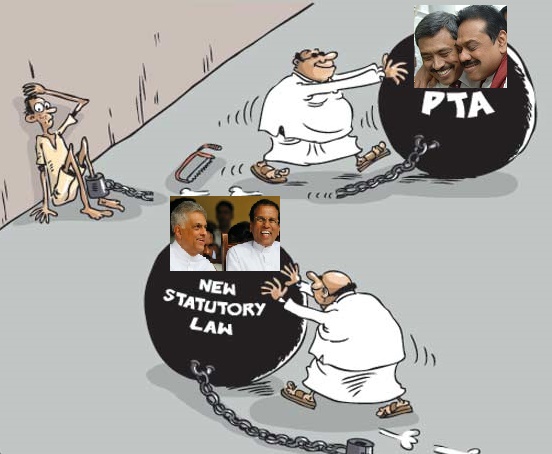
There has been constant pressure from the United Nation Human Rights Council and sections of the international community, particularly the West, to repeal the Prevention of Terrorism (Temporary Provisions) Act as amended, which was followed by the new Anti-Terrorism Bill which was gazetted on 22 March.

Several attempts made by The Daily Morning to contact State Minister of Justice, Prisons Affairs and Constitutional Reforms, Attorney Anuradha Jayaratne and Secretary to the Ministry of Justice, Prisons Affairs and Constitutional Reforms Wasantha Perera proved futile.

Travel to India in 50$?

The governments of Sri Lanka and India have decided to launch a passenger ferry service between Kankesanthurai in Jaffna, Sri Lanka to Karaikal in India from 29th April 2023, it has been reported.

According to reports, discussions in this regard have been held between the Minister of Ports and Shipping Nimal Siripala de Silva and India’s Foreign Affairs Ministry on Sunday (26).

It has also been decided to establish two Immigration and Emigration offices, one each in Kankesanthurai and Karaikal for this purpose, while preliminary measures have already commenced in this regard.

Minister Nimal Siripala de Silva has revealed that boats will not be provided initially by the governments of India and Sri Lanka for the ferry service, instead, boats will be provided under the tender called for by the Indian Ministry of Foreign Affairs.

Under the new passenger ferry programme, a ferry will hold a capacity of a total of 150 passengers with each passenger’s allowed baggage weight of 100 kilos, while the cost of one-way travel is US$ 50.

Sri Lanka to lease 450 state-owned fuel stations for Chinese, US, Australian firms with Shell JV

Sri Lanka cabinet has granted approval for three oil companies from China, the United States, and Australia in collaboration with Shell Pl to lease 150 fuel station for each company to operate in local market, Minister of Energy Kanchana Wijesekera said.

“Cabinet approval was granted to award licenses to Sinopec, United Petroleum, Australia & RM Parks of USA in a collaboration with Shell Plc to enter the Fuel Retail market in Sri Lanka,” Wijesekera said in a twitter message.

“Energy Committee & relevant other procurement committees had given their approval & recommendation to award the 3 companies the licenses to operate,” Wijesekera said.

The move comes as President Ranil Wickremesinghe administration has decided to sell government stake in the seven key state owned enterprises including loss-making fuel retailer Ceylon Petroleum Corporation (CPC).

“The 3 companies will be allocated 150 Dealer operated fuel stations each which are currently operated by CPC and they will be granted a license to operate for 20 years to import, store, distribute and sell petroleum products in Sri Lanka.

“A further 50 fuel stations at New locations will be established by each selected company.”

The discussions to allow foreign players to enter into local fuel distribution began in June 2022, during the peak of the economic crisis, where the government was struggling to supply fuel to the demand.

Currently Sri Lanka has CPC and a subsidiary of Indian Oil Corporation (Lanka IOC) as the fuel distributors in a duopoly market.

Minister Wijesekera last year said that new companies entering into Sri Lanka may be given 200 to 300 filling stations out of the 1,190 operated by state-run Ceylon Petroleum Corporation.

At the moment 90 percent of fuel distribution is done by state-run Ceylon Petroleum Corporation and about 10 percent by Lanka IOC.

Posted in Uncategorized