Election Commission unwilling to recognize Amaraweera or Sumathipala as UPFA General Secretary

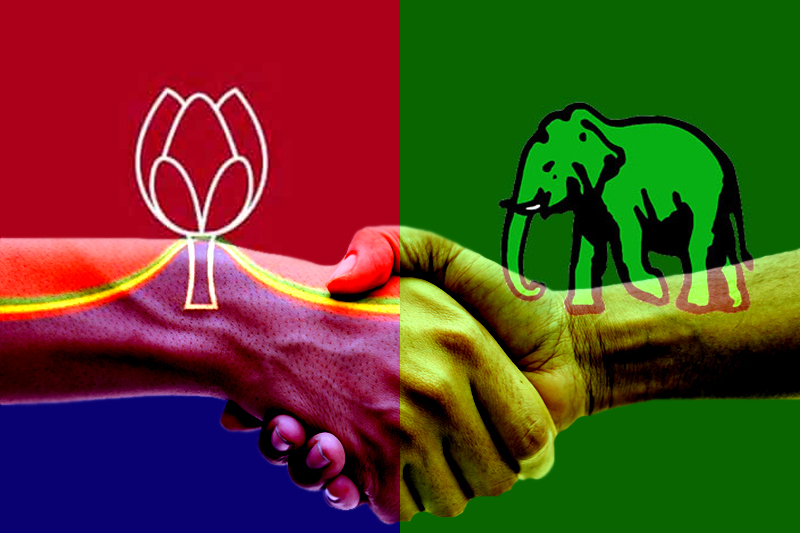
The National Election Commission has issued a statement regarding the controversy surrounding the General Secretary of the United Peoples’ Freedom Alliance.

The Commission has announced that it will not recognize Minister Mahinda Amaraweera or former Member of Parliament Thilanga Sumathipala as the UPFA General Secretary until the completion of investigations over the issue.

Thilanga Sumathipala had recently informed the Election Commission to recognize him as the UPFA General Secretary.

Subsequently, Minister Amaraweera had informed the Commission that he remains the UPFA’s General Secretary.

Considering both requests, the Election Commission has announced that it will not accept Mahinda Amaraweera or Thilanga Sumathipala as the UPFA General Secretary until the completion of investigations.

Posted in Uncategorized

A Chinese Man, Guinea Passport, & Political Intervention

A Chinese national suspected of having used a forged passport in an attempt to enter Sri Lanka was set to be deported, and reports suggest that he was later allowed to enter the country via the Katunayake Airport.

On the 18th of May 2023, two Chinese nationals and an Egyptian had arrived in Sri Lanka from Dubai and one of the Chinese men had produced a Guinea passport at the Katunayake Airport.

Immigration and Emigration officers at the BIA had denied entry to the Chinese national upon deciding that the passport he produced was forged.

News 1st’s Airport Correspondent said that thereafter, the Chinese national and his colleagues had behaved in an unruly manner.

It was then that State Minister Arundhika Fernando had intervened with the incident.

On the 19th of May 2023, the State Minister had addressed a letter to the Controller General of Immigration and Emigration informing that the Chinese national had arrived in Sri Lanka to discuss a housing project that will be launched under his ministry.

The State Minister had requested that the Chinese man be allowed to enter Sri Lanka upon considering his Chinese passport.

“The Chinese company based in Sri Lanka said that he is a genuine person, and he possesses a Chinese passport. They said that they will be responsible with regard to any punishment imposed on him, or on the decision to deport him. Therefore, I spoke to the Controller of Immigration and Emigration. I asked if it is possible to allow him to enter the country, using the Chinese passport. I addressed the letter on his advice and I did not influence him in any way,” exlained the State Minister.

The Department of Immigration and Emigration comes under the Ministry of Public Security, and the matter was raised with Minister Tiran Alles.

He said that he had have given instructions to “take him (Chinese national) in first and then check with the Chinese Embassy, get all the details and to take a decision.”

State Minister Arundika Fernando said that later was made aware that a Chinese national cannot use two passports.

The Department of Immigration and Emigration recorded a statement from the Chinese national in question and commenced an investigation.

China’s Sinopec signs contract agreements to enter fuel retail market in Sri Lanka

In a significant move to address Sri Lanka’s fuel supply challenges, a contract agreement was signed with Sinopec, a leading international petroleum company. The agreement, signed today (22), marks a crucial step in ensuring a steady and uninterrupted fuel supply for the nation, the President’s Media Division (PMD) said.

The signing ceremony took place at the Presidential Secretariat, with representatives from both Sri Lanka and Sinopec in attendance.

Secretary of the Ministry of Power and Energy M.P.D.U.K. Mapa Pathirana and Chen Chengmin, Managing Director of Fuel Production and Marketing Department of Sinopec Company, signed the agreement in front of the President, it added.

On the Sri Lanka side, the Secretary of the Ministry of Power and Energy, the Chairman & Managing Director of the Ceylon Petroleum Corporation, and the Chairman of the Ceylon Petroleum Storage Terminals Limited participated. From Sinopec, representatives from Sinopec Fuel Oil Lanka (Private) Limited, Sinopec Fuel Oil Sales Co. Ltd (People’s Republic of China), and Sinopec Fuel Oil (Singapore) Pte. Ltd. were present to formalize the agreement.

In response to the on-going foreign exchange crisis in Sri Lanka, the Ministry of Power and Energy has taken this decisive action to ensure an uninterrupted fuel supply to consumers. With the inability to provide sufficient foreign exchange for fuel shipments, the Ceylon Petroleum Corporation (CPC) and Lanka Indian Oil Company (LIOC) faced significant challenges, according to the PMD.

To tackle this issue, the Ministry explored various strategies and one of them involved inviting Expression of Interests (EOIs) from reputable petroleum companies established in producing countries. The goal was to import, store, distribute, and sell Petroleum Products in predetermined Distribution Dealer operated Networks in Sri Lanka. The Cabinet of Ministers approved this initiative.

One of the key requirements for new retail suppliers entering the market was their ability to secure forex requirements without depending on the domestic banking sector. It was mandated that these companies source their own funds for fuel procurement through foreign sources, at least during the initial one-year period of operation.

After receiving EOIs, the companies that were shortlisted were invited to submit detailed proposals in response to a Request for Proposal (RFP) document. The Cabinet Appointed Special Committee (CASC) and the Technical Evaluation Committee (TEC) thoroughly scrutinized the proposals and recommended awarding contracts to the following companies, subject to negotiations:

• M/s Sinopec Fuel Oil Lanka (Private) Limited, F5, Hambantota Maritime Center, Mirijjawila, Hambantota, Sri Lanka

• M/s United Petroleum Pty Ltd, 600 Glenferrie Rd, Hawthorn, Victoria 3122, Australia

• M/s RM Parks, 1061 N. Main St, Porterville, CA 93257, USA, in collaboration with Shell PLC

The Cabinet of Ministers, considering the recommendations made by the CASC and the Committee Appointed by the Cabinet, granted approval to award the contracts to the selected suppliers.

Sinopec, along with its affiliated companies, is set to commence operations in Sri Lanka within 45 days following the issuance of the license. This development brings hope for a more stable and reliable fuel supply, boosting the country’s energy sector and providing assurance to consumers.

Minister of Power and Energy Kanchana Wijesekera, State Ministers D.V. Chanaka, Indika Anuruddha, Shehan Semasingha, President’s Senior Advisor on National Security and Chief of Staff Sagala Ratnayake, President’s Secretary Saman Ekanayake, Central Bank Governor Dr. Nandalal Weerasinghe, Chinese Ambassador Qi Zhenhong and representatives of Sinopec Oil Lanka Pvt. Ltd, Sinopec China Pvt Ltd and Sinopec Singapore Pvt Ltd were present on this occasion, according to the PMD.

The deal with Sinopec– a state-owned Chinese company –was reached months after the two sides commenced their negotiations and Sri Lanka approved a proposal in March to liberalise the fuel retail marketing in the country with more players from China, Australia and the US.

Sri Lanka’s fuel retail market was a state monopoly under the Ceylon Petroleum Corporation (CPC) until 2003 when the Indian Oil Company (IOC) was allowed to operate.

“Negotiations have been completed with Sinopec Fuel Oil Lanka Ltd and its parent company in China and Singapore for a long-term contract on important storage, distribution and sale of petroleum products in the island nation,” the statement issued by the president’s office said.

In March, the Cabinet of Ministers had granted approval to award licenses to China’s Sinopec, Australia’s United Petroleum and RM Parks of the USA, in collaboration with multinational oil and gas company – Shell plc, to enter the fuel retail market in Sri Lanka.

Thereby, they are be granted a license to operate for 20 years to import, store, distribute and sell petroleum products in Sri Lanka.

In June 2022, the Cabinet of Ministers had green-lighted the proposal to open up Sri Lanka’s fuel import and retail sales market to companies from oil-producing nations.

In October the same year, the Petroleum Products (Special Provisions) Bill, paving the way for new suppliers to enter as importers, distributors and retail operators for petroleum products, was approved by the Ministerial Consultative Committee on Power and Energy.

Later on April 26, a team of officials from Sinopec visited Sri Lanka in order to finalise the agreements and commencement of operations for retail fuel sales, and accordingly, the timeline, conditions of the relevant agreement and other concerns were discussed between the team of officials and technical experts from the Chines energy giant and the Minister of Power and Energy, Kanchana Wijesekera.

It had been decided that the agreements would be signed in mid-May, and that operation would commence 45 days thereon.

Also, the US-based oil company RM Parks Inc. and the British multinational oil and gas company Shell PLC had held discussions with Minister Wijesekera on commencing retail fuel sales in Sri Lanka in the first week of June this year.

Wijesekera, joining the political talk show “360°” on TV Derana earlier in April, revealed that each company will handle 150 CPC dealer-operated filling stations in the local market.

At present, a total of 1,142 filling stations are under the purview of the CPC, however, the corporation fully owns only 234 of them, the minister explained, adding that 450 out of the remaining 908 filling stations owned by private distributors would be allocated to the three foreign oil companies.

Shavendra Silva raises objections on Karannagoda Committee report

Former Army Commander General Shavendra Silva through his lawyer today informed Court of Appeal that he is disputing the findings of Karannagoda Committee appointed to inquire into incident of violence following the Galle Face attacks on May 9, 2022.

President’s Counsel Faisz Mustapha appearing for General Shavendra Silva told court that his client is disputing the findings of Karannagoda Committee on both factual and legal aspects.

He contended that Karannagoda Committee is not a committee that has been appointed under any provision of the law.

Mustapha said it was a committee appointed by former President just to report to him and reiterated that he is not accepting the validity of the inquiry.

Faisz Mustapha PC further raised objections for conducting a fresh inquiry relying upon the findings of the Karannagoda Committee.

He alleged that Karannagoda Committee report had been released to the media with the motive of tarnishing the reputation of his client based on unfound allegations.

He raised objections for the withdrawal of the application if it is based on the findings of the Karannagoda Committee report. President’s Counsel Sanjeeva Jayawardena appearing for the petitioners including several Ministers and parliamentarians submitted that no point whatsoever had Mustapha PC’s client challenged the board of inquiry report of the military leaders and that in any event, that would not be final and conclusive, as the Minister has now undertaken to additionally conduct a full investigation in terms of the Law and as such, any persons involved in the conspiracy that took place, would be revealed finally at such proposed investigation.

Jayawardena further said there is no case of filing objections as this was a crucial matter as several official governmental institutions and installations were attacked and overrun.

He further said that there was even a physical threat to the security of Parliament itself and therefore, that the masterminds behind these attacks must be duly investigated.

Both parties made these remarks when the writ petition filed by 22 government Parliamentarians representing SLPP and several others was came up before Court of Appeal.

President’s Counsel Faisz Mustapha with Kuvera de Zoysa PC with Counsel Faisza Mustapha Marka and Sharafi Mohideen appeared for General Shavendra Silva. President’s Counsel Sanjeeva Jayawardena with counsel Rukshan Senadheera appeared for the petitioners.

Security partnering: US not pursuing SOFA with SL at present

The US is not keen to pursue a new iteration of the Status of Forces Agreement (SOFA) with Sri Lanka at present, visiting US Bureau of South and Central Asian Affairs Deputy Assistant Secretary (DAS) Afreen Akhter told The Sunday Morning last week.

Responding to a question, Akhter said that entering into a SOFA with Sri Lanka was not being considered by the US at present. “I don’t think that is something we are considering at the moment,” Akhter said.

The attempt to negotiate the bilateral SOFA between both countries caused much controversy in 2019, after part of its content was leaked to the local press.

However, the visiting DAS stressed that the US continued to work closely with Sri Lanka, especially on maritime security, and highlighted the gifting of the third decommissioned ex-US Coast Guard cutter to the Sri Lanka Navy.

Akhter also said that a specialised maritime patrol aircraft, which is to be gifted to Sri Lanka by the US, was expected to arrive in the island next year.

“We are really focused on building Sri Lanka’s maritime security capability through the gifting of the coast guard cutter, the King Air aircraft which will come next year, and through specialised training and other platforms and systems,” Akhter stated.

She added that the US considered Sri Lanka a valuable partner in the Indo-Pacific region.

Posted in Uncategorized

China’s vast industrial-scale fleet fishing in distant oceans

A few years ago, Ecuador’s navy found to its horror, a mega, illegal Chinese fishing fleet of 340 vessels just outside the biodiverse Galápagos Islands, a UNESCO World Heritage site.

They had also avoided being tracked by illegally switching off satellite communications.

China’s vast fishing armada has been for years raiding oceans beyond China including the Indian Ocean under the cover of night.

China says it does not tolerate illegal operations.

The IUU Fishing Index ranked China as the worst perpetrator of illegal, unreported and unregulated fishing in 2021 and 2019. The Overseas Development Institute has counted this Chinese fleet at 16,966 vessels and many fly flags of convenience. Vessels have been found in Argentina and West Africa.

A part of this highly sophisticated, industrial scale operation, is large vessels of Chinese state companies. These are equipped with bright lights to fish for squid, a highly lucrative industry. They are served by giant fuel tankers, such as the Ocean Ruby, which had been detected and photographed.

The UN’s Food and Agriculture Organisation found that in 2018, China reported about 2.26 million tonnes from its “distant-water fishery”, but provided details on species and fishing area only for those catches marketed in China (about 40% of the total for distant-water catch).

In 2018, China was the biggest player in marine fish capture, accounting for 15% of the global catch, or 12.7m tonnes, way ahead of nearest rival Peru which captured 7.15m tonnes, FAO data show. India’s catch was 3.6m tonnes. China’s catch was bigger than that of the second and third ranked countries combined.

Posted in Uncategorized

Presidential election this year!

To amend the constitution to speed up the presidential election

The government has decided to draft it soon and submit it to the parliament after the opposition expressed its full support, sources in the high-ranking political sector said.

According to reliable sources, it is the government’s plan to hold the presidential election within this year, the national newspaper ‘Deshay’ has reported on Sunday.

It has been learned that the government intends to go to the presidential election by offering more relief to the people with the receipt of the second loan installment of the International Monetary Fund next September.

An amendment to the Constitution should be brought for this. It is further stated in the ‘Deshay’ news report that three senior legal scholars attached to the President’s Office have already started the basic operational work required for those activities.

President to leave for Singapore and Japan tomorrow

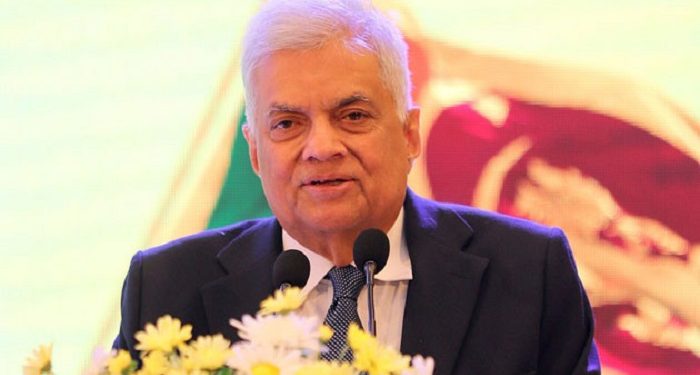
President Ranil Wickremesinghe is scheduled to leave for Singapore and Japan tomorrow.

The Office of the President said, during the five-day visit, President Wickremesinghe is scheduled to meet Prime Minister of Singapore Lee Hsien Loong and Japanese Premier Fumio Kishida.

The President is scheduled to discuss the agreement with the International Monetary Fund, debt restructuring process, investment opportunities and several other matters with both Singaporean and Japanese leaders.

The President is scheduled to return to the country on Saturday.

Ruling Party issues notice of Mandatory Attendance to all Govt. MPs amid key bill debate

The ruling party alliance has sent a written message stating that all members of parliament representing the ruling party must attend parliamentary proceedings this week.

A senior MP from the ruling party says the announcement was made through a brief three-line message. According to the MP, a three-line announcement is used for important bills like a budget referendum or a constitutional amendment.

As a result of this announcement, MPs are temporarily not allowed to travel abroad during this time. If an MP fails to attend parliamentary proceedings after being notified, they must provide reasons for their absence. The proposal to remove Janaka Ratnayake from the position of Chairman of the Public Utilities Commission will be discussed in Parliament on May 24th, and a vote will be held on the same day.

The Sri Lanka Podujana Peramuna has already stated that it will vote in favor of the proposal. However, the Samagi Jana Balawegaya and the Jathika Jana Balawegaya have announced that they will vote against it. Meanwhile, Basil Rajapaksa, the national organizer of the Sri Lanka Podujana Peramuna, has returned to the island. Sagara Kariyawasam, the General Secretary of the Sri Lanka Podujana Peramuna, says that Basil Rajapaksa returned to the island on Friday morning after having left for Dubai on May 7th.

Posted in Uncategorized

G7 takes stand against China’s “economic coercion”

As the G7 leaders sent a strong message to Russia by inviting Volodymyr Zelensky to Hiroshima, another rival was also on their minds – China.

British Prime Minister Rishi Sunak said China posed “the greatest challenge of our age” in regards to global security and prosperity, and that it was “increasingly authoritarian at home and abroad”.

And in not one but two statements, the leaders of the world’s richest democracies made clear to Beijing their stance on divisive issues such as the Indo-Pacific and Taiwan. But the most important part of their message centred on what they called “economic coercion”.

It’s a tricky balancing act for the G7. Through trade their economies have become inextricably dependent on China, but competition with Beijing has increased and they disagree on many issues including human rights.

Now, they worry they are being held hostage.

In recent years, Beijing has been unafraid to slap trade sanctions on countries that have displeased them. This includes South Korea, when Seoul installed a US missile defence system, and Australia during a recent period of chilly relations.

The European Union was particularly alarmed when China blocked Lithuanian exports after the Baltic country allowed Taiwan to set up a de facto embassy there.

So it is unsurprising that the G7 would condemn what they see as a “disturbing rise” of the “weaponisation of economic vulnerabilities”.

This coercion, they said, seeks to “undermine the foreign and domestic policies and positions of G7 members as well as partners around the world”.

They called for “de-risking”- a policy that Ms von der Leyen, who is attending the summit, has championed. This is a more moderate version of the US’ idea of “decoupling” from China, where they would talk tougher in diplomacy, diversify trade sources, and protect trade and technology.

They have also launched a “coordination platform” to counter the coercion and work with emerging economies. While it’s still vague on how this would work exactly, we’re likely to see countries helping each other out by increasing trade or funding to work around any blockages put up by China.

The G7 also plans to strengthen supply chains for important goods such as minerals and semiconductors, and beef up digital infrastructure to prevent hacking and stealing of technology.

But the biggest stick they plan to wield is multilateral export controls. This means working together to ensure their technologies, particularly those used in military and intelligence, don’t end up in the hands of “malicious actors”.

The US is already doing this with its ban on exports of chips and chip technology to China, which Japan and the Netherlands have joined. The G7 is making clear such efforts would not only continue, but ramp up, despite Beijing’s protestations.

They also said they would continue to crack down on the “inappropriate transfers” of technology shared through research activities. The US and many other countries have been concerned about industrial espionage and have jailed people accused of stealing tech secrets for China.

At the same time, the G7 leaders were clear they did not want to sever the cord.

Much of their language on economic coercion did not name China, in an apparent diplomatic attempt to not directly point a finger at Beijing.

When they did talk about China, they stood their ground in a nuanced way.

They sought to placate Beijing, saying their policies were “not designed to harm China nor do we seek to thwart China’s economic progress and development”. They were “not decoupling or turning inwards”.

But they also put pressure on the Chinese to cooperate, saying that a “growing China that plays by international rules would be of global interest”.

They also called for “candid” engagement where they could still express their concerns directly to China, signalling their willingness to keep communication lines open in a tense atmosphere.

We won’t know how, privately, Chinese leaders and diplomats will take the G7’s message. But state media in the past has hit back at the West for trying to have it both ways, by criticising China while also enjoying the fruits of their economic partnership.

For now Beijing has chosen to fall back on its usual angry rhetoric for its public response.

China had clearly anticipated the G7’s statements and in the days leading up to the summit, its state media and embassies put out pieces accusing the US of its own economic coercion and hypocrisy.

On Saturday evening, they accused the G7 of “smearing and attacking” China and lodged a complaint with summit organiser Japan.

They also urged the other G7 countries not to become the US’ “accomplice in economic coercion”, and called on them to “stop ganging up to form exclusive blocs” and “containing and bludgeoning other countries”.

It is worth noting that China has also sought to create its own alliances with other countries, and late last week just as the G7 summit kicked off, it hosted a parallel meeting with Central Asian countries.

It’s still not clear if the G7’s plan will work. But it is likely to be welcomed by those who have called for a clear strategy to handle China’s encroachments.

Indo-Pacific and China expert Andrew Small praised the statement as having “the feel of a real consensus”, noting that it expressed the “centre-ground” view of the G7.

“There are still major debates playing out around what ‘de-risking’ actually means, how far some of the sensitive technology export restrictions should go, and what sort of collective measures need to be taken against economic coercion,” said Dr Small, a senior transatlantic fellow with the German Marshall Fund think tank.

“But there is now a clear and explicit framing around how the economic relationships with China among the advanced industrial economies need to be rebalanced.”

Source – BBC