108 acres of land in the North to be released to owners

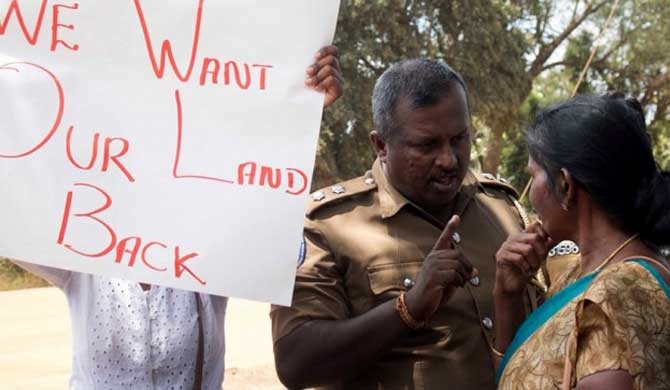
Around 108.893 acres of land in North Valikamam in Jaffna, which was under the custody of security forces during the civil war, will be released and handed over to 197 families on February 03, 2023.

Prior to the 75th Independence Anniversary celebrations on February 4th the relevant land owners were identified through a transparent process for this land release program, which is being implemented under the full supervision of the Security Forces in fulfilment of President Ranil Wickremesinghe’s promise to release the lands in the North and hand them over to their rightful owners prior to the 75th Anniversary of Independence.

Accordingly, five plots occupied by the Sri Lanka Army and another plot occupied by the Sri Lanka Navy are to be handed over to the people.

Of these lands, 13.033 acres of government-owned land in the North Palali area will be distributed among 75 families who were displaced by the war and are still housed in 09 camps at Point Pedro.

Further, the Town Hall building located in the liberated area will be handed over to the Valikamam North Pradeshiya Sabha.

It is also noteworthy that President Ranil Wickramasinghe has instructed the Ministry of Urban Development and Housing which is in charge of the resettlement process to immediately provide resettlement assistance to 197 families to be resettled.

Posted in Uncategorized

Lanka trade its way back to prosperity? BBC

Sri Lanka is, in the words of its own president, “bankrupt”.

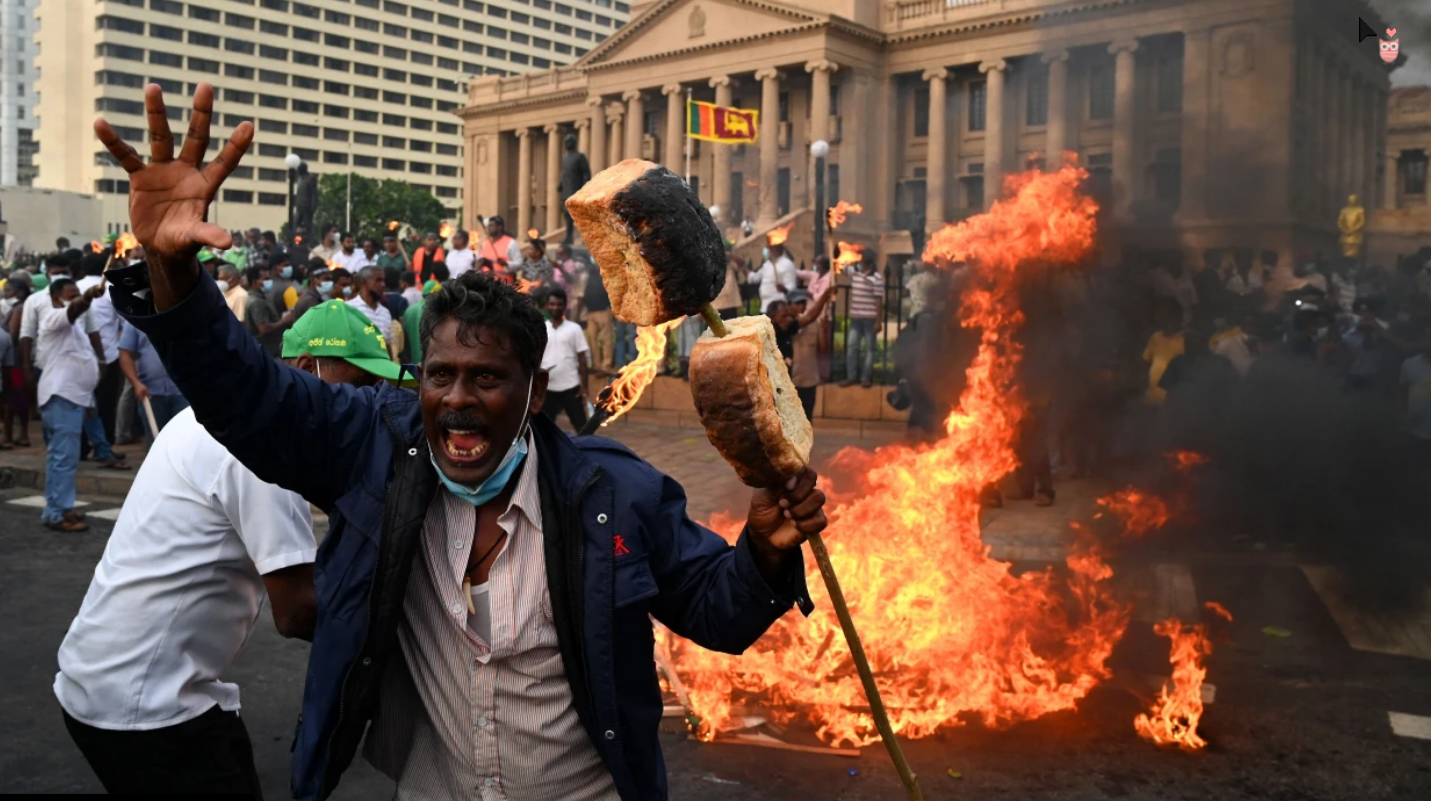
The Indian Ocean nation defaulted on its sovereign debt in May 2022, plunging the country into economic and political chaos.

The Colombo government secured a $2.9bn (£2.4bn) International Monetary Fund bailout in principle the following September.

But the cash will not be released to Sri Lanka until its sovereign creditors in China and India first agree to a restructuring of the billions of dollars of bilateral debt they are owed.

Despite optimism over the past month that such an agreement was imminent, a deal has still not materialised – and Sri Lanka’s economic agony, and the suffering of its population, continues.

Yet, even if the bailout cash does start to flow in the coming weeks or months, that will not mark the end of Sri Lanka’s economic rebuilding programme, but merely the beginning.

For it’s widely accepted that Sri Lanka’s economic model needs a fundamental overhaul.

In the years following the savage end of the government’s 25-year war against the separatist Tamil Tigers in 2009, Sri Lanka benefited from something of a financial “peace dividend”.

The government at the time successfully attracted large flows of foreign investment, not only from foreign governments like China, but also private international bondholders.

These financial flows pumped up domestic economic growth, but at the cost of ballooning imbalances.

The domestic economy grew steadily less internationally competitive in these years. And while exports continued to rise from 2000 to 2018, from $6.5bn to $19.4bn, over the same time period they slumped as a share of the economy, from 39% to 23%.

Even before the pandemic hit in 2020, tearing the heart out of the island’s lucrative tourism industry, the Sri Lankan trade deficit – the gap between its imports and exports – was already running at more than 6% of GDP.

That imbalance is one of the reasons the default hit Sri Lanka so hard – it suddenly found itself without the means to generate the foreign currency needed to import vital supplies of food and fuel.

Ranil Wickremesinghe, who took over the presidency after the discredited and reviled Gotabaya Rajapaksa fled the country in July 2022, has been clear that Sri Lanka’s road to recovery will have to involve addressing the imbalance at source, and, in particular, driving up exports.

“We have to transform into a highly competitive export-oriented economy,” he told local business leaders last year.

“There is no other way out. We are a country with 22 million people. We have to find markets outside.”

So the big economic question looming over Sri Lanka is: can this be done? Can the country trade its way back to prosperity?

Traditionally, Sri Lanka’s big exports have been agricultural, starting with cinnamon, which attracted European colonisers in the 16th Century. Today tea is still the biggest export commodity.

But the tea sector is still reeling from a disastrous 2021 ban on imports of fertiliser by the previous government, which cut yields by a fifth.

Looking to the future, increasing agricultural productivity is an obvious avenue for policymakers to explore.

Yet many firms in the tea sector style themselves as “artisan” producers, with leaves still plucked by hand as they were two centuries ago when the plantations were started by the British Empire. And many estates are still using archaic processing equipment.

On top of this, Roshan Rajadurai, the general manager of the Pedro estate in Nuwara Eliya, says that its workers are resistant to new, more efficient methods of picking.

He wants to move to a model in which pickers and their families are given individual sections of plantation to harvest themselves – with them setting their own hours – rather than working in large traditional work teams for fixed daily hours.

It’s a reform Mr Rajadurai says has been proven to increase yields where it has been adopted, but he says the pickers are resisting.

Sri Lanka’s tea farmers struggling to survive
“If we don’t do it I think with the rising cost, and the static prices that we get in the world markets for our product, I don’t think we can be sustainable in the long term,” he warns.

Textiles – manufacturing garments for Western brands – are another major source of exports for Sri Lanka.

But this, even more than tea, relies heavily on imported raw materials and fuel, which have shot up in price in the wake of the pandemic and the Russian invasion of Ukraine.

Those prices should come down this year, yet the reality is that tea and textiles, though they will probably always be important, are unlikely to push Sri Lanka very far up the global export value chain.

So what else could Sri Lanka export?

What’s striking is that speaking to policymakers and analysts in Sri Lanka, as Newsnight did in January, is that there is very little sense of a grand plan.

Unlike other Asian nations such as Malaysia or Vietnam, which saw a major state-led push into electronic manufacturing, there’s no strong sense that one hears of a particular sector where the country can and should gain an advantage.

The closest area to a prospective national champion is probably port services.

The governor of the county’s central bank, Nandalal Weerasinghe, says Sri Lanka’s geographical location, in the centre of Indian Ocean shipping lanes, offers an opportunity to be a major “trans-shipment” hub.

“Ports and logistics are where there is the potential for us to promote exports,” he says.

It is estimated that a third of the world’s bulk cargo, and two-thirds of its oil, is transported across the Indian Ocean.

But perhaps the absence of a clear national plan doesn’t matter as much as getting the economic policymaking basics right.

In the grip of the crisis last year, the government removed a peg on the currency, which resulted in a halving of the value of the rupee against the US dollar. Some think keeping a floating exchange rate will ultimately help boost exports.

“[In the past] we didn’t allow it to depreciate or to adjust according to market forces, which has basically discouraged exports,” says Roshan Perera of the Advocata think tank, and a former central bank director.

Another area for reform identified by the World Bank is, ironically, liberalising imports and dismantling tariffs. These duties make many imported goods and products more expensive, thereby benefiting domestic producers, such as those in the retail and construction sectors.

Global Trade

More from the BBC’s series taking an international perspective on trade.

Sri Lanka is reckoned to be one of the most protected economies in the world in terms of import duties on consumer goods.

The argument is that liberalisation could attract more foreign investment, which will help the country’s industries become more efficient and export more.

The question is whether, despite the change of president last year, there is enough political space for Mr Wickremesinghe to dismantle trade barriers, which will inevitably attract opposition from powerful local vested interests.

The optimistic case is that the shock of the last year will provide an impetus for such painful reforms, and give Sri Lanka at least a fighting chance of trading its way out of its worst ever economic crisis.

Watch BBC Newsnight’s reports from Sri Lanka here.

Paris Club to give Sri Lanka financing assurances amid IMF debt talks

The Paris Club of creditor nations is ready to provide financing assurances to Sri Lanka, a key step needed to unlock a $2.9 billion bailout by the International Monetary Fund (IMF), two sources with direct knowledge of the matter told Reuters.

The informal group of bilateral lenders is set to “soon” announce its support to the crisis-hit nation on a debt overhaul, said one of the people, who asked not to be named because talks are private.

The Asian island nation, which is grappling with soaring inflation, a recession and currency depreciation, entered into a staff level agreement with the IMF last September.

But it needs financing assurances from key bilateral lenders before the fund’s executive board approves the programme.

Sri Lanka’s public debt stood at 122% of GDP, of which 70% is denominated in foreign currency, according to data in a country presentation to investors in November.

China and India, both non-Paris Club members, are the top bilateral lenders. “Paris Club assurance is not reliant on China,” said the source.

Another source said the informal group is currently reaching out to other non-Paris Club besides China on financing assurances, but did not provide any further details.

India previously committed to help ease the debt burden of neighbour Sri Lanka as part of the IMF programme, and China’s Eximbank offered a two-year moratorium in a letter sent to the island nation in January.

While the IMF has not yet provided any guidance on where the lender stands regarding China’s assurances to Sri Lanka, a U.S. official visiting Colombo said on Wednesday that Beijing has not done enough.

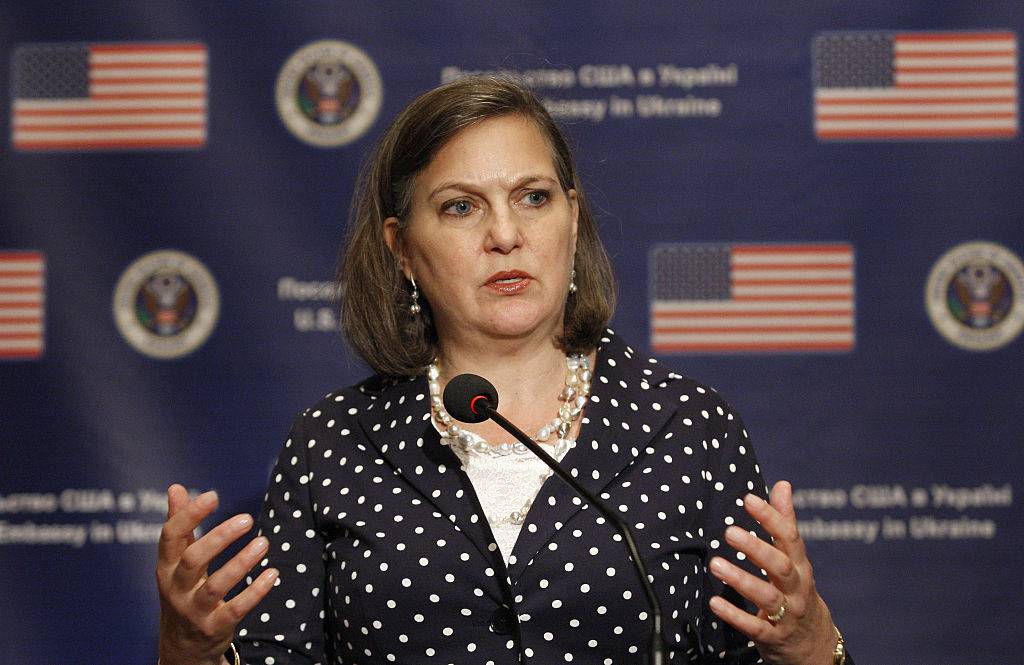
“What China has offered so far is not enough. We need to see credible and specific assurances that they will meet the IMF standard of debt relief,” U.S. Under Secretary of State for Political Affairs Victoria Nuland told reporters. The U.S. is the largest IMF member.

Source:Reuters

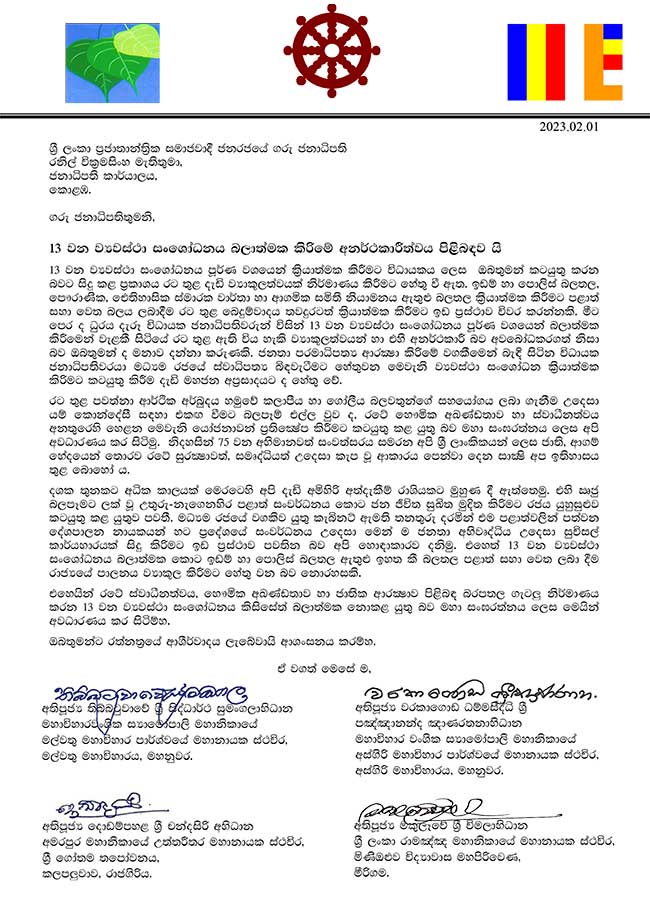
Mahanayake Theras urge President not to implement 13A

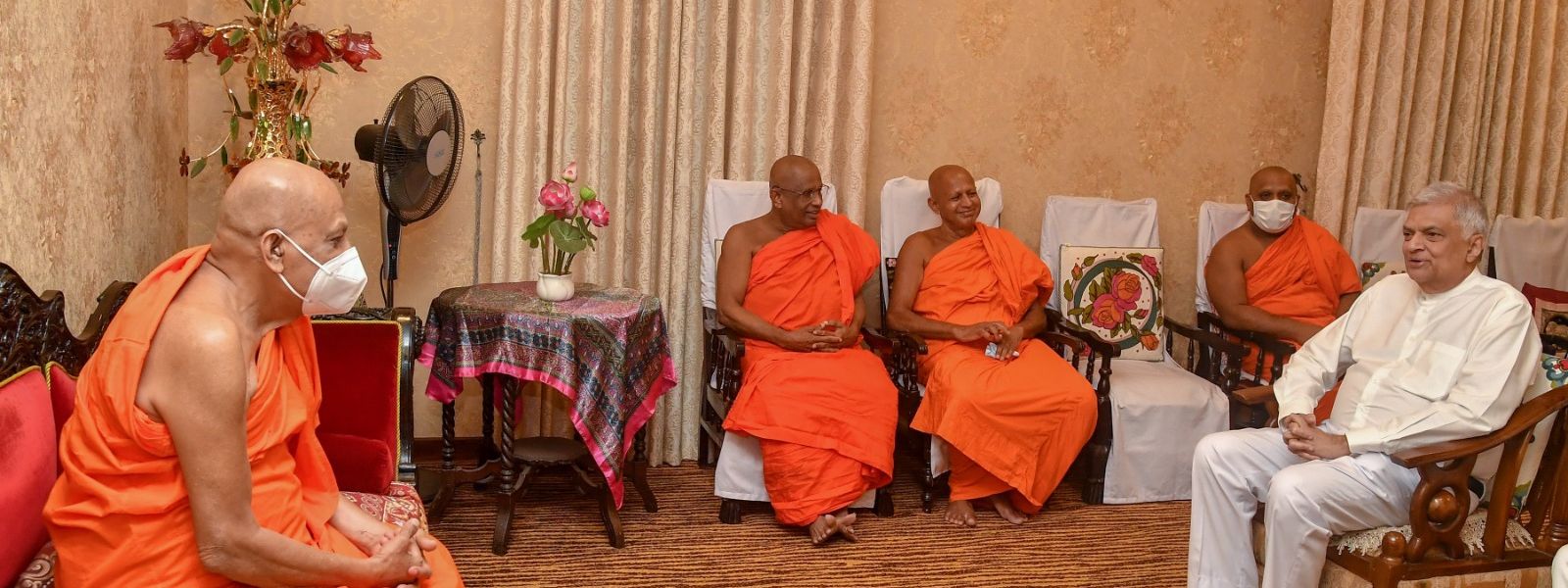
The Chief Prelates of the Three Chapters have accused President Ranil Wickremesinghe of confusing the country following his statement on the implementation of the 13th Amendment.

In a letter addressed to the Head of State today (02 Feb.), the religious leaders deemed the 13th Amendment as a piece of legislation that gives rise to serious concerns pertaining to the country’s national security, territorial integrity and its independence.

They further noted that by implementing the 13th Amendment, police and land powers too, will be devolved to Provincial Councils, and thus asserted that the Amendment should not be enforced at all.

Last month, President Wickremesinghe expressed the Cabinet’s willingness pertaining to the full implementation of the 13th Amendment.

Accordingly, he stated that the 13th Amendment will be implemented, in full, unless it is decided by the Party Leaders as to whether or not the Amendment should be abolished.

Attached below is the relevant letter received by Wickremesinghe from the Chief Prelates;

NPP for implementation of 13A, says Harini

The JVP-led NPP says that the 13th Amendment to the Constitution should be implemented fully as it has already been presented as a solution to the national question.

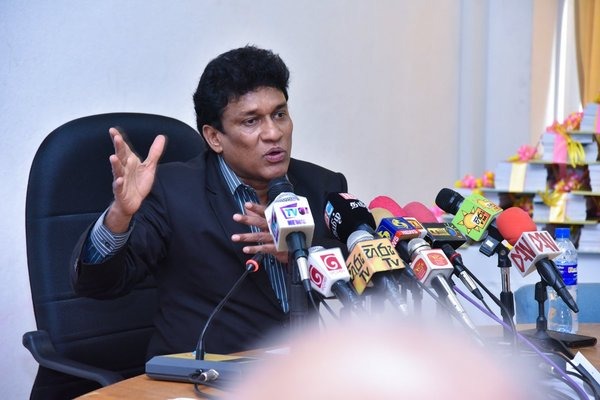
NPP MP Dr. Harini Amarasuriya, told The Island yesterday that however, there was a debate within her party whether the full implementation of the 13th Amendment would help solve the national problem.

She said that her party had no faith in the promises, and initiatives by President Ranil Wickremesinghe as regards the implementation of the 13th Amendment. “Why is he talking about the full implementation of the 13th Amendment at this juncture? He had ample time and opportunities. Therefore, we believe that his promises are only empty words and he will not take forward the implementation of the amendment,” Dr. Amarasuriya said.

Asked to explain the NPP stand on the full implementation of the 13th Amendment, Dr. Amarasuriya said: “It has been presented as a solution to the national problem. It is already there in the Constitution and we believe that it should be implemented, but we have a debate whether it could be a tenable solution for the national problem. Our standpoint is that a government with genuine intention of addressing the issues of Tamil people must bring about solutions to the national problem, and we have no faith in other parties, but only the NPP could do that.”

Posted in Uncategorized

Assist SL in securing IMF bailout, push for 13A

Leader of Tamil Progressive Party (TPA), MP Mano Ganesan and many other Tamil speaking political party leaders such as Rauff Hakeem, M.A. Sumanthiran, D. Sithadthan, Gajan Ponnambalam and Rishad Bathiudeen, who held talks with visiting US Under Secretary of State Victoria Nuland said they had a unanimous stand that President Ranil Wickremesinghe should demonstrate his credibility by matching his words with deeds and urged the US to assist Sri Lanka to secure the IMF bailout.

MP Ganesan elaborated that this is the President who has the benefit of the announced support of Opposition Leader Sajith Premadasa, Leader of prime ruling party Mahinda Rajapaksa, and the JVP Leader in implementing the 13A.

All Tamil speaking parties agreed that President Wickremesinghe should conduct separate discussions with parties representing North and East Tamils, Hill Country Tamils and Muslims and convene an All Party Conference thereafter, they told the visiting US Under Secretary of State.

He added that regarding addressing the issues, there shall be a step by step road map and US Under Secretary Nuland agreed to take these messages to President Wickremesinghe when discussing the economic crisis, ongoing US assistance to Sri Lankans, USD 240 million in new assistance last year alone, and the many ways both countries are working together toward an inclusive, prosperous and secure future for all Sri Lankans.

On the meeting held with the Tamil politicians, US Ambassador to Sri Lanka Julie Chung tweeted yesterday (1) that they held a positive meeting with parties on how the US can help Sri Lanka out of the economic crisis and to bring real-time reconciliation between communities with a genuine power-sharing agreement.

Posted in Uncategorized

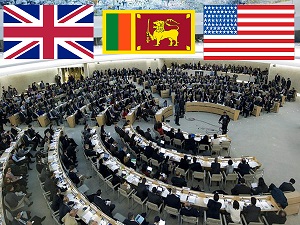
UK, US urge Sri Lanka to repeal PTA, decriminalize same-sex conduct

The United Kingdom and the United States have urged Sri Lanka to repeal the controversial Prevention of Terrorism Act (PTA) and decriminalize same-sex conduct.

The UK and US representatives made this appeal at the UN Human Rights Council’s Universal Periodic Review (UPR) Working Group when Sri Lanka’s human rights record were examined for the fourth time today (Feb. 01).

Sri Lanka is one of the countries reviewed by the UPR Working Group during its 42nd session in Geneva.

Sri Lanka’s first, second and third UPR reviews took place in May 2008, October 2012 and November 2017, respectively.

The 4th Cycle of the UPR commenced in November 2022 and Sri Lanka’s 4th UPR was taken up for consideration today. Argentina, Benin, Czechia, Gabon, Ghana, Guatemala, Japan, Paksitan, Peru, Republic of Korea, Switzerland and Zambia are among the countries reviewed from January 23 to February 03, under the UPR’s 4th cycle at the ongoing session.

Sri Lanka’s National Report under the 4th Cycle of the UPR was submitted on 22 December 2022 and provides a self-assessment on the steps taken since the last UPR in November 2017, to fulfill our voluntarily undertaken human rights obligations.

The process of preparation of the National Report was undertaken under the guidance of the Ministry of Foreign Affairs. Broad consultations were held with stakeholders from government and non-governmental organizations as well as the Human Rights Commission of Sri Lanka. Sri Lanka’s National Report is available here.

This year’s Review is taking place in a hybrid format. Due to the 75th Anniversary of Independence Day celebrations falling during the same period, Sri Lanka’s delegation to the Review is led by Foreign Affairs Minister Ali Sabry by means of a pre-recorded video statement.

The in-person delegation, led by Sri Lanka’s Permanent Representative to the United Nations in Geneva, Himalee Arunatilaka, comprises senior officials from the Presidential Secretariat, the Attorney-General’s Department, the Ministry of Foreign Affairs, and the Permanent Mission of Sri Lanka to the UN in Geneva.

The UPR was established by the General Assembly of the United Nations (UNGA) in 2006, as a State-driven voluntary peer-review process which provides the opportunity for each State to declare the steps taken at the national level to improve the human rights situation in that State and to fulfill their human rights obligations.

At the UPR, all 193 Member States of the UN are reviewed without any selectivity or discrimination. It is periodic and is repeated every four-and half years. Three sessions are held each year and 14 countries are reviewed in one session. As such, each Member State of the UN is reviewed every 4 years.

All UN member States, including Sri Lanka, have participated in 3 cycles of the UPR namely, in 2008 (first), 2012 (second) and 2017 (third).

Catholic Church to boycott Independence Day celebration

Sri Lanka’s Catholic Church has decided to boycott the 75th Independence Day celebrations on the 4th of February.

Speaking at a media briefing in Colombo earlier today (Feb. 01), Rev. Fr. Cyril Gamini took issue with the government’s move to allocate a sum to the tune of Rs. 200 million for the event, slamming it as a “crime against the people” and a “huge waste”.

Cardinal Malcolm Ranjith and the other members of the Catholic Church will not attend the Independence Day celebrations, he added.

The government has made plans to organize a celebration for Independence Day at a time when people are struggling with food insecurity, child malnutrition and job insecurity, Fr. Gamini said further, noting that daily power interruptions, collapse in the rule of law and violation of human rights are adding to the issues faced by them.

China has not done enough on Sri Lanka debt restructuring – US diplomat

The United States wants China to provide credible and specific assurances to the International Monetary Fund (IMF) along with other creditors to help Sri Lanka unlock a $2.9 billion bailout, a senior U.S. diplomat said on Wednesday.

Sri Lanka entered into a staff level agreement with the global lender last September but needs financing assurances from key bilateral lenders China and Japan before disbursements can begin.

India, the third significant lender, dispatched its financing assurances to the IMF last month.

“What China has offered so far is not enough. We need to see credible and specific assurances that they will meet the IMF standard of debt relief,” U.S. Under Secretary of State for Political Affairs Victoria Nuland told reporters.

“We, the United States, are prepared to do our part. Our Paris Club partners are prepared to do their part. India has made strong commitments that it will provide the credible assurances the IMF is looking for.”

The Export-Import Bank of China has offered Sri Lanka a two-year moratorium on its debt and said it would support the country’s efforts to secure an IMF program.

Sri Lanka, an island of 22 million people, is caught in its worst financial crisis since independence from Britain in 1948, with soaring inflation, a recession and currency depreciation over the last year.

“We want to see an IMF program as quickly as possible. That is what Sri Lanka deserves, that is what Sri Lanka needs,” Nuland added.

Source: Reuters

Posted in Uncategorized

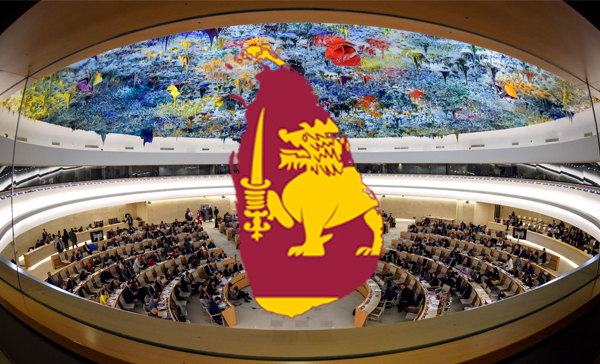
Sri Lanka up for Universal Periodic Review today (1) at UNHRC

Sri Lanka’s National Report under the 4th Cycle of the Universal Periodic Review (UPR) comes up for consideration by the UN Working Group on UPR on Wednesday 1st February 2023 during its 42nd Session in Geneva.

The Universal Periodic Review (UPR) was established by the General Assembly of the United Nations (UNGA) in 2006, as a State-driven voluntary peer-review process which provides the opportunity for each State to declare the steps taken at the national level to improve the human rights situation in that State and to fulfill their human rights obligations.

At the UPR, all 193 Member States of the UN are reviewed without any selectivity or discrimination. It is periodic and is repeated every four-and half years. 3 sessions are held each year and 14 countries are reviewed in one session. As such, each Member State of the UN is reviewed every 4 years.

All UN member States, including Sri Lanka, have participated in 3 cycles of the UPR namely, in 2008 (first), 2012 (second) and 2017 (third).

The 4th Cycle of the UPR commenced in November 2022 and Sri Lanka’s Fourth UPR is scheduled for 01 February 2023 during the 42nd session of the UPR Working Group, in Geneva.

The following countries will also be reviewed under the UPR’s 4th cycle at the 42nd Working Group, during the period 23 January to 3 February 2023: Argentina, Benin, Czechia, Gabon, Ghana, Guatemala, Japan, Pakistan, Peru, Republic of Korea, Switzerland, and Zambia.

Sri Lanka’s National Report under the 4th Cycle of the UPR was submitted on 22 December 2022 and provides a self-assessment on the steps taken since the last UPR in November 2017, to fulfill our voluntarily undertaken human rights obligations. The process of preparation of the National Report was undertaken under the guidance of the Ministry of Foreign Affairs.

Broad consultations were held with stakeholders from government and non-governmental organizations as well as the Human Rights Commission of Sri Lanka. Sri Lanka’s National Report is available at https://www.ohchr.org/en/hr-bodies/upr/lk-index

This year’s Review will take place in a hybrid format. Due to the 75th Anniversary of Independence celebrations falling during the same period, Sri Lanka’s delegation to the Review will be led by Minister of Foreign Affairs Ali Sabry by means of a pre-recorded video statement.

The in-person delegation will be led by Sri Lanka’s Permanent Representative to the United Nations in Geneva Himalee Arunatilaka and comprise senior officials from the Presidential Secretariat, the Attorney-General’s Department, the Ministry of Foreign Affairs, and the Permanent Mission of Sri Lanka to the UN in Geneva.