Basil says he is not part of the Government

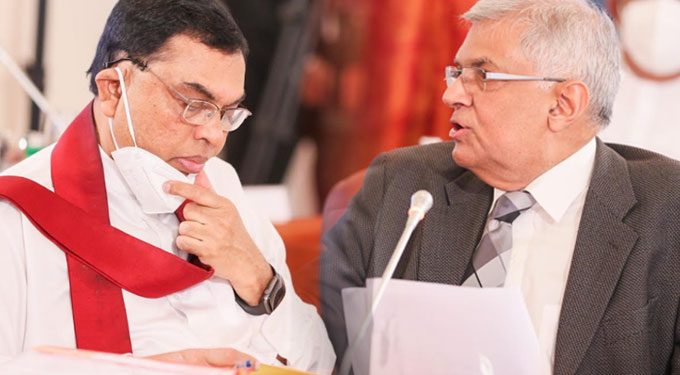
Sri Lanka Podujana Peramuna (SLPP) founder Basil Rajapaksa says he is not part of the Government.

Rajapaksa said this in response to questions raised from him during a visit to Kandy today.

The former Minister was asked about moves by the Government to postpone the Local Government (LG) elections.

“You will need to ask the Government that. I am not in the Government,” he said.

There have been allegations that Basil Rajapaksa is working with President Ranil Wickremesinghe in the Government.

The SLPP is part of the Government with a number of SLPP members in the Cabinet.

Basil Rajapaksa said the SLPP kicked off its campaign today for the LG polls.

He said the party will contest in all the districts as the SLPP in some areas and with other political parties in other areas.

Rajapaksa said the public will decide the future of the SLPP at the polls.

EC, political parties reach agreement on expenditure for election campaign

The Election Commission and around 85 political parties yesterday reached an agreement on the maximum amount which could be spent by individual candidates and parties at the local government election.

SLFP General Secretary Dayasiri Jayasekera said the agreement was to spend Rs. 15 per voter, of which the party can spend 60 percent of it per candidate.

“Total amount which could be spent will be computed by multiplying Rs. 15 by the total number of registered voters out of which 60 percent can be spent by the respective parties,” MP Jayasekera said.

UNP General Secretary Palitha Range Bandara also confirmed this and said all parties agreed on it.

Also the Chairman of Election Commission Nimal Punchihewa has told the political party representatives that the local government election will be held on March 9, 2023.

However CWC General Secretary Jeewan Thondaman said he had informed the Commissioner of Elections the election should not be held at this moment. “Time is not right to spend billions for the local polls. I am for elections but I am of the opinion that local government polls should not be held now,” he said.

Posted in Uncategorized

The ill-fated UK-Ceylon Defense Agreement of 1947 By P.K.Balachandran

The United Kingdom had decided to grant independence to Ceylon as part of the de-colonizing process following the end of World War II. But there was a condition attached it: independent Ceylon should allow the UK to retain its naval and air bases at Trincomalee and Katunayake respectively through a UK-Ceylon Defense Agreement.

The UK needed the bases to meet the emerging threat to its Empire from the USSR and also Communist China which was then looming in the horizon. As for Ceylon, it needed a British military presence to meet a perceived threat of an “invasion” from an independent India that was keen to play a dominant role in Asia.

But despite the shared strategic interest in the defense of the island, there were serious differences over the terms and conditions of the proposed Defense Agreement. The issues were: who will bear the cost of maintaining and staffing the bases; where will the money come from; under whose control will the bases be; and for how long will the arrangement last.

The UK and Ceylon did not see eye-to-eye on these. Both pleaded inability to bear the cost singly. Ceylon was poor and the UK had been devastated by the war. While Ceylon wanted to have overall control over the bases and the use to which they would be put, the UK wanted the bases to serve its geo-political interests in South East Asia as a whole, an objective that Ceylon did not share. Ceylon looked at the British military presence principally as a shield against a perceived “Indian invasion”, but the British ridiculed such an expectation and wanted the bases for resisting Soviet (and later Communist Chinese) inroads into South East Asia. Thus, geopolitical interests clashed.

However, because the dispute threatened to delay Ceylon’s independence, both sides felt a need to wrap up the pact by making the terms and conditions “vague” leaving the blanks to be filled later. It was also decided to state that the bases will be held by the British “in the mutual interest” of the two parties, thus assuring Ceylon that if it did not see a “mutual interest”, it could terminate the agreement. The Defense Agreement was signed in 1947 and Ceylon got independence in 1948.

In the years that followed, the geopolitical situation, across the world, got worse from the British point of view. Communist China had emerged in 1949 and the Korean war had begun in 1950. In this context, the UK began to press for filling-in the blanks in the 1947 Defense Agreement as per its interests. Initially, Ceylon was agreeable because the Soviets had irked it by vetoing its entry into the UN on the grounds that with British bases in it, Ceylon was not an “independent” country.

But during the talks, issues of funding and control came up. By this time, an additional factor had emerged – the Ceylon government was facing opposition from nationalist and Marxist forces due to burgeoning economic problems. This made it difficult to give any significant concessions to British military interests.

The story of the hard-nosed negotiations and the final derogation of the Agreement by the SWRD Bandaranaike government in 1957 is told in detail by Robert Barnes of York St.John University, UK, in his 2022 publication entitled: In the Mutual Interest’: The Making and Breaking of the United Kingdom-Ceylon Defence Agreement, 1947–1957 (Taylor and Francis).

In the first instance, Prime Minister D.S. Senanayake proposed that Ceylon purchase the land on which the bases were built and then lease them out to Britain. Britain agreed, but on the condition that it would be able to keep the bases as long as it required. However, the then Foreign Secretary, Sir Kanthiah Vaithianathan, subsequently told the British that the Ceylonese people would not allow precious land to be alienated to meet the needs of the British military. But Senanayake was more amenable. Due to the denial of citizenship to the people of Indian origin, he feared an Indian military intervention.

However, given the parlous state of Ceylon’s economy, Senanayake expected the UK to bear the cost of the bases. But the British rejected it and threatened to downsize the Trincomalee naval base. A worried Senanayake cited a threat to Ceylon due to the Korean war, and sought extensive assistance to Ceylon’s armed forces. But British Prime Minister Clement Atlee told him that Ceylon should first agree to purchase the land on which the bases stood and then make the land and all the facilities available to UK for as long as it was deemed necessary by the British military.

Subsequently, the British decided to give some financial assistance to Ceylon to defend itself. But it insisted that Ceylon buys the land on which the bases stood and that the proceeds would enable the UK to meet the cost of equipping and training the Ceylonese military. Senanayake agreed, but demanded the supply of two destroyers, one frigate, twelve minesweepers, and six seaward defense boats; equipment for one army battalion and two anti-aircraft regiments; and two regular and one auxiliary fighter squadrons. But the British rejected this and demanded BP 800,000 for the land on which the bases stood. In return, they said, they would give, free of charge, equipment worth BP 800,000. But this was not acceptable to Ceylon.

Ceylon then turned to the USA, which also wanted bases in Ceylon. But the US withdrew when Ceylon and Communist China signed the Rice-Rubber barter deal defying a US ban on sale of strategic material to China.

Talks on the UK-Ceylon Defense Agreement continued, but made no progress though Senanayake’s successors, Dudley Senanayake and Sir John Kotelawala, were both rightwing and pro-West. Meanwhile, the nationalist opposition to the stationing of the British military grew, which made Kotelawala say that Ceylon would not join any power bloc. Ceylon also refused to join the US-led South East Asia Treaty Organization (SEATO).

1956 was a watershed in the history of the Defense Pact talks. The leftist-nationalist SWRD Bandaranaike had come to power proposing full independence for Ceylon (not just a Dominion as Ceylon was at that time) and a non-aligned foreign policy. Meanwhile, the UK’s military misadventure over the Suez Canal had weakened its global stature. The mood in the UK was to shed some of its bases overseas. While Trincomalee was considered dispensable, Britain wanted the Katunayake air base and the telecommunications facilities on the island.

Bandaranaike proposed that the bases be held jointly with Ceylon having formal control. The UK wanted Ceylon to give concrete guarantees on which facilities the British could use and for how long. It also demanded a ‘fair price’ for any of the facilities that Britain was willing to hand over. But Bandaranaike forced the issue by publicly claiming that he had secured Ceylon’s absolute right to the bases and the withdrawal of 90% of the British forces. Britain was constrained to agree to shed formal control over the bases, though it still wanted the Royal Air Force to retain overflying and staging rights indefinitely.

It was finally agreed that the transfer of control of Trincomalee and Katunayake would take place in late 1957 and that the British withdrawal would be completed within five years. It was also agreed that Ceylon would pay £1.65 million over five annual payments during the withdrawal period.

The exchange of letters finally took place on June 7, 1957, “superseding rather than abrogating” the 1947 Defense Agreement, as Barnes put it. The transfer of control of the Trincomalee and Katunayake bases took place on 15 October and 1 November 1957 respectively.


The newly formed TNA to seek meeting with Indian PM

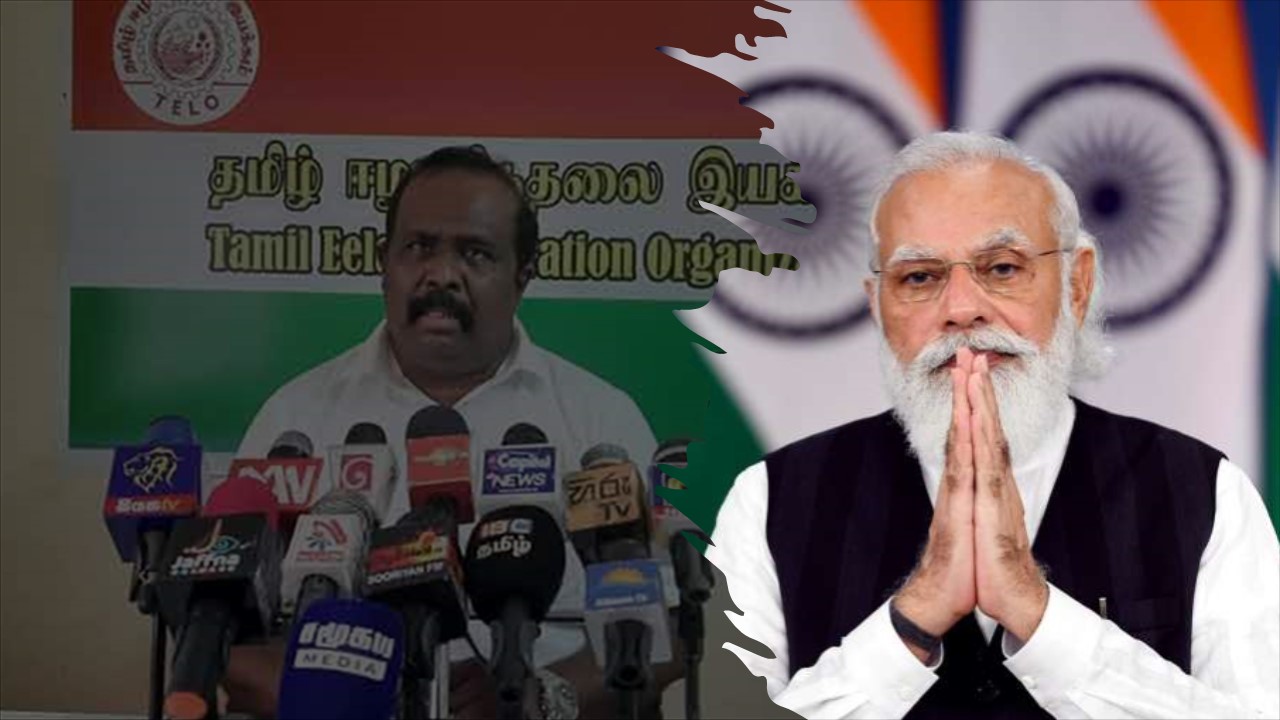
The newly formed Democratic Tamil National Alliance (DTNA), representing the two breakaway parties of the Tamil National Alliance (TNA) – the Tamil Eelam Liberation Organisation (TELO) and the People’s Liberation Organisation of Tamil Eelam (PLOTE) – would take necessary moves to meet Indian Prime Minister Narendra Modi post the Local Government polls, to hold discussions with regard to a suitable political solution and the implementation of 13th Amendment to the Constitution in Sri Lanka.

TELO Leader MP Selvam Adaikkalanathan told The Daily Morning yesterday (22) that his party would take necessary steps to obtain an appointment to meet PM Modi with regard to the above via Indian High Commissioner to Sri Lanka Gopal Baglay after the LG polls.

“Everyone is just talking about the implementation of the 13th Amendment. But if this is to happen, it is important to meet PM Modi and urge for it. Officials arriving from India would just highlight it, but it is important to actually implement it.”
He noted that his party would also highlight to PM Modi its long-term suggestion to have an Indian mediator in the ethnic talks.

Meanwhile, Indian Minister of External Affairs Dr. S. Jaishankar last Friday (20) highlighted the need for the full implementation of the 13th Amendment and early conduct of the Provincial Council elections.

The DTNA was formed in Jaffna last week with the representation of TELO, PLOTE,EPRLF, the Tamil National Party, and the Crusaders for Democracy (which comprises former Liberation Tigers of Tamil Eelam [LTTE] cadres).

Posted in Uncategorized

Constitutional Council to meet next Wednesday

A meeting of the Constitutional Council will be held next Wednesday (25) at 9.30 am, Chief of Staff and Deputy General Secretary of the Parliament Kushani Rohanadeera said.

Meanwhile, President Ranil Wickremesinghe appointed the non-members of Parliament as members of the Constitutional Council based on the nominations submitted by the Speaker with the agreement of the Speaker, the Prime Minister and the Leader of the Opposition in Parliament.

Accordingly, Dr. Pratap Ramanujam, Dr. (Mrs) Dilkushi Anula Wijesundere, and Dr. (Mrs) Weligama Vidana Arachchige Dinesha Samararatne have been appointed.
Dr. Ramanujam has served as a Member of the Public Service Commission and has served as the Secretary to several Ministries for over a decade.

Dr. Wijesundere is a doctor by profession and Dr. Samararatne is a law academic and works as a Senior Lecturer of the University of Colombo.

Posted in Uncategorized

Food inflation still very high at 59.3% in December 2022

The Department of Census and Statistics said that on a monthly basis, the Year-on-Year inflation of the food group was at a mammoth 59.3% in December 2022, although it reduced from 69.8% in November 2022. The Year-on-Year inflation of the non-food group also remained high at 59.0% in December 2022 from 60.4% in November 2022.

The overall rate of inflation as measured by NCPI on a Year-on-Year basis is 59.2% in December 2022 compared to November’s 65.0%.

Posted in Uncategorized

Opposition says LG polls will test Government popularity

The opposition says the Local Government (LG) elections will test the popularity of the Government.

Former Minister, Professor G.L Peiris said that the election is not just about electing local council members.

He said the 9th March election has more significance at a national level.

The former Minister said that the Government is fast losing popularity.

He said the public will judge the actions of the new Government at the LG polls.

Professor G.L Peiris, representing the Freedom People’s Congress, said that several attempts made by the Government to postpone the elections, have failed.

He said the Elections Commission has made it clear the elections will be held on 9th March.

However, he said the Government is attempting to look for reasons to postpone the polls.

Posted in Uncategorized

2023 LG election: Postal voting to end at midnight today

The acceptance of postal votes for the upcoming Local Government (LG) election is scheduled to end at midnight today (23 Jan.).

The accepting of postal votes from all eligible voters commenced on 05 January.

Meanwhile, the acceptance of cash deposits ended on Friday (20 Jan.), followed by the deadline for submitting nominations for the upcoming election, which was on Saturday (21 Jan.).

Although the Election Commission of Sri Lanka has convened all political parties and independent groups for a meeting, focusing on the 2023 LG election, tomorrow (24 Jan.), the leaders of independent groups contesting within Colombo were summoned to the District Secretariat today.

Further, the printing of ballot papers is also expected to get underway this week.

SL concerns over proposed Sethusamudram ship canal project BY P.K.Balachandran

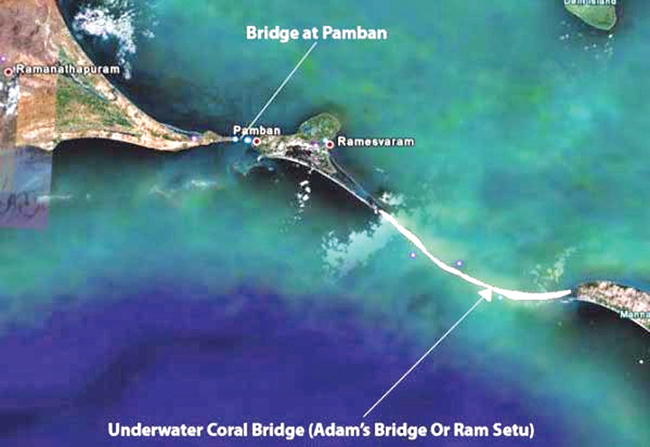
On January 12, the Tamil Nadu State Assembly unanimously adopted a government resolution urging New Delhi to immediately implement the long-pending “Sethusamudram project” which envisages a canal cut through the Gulf of Mannar and the Palk Strait to facilitate ship movement between the East and West coasts of India by the shortest route.

The proposal to cut a canal in the shallow sea dividing India and Sri Lanka to save on coast-to-coast journey time and promote the development of South Tamil Nadu, has been objected to in India on navigational, environmental and economic grounds. Since the project will have an impact on Sri Lanka too, objections have been raised in the island also.

Although Sri Lanka has an environmental impact assessment procedure for coastal conservation, the Sethusamudram project was not brought under its jurisdiction because it was to be within India’s territorial waters. But despite this, it is felt in Sri Lanka, that its environmental concerns have to be addressed given the proximity of the proposed canal to Sri Lanka. However, the Environment Impact Assessment (EIA) of the project carried out by India is said to have alluded to Sri Lanka only in passing.

Calls by Sri Lankan environmental groups for a joint Indo-Lankan Environmental and a Social Impacts Assessment fell on deaf ears in India, claim S. C. Withana and C. V. Liyanawatte of the Sir John Kotelawala Defence University in Sri Lanka, in their 2016 paper entitled: “Sethusamudram Ship Canal Project adverse to Sri Lanka?” Legal and Environmental Impact on Sri Lanka.”

They say that in 2005, Sri Lanka had sought the establishment of a standing joint mechanism for exchange of information on the project. It wanted to set up a common database on hydrodynamic modelling, environmental measures and the impact on fish resources, fisheries-dependent communities and also on measures to cope with navigational emergencies. They also contend that the UN Convention on the Law of the Sea (UNCLOS) had been violated.

Like the Indian environmental activists, Withana and Liyanawatte point out that the environmental impact study carried out by the National Environmental Engineering Research Institute (NEERI) of India in 1988 and the technical feasibility report carried out for the Tuticorin Port Trust (TPT) had failed to pay attention to the latest studies carried out by specialist groups on sedimentation dynamics in the Palk Bay and ignored major risks inherent in that cyclone-prone area.

Since the project is to be implemented in an ecologically sensitive area, the researchers quote Article 15 of the Rio Declaration on Environment and Development of 1992 which says: “In order to protect the environment, the precautionary approach shall be widely applied by States according to their capabilities. Where there are threats of serious or irreversible damage, lack of full scientific certainty shall not be used as a reason for postponing cost-effective measures to prevent environmental degradation.”

The executive summary of the EIA on the canal project itself says that the 83 km deep water channel is to be built in a biologically rich and highly productive sea area. There are over 3600 species of plants and animals, including 117 species of corals and 17 species of mangroves. Further, the EIA report states that this area is home to rare species such as sea turtle, whales, dolphins and sea cows. The sea cow is a rare and endangered species migrating with the change of seasons.

“Dredging the canal could stir up the dust and toxins that lie beneath the sea bed, affecting marine life,” the Lankan researchers say. The canal will damage coral reefs too. Further, by damaging the ecology of the zone, there could be changes in temperature, salinity, turbidity and flow of nutrients, leading to high tides and more energetic waves and hence coastal erosion. The pattern of sea breeze and rainfall pattern will be altered they say echoing Indian environmentalists. R.K. Pachauri, who was Chairperson of the Intergovernmental Panel on Climate Change (IPCC), had said that the project would not be “economically and ecologically viable.”

Resort to UNCLOS

Withana and Liyanawatte suggest that Sri Lanka could use the UN Convention on the Law of the Sea (UNCLOS) for getting redress.

Article 235 (1) of UNCLOS says that: “States are responsible for the fulfillment of their international obligations concerning the protection and preservation of the marine environment.” Art. 194(2) recognizes that: “States shall take all measures necessary to ensure that activities under their jurisdiction or control are so conducted as not to cause damage by pollution to other States and their environment and that pollution arising from incidents or activities under their jurisdiction or control does not spread beyond the areas where they exercise sovereign rights in accordance with this Convention.”

Article 235 (3) mentions that: “With the objective of assuring prompt and adequate compensation in respect of all damage caused by pollution of the marine environment, States shall cooperate in the implementation of existing international law and the further development of international law relating to responsibility and liability for the assessment of and compensation for damage and the settlement of related dispute.”

The Sri Lankan researchers point out that Section 2 of part XV of UNCLOS has general provisions dealing with the settlement of disputes by negotiations. Article 283 says that “when a dispute arises between state parties concerning the interpretation and application of the convention, the parties to the dispute shall proceed expeditiously to an exchange of views regarding its settlement by negotiations or other peaceful means”.
Withana and Liyanawatte say that Sri Lanka and India could negotiate for a dispute settlement mechanism. Sri Lanka could point out that India had not exchanged views regarding the project with Sri Lanka.

“If India is looking at continuing the project notwithstanding the objections of Sri Lanka, Sri Lanka can move on to the compulsory procedures entailing binding decisions according to Article 287. Sri Lanka can move on to a settlement of disputes by compulsory procedure through the International Tribunal for the Law of the Sea (ITLOS),” they suggest. In 2003 Malaysia had complained against Singapore over ‘Land Reclamation’ and got a ruling in its favor.

Be that as it may, the implementation of the Sethusamudram Ship Canal Project (SSCP) is not at all certain although the Tamil Nadu State Assembly has passed a resolution on it unanimously, with even the Bharatiya Janata Party (BJP) supporting it.

Firstly, the environment-protection lobby is strongly against it. Shipping experts have maintained that constant dredging will be needed and the time saved by using the canal rather than taking the circuitous route around Sri Lanka will be negligible as the speed of ships will have to be curtailed drastically when traversing the canal. Experts have even said that the huge expenditure to be incurred in cutting the canal and maintaining it cannot be justified.

Lastly, Dr. Subramanian Swamy, a vocal and activist BJP Member of Parliament, had gone to the Supreme Court against the project, citing religious objections. His plea was that the canal will cut the “Rama Sethu”, which is a string of limestone shoals Hindus believe constituted the bridge Hanuman had built to enable Rama and his army to cross over to Lanka to fight Ravana according to the epic Ramayana. The shoals are also said to be of importance in Abrahamic religions for they are believed to be Adam’s footprints. Hence the English name ‘Adam’s Bridge’ for Rama Sethu.

The Supreme Court had stayed the project in 2007 due to Swamy’s petition. In 2018, the Indian government told the court that it intends to explore an alternative alignment so that no damage is done to the Rama Sethu. That alternative has not been worked out yet.

Sri Lanka local govt polls: president’s party adamant time is not right for elections

Amid some lingering uncertainty over the timely conduct of Sri Lank’s local government polls scheduled for March 09, the United National Party (UNP), headed by President Ranil Wickremesinghe, maintains that now is not the time for an election.

UNP parliamentarian Vajira Abeywardena, a long-time Wickremesinghe loyalist, told reporters on Monday January 23 that the party is disappointed that an election is being held at a time that is not conducive to the conduct of an election.

“The election is not a priority for the people. The crisis is still not over,” Abeywardena said, speaking at an event.

Sri Lanka’s national election commission has announced that the local government polls will be held as scheduled on March 09 for 340 municipal councils, urban councils and pradeshiya sabhas. However, accepting nominations for the Kalmunai Municipal Council has been suspended following an interim injunction issued by the Supreme Court.

Both the UNP and sections of the ruling Sri Lanka Podujana Peramuna (SLPP), which have teamed up to contest some of the local bodies, continue to insist that now is not the time for elections, despite both parties submitting nominations and placing deposits for the polls.

The government, however, claims that Sri Lanka cannot afford an election at this juncture. The local government polls is estimated to cost around 10 billion rupees.

Abeywardena said an election is taking place at a time when even government workers’ allowances are being taxed.

“It would’ve been better to stop the election and cancel that tax. The private sector has also collapsed,” he said.

An election in March will also affect tourism, with many more tourist arrivals anticipated between February and April, he said.

“If an election process begins again, tourism businesses and hotels that suffered for three years will collapse once again,” the national list MP said that

“If the country is destroyed once again, it is your future that will be destroyed,” he added.

Meanwhile opposition the National People’s Power (NPP), a leftist outfit headed by the Janatha Vimukthi Peramuna (JVP), who some analysts predict will fare well at the upcoming polls, is adamant that the election go ahead.

NPP legislator Harini Amarasuriya said at a public event that an opportunity has presented itself to end 75 years of “corrupt rule”.

“The 9th is an unlucky day for these rogue leaders. But a very lucky day for citizens.

“March 09 is the day the first step will be taken towards establishing a people-centric administration elected by the people,” she said.

Posted in Uncategorized