Court orders Army to produce surrendered LTTE member

The Vavuniya high court has ordered the Army to produce an LTTE member who had surrendered at the end of the war, in court by next year.

The court on December 16 took up habeas corpus petitions filed by the wife of one of the missing, Selliah Vishwanathan, said lawyer K.S. Ratnavel.

The lawyer described the order as a landmark instance in the country’s judicial system.

Previously at the Mullaitivu magistrate’s court, the Army said it had a list of the surrendees, but failed to submit any document.

The Vavuniya high court accepted the petitioner’s allegation that those who had surrendered were in the Army’s custody.

They should be produced before the court by March 2023 or reasons relating to their enforced disappearances must be explained, said the court.

Posted in Uncategorized

UNHCR delegation calls on Defence Secretary

A delegation of the United Nations High Commissioner for Refugees (UNHCR) has called on the Secretary to the Ministry of Defence General Kamal Gunaratne at the Defence Ministry.

The delegation was led by UNHCR Director- Regional Bureau for Asia and the Pacific Indrika Ratwatte.

The Defence Ministry said upon extending a warm welcome the Defence Secretary had a cordial discussion with the UNHCR delegation.

The UNHCR delegation included Menique Amarasinghe (Head of National Office) and Sanjitha Satyamurthi.

Military Assistant to the Defence Secretary Col. Rasika Gunasena was also present at the occasion.

India’s Lines of Credit to Sri Lanka crosses US$ 3.2 billion

India’s Lines of Credit to Sri Lanka has crossed US$ 3.2 billion so far, according to figures released by the Indian High Commission in Colombo.

The High Commission said that India and Sri Lanka enjoy a multi-faceted and multi-sectoral partnership.

In line with its ‘Neighbourhood First’ policy, Government of India’s assistance to the people of Sri Lanka is extended in various forms, including in implementation of various projects under concessional Lines of Credit. This assistance continues even in the current situation.

Till date, Lines of Credit worth about US$ 3.2 billion have been extended to Sri Lanka in diverse sectors including railways, infrastructure, defence, renewable energy, supply of petroleum, fertilizers, etc.

Separately, in March 2022, Government of India also extended a concessional Credit Facility of USD 1 billion to GOSL through the State Bank of India for supply of essential items like food, medicines, fuel, etc.

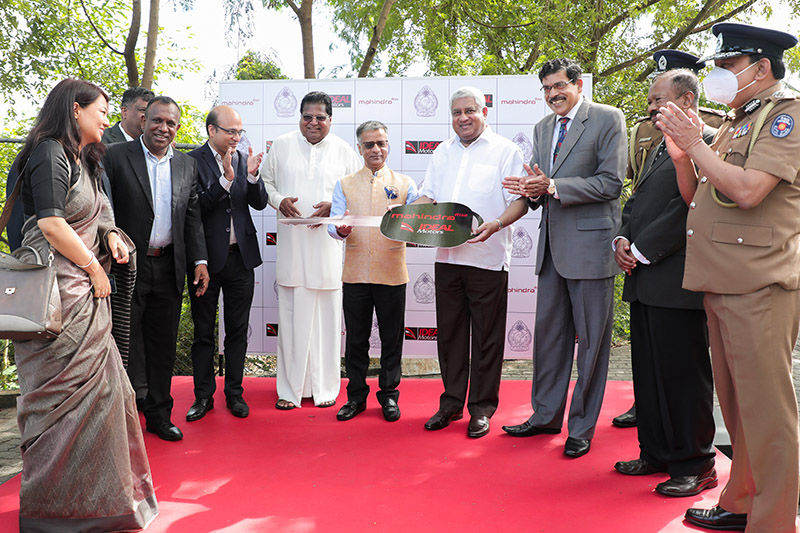
Yesterday, the High Commission handed over 125 SUVs manufactured by Mahindra and Mahindra Company of India. The 125 SUVs constitute the first batch of the planned supply of 500 vehicles for Sri Lankan law enforcement agencies and armed forces under an existing Line of Credit of US$ 100 mn extended by the Government of India to Sri Lanka sometime ago.

These vehicles with state of the art facilities will help address Sri Lanka’s requirements and augment capacities across the country, the Indian High Commission said.

The vehicles were handed over ceremonially by the High Commissioner of India to Sri Lanka, Gopal Baglay to Minister of Public Security, Tiran Alles in the presence of senior officials of the Ministry including Secretary to the Ministry of Public Security S. Hettiarachchi and Inspector General of Police Mr. C.D. Wickramarathne.

Solving a problem of over 50 years in 50 days BY M.S.M .Abub

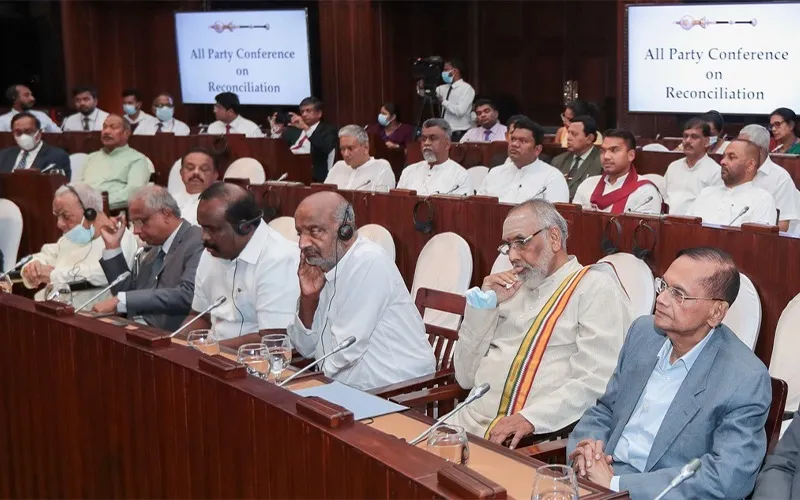
President Ranil Wickremesinghe has proposed to all political parties in Parliament to get together to find a solution to the decades-old ethnic problem before Sri Lanka’s 75th Independence Day which falls on February 4 next year.

Interestingly, Tamil political parties based in the Northern Province while commending the President for his overture have demanded him to fulfil the three requests they have put forward, before January 31, four days before his deadline.

The President during the budget debate in Parliament stated that he wished to find a lasting solution to the ethnic problem and called on the political parties representing the Parliament to get together in this endeavour. He also gave the undertaking to meet the parties after the budget is passed. He had convened an all-party meeting on December 13 accordingly.
The leader of the Pivithuru Hela Urumaya, Udaya Gammanpila says President Wickremesinghe is going to solve within 40 days a problem which is more than 40 years old. (In fact, the president is attempting to do so in about 50 days from December 13.)

The leader of the Pivithuru Hela Urumaya, Udaya Gammanpila says President Wickremesinghe is going to solve within 40 days a problem which is more than 40 years old.

On the same day, before the meeting with the President was held, the North-based Tamil parties had decided during a meeting among them to place three demands before the President setting January 31 as an ultimatum for them to be met.

Firstly, to stop land grabs in the Northern and Eastern Provinces by the armed forces and the state institutions while releasing all lands so acquired earlier by them in those two provinces, secondly, to hold the provincial council elections forthwith after implementing all provisions in the Constitutions and other laws in respect of power devolution and thirdly, to implement power devolution under a federal framework through a new Constitution are the three demands.

The professed intention of both sides seems to be good. Despite the question remaining whether resolving the ethnic issue within about 40 days is realistic, nobody can blame the President for such an intention. Tamil parties, similarly have the right to assume that a common stand on federalism could be achieved within the same period even though it has been the focal point of a debate since the 1940s.

The Tamil National Alliance (TNA) Parliamentarian M.A. Sumanthiran stated that the issue could be resolved within a day if all stakeholders made a genuine effort, as every aspect of the problem has been discussed over the years. True, that would be a valid point only with the condition he laid down with it; “if all stakeholders made a genuine effort.”

If the Tamil leaders are concerned about the private lands in the two provinces that have been occupied by the armed forces during the war between them and the Liberation Tigers of Tamil Eelam (LTTE), that could be resolved with a stroke of a pen by the President. They must be returned to their legitimate owners. However, it is not illegal for the armed forces and the state institutions to use state lands wherever in the country, if proper procedures are followed.

A provincial police division has to be created under a Deputy Inspector General of police to grant police powers to provincial councils. And the types of weapons that are assigned to that division have also to be decided. During the war, the concern was that the provincial police force might side with the Tamil rebels, but the possibility of the LTTE being revived or another Tamil armed group emerging from among the youth in the north and the east is extremely remote.

Their second demand – to hold the provincial council elections forthwith after implementing all provisions in the Constitutions and other laws in respect of power devolution – in fact, legitimate, since they are requesting what is in the book. It is a well-known fact that the Constitutional provisions on provincial councils are not implemented. Especially, the mechanism for the implementation of land and police powers which have been devolved under the 13th Amendment to the Constitution has not been created yet, even 34 years after that amendment was passed.

A provincial police division has to be created under a Deputy Inspector General of police to grant police powers to provincial councils. And the types of weapons that are assigned to that division have also to be decided. During the war, the concern was that the provincial police force might side with the Tamil rebels, but the possibility of the LTTE being revived or another Tamil armed group emerging from among the youth in the north and the east is extremely remote.

Even Ven. Athureliye Rathana Thera during the inaugural meeting of his Sri Lanka National Council (SLNC) on February 28, 2017, told in the presence of the then President Maithripala Sirisena that police and land powers should be granted to the provincial councils, now that the war is over. Interestingly, he was then a Member of Parliament representing Jathika Hela Urumaya (JHU) and no protesting voices were heard against his suggestion.

The 13th Amendment requires a Land Commission in order to practically grant land powers to provincial councils. Despite the land has historically been a sensitive issue, the Supreme Court has allayed much of the fears that were instilled in the minds of the Sinhalese by a ruling given in 2013. Overturning two previous rulings by Chief Justices Sarath N Silva and Shirani Banadaranayake, Chief Justice Mohan Peiris ruled on September 26, 2013, that land was vested in the people or the Central Government to be bequeathed or divested to the provincial councils, at their request and according to law.

Chandrika Kumaratunge when she was the Chief Minister of Western Province had been championing the idea of granting police and land powers to provincial councils and was blaming previous and then Presidents for not issuing the relevant gazette notifications. Ironically, she too was not prepared to issue those gazettes during her subsequent two consecutive tenures as President since 1994.

Making demand to President Ranil Wickremesinghe to hold provincial council elections is interestingly appropriate, as it was his government’s actions that deferred the provincial council elections indefinitely in 2017. His government then in a controversial manner introduced a mixed electoral system for provincial councils after which it also refused to ratify the relevant delimitation report in Parliament with even the minister in charge of provincial councils voting against the report. Then a committee headed by him was to review the report and present its report in two months which did not happen. Ironically, the provincial councils are the only mechanism that is at hand to address the ethnic issue that the President is attempting to resolve now within a short period.

Tamil parties’ third demand – to implement power devolution under a federal framework through a new Constitution – is their lasting solution to the national question or the ethnic problem. It is not clear if an agreement could be arrived at by the parties in Parliament in this regard before January 31, without running into controversies over federalism, despite there being occasions in the past where this matter had been agreed upon. It must be recalled that the United National Front (UNF) government led by Prime Minister Ranil Wickremesinghe and the LTTE agreed to explore a solution under a federal framework during the third round of peace talks between them on December 1, 2002, in Norwegian Capital Oslo. It must also be recalled that no party in the south protested against that agreement. It was when the LTTE announced that they withdrew from the talks in April 2003 that the southern parties collectively expressed concern.

However, times have changed; people have crisscrossed over to various parties, making it difficult to understand what politicians mean by policies and principles; some political parties like the JVP are changed in respect of the ethnic problem; the pressure exerted by the war on the southern leaders has eased; Tamil leaders are also in a position to take decisions without being killed; southern nationalists are disunited and in disarray and Wickremesinghe who spearheaded the peace talks then is more powerful as the President now than what he was then.
Yet, the question is remaining whether the Tamil parties’ January 31 ultimatum and Wickremesinghe’s February 4 ultimatum are realistic.


All Party Conference, Division Among Tamil Politicians & The Ethnic Question

A Journalist from Colombo asked me: There seems to be a polarisation among you Tamil Politicians after the President invited you for discussions on the ethnic question. Some have condemned you “Et tu Brute” for attending the Conference. Do you think apart from dividing the Tamil politicians anything constructive will come out of this exercise?

My response was: The division among Tamil Politicians is not a strange phenomena. Their keen intellect and selfish motivations keep them always divided. They air many varied views. For example many think Ranil is a Fox and therefore Tamils must not trust him and go for discussions. That thought is erroneous. What comes by refusing to discuss or refusing to engage? Our points of view would be ignored or lost to the government and to its Leader. So the polarisation is a fact. But it is not recent. It is endemic among Tamils. We have to proceed despite such organic inheritance if we are to find a solution for our affected people. Our problems are over seventy years’ old.

Refusing to participate in a discussion takes us nowhere. Some have asked why we did not stipulate a condition that unless the President is prepared to grant federalism we would not participate in any discussion. The discussion that took place on 13th instant was not with the leaders of Tamil Parties only. It was with all Party Leaders. It was a preliminary gathering to initiate discussions on the ethnic problem with the consent and concurrence of all Parties represented in Parliament. Majority of Party Leaders Sinhala, Muslim and Upcountry attended the meeting. Refusing to attend such a meeting would have only hardened the feelings and reactions of the leaders of other communities. Nothing would have prevented the Government from continuing with the Meeting with the available Tamil Speaking Party leaders including the Muslim Parties and Upcountry Tamil Parties. Have the Leaders of Tamil Parties from the North and East been elected only not to present their views to a Government in power, allowing only quislings from the North and East to air our People’s views? Are these critics hand in glove with the quislings?

Furthermore boycotting does not solve problems. Engaging does. There were many complicated problems such as the opening of the Bustand at Vavuniya and the problems of the Private Bus Owners and CTB which we were able to solve when I was Chief Minister, Northern Province, because the Parties were prepared to engage with each other under our facilitation. Each Party aired their views and their fears and we as facilitators were able to sort them out.

Some ask us even after publicly saying that India should be brought in to facilitate discussions why we went for discussions without stipulating that condition. Simple answer is that we have not reached that stage yet. We are still at the point of understanding our immediate needs and the manner of solving them. Stopping land grabbing in the North and East is an immediate need. Reviewing the numbers of the Military and the articulation of the need to keep a Military in such large numbers in the North and East are responsibilities of the government. We cannot get relief/answers to these questions if we boycott.

It would be premature to call in India at this stage. India’s role would be absolutely essential at the time when the existing Constitution is to be changed. Any attempt at changing the present Constitution must ensure that the role of India at the time of evolving the Thirteenth Amendment to the present Constitution is not lost sight of. At that time Sri Lanka needed the services of India very badly. The LTTE were in a commanding position then. India signed the Indo-Sri Lankan Agreement of 1987 by implication on behalf of the Tamils of Sri Lanka. Any change in the existing Constitution must ensure a greater, independent status to the Tamils. At that stage of deliberations we should no doubt ask for the facilitation of India.Indeed we would! There is no question of the Government of Sri Lanka trying to avoid India and grant us less than what has been granted under the 13th Amendment under a Unitary Constitution. We have already stressed the need to have a Confederal Constitution for Sri Lanka.

In fact there had been a draft Constitution prepared during the Yahapalanaya Government to which TNA too was a Party. I have been asking Mr. Sumanthiran to send me a copy of same. But he had delayed sending it until the time of our deliberations on the 13th instant. We had a look at that draft.

1. The proposed Yahapalanaya constitution we found is worse for us, the Tamils, than the current Constitution.

2. The draft given to me is not a federal constitution, but a unitary constitution with a seemingly powerless “Second Chamber” added (Art. 111). We could find no actual powers accorded to this Second Chamber. Ekiya under any interpretation implies unitary. Unless we have an eksath constitution giving equal rights to all communities we just cannot accept this so called ekiya draft constitution. I can understand why Mr. Sumanthiran delayed sending a copy of same to me.

3. Overall, this proposal is burdened with procedural specifics, and often simply repeats the current constitution’s provisions in more flowery words. There is little substance in the proposals.

Let me elaborate – Inter alia (a) Art. 14(3)(a)(para 2) of the proposed constitution openly allows for non-arbitrary discrimination against non-citizens. This is not good for the Tamil diaspora – but more to the point, it could be a rationale for treating foreign investors poorly, and could violate trade and investment treaties that contain non-discrimination provisions. (b) Unitary or Federal State? It is certainly Unitary. Article 1 says it would be undivided and indivisible. That would mean the continuance of the hegemony of the Sinhalese throughout the Island. (c) Article 4 gives powers to the Central Government to acquire territories and legalise illegal land grabs. The continued usage by outsiders after 2009 would give the Government the right to legalise their illegal usage. Furthermore this Article repeats the Sixth Amendment shamefully.(d) Most land rights seem to be transferred to the Central Government. (Vide Article 295 et seq.)(e) Buddhism has foremost place, with dignity to other religions, but not equality. At least the North and East could be allowed to be sane, sensible and secular (f) In the proposed Constitution: “Where a statute is enacted by the Provincial Council, it shall be forthwith referred to the Governor for assent.”(Art. 245(1)).Governor means nominee of the President or the Central Government. Where is the power sharing contemplated? By implication all Laws by the Province would be under the scrutiny of the Central Government. Theoretically the Central Government could sabotage the progress of the Provincial Administration. This happened to us when I was Chief Minister. An International Company called in, to grow vegetables and fruits for export was refused permission on non existing or false grounds.

Therefore we must be careful that those among us who helped to bring out this draft would not compromise our rights and powers. At that time we need to call upon India to help.

Whether anything constructive would come out of this process would depend upon us. The Government cannot be allowed to bamboozle its way to inform the World that we have compromised on our essentials. We need a confederal constitution with the rights of the majority Tamil speaking people of the North and East confirmed and ensured. Of course within the Tamil speaking areas there could be the Tamil and Muslim divisions. As for the Upcountry Tamils their rights as minorities in the Sinhala areas must be adequately ensured under a confederal constitution. Switzerland is confederal and has 20 cantons which function independently. Switzerland is smaller than Sri Lanka in its area. Confederal system ensures every community occupying defined areas in majority would be responsible for their governance and administration with minimum interference from the Centre. Unlike the other minorities in Sri Lanka the Tamils of the North and East are not minorities in their traditional areas of residence. They have been majority in their homelands continuously from over 3000 years. Despite recent occupation by members of the majority community with State assistance within the Eastern Province and the stupendous population boom among the indigenous Muslims of the Eastern Province, still the Tamils of the North and East are the majority community in the North-East.

If the Government does not view our problems sympathetically or tries to cajole or coax us to accept an Unitary Constitution, or refuses the participation of India as a facilitator, we would at that stage have no alternative but to appeal to the International Community to hold a plebiscite in the North and East under their supervision. Of course we would not make secession an option. It would be whether a confederal or unitary constitution that the North and East want. Under a confederal system the Muslim interests in the East and the Upcountry Tamils’ interests in the Hill Country would no doubt be given recognition and ensurance.

We have therefore engaged ourselves with the Government in finding a solution to our problems which have lasted for over seventy years. How cunning and dubious the Government is, is of no consequence so long as we are firm in our desire to get the best for our People. I have confidence that something constructive will come out of this exercise.

*Justice C.V. Wigneswaran M.P.

Posted in Uncategorized

China’s Chargé d’affaires calls on the President

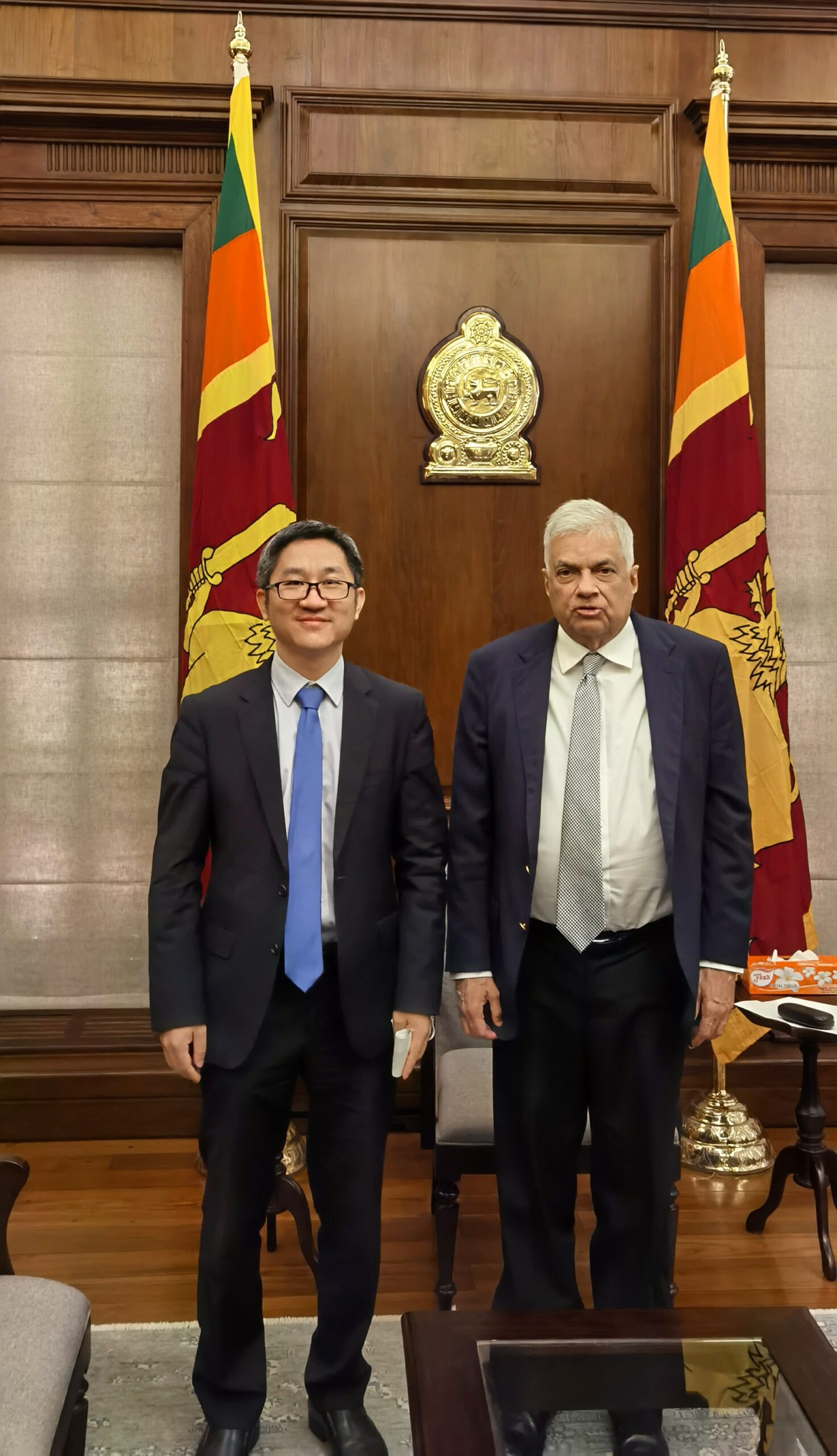
China’s Chargé d’affaires Hu Wei called on President Ranil Wickremesinghe yesterday (21).

The Chinese Embassy in Colombo stated that the President and the Chargé d’affaires reviewed recent fruitful discussions on Sri Lanka’s debt issue both bilaterally and multilaterally.

The Embassy said the President commended the continued support by the Chinese government and banks.

Posted in Uncategorized

LG Polls gazette on Monday?

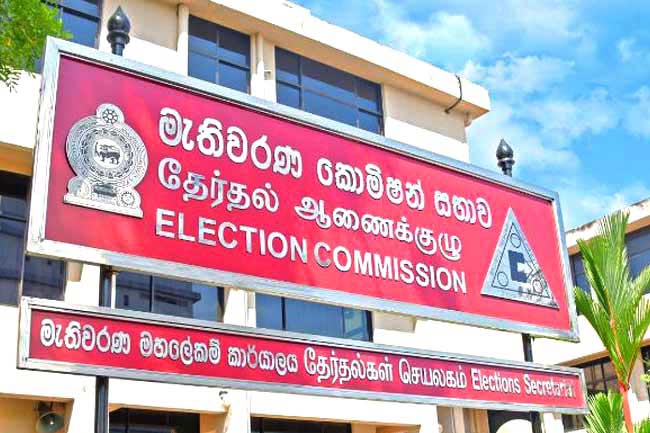
The gazette notification declaring the conduct of Local Authorities Election is likely to be issued on Monday (26), according to Election Commission sources.

The National Election Commission has also summoned all Deputy and Assistant Election Commissioners in all districts to Colombo, for a discussion tomorrow, on the conduct of the Local Authorities Election.

The discussion will take place at 10am tomorrow at the Election Secretariat in Rajagiriya. The summoning notice was issued by the Director General of Elections, Saman Sri Ratnayake.

The Election Commission noted that they expect to discuss the conduct of the Local Authorities Election at length.

Meanwhile, earlier this month, the Commission said an announcement on the conduct of the election will be made in the last week of December.

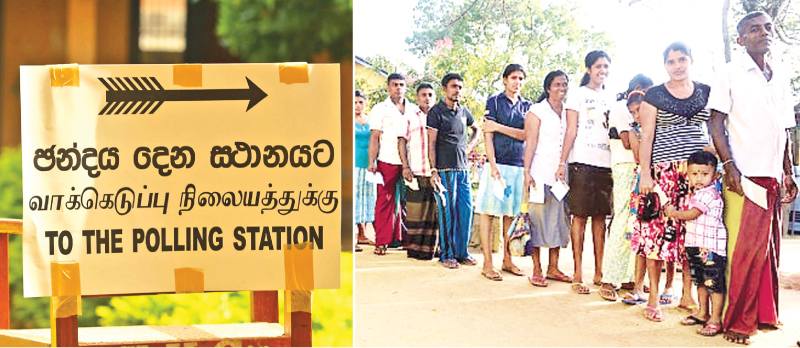
The 2023 Local Authorities Election is scheduled to be held based on the certified 2022 electoral register.

Representatives for 341 Local Government Bodies will be elected at the election.

Returning Officers for LG Polls appointed

The National Election Commission has appointed Returning Officers and Assistant Returning Officers for all administrative districts for the conduct of the Local Authorities Election.

The Commission has made the appointments by exercising the powers vested in the Election Commission under Section 4(1) of the Local Authorities Elections Ordinance.

Accordingly, a gazette extraordinary has been issued by the Election Commission dated 21st of December.

According to the gazette, respective District Secretaries or Government Agents have been appointed as Returning Officers while Deputy Commissioners or Assistant Commissioners of Elections have been named Assistant Returning Officers of respective districts.

The National Election Commission is expected to make an announcement pertaining to the Local Authorities Election next week.

State employees in SL behave like kings – Korean official

The Executive, Legislature, and Judiciary of Sri Lanka’s democratic political system and the education system need to be reformed and the mindset of the people changed to see any development in the country, Korea Disaster Relief Foundation (KDRF) President Cho Sung Lea said yesterday.

While addressing a meeting to elaborate on how South Korea became one of the most developed and powerful countries in the world in just 40 years and the way they were willing to help Sri Lanka overcome its current economic downfall, Lea requested the government to start “new village projects.”

The meeting was held at the Social Empowerment Ministry yesterday.

“The new village projects are the types of projects that a country should implement from the ground to become a developed country,” he said.

“In South Korea, developing projects were initiated by villages. We used to build all roads so that people could use them efficiently and quickly. The South Korean Government funded to implement of such projects,” Mr Lea said.

“If Sri Lanka wants to become a developed country, the thinking pattern of the people should also change. For that, the education system should be changed,” he said.

“If the teachers do not change, there is no hope for Sri Lanka. Therefore, first, the thinking patterns of the teachers should be changed before changing the thinking patterns of the people,” he said.

“The teachers should know how the children in Sri Lanka are living and what they are experiencing. We do not need better and brand-new buildings for educational purposes. All we need are good teachers,” Mr Lea added.

“There should be a reform of State officials. Never think that politicians are the most respectable people in the country. In South Korea, the State officials used to greet every person received at any State institution, But the situation in Sri Lanka is very different,” he said.

“The people of a country is sovereign. But in Sri Lanka, State employees behave like kings. Therefore, in that way, Sri Lanka has become a different country,” he added.

Posted in Uncategorized

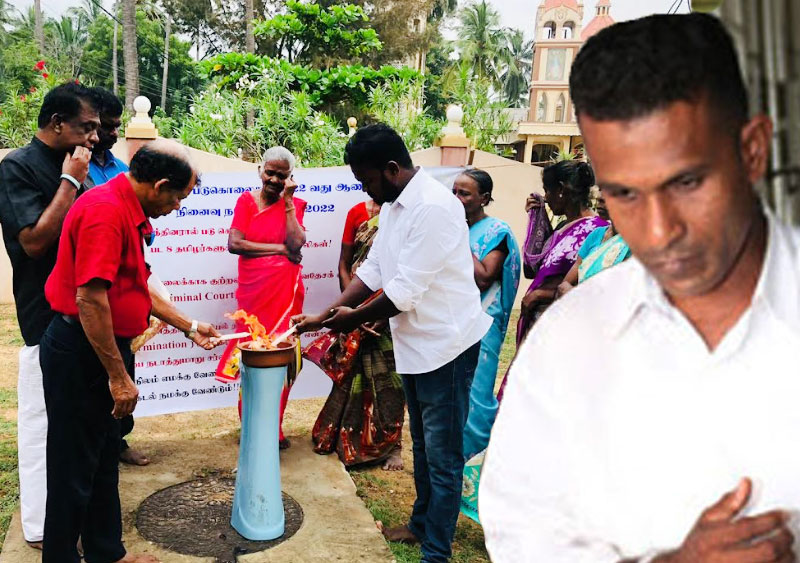
Eight civilians killed in 2000 remembered

Relatives and friends have remembered eight Tamil civilians murdered at Mirusuvil in Jaffna 22 years ago.

Sunil Rathnayake, the Army soldier who was the only person to have been convicted of the killings and sentenced to death, was pardoned by Gotabaya Rajapaksa.

Former MP M.K. Sivajilingam and the chairman of Chavakachcheri Pradeshiya Sabha too, attended the remembrance event in front of the Mirusuvil church yesterday (20).

R.M. Sunil Ratnayake of the Gajaba Regiment was sentenced to death by a high court, a ruling upheld by a five-member Supreme Court panel.

However, he was pardoned by Rajapaksa in March 2020, which came in for strong criticism by the United Nations and other international agencies as well as 22 local organizations.