US delegation led by Principal Deputy Assistant Secretary at Defence Ministry for talks

A US delegation that arrived in the country on Tuesday (14) night aboard two US Air Force planes had met with State Minister of Defence Premitha Bandara Tennakoon and Secretary of Defence General Kamal Gunaratne (Retd).

Principal Deputy Assistant Secretary of Defense for Indo-Pacific Security Affairs Jedidiah P. Royal led the delegation that arrived in the country on Tuesday (14) night aboard two US Air Force planes.

The US delegation met with the State Minister of Defence Premitha Bandara Tennakoon and Secretary of Defence Ministry General Kamal Gunaratne (Retd) at the Defence Ministry.

A statement noted that the discussions were centred on boosting US – Sri Lanka ties.

In addition, security cooperation enhancement, and regional defence stability enhancement were also discussed.

How the Chinese are destroying Sri Lankan fishing community

The beautiful island nation Sri Lanka, also known as ‘the pearl of the Indian ocean’, has been going through its toughest economic crisis since its independence in 1948. Another victim of the vicious ‘debt-trap diplomacy’, Sri Lanka has seen significant growth in Chinese influence in the recent past.

While the entire world witnessed the tragedies of Hambantota port and Colombo port city projects, not much has been said about the exploitation of marine species and resources in Sri Lanka by the Chinese. A report published by South Asia Foresight Network (SAFN) titled ‘The baneful existence of Chinese sea cucumber farms in Sri Lanka’ attempts to quantify the damage caused to the environment and local communities by the presence of Chinese sea cucumber farms.

Considered a delicacy in China, sea cucumbers are often served during banquets and dinners. In addition, sea cucumbers are used in traditional Chinese medicine (TCM) to cure impotence, joint pain, etc., enhance sports performance and are known to have anti-fatigue effects. All these factors have made sea cucumbers one of the most expensive seafood items that already have a huge market available for business. The demand for sea cucumber has been on the rise which has led to the construction of massive farms along the Lankan coastline.

The Ministry of Fisheries leased out sea land plots ranging between one to ten acres on the seashore. The largest fish breeding sites are located near shallow coastal lands due to favorable marine environment including sunlight and sea plants. While all these factors make Sri Lanka a suitable place for sea cucumber farming, large-scale production could prove to be catastrophic. These areas are usually surrounded by thick electric fences keeping in line with the pen culture method.

About 4000 sea cucumbers can be bred at one time in one acre of area. In a sea cucumber hatchery, the baby animals are nursed for up to four months before they are sold to commercial farms run by locals. These babies then take at least ten months to mature and ready for export. According to the report, in 2020 alone, Sri Lanka exported about 326 tons of sea urchins with China being the biggest buyer. But the story began in 2015 when the Sri Lankan government issued a gazette notification on sea cucumber farming and proposed an area of 10,000 acres for the same. In 2016, a sea leech hatchery was established by a Chinese joint venture company ‘Gui Lan (Pvt) Ltd’ on the northern peninsula to facilitate the export of sea cucumbers and urchins to China. The company was registered as a private limited liability company with a registered address in Negombo with two Chinese and a Sri Lankan being named as directors in April 2016.

In June 2022, welcoming Chinese investment in the country, the Sri Lankan cabinet approved a proposal for a large-scale commercial sea leech and sea cucumber farming project spanning 5,000 acres in the districts of Jaffna, Mannar, Kilinochchi and Batticaloa in the Northern and Eastern Provinces. The government also plans to set up an export village in an area spanning 100 acres.

As per the report, the approximate price range for Sri Lankan Sea Cucumber is between US$ 30.39 and US$ 54.69 per kilogram or between US$ 13.78 and US$ 24.81 per pound (lb) in 2022. In 2017, a kilo of sea cucumber was priced at US$21.64 and in 2019 the price went up to $30.39 per kilo.

In India, though illegal, a kilo of sea cucumbers can fetch about Rs 50,000 and some fishermen could even earn Rs. 2 lakhs in a single day. This highly-priced delicacy is helping Sri Lanka bring in the much-needed foreign currency to combat the ongoing economic crisis in the country but not without a cost.

While the Sri Lankan government is busy counting the money, the local fishermen communities have been suffering because of the prevalent socio-economic and environmental issues. The report sheds light on the illegal operations of the Gui Lan joint venture, which has failed to secure a permit from the National Aquaculture Development Authority of Sri Lanka (NAQDA) for its new nursery in Kowtharimunai in Pooneryin. This new nursery is located only a few kilometers away from the company’s Ariyalai hatchery in Jaffna. According to the report, the establishment of this new nursery has led to acres of sea-land being fenced off for sea cucumber harvesting, shutting
out the traditional fishermen who harvest prawns for a living. The large nets on the shallow
waters of the sea prevent the breeding of fish, crabs, and prawns, posing a serious threat to longterm sustainability of the region. It was also found that out of 90 sea cucumber farms in the Jaffna
DS alone, and only 48 have permits. This makes most of the sea cucumber farms illegal in the
North.
The laid-back attitude of the authorities resulted in no proper action has been taken yet. About
3,200 small-scale fishing families have been seriously affected by the creation of sea leech farms,
losing their livelihoods during an ongoing economic crisis in the country. A group of fishermen
has also started a hunger strike near the Kiranchi fishing harbor because the roads leading to
their boats for fishing activities has been blocked due to the permission of a group of fishermen
to set up sea leech cultivation boxes. The fishermen point out that if out of 100 fishermen even
just 10 set up a sea leech farm, the livelihood of the remaining 90 who catch shrimp, prawns and
other fishes is put at stake. Out of the 17,000 fishing families living in the Northern Province, less
than 1000 have been selected to work in these farms, leaving the remaining 16,000 Dhiwara
families at risk of losing their livelihood and falling into the streets. This has led to continuous
protests demanding the closure of the illegal sea leech farms in Punagari, Kirawan and Ilavankuda
areas.
Not only the local communities but also the marine biodiversity has been seriously impacted by
the operation of these farms. The report states that at the hatchery, high levels of electricity, fuel
and water are required during the feeding stage to maintain the culturing water temperature
and oxygen status for juvenile sea cucumbers, which has a significant environmental impact. In
addition, high levels of fossil fuel emissions from energy use, large amounts of nitrogen and
phosphorus discharged in wastewater, and a low utilization rate of post-production waste
contribute to pollution in the farm area. Moreover, the lights aimed at the sea urchin production
farms across the lagoon are switched on in the evening which affects the movement of fish and
prawns toward the shore. These organisms live near the coast or move towards the sea
depending on the salinity of the waters. Chinese companies like Gui Lan have constructed several
sea cucumber farms with electric fences along the seashore, restricting the movement of other
aquatic species towards the coast during monsoon season. The operation of such farms without
proper planning and study has raised many obvious problems, especially in the sea areas where
shrimps, crabs and squids breed naturally.
This malevolent practice could pose a serious threat to the long-term sustainability of the region.

Sea cucumbers help detoxify contaminants in the soil and other environments and help in nutrient cycling and redistribution of sediments, making them excelling bioremediators. Moreover, they help increase seawater alkalinity, which creates buffers against ocean acidification, supporting the survival of coral reefs. In order to run a sea cucumber farm, wild sea cucumbers are caught from the sea and placed in the farms and hatcheries. This creates an ecological imbalance in the ocean, which leads to polluted and murkier waters in the areas where sea cucumber population has declined.

The report provides a great insight into the lesser-known back channel economic interest of China in Indian Ocean and the littoral states. Given the tremendous threat sea cucumber farms pose as highlighted in the report, the Sri Lankan government must take quick action to solve the problem and work to improve the living condition of the fishing community through the right technology and clean investments from local entrepreneurs. Handing over the coastline to Chinese domination will only bring disaster to humans as well as the marine environment.

Source:Colombo Gazette

Future elections run risk of being postponed based on the lack of funds claim – Former EC Chief

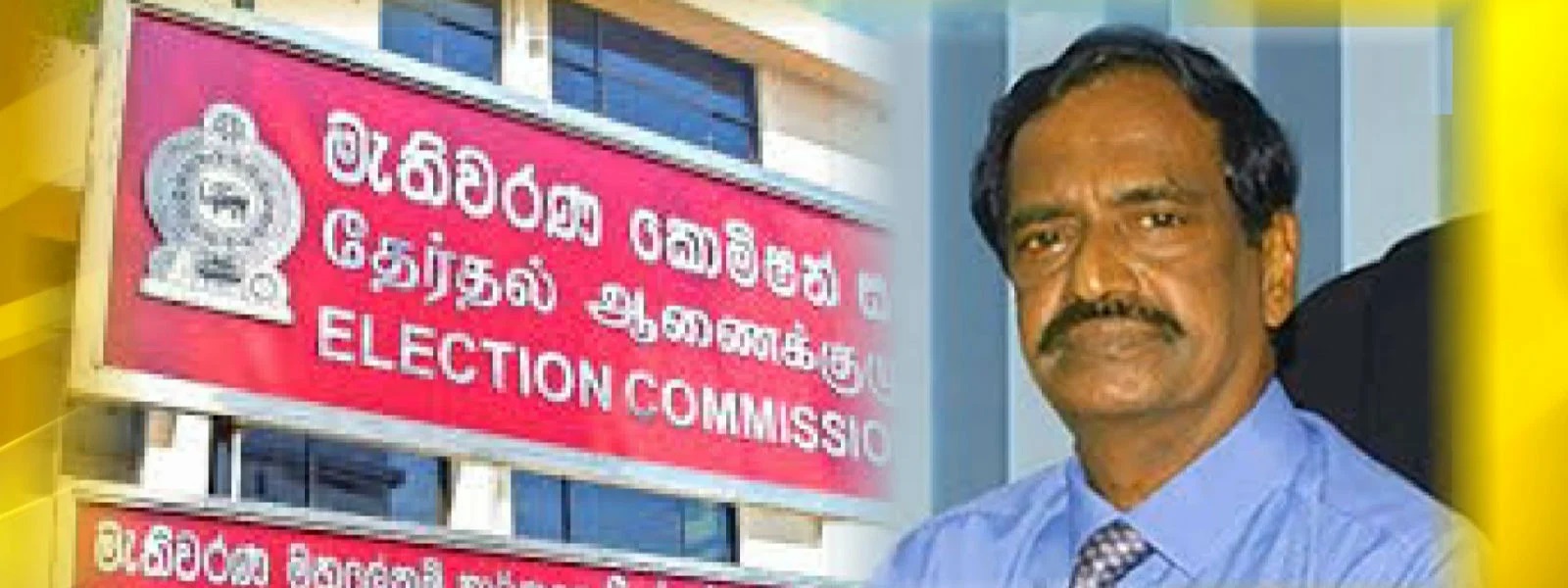
Former Commissioner of Elections, Mahinda Deshapriya says any future election is at risk of being postponed if the excuse claiming there is a lack of funds is accepted at this juncture. Addressing a press conference yesterday Deshpriya said accordingly it will be possible to delay any election in the future if the upcoming Local Government is postponed based on the fact. He also said in reality an election only costs Rs. 8 billion contrary to the Rs. 10 billion announced and even then the funds are not required at once. He added that the entire amount is not necessary during the preparation period. “Initially the EC only requires Rs. 2.5 – 3 billion. Even that amount can be disbursed in parts,” he noted.

The Former Commissioner said it is possible to hold the elections as scheduled by having discussions with the Treasury, the IGP, the Government Printer and various other parties. When asked how he would have faced the current issues in holding the elections, Deshapriya refused to answer and said it is up to the current Election Commissioner and the members to decide how they will resolve the conundrum.

Posted in Uncategorized

Govt Printer seeks tightened security for LG polls printing work

Initial printing activities pertaining to the 2023 Local Government Election have been completed, Government Printer Gangani Kalpana Liyanage says.

Speaking to Ada Derana, Liyanage mentioned that ballot paper printing activities, however, continue to face hindrances without adequate security in place.

Despite the requests made to the police chief to deploy 60 police officers (35 during daytime and 25 at night) to oversee the security measures during ballot paper printing, only three police officers have been deployed, according to the Government Printer.

The Government Printer further stated that printing of notices on polling queues is expected to commence today.

Meanwhile, the Election Commission noted that the postal voting of the LG election can be held on February 22, 23, 24 and 28 as scheduled if the ballot papers are received no later than tomorrow.

However, if the ballot papers are not provided on time, the election body says it hopes to decide on new dates for the postal voting of the LG election.

On Tuesday (Feb 14), the Election Commission, citing “unavoidable reasons”, announced that ballot papers for the postal voting could not be distributed as scheduled on February 15.

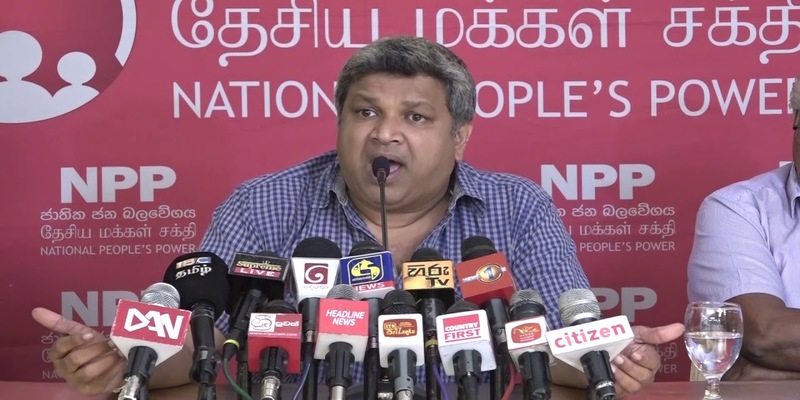
Against this backdrop, the National People’s Power (NPP) has handed over a letter to the United Nations compound in Colombo detailing the alleged attempts to postpone the LG election.

Postal voting for LG polls postponed indefinitely

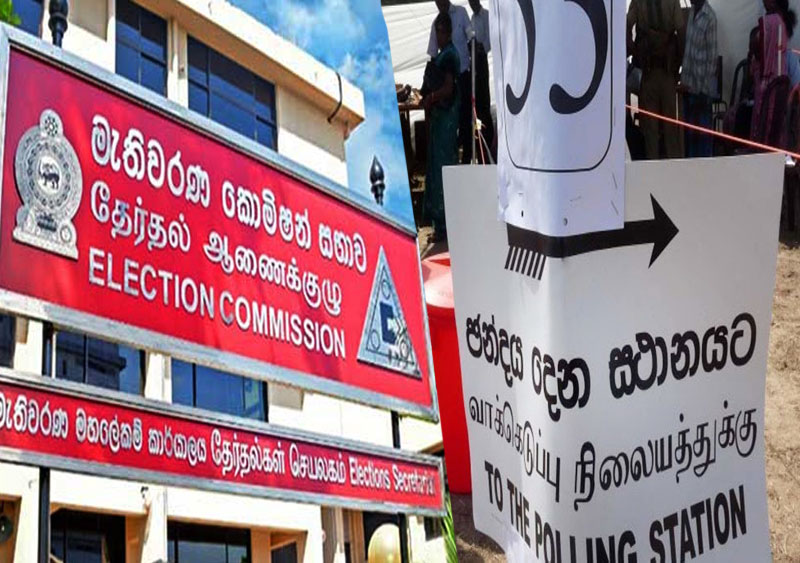
The postal voting for the 2023 local government election was postponed until further notice, Election Commissioner General Saman Sri Rathnayake announced today.

He said the postal voting was scheduled for February 22, 23, 24 and 28.

The Commissioner General said the postal voting was postponed as the Government Printer has not supplied the postal ballot papers on time as agreed.

He said new dates for postal voting will be announced in due course.

Posted in Uncategorized

Crucial discussion between Election Chief and Treasury Secretary

Chairman of the National Election Commission Nimal Punchihewa is scheduled to hold talks with the Secretary to the Treasury today pertaining to the Local Authorities Election.

Chairman of the Commission Nimal Punchihewa said he is hoping to summon the Treasury Secretary over the failure to release the funds requested by the Election Commission for the Local Authorities Election.

Several seniors Finance Ministry officials are also expected to attend the meeting.

Meanwhile, the Elections Chief said he is hoping to resolve the matter following talks. Nimal Punchihewa has also held discussions with the Government Printer pertaining to the Local Authorities Election.

The Commission has pointed out the importance of the Department of Government Printing releasing the printed ballot papers, other documents and materials needed to conduct the election promptly.

On Tuesday, it was announced that the issuance of postal ballot papers for the Local Authorities Election will not take place as planned due to the delay in the Department of Government Printing releasing required documents and materials.

Posted in Uncategorized

Independent MPs was to summon P’ment immediately

The Freedom People’s Congress in a letter to the Prime Minister have requested for Parliament to be summoned immediately, under Standing Order 16.

The letter bearing the signature of the General Secretary of the Freedom Peoples’ Congress notes that the decision to indefinitely delay the issuing of ballot papers for the Local Government Election is a threat to Sri Lanka’s democracy.

The letter further notes that the National Election Commission had observed that the reason for the decision to indefinitely delay the issuing of ballot papers for the Local Government Election was that the Treasury had failed to deliver funds for printing, and based on that the Government Printer had refused to go ahead with the printing process.

It notes that Parliament should convene immediately as Public Representatives, as the legislators, are bound to control the undemocratic situation, and managed the situation as well.

14 MPs had signed the letter that was addressed to the Prime Minister.

Posted in Uncategorized

China’s loans to Sri Lanka have been “quasi-predatory”, says Lankan economist -By P.K.Balachandran

Dr. Muttukrishna Sarvananthan of Point Institute of Development in Jaffna, says that Chinese lending to Sri Lanka between 2007 and 2022 was marked by an absence of due diligence, hidden conditions and aggressive lobbying with Sri Lankan politicians and bureaucrats. These are “predatory”. But considering the lower rates of interest charged, the lending could be termed “quasi-predatory”, he says.

Sarvananthan’s contentions are found in his critique of “Evolution of Chinese Lending to Sri Lanka since the mid-2000s – Separating Myth from Reality” written by Umesh Moramudali and Thilina Panduwawala and published by the China-Africa Research Initiative of the School of Advanced International Studies (SAIS) at the Johns Hopkins University.

In the critique entitled Chinese Lending to Sri Lanka: A Factual cum Reality Check: A Rejoinder to Umesh Moramusali and Thilina Paduwawala, Sarvananthan agrees that the leasing of the Hambantota International Port (HIP) to a Chinese company in 2017 was neither an “asset seizure” nor a “debt-to-equity swap.” It was not an “asset seizure” because the port was never made collateral for the loans from the China Exim Bank. It was not a “debt-to-equity swap” either, because the money received for granting 85% of the equity stake to the China Harbor Group was not utilized to repay the loans borrowed for the purpose of building and expanding the port.

As Moramudali and Panduwawala point out, the funds obtained from the Chinese company for leasing the port for 99 years, were used to pay off Sri Lanka’s International Sovereign Bonds (ISB).

But this was malpractice, Savananthan contends. “The utilization of the proceeds of the leasing of the HIP to augment the balance-of-payments or for the repayment of a maturing ISB/s is a dubious accounting practice of the Government of Sri Lanka and a gross violation of the International Public Sector Accounting Standards of an accountable democratic state,” he says.

The Chinese lender (EXIM Bank of China) had also erred, he adds. “If it is indeed a responsible and accountable state-owned lender of the world’s second-largest economy, the EXIM Bank of China should have insisted that the money paid by the China Harbor Group (CHG) to the Government of Sri Lanka (GOSL) for the acquisition of 85% equity stake in the HIP should be channelled to repay the loans obtained from the EXIM Bank of China to build and subsequently expand the HIP.”

“If the lender for the HIP was a state-owned bank from a Development Assistance Committee (DAC) member bilateral donor, the foregoing dubious transaction by the GoSL would not have been allowed.”.

Hidden Debt

Moramudali and Panduwawala found that the loans obtained from China for Hambantota port (HIP) were being serviced by the Treasury of Sri Lanka. In 2017, the Treasury had taken over these loans from the balance sheet of the Sri Lanka Ports Authority (SLPA). Between 2013-2017, these HIP loans were included in the balance sheet of the SLPA as a “non-guaranteed” foreign loan to the SLPA.

This is a “classic example of a hidden debt,” Sarvananthan says. Neither the GoSL nor the Chinese lender was transparent as per international practice, he notes.

According to Moramudali and Panduwawala, the “Auditor General noted that the outstanding balance of four China EXIM loans for Hambantota port construction were not recorded in the government’s outstanding debt stock. While debt repayments were made on time by the Treasury and tracked by the ERD (External Resources Department of the Central Bank) outstanding loan amounts were not recorded by the SLPA or the Treasury in annual balance sheets.”

Moramudali and Panduwawala further pointed out that the signing of all five loan agreements between SLPA and a Chinese supplier or contractors responsible for constructing the port, had taken place months before the signing of the loan agreement between the GoSL and ChEXIM. To Sarvananthan, this is another example of the “predatory nature” of the Chinese loans for the Hambantota port. He asks: “How could the SLPA sign contracts with Chinese suppliers and contractors even before the loan agreement was signed?”

Sarvananthan points out that the 6.3% interest charged on the first agreement dated October 30, 2007, for a loan of US$ 307 million, and 6.5% interest charged on the second agreement dated August 06, 2009, for a loan of US$ 65 million for the Hambantota port by the Exim Bank of China were “exorbitant” given the fact that the effective LIBOR (London Inter-Bank Offered Rate) was just 2% in 2009.

Predatory Lending

Sarvananthan defines predatory lending as “severe conditions” that can be aggressive sales/lobbying tactics, very high-interest rates (usually 3-digit interest rates), overcharging for administrative costs, non-disclosure of risk factors by the lender, failure to carry out due diligence with regard to the technical feasibility and/or financial viability of a particular project, or very high collateral requirement, a very stringent penalty in the event of default, or a combination of the foregoing.”

Failing to carry out due diligence with regard to the financial viability/commercial potential of most of the projects funded by China in Sri Lanka would also fall in that category. Due diligence was lacking in the case of the Hambantota port, the Mattala airport, the Colombo Lotus Tower and Sri Lanka’s capacity to repay was also not factored in, Sarbananthan points out.

Sarvananthan considers lobbying for projects aggressively by submitting unsolicited project proposals with suggestions for Chinese funding mechanisms as predatory. “Chinese state-owned companies could also be potentially involved in bribing politicians and/or bureaucrats in their host countries, which is termed corrosive capital,” Dr.Sarvananthan alleges.

Dubious Cancellations

The Jaffna-based economist considers the abrupt and arbitrary cancellation of the Japan International Cooperation Agency (JICA) funded US$ 1.6 billion Light Rail (LRT) project in Colombo in 2020 dubious. He points out that immediately after the cancellation of the LRT project in January 2020, the China Harbor Engineering Corporation (CHEC) was given the contract to build an elevated highway connecting the Colombo Port City and Thalawathugoda (replacing the proposed LRT system) without calling for open tender.

“This is a classic case of project grabbing by Chinese state-owned companies and predatory lending by Chinese state-owned financial institutions,” Sarvananthan asserts.

Similarly, the East Container Terminal (ECT) of the Colombo port was to be developed jointly by India, Japan, and a local private company (John Keels Holdings) in terms of a trilateral agreement signed in 2017. But this was abruptly abrogated by the government in 2021 with the purported view to developing it entirely by the Sri Lanka Ports Authority (SLPA). However, in January 2022, it was reported that the ECT is to be jointly developed by China Harbor Engineering Corporation (CHEC) in partnership with a local company, Access Engineering, Sarvananthan says.

Citing another example, the Lankan economist says Sri Lanka bought Sinovac COVID-19 vaccines in June 2021 from China due to the delay in receiving the second dose of AstraZeneca COVID-19 vaccines from India. There were allegations in the media that the Ministry of Health was paying a higher price to purchase Sinovac from China than the price paid to AstraZeneca from India.

“When a journalist requested the Ministry of Health to disclose the purchase price of Sinovac, it refused to disclose the price because of a gagging agreement between the Chinese Embassy in Colombo and the local company involved in the purchase on behalf of the Ministry of Health. It was reported that the Chinese Embassy in Colombo had informed the Ministry of Health that if the purchase price was made public the order will be cancelled, ostensibly because of a ‘special price’ offered to Sri Lanka,” Sarvananthan says.

“It is this kind of non-transparency in the official business dealings between China and Sri Lanka that leads to accusations of predatory practices,” he observes.

However, Sarvananthan prefers to consider Chinese loans to be “quasi-predatory” rather than “predatory”, taking into account the comparatively low-interest rates they carry.

Posted in Uncategorized

Defence co-operation with Sri Lanka explored at Aero India

Sri Lanka’s State Minister for Defence Premitha Bandara Tennakoon at an aviation confab has brought out the potential for greater defence co-operation between the two countries, India’s embassy in Colombo said.

Forums like Aero India can be used for defence cooperation through joint ventures, co-development and production whilst investing in research and development, the High Commission quoted Minister Tennakoon as saying.

Minister Tennakoon had been accompanied by a business delegation from Sri Lanka to identify avenues for greater cooperation.

Minister Tennakoon had participated in Aero India 2023 and SPEED- Defence Ministers’ Conclave.

He had also highlighted the importance of a collective response through multilateral efforts like the Colombo Security Conclave to tackle the common security challenges in the Indian Ocean Region.

The minister had met the Chief of Defence Staff and all three service chiefs in addition to Defence Minister Rajnath Singh.

Sri Lanka Armed forces already operating Indian defence equipment like Indra radar, offshore patrol vessels and Army training simulators, the statement said.

India has committed supply a floating dock, Dornier aircraft to build up capacity.

Delayed election is delayed democracy -The Morning Editorial

Despite the Government’s claims that it has no fear of elections and that the public still has faith in its capabilities, the indefinite postponement of the postal voting ballot paper distribution of the upcoming Local Government (LG) election, caused by the delay in providing funds for election preparations, could reasonably be interpreted as a sign that the Government is actively attempting to derail the election process.

This development comes against the backdrop of much of the Opposition highlighting the Government’s trepidation and alleging for months that the Government would make underhand attempts until the last possible moment, to delay the election for as long as possible.

In fact, the current administration led by President Ranil Wickremesinghe, which consists mostly of members of the former Government led by then-President Gotabaya Rajapaksa and then-Prime Minister and incumbent Government MP Mahinda Rajapaksa, is inarguably one of the most unpopular governments since Independence. While Wickremesinghe has gradually lost popularity over many years, members of the former Rajapaksa Government have earned the wrath of the people due to their roles in the creation of the economic crisis that erupted in 2022. Facing even an LG election under such circumstances is disadvantageous to the Government, a reality the Government cannot hide from.

However, the myriad reasons for the Government to fear elections do not justify any attempts to postpone elections, as they are meant to provide the people with the opportunity to exercise their voting right and choose who represents them. Therefore, regardless of the prevailing circumstances, the Government is duty-bound to prioritise the people’s interests over its own and ensure that the conduct of the LG election is properly facilitated.

According to the Government, the main challenge that the LG election is facing is the lack of funds. Even though the Government has not directly stated that it is unable to fund the election, it has put forth funding as a monumental challenge on numerous occasions. However, if this is actually the reason for the potential postponement of postal voting, the Government should look into measures that could be taken to overcome this challenge. For example, if the Government is not in a position to provide funds for the election, it could look into providing as many non-financial resources as possible. As a temporary measure, it could also utilise funds that have been allocated for other, non-urgent initiatives. What’s more, as some political commentators have said, obtaining international assistance to conduct the LG election could also be possible because conducting elections on time is part of strengthening democracy, which the Western world has encouraged in countries such as Sri Lanka over the years.

However, the voting public has not witnessed any significant action being taken by the Government apart from lamenting the challenge in funding the LG election. This raises doubts regarding whether the unavailability of funds is a genuine reason or an exaggerated claim to conceal the Government’s unwillingness to face the LG election. If it is an exaggerated claim, it is a serious violation of the people’s right to participate in the democratic process, and this failure or unwillingness to facilitate the LG election will be yet another black mark on the Government. Worse yet, it could push an agitated public on to the streets as their franchise has been denied and their opportunity to vent their frustration at the ballot box has been taken away, resulting in chaotic scenes reminiscent of mid-2022.

Therefore, President Ranil Wickremesinghe and the Government must understand that holding on to power by delaying elections undemocratically would only serve to lower its approval rating, which is not too different from losing elections.