Local council polls: Test of strength for Govt, but will they be held?

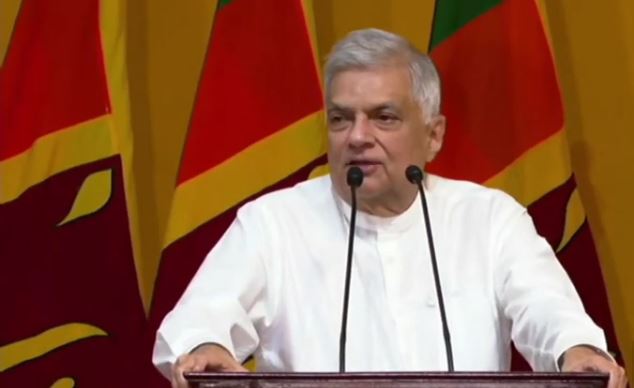
Four months after ensconcing himself constitutionally as the President of Sri Lanka, Ranil Wickremesinghe finds himself at the helm of many a change, both politically and otherwise.

This week, he refused to place his signature on Detention Orders under the Prevention of Terrorism Act (PTA) on two student leaders. They were Wasantha Mudalige, Convenor of the Inter-University Students Federation (IUSF), and Ven. Galwewa Siridhamma Thera, Convenor of the Inter-University Bhikku Students Federation. They were detained under the PTA, and the orders lapsed on Friday. On the same day, members of the Inter-University Students Federation (IUSF) staged a protest outside the United Nations Office in Bambalapitiya demanding their release. Police were forced to use tear gas and water cannons after they broke security cordons as they tried to march towards the Welikade Prisons.

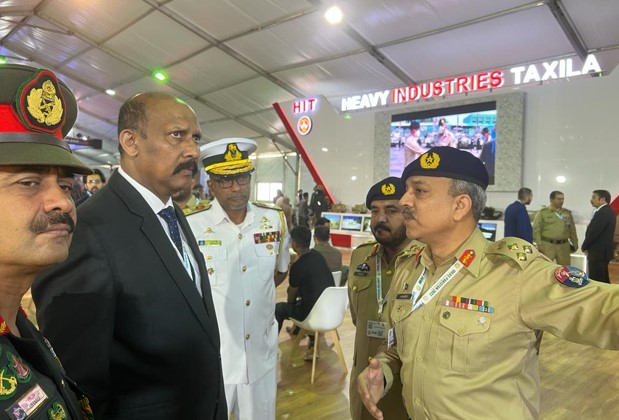
The previous orders under the PTA had been signed by Defence Secretary, retired Major General Kamal Gunaratne. However, he was away this week in Pakistan leading a military delegation from Sri Lanka. That included the Commander of the Army, Lt. Gen. Vikum Liyanage, Chief of Staff of the Sri Lanka Navy, Rear Admiral U.V.M.P. Perera and Chief of Staff of the Sri Lanka Air Force, Air Vice Marshal R.A.U.P. Rajapaksa. They have since returned.

Asked how cases related to the PTA would now be handled, a government source said it would be under the normal laws of the country. The move, the source said, made clear the government would veer away from the use of provisions of the PTA in the future. This is particularly in view of criticism, both in Sri Lanka and abroad, that such a controversial law should not be used but rescinded. Making the situation worse was the fact that the arrest of the two student leaders was over the protests, both at the Galle Face Green and outside Temple Trees. They were seeking the ouster of the then President Gotabaya Rajapaksa. These protests forced him to flee Sri Lanka. He, however, returned within weeks after efforts to obtain asylum abroad failed. He is now awaiting a response to an appeal made to the US for the reinstatement of his citizenship which he renounced to contest the presidential elections in 2019. It has been made through his lawyers in the US.

Ex-President Rajapaksa was in a bind this week after Uttara Lanka Sabhagaya leader Wimal Weerawansa made some disturbing disclosures about an alleged attempt on the former President’s life. It was during a talk show on a television programme and had been based on revelations made to him when Rajapaksa was serving as President. Of importance in the accusation is the alleged involvement of a Colombo-based diplomat, a charge which a source in the mission concerned dismissed as “absolute rubbish.” In the morning that followed the airing of the programme, Gotabaya Rajapaksa, a source in the know said, utilised the good offices of a friend, a minister, to appeal to Weerawansa not to repeat those assertions. He explained that such matters had happened during his term of office, and he did not wish to talk about them now. Or was it a case of misreading the situation? After all, he has then personally granted a string of appointments to the diplomat concerned.

On the subject of PTA, at the 51st sessions of the UN Human Rights Council in Geneva, the latest resolution on Sri Lanka noted that “the introduction in March 2022 of amendments to the Prevention of Terrorism Act, that detentions under that law continue, and the expressed intention of the Government of Sri Lanka in this regard to introduce new legislation on combatting terrorism, and encourages the Government to engage in consultations with civil society, the Office of the High Commissioner and relevant special procedure mandate holders in the preparation of new legislation, in order to ensure that any legislation on combating terrorism complies fully with the State’s obligations arising from international human rights law and international humanitarian law.”

Added to this are fears about the future of the GSP plus tariff concessions from the European Union. A focal point of criticism has been the continued use of the PTA. This is one of the reasons why Justice Minister Wijeyadasa Rajapakshe is giving priority to a new counter-terrorism law.

Meeting with world leaders

Within the short span of just four months, President Wickremesinghe has not only presented a budget but also met with several world leaders. This feat, it is interesting to note, was not matched by his predecessors within that time frame. First was the visit to the UK for the funeral of Queen Elizabeth II. It was followed by the visit to Tokyo for the official funeral of one-time Japanese Prime Minister, Shinzo Abe. Immediately thereafter, he flew from there to Manila and took part in the meeting of the Board of Governors of the Asian Development Bank as Minister of Finance. Then came the visit to Egypt for the COP27 environment conference.

This week, South African Prime Minister, Cyril Ramaphosa, broke journey in Colombo twice – first on his way to Bali (Indonesia) for the G-20 summit of world leaders. He had more time on his return to stop en route home. President Wickremesinghe entertained him to dinner at the Sri Lanka Air Force base that adjoins the Bandaranaike International Airport. There was an array of Sri Lankan food including hoppers. An SLAF troupe gave a live performance to President Ramaphosa and members of his entourage. The surprise came when President Wickremesinghe had a cake waiting for him. It was President Ramaphosas’ 70th birthday (born on November 17, 1952). The South African leader, cut a piece and fed it first to President Wickremesinghe. At the talks, he offered Sri Lanka assistance in the sphere of economic and cultural matters. He also offered assistance to Sri Lanka to set up a Truth and Reconciliation Commission. President Wickremesinghe’s new initiative to reach an ethnic reconciliation package was held in Mannar yesterday. He met Tamil groups and leading personalities in the area to hear their views. A similar meeting also take place in Vavuniya.

Also celebrating his 77th birthday was one-time President Mahinda Rajapaksa. He was born on November 18, 1945. The first to telephone him to extend birthday wishes early Friday morning was President Wickremesinghe. After a brief exchange of pleasantries, they chatted for a short while. On Friday, Rajapaksa was in Tangalle where the Sri Lanka Podujana Peramuna (SLPP), which he leads, held a series of religious ceremonies including all night pirith. A busload of SLPP parliamentarians travelled to Tangalle to greet him.

President Wickremesinghe added another record to his political gains when he presented the budget on November 14. Earlier, he had only presented an interim budget but the latest, which the Parliament is now debating, is for 2023 and is significant. He said: “A glimmer of hope on emerging from the economic abyss is currently visible because of the strenuous and difficult actions we have adopted during the past few months. After the era of waiting in queues for days and protesting in various occupied places, our sufferings have been eased to some extent and we have reached an era where our peace of mind is much settled.” There are those who do not agree with this assertion. They argue that the worst is yet to come. Some have voiced their dissenting views to these expressions in speeches in Parliament. As it often happens, others have voiced their own views on issues, to say the least, that appear extraneous and not directly relevant.

One issue that remains uppermost is when the International Monetary Fund’s Extended Fund Facility would arrive. That facility was set up to aid countries experiencing serious payment imbalances because of structural impediments or slow growth and an inherently weak balance-of-payments position. The IMF has committed US$ 2.9 billion over a 48-month period reportedly subject to pending fiscal measures the government would adopt. President Wickremesinghe said, “Talks with the IMF are currently in progress. We are in dialogue with India and China on debt restructuring. We are confident that these discussions will lead to positive outcomes.” The remarks make clear there is no conclusive outcome yet. In that light, there is more than an element of apprehension when it would. A segment also raises the question whether it would at all and, if so, by when.

Different views apart, there is little doubt that the budget would be passed when the final vote (third reading) is taken up on December 8. One binding factor towards this is the different groups within the Sri Lanka Podujana Peramuna (SLPP), some now functioning differently, do not want to bring about a dangerous situation for themselves. That is the conduct of parliamentary elections, one that would be necessitated by defeating the budget. They are not prepared for such an eventuality and do not want to risk a situation since the SLPP would be on a losing streak. It is to avert such a situation that sections within propose a link with the United National Party (UNP).

Basil Rajapaksa returns

However, the return of SLPP ideologue Basil Rajapaksa has an entirely different reason. He has told his backers that he is booked on Emirates flight EK 0650 departing Dubai at 2.40 a.m. and will arrive in Colombo at 8.25 a.m. on Sunday (today). SLPP General Secretary Sagara Kariyawasam confirmed to the Sunday Times “this was his (Basil Rajapaksa’s) itinerary and he had no plans to be in Colombo earlier.” Kariyawasam said his party was preparing for the local council elections. Ahead of his arrival, Basil Rajapaksa has been talking to his close supporters about launching a media campaign for the SLPP for the local council elections. This is both in the print and electronic media.

This is bound to give rise to friction. Prime Minister Dinesh Gunawardena has appointed Mahinda Deshapriya, a former chairman of the Election Commission, to head a Delimitation Commission. The other members, according to a Gazette extraordinary, are Jayalath R. V. Dissanayake, W.M.M.R. Adikari, K. Thavalingam and I.A. Hameed. Earlier, President Wickremesinghe also declared that he wanted to halve the membership of those in local councils from 8,000 to 4,000.

Last Tuesday, all opposition parties collectively met Election Commission Chairman Nimal G. Punchihewa. They requested that elections be held in such a way that these local councils could be established by March 20 next year. One of the prime movers in this regard is Sajith Premadasa, leader of the Samagi Jana Balavegaya (SJB). Punchihewa told the Sunday Times, “there is no obstacle to conducting the elections on schedule and we are going ahead with the necessary preparations. The local council elections should take place 65 days prior to March 19.”

He added: “There have been various public comments that the Delimitation Committee process can delay the election, and some ministers have been saying that the government lacks funds for the conduct of the elections. Some have been saying that the process of reducing the number of local council members would take time and therefore the election process could be delayed. Whatever the reasons given, the fact is that none of these processes does hinder the conduct of the elections. Even if the Cabinet gives us reasons it will not affect us.

“However, if Parliament passes a resolution citing reasons for a postponement such as the Delimitation Committee needing more time, lack of funds or requiring time for amendments, the Elections Commission will be compelled to accept that position. Therefore, as it stands now, we are making preparations for the conduct of the elections.”

There is also an element of uncertainty over Punchihewa’s office as Chairman of the Election Commission. In terms of the 21st amendment to the Constitution, heads of independent commissions (including the Election Commission) are to be named by the new Constitutional Council once it is fully constituted. In such an event, would a successor cause a delay in the local council polls remains a question.

Tuesday’s meeting with the Elections Commission chief was attended by Opposition Leader Sajith Premadasa, Prof G.L. Peiris (SLPP), Dayasiri Jayasekara (SLFP), Ranjith Madduma Bandara (SJB), Anura Priyadharshana Yapa (SLPP), Chandima Weerakkody (SLPP), Vasudeva Nanayakkara (Democratic Left Front), Ashoka Abeysinghe (SJB) and Dilan Perera (SLPP). Chandima Weerakkody who represented opposition parties handed over a document to the Elections Commission Chief calling him to conduct the local government elections on schedule. He said that as it appears there was no reason for the Government to postpone the local elections and the term of the councils had already been extended by year. He said that going by the meeting with the Elections Commission members they were expecting the Commission to announce the Local Government elections by mid-December.

Prime Minister Dinesh Gunawardena, however, told Parliament on Thursday, “Yesterday I responded to the statement made by Harsha de Silva. In our constitution, there is provision for the President to dissolve Parliament. As the Opposition Leader said there is provision to pass a resolution and dissolve parliament. But not as in the US constitution. That is very clear. This is what I told Dr. Harsha de Silva not to mislead the country and the house. Eran Wickremaratne too acknowledged it. You’ll say you want a parliamentary election to test the mandate of the people.

“Those are two different things. I replied to what Harsha de Silva mentioned on the interpretation of the constitution. I read the constitution repeatedly. I know that the leader of the opposition would have read the constitution but there is no provision as in the US constitution and the US electoral system for us to have midterm election so let us not get excited. We are standing for the sake of the country. There has to be unity and a working arrangement. We must stick to that.”

Opposition Leader Premadasa: Today the demand from the people is to give an opportunity to test the mandate of the people. The Prime Minister is speaking of the US Constitution, but they are not bankrupt. Your government has ruined the country. Under those circumstances, I am asking if you can give an assurance that you would not interfere in the process of having free elections in manner that the Local Councils could be established by March 20. Can you answer that?”

Prime Minister Gunawardena: See how the Opposition Leader changed the question within few minutes. He earlier said something else and when I answered Dr Harsha de Silva about the US Constitution, he now says something else. The Elections Commission is an independent body. It will act according to its mandate.

Basil Rajapaksa has told his backers in Colombo on the telephone that by contesting an election, he wants to demonstrate that the SLPP could be a political party that would be stronger than even the Janatha Vimukthi Peramuna (JVP). That is even if they are forced into the opposition ranks. However, how many within the current SLPP government could Basil Rajapaksa muster? It is no secret that the number of his supporters dwindled after the vote on the 21st Amendment to the constitution. They are now said to be below 25 parliamentarians and his first task, if he is to rebuild his party, would be to shore up the numbers. That appears no easy task. One of the reasons why they have split is over disapproval of his actions in the past. Already 14 MPs have left the party fold, eight to the government ranks and six to the opposition.

This week, a group of MPs who belonged to the SLPP peeled away from the party further when they chose to come under the umbrella of the Samagi Jana Sandhanaya (SJS). The group is led by Anura Priyadarshana Yapa, one-time Cabinet minister and senior member from the Kurunegala District. He told the Sunday Times, “We have been in the opposition for quite sometime now. Regrettably we get only five minutes to air our views in Parliament. We talked to the SJB for weeks and realised that there is a similarity in our policies on economic issues. Thus, we will function under the SJS umbrella. This does not mean we will join the SJB. We will continue to remain as an independent body.”

Yapa said, “We cannot allow our people to continue to suffer. This reality has now dawned on even other groups who are sitting as independents. There is an urgent need to improve the living conditions of the people. I must also make it clear that the SJB has not asked us to join it. Like some of the other parties, we are partners sharing the same ideals. There have been wrong reports about one of our members, Sudarshini Fernandopulle that she had joined the SJB. “

The once strong SLPP has splintered into different groups. Here is a lineup of the new sides they are on:

On the Government side: Nimal Siripala, Mahinda Amaraweera, Ranjith Siyambalapitiya, Jagath Pushpakumara, Lasantha Alagiyawanna, Shantha Bandara, Suren Raghavan and Chamara Sampath Dasanayake

Sitting in the Opposition benches: Maithripala Sirisena, Dayasiri Jayasekara, Angajan Ramanathan, Shan Wijayalal De Silva, Sarathi Dushmantha and Duminda Dissanayake from the Sri Lanka Freedom Party (SLFP).

SLPP (Dullas Group) that is functioning independently has 13 MPs. They identify themselves as the “Nidahasa Jathika Sabhawa.” The members are: Prof. G.L. Peiris (SLPP Chairman), Dullas Alahapperuma (SLPP Treasurer), Prof. Charitha Herath, Dilan Perera, Dr. Nalaka Godahewa, Prof. Channa Jayasumana, Dr. Upul Galappatti, Dr. Thilak Rajapaksha, Lalith Ellawala, K.P.S. Kumarasiri, Wasantha Yapa Bandara, Gunapala Rathnasekera and Udayana Kirindigoda.

SLPP (Wimal Group): 12 MPs sitting as an independent group with the opposition. Known as the “Uththara Lanka Sabhagaya (ULS)”. Members are: Wimal Weerawansa (Chairman), Ven. Athuraliye Rathana Thera, Vasudeva Nanayakkara, Udaya Gammanpila, Prof. Tissa Vitharana, Gevindu Kumaratunga, Jayantha Samaraweera, Mohamed Muzammil, Weerasumana Weerasinghe, Gamini Waleboda, Uddika Premaratne and Nimal Piyatissa.

Former members of this coalition, namely Tiran Alles, Asanka Nawarathna and A.L.M. Athaullah are now with the government.

SLPP (Anura Yapa Group): 06 MPs sitting as an independent group. Members –Anura Priyadarshana Yapa, John Seneviratne, Chandima Weerakkody, Dr. Sudarshani Fernadopulle, Jayarathna Herath and Priyankara Jayaratne.

The SJB’s Harin Fernando and Manusha Nanayakkara are in the Government as ministers.

SJB’s Diana Gamage and Aravindh Kumar are also supporting the government. They defected during the vote on the 20th Amendment in 2020.

SJB MPs Patali Champika Ranawaka and Kumara Welgama are functioning as Independents

The Uttara Lanka Sabhaghaya led by Wimal Weerawansa will hold its convention today at the Sugathadasa stadium. The new group is set to adopt twelve resolutions. They refer to the floating of the dollar negligently, the announcement that the country is bankrupt, large-scale corruption, government parties’ silence over the bad financial advice given by officials of the Presidential Secretariat, the Central Bank and the Treasury causing discontent among the people. This challenges the trust in the government as well as the existence of the government. Therefore, the twelve conditions imposed on the government not to allow the crisis to become a disaster will be taken up today.

Tomorrow, they will sit down to select candidates for the local council elections. “We are strongly in favour of the conduct of these elections,” Weerawansa told the Sunday Times.

Local council polls, unless they are thwarted by the ruling leaders for good reasons, will no doubt be the first test of strength for the SLPP government. However, the billion-dollar question is whether it would materialise.
Posted in Uncategorized

‘Investing in a failed state’ – Gary Anandasangaree slams MPs encouraging investment in Sri Lanka

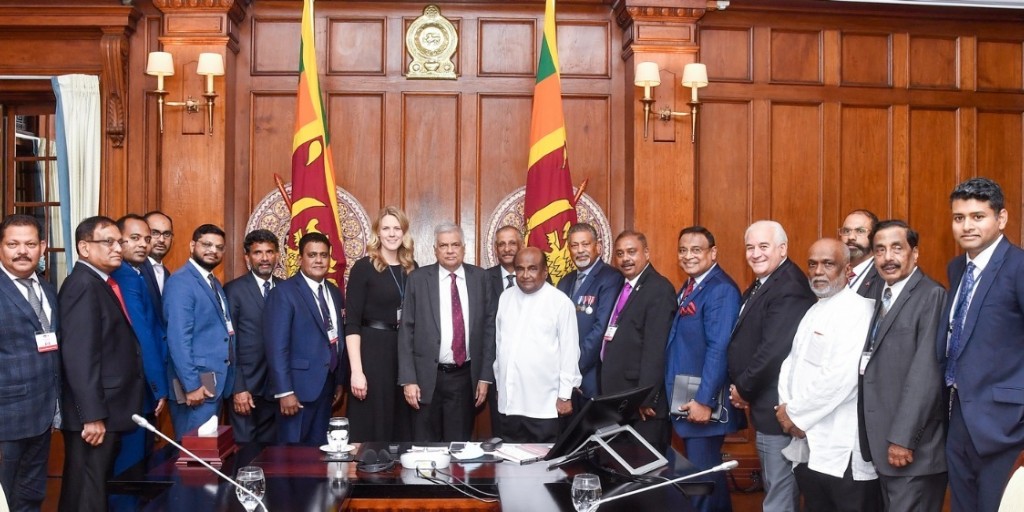
The visit composed of 18 members including two Canadian MPs, Han Dong and Rachael Thomas. Han Dong, sat down with Indeewari Amuwatte of Ada Derana 24 to discuss these potential investment opportunities as an avenue for political change.

During the interview, Dong claims that investment can facilitate processes of reconciliation.

The MP claimed that through his discussion with all parties it was clear that Sri Lanka was ready for a new start. Dong added that “everyone is ready to move ahead on truth and reconciliation, to settle some of the historical problems.”

In response to being asked how reconciliation can be achieved, Han Dong states that there needs to be conversations and dialogues which build mutual trust. He adds that investments in different regions can contribute to processes of reconciliation, “sustainable policies to welcome investments in different regions in Sri Lanka [will] truly lift people out of poverty, truly give access to women and girl[s] [and] to education and political representation.”

At a later point in the interview, the MP states that investing necessitates reconciliation. “We can’t talk about the economy without talking about reconciliation, for investors they want a stable political environment to make that investment.”

Analysis by Asvini Uthayakumaran​

Dong’s claims that investment will bring reconciliation to the island is worth further interrogation.

Conflict-related sexual violence is among the many human rights violations committed by the Sri Lankan state. A report published by People for Equality and Relief in Lanka (PEARL) in September highlights that Sri Lanka has failed to punish perpetrators of conflict-related sexual violence against Tamils. Victims, families of victims, and activists have repeatedly emphasized that international justice is the only recourse for survivors of conflict-related violence. The priority of the international community should be to secure justice for victims. Reconciliation is not possible without this justice. To invest in a state that has failed to address these grave human rights violations contributes to the ongoing dismissal of victim grievances.

Dong’s claims that everyone is ready to move towards reconciliation conveniently ignore the relatives of the disappeared that have been protesting in the North East for over 2000 days. An estimated 138 protesters have died without knowing the fate of their loved ones. Families of the disappeared have frequently voiced their concerns regarding their lack of confidence in domestic mechanisms such as the Office of Missing Persons (OMP). According to the United Nations Human Rights Council (UNHRC), the OMP has not been able to trace a single disappeared person. Protesters have repeatedly appealed to the international community to deliver justice.

In the interview, MP Dong also states that investments in different regions of the island will contribute to political representation. Tamils and Muslims on the island face consistent political repression at the hands of the Sri Lankan state. In 2021 the military was granted 15% of the total state budget amounting to more than both the health and education sectors. In the Mullaitivu District, there is an estimated one soldier for every two civilians. The heavy militarisation fosters an environment of surveillance. Tamils exercising their freedom of assembly have reported being monitored and harassed by Sri Lanka’s security forces. A report from the United Nations noted that “Families of the disappeared face surveillance, questioning, intimidation and unannounced visits by intelligence officers and the police, especially when they are actively involved in protests or memorialization”. Wickremesinghe’s recent budget announcement will see even more money siphoned off to the the military. Political representation will not be achieved through investments, representation necessitates demilitarisation.

The linkages Dong makes between the interests of entrepreneurs that are looking to maximize returns on their investments and Tamil survivors of genocide seeking justice are opportunistic and tone-deaf. Investment is not sufficient for addressing the demands of Tamils in the Northeast. Investment does not hold accountable the Sri Lankan politicians that have been accused of war crimes. Reconciliation is not possible without justice and justice will not be achieved with mere investments.

If Canada is seeking to collaborate with the Sri Lankan government it must be through a human rights lens. Tamils on the island have repeatedly appealed to the international community to deliver justice. The claim that Sri Lanka is ready for investment and that investment will bring reconciliation simultaneously contributes to the erasure of Tamil voices and conceals the continued violence of the Sri Lankan state.

Pakistan & Sri Lanka agree to support each other regionally

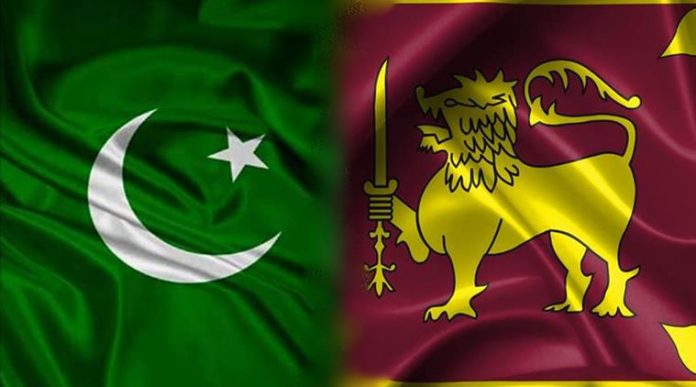
Sri Lanka and Pakistan have agreed to continue to support each other at all regional and international fora.

The matter was discussed during the third round of Pakistan-Sri Lanka Armed Forces Defence Dialogue (AFDD) was held in Expo Centre Karachi from November 16-17, 2022.

The Pakistan delegation was led by Lt Gen (retd) Hamood uz Zaman Khan, Secretary Defence, Sri Lankan delegation was headed by Gen (retd) Kamal Gunaratne, Secretary Defence.

During the dialogue, Pakistan and Sri Lanka reviewed the existing scope of bilateral military relations and expressed satisfaction on the progress achieved under the umbrella of AFDD.

Both leaders exchanged views on regional security and upcoming challenges.

It was agreed that Pakistan and Sri Lanka will continue to support each other at all regional and international fora.

The cooperation in the field of defence industry, military training, joint exercises and high level visits will continue.

In the end, it was agreed that next meeting of AFDD will be convened in Sri Lanka on mutually agreed dates in 2023.

China working with other lenders on ‘easing’ Sri Lanka debt

China is working with other lenders on easing Sri Lanka’s debt burden, a Chinese diplomat said as country attempts to re-structure debt after the country defaulted on foreign debt after two years of money printing.

“China is actively working with relevant countries and international financial institutions to support Sri Lanka to ease the debt burden and realize sustainable development,” Li Guangjun, Economic and Commercial Counselor, Embassy of Peoples’s Republic said.

He was speaking at the 21st Annual General Meeting of Sri Lanka – China Business Council of the Ceylon Chamber of Commerce.

Sri Lanka and China is celebrating 65th anniversary of diplomatic relations.

2022 was also the 70the anniversary of a rubber-rice pact, a barter deal made when the US Fed fired a global commodity bubble purchasing Liberty Bonds for new money, and hit the monetary brakes sending ripples similar to 2022 across the world.

“Over the past decade bilateral relations have been cordial and friendly which had made the possibility of great progress in achieving economic and trade co-operation between our two countries,” Li said.

In 2021 China was Sri Lanka’s second largest trading partner and the largest source of foreign direct investment, he said.

“In spite of the pandemic and sluggish global growth business ties have continued to grow,” Li said.

Sri Lanka ran up foreign debt steeply from 2015 to 2022 taking in so-called ‘cover up’ loans as the country experienced three currency crises in a row while printing money to suppress rates under flexible inflation targeting and lost the ability to make foreign payments.

China itself gave monetary instability loans without pressing Sri Lanka to tighten monetary policy.

China on track to bail out Sri Lanka with US$1.25bn in 2018

Sri Lanka signs US$500mn loan with China Development Bank

Sri Lanka gets US$500mn loan to help fight Coronavirus China says

Sri Lanka is now seeking a 2.9 billion US dollar loan from IMF, with domestic investment smashed to reduce outflows and regain external stability.

However an agreement from from China and India to re-structure debt called a ‘creditor assurance’ is needed to unlock new funding.

Posted in Uncategorized

Eight committees to be appointed at provincial level to resolve land issues

President Ranil Wickremesinghe has assured immediate solutions to land, housing, health, irrigation, and agriculture-related issues in the Northern Province, the President’s Media Division (PMD) says.

The Head of Stated also stated that 08 committees would be appointed at the provincial level to resolve the land issues.

He pointed out that all the land-related issues in the North and South of the country would be resolved accordingly.

President Wickremesinghe made these observations while participating in the District Development Committee meeting held at the Vavuniya District Secretariat this morning (Nov. 19).

The development committee meeting was called covering Vavuniya, Mannar, and Mullaitivu districts in the Northern Province.

The issues related to the lands, housing, health, irrigation, and agriculture in the province and solutions for them were discussed at length during the meeting.

President Ranil Wickremesinghe assured that all measures would be taken to improve the living conditions of the people by providing prompt solutions to the problems arising in various fields in the Northern Province and said that he expected the supportive hands of the parliamentarians of the Northern Province in this endeavor.

Pointing out that there are many unsolved problems in the North, the President further assured that he would resolve those issues by way of discussions with all parties.

Parliamentarian Charles Nirmalanathan drew the attention of the President to the fact that the Tamil people who settled in the Settikulam area in 1994 have still not been provided with land.

The President instructed the Vavuniya District Secretary to intervene to resolve the land issue in Settikulam within 03 months and added that he would inquire about the matter from the Ministry of Justice as well as the Ministry of Lands.

At the meeting, attention was also drawn to the problems arising due to the acquisition of certain farmlands in the Mullaitivu district by the Department of Archaeology.

Giving special attention to the housing problem of the people in the Northern Province, the officials pointed out that the housing projects initiated to address the issue in the three districts have reached different stages of construction and an additional sum of Rs. 3,000 million is required for its completion.

President Ranil Wickremesinghe pointed out that many housing projects have commenced across the island and he expected to provide quick solutions to the housing problem of the people in the North.

Parliamentarian Selvam Adekkalanathan highlighted the plight and the needs of the people living in the vicinity of Vavuniya Lake and Thirikkulam Lake and drew the attention of the President at the meeting.

The renovation of the tanks in the districts, solving the fertilizer problem, and streamlining the distribution activities also was the focal point at the meeting.

The President instructed the officials to take measures to provide the necessary solutions to the health sector-related problems and the shortage of doctors in the Northern Province paying special attention to them when the issues were raised during the meeting.

Parliamentarian Rishad Bathiudeen explained various irregularities that the fishermen in the Mannar district have to face in the supply of kerosene oil and the President instructed the officials to initiate an urgent inquiry into the matter.

Fisheries Minister Douglas Devananda, Urban Development, and Housing State Minister Tenuka Vidanagamage, State Minister for Rural Development Kader Mastan, Northern Province Governor Jeevan Thiagarajah, Secretary to the President Saman Ekanayake and public officials including district secretaries were present on the occasion.

Posted in Uncategorized

Debt-for-nature swap: IMF not too keen; Govt. to identify projects

The International Monetary Fund (IMF) has expressed concerns over the Government’s possible deviation from the ongoing debt restructuring programme, following its move to explore a debt-for-nature swap earmarked at around $ 1 billion, The Sunday Morning learns.

However, President Ranil Wickremesinghe has directed his officials to commence the process of identifying the projects that could be taken under a debt-for-nature swap, it is learnt.

Wickremesinghe has tasked his Advisor on Climate Change Ruwan Wijewardene to spearhead the initiative with the support of the Environment Ministry, Presidential Economic Advisor Dr. R.H.S. Samaratunga, and the Central Bank of Sri Lanka (CBSL).

Given the obstacles and delays faced by Sri Lanka in finalising the Extended Fund Facility (EFF) from the IMF, which has now been pushed back to around March next year, the Government has turned to the environment and climate financing for reprieve from the ongoing economic crisis.

The Government has reportedly commenced talks with the UN Development Programme (UNDP) and other agencies to explore the possibilities of a debt-for-nature swap programme.

When asked about the Government’s latest initiative and the concerns raised by the IMF, Wijewardene told The Sunday Morning that the Government was seriously looking at the option and was now preparing the groundwork. “The groundwork will be done. We can then proceed once the (debt) restructuring process is completed,” he added.

It is further learnt that the CBSL is also looking at drawing a framework for bonds (blue bonds, green bonds, etc.) and the draft is expected to be prepared by the end of December.

The Sunday Morning’s ‘Black Box’ exclusively revealed last month that President Wickremesinghe had turned to climate change and the environment to raise funds amidst delays in finalising the proposed financial aid from the IMF.

The President’s visit to Egypt to attend the COP27 summit, where he met with several key global leaders on the sidelines, was mainly aimed at setting the groundwork to initiate the debt-for-nature swap programme.

Meanwhile, striking a deal with Sri Lanka’s key creditors on a debt restructuring plan along with a haircut remains inconclusive, with China holding back on agreeing to a haircut, resulting in both India and Japan adopting a ‘wait-and-see’ attitude.

It is learnt that China is willing to consider a delay in repayment of the loans, but not a haircut, which is a key requirement of the Sri Lankan Government.

The discussions held between the Government and creditors last week had concluded with all parties agreeing to engage in further discussions on the matter, it is also learnt.

The geo-politics that Prabakaran failed to understand By M.S.M Ayub

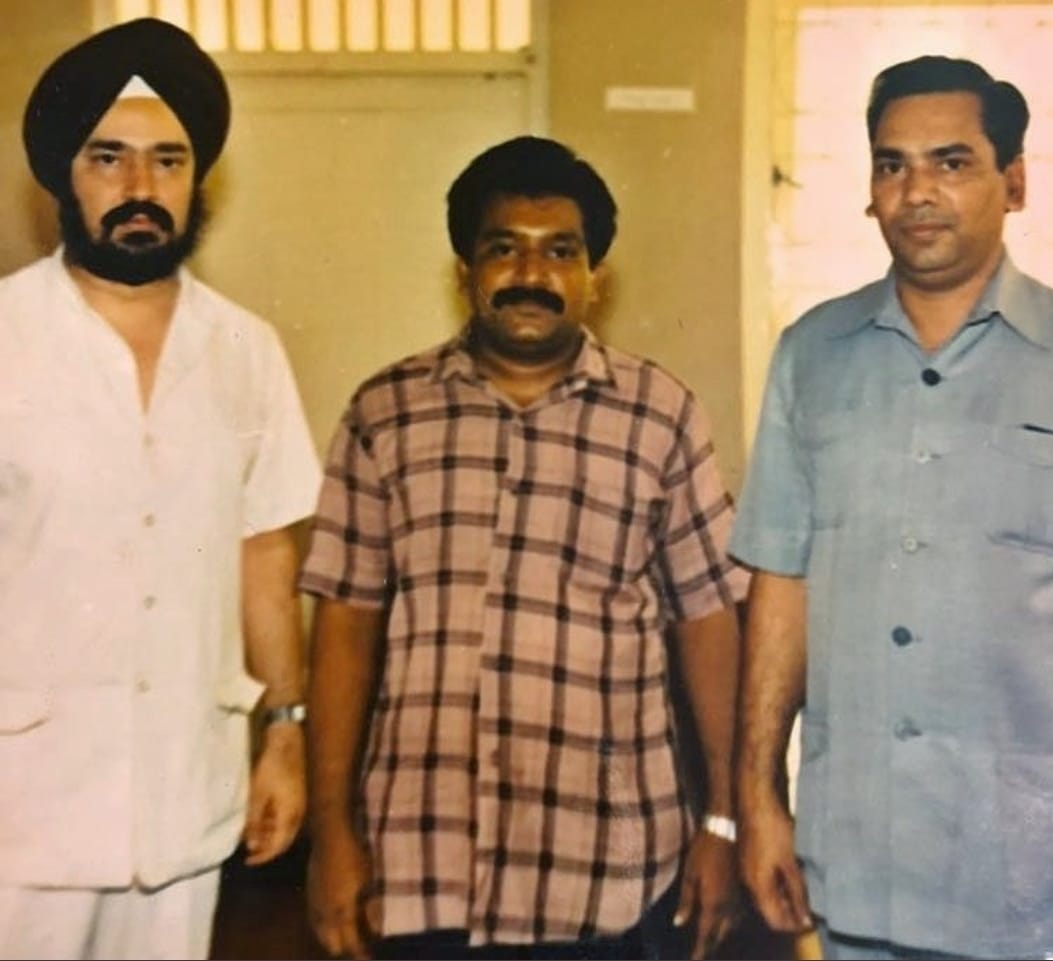
Although six convicts of the Rajiv Gandhi assassination case were released by the Indian Supreme Court on November 12, four of them have been again detained as they are Sri Lankans who had entered India without proper travel documents. They are being lodged in a special camp in Tiruchi, Tamil Nadu.

Some media reports indicate that the Indian authorities are in a quandary as to what action could be taken regarding them as they do not have documents to prove their country of origin. Yet, some of their details proven during the proceedings of the case might be used as proof of their country of origin, if they intend to deport them, according to some observers.

Rajiv Gandhi assassination, that took place during an Congress Party election rally in Sriprumbuthur in Tamil Nadu on May 21, 1991, is a turning point in the Sri Lanka’s separatist war and there by in the recent Sri Lankan history as well. It is a result of the dynamics of the geo-politics in the South Asian region and it had a considerable bearing on the same dynamics which in turn paved the way for deep changes in the politics in both India and Sri Lanka. It also changed the relationship between India and Sri Lanka which had been severely soured in the context of an extension of the effects of the Cold War into the region, to a positive level.

Thus, the LTTE killed former Indian Prime Minister Rajive Gandhi, former Sri Lankan President Ranasinghe Premadasa, TULF leader A. Amirthalingam and many others. They miserably failed to change the suppressive attitudes of the Indian and Sri Lankan governments towards them by killing Rajiv Gandhi and Premadasa

The initial years of the separatist war in Sri Lanka, the Tamil armed groups seemed to be ideologically slanted towards left with some groups such as the EPRLF openly displaying pictures and quotations of Karl Marx, Engels and Lenin in their offices and propaganda materials. However, they, especially the LTTE openly dared to breach Lenin’s edict on individual terrorism. They killed leaders of rival armed groups, State officials and politicians. Even JVP, which stands for Marxism, unsuccessfully followed this method to the change course of the State oppression which they termed as State terrorism.

Thus, the LTTE killed former Indian Prime Minister Rajive Gandhi, former Sri Lankan President Ranasinghe Premadasa, TULF leader A. Amirthalingam and many others. They miserably failed to change the suppressive attitudes of the Indian and Sri Lankan governments towards them by killing Rajiv Gandhi and Premadasa. Yet, they, by these acts made a tremendous impact on the disgruntled or rebel groups in many countries. For instance, an armed Madhesi group in Nepal with which the Nepalese Government signed a peace deal in 2010 had named themselves Liberation Tigers of Terai Eelam, so that the initials of the name, LTTE becomes identical as that of the Liberation Tigers of Tamil Eelam. (Interestingly, the word Eelam which means in Tamil “Lanka” had been borrowed from the Sri Lankan rebels)

The failure on the part of some of the Sri Lankan leaders as well as the Tamil armed groups, especially the LTTE to realise the geo-politics in the region cost the country and primarily the Tamils in the north and the east dearly. President J.R.Jayewardene, even being a seasoned and shrewd politician, chose to take the side of the Western powers during the peak of the Cold War provoking the wrath of India which was then a close ally of the USSR. And the then Indian Prime Minister Indira Gandhi provided the Sri Lankan Tamil armed groups with funds, weapons and training in early 1980s to fight against the Sri Lankan armed forces. In brief, as Zelensky of Ukraine did, JR, as he was commonly known, took the beating at the hands of the neighbour by supporting the latter’s enemy.

Dynamics of geo-politics was alien to the perceptions of Velupillai Prabakaran as well. Even after all other Tamil armed groups renounced the armed struggle for a separate State within Sri Lankan territory in 1987, he fought not only with the Sri Lankan armed forces, but also with that of India. Besides, he antagonised Tamil intelligentsia, Sinhalese leftists who initially supported his separatist cause and Muslims who were the majority in the Eastern Province.

Despite India providing assistance to the Tamil armed groups, it in fact did not want an independent Tamil State adjacent to its Southernmost State of Tamil Nadu which was then home to 50 million Tamils. Indian leaders knew that such an independent Tamil State would result in separatist trends in Tamil Nadu as well while becoming a launching pad for secessionist movements that might so emerge in that State. Besides, it was a State where a separatist movement was active before it was outlawed by Jawaharlal Nehru in 1960s.

India successfully convinced President Jayewardene’s government to accept the concept of devolution of power by diplomatically pressurising him using the senior officials of its Foreign Office such as G. Parthasarathy and Romesh Bandari by 1987. Also Prime Minister Rajiv Gandhi used coercive means as well to implement the concept. He once, on June 3, 1987, sent a flotilla of ships to trespass into the Sri Lankan waters in the guise of sending food to people entrapped by the war in the Jaffna peninsula. On the next day 5 Indian planes escorted by two Mirage jets airdropped relief supplies in various places in the Peninsula.

Once it tamed Sri Lankan leaders, India no longer wanted to support the separatist cause of Tamil groups and hence thrust an agreement, Indo-Sri Lanka Peace Accord on both the belligerent parties in the neighbouring country, the government as well as the Tamil rebels in 1987. During the 4th SAARC summit in December, 1988 in Islamabad the then Indian Foreign Secretary S.K.Singh informed India’s official stance on the war in Sri Lanka to the media by categorically ruling out the possibility of carving out of a Tamil State in the island. Had Prabakaran realised, at least then what was in store for his struggle, tens of thousands of lives could have been saved in the next two decades.

Apart from the fears of separatism seeping into Tamil Nadu India was compelled to take military action against the LTTE as the outfit started to attack its forces, the “Indian Peace Keeping Force” (IPKF) stationed in the island, subsequent to the signing of the Indo-Sri Lanka Accord. Yet, the Indian leaders were in a quandary when anti-India feelings began to mount in its Tamil State due to the sufferings of Sri Lankan Tamils at the hands of the so-called IPKF. Hence, it wanted to leave the matter to the Sri Lankans to settle among them. It was further facilitated by an unceremonious call by President Premadasa for the de-induction of the IPKF which was completed in March1991.

Nevertheless, Prabakaran’s ignorance on the dynamics of geo-politics prompted him to assassinate Rajiv Gandhi two months after that, as a measure of revenge, pushing the Indian authorities to actively support the Sri Lankan government in its effort to eliminate the Tamil rebels.

The geo-political compulsion exerted on India to finger into Sri Lankan affairs was largely taken off by the end of the Cold War with the collapse of the Soviet Union and the socialism in the Eastern Europe in 1991 itself. Subsequently, India became closer to the West than J.R’s Sri Lanka. Hence, Indian leaders occasionally and ritualistically call on the Sri Lankan leaders to implement a comprehensive programme of devolution of power in the island which they can exploit in Tamil Nadu during elections. The call is now also used as a leverage to exploit economic gains as well.

Posted in Uncategorized

Sri Lanka targets one million Chinese tourists

The Sri Lanka Embassy in Beijing, consistent with its efforts to continuously promote Sri Lankan tourism in the Chinese market, is targeting one million Chinese tourists to visit Sri Lanka after the China travel restrictions are relaxed, a statement from the mission said.

Ambassador Dr. Palitha Kohona met with the General Manager of Beijing Spring Travel Service Co., Ltd, Mr.Yang Yang, on November 16, 2022, in order to further bilateral cooperation in the tourism industry.

The Ambassador Dr. Kohona said that the Embassy is also exploring all possible ways to position Sri Lanka as a preferred destination in the Chinese Market including a formal request to the authorities.
General Manager Mr. Yang said that Beijing Spring Travel Service Co., Ltd is among the top 10 Travel companies in Beijing and Shanghai and has been accorded award certificates many times by the Chinese Government and the travel trade. The annual business turnover of Spring Travel in 2019 was 24.5 billion RMB (3.5 billion USD). Spring Airlines is valued at 50 billion RMB.

The company is already well established in the Sri Lanka travel trade and connected with local travel companies. They have organised a series of group visits to Sri Lanka before the pandemic. The company owns Spring Airlines with 110 aircraft (A320). The Ambassador has already spoken with the airlines of Chongqing, Shanghai, Shandong and Sichuan. The Ambassador and Mr.Yang also discussed the possibility of Spring Airlines establishing air connectivity with Colombo from Chongqing, Chengdu, and Kunming.

Sri Lanka in talks for USD 1 Bn “debt-for-nature” swap deal: report

Sri Lanka is in talks for a “debt-for-nature” swap deal of up to USD 1 billion in climate-focused finance, a kind of agreement discussed at the United Nations COP27 summit in Egypt, Reuters reported citing people familiar with the matter.

According to the news report, such agreements are part of efforts to address an intractable quandary facing world leaders as to who would pay the bill for the global fight against biodiversity loss and climate change.

Sri Lanka is among several other countries including Ecuador and Cape Verde exploring the possibility of striking debt-for-nature swap deals to ease the debt problems.

A debt-for-nature swap deal is a bilateral agreement, which involves purchasing foreign debt, converting that debt into local currency and using the proceeds to fund conservation activities. The key to the transaction lies in the willingness of commercial banks (or governments) to sell debt at less than the full value of the original loan.

Reuters reported that Ecuador – a serial defaulter and its sovereign bonds are again trading at “distressed” levels, or a deep discount to their face value – is now n talks with banks and a nonprofit group in an attempt to teach a deal that would see about USD 800 million of its debt refinanced more cheaply, freeing up the savings conservation efforts.

At that level, it would be the biggest debt-for-nature swap struck to date, yet it could eventually be trumped by others, including Sri Lanka, which has been discussing a deal of up to $1 billion according to people familiar with those talks, the news agency said further.

Cape Verde, an archipelago nation off West Africa, is meanwhile close to a nature swap that could be worth up to USD 200 million, said Jean-Paul Adam, a former Seychelles government official who now works for the U.N. Economic Commission for Africa (UNECA), providing financing advice to governments.

Reuters stated that Ecuadorian, Sri Lankan and Cape Verde governments did not respond to requests for comment for this story, although Ecuadorian President Guillermo Lasso said in an local newspaper on Oct. 12 that its Galapagos swap deal could be wrapped up in four or five weeks.

The potential deals for Ecuador, Sri Lanka and Cape Verde, reported here in detail for the first time, point to a jump in interest for this form of financial alchemy, which was conceived decades ago but has remained something of a niche area until recently.

Only three of over 140 or so swaps struck over the past 35 years – the first in 1987 – had a value of more than a quarter of a billion dollars, according to global data published by the African Development Bank. The average size was $26.6 million.

The combined value of swap deals to date is $3.7 billion, according to the data. That’s a fraction of the $400 billion of emerging market sovereign debt analysts at Capital Economics recently estimated had fallen to distressed levels.

Advocates say that those current debt problems, combined with the growing political will and the recent successful swap deals in the Seychelles, Belize and Barbados, mean a swathe of other countries are now exploring the model.

-with inputs from Reuters

Lankan Defense Secretary heads delegation at Pakistan-Sri Lanka Armed Forces Defence Dialogue

Third Round of Pakistan-Sri Lanka Armed Forces Defence Dialogue (AFDD) was held in Expo Centre Karachi from 16-17 November 2022. Pakistan delegation was led by Lt. Gen. (Retd) Hamood uz Zaman Khan, Secretary of Defence. The Sri Lankan delegation was headed by Gen. (Retd) Kamal Gunaratne, Secretary of Defence.

During the Dialogue, Pakistan and Sri Lanka reviewed the existing scope of bilateral military relations and expressed satisfaction on the progress achieved under the umbrella of AFDD. Both leaders exchanged views on regional security and upcoming challenges. It was agreed that Pakistan and Sri Lanka will continue to support each other at all regional and international fora. The cooperation in the field of defence industry, military training, joint exercises high level visits will continue.

In the end, it was agreed that next meeting of AFDD will be convened in Sri Lanka on mutually agreed dates in 2023.

The delegation also visited the Defense Expo IDEAS-22 which is being held at Karachi and held discussions with various stakeholders. The high-level defence delegation also called on the Minister of Defence Production, Secretary of Defence Production, Secretary of Defence and Chairman Joint Chiefs of Staff Committee during their visit to Pakistan. H.E Maj. Gen. (R) Umar Farooq Burki HI (M) High Commissioner of Pakistan in Sri Lanka ensured to facilitate and make this a successful high-level Sri Lankan defence visit to Pakistan.