An Open Letter To The;
Most Venerable Thibbatuwawe Sri Siddhartha Sumangala Mahanayaka Thero of the Malwatte Chapter
Most Venerable Dr. Warakagoda Dhammasiddi Sri Gnanarathabidhana Mahanayaka Thero of the Asgiriya Chapter
Most Venerable Dodambahala Sri Chandrasiri Mahanayaka Thero of the Amarapura Chapter
Most Venerable Makulewe Wimalaabhidana Thero of the Ramanna Chapter
My humble salutations to the most Venerable Mahanayaka Theros!
Self Introduction
My early life had been in Kurunegala and Anuradhapura. I used to spend considerable time within the precincts of the Mahabodhi as a child taking all our visitors around the Mahabodhi. I used to also visit Ruwanwelisaya and other Vihares and Dagabos in the company of our visitors. In the 1940s before the so-called Independence, there was so much understanding and camaraderie among the Sinhalese Buddhists and Tamil Hindus. The Old Town in Anuradhapura had a high percentage of Tamil speaking people then.
In fact the Udarata Sinhalese had asked for Federalism from the Donoughmore Commissioners. If only the Tamil Leader at that time instead of being selfish had asked for Federalism instead of 50:50 we would definitely have got a Federal Constitution despite the underhand work done by DS Senanayake and Sir Oliver Goonetilleke, trying to influence the Soulbury Commissioners in England to grant a Unitary Constitution.
I was the recipient of the Mackeen Memorial Prize at Royal College in 1957 for Comparative Religions. From my student days I was interested in Comparative Religions. I have some knowledge of Buddhism and the other religions in Sri Lanka.
I was the Assistant Secretary of the Congress of Religions from its inception in 1965.Mr. SNB Wijeyekoon was its Secretary. It had been later incorporated in 1970 as Act No.13 of 1970. We made arrangements for the then Mahanayake Thero of the Malwatte Chapter to visit Jaffna and he in fact visited Jaffna then. Under the political leadership of Hon’ Dudley Senanayake as Prime Minister such arrangements were considered a prelude to the solving of the ethnic problem. But it was not possible to solve the ethnic problem though there was relative peace during the stewardship of Hon’ Dudley Senanayake. I believe I am the only one living among the original Members of the Congress of Religions.
I was a votary of world renowned Philosopher Jiddu Krishnamurthy in the company of Dr. EW Adikaram and Mr. Shanmuganayagam, Advocate. We had seen so much similarities between Buddhist Philosophy and the Philosophy of Krishnaji.It was Krishnaji who told me when we met for the last time at Adyar that I had heard enough of him and it was time for me to share my knowledge with others. It is the confidence given to me by Krishnaji and others which prod me to address this letter to Your Goodselves.
I mention these facts to let you know that I am not conditioned by parochial factors. My sole concern is a scientific and religious consideration of the ethnic problem in Sri Lanka.
Epistle by Your Venerable Reverends to the President
Reverend Sirs!
May I refer Your Goodselves to the epistle you have addressed recently to the President regarding the 13th Amendment? According to the Thinakural (in Tamil) Your Venerable Reverends have stated as follows:
1. By granting Land and Police powers together with the right to administer archaeological sites and places of religious worship to the Provincial Councils, it would lead to separation.
2. The previous Presidents did not administer the Thirteenth Amendment fully, cognizant of the instability that it could lead to.
3. The President is under an obligation to protect the sovereignty of the Country. Administering the Thirteenth Amendment would enrage the People.
4. The President should avoid pandering to the wishes and conditions that powerful nations might stipulate in order to grant economic benefits when this Country now faces an economic impasse.
5. The President should desist from implementing the Thirteenth Amendment fully, using his executive powers.
Let me examine the abovesaid statements.
1. By granting Land and Police powers together with the right to administer archaeological sites and places of religious worship to the Provincial Councils, it would lead to separation.
Response – Are the most Venerable Mahanayake Theros saying every Provincial Council would ask for separation if the President grants Land and Police powers together with the right to administer archaeological sites and places of religious worship to the Provincial Councils? If that is so, then why not? After all there are 20 cantons in Switzerland. We could have a confederation like in Switzerland allowing every Province to function independently and separately subject to certain rights of the Centre.
If the Venerable Theros think that the Provinces other than the Northern and Eastern Provinces would not want to act independently but that only the North and East would want to separate then they infer that because the North and East are Tamil speaking areas they would want to separate or act independently. In other words the Venerable Theros believe the Tamils are not satisfied being under the yoke of the Sinhalese governed Central Government and therefore the North and East must be forcibly kept under the boot of the Sinhalese without giving any freedom to the Tamil speaking people of the North and East to govern themselves.
Was it not such thinking that has brought economic instability to the Country? How long is this Country going to prepare for war against the Tamils and spend colossal amount of foreign exchange to keep the military in readiness? And what are the Sinhalese scared about at the worst? That the Tamils of the North and East would separate and form their own Thamileelam? How does it affect the Sinhalese? The Sinhalese never occupied the North and East in great numbers. The Buddhist remains in the North and East are those from during the time of the Demala Baudhayo.(Tamil Buddhists) (vide Demala Baudhayo by Professor Sunil Ariyaratne in Sinhala language). In any event there was no Sinhala language born during the time of the Demala Baudhayos. The Sinhala language came into being only in the 6th and 7th Centuries AD. Only those who spoke the Sinhala Language could be identified as Sinhalese. The Mahawansa never referred to a people called the Sinhalese nor to a language called Sinhala!
Are Your Goodselves worried about separation because Your Venerable Reverends are aware that the Sinhalese have no legitimate rights whatsoever to control the Tamils? You are therefore wanting force and violence to be used on the Tamils to keep them subjugated. Is it not? Is that what Buddhism has taught your Reverends? In Aggañña Sutta, Dūgha-Nikœya it is stated
“The king, the ruler of the world, the dharmic dharma-king [P. dhammiko dhammarœja] relies just on dharma; honours dharma, reveres dharma, esteems dharma; with dharma as his standard, with dharma as his banner, with dharma as his mandate, he sets a dharma watch and bar and ward for folk within his realm […] for warrior and camp follower, for brahman and for householder, for town and country folk, for recluse and for godly man, for beast and bird alike.“
Is not Ahimsa part of Dhamma my revered Venerable Mahanayake Theros? The term Ahimsa is an important spiritual doctrine shared by Hinduism, Buddhism and Jainism. It literally means ‘non-injury’ and ‘non-killing’. It implies the total avoidance of harming of any kind of living creatures not only by deeds, but also by words and in thought. How could Bhikkus of your calibre and sensitivity preach something which harms a section of our People?
After all the Tamils of the North and East are asking for something which the International Law gives them the right to claim and enjoy. Article 1 of the International Covenant on Civil and Political Rights states as follows – All peoples have the right of self determination. By virtue of that right they freely determine their political status and frely pursue their economic, social and cultural development.
Does it not occur to Your Goodselves that not granting to the Provincial Councils Land and Police powers together with the right to administer archaeological sites and places of religious worship in their own areas would keep the Tamils without freedom under the hegemony of the Sinhalese rulers at the Centre? Is that what Buddhist Bhikkus of the highest calibre as the four of you want? To do himsa to the Tamils?
Granting Land and Police powers to the North and East under our Unitary Constitution would not lead to separation under any circumstances. It would only curtail and to some extent control the nefarious activities carried out by the Centre and its Agents in the North and East. Do Your Goodselves want to perpetuate the wrongs done by the Centre in the North and East by requesting the Centre to not grant Land and Police powers to the North and East which they are by Law entitled?
2. The previous Presidents did not administer the Thirteenth Amendment fully, cognizant of the instability that it could lead to.
Response – Have not the previous Presidents by their shortsightedness created circumstances which brought civil war within this Country. Was it not the foolish utterance by President JR Jayewardene “if the Tamils want war let them have war; if they want peace let them have peace” which gave impetus to the thirty years’ war in Sri Lanka? If the Thirteenth Amendment was fully administered by the successive Presidents there was a possibility of bringing about a settlement to the ethnic problem though Thirteenth Amendment is not at all a permanent solution to our problem. Only a confederation would solve our ethnic problem permanently. Thus the non-administering of the Thirteenth Amendment caused immense instability. Why not try the full administration of the Thirteenth Amendment to see if it leads to anything worse than the Thirty Years’ War even though the full adminstration of the Thirteenth Amendment is no permanent cure for our political problems. We could in fact find out what the people of the North and East want by conducting a Referendum under the auspices of the United Nations.
3. The President is under an obligation to protect the sovereignty of the Country. Administering the Thirteenth Amendment would enrage the People.
Response – What sovereignty are your Venerable Reverends speaking of? The Tamils of the North and East are historically and in fact a Nation by themselves. They have a defined homeland, distinct language, culture and collective consciousness. They no doubt lost their sovereignty just as the Sinhalese to the Portugese colonial conquest, followed by the Dutch and then the British. The British failed to recognise the Tamil Nation when they handed over the reigns of Government to those in power during the time of so called Independence.But that did not negate the existence of the Nationhood of the North Eastern Tamils. The Tamils continued their historical democratic struggle to share sovereignty for thirty years from the time of so called Independence. But the 1972 Constitution failed to recognise the Nationhood of the Tamils of the North and East. The elected Members of Parliament showed their disapproval in Parliament and outside it. So did the 1978 Constitution. Again the Tamil Representatives showed their regret for not recognising a historical and existential fact in the new Constitution.
Thereafter when democratic means failed during the first thirty years after so called Independence, there was a militant struggle for another thirty years. There was during the said period of violence a de facto Tamil State in the North and East for nearly thirty years which was tacitly recognised during the Internationally backed Peace Process in 2002. The Tamils at the next Election at that time fully endorsed the Earned Tamil Sovereignty.
A Nation is different from a Country or State. Several Nations could live side by side in a Country. A Nation’s sovereignty exists independent of the country’s sovereignty. A Nation consists of people of common origin, language and history. The Country could have several such Nations living side by side. The sovereignty of a Nation cannot be taken away by the Country claiming sovereignty to itself.
If the people are educated on all these matters there is nothing that our people need to get enraged about. If we hold a Referendum for the people of the North and East by the UN then there would be nothing that could enrage our People. They would have to accept the decision of the People.
4. The President should avoid pandering to the wishes and conditions that powerful nations might stipulate in order to grant economic benefits when this Country faces an economic impasse.
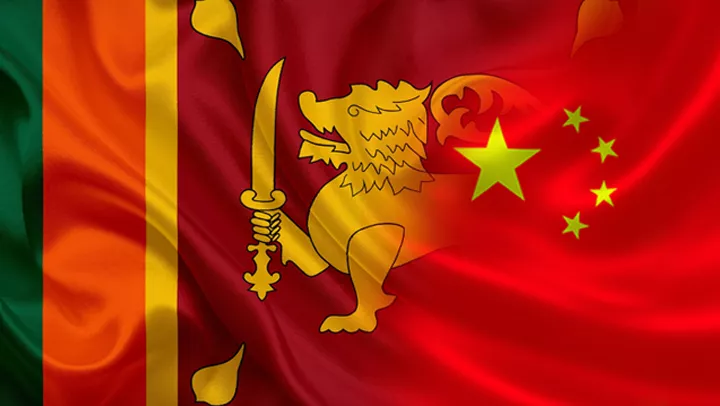
Response – The economic impasse of this Country is definitely largely due to the conduct of the war at tremendous expense. Of course lots of middlemen made millions on commissions and cuts. But the Country went down economically due to the politicization of the Public Service. Was it not pandering to the wishes and conditions laid down by China when it readily gave money to Sri Lanka to boost the egos of certain Politicians which has brought us to this level of indebtedness? After all powerful Nations are trying to point out to this Country where they went wrong. Why cannot spiritual personalities like Your Goodselves who are Mahanayake Theros understand what those powerful Countries are saying? Why are you not examining their statements objectively? I do not have to remind you of the Kalama Sutta.
It says “It is proper for you, Kalamas, to doubt, to be uncertain; uncertainty has arisen in you about what is doubtful. Come Kalamas! Do not go upon what has been acquired by repeated hearing; nor upon tradition; nor upon rumor; nor upon what is in a scripture; nor upon surmise; nor upon an axiom; nor upon specious reasoning; nor upon a bias towards a notion that has been pondered over; nor upon another’s seeming ability; nor upon the consideration ‘This monk is our teacher.’
Kalamas! when you yourselves know: ‘These things are bad; these things are blamable; these things are censured by the wise; undertaken and observed these things lead to harm and ill,’ abandon them!”
Let not Your Reverends lead the people of this Country down wrong and precipitous paths by Your Reverends’ impulsive statements!
5. The President should desist from implementing the Thirteenth Amendment fully, using his executive powers.
Response – The President using his executive powers under our Unitary Constitution to fully implement the Thirteenth Amendment is not going to solve the Tamils’ basic problem of Sinhala hegemony over them. The President knows at least the full implementation of the Thirteenth Amendment would show this Country in a better light to the rest of the world at a time when this Country is going round the World with a begging bowl.
We are asking for a confederal system to get out of the hegemonic hold that the Sinhalese people and their Politicians have over us. Your Reverends are saying don’t give anything to the Tamils. As between the President and Your Goodselves don’t you find yourselves on the side of extremism compared to the President? I thought the Buddha preached the Middle Path!
Venerable Sirs! Let me tell you the truth of what happened. DS Senanayake influenced the Soulbury Commissioners by sending O. E. Goonetilake to England to meet the Commissioners before they came to Sri Lanka. Somehow he wanted a Unitary Constitution which would give overall powers to the Centre and therefore to the majority community the Sinhalese.
Having got a Unitary Constitution and the corresponding hold on the entire Country, the Sinhalese went on to capture the reins of Government throughout the entire Island. No Sinhala Politician is now prepared to lose the grip they got through the Unitary Constitution.
It is the Unitary Constitution that gives the Sinhalese the power to control the Tamil speaking People of the North and East not that the Sinhalese have any claims or rights historically or otherwise over the North and East.
The Tamil speaking People have always occupied the North and East continuously for over 3000 years. If Your Reverends do not accept what I say Your Good Selves could ask His Excellency the President to appoint a panel of Historians consisting of Sinhalese, Tamil, Muslim, Indian and International Historians to sit together and write our ancient History officially.
Thanks.
I remain
Yours Truly
Sgd.
Justice C. V. Wigneswaran MP