S. African Envoy to brief CoI on human rights experience

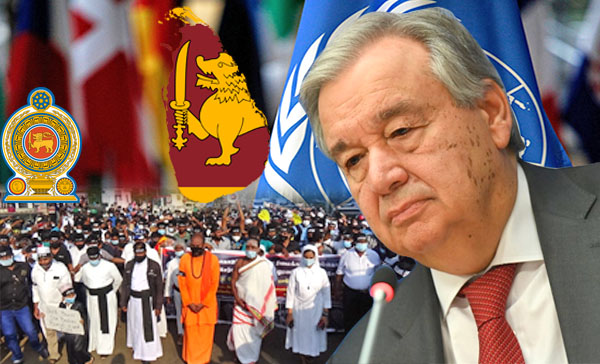
South African High Commissioner to Sri Lanka S.E. Schalk will appear before the Presidential Commission of Inquiry (CoI) for the Appraisal of the Findings of Previous Commissions and Committees and the Way Forward to investigate, inquire into, and report or take necessary actions on the findings of preceding commissions or committees appointed to investigate into human rights violations, serious violations of international humanitarian law, and other such offences today (12).

Schlak is scheduled to make statements before the CoI regarding missing persons in Sri Lanka, human rights violations, the legal system of South Africa, and the actions taken by them regarding related matters in South Africa.

The CoI is chaired by Supreme Court Judge Justice A.H.M.D. Nawaz, while its other members inlcude retired Inspector General of Police (IGP) Chandra Fernando, retired District Secretary Nimal Abeysiri, and former Mayor of Jaffna Yogeswari Patkunarajah.

Meanwhile, Minister of Foreign Affairs M.U.M. Ali Sabry (PC) said recently that a truth-seeking mechanism will be established before March 2023, based on the final report of this CoI, which was appointed by former President Gotabaya Rajapaksa, and which is expected to be released this month.

Posted in Uncategorized

Sri Lanka state minister, CB Governor meets IMF’s Gopinath

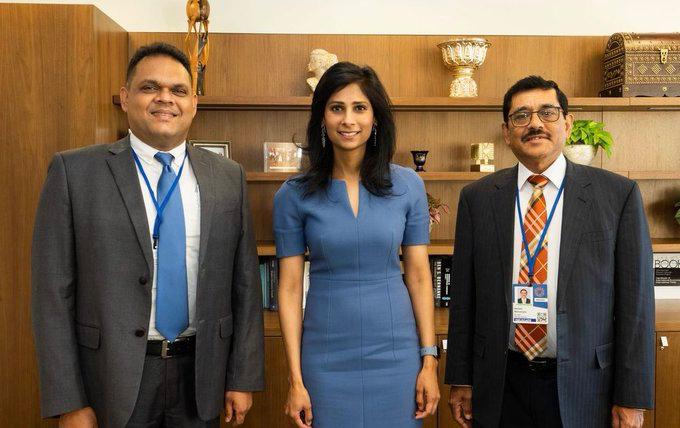
Sri Lanka’s State Minister for Finance Shehan Semasinghe and Central Bank Governor Nandala Weerasinghe has met the International Monetary Fund’s Deputy Managing Director Gita Gopinath in Washington.

A delegation from Sri Lanka including Treasury Secretary Mahinda Siriwardene is in the US as part of a delegation for the IMF annual sessions.

“The severe challenges facing Sri Lanka and the steps taken to meet them were discussed,” during the meeting with Gopinath, the island’s Finance Ministry said.

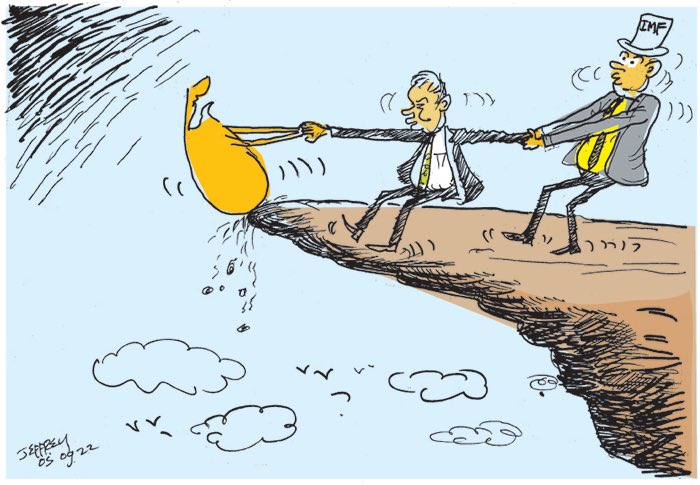
Sri Lanka has struck a reform deal with the IMF involving raising taxes, fixing losses in state enterprises and also re-structuring debt.

Sri Lanka’s rupee collapsed from 200 to 360 to the US dollar in 2022, after two years of money printed by a reserve collecting central bank to suppress rates.

Sri Lanka is going to the IMF for the 17th time with forex shortages from the intermediate regime.

Solhiem gets a new role in Sri Lanka

Former Norwegian peace envoy Erik Solhiem has been appointed as an International Climate Advisor to President Ranil Wickremesinghe.

Solhiem, who is, currently in Sri Lanka had talks with the President on issues related to climate change.

“The President has a great vision for green economic recovery and for Sri Lankan climate leadership,” Solheim said following his meeting with the President.

In 2017 then Prime Minister Ranil Wickremesinghe had talks with Solheim in Switzerland on the sidelines of the World Economic Forum.

Solheim was then the Executive Director of the United Nations Environment Programme and he had agreed to work with Sri Lanka through his new role at that time.

Wickremesinghe was Prime Minister when Solheim was involved as a Norwegian peace negotiator but Solheim was later accused of being biased towards the LTTE.

As a negotiator of the peace process in Sri Lanka between 1998 to 2005, Solheim attempted to reach a compromise between the Government and the LTTE.

Norway eventually withdrew from the peace process after the Government led by then President Mahinda Rajapaksa decided to defeat the LTTE militarily.

Sabry faults ‘handful of persons’ but won’t accept charge of economic crimes

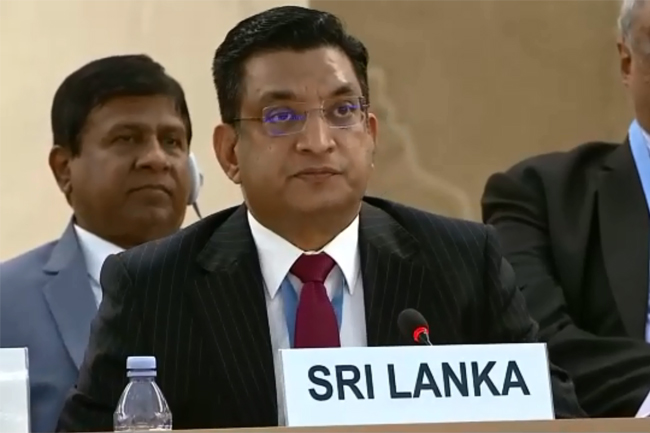
Foreign Minister Ali Sabry has reiterated that a handful of persons who advised President Gotabaya Rajapaksa caused the unprecedented economic meltdown.

Sabry has alleged that politicians, officials, public sector as well as the trade unions are responsible for the crisis.

The Minister said so in response to ‘Hiru’ anchor Chamuditha Samarawickrema seeking an explanation regarding the Geneva-based United Nations Human Rights Council (UNHRC) taking up the contentious issue of economic crimes in Sri Lanka.

In a wide-ranging interview on ‘Salakuna’ on Monday (10), Sabry repeated the accusations that he had made in June in his capacity as the Finance Minister following talks with the International Monetary Fund (IMF) in Washington.

However, Minister Sabry declined to call those responsible ‘economic assassins’ or categorise their actions ‘economic crimes.’ But he acknowledged that as a member of the Cabinet-of-Ministers he had also been named a respondent in Court cases in this regard.

Sabry stressed that he didn’t believe that those who had been blamed for the crisis did so purposely though the then President Gotabaya Rajapaksa acted recklessly, on advice received, without taking sufficient safeguards.

The Bar Association of Sri Lanka (BASL) is among the parties to move the apex court over the unprecedented financial meltdown.

The panel of interviewers, comprising Chamuditha Samarawickrema, Madushan de Silva and Kalindu Vithanage, repeatedly pointed out that the denial of basic requirements could be considered violation of human rights.

When the panel pointed out that Minister Sabry essentially agreed with the views expressed by the international community, and other interested parties, as regards economic crimes, the lawmaker said that in spite of the deteriorating crisis, still those responsible continued to make promises, at the expense of economic stability. Minister Sabry cited the recent declaration of free mid-day meal as a case in point. Such promises were made without making required financial provisions, the Minister added.

Minister Sabry said that he wouldn’t under any circumstances,defend the indefensible and alleged that the country wouldn’t have been in this mess if not for arrogant conduct of the decision-makers.

Sabry compared how Dr. Indrajith Coomaraswamy in his capacity as the Governor of the Central Bank (June 2016-Dec. 2019) had successfully handled an impending crisis due to the response of those at the helm following the last presidential election, in Nov. 2019 before it developed into a catastrophe.

The Minister said that as the former Finance Minister he took the responsibility for the declaration of default status by Central Bank Governor Dr. Nandalal Weerasinghe in the second week of April this year. Emphasising that there was absolutely no uncertainty regarding that decision taken, Minister Sabry said that in addition to the Finance Secretary, Mahinda Siriwardana, and Dr. Weerasinghe, the government had consulted a three-member committee of economic and fiscal experts of the Presidential Advisory Group, Dr. Indrajith Coomaraswamy, Prof. Shanta Devarajan and Dr. Shamini Cooray.

Minister Sabry cited the Ceylon Electricity Board (CEB) as one of the enterprises that had contributed to the deterioration of the national economy. He explained how the CEB engineers brazenly thwarted attempts to enhance renewable energy capacity on various pretexts. Calling them a Mafia organization, Minister Sabry pointed out how those who had blocked renewable energy projects, approved emergency power purchases, at exorbitant rates. Chamuditha Samarawickrema pointed out that there was no point in making such allegations. The Hiru team stressed the responsibility on the part of the government to address the issue at hand.

Commenting on the latest defeat, suffered by Sri Lanka at the UNHRC, Minister Sabry said that the country was paying a very heavy price for failing to fulfill the promises made by successive governments before the international community.

Declaring that Sri Lanka couldn’t accept hybrid courts to examine accountability issues, Minister Sabry decried the co-sponsorship of the Geneva resolution, in Oct 2015, during the Yahapalana administration. Responding to criticism that only seven countries voted, objecting the resolution moved against Sri Lanka, Minister Sabry said that of the 20 countries that voted against Sri Lanka, many represented the EU. Minister Sabry said that the proponents of the resolution believed they could secure more than 24 votes though ended up with 20.

Sabry reiterated their commitment to do away with the Prevention of Terrorism Act (PTA) perhaps before end of this year to pave the way for a new law, in line with international standards.

Minister Sabry emphasised that the contentious issues of reconciliation and accountability should be addressed with appropriate mechanisms. Success of such projects depend largely on workable mechanisms, not individuals.

Posted in Uncategorized

Sri Lankan Police methods for controlling public gatherings discussed

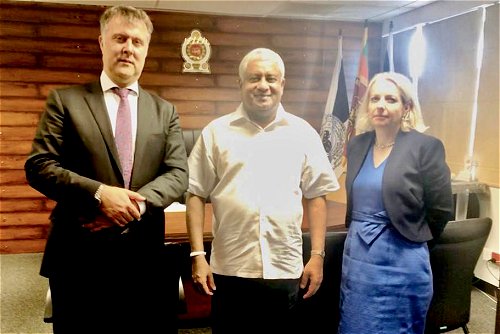
A meeting took place Tuesday (11) between Ben Mellor, Director, India and Indo-Pacific Ocean Directorate of the Foreign, Commonwealth and Development Office, British High Commissioner to Sri Lanka Sarah Hulton and the Minister of Public Security, Tiran AllesIt at the Ministry of Public Security.

At the meeting, Mr. Mellor drew attention to the way the Sri Lankan Police operates to control public gatherings.

Mr. Mellor stressed the importance of the Sri Lankan Police acting in a way that no party is prejudiced when controlling public gatherings.

Minister of Public Security, Tiran Alles emphasized that the Sri Lanka Police will have to take action when these public gatherings take place without obtaining legal permission.

Mr. Ben Mellor and High Commissioner Hulton also told the Minister of Public Security that they agree that protecting law and order is a major responsibility of the Sri Lanka Police.

Minister of Public Security requested the Mr. Mellor to support organizing a training workshop for the Sri Lanka Police officers on crowd control.

Also, Mr. Ben Mellor, Mrs. Sarah Hulton and Mr. Tiran Alles were of the unanimous opinion that children should not be used as shields during public gatherings.

Posted in Uncategorized

SLPP pushing for new Constitution in place of 22A

A majority of the members from the ruling Government party, the Sri Lanka Podujana Peramuna (SLPP), are of the view that a new Constitution should be adopted in Sri Lanka instead of introducing amendments to the existing Constitution, The Morning learnt, and the party has suggested that the new draft Constitution – recommended by the nine-member committee of experts headed by Romesh de Silva (PC) – be considered for this purpose.

An SLPP source, speaking on condition of anonymity, said: “The best thing is to bring a new Constitution. An experts’ panel chaired by de Silva was previously appointed and drew up a draft Constitution that is suitable for Sri Lanka.”

The source noted that a majority of the party members were of the view that the 22nd Amendment to the Constitution Bill is not the need of the hour.

“There should not be another Amendment to the Constitution, because it has been amended 20 times now. The last four amendments were made during the last six years, signifying that this Constitution is not suitable for Sri Lanka.”

The two-day debate and the vote on the proposed 22nd Amendment to the Constitution Bill are scheduled for next week, following its postponement last week.

It is learnt that the SLPP has scheduled an official meeting early next week to decide on their stance on the said Bill.

The party source also said that they have provided a draft Constitution and that the majority of the party is in favour of requesting the President to consider appointing a select committee if necessary and thereby introducing a new Constitution, rather than going ahead with this proposed amendment.

“The same position was confirmed by the President the day before yesterday, when he expressed sentiments regarding the electoral system, stating that he wants to change it, and also that if Parliament does not give him approval, he would go before the people. We can have both – a new Constitution and a new electoral system introduced together – and present the people with one referendum rather than holding several referendums,” the source said.

Meanwhile, Janatha Vimukthi Peramuna (JVP)-led National People’s Power (NPP) National List MP Dr. Harini Amarasuriya shared her views with The Morning yesterday regarding the party’s stance on matters concerning the Constitution, saying: “We proposed three amendments, so it depends on whether those amendments can be accommodated or not. One of the amendments is regarding MPs crossing over to various parties, where if there is a crossover, the MP in question needs to resign from his or her seat. Another is regarding the current President, who was appointed without the people’s mandate through Parliament and essentially allowed to serve for two and a half years. This is, in our view, a violation of the idea of sovereignty. We think that there needs to be some way in which the Constitution addresses that.”

When queried as to whether the JVP/NPP would vote in favour of the said 22nd Amendment to the Constitution Bill or would vote against it or abstain from voting, she said: “It is hard to say right now, as there is some doubt as to whether the Bill is going to be presented for a vote, so let us see.”

SL among 54 poor nations in urgent need of debt relief: UN

Cascading global crises have left 54 countries, including Sri Lanka – home to more than half of the world’s poorest people — in dire need of debt relief, the UN said Tuesday.

In a new report, the United Nations Development Programme warned that dozens of developing nations were facing a rapidly deepening debt crisis and that “the risks of inaction are dire”.

UNDP said without immediate relief, at least 54 countries would see rising poverty levels, and “desperately needed investments in climate adaptation and mitigation will not happen”.

That was worrisome since the affected countries were “among the most climate-vulnerable in the world”.

The agency’s report, published ahead of meetings of the International Monetary Fund, the World Bank, and also of G20 finance ministers in Washington, highlighted the need for swift action.

But despite repeated warnings, “little has happened so far, and the risks have been growing,” UNDP chief Achim Steiner told reporters in Geneva.

“That crisis is intensifying and threatening to spill over into an entrenched development crisis across dozens of countries across the world.”

The poor, indebted countries are facing converging economic pressures and many find it impossible to pay back their debt or access new financing.

“Market conditions are shifting rapidly as a synchronised fiscal and monetary contraction and low growth are fuelling volatility around the globe,” UNDP said.

The UN agency said debt troubles had been brewing in many of the affected countries long before the Covid-19 pandemic hit.

“The rapid build-up in debt over the past decade has been consistently underestimated,” it said.

The freeze on debt repayment during the Covid crisis to lighten their burden has expired and negotiations under the G20 Common Framework created during the pandemic to help heavily-indebted countries find a path to restructure their obligations has been moving at a snail’s pace.

According to available data, 46 of the 54 countries had amassed public debt totalling $782 billion in 2020, the report said.

Argentina, Ukraine and Venezuela alone account for more than a third of that amount.

The situation is deteriorating rapidly, with 19 of the developing countries now effectively shut out of the lending market — 10 more than at the start of the year.

A third of all the developing economies have meanwhile seen their debt labelled as being “substantial risk, extremely speculative or default,” UNDP’s chief economist George Gray Molina told reporters.

The countries at the most immediate risk are Sri Lanka, Pakistan, Tunisia, Chad and Zambia, he said.

Gray Molina said private creditors have so far been the biggest obstacle to moving forward with needed restructuring.

But he suggested that the current market conditions could pave the way for a debt deal, as private creditors see the value of their holdings plunge by as much as 60 percent.

“When emerging market bonds trade at 40 cents on the dollar, private creditors suddenly become more open to negotiation,” he said.

“The incentives are to now join a negotiation where you might accept the haircut of 20 cents on the dollar, 15 cents on the dollar and 30 cents on the dollar.”

But willing creditors are not enough to actually nail down a much-needed debt-relief agreement, Gray Molina acknowledged.

“The missing ingredients at this moment are financial assurances from major creditor governments to clinch a deal.”

Steiner, who has repeatedly raised the alarm about the crisis, voiced hope the international community might finally recognise that action is in everyone’s shared interest.

“Prevention is better than treatment and certainly… much, much cheaper than having to deal with a global recession,” he said.


Posted in Uncategorized

Cabinet briefed on IMF financial facility

The Cabinet has been briefed about the financial facility provided to Sri Lanka by the International Monetary Fund (IMF).

A group of IMF representatives who participated in the meeting of the Cabinet last evening (10) through Zoom technology have briefed the ministers.

The IMF agreed to provide a financial facility of USD 2.9 billion to Sri Lanka which is facing a severe economic crisis.

The IMF representatives have informed the Cabinet about details of the financial facility and the Ministers have been given the opportunity to ask questions.

Meanwhile, MP Patali Champika Ranawaka said that a programme will be implemented next week to inform the MPs about the economic crisis in the country and proposed solutions.

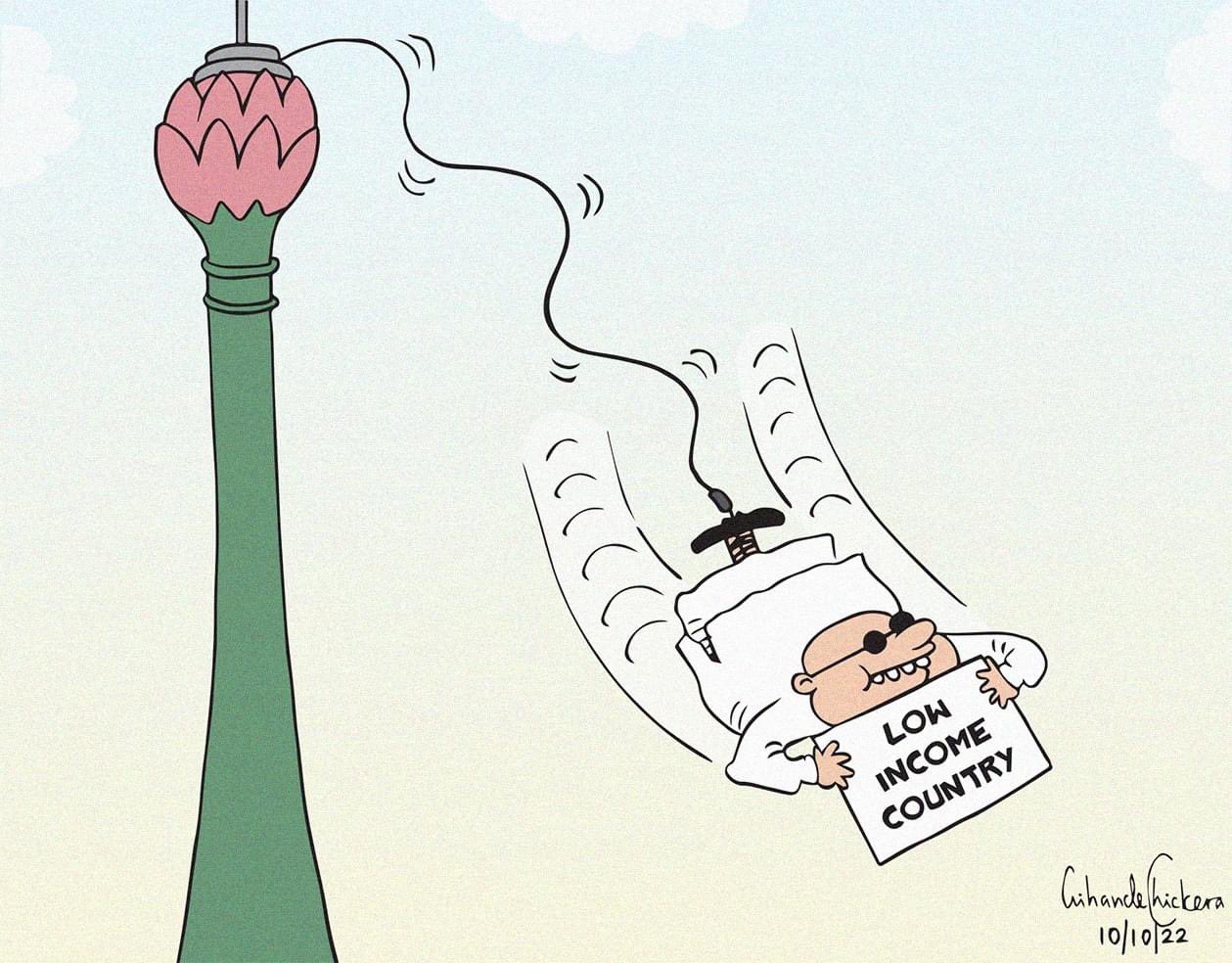
Cabinet nod given to voluntarily downgrade SL’s income status

Cabinet nod has been given to demote Sri Lanka to a lower income status, a step that is taken with the aim of having more access to financial assistance, loans and concessions.

The proposal was made so that the crisis-stricken country can gain concessionary funding from the International Development Association (IDA), which is the World Bank (WB) that helps the poorest and vulnerable nations.

Sri Lanka is currently categorised as a Developing/Emerging lower-middle income economy. In 2020 the island nation was downgraded to its current status just a year after (2019) it was elevated to the upper middle-income category.

Sri Lanka’s GNI as of 2021 as calculated by the World Bank is US$ 3,820.

Sri Lanka to double compensation paid to missing persons’ families amid high inflation

Days after the United Nations Human Rights Council (UNHRC) passed a tough new resolution on Sri Lanka, the island nation has announced a 100 percent increase in compensation paid to relatives of missing persons citing high inflation.

Cabinet spokesman Minister Bandula Gunawardena said on Tuesday October 11 that a proposal by Justice Minister Wijeyadasa Rajapakshe to increase the compensation was approved by the cabinet of ministers at Monday’s weekly cabinet meeting.

A statement from the government information department said that it had been previously decided in March 2022 that a 100,000 rupees should be paid as compensation to close relatives of missing persons based on the certificate of missing issued by the Registrar Genera.

The decision to double the amount was made after taking into account the long time it took to obtain the certificate and the insufficiency of 100,000 rupees.

Minister Rajapakshe has also proposed that the requirement of obtaining the certificate of missing be ignored if the compensation secretariat has confirmed that the relevant person is missing, the statement said.