Dallas gets stronger in Parliament

It is reported that the number of MPs in the Freedom People’s Council (FPC) led by Dullas Ahalapperuma is to to increase to 20 MPs.

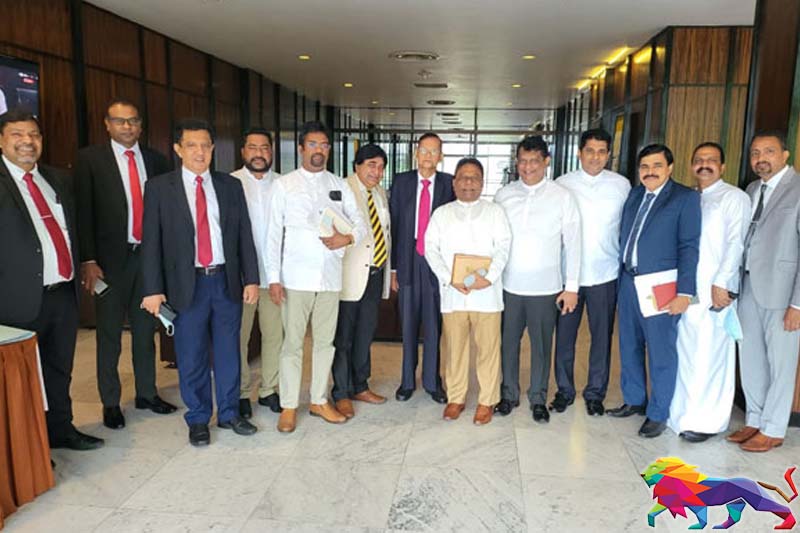
Currently, there are only 13 MPs in the group and in order to increase the number, a secret meeting was held at the residence of Prof. G.L. Peiris recently, reports say.

Following the discussion, the MPs who had attended had agreed to join them.

It is reported that Dallas Alahapperuma, Charitha Herath, Nalaka Godaheva, Dilan Perera representing the FPC as well as MPs Anura Priyadarshana Yapa, Priyankara Jayaratne, Sudarshini Fernandopulle, Jayaratne Herath, Chandima Weerakkodi and John Seneviratne also attended.

Meanwhile, the group of the Member of Parliament Dallas Alahapperuma has also held a discussion with the Sri Lanka Mahajana Pakshaya and has received the assent of the party leader – Asanka Navaratne.

It is reported that although Charitha Herath has initially expressed his reservations on the inclusion of Navaratne, it has now been settled.

The reason is that both of them represent the Kurunegala district.

When Charita Herath was to enter the fray from Kurunegala district under the SLPP ticket at the last general election, the SLPP founder – Basil Rajapaksa had cut him off. It was well known that Johnston Fernando had also supported this.

Major oil supplier threatens to withdraw triggering fuel crisis again

At least one oil supplier has threatened to cancel the fuel supply contract if Sri Lankan authorities fail to pay its balance payment, further exacerbating the crippling fuel crisis in the country.

Leading energy trading firm, BB Energy has informed the state-run Ceylon Petroleum Corporation (CPC) that they have the right to cancel the fuel supply contract owing to the non payment of their due amount as per its provisional invoice for 280,000 barrels of gas oil within 14 days following the arrival of their shipment.

The cash-strapped government is grappling to raise US $587 million to pay for several fuel shipments with Sri Lanka facing another severe fuel crisis after the government delayed payments for shipments already anchored at Colombo Port and several other shipments on its way to the port, informed sources said.

The CPC has unloaded a diesel consignment on September 14. One 37,000 metric tonnes (MT) Petrol 92 Cargo and one 100,000 MT crude oil cargo will have to be unloaded as the suppliers are awaiting payment, a senior Energy Ministry official said.

According to the message sent by BB Energy to CPC, it sated that they should be paid 2 per cent more than the amount quoted in provisional invoice and if failed to do so the company will unilaterally cancel the contract and divert the vessel to another discharge port.

The company is making this demand after receiving 10 per cent of the quoted amount in the provisional invoice, the senior official said adding that the government is grappling to ease fuel shortage under such difficult conditions.

Some of the present suppliers are yet to be paid for their fuel cargo already delivered to the CPC and if they withdraw from the fuel supply process the country will have to face another severe fuel crisis and people will have to bear the brunt, he opined.

The Sapugaskanda oil refinery is to face the risk of closing down again if the present crude oil supply is halted amidst current difficulties triggering an energy crisis that has led to island-wide rolling power cuts. The shutting down of the oil refinery from time to time for a long period would definitely cause mechanical and technical defects; senior equipment engineer of the CPC Janaka Wijesuriya said adding that restarting the system frequently and repairs were very costly. Some spare parts will have to be imported from the US and it has become a difficult task at present due to the dollar crisis.

This situation would not have arisen if the CPC stuck to the crude oil procurement plan of importing two shipment of 90,000 metric tonnes per month and 24 such consignments per year on term tenders, he pointed out.

Posted in Uncategorized

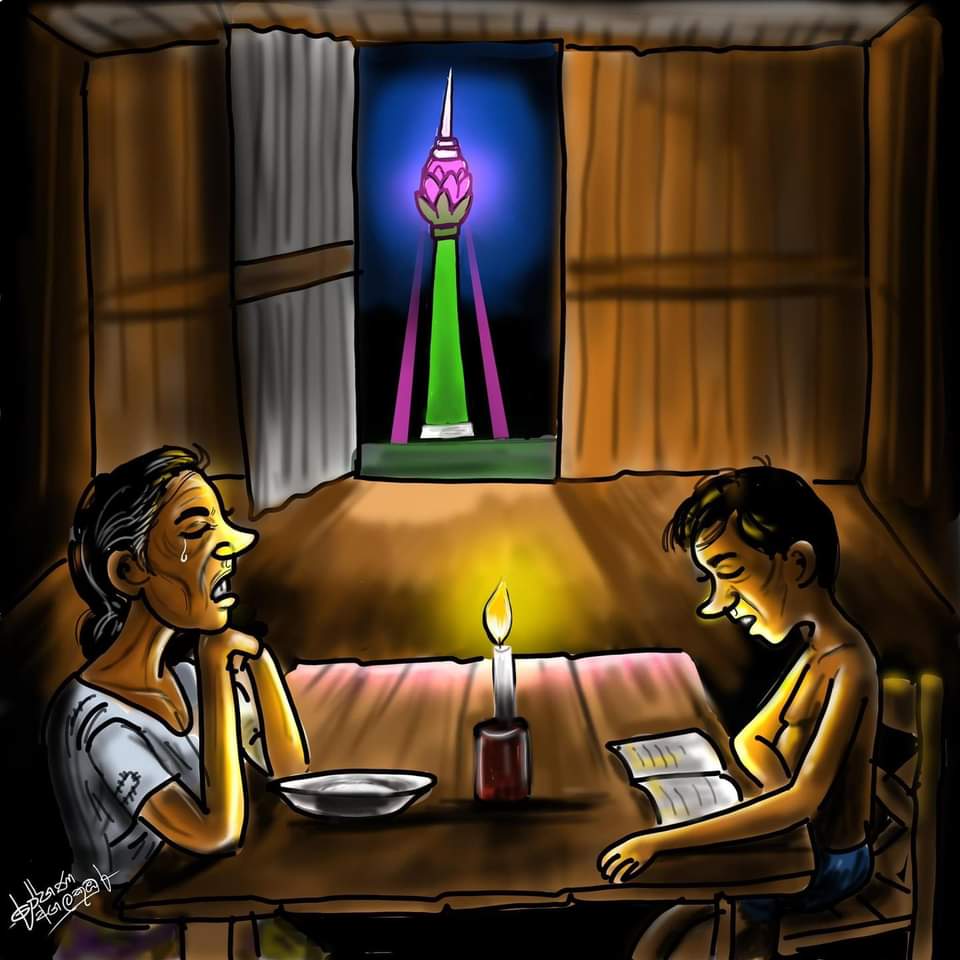
Sri Lanka heading for a humanitarian disaster

Sri Lankans have lost access to most medicine and medical supplies, setting them on course for a humanitarian disaster, Direct Relief reported.

Unlike Russia’s invasion of Ukraine and the recent hurricane batterings of Puerto Rico and Florida, Sri Lanka’s crisis grew slowly and has garnered few international headlines. But Sri Lankans are suffering amid the harshest economic crisis the country has confronted since gaining independence from the British empire in 1948.

With the country’s foreign reserves depleted, the nationalized healthcare system cannot afford to import medicine and medical supplies in sufficient quantities. Sri Lanka relies on imports for about 85% of its pharmaceutical needs and about 80% of its medical supplies. The country imported $815 million in medicine in 2021, but by May had only about $25 million in foreign reserves to pay for imports of any kind.

Last week in Sri Lanka, Direct Relief staff participated in an extensive series of meetings with Prime Minister Dinesh Gunawardena and much of the country’s healthcare leadership while overseeing the arrival of what may be the largest donation of medicine to the country since the crisis began.

What they encountered was grim. “For the next six months, they’re expecting a catastrophic number of deaths,” said Chris Alleway, Direct Relief’s manager of emergency response and new initiatives, who led the Sri Lanka meetings.

The 3,500-bed National Hospital of Sri Lanka in Columbo, which usually has 1,300 medicines in stock, is now down to requesting only the 60 most essential medicines.

With anesthesia in short supply, most general surgeries in the country have ceased, including kidney transplants. Cancer patients have lost access to medications needed to fight the deadly disease. Diabetes patients must secure and bring their own glucose meters for blood sugar checkups.

Many hospitals are stocked out of basic items like bandages and cotton balls. The stockouts are forcing rural clinics to close their doors and refer patients to larger facilities in urban areas, which also are overwhelmed by the flow of patients.

Due to a severe fuel shortage, the country’s fishing fleets cannot go far out to sea, slashing the supply of fish that is a significant source of protein in the country, including at its largest children’s hospital.

In addition to Sri Lanka’s Prime Minister and the Ministery of Health, Direct Relief staff met with the chairs of the country’s medical universities, including the colleges of oncology, psychiatry, nephrology, hematology, endocrinology, critical care medicine, anesthesiology, and maternal & child health.

Sri Lanka is also losing clinicians as they migrate to other countries with more opportunities, while its medical colleges see the number of applicants for medical education decline sharply.

“Every one of the medical college leaders informed us that they are in a dire situation, with major shortages across the board for everything,” Alleway said. “A lot of them were very emotional in our conversations. You could tell that they’re holding together the health care system to the best of their abilities with limited to no resources.”

Responding to the crisis spurred by Sri Lanka’s default in June of this year, Direct Relief has delivered eight humanitarian shipments totaling 27 tons and 16 million defined daily doses of donated medicine.

The largest shipment from Direct Relief to Sri Lanka—36,600 lbs. (18 tons) of medicine and medical supplies requested explicitly by Sri Lanka’s government—arrived in recent weeks.

“Direct Relief’s donation of $10 million worth of medicine will save many lives,” Prime Minister Gunawardena said in a statement.

The 18-ton shipment included medications to treat infections, wounds, seizures, mental health conditions, glaucoma, cardiovascular disease and respiratory issues.

These products were donated to Direct Relief by companies including Accord Healthcare, Apotex, Baxter International, Teva Pharmaceuticals and Viatris. One particularly considerable contribution from Accord included nearly 200,000 defined daily doses of IV furosemide, which is used to treat edema from heart failure and liver and kidney disease.

Other companies contributing donated medicine to Sri Lanka include AbbVie, Boehringer Ingelheim Cares Foundation, Eli Lilly & Co., Hikma Pharmaceuticals, Integra LifeSciences, Meitheal Pharmaceuticals, and Merck.

Partnering with Sri Lanka’s College of Endocrinologists and the Life for a Child program, Direct Relief has also donated and delivered two shipping containers of insulin that went to 25 health facilities for the benefit of patients under the age of 14 with diabetes.

Direct Relief works closely with Sri Lanka’s Ministry of Health, Ministry of Foreign Affairs, the Sri Lankan Embassy in the United States, the Medical Supply Division, and the National Medicines Regulatory Authority to deliver supplies and will continue to do so.

Direct Relief has also received invaluable assistance from Medical Help Sri Lanka, an organization formed by Sri Lankans in the United States.

“Direct Relief has established trusted relationships at all levels of the government and will continue to provide support as needed,” Alleway said.

In April, Sri Lanka suspended repayment of nearly $7 billion in foreign debt due this year out of a total foreign debt of more than $51 billion. On Sept. 1, the International Monetary Fund announced $2.9 billion in loans “to restore macroeconomic stability and debt sustainability while safeguarding financial stability, reducing corruption vulnerabilities and unlocking Sri Lanka’s growth potential.”

The loans, however, are not expected to restore Sri Lanka’s ability to import medicine quickly. In the meantime, Direct Relief will continue assisting the country to the fullest extent possible, with additional medical aid shipments already underway.


The geopolitics of voting at the UNHRC on the resolution against Sri Lanka By P.K.Balachandran

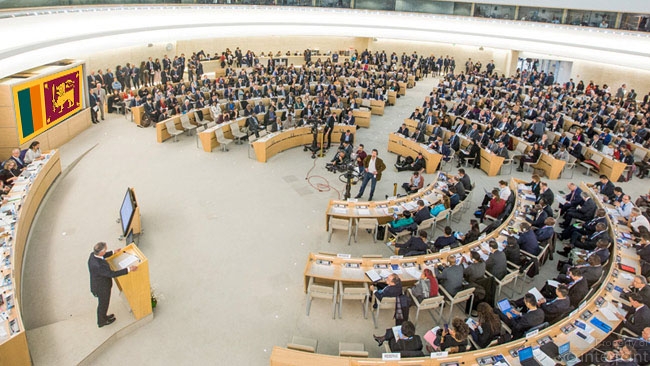
Looking at the voting on the UN Human Rights Council’s resolution on Sri Lanka on October 6, it appears that the decisions taken by the 47 members were determined by their respective positions in geopolitics and their national interest.

The 20 members who voted for the resolution castigating Sri Lanka for alleged human rights violations, were Western nations and their political allies. Japan, which is a firm ally of the West, however, struck a different path. It abstained perhaps due to its national interest vis-à-vis Sri Lanka. Those who voted against the resolution had been at odds with the West geopolitically. And those who abstained either had mixed feelings about the West’s agendas or had other more important national interests at stake.

Among those who said “aye” were hardcore Western nations, such as the US, UK, France, Germany and the Netherlands. These were also votaries of the Western concept of human rights. Among others countries that said “aye” were those feeling threatened by the Russian invasion of Ukraine and had been flocking to the West and NATO. Many of these are new States that had emerged from the former Soviet Union but are now harboring fears of Russian expansionism. Ukraine, which voted for the resolution, is being aided by the West to fight Russia.

Countries like Armenia, the Czech Republic, Lithuania and Finland, also fear that they might be Russia’s next target and have flocked to the US camp. Poland remembers that the USSR had occupied it ahead of World War II. Montenegro, which had emerged from the ruins of Yugoslavia, had joined NATO in 2017 and was firmly in the Western camp. Paraguay, Argentina and Honduras in South America, and South Korea in Asia, had been firm allies of the US.

However, it is remarkable that there was only one African country, Malawi and one Asian country, South Korea, among the 20 that went along with the US-led Western alliance in the Council.

The Nays

Among the seven countries that voted against the resolution, there were none from Europe. All of them had serious differences with the US. The nays were Bolivia, China, Cuba, Pakistan, Eritrea, Uganda and Venezuela. In 2008, Bolivia had expelled the US Ambassador. Even now the US has been pressing Bolivia to improve its rights record. US-Eritrea tensions were related to rights violations. In 2021, the US had imposed selective sanctions.

Uzbekistan is close to China as China is the largest trading partner. China has also been increasing its development loans to Uzbekistan as it regards Uzbekistan as a critical part of its Belt and Road Initiative. Uzbekistan’s voting against the resolution, with China, therefore, stood to reason. China’s hostility to the US needs no explanation. As for Pakistan, it has had a love-hate relationship with the US. It has also been a firm ally of Sri Lanka.

The US had broken off diplomatic relations with Venezuela in 2019, after accusing its authoritarian leader Maduro of electoral fraud. The Trump administration then tried to topple Maduro by sanctioning Venezuelan oil exports. Maduro responded by seeking economic and diplomatic help from Russia, as well as Iran and China.

Abstentions

Among the abstaining 20 countries, there was only one pro-US country, namely, Japan. Japan has always taken a soft line on Sri Lanka trying to reform it by helping it economically rather than sanctioning or shaming it publicly. The other countries in the group either had problems with the West, or had a tendency to take independent postures (ex: Malaysia) or had geopolitical reasons to be neutral (ex: India). Under the Trump Presidency, US-Brazil relations were good, but not under Biden. Trump supported the right wing President Bolsonaro. But Bolsonaro is now being electorally challenged by the leftist Luiz Inacio “Lula” da Silva.

Cameroon’s relations with the US have been under strain over human rights abuses, in particular in the Anglophone Northwest and Southwest Regions of the country, and also over the pace of political and economic liberalization. In troubled Cote d’Ivoire, the US has been trying to help restore peace and support a democratic government whose legitimacy could be accepted by all the citizens of Cote d’Ivoire. In Gabon, China’s presence is manifest. In 2019 China was the buyer of 63% of the products sold by Gabon on the world market. 74.8% of the products sold during this reference year consisted of hydrocarbons.

Relations between the US and Gambia had not improved significantly due to the human rights and freedom of press shortcomings, which resulted in the suspension of Gambia’s compact with the Millennium Challenge Corporation (MCC) in June 2006. The US is involved in Mauritania on a wide array of issues, including human rights and the rule of law. In Namibia, there is a marked Chinese presence. There are scores of Chinese official development projects, through grants, concessional loans and preferential export buyers’ credit running to millions of RMB. Namibia is amenable to Chinese influence.

Given persistent troubles in Somalia, the US Embassy there was closed from 1991 to 2018. Senegal remained neutral at the UNHRC voting though its relations with the US had been good. US Secretary of State Blinken would be visiting the country in November.

The US has had problems with Sudan over terrorism. Although Sudan publicly supported the international coalition actions against the al Qaida network and the Taliban in Afghanistan, it had criticized US air strikes in that country. In response to Sudan’s continued complicity in unabated violence in Darfur, President Bush had imposed economic sanctions on Sudan in May 2007. But in December 2020, Sudan’s designation as a State Sponsor of Terrorism was rescinded.

The UAE irked the US in December 2018, when it reopened its embassy in Syria, reatoring ties with the government of anti-US, pro-Russian President Bashar al-Assad. In January 2019, the UAE hosted a Syrian trade delegation that was led by a businessman who had been on the U.S. Treasury sanctions list since 2011. As the UAE’s relations with China were intensifying, its alliance with the US began to face turbulence.

Additionally, China has been the biggest buyer of crude oil from the Gulf region. China has been broadening its economic and political footprint across the Middle East, which has created tension in UAE-US relations. In November 2021, the US warned the UAE about a Chinese military presence in it. US intelligence had found that China was secretly building a military facility at a port in Abu Dhabi. Following several American meetings and visits by the US officials, the site construction was halted. Despite that, the US officials said that extensive Chinese presence in the UAE could endanger the planned US$ 23 billion deal of F-35 fighter jets, Reaper drones and other advanced munitions.

China’s Gains in Africa

The UNHRC voting shows Chinese gains in Africa and the relative weakness of the US in that continent. According to the National Bureau of Asian Research, “China appears to be seeking a loose, partial, and malleable hegemony over the global South, making the African continent a strategic priority for Beijing.” China has brought under the BRI umbrella, the Digital Silk Road, which is focused on improving information and communications technology and digital capabilities in Africa.

Most importantly, unlike the US and the West, China does not promote its authoritarian model of governance. It is, in fact, indifferent or blind to the type of regime that exists in a client State. Local regimes find this to be very convenient. Local nationalisms detest preaching by outsiders especially former colonial powers or the new “imperialist” powers. These nationalistic feelings came to Sri Lanka’s aid at the time of voting in the UNHRC. Though the resolution was carried, Sri Lankan nationalists drew comfort from the fact that the majority of the UNHRC members (27 out of 47) either said “nay” or abstained.

Posted in Uncategorized

Travel ban on military personnel; Canada to name three officers, others to follow suit

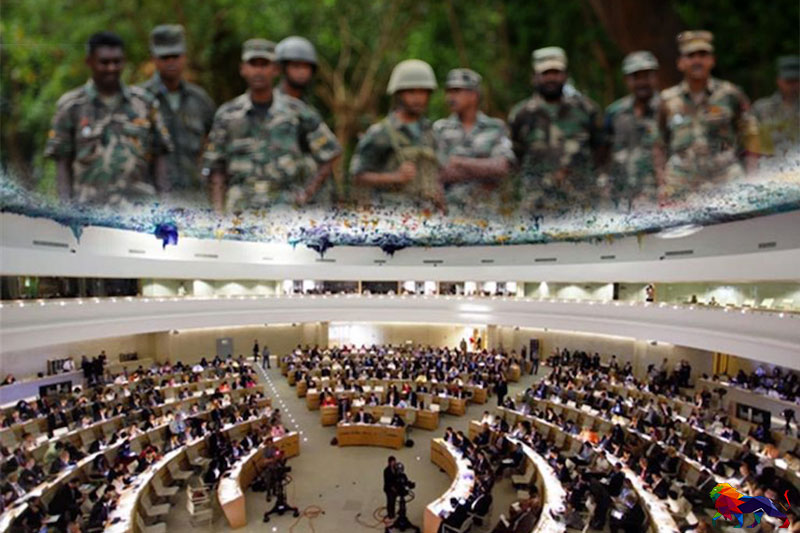
Last Thursday’s resolution on Sri Lanka at the United Nations Human Rights Council (UNHRC) will see immediate travel bans by member countries on military personnel.

The first to move will be Canada which will name at least three officers, the Sunday Times learns. Others to follow suit are member-countries of the European Union.

The Geneva-based UN Human Rights Council on Thursday adopted a resolution on “promoting reconciliation, accountability and human rights in Sri Lanka”. It was backed by 20 countries including the United States and the United Kingdom. Twenty countries abstained whilst seven voted against the resolution and thus in favour of Sri Lanka.

Unlike the previous resolutions, the one adopted last Thursday gives

considerable focus to the economic crisis in Sri Lanka and the resultant violation of human rights. It deals with corruption and emphasises the need for action against it. It also criticises the government over the handling of protestors who took part in the ouster of former President Gotabaya Rajapaksa.

A new Secretariat functioning under the UN Human Rights Commissioner will probe alleged economic crimes that have led to human rights violations as well as all other issues contained in the new resolution.

Asia (with the exception of Korea) and Africa (with the exception of Malawi) either abstained or voted against the resolution.

Posted in Uncategorized

India notes inadequate progress in Sri Lanka

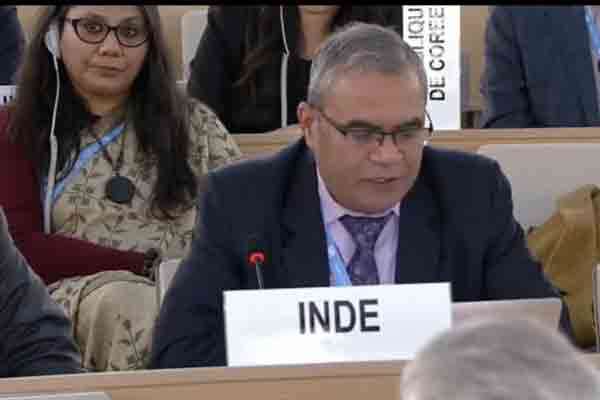
India today noted the “inadequate” progress made in Sri Lanka on the commitments in the spirit of the 13th Constitutional Amendment.

Speaking at the UN Human Rights Council in Geneva today, Ambassador Indra Mani Pandey, Permanent Representative of India to the UN and other International Organizations, said that while India has taken note of the commitments by the Government of Sri Lanka on issues of implementation of the commitments in the spirit of the 13th Constitutional Amendment, meaningful devolution and the early conduct of provincial elections, “we believe that the progress towards the same remains inadequate.” India urged Sri Lanka to work meaningfully towards early implementation of these commitments.

He said that achieving prosperity for all Sri Lankans and realising the legitimate aspirations of Tamils of Sri Lanka for prosperity, dignity and peace are two sides of the same coin,.

The Ambassador stressed that as an immediate neighbour, India has substantially contributed to the relief, rehabilitation, resettlement and reconstruction process in Sri Lanka after 2009.

“In finding a lasting and effective solution for peace and reconciliation in Sri Lanka, India has always been guided by the two fundamental principles of support to the aspirations of the Tamils for equality, justice, dignity and peace and unity, territorial integrity and sovereignty of Sri Lanka,” he added.

India abstained from voting for the resolution on Sri Lanka which was eventually passed.

Posted in Uncategorized

Japan denies RW’s claim of co-chairing creditors’ summit

Although President Ranil Wickremesinghe said in his special statement in Parliament that Japan would assist Sri Lanka in the debt restructuring process and has agreed to co-chair the summit pertaining to negotiating with creditor nations, Reuters reported yesterday (6), quoting a Japanese Government official in Tokyo, that Japan has not yet reached any agreement to co-chair a debt summit with Sri Lanka’s creditors.

“We have not reached such an agreement. It might be their (Sri Lanka’s) wishful thinking, but the situation remains unchanged,” a senior Japanese Government official with knowledge of the matter had informed Reuters on the condition of anonymity.

However, President Wickremesinghe said in Parliament yesterday: “Japan is to assist Sri Lanka in the debt restructuring process and has agreed to co-chair the summit to negotiate with creditor nations.”

Later, the Presidential Media Division (PMD) clarified the President’s statement on its official account.

“Japan is to assist Sri Lanka in the debt restructuring process. The Government requests Japan to co-chair Sri Lanka’s creditors’ conference,” the PMD statement read.

Reuters further reported the Japanese Government official to have also said that “Japan will stand ready to provide full support for Sri Lanka’s debt restructuring provided that the necessary conditions are met”.

Posted in Uncategorized

UNHRC resolution reflects need for Intl scrutiny – Amnesty International

The UN Human Rights Council resolution upholds the need to maintain international scrutiny and seek justice and accountability in Sri Lanka, said Amnesty International in a statement on Friday (7).

Dinushika Dissanayake, Amnesty International’s Deputy Regional Director for South Asia, said the adoption of the UN Human Rights Council’s resolution reflects the need for continuing international scrutiny on Sri Lanka.

She said that it is a welcome step in the right direction, but more needs to be done.

However, she said that the Council failed to respond to civil society demands for the establishment of an expert mechanism that could address the broad spectrum of human rights violations including those arising from the serious economic and political crisis that the country faces.

The Amnesty International statement noted that the Government of Sri Lanka should abide by the commitments it has made to the international community and ensure the effective operation of redressal bodies for human rights violations, such as the Human Rights Commission of Sri Lanka, the Office on Missing Persons, the Office on Reparations, and the National Authority for the protection of Victims of a Crime and Witnesses, among others.

“We urge all UN member states to increase international accountability in line with the recommendation made by the High Commissioner for Human Rights in her report, including through investigations and prosecutions under universal jurisdiction and, where possible, by referring cases to the International Criminal Court,” said Dinushika Dissanayake, Amnesty International’s Deputy Regional Director for South Asia.

Background:

The resolution comes in the wake of damning reports by the UN Office of the High Commissioner for Human Rights (OHCHR), Amnesty International and others, all of which reported violations of human rights during Sri Lanka’s response to the economic crisis and the authorities’ crackdown on protests.

Amnesty International has previously documented the catastrophic impact of the crisis on Sri Lankans’ economic and social rights and detailed violations of civil and political rights during the crisis.

The organization also sent a joint open letter to members of the UNHRC, calling on them to adopt a strong resolution on Sri Lanka that strengthens existing UN mandates on accountability.

Sri Lanka rejects resolution at the UN Human Rights Council

Sri Lanka categorically rejected resolution A/HRC/51/L.1 (Rev.1) titled “Promoting reconciliation, accountability and human rights in Sri Lanka” tabled by the United Kingdom, Canada, Germany, Malawi, Montenegro, North Macedonia, and the United States, which was adopted by a vote at the Human Rights Council (HRC) in Geneva, on Thursday (6).

Sri Lanka’s Minister of Foreign Affairs Ali Sabry delivered the statement on behalf of Sri Lanka as the country concerned and called on the Members of the Council to reject the resolution by voting against it.

In support of Sri Lanka’s position opposing the resolution, the delegation of Pakistan called for a vote.

Over half of the members of the Council did not support the resolution with 07 countries (Bolivia, China, Cuba, Eritrea, Pakistan, Uzbekistan and Venezuela) voting against the resolution and 20 countries abstaining on the vote. 20 countries voted in favour of the resolution.

Representatives of Pakistan, Brazil, China, Venezuela, Japan and Republic of Korea made statements in support of Sri Lanka prior to the vote.

Pakistan said that they share the concerns of Sri Lanka and other Member States that the resolution is intrusive and this level of scrutiny would not be even acceptable to any sovereign state including the Core Group. They further observed that the resolution fails to recognize the horrendous acts of terrorism committed by the LTTE and its sponsors, lacks balance, proportionality and consistency. At a critical time when the people of Sri Lanka expect demonstrations of global solidarity and support to face its economic challenges which are not entirely of Sri Lanka’s own making, the Core Group chose a path that has the potential to exacerbate the problem instead of improving the situation.

Brazil noted the need to avoid politicization of the work of the Council and reiterated their position that cooperation of the country concerned is key to the success of this Council’s initiatives. Brazil highlighted the responsibility of the international community to support the country in its recovery including through international cooperation and assistance.

China appreciated the Government of Sri Lanka’s commitment to promoting and protecting human rights, advancing sustainable socio-economic development, improving living standards, protecting the rights of the vulnerable groups, facilitating national reconciliation and combatting terrorism. China regretted that the resolution is tabled without the consent of country concerned, is a product of politicization, and will by no means play any positive role in the promotion of human rights in Sri Lanka. China highlighted that the work of Council should be guided by its founding principles and that all parties should promote genuine dialogue and cooperation and refrain from adopting double standards. China rejected the practice of using human rights as a pretext to interfere in the internal affairs and undermine the sovereignty of other countries to the detriment of international cooperation.

Venezuela expressed their deep concern at initiatives that do not have the support of the country concerned and that the Core Group is insisting on imposing hostile initiative, monitoring and oversight mechanism without the consent of Sri Lanka, ignoring the progress made by the Government. Venezuela highlighted that the mechanism financially bleed out over 6 million dollars that could have been better used to support the least developed countries and further that the practice of wasting money seems all too common in the Council.

Japan recognized the progress made by Sri Lanka and said that the Government’s own initiatives, efforts and commitments are indispensable to achieving real change on the ground.

Republic of Korea noted with appreciation the efforts of the Government of Sri Lanka to promote national reconciliation, reconstruction and prosperity.

Sri Lanka’s Foreign Ministry said it is grateful to the countries which withstood pressure by the sponsors and demonstrated their support to Sri Lanka by voting against or abstaining on the vote as well as by speaking in support of Sri Lanka.

While delivering the Sri Lanka statement as the country concerned, the Foreign Minister regretted that a draft resolution on Sri Lanka is tabled once again despite the progress made domestically on reconciliation and human rights and Sri Lanka’s continued constructive engagement with the Council.

He outlined Sri Lanka’s intention to move forward domestically with replacing the Prevention of Terrorism Act (PTA) with a comprehensive national security legislation, and the introduction of Constitutional amendments and a legal framework to strengthen democratic governance, participation and the rule of law as well as independent institutional oversight. On reconciliation and human rights, Sri Lanka is awaiting the final report of the Presidential Commission and the establishment of a domestic truth-seeking mechanism is under advanced discussion. He also referred to Sri Lanka’s upcoming engagement with the UPR process.

Minister Sabry highlighted that while the resolution may meet the objective of advancing the political considerations of the sponsors, it is manifestly unhelpful to Sri Lanka.

The Minister strongly opposed the resolution, particularly the proposal in Operative Paragraph (OP) 8 that seeks to ‘extend and reinforce’ the so-called “external evidence gathering mechanism” created by the Office of the High Commissioner for Human Rights (OHCHR). The mechanism is outside the mandate envisaged for the Council. No sovereign state can accept the superimposition of an external mechanism that runs contrary to its Constitution and which pre-judges the commitment of its domestic legal processes.

The Minister also noted that many countries have already raised serious concerns on the budgetary implications of this resolution given its ever-expanding mandate. He further noted that this is an unhelpful and misdirected drain on the resources of all Member States, including the donors in the midst of ongoing global crises. In sharp contrast, he said that we are faced with the dire financial needs of developing countries to prevent hunger and child malnutrition.

Foreign Minister Sabry objected to the references in the resolution to matters which are outside the framework of the Council such as domestic economic and financial policy. He further observed that solutions to economic and financial crises faced today by many countries will not be found in the mandate, the instruments or the expertise of the Council.

The result of the vote demonstrates that the resolution is another example of the North-South polarization and politicization of the Council, contrary to its founding principles. This vote also demonstrated solidarity among the countries of the South which continued to support the basic founding principles of the Human Rights Council of universality, impartiality, objectivity and non-selectivity leading to constructive international dialogue and cooperation.

The Human Rights Council is comprised of 47 Members, including 13 African states, 13 Asia- Pacific states, 8 Latin American & Caribbean States, 7 Western Europe and Other States, and 6 Eastern European States.

Lanka loses vote in UNHRC but the nays and abstentions outnumber the ayes

Sri Lanka lost the vote on the human rights situation in the country at the UN Human Rights Council (UNHRC) in Geneva on Thursday.

Out of the 47 members, 20 voted in favor of the resolution that castigated Sri Lanka for a variety of human rights violations and for disregarding calls for accountability. Seven voted against and 20 abstained.

ADVERTISEMENT
The last time a vote taken on a similar resolution in March 2021, 22 had voted for the resolution, 11 against and 14 abstained.

Just like it did in March 2021, Sri Lanka is likely to claim that the nays and abstentions put together outnumber the ayes and therefore the resolution cannot be considered an outright victory for the movers of the resolution that are White Western nations and their allies in the Global South. Those countries which voted against the resolution and those who abstained were all from the Global South except Japan. Japan broke away from its Western alliance and abstained like India, Nepal and Brazil. Those countries which had always voted against th resolution continued to vote against it. India, which has tended to abstain, abstained this time too.

The resolution on “promoting reconciliation, accountability, and human rights in Sri Lanka” was presented at the 51st session of the UNHRC by the Permanent Representative to the UK in Geneva, Ambassador Simon Manley. The resolution was proposed by the core group on Sri Lanka, comprising Canada, Germany, Malawi, Montenegro, North Macedonia, the United States, the United Kingdom, and 30 other countries.

Presenting the resolution, Manley said the text is largely based on last year’s resolution but has been updated to reflect some of the key developments over the last 18 months in what has been a rather dramatic time for Sri Lanka – an economic crisis, mass protests, and a change in government, all of which have had a significant bearing on the human rights situation in the country.

Speaking earlier, Sri Lanka’s Foreign Minister Ali Sabry categorically rejected the new draft resolution presented against Sri Lanka at the United Nations Human Rights Council (UNHRC) in Geneva.

Rejecting the new resolution, Minister Ali Sabry said the draft resolution had been presented without Sri Lanka’s consent or consultation.

Foreign Minister Ali Sabry further said the new resolution will not be helpful to the country.

Meanwhile, China had also called on the other nations to reject the new draft resolution. Pakistan had also called for a vote on the resolution, stating that it will vote against it as it is outside the purview of the Council’s mandate and does not include provisions for atrocities committed by the LTTE. Japan said that it will abstain from voting on the resolution presented against Sri Lanka at the UNHRC.

Posted in Uncategorized