I got the opportunity to exchange views with the state leaders during the visits to the United Kingdom and Japan recently. I also got the opportunity to meet the Finance Ministers of the countries where the Asian Development Bank operates during my visit to the Philippines. These meetings and exchange of views are of pivotal importance to overcome the economic crisis we are currently facing.
Today, the country’s economy and financial condition are not at sound levels. But some political parties and groups are still working under the assumption that the country is in a sound state. They make their comments, criticisms as well as make their proposals under the same assumption. We can’t assume that the economy has come back to normal just because the fuel queues are over.
We are facing the most serious economic crisis our country has ever faced in recent history. I explained the strategy to get out of this crisis on many occasions.
• Reaching a staff-level agreement with the International Monetary Fund
• Reaching a common agreement on debt restructuring with countries like Japan, India and China and private creditors who have given us loans
• Thereafter stabilizing the economy by obtaining loan assistance from the IMF and other countries after certification from the International Monetary Fund.
• Working to raise the country’s economy to a developed level through a general plan after stabilizing the economy.
I pointed out at the initiation that we should strive to fulfill these four factors. It is because depending on the success of the first step, the second step could be made successful and only once the second step is made successful the third could be made successful and so on.
I pointed out those facts even before I assumed duties in the office of Prime Minister. I reemphasized the same after assuming duties in the office of Prime Minister. I pointed it out again when I presented the policy statement to the Parliament after assuming the office of President.
We have made the first stage successful and the preparations at the foundation level to make the second stage a success are being made. Under such a situation we got the opportunity to exchange our views with the state leaders.
In addition we had the opportunity to meet the finance ministers of 68 member countries of the Asian Development Bank, in Manila.
During these meeting I too got the opportunity to discuss with the Prime Minister of Singapore, Mr. Lee Hsien Loong. The free trade agreement we inked with Singapore was not functioning properly in the past. If we are able to re-enact this agreement, the benefit the country would enjoy would be enormous.
This agreement will also be instrumental strengthen our economic ties with Southeast Asia. The Prime Minister of Singapore expressed confidence that through the implementation of this agreement, it will be possible to obtain a stable economic approach with Sri Lanka.
I also had a dialogue with representatives of Japan International Cooperation Agency and Japan International Cooperation Bank. The representatives of both the institutions assured their support to expand investments in Sri Lanka.
I also met with Japanese Prime Minister Mr. Fumio Kishida. During the discussion, we focused on a number of important issues affecting our two countries. In addition, discussions were held with the Japanese Foreign Minister as well as with the Japanese Finance Minister.
Japan’s agreement to play a leading role as a mediator in the debt restructuring process of Sri Lanka is a good sign. Due to some recent incidents, the goodwill between Japan and us had been strained. We strived hard to re-strengthen the bonds with Japan during the past few months. Now we have a green light from them. We persevere to restore the friendship we had with Japan earlier.
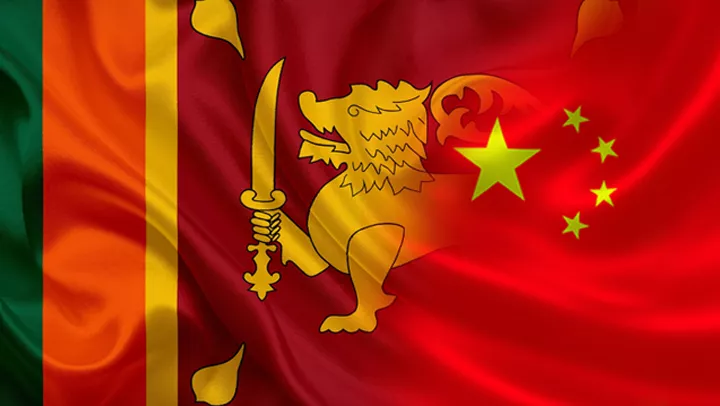
We already have commenced the preliminary discussion with China. We have already commenced the preliminary discussion with China. Following the Chinese Communist Party convention, we will recommence the discussions with China. It is very significant that Japan has agreed to mediate to discuss the debt restructuring program with China. China has been supporting us since ancient times and we hope they would do the same at this critical juncture.
Our discussions with India are in progress. I briefed the Sri Lanka’s current situation to Indian PM Modi in Japan. We pay our gratitude to India and Prime Minister Modi for their support extended during the difficult time in the recent past. We have a positive response from Modi to overcome the economic crisis.
I strived to get maximum benefit to Sri Lanka by meeting state leaders from UK, Japan and Philippines, representatives from international organizations and Finance Ministers. We have got to spend an enormous amount of money and time to exchange views separately if we were to meet individually. It is a rare opportunity for us to meet all of them at a particular place, within a limited period of time.
Many of them expressed their support to overcome the crisis situation after I explained the practices and plans, we follow to recover from the economic crisis. Finance ministers have the capacity to influence in provision of economic relief and debt restructuring. Therefore, it was a very favourable situation for us to meet and discuss with a number of finance ministers under one roof.
Sri Lanka hopes to come to a common agreement with creditor nations including Japan, China and India. We also commenced dialogues with Ambassadors from other countries, which have already provided loan facilities. Our expectation is to bring them into a multilateral common agreement.
After reaching an agreement with the countries that have granted us loans, we are also holding talks with private creditors like the London Club. We hope to reach an agreement with them regarding debt restructuring. Thereafter we can get the IMF certificate.
The Asian Development Bank has already expressed its willingness to provide us with a loan of USD 500 million. After obtaining the IMF certificate, we will be able to obtain bridging finance facilities from financial institutions such as the World Bank and the Asian Development Bank. Simultaneously, the opportunity to obtain bilateral loans will be possible by negotiating with other countries that provide credit facilities.
We have requested International Development Association to assist us to get concessional financing as Sri Lanka currently lacks the credit worthiness to borrow on market terms from World Bank or any other institution. Twelve countries such as Egypt, Indonesia and the Philippines have requested interim relief at such economic crises situations. It is a great relief that we have the opportunity to get concessional loans in such a way.
We attempt to revive the tourism industry through different strategies since our expectation is to increase the foreign exchange income through this industry.
Our objective is to increase private sector monetary reserves and foreign income. Through this we would be able to stabilize the economy and strengthen the rupee to some extent by the end of 2023.
I would also like to draw your attention to some of the challenges we face today in reviving the collapsed economy. I have also pointed out facts to you about this from time to time. But we have got to consider it over and over again since it would enables us to comprehend the real picture of the situation we are in today.
The economy of our country collapsed completely, due to the economic policies maintained in the recent past as well as due to the global crisis. The money which was printed during the last
two years was thirteen fold of the sum that was printed by the 2015 government. As production did not increase accordingly, the inflation increased by 100 percent as a result.
But we could maintain the inflation rate at 69.8 percent this September due to some measures taken by us in the last two or three months. As indicated by the interim budget proposals, we need to undertake a number of radical economic reforms. Under those proposals we have commenced the task of restructuring the state enterprises which have become a burden to the country. For decades, the loss of these institutions was directly and indirectly borne by the public. Under the guise of state resources, the loss of these institutions was placed on the people.
I will mention the sum of the losses incurred by several government institutions by the end of the second quarter of the year 2022. The loss incurred by the Ceylon Petroleum Corporation is Rs 1057 billion rupees. The loss incurred by Ceylon Electricity Board and SriLankan Airlines are Rs 261 billion and Rs 791 billion respectively.
This burden can no longer be placed on the people. Therefore, we will restructure these institutions and bring them to a state where they will not be a burden to the country. Agriculture and food production collapsed due to the short-sighted approach to fertilizer policy. Now inflation rate related to food is closer to 95 percent. The truth is that this kind of inflation was not recorded even during a World War and this is a very dangerous situation.
As a result of the fall in food production, the prices of goods in the local market have increased. During the last few months, we implemented the necessary measures to control the rise in inflation. These problems cannot be solved overnight.
Due to the prompt measures that we followed, we were able to increase the yield during the last ‘Yala Season’, which was higher than we expected. Everything is ready to provide the necessary fertilizer and seeds for the upcoming ‘Maha Season’ without any problem. If we are able to harvest the expected paddy in the ‘Maha Season’ without natural calamities, we will be able to find better solutions to prevent the rise in food prices. It can also create a basis for economic stability.
While giving preliminary attention to agricultural activities, we have launched a rapid food production program. We are well aware that some parts of the country are suffering from food shortages. A program is now in place to identify those individual parts at the rural level. We expect to ensure food safety through these identifications.
The Central Bank decided to raise interest rates as a temporary effort to limit the monetary supply. Although this may appear to be an advantage for individuals, it is a disadvantage as a whole. Due to this situation, the economic growth rate decreases and domestic borrowing will be limited.
Consequently, the economy shrinks and the private sector suffers. According to the current forecast, the economy may shrink by 7 to 8 percent.
We have taken measures to prevent the shrink of the economy and the increase of the inflation
1- Setting maximum price limits for basic consumer goods
2- Increasing production and productivity by removing barriers to domestic production
3- Relaxation of foreign exchange regulations to some extent to increase inflow of foreign exchange
4- Imposing restrictions to prevent non-essential imports
5- Implementing a better open market system
6- Keeping interest rates at a limited level by imposing interest limits on deposits
There are no quick fixes to any of these problems. We have to move forward step by step in the process of rebuilding the economy.
To strengthen the foreign reserves of the Central Bank, we will be using the money received from the Asian Development Bank. We will be able to increase these reserves by another two or three billion US dollars by reducing the burden on the country by state enterprises.
We have also decided to keep the money that we have received from the ship “Express Pearl” in the same pool.
Parallel to this, money earned from intermediate credit facilities, tourism and private businesses will be used to strengthen the economy. We will also increase export revenue.
Through this kind of proper economic practice, we will be able to regain the trust of foreign workers. On such confidence, they would remit foreign exchange to Sri Lanka again as before.
With all these attempts, we will be able to regain international confidence.
The tax structure of the country should be completely reviewed and changed. At present around 80 percent of the total amounts of taxes are indirect. Every citizen of this country pays taxes without knowing it. They pay taxes for activities that have nothing to do with them. Even the last poor citizen of the country has been caught-up in this tax net. Changing this situation is the need of the era.
According to the tax policy we adopted in 2019, around 14 percent of the gross domestic product was earned from taxes. However, due to the change in the tax policy, the tax revenue decreased to 8.5 percent. Now we have discussed with the International Monetary Fund and agreed to raise that amount again to 14 percent.
However, we cannot be satisfied with just that. In order to maintain free education and free health services, government tax revenues should be increased to 18 percent of the gross domestic product. This should be earned from tax revenue. Without that, if we go back to print money, there will be more difficulties in the future.
In fact, Mr. Speaker, the income decreased since we did not have a long-term financial relationship. As the gap between foreign expenditure and income widened, foreign exchange reserves collapsed. Inflation increased by 100%. The value of the rupee collapsed. We have had to face the full blow because the interest rate has increased.
That is why our economy has shrunk. We thought to advance economic growth through state corporations and banking systems. Now it has failed. Therefore, I was informed to restructure our debt, get loans from the International Monetary Fund, get money from the World Bank, the Asian Development Bank, bridging finance countries and take steps to rebuild the economy in the next two or three months.
For that we have to increase our products. We need to increase our foreign exchange. After the increase in foreign exchange, our industries and services will improve. Also, when the losses of our loss-making institutions are reduced and the income is increased, the government’s budget will be strengthened. We hope to ensure that plan. When the “Maha Season” is successful, we will get more production power. It gives strength to the state economy.
On the other hand, we can find foreign exchange through the tourism industry. In addition, our workers in foreign countries can make a strong contribution to the economy by sending their money to Sri Lanka. We hope to implement this program from the middle of next year.
As we move forward along the difficult path of overcoming this crisis, we have to suffer from uncontrollable global tendencies. Fuel price is one such thing. Due to the effects of the war in Ukraine, it has been predicted that the world’s fuel production will drop in the months of December and January. As a result, the price of fuel will increase. We must prepare to face such a situation from now on. We need to plan now to keep the increasing fuel prices at a level that consumers can bear.
I would like to emphasize another important point here. You all hold different political views. But you can achieve your political goals only if the country recovers from this economic crisis.
I embarked on this journey taking a huge risk. At a time when no other political party or leader of the opposition would accept this risk, I accepted the risk for the country and embarked on a dangerous journey. We have progressed gradually, but steadily. We know that the majority of people in our country support this journey. They want a good life, good country and a good future.
However, there are people who do not want that. There are people who hope to get political benefits by destroying the country day by day and putting it deeper into crisis. They see everything wrongly.
Some of these groups are struggling to adapt some theories that were attempted to be implemented decades ago. Then some political groups said don’t give water to a dying man but to carry the corpse after his death around the country.
Some groups are struggling to apply this theory even today. They are waiting for the economy to take its last breath without supporting it. They think that if the economy collapses and people die, they will be able to gain power over their dead bodies.
I would like to point out that such expectations have never been fulfilled anywhere in the world. Even if the power is gained in such a way, that same would end in a more unfortunate manner. I request those with such views to query from their own consciences. Now no one has to stay in fuel or LPG queues for days. The lights don’t go off for ten to twelve hours. Schools and universities are open and we feel that all fields of the country is coming back to normal. The people of this country have a strong need to bring their lives back to normal. The Colombo International Book Fair, which ended very successfully, can be cited as an example of a well-reflected need.
But, there are many shortcomings and flaws which should be rectified. It will be possible to make this journey stronger and faster only with the support of all of you, so again I request you to forget the old vendettas and join with this journey. Criticism is easy and to see mistakes of others. It’s easy to protest, but finding solutions is difficult.
I am following the method shown by the Lord Buddha in order to raise the country again from this economic crisis. The Buddha has shown in the “Kootadatta Sutra”, the points that King Maha Vijita followed in rebuilding a fallen country. Accepting real advice, understanding the real nature of the problem, taking the problem as a whole and finding solutions according to a plan, and fully implementation of the plan with confidence are those points.
This is the process we follow. So I invite you all to join this process and let us face this challenge together for the sake of the country.
Therefore, I request again for all of you to join a common program to build the country through the National Assembly of Parliament, “Jana Sabhava” which is to be established soon, and Parliamentary Sectoral Committees.