An election to be held in Sri Lanka before March 30

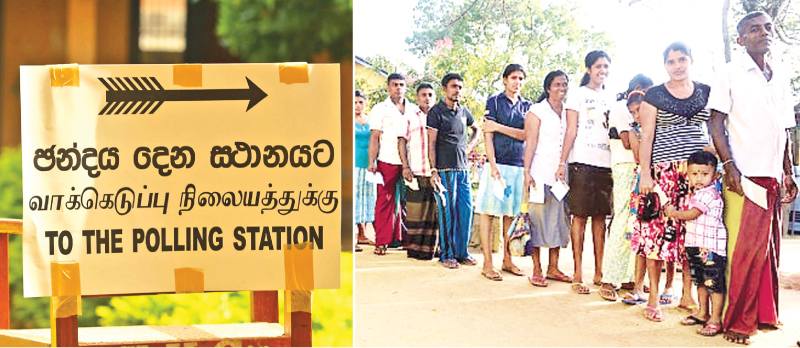
The Election Commission says that it is expected to hold an election before March 20, 2023.

Chairman of the Election Commission Nimal G. Punchihewa stated that according to the Local Authorities Elections Ordinance the commission will have the authority regarding the election polling after September 30.

“Thus, the commission can hold an election before March 20.”

He said that the local government elections have been postponed by a year, however, one of the requests of the Selection Committee on Elections is that the commission should have the power that is wielded by the minister, as no matter how good a reason a minister has in implementing it, it is possible to appear that he is carrying it on for a political sense.

The chairperson, who further emphasized that the voter list in 2022 is expected to be certified on October 31, while the supplementary list is expected to be certified on November 11, added that if an election is announced to be held before certifying these two, the 2021 voter list will be valid.

“The commission hopes to hold the election before March 30, taking the relevant dates into account”, said the chairman.

Election Commission to suspend SLFP constitutional amendments?

Sri Lanka Freedom Party (SLFP) Executive Committee member Montague Sarachchandra has requested the Election Commission (EC) to suspend the implementation of the recent amendments made to the SLFP’s constitution until the verdict of the case filed in the Colombo District Court challenging the Chairmanship of former President and incumbent MP Maithripala Sirisena is delivered.

In a letter addressed to Election Commission Chairman Nimal Punchihewa, Sarachchandra claimed that since the appointment of Sirisena as the SLFP Chairman is against the party’s constitution, he has filed a case, bearing number DSP/197/2022 in the Colombo District Court, requesting that an order be issued to suspend Sirisena’s appointment.

He also said that the court, which had taken up the case, had ordered the respondents including Sirisena, SLFP General Secretary and MP Dayasiri Jayasekara, SLFP Treasurer and State Minister Lasantha Alagiyawanna, and SLFP National Organiser Duminda Dissanayake to raise objections. Claiming that the respondents have delayed the submission of objections until 5 September, he said that the respondents had however amended the party’s constitution on 2 September.

Noting that the SLFP Chairman has the power to remove any official of the party, and that the number of appointments that the Chairman can make to the Central Committee of the Party has been increased to 35 through the relevant amendments, he said in the letter that it is apparent that Sirisena has gained unlimited powers through these amendments in order to take revenge on the party members who oppose him.

Therefore, considering the matter, Sarachchandra, who is a former Central Committee member of the SLFP, requested Punchihewa to suspend the implementation of the relevant amendments to the SLFP’s constitution until the case filed in the Colombo District Court challenging Sirisena’s Chairmanship is over and the verdict is delivered, and to inform of the same to Jayasekara.

According to the Parliamentary Elections Act, No. 1 of 1981, a recognised political party must notify the Election Commission of all amendments made to its office bearers or constitution within a period of 30 days from the implementation of the relevant amendment.

Several amendments were implemented to the constitution of the SLFP recently, including a clause empowering the SLFP Chairman to remove any officer or member at their discretion. Despite the opposition of several members of the SLFP’s Parliamentary group such as Ministers Nimal Siripala de Silva and Mahinda Amaraweera, and MP Chamara Sampath Dassanayake, the amendments were passed in the SLFP Central Committee and its All-Ceylon Committee.

Posted in Uncategorized

Leading US Senators unveil a resolution calling for int’l approach to address SL’s crisis

Leading US senators, including the US Senate Foreign Relations Committee Chair Bob Menendez have introduced a Senate resolution calling for a comprehensive international approach to address Sri Lanka’s current political and economic crisis, including challenges related to poor governance and economic policy under the Rajapaksa family’s rule.

Senator Bob Menendez, Chairman of the Senate Foreign Relations Committee, was joined by Senators Dick Durbin, Patrick Leahy and Cory Booker in introducing the Senate resolution
“I am proud to be joined by my colleagues in introducing our resolution that necessarily calls attention to the devastating political and economic turmoil plaguing the people of Sri Lanka,” Chairman Menendez said. “As the country grapples with its worst domestic crisis since the end of its civil war, the international community must continue to provide robust support and ensure that accountability for war crimes and respect for human rights in Sri Lanka remain top priorities. I applaud efforts by the Biden administration, our Quad partners, and the IMF in providing critical humanitarian and economic assistance, and affirm my commitment to continue to work with my colleagues to advance stability and prosperity in Sri Lanka and the broader region.”

“After decades of conflict, political mismanagement, and unaddressed inequalities, the Sri Lankan people have made it clear they aspire for something better,” Senator Durbin said. “Introduction of today’s resolution shows that the U.S. Senate stands with peaceful democratic efforts to address these long neglected challenges.”

“The Rajapaksa family enriched themselves at the expense of the Sri Lankan people, ruthlessly silencing their opponents, inciting ethnic tensions, and leaving the country an economic shambles,” Senator Leahy said. “After years of civil war and government mismanagement and abuse, Sri Lanka needs a government that is committed to ethnic tolerance, equitable economic development, human rights, and justice. That should also be the focus of U.S. policy.”

“The Sri Lankan people have sent a firm message that they want their government to address the dire economic and humanitarian crises that are afflicting their country,” Senator Booker said. “I stand with the Sri Lankan people and support their peaceful efforts to address their needs. Furthermore, the international community must continue to push for justice, transparency, and accountability for human rights violations committed during the civil war to help the people of Sri Lanka move forward.”

While commending the Biden administration and other Quadrilateral Security Dialogue (Quad) members’ support for Sri Lanka, the resolution calls on the UN Human Rights Council to extend its war crimes accountability resolution; urges Sri Lankan security forces to respect Sri Lankans’ rights to protest peacefully; and presses President Ranil Wickremesinghe to work with opposition parties and ethnic minority groups in efforts to address the crisis.

Core Group on Sri Lanka to present draft resolution at UNHRC session

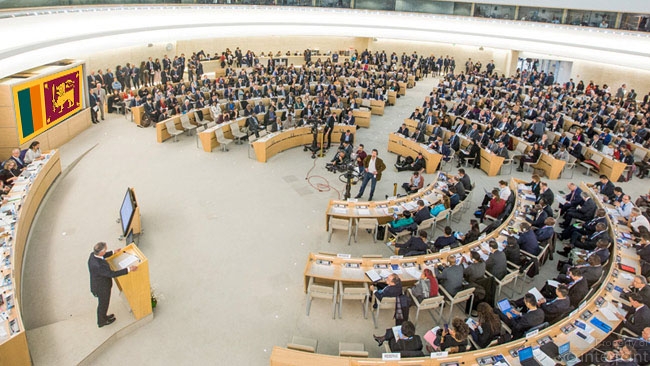
The Core Group on Sri Lanka is planning to present a draft resolution to the 51st session of the United Nations Human Rights Council (UNHRC) seeking the promotion of reconciliation, accountability and human rights on the island nation.

The Core Group consists of the United Kingdom, the United States, Germany, Canada, Malawi, North Macedonia and Montenegro.

In its draft proposal, the Core Group has called upon the government of Sri Lanka to fulfil its commitments on the devolution of political authority, which is integral to reconciliation and the full enjoyment of human rights by all members of its population.

It also encouraged the Sri Lankan government to respect local governance, including through the holding of elections for provincial councils, and to ensure that all provincial councils, including the northern and eastern provincial councils, are able to operate effectively, in accordance with the thirteenth amendment to the Constitution of Sri Lanka.

The Core Group went on to underscore the importance of addressing the underlying governance factors and root causes which have contributed to this crisis including deepening militarization, lack of accountability in governance and impunity for serious human rights violations and abuses.

However, the Core Group expressed concerns at the human rights impacts of the economic crisis, including as result of increased food insecurity, severe shortages in fuel, shortages in essential medicines and reductions in household incomes, while stressing the need to promote and protect the rights of the most marginalized and disadvantaged individuals, including daily wage earners, children, older persons, and persons with disabilities.

It also raised concerns over other human rights developments since April 2022 including violence against and arrests of peaceful protestors, as well as violence against government supporters, resulting in deaths, injuries, destruction and damage to houses of members of Parliament and stresses the importance of independent investigations into all attacks and for those found responsible to be held to account.

The Core Group further noted that it remains concerned at continued militarization of civilian government functions; the erosion of the independence of the judiciary and key institutions responsible for the promotion and protection of human rights; lack of progress in addressing longstanding grievances and demands of Tamil and Muslim populations; surveillance, intimidation and harassment of journalists, human rights defenders, families of the disappeared and persons involved in memorialization initiatives, and sexual and gender-based violence.

Posted in Uncategorized

India’s stringent call in Geneva for 13A – What is the 13th Amendment?

India has called for full implementation of the 13th Amendment to Sri Lanka’s Constitution, the controversial 1987 amendment that has never been completely implemented for 35 years due to vehement opposition from many of the country’s Sinhala-dominated political parties.

But what is the 13th Amendment that India’s representative to the United Nations Human Rights Council highlighted, something that was drafted long before most Sri Lankans and Indians of today were even born? Here’s a look.

13A:

Up to 1987, Sri Lanka was ruled from Colombo by a central government, which resulted in areas far from the capital being virtually ignored in development programs and day to day governance. The 13A, as it became known, required devolution of powers to nine Provincial Councils – Northern, Southern, Eastern, Western, Central, Northcentral, Uva, Sabaragamuwa and Wayamba (Northwestern). It mandated the holding of Provincial Council elections. Perhaps most controversially, it required a referendum in the Northern and Eastern Provinces to place the question of merging these two provinces in the hands of the population in these regions. With the North and East having a majority Tamil population, the merger was expected to be approved. But the referendum was never held.

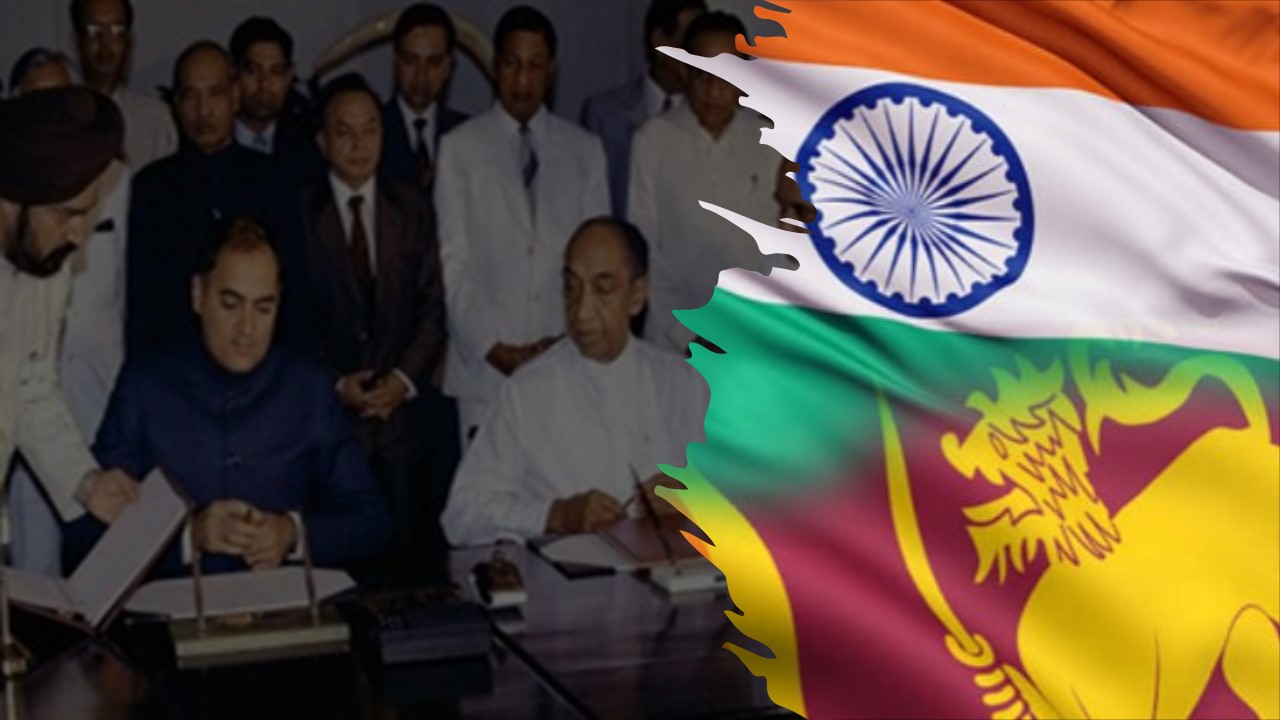
The 13th Amendment was passed after the singing of the India-Sri Lanka Peace Accord, as a direct result of Indian intervention in Sri Lanka’s civil war,. Signed in July 1987 between then Indian Prime Minister Rajiv Gandhi and then Sri Lankan President J.R. Jayewardene, the accord was aimed at resolving the country’s ethnic conflict between the armed forces and the Liberation Tigers of Tamil Eelam (LTTE), which demanded a separate state in the Northeast.

The 13th Amendment led to the passing of the Provincial Councils Act, the creation of nine Provincial Councils and the Sri Lankan government committing to a power-sharing arrangement to enable self-govern for all nine provinces in the country, including the seven Sinhala majority provinces. If implemented fully, the provincial councils would have the right to self-govern over key areas such as education, health, agriculture, housing, land and police. The amendment was vehemently opposed by both the Sinhala nationalist parties and the LTTE.

13A also required Tamil to be made a National Language of Sri Lanka in addition to Sinhala in an attempt to roll back the controversial ‘Sinhala Only Act’ of 1959.

Why it was never fully implemented:

The amendment has never been fully implemented because of opposition by political parties that rely on Sinhala vote bases, who view 13A as an imposition by India in Sri Lanka’s internal affairs. Only a few subjects such as education and health have been partially devolved. However, the ethnic Tamil political parties have repeatedly called for its full implementation.

India has since 1987 been urging Sri Lanka to implement 13A the amendment. Ironically, the LTTE also opposed 13A and the Indian government in 1987 sent a large military contingent, the Indian Peace Keeping Force (IPKF), to enforce the Indo-Lanka Accord and pave the way for the implementation of 13A. This led to a bitter war in the North and East between the LTTE and IPKF, with the Indian military being withdrawn in 1990 after suffering over 1,100 soldiers killed, often referred to as ‘India’s Vietnam’.

The Indo-Lanka Accord and 13A also sparked the rise of the bloody 1989/90 insurrection by the Janatha Vimukthi Peramuna (JVP) which led to an even more violent government crackdown that left over 50,000 people dead.

An issue that never died:

In November 2019, when then Sri Lankan President Gotabaya Rajapaksa visited India for the first time after taking office, the sticky issue of !3A was sidestepped, as both sides attempted to reset ties.

Subsequently, India’s External Affairs Minister S. Jaishankar and Foreign Secretary Harsh Vardhan Shringla also urged the Sri Lankan government to adhere to the commitments made on the reconciliation process by way of meaningful devolution under the 13th Amendment during their visits to Sri Lanka. India has also raised the issue at many multilateral fora.

Last February, while New Delhi abstained from voting on a UNHRC resolution in Geneva that called for punitive actions against Sri Lanka for alleged war crimes committed during its decades-long civil war, India’s Permanent Representative to the UN Indra Mani Pandey stressed that Tamil rights must be respected by Colombo in the form of the implementation of 13A.

Report filed with inputs from Zulfick Farzan, Senitha Senanayake, Ruhaza Irfan

Posted in Uncategorized

Ali Sabry meets China’s Rep at UNHRC; discusses support & Human Rights

Ambassador Chen Xu, Permanent Representative of China to the United Nations Office at Geneva and other international organizations in Switzerland, met with Sri Lankan Foreign Minister Sabri, who was in Geneva to attend the 51st Session of the Human Rights Council.

Ambassador Chen Xu said that China and Sri Lanka have a long-standing tradition of friendship, and the Chinese side sympathizes with the difficulties that Sri Lanka is currently facing.

China firmly supports Sri Lanka in choosing a development path that suits its national conditions, positively evaluates Sri Lanka’s achievements in human rights, and firmly opposes relevant countries’ pressure on Sri Lanka under the pretext of human rights.

Foreign Minister Ali Sabry said that Sri Lanka and China have traditionally been friendly, the strategic cooperative partnership has been continuously consolidated, and they have firmly supported each other on issues concerning the core interests and major concerns of both sides.

He also thanked the Chinese government and people for helping Sri Lanka in difficult times as always, and expressed he is willing to strengthen communication and coordination with China at the Human Rights Council and further deepen bilateral cooperation.

Posted in Uncategorized

Japan calls for meaningful reconciliation

Japan has called for meaningful reconciliation in Sri Lanka and a better human rights situation.

The Japanese Government said that it is concerned by the devastating economic crisis and emphasizes the need for Sri Lanka to urgently take all necessary measures to guarantee all people’s rights.

“Japan also believes it is vital for Sri Lanka to take further voluntary actions and provide remedies to achieve a meaningful reconciliation and a better human rights situation,” the Japan told the UN Human Rights Council in Geneva.

Japan said that it also acknowledges the amendments to the Prevention of Terrorism Act as an important initial step, and encourages Sri Lanka’s further efforts to impose a moratorium on the PTA, enact comprehensive counterterrorism legislation, and establish transitional justice mechanisms, including a truth and reconciliation committee.

Japan also encourages Sri Lanka to continue its efforts to improve its human rights situation through dialogue with all domestic and international stakeholders, including OHCHR.

Japan said that it stands ready to support Sri Lanka on both the human rights and economic fronts, including through its ongoing humanitarian assistance for medicine and food.

Posted in Uncategorized

US calls for accountability for protest-related violence in Sri Lanka

The United States says it is committed to supporting the Sri Lankan people and welcomed UN Human Rights Council’s efforts to advance accountability, reconciliation, and respect for human rights in Sri Lanka.

Delivering a statement during the Interactive Dialogue on Sri Lanka at the 51st Session of the UNHRC in Geneva on Monday, U.S. Ambassador Michèle Taylor urged respect for human rights and fundamental freedoms, including rights to peaceful assembly and expression

“The United States is committed to supporting the Sri Lankan people in their efforts to strengthen their democracy. We recognize the profound economic and political challenges the country is facing, and we welcome the government’s efforts at reform,” she said.

The rule of law, equal access to justice, independent institutions, transparency, and accountability are pillars of democratic systems, Ambassador Michèle Taylor said.

She said the U.S. values the UNHRC’s attention to and engagement on Sri Lanka, including the OHCHR’s recent report and its efforts to help survivors and the families of missing persons.

“We urge respect for human rights and fundamental freedoms, including rights to peaceful assembly and expression. We call for accountability for protest-related violence in line with rule of law and equal access to justice.”

The U.S. Permanent Representative to the UNHRC said it is essential that the Prevention of Terrorism Act align with international human rights obligations and commitments, to protect fair trial guarantees and other applicable legal protections.

As a key step toward improved human rights, it is also important to address longstanding impunity and corruption in Sri Lanka, she said.

“We will continue to support justice, accountability, and reconciliation in Sri Lanka.”

GR, BR, and MR: From heroes to the Zero Draft in Geneva -FT.LK

The Sunday papers in Colombo gave a heads-up on the new resolution (currently at the stage of the ‘Zero Draft’) on Sri Lanka reportedly being negotiated at the United Nations Human Rights Council in Geneva, revealing that “the Zero Draft resolution seeks to recommend action against political leaders and state officials responsible for economic crimes that have adversely impacted on human rights in Sri Lanka.”

The news reports indicate that “…The names of ex-President Gotabaya Rajapaksa and his brother, former Finance Minister, Basil Rajapaksa, have figured in these consultations…reference is to be made to then President Mahinda Rajapaksa…”

Evidently, two of the Rajapaksa brothers, former President Gotabaya and former Finance Minister Basil have come up in discussions in relation to economic crimes, while the third, former President Mahinda, President during the last stages of Sri Lanka’s war against the Tigers, is to be mentioned “for not fulfilling ‘assurances’ given to Ban Ki-moon, then UN Secretary General, during his visit to Sri Lanka on May 26, 2009”. This covers between them, transgressions of pretty much most of the social, economic, civil and political rights guaranteed under the Universal Declaration.

President Ranil Wickremesinghe needn’t feel left out because he will find that his own recent ‘see-if-I-care’ violations of the rights of protesters, more in-your-face than any since the war, hardly went unnoticed by the OHCHR fact-finding mission recently in Colombo, which included them in the Human Rights High Commissioner’s Report. Together, these personalities comprise the larger part of the top rank of the ruling elite in Sri Lanka over the last decades. No one should be surprised that Sri Lanka is in unprecedentedly deep crisis.

Early elections

Twice elected president of Chile, UN Human Rights High Commissioner Michele Bachelet recently completed her tenure and has left office, but not before she did right by Sri Lanka and ensured that her report presented to the Human Rights Council on Sri Lanka was comprehensive and up-to-date.

She concludes that the current administration “appear[s] to reflect a continuity with the past.”

Actually, it has been getting progressively worse and her report acknowledges it: “Following the installation of the new administration, there has been a notable hardening of approach, with increasing public rhetoric characterising the protesters as violent extremists.”

It is probably in this context that her report includes an unambiguous reference to and tacit endorsement of calls for an early election: “There remains a significant deficit in confidence and trust between the Government, protest movement and broader civil society and calls have continued for early elections for a renewed democratic mandate.”

In addition to introducing the new category of “economic crimes” perpetrated against the people, the Report of the outgoing High Commissioner itemises the recent spate of state violence against the protesters impacted by those economic crimes, in some detail:

“On 31 March 2022, police dispersed protesters…injuring 50 people and arresting over 20; some were allegedly ill-treated including by men in civilian clothing reportedly belonging to presidential security.

On 19 April 2022, police opened fire at a spontaneous protest in Rambukkana … One person was killed by live ammunition and 24 others were injured. An investigation by the HRCSL found that police had used excessive use of force.

On 9 May 2022, widespread violence erupted after supporters of then Prime Minister Mahinda Rajapaksa attacked peaceful protestors in Colombo…and destroyed their makeshift tents.

Instances of beatings and use of live ammunitions by police or military have been captured and circulated on social media.

On 18 June 2022, the military confronted protestors at a fuel station in Mullaitivu … Two people were injured by the soldiers who allegedly also opened fire into the air.

On 3 July 2022, a video of an army officer assaulting a civilian in a fuel station in Kurunegala was widely circulated on social media. A similar incident involving a police officer assaulting a motorist and handling a handgun irresponsibly occurred on 17 June also in Kurunegala. On 13 July 2022, a protestor died after police fired tear gas.

On 22 July 2022, security personnel, including police and military, stormed at a protest camp near the presidential offices in Colombo, injuring at least 48 people; nine others were arrested. The evacuation and medical treatment of injured protestors was obstructed. Since then, a number of leaders and members of the protest movement and trade unions have been arrested, some in an irregular manner by plain-clothes personnel using unmarked vehicles.

Excessive force was most recently used in breaking up a peaceful student protest in Colombo on 18 August 2022 with 20 arrests.”

This clearly tells a less than savoury story about the new administration to the entire world, including to the people of Sri Lanka.

Economic crimes, international accountability

Referring to economic crimes, the Report says, “The High Commissioner hopes that the new administration will respond to the popular demand for accountability for economic crimes, including corruption, and abuse of power with a renewed commitment to end impunity.”

The Office of the High Commissioner for Human Rights (OHCHR) is also developing “possible strategies for future accountability processes at international level”. They have talked to victims and civil society organisations and national authorities. It has declared that it “supports judicial and non-judicial proceedings with competent jurisdictions through the sharing of relevant information …”

It has evidently got requests to provide evidence against 8 named individuals with a “number of alleged violations”.

It is interesting to note that a couple of foreign missions in Colombo felt they couldn’t leave anything to chance and decided to head over to Geneva themselves. It is reported that UK High Commissioner in Sri Lanka “was in Geneva this week helping to promote the resolution”. The Chief Political/Economic Officer of the US Embassy in Colombo is to join “a delegation from the US State Department’s Global Criminal Justice Division” apparently to assist with “the same task”. The Resolution on Sri Lanka is being taken very seriously indeed.

It is reported that the focus of these teams in Geneva is “to help provide legal and other guidelines to countries that want to exercise universal jurisdiction permissible under their laws and try those against whom there is ‘credible’ evidence for a period of two years (September 2022 to September 2024)”.

The Sunday paper quotes diplomats in Geneva disclosing that “seven countries had agreed to enforce provisions of universal jurisdiction under their laws to deal with matters relating to Sri Lanka”. So that’s seven countries which could initiate proceedings in their own territories against human rights violators in Sri Lanka.

Sri Lankan Govt. responds

The Government of Sri Lanka (GoSL) has responded to the High Commissioner’s Report in writing, insisting at length that this reply be given equal prominence to that of the Report. GoSL may regret this given some of its content.

While rejecting the earlier resolution on war crimes investigations (46/1) and the new mechanism in Geneva called the Sri Lanka Accountability Project, the Government has denied all allegations of recent violations in the context of protests:

“The Government’s response to the current political and social challenges has been firmly within a democratic, constitutional framework, respecting the civil and political rights of the people, including their right to peaceful assembly and protest.”

Seriously? There was no fog of war, and cameras were everywhere.

There is more on the subject:

“Those arrested were produced in courts within 24 hours, and a majority were granted bail.”

“…the dispersal of the protestors illegally occupying the Presidential Secretariat and obstructing its entrance, was carried out in accordance with the Criminal Procedure Code.”

“…law enforcement authorities have been instructed to follow due process in the conduct of investigations under the PTA and to use this legislation only in instances of extreme necessity.”

“…when some protestors burned down the private residence of the President (the then Prime Minister) on 9th July 2022, no excessive force was used beyond the maintenance of public order and security.”

“…no excessive nor disproportionate force was used when protestors tried to forcibly enter the Parliament on 13th July 2022 when the Party Leaders were meeting.”

Replying to the High Commissioner’s reference to the 2019 Easter Sunday attacks, the GoSL reminds the Council that despite the “extensive investigations”, since the perpetrators were suicide bombers, they have been unable to “identify their wider connections”.

They also submit that the new President’s policy as outlined in Parliament is to “achieve a more just, fair, inclusive and sustainable society where all Sri Lankans can live longer, healthier and more dignified lives, including human rights and reconciliation.”

In Geneva, the Government will need to show more than just good intentions, which are not patently contradicted by actual practice.

The High Commissioner doesn’t mince her words in her suggestion to the GoSL: “The new Government should immediately reverse the drift towards militarization, end the reliance on draconian security laws and crackdowns on peaceful protest”.

High Commissioner’s recommendations

The most important segment of the High Commissioner’s report is the final section with its recommendations, addressed to the Council. The first one addresses the urgent need to ensure social protection for the most vulnerable groups at this time of economic crisis.

Immediately afterwards, it deals with the related issue of “international finance assistance” (read IMF) and recommends that the Government should “assess any potential human rights impact of international financial assistance programmes and take preventive measures to reduce it to the bare minimum”.

In this context, it is just as well that the Governor of the Central Bank has declared that he has no objections to revealing the contents of the IMF agreement which had it been kept a closely guarded secret, couldn’t have been assessed for its human rights impact.

It’s now down to the President to prove that he meant what he said about a dignified, sustainable and long life, etc., for the citizens by sharing the relevant contents of the IMF agreement in Parliament. No one can be convinced that he should be the sole arbiter in the evaluation that the UN Human Rights High Commissioner recommends.

The President’s current legislation of choice in the arrests of protestors, the infamous PTA, also comes in for criticism. The High Commissioner recommends to the Council that Sri Lanka should “Observe a strict moratorium on the use of PTA and expedite the release of detainees and long-term prisoners under the PTA.”

In a robust set of recommendations on “economic crimes”, the Report assures its support for Sri Lanka “in the investigation of economic crimes that impact on human rights and the tracing and recovery of stolen assets” which will be music to the ears of the people of Sri Lanka who have suffered corruption too long in silence.

It includes monitoring of the “steps to address” economic crimes in the “enhanced monitoring and report regularly to the Council on the human rights situation in Sri Lanka” and also encourages “relevant thematic special procedures to examine and make recommendations on human rights dimensions of the economic crisis”.

Thematic Special Procedures include the Independent Expert on the effects of foreign debt and other related international financial obligations, and the Working Group on the issue of human rights and transnational corporations and other business enterprises, among many others such as the expert on Right to Food (who may have much to say about the fertiliser ban), Freedom of Opinion and Expression, Freedom of Assembly, Arbitrary Arrests to name a few that come to mind.

Sri Lanka’s new Foreign Minister, in Geneva to present the administration’s case, will have little success if the written response of the GoSL forms the basis of his submission, in the face of the evidence gathered by the OHCHR in its monitoring function.

The High Commissioner assures that her office is “ready to provide technical assistance” to implement the Report’s recommendations “through the strengthening of its country presence” in support of the people of Sri Lanka.

It will be of great value if the Human Rights Commission of Sri Lanka could work closely with a strengthened UN country presence qualitatively enhancing the capacity of the Commission to carry out its work, including perhaps the development of a joint program of Human Rights training and monitoring, including for politicians at all levels of governance, bureaucrats and law enforcement authorities.


Lazard in talks with China, India, Japan on Sri Lanka debt-Reuters

Financial advisory group Lazard has started talks with India, China and Japan on restructuring Sri Lanka’s debt, a spokesman for the Sri Lanka government said on Tuesday, as the crisis-hit island nation seeks an International Monetary Fund (IMF) bailout.

Lazard was hired by Sri Lanka in May, along with international lawyers Clifford Chance, to guide the government through the process of restructuring its debt, for which estimates range from $85 billion to well over $100 billion.

Earlier this month, the IMF said it had reached a preliminary agreement with Sri Lanka for a loan of about $2.9 billion. But for the deal to go through, the country will require debt relief from China, India and Japan, its three main international lenders.

“They are in the process of speaking to India, China, Japan, mainly to ensure we come to some sort of consensus,” acting cabinet spokesperson Ramesh Pathirana told reporters, referring to Lazard.

“We will keep our fingers crossed that we will be able to come to an agreement.”

The three countries hold about $13 billion of Sri Lanka’s debt, while China is Sri Lanka’s largest bilateral creditor.

Sri Lanka is also expected to formally reach out to private creditors who hold about $12 billion in bonds later this week, a government source told Reuters.

“The government is planning to start talks with the ambassadors of China, U.S., Japan and India next week on debt restructuring,” the source said, declining to be named as he was not authorised to speak to media.

Sri Lanka is in the throes of its worst financial crisis in seven decades, leaving it with paltry foreign exchange reserves to pay for critical imports of fuel, food and medicine.

Posted in Uncategorized