‘Ratta’arrested, banned from traveling aboard

Social media activist Rathidu Senarathna alias ‘Ratta’ was arrested today (1) by a police team of the Colombo Central Division Criminal Investigation Unit.

Ratta appeared at the Unit today at around 3.50 pm in response to a notice given by the Colombo Crime Division to record a statement related to an investigation regarding the conduct of the ‘Aragalaya’ anti-government protest.

The Colombo Crime Division had recorded a statement from Rathidu Senarathna for almost three hours.

After receiving the statement, a team of officers from the Colombo Central Division Criminal Investigation Unit came to the Colombo Crime Division and made the arrest.

The Colombo Central Division Criminal Investigation Unit has arrested Rathidu Senarathna in connection with an incident of violation of court orders during a protest held in the Bank Mawatha area on May 21.

Meanwhile, the Colombo Fort Magistrate Thilina Gamage today ordered to impose a foreign travel ban on Rathidu Senarathna and Haritha Darshana.

The Magistrate issued the travel ban when a case filed by the Colombo Fort Police against 11 suspects for being members of an illegal assembly and causing property damage and injury in violation of court orders was summoned today.

The magistrate ordered the court registrar to send the order banning them from traveling abroad to the Controller General of Immigration and Emigration.

Travel ban on MR, Basil further extended till Aug. 4

The Supreme Court today further extended its interim order preventing former Prime Minister Mahinda Rajapaksa and former Finance Minister Basil Rajapaksa from leaving the country until August 4, without the prior approval of the Supreme Court.

Meanwhile, other respondents including former Central Bank Governors Ajith Nivard Cabraal, W.D. Lakshman and former Secretary to the Ministry of Finance S.R. Atygalle gave an undertaking through their lawyers that they will not leave the country without the permission of Supreme Court.

Supreme Court five-judge-bench bench comprising Chief Justice Jayantha Jayasuriya, Justice Buwaneka Aluwihare, Justice Vijith Malalgoda, Justice L.T.B. Dehideniya and Justice Murdu Fernando fixed the petitions for support for leave to proceed on August 3.

The Supreme Court made this order in connection with a Fundamental Rights petitions filed by Sri Lankan swimmer and coach Julian Bolling, former Chairman of the Ceylon Chamber of Commerce Chandra Jayaratne, Transparency International and Jehan Canaga Retna. In this petition, the petitioners are seeking an order to take legal action against those responsible for financial irregularities and mismanagement of the Sri Lanka economy.

The petitioners maintained that they have been reliably informed that some of the above respondents may leave the country and thereby avoid giving information sought by the petitioners and consequently prevent proper investigation.

The petitioners stated that irreparable loss, harm and prejudice would be caused to them and the citizens of Sri Lanka unless court the interim relief sought in the application is granted.

President’s Counsel Chandaka Jayasundere and Upul Jayasuriya PC appeared on behalf of the petitioners.

President’s Counsel Gamini Marapana with Navin Marapana PC appeared for former Prime Minister Mahinda Rajapaksa and former Minister Basil Rajapaksa.

‘A moment of opportunity’: fall of Sri Lankan president raises victims’ hopes -UK Guardian

It was a warm April day in 2019 and Gotabaya Rajapaksa was enjoying the afternoon with his family in an affluent suburb of Los Angeles. Rajapaksa, relaxed in his chinos and polo shirt as he strolled through the car park of the popular American supermarket Trader Joe’s, looked surprised when a woman sidled up and shoved a brown envelope into his hands. “You’ve been served,” said the private investigator before rushing away.

The charges inside that brown envelope, a civil suit alleging complicity in torture and killings, would not make it far in the courts. Seven months later Rajapaksa, a member of Sri Lanka’s most powerful political dynasty, would be elected president, and be granted immunity from prosecution.

But since Rajapaksa’s presidency came to an abrupt end this month as he fled abroad and resigned in disgrace, accused of bankrupting Sri Lanka, lawyers, activists and victims around the world have swung into action. Stripped of the protections of his office, many believe that, finally, this could be an opportunity for justice.

On Sunday, the International Truth and Justice Project (ITJP), which has spent more than a decade doggedly collecting evidence on Rajapaksa and brought the initial 2019 US civil suit, filed a criminal complaint with the attorney general in Singapore, where he is hiding out. It is seeking his arrest for alleged war crimes under the country’s Geneva conventions act. Lawyers say other lawsuits may soon follow.

“We are excited, this is a moment of opportunity,” said Yasmin Sooka, a human rights lawyer with the ITJP. “We’ve spent years collating an extensive dossier on Gotabaya and a pattern of international violations going back to 1989. Now he no longer has immunity, we are confident we have a credible case he has to answer.”

The message it sent to victims, added Sooka, was “very powerful; the idea that this man, who was known in Sri Lanka as ‘The Terminator’, can be finally held accountable”.

Though rare, there have been cases where war criminals who escaped abroad have been prosecuted and sentenced under universal jurisdiction. Sooka confirmed the ITJP was also considering re-filing the US civil case and would be pushing for foreign governments to place sanctions on Rajapaksa’s assets.

The accusations against Rajapaksa date from late 2008 onwards, when he was defence secretary and head of the armed forces in Sri Lanka. It was during this time, when his older brother Mahinda was president, that he oversaw the ending of Sri Lanka’s 26-year-long civil war between the Tamil separatist militant group known as the Tamil Tigers and Sri Lankan government forces.

Barbaric methods were allegedly used and approved by Rajapaksa. According the UN, backed up by witness accounts and video footage, there were “credible allegations of war crimes and crimes against humanity”, including systematic murder, torture and sexual violence against tens of thousands of Tamil civilians and the summary execution of prisoners by government forces.

Citizens were enticed to safe no-fire zones in the Tamil-controlled areas in the north, only to be bombarded by deadly shelling from government forces, with dozens of hospitals and humanitarian facilities targeted. Thousands who surrendered were taken in and never seen again. In those final phases of the war, estimates of the dead range from 40,000-100,000. Even in the years that followed, thousands more were subjected to enforced disappearances and white van abductions, where they were often tortured and rarely returned. According to the ITJP and others, the responsibility and chain of command for these actions ended directly with Rajapaksa. He denies all the allegations.

Yet despite numerous damning reports, UN resolutions and recommendations and an international outcry, Rajapaksa never faced a domestic or international courtroom. After his brother lost power in 2015, Rajapaksa moved freely to the US, gaining citizenship. In 2019, still heralded as a war hero by Sri Lanka’s Sinhalese Buddhist majority, he returned to Sri Lanka and was voted in as president. The limited progress towards wartime justice and reconciliation was halted, military generals who had faced convictions for war crimes were pardoned and the persecution of Tamils escalated.

But with Rajapaksa’s dramatic fall from grace has come a new appetite for accountability. While the overwhelming cry from protesters on the streets in Colombo has been a call for him and his family to face corruption charges, human rights organisations and victims have begun vocally pushing for investigations to look beyond financial crime and extend to Rajapaksa’s persecution of the Tamil and Muslim minorities, who are mainly concentrated in Sri Lanka’s northern and eastern provinces, as well as activists, journalists and political opponents.

“We never dreamed this would become a possibility, where President Rajapaksa had to run away for his own safety,” said Leeladevi Aanandarajah, 70, whose son Aanandanadarasa Anura was taken into military custody in the Tamil region of Vavuniya in 2009 and never seen again.

Alongside hundreds of other Tamil mothers, Aanandarajah has spent years trying to find answers about her son, including testifying before police and commissions. Yet their calls for justice have consistently been ignored and she has faced constant harassment, surveillance and abuse from the authorities and military. Many of the mothers of the disappeared are now dying before they get answers.

Like most in the north and east, her hopes now rest on the international community stepping in. “With President Rajapaksa’s resignation, now we are hopeful of pursuing all available avenues with the support of our diaspora communities abroad to bring him before the international criminal court in order to ensure justice is provided to us,” she said. “What we demand is justice for our children, nothing else.”

The ITJP is not the only group looking at renewed legal action against Rajapaksa. In 2019, a US civil action was brought against Rajapaksa for his alleged role in the murder of Lasantha Wickrematunge, a journalist who reported on Rajapaksa’s alleged involvement in corruption and was subsequently killed by a military hit squad directly under his command. More than a dozen other critical journalists were killed during that time in similar circumstances.

Nushin Sarkarati, a lawyer with the Center for Justice and Accountability in the US, who filed the case on behalf of Wickrematunge’s daughter but had to withdraw it after Rajapaksa became president, said this felt like “a new moment of opportunity”, one they intended to seize.

“We’re in discussion with the family about what the next steps are: whether civil litigation is still the right way forward or is there more fervour to push for criminal action against Gotabaya?” said Sarkarati.

Previous pleas by the UN human rights commissioner for members states to open up investigations into war crimes in Sri Lanka in their own countries, and then seek Rajapaksa’s arrest under universal jurisdiction, have come to nothing.

But Sarkarati said that with the “groundswell of support and calls for justice for the myriad abuses that he’s been linked to”, several human rights groups were now pushing governments, including the US, to reopen old criminal investigations into Rajapaksa. “A government like the US could open an investigation and then seek his extradition,” said Sarkarati.

Nonetheless, the pathway to Rajapaksa facing trial is riddled with uncertainty. If the authorities in Singapore let him freely leave after his visitor visa expires in early August, a cabinet minister has indicated that Rajapaksa intends to return to Sri Lanka.

KS Ratnavale, a senior lawyer who has worked on hundreds of cases of enforced disappearances and massacre victims, said there remained little likelihood of Rajapaksa facing trial for war crimes within Sri Lanka where all domestic accountability mechanisms had so far failed and Rajapaksa’s political allies were still running the country.

The new president, Ranil Wickremesinghe, is among those accused of protecting the Rajapaksa family in the past and of complicity in obstructing civil war justice. When he was prime minister, from 2015-2019, Wickremesinghe never set up the promised hybrid courts – intended to put leaders on both sides on trial for grave violations of human rights in the civil war – and had refused to dismantle the military units in the north accused by Tamils of committing the worst war crimes.

Wickremesinghe’s actions since becoming president this month, including reappointing Kamal Gunaratne, a former commander of the 53 Division of the Sri Lankan army accused of committing alleged war crimes, as secretary to the ministry of defence, have also not inspired confidence among Tamil groups calling for justice.

“Whatever government comes to power, it covers up the atrocities and crimes committed against civilians and unarmed personnel and entrenched immunity is given to armed forces and paramilitary groups,” said Ratnavale. “That’s why victims are demanding an international probe.”

For the mothers of the disappeared who are still waiting for justice, the fall of Rajapaksa, while a symbolic victory, was not enough to convince them that they would finally be granted the accountability and answers they have craved for 13 years.

Kathirkamanathan Kokilavani, 52, from Kilinochchi, lost her 18-year-old son as they were escaping from heavy shelling and barrel bombing, and never saw him again. “I don’t believe whoever comes into power will give us answers, because they are scared of the truth,” she said. “The Rajapaksas made our children disappear; now they have disappeared from politics.”

Posted in Uncategorized

Merchandise trade balance records a surplus for first time in nearly 20 years

The merchandise trade balance recorded a surplus in June 2022 for the first time since August 2002, reflecting the impact of historically high monthly export earnings and the continued decline in import expenditure, says the Central Bank of Sri Lanka (CBSL).

The balance in the merchandise trade account in June 2022 recorded a surplus of US dollars 21 million, compared to the deficit of US dollars 652 million recorded in June 2021, and for the first time since August 2002, where a trade surplus of US dollars 110 million was recorded.

Meanwhile, the cumulative deficit in the trade account during January-June 2022 narrowed to US dollars 3,514 million from US dollars 4,316 million recorded over the same period in 2021.

Earnings from tourism recorded an increase in June 2022 (year-on-year) from the low base, despite the negative sentiments associated with travel advisories and the ongoing shortage of fuel and resultant transportation difficulties, the CBSL said.

Workers’ remittances moderated in June 2022, compared to May 2022, reflecting an increase of grey market activity of foreign exchange transactions, according to data on the External Sector Performance for June 2022.

Foreign investment in the government securities market recorded a marginal net inflow, while that in the Colombo Stock Exchange (CSE) recorded a marginal net outflow during June 2022.

The Central Bank says it continued to provide forex liquidity to finance essential imports, exhausting the usable level of gross official reserves.

Meanwhile, the weighted average spot exchange rate in the interbank market remained around Rs. 360 per US dollar during the month.

No rule of law in the country: Cardinal Malcolm Ranjith

The Archbishop of Colombo, Rev. Malcolm Cardinal Ranjith commented on the fate of the rule of law in the country today.

His Eminence Malcolm Cardinal Ranjith, speaking at the mass held for the 150th Jubilee of the Church of the Holy Apostles in Modara, demanded for the public to look at the fate of the rule of law within the country.

Rev. Malcolm Ranjith pointed out that the country has fallen into an abyss due to people who are greedy for power and wealth and betray the policies agreed upon by all.

Speaking further, the Archbishop of Colombo said that religion is not just about coming for the Sunday Mass, but one must also live within religion. However, despite calling Sri Lanka a ‘Dharmadweepa’ (A land of religion), he requested others to see what has become of the country today.

Citing the incident of a bomb being found at a Church in Borella, His Eminence Malcolm Cardinal Rajith stated that several people inside the church were arrested, and were subsequently locked up for more than a month, when the fault lay with the security services, and not with the innocents.

Till today, there has been no investigation initiated into it, he said, adding that however, those who discovered the bomb were kept imprisoned for over a month, only to be later released due to zero evidence.

“Those suspects were beaten. They were forced to sign documents. No justice was done for them. That bomb was powerful. It was the power of the former Government. To this day, this case remains completely under the carpet,” he said.

Referring the Easter Sunday Attack in 2019 when 269 people died in Katuwapitiya, Kochikade and several other places, His Eminence Malcolm Cardinal Ranjith said that to this date, no justice has been served over them, which illustrates the power of the powerful in the country.

“We should be ashamed before the world. There is no law in the country. There is no room for justice. There is only lawlessness and the law of the powerful in the country. No matter how much we asked for an independent investigation, the law of our country did not do anything to prosecute those who have been identified as the culprits,” he said.

The Archibishop of Colombo continued, pointing out that to this date, they live freely and are able to engage in political activities and hold positions. His Eminence Malcolm Cardinal Ranjith called for the people to live a princpled life instead.

Posted in Uncategorized

Indian Navy monitoring Chinese research vessel headed for Sri Lanka’s Hambantota port – report

The Indian navy is monitoring the movements of a Chinese research vessel that is bound for Sri Lanka’s Hambantota port, Indian online newspaper ThePrint reported quoting sources in the defense and security establishment.

The vessel is scheduled to dock at Hambantota port in mid-August, ThePrint has learnt. However, the exact purpose of the vessel’s visit to Hambantota is unclear. It remains to be seen whether it is going to the port for turnaround, replenishment, logistics, or signaling, according to sources.

The sources also explained that such vessels start their movement when China or any other country is carrying out missile tests, adding: “It is not a military vessel though. Such Chinese vessels have operated in the area before, and we have always monitored their activity.”

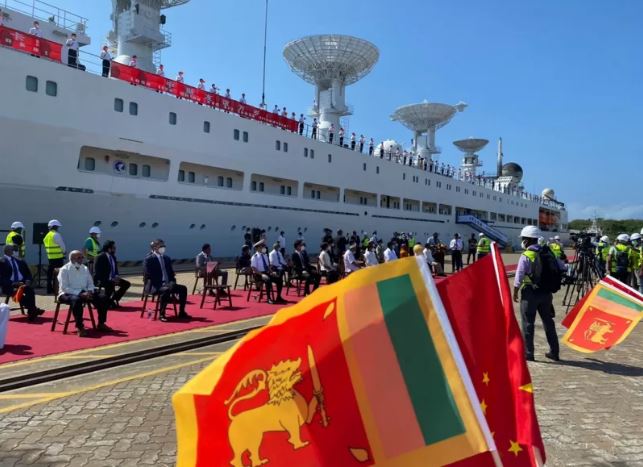
The Chinese research vessel — called the Yuan Wang 5 — is reportedly involved in space and satellite tracking. After first denying reports of its expected arrival at Hambantota port, Sri Lanka’s Defense Ministry confirmed Saturday that the vessel would be docking at the port between 11 and 17 August.

This came after Arindam Bagchi, spokesperson of India’s external affairs ministry, alluded to the Chinese vessel while telling the media Thursday that India “carefully monitors any development having a bearing on its security and economic interests”.

Consequently, Reuters reported that China Friday said that it hoped “relevant parties” would refrain from interfering with its “legitimate maritime activities”. According to the report, the “Yuan Wang 5 is one of China’s latest generation space-tracking ships, used to monitor satellite, rocket and intercontinental ballistic missile launches”.

The Yuan Wang 5 is a third generation vessel in the Yuan Wang class series and entered service in 2007. It has a displacement of 25,000 tonnes and can hold out against a maximum wind scale of 12. The Yuan Wang 5 was built by the state-owned Jiangnan Shipyard in Shanghai. It reportedly also has an aerial reach of 750 km. The Yuan Wang 5s are operated by the Strategic Support Force of the People’s Liberation Army (PLA).

Posted in Uncategorized

Minority parties likely to join all-party govt

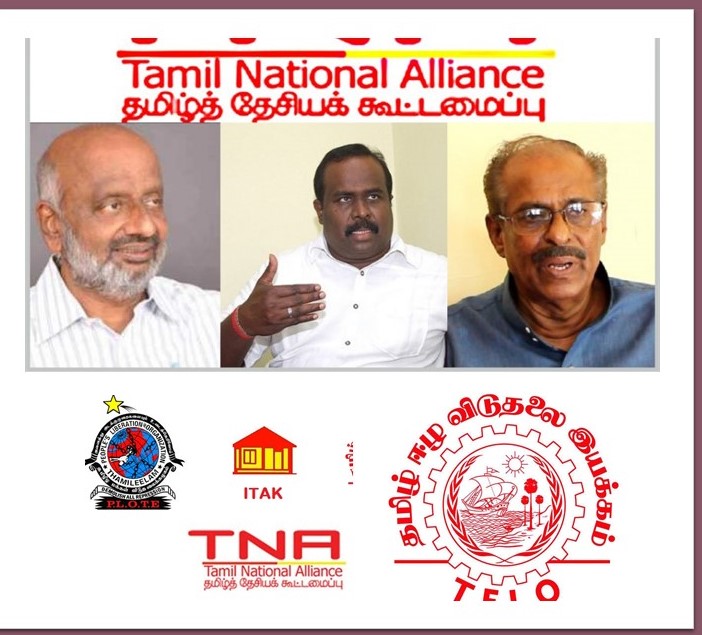
Several opposition parties representing minority communities are considering joining an all-party government proposed by President Ranil Wickremesinghe.

The Democratic People’s Front (DPF) led by Mano Ganesan, All Ceylon Makkal Congress (ACMC) under Rishad Bathiudeen and the Sri Lanka Muslim Congress (SLMC) led by Rauff Hakeem are considering the proposal, party representatives confirmed.

President Wickremesinghe wrote to MPs on Friday requesting them to join a national all-party programme to “create economic and social stability.”

DPF Leader Mano Ganesan told the Sunday Times they had received the invitation and were considering the matter. He said the party believed it was not the time to topple the government given the present economic difficulties.

The ACMC’s politburo will discuss the President’s proposal and a decision will be taken by its central committee, General Secretary Ameer Ali said.

SLMC Chairman Nizam Kariapper said his party was closely monitoring steps being taken by the President and would take a decision soon.

In his letter to MPs, President Wickremesinghe proposed to initiate a broad dialogue to discuss steps including the reintroduction of the 19th amendment and the Parliamentary Oversight Committee System.

Posted in Uncategorized

Constitutional amendment: New 22A draft Bill in Cabinet tomorrow

A new draft Bill of the Government’s proposed 22nd Amendment to the Constitution is to be taken up for discussion at the Cabinet meeting tomorrow (1 August), The Sunday Morning learns.

The Justice Ministry last week sent the new draft Bill to the Cabinet Secretary to be included in the agenda of Monday’s Cabinet meeting to be taken up for discussion and decision.

Justice Minister Dr. Wijeyadasa Rajapakshe told The Sunday Morning that the new draft 22nd Amendment would be gazetted once the Cabinet granted approval and presented it to Parliament seven days after the gazette was issued.

When asked about the provisos that were included in the previous 22nd Amendment draft Bill during President Gotabaya Rajapaksa’s tenure, the Minister noted that all provisos that were included in the previous draft Bill due to the former President’s request had now been completely removed.

Therefore, the new draft Bill will reflect the 19th Amendment to the Constitution and will go even beyond that, according to Rajapakshe.

He explained that the new draft Bill contained more features that empowered the Parliament as well as mechanisms to counter bribery and corruption. “It is, therefore, a 19th Amendment Plus scenario,” the Minister added.

The draft Bill of the 22nd Amendment that was earlier presented to Parliament was terminated following the prorogation of Parliament until Wednesday (3 August) last week.

In the previous 22nd Amendment draft Bill, former President Rajapaksa requested certain powers vested with the Executive Presidency to remain during the period of the incumbent Parliament.

Among the clauses that the provisos requested were the ones on the President’s power to appoint members to the Cabinet and ministry secretaries, the holding of Cabinet portfolios, and the President’s power to remove a prime minister.

Posted in Uncategorized

Talks with the IMF have gained progress-PMD

The President’s Media Division says discussions with the International Monetary Fund with the aim of obtaining support in order to alleviate the economic crisis in the country and establish positive economic practices have gained progress.

The PMD issuing a statement said in order to achieve progress with the IMF, a formal plan on debt sustainability must be presented.

The Media Division said progress of negotiations has stalled due to the recent political instability and the former government’s political hard-line that they will not work with the IMF.

The PMD added a government has been formed under President Ranil Wickremesinghe with complete political stability while discussions are underway to form an all-party government.

Accordingly, the PMD said it is the government’s stance that negotiations with the International Monetary Fund can be successfully completed while initial steps required can be taken to create financial stability.

US Ambassador meets Foreign Minister

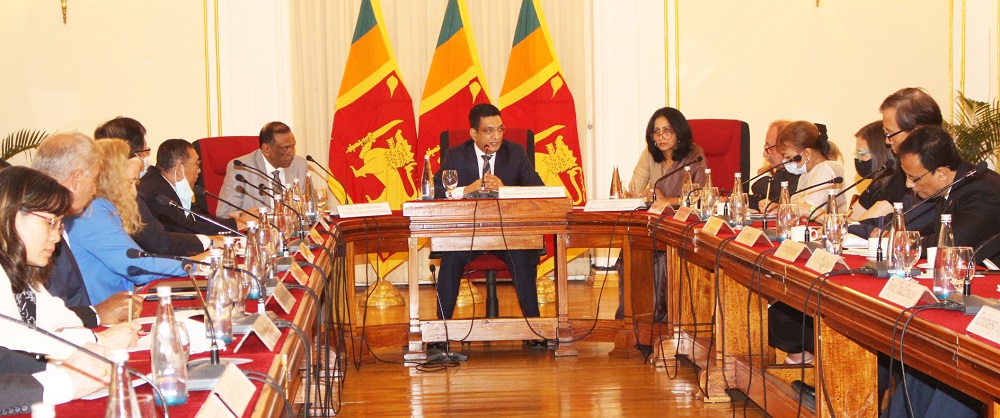
The US Ambassador to Sri Lanka Julie J. Chung met the Minister of Foreign Affairs Ali Sabry on Friday (29) for talks.

In a tweet, she said that the US looks forward to strengthening & growing bilateral relationships between Sri Lanka and the US, and the US shared commitments to democratic governance, investment & trade, as well as ongoing assistance to meet the urgent needs of the Sri Lankan people.