Sri Lanka crisis raises alarm about further unrest in APAC region

Developments in Sri Lanka underline the risk of destabilising social and labour unrest throughout Asia-Pacific because of rising living costs impacting the region, S&P Global Market Intelligence said.

Countries with similarly weak economic fundamentals and/ or poor economic policies have reduced resilience to external shocks, such as the COVID-19 pandemic, the Russia-Ukraine conflict, high oil prices and inflation and therefore are more likely to experience sustained and politically de-stabilising social unrest. Pakistan, Nepal, Bangladesh and Laos, for example, are particularly vulnerable to similar crises, but to varying extremes.

Sri Lanka’s parliament on 20 July elected acting President and Prime Minister Ranil Wickremesinghe as the interim president to lead an all-party interim government. The government has since March 2022 faced mass public protests driven by the country’s economic collapse. The resultant shortages of essential commodities – including food, fuel, and medicine – along with extreme inflation (which IHS Markit expects to exceed 45% over 2022) triggered a near total erosion of public confidence in the government of former president Gotabaya Rajapaksa.

Sri Lanka’s new interim government will almost certainly seek to focus short-term efforts towards securing external funding – principally through the IMF and the other multilateral lenders but also from close strategic partners, including China and India – as well as concluding debt rescheduling negotiations. While IHS Markit assesses that an IMF programme is likely, disbursement of funds and therefore an improvement in domestic social conditions is unlikely till 2023. Beyond this, political instability is likely to continue, with parliamentary elections likely once economics stabilisation has taken place.

Sri Lanka’s economic weakness has been the primary driver of the country’s ongoing crisis. Foreign exchange reserves have decreased over the past three years, in part due to a decline in revenue triggered by fiscal policies under Rajapaksa’s government and its resistance to negotiating a bailout with the IMF. Tax revenue fell to 7.3% of GDP in the third quarter of 2021 versus 12.8% in the equivalent period of 2019, just before the government introduced a series of tax cuts.

External factors have also had a compounding effect, with the COVID-19 pandemic undermining the tourism sector, the third largest foreign currency earning sector in the country, and the Russia-Ukraine conflict driving already high food and fuel prices. With debt servicing payments upcoming, the government was forced to declare a moratorium on its external debt obligations in April 2022. The government has allowed the rupee to free float, causing a severe depreciation in the exchange rate, which is projected to depreciate 82.3% against the US dollar by end-2022, and exacerbating inflation caused by shortages of imported goods and global inflationary pressures.

Pakistan, the fragile external position, exacerbated by soaring global commodity prices, has already led to a rapid depletion of foreign exchange reserves, sharply rising inflation, and a sudden change of government in April 2022 with a strong possibility of snap elections in the next year. Recent deregulation of domestic fuel and electricity prices as part of IMF bailout conditions further elevate the risk of social and labour unrest in the next year.

While Bangladesh and Laos are vulnerable, they have mitigating factors that set them apart from Sri Lanka, Pakistan and Nepal. Bangladesh has strong foreign exchange reserves allowing it to better weather economic pressures and reduces the risk of mass anti-government unrest. In Laos, rising living costs and fuel shortages have led to anger against the government on social media but large-scale anti-government protests are unlikely due to the Lao People’s Revolutionary Party’s restrictive security regime.

Other countries in APAC are likely to be more resilient to government instability as rising inflation and living costs drive unrest. Protests for example are particularly likely in Indonesia, India, Thailand and the Philippines although we do not expect changes in government leaderships as a result. Labour unrest is also likely to be significant in South Korea, India, and Bangladesh, driving supply chain risks in their garments and electronics sectors, as well as to ports and domestic cargo industries.

Posted in Uncategorized

Why has Lankan President Wickremesinghe prorogued parliament? By P.K.Balachandran

Sri Lankan President Ranil Wickremesinghe has prorogued parliament till August 3. According to informed sources, the prorogation would enable him to reconstitute the various parliamentary committees and appoint suitable chairmen for them in the light of the new alignment of political forces in parliament after the exit of President Gotabaya Rajapaksa and Prime Minister Mahinda Rajapaksa and his own election as President.

The prorogation also enables him to formally address parliament as the new President of Sri Lanka. He would be delivering the equivalent of the “Throne Speech” in the UK parliament. The speech will have the mark of authority of the county’s President and also his view of the state of the country and its outlook for the future.

According to www.parliament.lk, the website of the parliament of Sri Lanka, prorogation is a temporary recess of parliament, which should not extend to a period of more than two months. However, such date for summoning parliament may be advanced by another Presidential Proclamation provided it is summoned for a date not less than three days from the date of such fresh proclamation.

Constitutional Provisions

During the prorogation, the Speaker continues to function and the Members retain their membership even though they do not attend parliament. The effect of a prorogation is to suspend all current business before the House. All proceedings pending at the time are quashed except impeachments. But they can be revived at the next session.

Paragraph (4) of Article 70 of the Constitution states: “All matters which having been duly brought before parliament, have not been disposed of at the time of the prorogation of parliament, may be proceeded with during the next session.”

At the beginning of a new session, all items of business which were in the Order Paper of Parliament need to be re-listed, if it is desired to continue with them.

Committees of Parliament

In terms of the Standing Orders of Parliament No. 114, the Committee of Selection has to be appointed and therefore, all the following Committees for Special Purposes cease to function during the recess or the prorogation of Parliament and all of them have to be re-constituted at the commencement of each session of Parliament except the Committee on High Posts, Sectoral Oversight Committees and Select Committees of Parliament as per provisions of Standing Order of Parliament Nos. 124(5), 111(2) and 109 respectively.

At the end of a prorogation, a new session begins and is ceremonially declared open by the President. He is empowered under the Constitution to make a Statement of Government Policy in parliament at the commencement of each Session of parliament and to preside at ceremonial sittings of parliament in terms of the provisions stipulated in Paragraph (2) of Article 33 of the Constitution.

World Bank does not plan to offer new financing to Sri Lanka until an adequate macroeconomic policy framework is in place

The World Bank Group expressing deep concern about the dire economic situation and its impact on the people of Sri Lanka yesterday said it does not plan to offer new financing to Sri Lanka until an adequate macroeconomic policy framework is in place.

Issuing a statement, the World Bank Group said it is repurposing resources under existing loans in its portfolio to help alleviate severe shortages of essential items such as medicines, cooking gas, fertilizer, meals for school children and cash transfers for poor and vulnerable households.

To date, the World Bank has disbursed about US$160 million of these funds to meet urgent needs. In addition, other ongoing projects continue to support basic services, the delivery of medicine and medical supplies, school meals and tuition waivers.

“We are working closely with implementing agencies to establish robust controls and fiduciary oversight to ensure these resources reach the poorest and most vulnerable,” the global lender said.

“We will continue to monitor this closely. We are also coordinating closely with other development partners to maximize the impact of our support for the people of Sri Lanka.”

Until an adequate macroeconomic policy framework is in place, the World Bank does not plan to offer new financing to Sri Lanka, the statement affirmed.

“This requires deep structural reforms that focus on economic stabilization, and also on addressing the root structural causes that created this crisis to ensure that Sri Lanka’s future recovery and development is resilient and inclusive,” the World Bank Group said.

China says its massive loans, projects did not push Sri Lanka to bankruptcy

China on Thursday defended its massive infrastructure ventures and investments in crisis-hit Sri Lanka and said that they have “boosted” its economic development, amid criticism from the US of Beijing’s unproductive projects and opaque loan deals among the reasons for the country’s bankruptcy.

“The China-Sri Lanka practical cooperation has always been led by Sri Lanka with scientific planning and thorough verification with no strings attached,” Chinese Foreign Ministry spokesman Zhao Lijian told a media briefing here.

“Chinese projects have boosted Sri Lanka’s economic development, and brought tangible benefits to the Sri Lankan people,” he said while responding to a question on the criticism of China’s projects and policies towards Sri Lanka by the USAID administrator Samantha Power.

Speaking in New Delhi on Wednesday, Power said India reacted “really swiftly” with an absolutely critical set of measures to help Sri Lanka tide over its economic crisis, but calls to China to provide significant relief have gone unanswered.

Power said China became one of Sri Lanka’s “biggest creditors” offering often “opaque loan” deals at higher interest rates than other lenders and wondered whether Beijing would restructure the debt to help the island nation.

Refuting her allegations, Zhao said “there are multiple components to Sri Lanka’s foreign debt, where China-related debts take far less share than the international capital market and multilateral development banks.”

“Besides what China provides for Sri Lanka almost preferential loans with low-interest rates and long terms, which have played a positive part in improving Sri Lanka’s infrastructure and livelihood,” he said.

China’s unproductive projects in Sri Lanka, including the Hambantota port, which Beijing took over on a 99-year lease as a debt swap, has come under sharp criticism.

The unprecedented economic crisis faced by Sri Lanka has led to severe shortages of fuel, cooking gas and medicine and long lines for essential supplies, which led to massive anti-government protests and the ouster of President Gotabaya Rajapaksa this month.

China, which accounts for 10 per cent of Sri Lanka’s debt, is reported to have resisted offering a debt cut.

He also sought to blame the US policies including the interest rate hikes, unilateral sanctions and massive stimulus policies which had seriously impacted many developing countries like Sri Lanka.

“I want to stress that the global economic and financial markets have taken a heavy toll as the US’s recent sudden interest rate hikes and balance sheet reduction has siphoned off dollars more rapidly, reverse from the long-running quantitative easing policy and irresponsible massive stimulus,” he said.

Without referring to the Russia-Ukraine war, Zhao also blamed the US sanctions.

“The US’s unilateral sanctions and tariff barriers have undermined the security of industrial chains and have worsened the price surge of energy, food and other commodities. This has further aggravated the financial and economic situation of many developing countries,including Sri Lanka,” he said.

SJB MP Dr. Harsha de Silva stresses need for all party government

While calling for an all party or multi party government, Samagi Jana Balawegaya (SJB) MP Dr.Harsha de Silva today said Sri Lanka’ will slide further as a nation.

“I have urged from day one that we must establish an all or multi party government. My reasoning has always been that without broad support we will NOT be able to undertake the deep and comprehensive structural economic reforms needed to get us out of this mess. Today even the World Bank had said without such reform no money will come. That is true. But even before that without reform we cannot get IMF agreement nor deal with our creditors Dr. De Silva said when Daily Mirror inquired from him on the reports which said he is to be appointed as the minister of finance.

“Most politicians either don’t understand the depth of the economic crisis we are in or they are not interested in resolving the crisis. It is my view that unless such a government is setup and reforms commenced we will slide further as a nation and get closer to an implosion. Of course such a government must be interim, short term. The current Parliament does not reflect the peoples mandate. It is completely distorted. Thus if such a multi party government is to established then we must agree to elections at the earliest possible time,” he added.

Posted in Uncategorized

China Defends Military Ship’s Planned Visit to India’s Neighbour Sri Lanka

India worries that the Chinese-built and leased port of Hambantota will be used by China as a military base in India’s backyard. The $1.5 billion port is near the main shipping route from Asia to Europe.

Shipping data from Refinitiv Eikon showed Chinese research and survey vessel Yuan Wang 5 was en route to Hambantota and due to arrive on Aug. 11, at a time when Sri Lanka is facing its worst economic crisis in seven decades. India has provided Sri Lanka with nearly $4 billion in support this year alone.

During a weekly briefing late on Thursday, an Indian foreign ministry spokesman said the government was monitoring the planned visit of the Chinese ship, adding that New Delhi would protect its security and economic interests.

India has already lodged a verbal protest with the Sri Lankan government against the ship’s visit, Reuters reported on Thursday.

In response to questions from Reuters, China’s foreign ministry said Beijing had always exercised freedom of the high seas lawfully.

“China hopes that the relevant parties will view and report on China’s marine scientific research activities correctly and refrain from interfering with normal and legitimate maritime activities,” the ministry said in a statement.

Relations between India and China have been strained since armed clashes on their border two years ago killed at least 20 Indian and four Chinese soldiers and led to a massive build-up of troops on both sides.

Foreign security analysts describe the Yuan Wang 5 as one of China’s latest generation space-tracking ships, used to monitor satellite, rocket and intercontinental ballistic missile launches.

The Pentagon’s annual report on China’s military modernisation says the Yuan Wang ships are operated by the Strategic Support Force of the People’s Liberation Army (PLA).

A Sri Lankan consulting firm, the Belt & Road Initiative Sri Lanka, said on its website that the Yuan Wang 5 would be in Hambantota for a week and “conduct space tracking, satellite control and research tracking in the northwestern part of the Indian Ocean region through August and September”.

Sri Lanka formally handed over commercial activities at its main southern port to a Chinese company in 2017 on a 99-year lease after struggling to repay its debt.

China is one of Sri Lanka’s biggest lenders and has also funded airports, roads and railways, unnerving India, which is now trying to claw back lost ground.

Sri Lanka angered India in 2014 when it allowed a Chinese submarine and a warship to dock in Colombo.

(Reporting by Krishna N. Das in New Delhi, Yew Lun Tian in Beijing and Greg Torode in Hong Kong; Editing by Raju Gopalakrishnan and Mark Heinrich)

Copyright 2022 Thomson Reuters.

Posted in Uncategorized

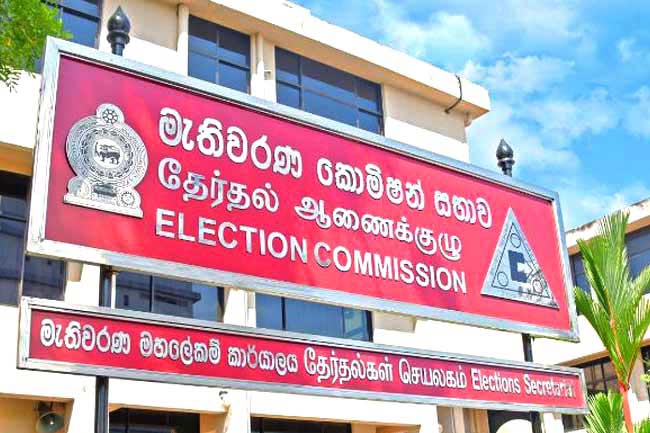
Not the ideal time for elections -Commission

The National Election Commission says the prevalent crisis in the country must be brought to end in order to conduct free and fair elections.

Chairman of the Election Commission Nimal Punchihewa said he is prepared to conduct an election once the major issues faced by the general public due to the current crisis are solved.

Speaking to media after members of the Election Commission called on the Chief Prelates of the Malwathu and Asgiri Chapters, Punchihewa said the Commission is obligated to conduct a free and fair election.

He added the public is not in a mindset to vote in a free manner noting at present the public is languishing in fuel queues.

He questioned if polling booths could be established beside fuel queues.

Nimal Punchihewa said Parliament should pass a vote to conduct a General Election with a majority if an election was to be conducted under the approval of the President.

However, Nimal Punchihewa said seeking solutions to the issues faced by the public should be prioritized over conducting elections.

Meanwhile, Commissioner General of Elections Saman Ratnayake said the voter list for 2022 is currently being prepared.

He said the list is expected to be certified by October.

He noted although the government had changed, the state remained intact.

Speaking on whether foreign funds will be used to conduct an election Ratnayake said the President and Cabinet of Ministers have the responsibility of providing funds for the conduct of an election.

British High Commissioner holds wide-ranging talks with President Ranil

British High Commissioner to Sri Lanka Sarah Hulton says she held a wide-ranging discussion today with President Ranil Wickremesinghe.

In a twitter message, the High Commissioner said she “raised respect for human rights and due process” in line with United Nations Human Rights Commission (UNHRC), during the talks held with the President.

The British High Commissioner also said that she is looking forward to strengthening UK-Sri Lanka relationship within a peaceful, democratic and inclusive space.

Meanwhile President Wickremesinghe had also met with US Ambassador to Sri Lanka, Julie Chung yesterday (July 27) to discuss how the island nation arrived at this point of economic and political crisis.

The focus of the discussion also fell on how the two countries can work together to navigate towards a brighter future for all, the US envoy said in a tweet.

“Our countries and our people have been friends and partners for more than 70 years, relationships that will flourish in a Sri Lanka that embraces good governance, respects human rights, and listens to the aspirations of its people.”

Parliament prorogued with effect from today (28); Next session on 3rd August

President Ranil Wickremesinghe has decided to prorogue Parliament with effect from midnight today (28).

According to the extraordinary gazette issued this evening, the next session will commence at 10:30 AM on 3rd August 2022.

What does it mean when Parliament is Prorogued?

A prorogation which is a temporary recess of Parliament, should not extend to a period of more than two months, However, such date for summoning Parliament may be advanced by another Presidential Proclamation provided it is summoned for a date not less than three days from the date of such fresh proclamation.

When Parliament is prorogued, the Proclamation should notify the date for the commencement of the new Session of Parliament under Paragraph (3) of Article 70 of the Constitution.

Constitutional Provisions:

During the prorogation the Speaker continues to function and the Members retain their membership even though they do not attend meetings of Parliament.

The effect of a prorogation is to suspend all current Business before the House and all proceedings pending at the time are quashed except impeachments.

A Bill, motion or question of the same substance cannot be introduced for a second time during the same Session. However, it could be carried forward at a subsequent Session after a prorogation.

“All matters which having been duly brought before Parliament, have not been disposed of at the time of the prorogation of Parliament, may be proceeded with during the next Session,” states the Paragraph (4) of Article 70 of the Constitution.

Pending Business of Parliament:

In the light of this constitutional provision, a prorogation does not put an end to pending Business. Thus, a pending matter may be proceeded with from that stage onwards after the commencement of the new Session. At the beginning of a new Session all items of Business which were in the Order Paper of Parliament need to be re-listed, if it is desired to continue with them.

Commencement of the New Session:

At the end of a prorogation a new Session begins and is ceremonially declared open by the President. He is empowered under the Constitution to make a Statement of Government Policy in Parliament at the commencement of each Session of Parliament and to preside at ceremonial sittings of Parliament in terms of the provisions stipulated in Paragraph (2) of Article 33 of the Constitution.

The President is empowered to make a statement of Government Policy at the commencement of each new Session. In the past, it was known as the Throne Speech which was delivered by the Governor-General.

Posted in Uncategorized

Sri Lanka hopes for $4bn in China aid ‘soon’ as envoy defends ties

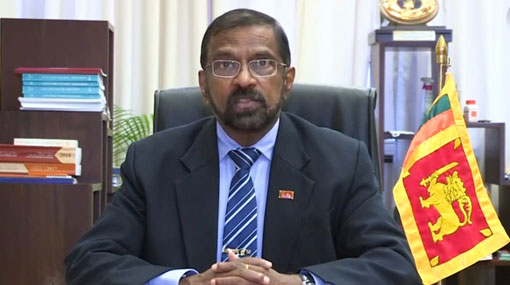
Sri Lanka hopes to conclude discussions with China “soon” on a $4 billion aid package, the country’s ambassador to Beijing told Nikkei Asia.

Ambassador Palitha Kohona said in an email that talks were progressing. “We hope that these discussions could be concluded soon, as a positive outcome would definitely assist Sri Lanka to reestablish confidence in the financial markets and recover from its unprecedented and dire financial circumstances.”

China has been a major creditor of Sri Lanka, though it remains a burning question exactly how much the latter owes the former. Since Sri Lanka plunged into a severe foreign exchange crisis this year and defaulted for the first time in May, Beijing has reportedly been reluctant to go along with debt restructuring.

But new Sri Lankan President Ranil Wickremesinghe, who was elected by parliament on July 20 after the resignation of much-criticized Gotabaya Rajapaksa, is looking to China again as he attempts to cement his grip and quell unrest.

Since early this week, police have been rounding up frontline demonstrators and leaders of the anti-government movement. A state of emergency is to remain in effect for another month after parliament approved it on Wednesday.

Persistent resentment and protests against the new government threaten to disrupt efforts to secure a long-awaited bailout from the International Monetary Fund. Wickremesinghe, in his previous role as prime minister, had expressed optimism in June that such a deal would be in place by the end of this month, but that now appears unlikely.

IMF Managing Director Kristalina Georgieva told Nikkei shortly before Wickremesinghe became president that the fund wanted to offer aid as quickly as possible and would work with any administration — “as long as the next leader enjoys support and has the longevity to lead the country.”

In the meantime, Sri Lanka appears to be pinning hopes on the $4 billion aid package from China, which would include a $1.5 billion credit line and implementation of a $1.5 billion currency swap with Beijing.

Last Friday, the day after Wickremesinghe was sworn in, Chinese President Xi Jinping sent a congratulatory message and promised to “provide support and assistance to the best of my ability.”

Ambassador Kohona stressed that Sri Lanka had never been unable to meet its loan repayment obligations in the past. While protesters and many observers have accused the previous Rajapaksa government of economic mismanagement, the envoy said it was only an unexpected convergence of factors including the COVID-19 pandemic that led to the default.

“However, with the easing of the COVID situation and the return to constitutional governance, we hope to take our discussions with China toward positive conclusions in the near future,” he said.

Average Sri Lankans continue to deal with painful shortages of fuel, food and other essentials, as dwindling foreign reserves have left the country unable to import what it needs. The energy minister said this week that fuel imports must be restricted for the next 12 months, and that fuel would be available only through a quota system starting this month.

Kohona said he has also been holding discussions with large Chinese companies to encourage them to invest in Sri Lanka and bring in more foreign currency. His sales pitch notes that Sri Lanka’s Indian Ocean location puts it within easy air and sea access to promising markets, from Africa and the Middle East to India and Southeast Asia.

“A number of Chinese companies have already made commitments to invest in Sri Lanka and we are actively discussing potential investment options with others, including in steel, renewable energy, tire production, yacht building and infrastructure development,” the ambassador said.

He also said he expects that with a “return to normalcy,” investors in existing big-ticket projects like Colombo Port City and the Hambantota Port area will “proceed with their intended investment plans.” The Chinese government, he said, is “actively” encouraging companies to invest in Sri Lanka.

The ambassador rejected claims that Sri Lanka has fallen into a Chinese “debt trap,” arguing that only around 10% of external debt is owed to China, though some observers have questioned whether that number covers everything.

“Much more is owed to multilateral institutions like the World Bank and the Asian Development Bank,” he said. “Similarly, a considerable amount is owed to institutional investors, mainly from the West, including Wall Street. The interest rates charged by the Chinese lenders have also been favorable.”

Suggestions that Sri Lanka’s financial situation has been caused by the debts owed to China are “inaccurate and misplaced,” he said.

Kohona was also quick to deny that China had abandoned Sri Lanka while India stepped in with around $3.8 billion in financial assistance.

“India, also a long-standing friend, did in fact come to Sri Lanka’s assistance very early and promptly, and we are indeed grateful to India for what it has done,” he said. “But it is an unfair exaggeration to say that China deserted Sri Lanka during its time of need.” According to the ambassador, since 2021, China and Chinese banks have made available almost $1.2 billion worth of assistance in various forms.

Kohona pointed to China’s provision of a 500 million yuan ($74 million) emergency assistance package that included rice, medicines, fertilizer and fuel.

The ambassador suggested that over the longer term, exports to the lucrative Chinese market could help ensure a sustainable recovery. He said that Beijing was encouraging this as well, and that free trade talks were underway.

Not to be outdone, Indian Prime Minister Narendra Modi made it clear this week that his government also remains willing to help. “India will continue to be supportive of the request of the people of Sri Lanka for stability and economic recovery, through established democratic means, institutions and constitutional frameworks,” Modi said in a congratulatory message to Wickremesinghe on Monday.

Source: Nikkei Asia