Deployment of army personnel to disperse Galle Fort protest: Two lawyers file FR petition

Two lawyers today filed a Fundamental Rights violation petition in Supreme Court challenging the legality of the deployment of Army personnel to forcefully disperse a peaceful protest at the ramparts of the Galle Fort on last Wednesday (29).

Two lawyers Amara Diwakara Liyanarachchi and former JVP Parliamentarian Ajith Kumara who took part in the protest filed this petition naming Army Commander, the Commanding Officer of Galle-Fort, Defence Secretary, Minister of Public Security, IGP, Attorney General and several others as respondents.

The Petitioners state that this incident happened when the second day of the first test match was being played between Sri Lankan and Australian Cricket teams at the Galle International Cricket Stadium.

The two lawyers state that they conducted their protest by holding banners and placards desisting the present Government and President, exercising their freedom of expression strictly within the bounds of law. The Petitioners reiterated that the said protest have not caused any disturbance whatsoever to the Cricket match nor to its spectators and any tourist visiting the Galle Fort.

The Petitioners state that the arrival of military personnel armed with firearms at the ramparts of the Gall Fort and forcefully dispersing a peaceful protest, whilst police officers were present, and without any authority whatsoever is grossly illegal and a danger to the lives of the general public.

The petitioners further said the conduct of the military personnel is a clear abuse of the military power and a usurpation of police powers.

The petitioners are further seeking a declaration that the Fundamental Rights of the Petitioners as guaranteed by Article 11, Article 12(1), Article 14(1)(a), Article 14(1)(b) and Article 14(1)(h) of the Constitution have been violated by the respondents.

Proposed Lankan constitutional amendment lets President Gotabaya off the hook By P.K.Balachandran

The Gazetted draft of the 22 nd. Amendment (22A) of the Sri Lankan constitution, which will be presented to parliament in the coming week, is a compromise between the interests of President Gotabaya Rajapaksa and Prime Minister Ranil Wickremesinghe. It is also designed to maintain the stability needed to tide over the current economic crisis and to avoid a referendum.

If passed by parliament, by the required two-thirds majority, the draft 22A will enter the constitution as the 21 st.,Amendment (21A).

Constitutional Council and Independent Commissions

In a significant change, the draft 22A re-establishes the independent Constitutional Council (CC) to replace the Parliamentary Council of the 20 th.Amendment (20A). The CC will, in turn, appoint the Chairmen and members of the various Independent Commissions (ICs) which would make key appointments and oversee the work of sectors assigned to each.

The Independent Commissions are: the Elections Commission, Public Service Commission, Police Commission, Judicial Commission, Finance Commission, Bribery and Corruption Commission, Delimitation Commission, Human Rights Commission, Audit Service Commission and National Procurement Commission.

The CC comprises the parliament Speaker (who will be its chairperson), the Prime Minister, the Leader of the Opposition, one Member of Parliament (MP) appointed by the President, 5 MPs comprising one ruling party MP, one MP from the party of the Leader of the Opposition, three non-MPs appointed by the Speaker in consultation with the Prime Minister and the Leader of the Opposition and approved by a majority of MPs in parliament, and one MP from a party other than the one represented by the Prime Minister and the Leader of the Opposition.

All appointments should reflect the pluralistic character of Sri Lankan society. Non-MPs should be persons of repute and integrity. CC members will serve for three years. Vacancies will have to be filled in 14 days.

It is the President who makes appointments to the CC. But the 22A enjoins the President to make the appointments within 14 days of receiving recommendations from the CC. If he fails to do that, the appointments will be deemed to have been made as recommended by the CC.

In case parliament is dissolved, the Speaker, the Prime Minister and the Leader of the Opposition will continue to be members of the CC till a new parliament is elected and a government assumes office.

The CC’s nominations are necessary for high offices such as Attorney General, the Governor of the Central Bank, the Auditor General, the Ombudsman, and the Secretary General of parliament. The CC shall meet at least twice in a month. The quorum is five. Its decisions should generally be by consensus or be approved at least by five members.

President’s Powers

Through the 22A, the Prime Minister gains authority over the President, but he will not be able to exercise the new provisions during the tenure of the current (the ninth) parliament. The new provisions will come into effect only from the next of 10 th. parliament. This is a major concession to President Gotabaya Rajapaksa and the votaries of a strong Executive Presidency, like the Sinhala nationalists including the present Justice Minister and the architect of the 22A, Wijesdasa Rajapakshe.

The 22A says that the President will take his decisions on appointments to the council of ministers and the distribution of portfolios among the ministers “on the advice of the Prime Minister” and not in “consultation with the Prime Minister, where he considers such consultation is necessary” as is the case now under the 20 th.Amendment.

But there is a condition attached to this. The above mentioned stipulation will not come into play during the life of the current parliament. During the life of the current parliament, the President may “consult” the Prime Minister only if, in his opinion, such a consultation is necessary. This provision constitutes a major concession by the Prime Minister Wickremesinghe to President Gotabaya.

The other concession made to the President is that he shall be entitled to hold the Defense portfolio. In the case of the absence or exist of a minister, the President can take over that ministry, but only for 14 days.

Prime Minister’s Term of Office

The draft 22A says that the Prime Minister shall stay in office throughout the period the cabinet is in office, unless he resigns or ceases to be a Member of Parliament. However, from the time the 22A is enacted till the dissolution of the ninth parliament, the President can remove the Prime Minister from his office, if in his opinion, the Prime Minister has lost the confidence of the parliament.

Ministerial Secretaries’ Tenure

At present, the Secretaries to the Ministries quit the moment the cabinet resigns or is dissolved. But under the proposed 22A, they would not be required to quit but await the appointment of a new cabinet.

Critique

The draft 22A has the support of those who favor the present order with Gotabaya Rajapaksa continuing as Executive President and Ranil Wickremesinghe continuing as Prime Minister. They feel that the existing system has to be upheld for the sake of stability considered necessary to get desperately-needed humanitarian and financial aid from other countries. They fear that an opposition divided ideologically and politically will not provide a stable government and successfully operate the government machinery without a strong Executive Presidency which is immune to the vagaries of party politics, characteristic of the Westminster system. They feel that to solve the tremendous and unprecedented economic crisis, Sri Lanka needs the undivided attention of a strong center represented by the Executive Presidency.

The critics of the 22A however say that it is a big let-down, in the context of the public demand for a democratic system to end the system of government based on concentration of power in the hands of one person or one family and its cronies. These critics expected the 22A to be a full resurrection of the 19A of 2015. But it is only a pale shadow of the 19A, says Constitutional expert, Dr.Jayampathy Wickramaratne.

In a short note issued on Thursday, the Center of Policy Alternatives (CPA) said: ““The Gazetted 22A does not curtail the powers of the President nor introduce checks and balances in any meaningful manner, contrary to the demands of the people of Sri Lanka. In the absence of any genuine attempt to address the inherent problems of governance, this attempt at reform will only worsen the existing political and economic crisis and destroy whatever little remaining faith citizens might have in constitutional governance.”

“CPA has carefully considered the contents of the Bill and notes that the Bill does not revert the Constitution to the structure of government that prevailed under the Nineteenth Amendment (2015-19).”

Dr.Wickramaratne regrets that the President will retain his powers for the duration of the present parliament, though he is allowed to hold only the Defense portfolio under the 22A. Any other ministry could beheld only for 14 days. The experts also regrets that there is no specific provision for the representation of the small parties in the CC and to ensure the pluralist nature of Sri Lankan society.

The main opposition Samagi Jana Balawegaya’s proposal for a 21A was a radical departure from the existing 20A and called a fundamental change in the constitution including the abolition of the Executive Presidency. But as expected, the Supreme Court said that the SJB’s 21A would need a two thirds majority in parliament and a referendum.

President Gotabaya and Prime Minister Wickremesinghe felt that the country could not afford a referendum under the present economic and financial conditions and got the Justice Minister Wijedasa Rajapakshe to draft an amendment which will not require a referendum.

Given the SJB’s opposition to the 22A draft, it is unlikely to vote for it in parliament. The National Peoples’ Power led by the Janatha Vimukthi Peramuna (JVP), and the Tamil National Alliance (TNA) would also oppose it. But the 11-party group is likely to support it as it wants a strong Executive Presidency.

The million dollar question is whether the 22A will get the two-thirds majority needed for a constitutional amendment..

Railway workers call off strike; Delay in operations expected

Railway trade unions have called off their strike action.

A Senior Officer from Sri Lanka Railways told News 1st that a decision was made to release fuel from the Sri Lanka Railways reserves to employees, as they went on strike citing that they had NO fuel to report to work.

The officer said that fuel was provided to railway workers until 3 PM on Friday (1).

The sudden strike by railway workers severely inconvenienced many passengers on Friday (1) afternoon.

Sri Lanka Railways said that although the strike was called off, there will be a delay in operating trains this evening.

Posted in Uncategorized

Pass 22A & form All-Party Government; Mahanayake Theros send 10 point letter to President

The Mahanayake Theros in a letter to the President have called for the 22nd Amendment to the constitution to be passed immediately to form a genuine all-party government.

It is wise for all the party leaders to come together for a certain period for the welfare of the general public, and the President, as well as all the Party Leaders, must agree to the following 10 points, said the Mahanayake Theros.

1. All-Party Government must be limited to six months. If the All-Party Government is successful in bringing stability the period could be extended to 12 to 18 months with the agreement of all the Party Leaders.

If not, the people should be allowed to elect a new government.

2. A Party Leader must be appointed as the head of the All-Party Government. If there is no agreement, an internationally recognized non-partisan Sri Lankan must be appointed to parliament from the National List to take up the post.

3. The Cabinet of the All-Party Government must be limited to 15 members, and should NOT include anyone convicted by the court.

4. Suitable and Experienced people must be appointed to the respective ministries, and if there is none in parliament, the Party Leaders can agree to appoint such Sri Lankans to Parliament from the National List.

5. National Intellectual Council must be appointed to guide and advise the All-Party Government.

6. The program by the National Intellectual Council must be discussed in Parliament and implemented as a National Policy, casting aside party differences.

7. Independent Committee must be appointed to review the proposals put forward by the National Intellectual Council to eliminate the economic crisis.

Such actions must be subject to judicial purview, should be audited, and must also be published from time to time for public awareness.

8. President and the Prime Minister of the All-Party Government must be bound by the collective decisions made by the said Council.

9. Legal provisions must be made available to abolish the perks of the MPs and the Cabinet and provide relief to the people battered by the economic crisis.

10. Prepare a proper mechanism to obtain aid from Multi-National Agencies, and friendly nations, and manage said aid, rather than leading the country to anarchy through mismanagement.

The letter was signed by the Mahanayake Theros of the four main Buddhist Sects in the country.

Japan says closely paying attention to SL’s difficult economic situation

Japanese Embassy in a statement on their FaceBook page said that Japan is closely paying attention to the current difficult economic situation in Sri Lanka and the severe humanitarian situation accompanied.

“Considering such a situation, the Government of Japan has decided to provide Emergency Grant Aid of USD three (3) million through UNICEF and WFP in order to provide medicine and food in a manner that would directly benefit the Sri Lankan people. Japan sincerely hopes that this assistance will be of help to overcome the hardship faced by the people of Sri Lanka, Japan’s long-standing friends,” the Embassy said.

The statement added that the government of Japan would like to consider its further contribution to Sri Lanka in consultation with the Government of Sri Lanka and other developing partners, while giving attention to the situation of Sri Lanka and the negotiation progress between Sri Lanka and IMF.

Posted in Uncategorized

Srilankan Airlines warns of imminent bond payment default

Srilankan Airlines has warned about its capability to make a coupon payment on a Singapore-listed bond, citing the deterioration in Sri Lanka’s economy.

The payment relates to a $175 million bond with a 7% coupon listed in Singapore, according to a filing with the Singapore stock exchange. The bonds term is to complete in 2024.

The carrier missed a coupon payment due on 25 June, but still has a 30-day grace period. The bonds are backed by the Srilankan government, which holds 99.52% of the carrier.

“The economic situation in Sri Lanka has directly impacted the ongoing operations of the Company,” says Srilankan.

“In light of the current circumstances, the board considers it necessary to make use of the 30-day grace period to further determine the position of the company, both in respect of the upcoming coupon payment and its debt obligations more generally.”

The carrier adds that Sri Lanka’s economic conditions have deteriorated rapidly owing to a “very low level” of foreign exchange reserves, the coronavirus pandemic, and Russia’s invasion of Ukraine. As such, Sri Lanka is “seeking urgent financial assistance from the International Monetary Fund.”

“The board intends to establish a transparent process for discussions and communications with all bondholders, and to pursue an active dialogue with bondholders as soon as it is in a position to do so,” says Srilankan.

“The board will continue to keep bondholders informed as matters develop.”

In May, ratings agency Fitch affirmed its ratings for Srilankan bonds at ‘C’. It noted that Sri Lanka’s government has imposed a debt repayment moratorium, thus triggering “the commencement of a default-like process for [Srilankan].”

Cirium fleets data indicates that Srilankan has 22 in-service aircraft, comprising 11 Airbus A330s and 10 A320 family aircraft. All of its aircraft are leased. Lessors with exposure to the airline are AerCap, Air Lease Corporation, Aircastle, Avolon, Carlyle Aviation Partners, and one unconfirmed lessors.

Posted in Uncategorized

World Bank to redesign 17 ongoing projects in Sri Lanka

The World Bank would extend further support after reaching an agreement with the International Monetary Fund, the World Bank’s Country Director for Sri Lanka Faris Hadad-Zervos says.

There are 17 ongoing World Bank-funded projects in Sri Lanka, he said adding that the projects will be redesigned to provide financial assistance to face the current crisis.

For similar articles, join our Telegram channel for the latest updates. – click here

This was mentioned at a discussion between World Bank representatives and President Gotabaya Rajapaksa at the President’s House in Colombo, today (June 29).

Explaining the current situation in the country, the President pointed out the need to provide the World Bank loan assistance to banks and financial institutions.

President Rajapaksa requested the representatives to take necessary measures to issue such financial assistance at low interest rates to the people engaged in agriculture, livestock, small and medium scale enterprises and businesses.

The World Bank representatives said they have already decided to allocate funds for domestic gas and fertilizer supplies.

Tax increases, the removal of diesel and kerosene subsidies will have a severe impact on many sectors including fisheries.

The government is also concerned about other groups at risk, the President said adding that these issues would have to be considered in reaching an agreement with the International Monetary Fund.

World Bank Country Manager for Sri Lanka Chiyo Kanda, Senior Operations Officer Asela Dissanayake, Practice Manager Gabi George Afram, Lead Private Sector Specialist Peter Mousley, Lead Financial Sector Specialist Miquel Dijkman, Senior Economist Kishan Abeygunawardana and Secretary to the President Gamini Senarath, Principal Advisor to President Mr. Lalith Weeratunga, Chief of Staff to the President Anura Dissanayake, Secretary to the Finance Ministry K.M.M. Siriwardena, Director of the External Resources Department Himali Bogodagedara and Vice President of the Sri Lanka Medical Association Dr. Surantha Perera, also attended this discussion.

Posted in Uncategorized

IMF-Sri Lanka bailout talks end without a deal – CNBC

The International Monetary Fund has ended talks with Sri Lanka, failing to conclude a deal for a bailout package for the near-bankrupt nation after 10 days.

Nevertheless, in a statement released around noon Sri Lanka time on Thursday, the IMF promised to keep up the talks, which began on June 20. “The discussions will continue virtually with a view to reaching a staff-level agreement on the extended fund facility or EFF arrangement,” it said.

The EFF was established to assist countries with “serious payment imbalances,” according to the IMF. In addition, it provides support for policies “needed to correct structural imbalances over an extended period.”

Sri Lanka, an island nation of 22 million people, is facing its worst financial crisis since independence in 1948, which has left it struggling to pay for fuel and forced it to default on some foreign debt.

Left with just enough fuel for about a week and fresh shipments at least two weeks away, Sri Lanka has imposed restrictions on supplies, limiting them for use for public services like trains and buses and those relating to the health sector, Reuters reported. The ban is scheduled to last two weeks.

Noting that public debt is assessed as unsustainable, the IMF said executive board approval of a package would require “adequate financing assurances from Sri Lanka’s creditors that debt sustainability will be restored.”

“In this context, discussions focused on designing a comprehensive economic program to correct the macroeconomic imbalances, restore public debt sustainability, and realize Sri Lanka’s growth potential,” the press release said.

‘Fragile state’

The lack of a bailout package defied the expectations of an expert CNBC spoke to earlier in the day.

Georgetown University professor Shanta Devarajan said Sri Lanka was close to reaching an agreement with the IMF.

″[Sri Lanka is] very close to reaching what is called a staff level agreement [with] the Fund [on] the set of policies and programs that Sri Lanka would undertake in order to bring down the fiscal deficit and make the fiscal debt sustainable,” Devarajan told CNBC’s “Squawk Box Asia” on Thursday.

He traced the genesis of the current problem to tax cuts three years ago. “We are in this mess at the moment…because in November 2019, the government cut taxes substantially. The value added tax rate went from 15% to 8%,” Devarajan said.

He added that the country is on the verge of becoming a “fragile state.”

“It has all the characteristics [of a fragile state] at the moment. It’s not just the protests in the streets, but … the queues for fuel,” he said, adding that there are now confrontations with the army and the police in various places.

“People have been killed; there have been some shootouts. So this is a very dangerous situation to be in,” Devarajan said.

Sri Lanka has closed schools in urban areas and officials have urged the country’s residents to work from home.

Posted in Uncategorized

NEWS Fuel from Russia? Prez reaches out to Putin

President Gotabaya Rajapaksa has spoken to his Russian counterpart Vladimir Putin over the phone to secure fuel supplies to Colombo from Moscow, says Sri Lanka Podujana Peramuna (SLPP) Parliamentarian Mahindananda Aluthgamage, adding that the President is also expected to visit United Arab Emirates (UAE), to discuss fuel supply to Sri Lanka.

Meanwhile, discussions are underway with India through the Indian High Commission in Colombo for procuring fuel for the country before the 10th of July, MP Aluthgamage added.

At present, the government is reaching out to other nations to procure fuel due to the lack of foreign exchange to purchase the much needed commodity.

Minister of Power and Energy Kanchana Wijesekara and Minister of Environment Naseer Ahamed arecurrently in Qatar to procure fuel and to brief Qatari officials on the ongoing crisis situation in the country.

They called on Saad Sherida Al-Kaabi, Qatar’s Minister of State for Energy Affairs and the President and CEO of Qatar Energy, to discuss the supply of petroleum products, liquefied petroleum gas (LPG) and liquefied natural gas (LNG) to Sri Lanka to overcome the energy crisis with the assistance of the country’s state-owned petroleum company Qatar Energy and The Qatar Development Fund.

Minister Wijesekara also met with the Deputy Director-General of the Qatar Fund for Development for a discussion on a possible credit line facility for petroleum and gas supply to Sri Lanka.

He also held a discussion with Sheikh Mohammed bin Hamad bin Qassim Al-Abdullah Al-Thani, Qatar’s Minister of Commerce and Industry with regard to investment opportunities in power, energy and other sectors.

US Ambassador meets President

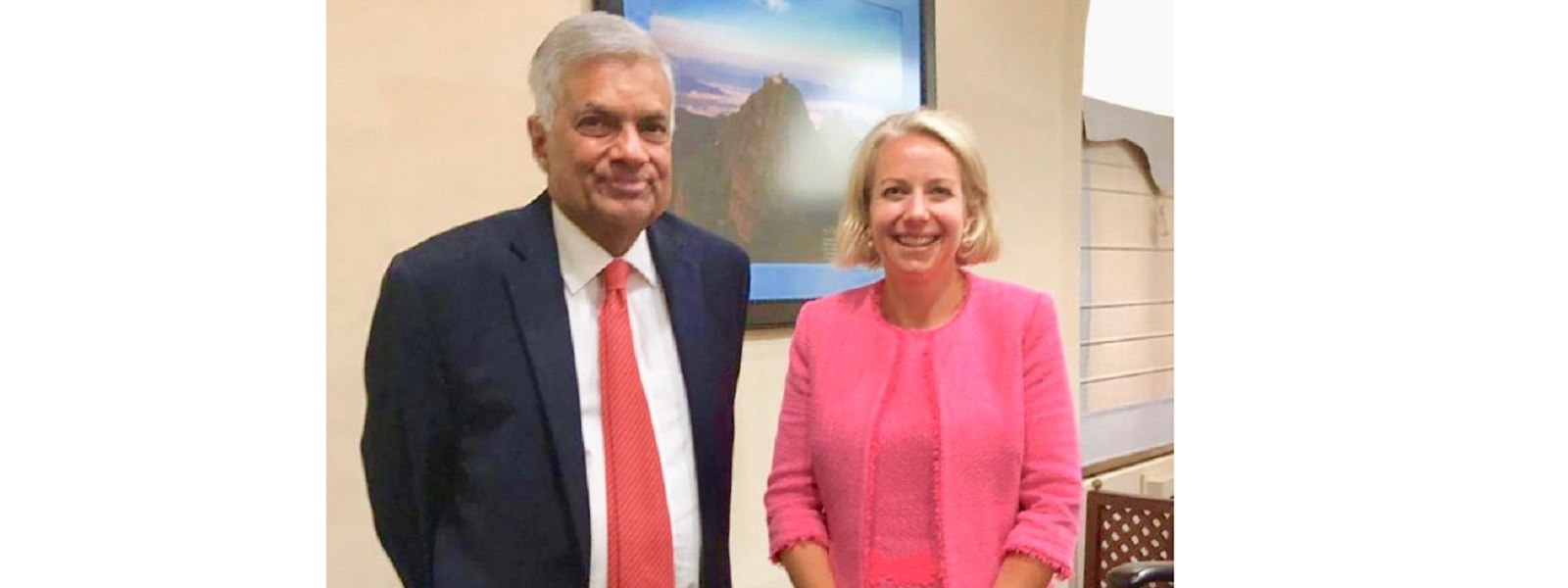
President Gotabaya Rajapaksa met with the USA Ambassador in Sri Lanka Julie J. Ching today (30) and thanked the US for the valuable support shown during these difficult times.

Further, the Ambassador assured the Government of the USA’s continuous support in stabilizing the economy with the recent developments with the International Monetary Fund (IMF).

US Ambassador to Sri Lanka Julie Chung told President Gotabaya Rajapaksa that the US will support Sri Lanka in finding a solution to the economic crisis.

A high-level diplomatic delegation from the United States stated that the US supports the strengthening of the relationship with the International Monetary Fund.

US President Joe Biden has also taken steps to provide humanitarian assistance on several occasions.