Sri Lanka’s gazetted 22nd amendment bill is a diluted version of itself: CPA

Sri Lanka’s newly gazetted 22nd amendment to the constitution bill does not curtail the powers of the president nor introduce checks and balances in any meaningful manner, contrary to the demands of the people of Sri Lanka, the Centre for Policy Alternatives (CPA) said.

In the absence of any genuine attempt to address the inherent problems of governance, this attempt at reform will only worsen the existing political and economic crisis and destroy whatever little remaining faith citizens might have in constitutional governance, the organisation said in a statement issued on Thursday June 30.

“CPA has carefully considered the contents of the Bill and notes that the Bill does not revert the Constitution to the structure of government that prevailed under the Nineteenth Amendment (2015-19). The Minister of Justice had proposed two previous versions of this Bill (one as a Private Member’s Bill). The present gazetted Bill represents a significant weakening of the previous limited proposals by the Minister of Justice and leaves intact the unchecked powers of the Executive President,” the statement said.

Justice Minister Wijeyadasa Rajapakshe had previously claimed that the amendment, as drafted by him, will largely be a restoration of the 19th amendment which will see some of the powers conferred on the president by the controversial 20th amendment will be repealed.

The 19th amendment to the constitution, enacted during the Yahapalana government of former President Maithripala Sirisena and then Prime Minister Ranil Wickremesinghe saw some of the executive powers of the president curtailed and parliament significantly strengthened. That amendment was rolled back by President Gotabaya Rajapaksa’s Sri Lanka Podujana Peramuna (SLPP) government after its 20th amendment to the constitution was passed in parliament, conferring the office of the president with even more sweeping powers.

Sri Lanka’s prevailing economic crisis which has precipitated a political crisis has brought to the fore the need to speedily introduce constitutional reforms, and Minister Rajapakshe’s 21st amendment (referred to in the bill as the 22nd amendment) promised to be a restoration of the more progressive provisions of the 19th.

However, the CPA, a public policy research and advocacy think tank, said the final version of the 21st (or 22nd) amendment bill that was approved by the cabinet of ministers on Monday June 27 was a watered-down version of the original.

For example, the organisation said, the proposed Constitutional Council has been significantly diluted from what prevailed under the 19th amendment.

“The proposed composition of the Council favours the government and enables the government to control or influence 7 of the 10 members. Thus, it is CPA’s view that the Council is merely an expanded version of the Parliamentary Council that exists under the Twentieth Amendment. The original intent behind the creation of the Constitutional Council under the Seventeenth Amendment, which was to de-politicise governance, involved two methods: one was to ensure a majority representation in the Council for non-politicians, and the other was to remove government dominance over the political members. The composition of the Council proposed in the Bill achieves none of those objectives and in turn, undermines the independence of the institutions to which appointments are made through the Council,” it said.

Whilst some effort has been made to curtail the president’s powers in relation to the appointment and removal of the cabinet of ministers, the CPA said, these have all been rendered ineffective by the transitional provisions that make them applicable only from the next parliament. The president will also be able to appoint all secretaries to ministries at his own discretion, which the CPA said again protects the executive power concentrated in the office of the president.

Minister Rajapakshe, for his part, has called for wide support for his version of a 21st amendment to the constitution after the Supreme Court determined that the provisions of a competing draft by the main opposition required a referendum. The main opposition Samagi Jana Balavegaya (SJB)’s 21st amendment concentrated heavily on abolishing Sri Lanka’s all-powerful executive presidency and, according to a determination by the Supreme Court, many of its provisions require a two thirds majority in parliament along with a people’s referendum.

“We have included everything that can be passed without a referendum,” Rajapakshe told parliament on June 21, defending his version of the amendment.

The amendment bill gazetted over a week later, on Thursday June 30. The document can be found at this link.

In its statement, the CPA said that though Sri Lanka’s worsening economic crisis was the result of due to the failures of successive governments, the present holder of the executive presidency exacerbated the issue as a result of arrogating more power to himself through the 20th amendment to the constitution and “fatally undermined even the weak checks and balances and the separation of powers implemented by the 19th amendment“.

“The only appropriate institutional reform response to this unprecedented disaster through constitutional reform is the complete abolition of the executive presidential system and the return to a full parliamentary constitutional
democracy,” the CPA said.

The rhetoric used to usher in the 20th amendment in 2020 that called for unilateralist and centralised executive decision-making for economic development is directly linked to the present crisis and such a model must be unequivocally rejected, the organisation further said.

“Considering the multiple challenges confronting Sri Lanka, Sri Lanka’s economic recovery cannot and must not be yet again based on a heavy executive decision-making governance model. For these reasons, it is clear from the perspective of both constitutional principle and constitutional design that the Bill is not in any sense a meaningful
contribution to the necessary institutional reform that must be part of Sri Lanka’s economic recovery,” it said.

Attorney-at-Law Luwie Ganeshathasan expressed similar sentiments.

“This 22A is no change from what we have right now, it is just dressed up to look like something new. I am not even sure why we are wasting our time and money debating this in Parliament. If this is the best “reform” this Parliament can deliver, they might as well go home,” he tweeted Thursday morning.

Posted in Uncategorized

China speaks to Dhammika on promoting Chinese projects

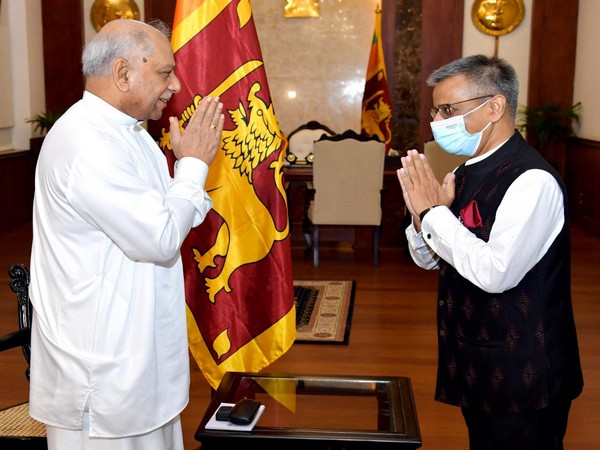
China had talks with Investment Promotion Minister Dhammika Perera today on promoting Chinese projects in Sri Lanka.

Ambassador Qi Zhenhong met with Perera and exchanged views on enhancing economic and trade cooperation, promoting Chinese invested projects in Sri Lanka as well as other topics of mutual interests, the Chinese Embassy in Colombo said.

A gazette notice was issued this week bringing a number of institutions, including some Chinese funded projects under Investment Promotion Minister Dhammika Perera.

The gazette notice issued by President Gotabaya Rajapaksa brought the Board of Investment of Sri Lanka, Colombo Port City Economic Commission, Projects related to Colombo Port City, Department of Immigration and Emigration, Colombo Lotus Tower Management Company (Pvt.) Limited, Techno Park Development Company (Pvt.) Limited and Information Technology Parks under the Minister of Investment Promotion Dhammika Perera.

The new Minister has been tasked with promoting foreign direct investment and private sector investments in Sri Lanka.

Other duties entrusted to the new Minister includes formulation of policies, strategies, programmes and projects to enhance regional trade and investment cooperation, promotion, regulation and monitoring of economic development zones.

He has also been given the task to develop the Colombo Port City Special Economic Zone as an international business and services hub with specialized infrastructure and other facilities aimed at national interest and economic advancement.

Dhammika Perera also has the responsibility of establishing the Colombo Lotus Tower as a business model and promoting it as a tourist centre.

The business tycoon took oaths recently as a Member of Parliament replacing Basil Rajapaksa as a National List MP.

26 train services cancelled as railway guards unable to report to work due to lack of fuel

A total of 26 train services including office and intercity trains which were scheduled to operate yesterday were cancelled following difficulties faced by the Station Masters (SMs) and junior staff in reporting for work due to the prevailing fuel crisis, the Sri Lanka Railways Station Masters’ Union (SLRSMU) said.

Accordingly, two train services between Colombo Fort-Wadduwa, Colombo Fort-Veyangoda, Colombo Fort-Ambepussa, Colombo Fort -Chilaw, Colombo Fort -Madampe, passenger and mail transport trains operated between Colombo Fort and Avissawella, and six train services between Colombo Fort-Panadura, Colombo Fort-Rambukkana were cancelled.

Meanwhile, intercity express trains scheduled to leave for Batticaloa and Kankesanthurai (KKS) from Colombo Fort were also cancelled.

The collapse of the railway service has begun now. However, the station masters and the junior staff are trying to overcome the situation as much as possible to make the service work.

The majority of the railway staff do not have official quarters. The lack of fuel can lead to problems in them reporting to work in the future. Therefore, delays in the operation of trains, inability to issue tickets, failure to deliver or delayed delivery to passengers’ needs may affect the railway transport service.

However, neither the department nor the government has taken steps to introduce a successful method of providing quick fuel to railway employees, which is the main mode of transport at this time.

The union emphasized that train cancellations in the future are more likely if this matter is not addressed promptly.

Would not get support from Security council: UK

Britain on Monday said that, while Sri Lanka is a human rights priority country for the Foreign, Commonwealth and Development Office, its assessment was that a referral to the International Criminal Court (ICC) against those responsible for alleged human rights violations in Sri Lanka would not have the required support from members of the UN Security Council.

Vicky Ford, Parliamentary Under-Secretary (Foreign, Commonwealth and Development Office) was responding to a question raised in the British parliament by Labour MP Stephen Morgan, who asked whether her Department is taking steps to ensure that those responsible for human rights violations against the Tamil community in Sri Lanka are brought to justice in the International Criminal Court.

“It would not advance the cause of accountability for an ICC referral to fail to win Security Council support or to be vetoed,” Parliamentary Under-Secretary Vicky Ford stated in a written answer.

She further stated –

We, alongside our partners in the Core Group on Sri Lanka, have led international efforts over many years to promote accountability, reconciliation and human rights in Sri Lanka. On 23 March 2021 the UN Human Rights Council (UNHRC) adopted resolution 46/1, which provides a continued framework for international engagement on human rights. It calls on the government of Sri Lanka to make progress on human rights and stresses the importance of a comprehensive accountability process for all violations and abuses committed in Sri Lanka. The Minister of State for South Asia, Lord (Tariq) Ahmad of Wimbledon, visited Sri Lanka in January 2022. He travelled to the North and East as well as Colombo and met a range of civil society groups, including Tamil representatives, to discuss human rights. The Minister also urged the Government of Sri Lanka to take steps to deliver justice and accountability.

Posted in Uncategorized

Crisis-hit Sri Lanka cabinet okays US grant after rejecting $480 mln MCC deal in 2020

Sri Lanka Cabinet has given green light to a proposal submitted by the Prime Minister to obtain a grant from the United States of America, nearly two years after President Gotabaya Rajapaksa rejected a $480 million from the U.S.-based Millennium Challenge Corporation (MCC).

The $57 million comes through two agreements signed between the Governments of Sri Lanka and U.S. to supply funds to strengthen the cooperation for democratic good governance and social integrity’ and to create a sustainable and covered economic development’

The proposal by the Premier Ranil Wickramasinghe suggested signing a new agreement for implementation of a new programme for financing 57 million US dollars by the United States Agency for International Development (USAID).

The project has been named as ‘The Programme for a Democratic, Prosperous Sri Lanka with the Ability to Survive Amidst Disasters’ until the year 2026, paying the preliminary attention on the fields of productive democratic governance, growth based on a secure market and strengthening the resources required to sustain pressure and stress.

President Rajapaksa in November 2021 said that his government will never sign the MCC agreement proposed by the U.S soon after the then Secretary of State Mike Pompeo’s visit. However, the U.S. cancelled the MCC offer to Sri Lanka one month after Rajapaksa’s statement.

Posted in Uncategorized

As Sri Lanka economic crisis worsens, daily wage workers struggle

Velu Anna Lechchami, 49, from Ratnapura village, about 100km (62 miles) from Sri Lanka’s main city of Colombo, is thankful for the smallest job she gets.

If she or her husband find work to clean, cook, or pluck tea leaves, they will be able to put food on the table that day. But with a catastrophic economic crisis in Sri Lanka, work is scarce and if they find something to do, getting to work is another challenge.

Sri Lanka restricted the sale of fuel on Monday, providing it only for essential services till July 10. The desperate move was taken as the island nation has run short of foreign currency to buy fuel.

For Lechchami, this means less work. There are days she just survives on a cup of plain tea with some sugar. On other days, she survives by boiling the jackfruit offered by her neighbour.

“There is no other option for us. We must work to buy food for the day. We are trying to survive. There is nothing else to do,” she told Al Jazeera.

Sri Lanka is facing its worst economic crisis in more than 70 years, with its economy shrinking by 1.6 percent in the first quarter of this year, according to official data.

The country has defaulted on its $51bn foreign debt and is now holding bailout talks with the International Monetary Fund (IMF).

Inflation hit a record 45.3 percent last month while the rupee depreciated more than 50 percent against the dollar this year. The shortage of foreign currency required to import fuel, fertiliser and other essentials has had a devastating effect on the country’s economy.

Prime Minister Ranil Wickremesinghe told parliament last week the country was facing a record recession.

Protesters have been demanding the resignation of President Gotabaya Rajapaksa over the government’s handling of the crisis for months. The other two powerful Rajapaksas – Prime Minister Mahinda Rajapaksa and Finance Minister Basil Rajapaksa – have resigned.

‘We are done for’

The economic crisis has forced people across the island to stay in queues for days to buy essential goods such as fuel and cooking gas.

Security officials have been deployed at fuel stations to control the crowds.

In a bid to end the fuel crisis, power and energy minister Kanchana Wijesekara on Tuesday tweeted the government will allow import and retail sale of fuel to companies from the oil-producing nations.

Authorities also introduced a token system this week to stop people from queueing at filling stations. However, it has caused more chaos.

Kadireshan Selvachandran, 35, an autorickshaw driver working in Colombo, has been in a line to buy fuel for three days. He spent the last two nights in his vehicle, hoping he would be able to buy enough fuel to last a day. He did not get the token.

“We are done for. Now they say only essential services will be given fuel for the next 13 days. We are doing essential services too, we feed our children,” he said.

Selvachandran is determined not to leave the queue till he gets fuel.

Experts say the talks with the IMF could result in some drastic and deep-reaching structural reforms.

Political analyst Dr Aruna Kulatunga told Al Jazeera some of these reforms may include removing the duopoly in the energy sector, ending import restrictions, increasing income and indirect taxation and privatisation or selling of unproductive “white elephant” state-owned enterprises.

A repealing of the Paddy Lands Act, which bars development and even other agricultural work in abandoned paddy lands, is also on the table along with the transfer of non-productive state-owned lands to farmers and former estate workers, he said.

“This is a double-edged sword. On one side one can assume serious job losses while on the other hand, deep-reaching social reforms like land redistribution and allowing productive use of abandoned paddy lands will increase the bottom lines for many of the marginally affected people,” Kulatunga told Al Jazeera.

For Lechchami from Ratnapura, however, it is a long wait while having three meals a day has “become a luxury” for her. Experts warn that one of the long-term effects of the economic crisis could be chronic malnutrition for generations to come.

The United Nations World Food Programme says 22 percent of Sri Lanka’s population is “food insecure and in need of assistance”. The country’s Medical Research Institute (MRI) has launched a survey to look into the malnutrition status of the people.

“Malnutrition in the pre-economic period was high. Now with the economic crisis, it will definitely go up,” Dr Renuka Jayatissa, a nutritionist at MRI, told Al Jazeera.

Lechchami says the cost of most food has tripled from what she paid last year. The longer the government takes to ease the crisis, the worse it will get for her family.

SOURCE: AL JAZEERA

A provincial council election must be pressurized for by India: Mano Ganesan

As much as India has been supportive towards Sri Lanka and doing its best to help the nation, The Indian Government needs to also pressurize for a provincial council election to be held so that the opinion of the people is made known, says Samagi Jana Balawegaya (SJB) MP Mano Ganesan.

He made this statement while speaking to the media today (29).

“As much as an election must be pushed forward for, due to the lack of funds, the Indian government and other nations must support financially for an election to be held. The other nations of the world are reluctant to help Sri Lanka at the moment as the credibility has been lost by the Government of Sri Lanka. The international community has lost trust with the President of Sri Lanka as well. The might have not openly stated it, but this is the fact. Thus, right now an election is needed,” said MP Ganesan.

He further mentioned that despite the voices of the people being loud and clear, President Gotabaya Rajapaksa has refused to step down, thus an election was the only way forward so that the President can be ousted.

Posted in Uncategorized

Registrar General’s Department, post offices curtail services due to fuel crisis

Due to the crisis situation in the country, the Registrar General’s Department has decided to restrict the services offered by all its regional and district offices to two days a week.

Accordingly, the issuance of birth, marriage and death certificates through the divisional secretariats and land registration services will be limited to Mondays and Wednesdays.

In a media notice, the Department said the aforementioned services are provided only on Mondays and Wednesdays between 8.30 a.m. and 4.00 p.m. over the next 10 days.

However, Registrar General’s Department head office at ‘Suhurupaya’ in Battaramulla and its branches located at the Immigration & Emigration Department’s regional offices in Kandy, Matara, and Kurunegala will function on weekdays as per usual.

Meanwhile, the Post Office announced that In view of the crisis situation in the country, all post offices will be open only three days a week until the 10th of next month or until further notice.

Post Master General Ranjith Ariyaratne has issued a circular stating that the minimum staff should be called for the duties of the Central Post Office and Post Offices on Monday.

According to the circular, all post offices and sub-post offices across the island will be open on Tuesdays, Wednesdays and Thursdays and will be closed on Mondays, Fridays and Saturdays.

Diesel shipment due mid July and Petrol by July 22

Prime Minister’s advisior Sagala Ratnayake today said that a Diesel shipment containing 30,000 metric tons was due between July 11-15 and a Petrol shipment from India is due by July 22 although the government is trying to source a Petrol shipment by July 10.

Speaking at a media discussion at the Prime Minister’s Office he said only 11,000 MT of diesel, 30,000 MT of furnace oil, 800 MT of jet fuel and 5,000 MT of petrol are available at the CPC storages.

He said that a Petrol shipment is expected to arrive by July 22 from India and no permanent order has been placed before that. However he said the CPC has strong connections with a network of suppliers around the world and they were trying to secure a shipment before that. He elaborated that there was a high demand for fuel in the international market and it was one reason for the delay in securing a new shipment.

He said that 38,000 MT of diesel would be received between July 11 and 15.

Therefore, the existing diesel stocks will only be available for essential services, until the new shipment reaches the country.

There will be no issue with domestic gas supply by next month, as Litro Gas Lanka Ltd. will procure 100,000 MT of gas stock for the next four months. Another 33,000 MT of gas shipments will arrive in the country on July 6, 10, 16, 19, 21 and 31.

He said that Domestic gas will be distributed on a priority basis and the first three days after receiving the shipment on July 6 will be for the delivery of LP gas to Colombo. Thereafter necessary distribution mechanisms have been put in place to deliver domestic gas around the country in an uninterrupted manner

One day service for passports extended to 3 more districts

The ‘One Day Service’ for issuing of passports will commence in three more districts from next Monday (June 04), according to Minister Dhammika Perera.

Accordingly, the One Day Service will also be carried out at the Immigration and Emigration Department’s regional offices at Kandy, Matara and Vavuniya from Monday, he said.

Hitherto passports were issued through the one-day service for urgent needs clients only at the Head Office of the Department of Immigration and Emigration at “Suhurupaya” in Battaramulla.