Chinese research vessel to enter Sri Lanka’s Hambantota port next week

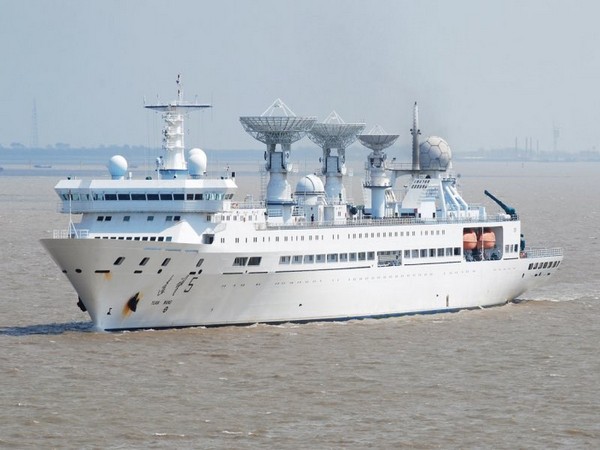
A Chinese scientific research vessel has set sail for Sri Lanka’s Hambantota port for a week-long stay. During this significant visit to the key Sri Lankan port, it could conduct satellite research in the northwestern part of the Indian Ocean region, prompting security concerns for India.

Hambantota port, located around 250 km from Colombo was built with high-interest Chinese loans. The Sri Lankan government struggled to repay the debt they had taken from China following which the port was handed over to the Chinese on a 99-year lease.

“The Chinese scientific research vessel ‘Yuan Wang 5’ will enter Hambantota port on August 11 for a week. It is expected to leave on August 17 after replenishment. It could conduct satellite control and research tracking in the northwestern part of the Indian Ocean region,” said Y Ranaraja, Director, Belt & Road Initiative Sri Lanka (BRISL).

“China’s Yuanwang-5 space-tracking vessel conducting a space-ground information exchange and specially provide significant data support to Zhongxing-2E satellite’s orbit determination and entry. Now the vessel is sailing pass Taiwan towards Hambantota in Sri Lanka,” Ranaraja said in another tweet.

Amid one of the worst economic crises in Sri Lanka, locals around the country’s Hambantota port blame the government for the situation the island nation is facing at present while saying that the leaders use the money they receive from China for their own benefit rather than for the area’s development.

The port area is under heavy security and people outside have no idea of what goes on inside the port. There were reports that a few months back the Sri Lankan government found a radioactive substance inside a ship that was en route to China.
Initially, the Chinese government had asked for 80 per cent of the portland share including the control of security, which was later changed to 70 per cent after pressure from the neighbouring countries including India.

“This government failed to get major investments from China. The government made lot of effort but they failed to get any investment from China. I think discussions are on regarding rescheduling of repayment of loans. They talked to the Chinese Govt. That’s all I know,” former Prime Minister of Sri Lanka Ranil Wickremesinghe told ANI in Colombo. (ANI)

Parliament to meet tomorrow (27) to debate emergency

Parliament is scheduled to convene tomorrow (27) at 10.00 AM and the proclamation on the state of emergency declared by the Acting President under the Public Security Ordinance is to be approved after debate until 4.30 pm.

This proclamation was made by the then Acting President through the Special Gazette No. 2288/30 dated July 17, 2022, and according to the legal provisions, if the approval of the Parliament is not obtained within 14 days for the said proclamation, it will be canceled.

It is stated in the gazette that this proclamation has been issued following the powers vested in the President in terms of the Public Security Ordinance to ensure public security and the protection of the public order and the maintenance of supplies and services essential to the life of the community.

Meanwhile, Wajira Abeywardena, who was nominated by the Election Commission for the National List Member of the United National Party, was vacant due to the swearing-in of the President, Hon. Ranil Wickramasinghe is scheduled to be sworn in as a Member of Parliament tomorrow morning.

Posted in Uncategorized

Indian-origin Tamils’ party to support Wickremesinghe for the sake of stability

The leader of the Tamil Progressive Alliance (TPA), Mano Ganeshan, said here on Tuesday, that his party, which represents the interest of Sri Lankan nationals of Indian origin, will support the Ranil Wickremesinghe government for the sake of national stability.

In view of the necessity to maintain political stability to tackle the economic problems facing Sri Lanka, the TPA will support the government in its efforts to solve pressing issues, he explained.

He appealed to the political parties not to continue playing the politics of opposition.

On joining a national or all-party government, Ganeshan said that neither the TPA nor any other party has received an invitation to join such a government. Reports of the TPA’s decision to join such a government have no basis, he added.

Ganeshan said that the TPA’s aim will be to see that the interests of Sri Lankans of Indian descent are met by the Wickremesinghe government and that in the proposed new constitution their rights are enshrined.

Indian High Commissioner meets JVP leaders

The Janatha Vimukthi Peramuna (JVP) leader Anura Kumara Dissanayake called on the Indian High Commissioner to Sri Lanka Gopal Baglay on Tuesday. The meeting took place at the Indian High Commission in Colombo.

The discussion focused on Sri Lanka’s economic crisis and the strengthening of bilateral ties between India and Sri Lanka. JVP Propaganda Secretary Vijitha Herath and the first Secretary to the Indian High Commission in Colombo Eldos Mathew also participated in the discussion.

Earlier, the US Ambassador Julie Chung had met Anura Kumara Dissanayake. Foreign Ambassadors have begun meeting JVP leaders publicly after the party got identified with the anti-Gotabaya Rajapaksa and anti-Ranil Wickremesinghe movements.

Given the fact that the movement called Aragalaya (struggle) succeeded in forcing Gotabaya Rajapaksa to flee from the country and resign from exile in Singapore, its supporters among the political parties have gained international attention. Among the parties in parliament, the closest to the Aragalaya is the JVP. However, at the ground level, the movement was led by a breakaway group of the JVP called Firstline Socialist Party (FSP) led by Kumar Gunaratnam. It is not certain if there is an alliance between the two or it is just a case of the JVP riding piggy back on the FSP.

Posted in Uncategorized

Modi congratulates Prez for appointment as 8th Executive President

Indian Prime Minister Narendra Modi has congratulated President Ranil Wickremesinghe for his appointment as the 8th Executive President of Sri Lanka in a letter today (26).

“You have assumed the high office at a critical time for Sri Lanka. I hope your tenure will nuture economic stabilisation as well as fulfull the aspirations of all citizens of Sri Lanka. As a close friend and neighbour of Sri Lanka, India will continue to be supportive of the quest of the people of Sri Lanka for stability and economic recovery, through established democratic means, institutions and constitutional framework,” the letter read.

The letter further noted that the Indian counterpart looks forward to working closely with President Wickremesinghe for the mutual benefit of the people of both nations and also further strengthening the age-old, close and friendly relationship between the two countries.

“I wish your Excellency a succesful term in office. Please accept, Exellency, the assurances of my highest consideration,” the letter concluded.

Posted in Uncategorized

CID arrests protester ‘Danish Ali’ when attempting to flee country

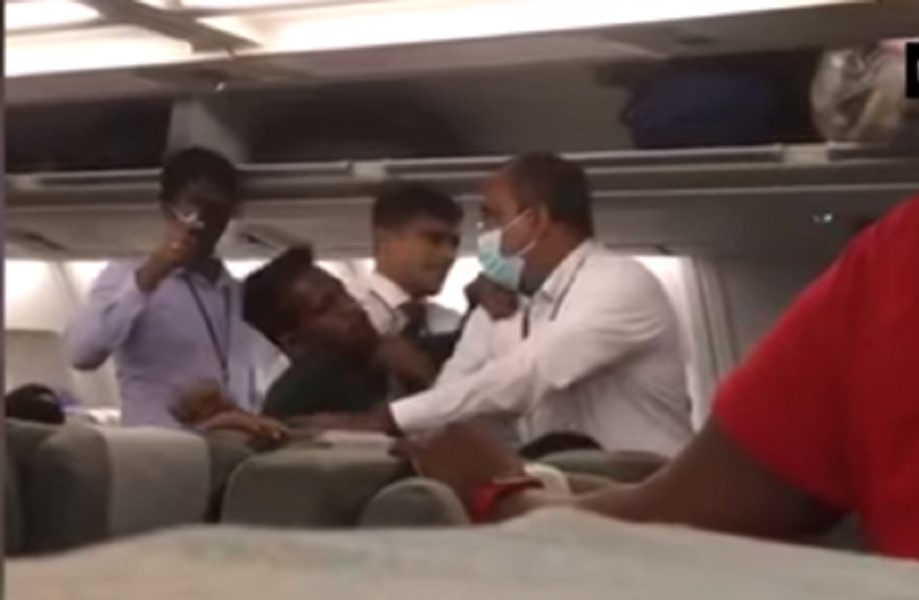
The Criminal Investigation Department (CID) of Police arrested a protester who forcibly entered Sri Lanka’s state television, the Sri Lanka Rupavahini Corporation on 13th July when he attempted to flee the country today.

The CID arrested ‘Danish Ali’ at the Katunayake Bandaranaike International Airport when he was attempting to leave the country.

Police Media Spokesman Senior Superintendent of Police Nihal Thalduwa said the suspect was arrested while trying to go to Dubai.

The police media spokesperson further stated that a court has issued a warrant for his arrest.

Posted in Uncategorized

Sri Lanka’s forex crisis to prolong fuel shortage at least for 12 months – minister

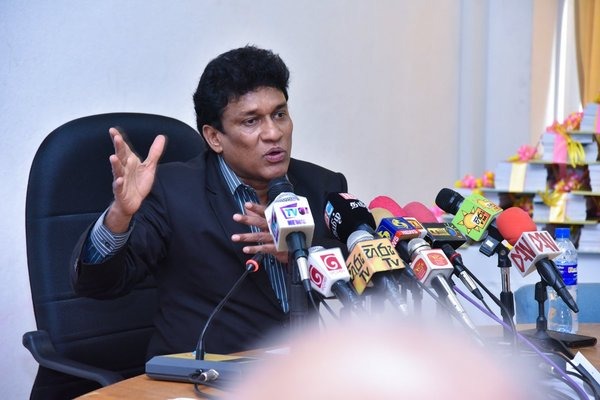
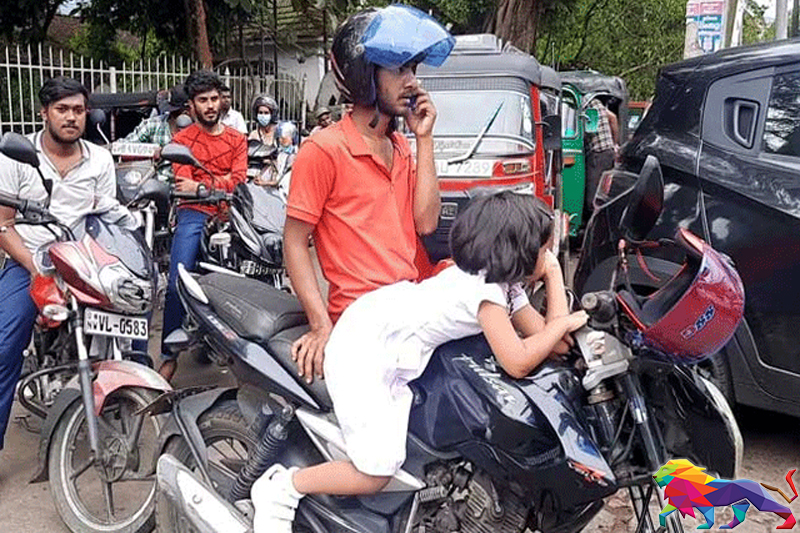
Sri Lanka’s fuel import will have to be limited for the next 12 months due to a dollar shortage and a systematic fuel rationing system with a QR-code is being rolled out nationwide, the Power and Energy Minister Kanchana Wijesekera said.

The QR system is to be implemented island-wide on Tuesday 26 as a measure to supply fuel as the government cannot fulfil the daily demand, the minister said in his Twitter feed.

“Due to Forex issues, fuel imports have to be restricted in the next 12 months,” Wijesekera said on Monday (25).

Sri Lanka’s average fuel import bill is around 500-550 million US dollars per month at present while the country has only a few million usable reserves as of end-June.

The island nation has been managing the fuel from its export earnings and remittances which are much lower than the total import bill.

Sri Lanka’s foreign exchange reserves depleted to near zero after the government under Gotabaya Rajapaksa did not seriously address a looming economic crisis. That led to a shortage of many essentials including fuel, resulting in public anger and protests which eventually forced Rajapaksa to flee the country.

An Indian 500 million US dollar credit line held the country to manage the fuel imports from mid-March to June 16.

The Ceylon Petroleum Corporation (CPC) is forced to reduce its fuel purchase because it does not have dollars to import the country’s demand, while the only other player, listed Lanka IOC’s supply is also not enough to meet the demand amid hoarding and a booming black market for fuel.

“CPC has never distributed fuel daily to every single fuel station. Practically not possible even when stocks are unlimited,” the minister said.

said.

The QR code-based National Fuel Pass will be used without the last digit number plate restrictions from August 1st, he said.

“From the 1st of August only the QR system quota will be in place & the last digit of the number plate system & other allocations will be invalid,” Wijesekera said.

He says by the end of the week different entities in the government sector, divisional secretaries, police departments, and businesses will be given options to register their vehicles too.

Posted in Uncategorized

Putin counting on Ranil to develop Russia-Sri Lanka relations

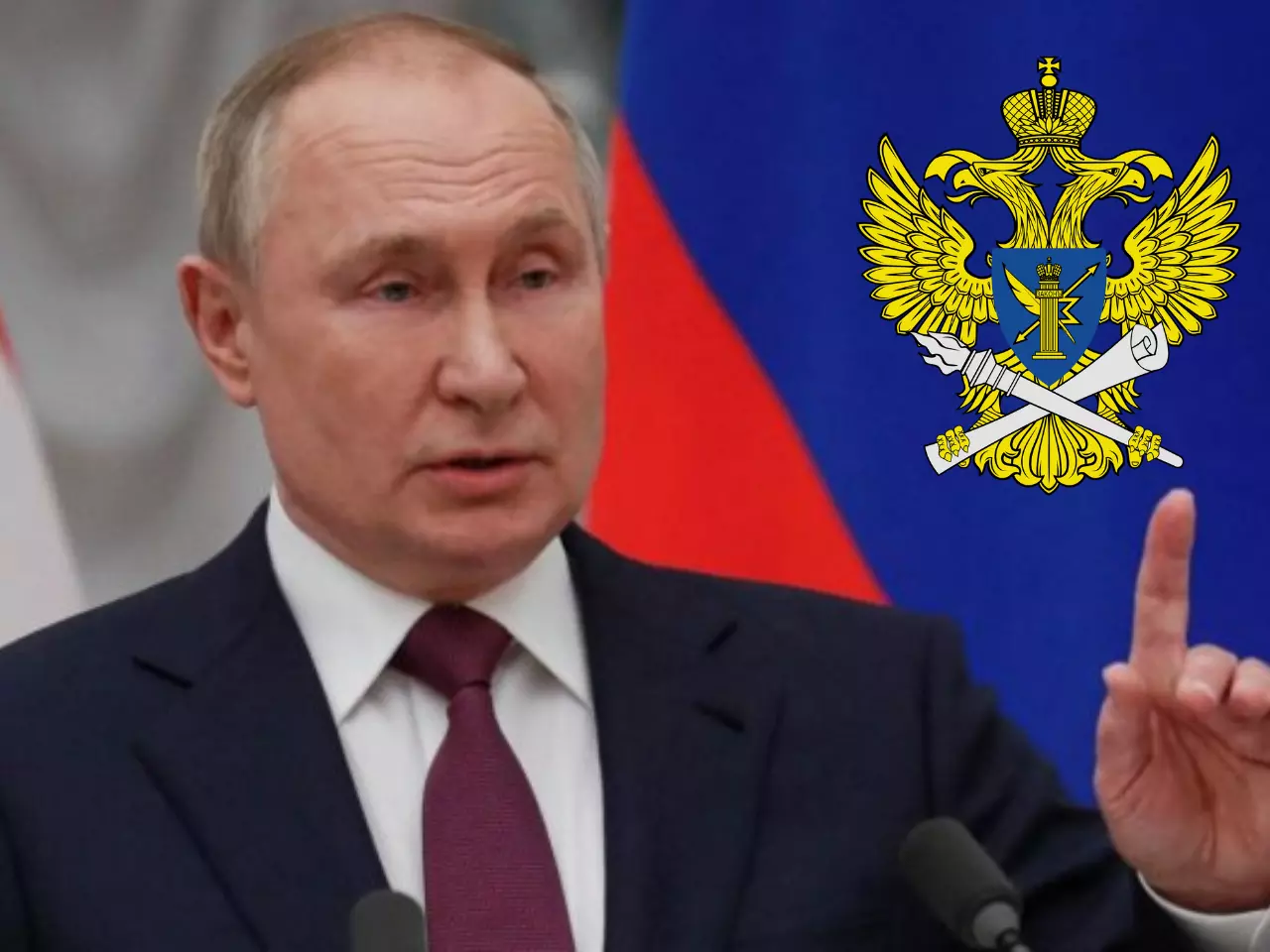
Russian President Vladimir Putin says he is counting on President Ranil Wickremesinghe to develop relations between Russia and Sri Lanka.

In a congratulatory message to Wickremesinghe, President Vladimir Putin noted that the relationship between Russia and Sri Lanka are of traditionally friendly nature.

“The Russian-Sri Lankan relations are of traditionally friendly nature. I am counting on your activities as Head of State to foster further development of the constructive bilateral cooperation in various spheres for the benefit of our peoples and in the interest of strengthening the regional stability and security. I wish you every success as well as good health and prosperity. Yours sincerely,” Putin said.

Putin’s message was conveyed by Russia’s Ambassador to Sri Lanka Yury Materiy when he called on President Ranil Wickremesinghe this morning.

Sri Lanka asks China for help with trade, investment and tourism

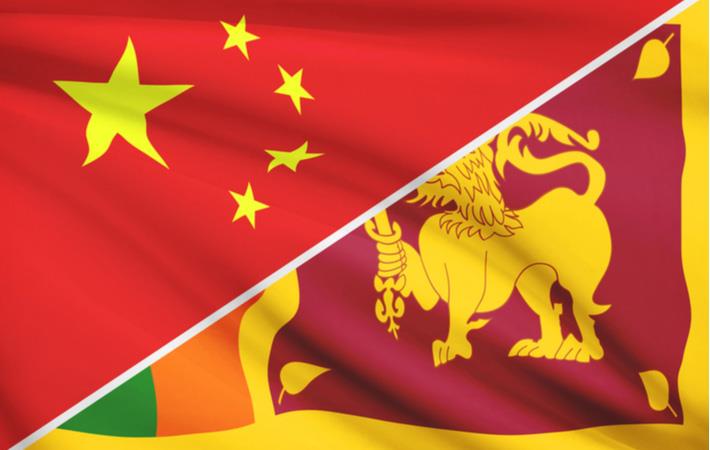
(Reuters) – Sri Lanka has asked China to help with trade, investment and tourism to help it grow sustainably, Colombo’s envoy to Beijing said on Monday as it negotiates for an emergency $4 billion package to help it emerge from an economic meltdown.

The island nation of 22 million people is suffering its worst economic crisis since independence in 1948 after running out of foreign reserves. Protesters angry about the shortages of fuel, food and medicine toppled the Rajapaksa ruling family.

Ambassador Palitha Kohona’s emphasis on China as a key to Sri Lanka’s economic recovery reflects Beijing’s status as one of Sri Lanka’s two largest foreign creditors, along with Japan. China also holds some 10% of Sri Lanka’s external debt,

In an interview with Reuters at Sri Lanka’s Beijing embassy, Kohona said Colombo wants China to ask its companies to buy more Sri Lankan black tea, sapphire, spices and garments and to make Chinese import rules more transparent and easier to navigate.

He said Beijing could also help by pouring further investment into vast China-backed port projects in Colombo and Hambantota. Major Chinese investment plans had not materialised because of the COVID-19 pandemic, Kohona said.

In addition, Sri Lanka would like to see more Chinese tourists, whose numbers fell from 265,000 in 2018 to almost zero after the 2019 suicide attacks and the pandemic.

Kohona said new Sri Lankan President Ranil Wickremesinghe has plans to visit China to discuss cooperation on matters including trade, investment and tourism.

Wickremesinghe is no stranger to China. A photo of him shaking hands with Chinese President Xi Jinping when he visited Beijing in 2016 as prime minister hangs in the hallway of the embassy where Reuters interviews Kohona.

Kohona said he expects no fundamental change in the new government’s policy towards China.

He said he understands China is finding it hard to act quickly to help Sri Lanka now because as a major global creditor it is also financially exposed to many other countries in financial difficulty. “Maybe if it was only Sri Lanka, then the decision-making would’ve been much easier.”

For several months Sri Lanka had been in talks in China for a $4 billion aid package, consisting of a loan of $1 billion to repay a roughly equivalent amount of Chinese debt due this year.

It is also asking for a $1.5 billion credit line to pay for Chinese imports. Kohona said these imports are mainly inputs needed by his country’s lucrative garment industry such as buttons and zippers.

Sri Lanka also hopes to persuade China to activate a $1.5 billion bilateral currency swap.

Kohona said discussions on financial aid with China are still underway but no date for the next meeting has been set.

The Chinese foreign ministry said this month that Beijing is willing to work with other countries and international financial institutions to “play a positive role” to help Sri Lanka.

Beyond financial aid, Sri Lanka also hopes China can help it buy fuel, fertilizer and other urgently needed supplies.

China pledged 500 million yuan ($74.09 million) of emergency support for Sri Lanka in April and May. “We need a lot more,” Kohona said.

Source: Reuters

Significance of July in recent Sri Lankan history By P.K.Balachandran

(Counterpoint): July has been a significant month in the recent history of Sri Lanka. Some of the major events which determined the trajectory of the island in recent times took place in July. The dramatic and ignominious end of the Gotabaya Rajapaksa Presidency took place in July this year. Gotabaya Rajapaksa would go down in history as the first Sri Lankan Head of State and government to flee from the country, that too, as a result of a public uprising. Adversity struck the winner of the war against the formidable LTTE when he was in the middle of his 5- year tenure. Mismanagement of the pandemic and the economy made a mockery of his claim of opening “vistas of prosperity” for his people.

It was also in July 2022, that, for the first time in the island’s history, the offices and residences of the President and the Prime Minister were stormed and occupied by agitators. Again, for the first time, the Prime Minister’s personal residence housing thousands of books and works of art, was burnt to ashes by an insensate rabble.

July 2022 witnessed the extraordinary spectacle of Ranil Wickremesinghe, a National List MP whose party did not win a single seat in parliament in the last general elections, being elected President of the country by the members of parliament, none of whom belonged to his party. Sri Lanka had not seen political pole vaulting of this magnitude before.

Black July

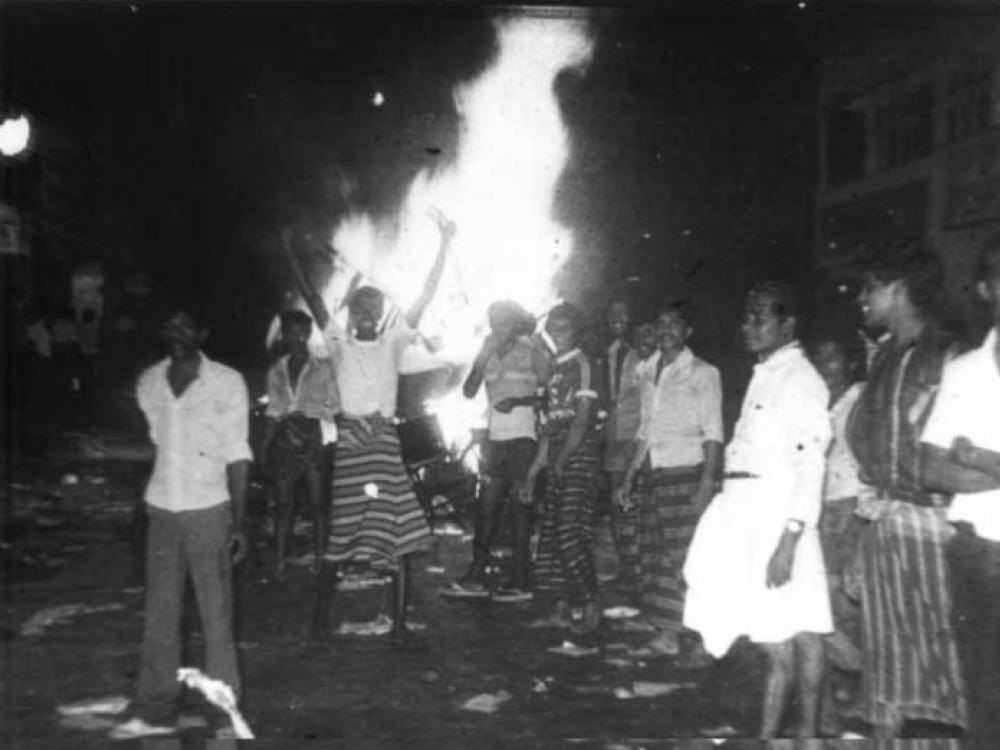
It was in July 1983 that Colombo saw an unprecedented anti-Tamil pogrom, which, according to former President Chandrika Kumaratunga, claimed about 1000 lives, destroyed 18,000 properties, and forced the migration of 700,000 Tamils, though many Sinhalese and Muslims courageously sheltered Tamils against politically-backed hoodlums. On July 25, thirty-seven Tamil militants detained in the Welikade prison in Colombo were killed with knives and clubs by Sinhalese fellow prisoners.

The July 23-30 pogrom was triggered by the killing of 13 Sri Lankan soldiers by the Liberation Tigers of Tamil Eelam (LTTE) in Tirunelveli in Jaffna. The pogrom led to the intensification of Tamil militancy, which along with the muscular State response, devastated the country in the next 26 years.

Devanesan Nesiah, writing in Groundviews in 2013, said that the government had been preparing the ground for a crackdown on the Tamils before the riots. Steps taken included the Regulations of June 3 authorizing police officers of the rank of Assistant Superintendent of Police and above to dispose of dead bodies in the North without any inquest or other inquiries. Then there was the order of July 2 prohibiting the publication and sealing of the offices of Suthanthiran and Saturday Review (both Jaffna-based).

Nesiah recalled that President Jayewardene broadcast on State radio (and published in the London-based Daily Telegraph of July 12) saying: “I am not worried about the opinion of the Jaffna people now. Now we can’t think of them. Not about their lives or their opinion about us… on terrorist issues. We are going to deal with them ourselves, without any quarter being given”.

Nesiah pointed out that the regulation permitting the police to dispose of dead bodies without a judicial inquiry was extended island-wide with effect from July 18, a week before the commencement of the pogrom. On July 20, came total censorship of news about terrorism.

Truth Commission

In 2001, President Chandrika Kumaratunga appointed a Truth Commission under the chairmanship of former Chief Justice S Sharvananda. According to Kumaratunga, the commission found it hard to get data because of the time gap. Referring to the impact of the pogrom on Sri Lanka, she said that some of the best-qualified professionals of Sri Lanka had had to flee. The entire fabric of Sri Lankan society changed for the worse, she said. “Violence became a major tool of socio-political behavior in this country.”

First Suicide Bombing

Come July 1987, Sri Lanka saw the first suicide bombing. On July 5, 1987, Vallipuram Vasanthan alias Capt.Miller, an LTTE cadre drove a truck laden with explosives into a Sri Lankan army camp in Nelliady in Jaffna killing 40 soldiers. This day is observed as ‘Black Tiger Day’ by the LTTE and its supporters. After Nelliady, hundreds of suicide attacks took place. According to the LTTE, between 1987 and 2008, 356 suicide cadres, called ‘Black Tigers’, had laid down their lives, 254 of them in sea operations.

India-Sri Lanka Accord

The India-Sri Lanka Accord, signed by Lankan President J.R.Jayewardene and Indian Prime Minister Rajiv Gandhi on July 29, 1987, aimed at ending the fighting between the government forces and the LTTE and laying the foundation for the devolution of power to the provinces, principally to a united Tamil-speaking North Eastern province. Eventually, the Lankan parliament enacted the 13 th. constitutional Amendment to implement the Accord’s aims to the extent it could.

But the Accord got a violent public reception. A day after the Accord, Rajiv Gandhi was hit on the neck by a naval rating participating in the Guard of Honor at the Presidential palace. The opposition Sri Lanka Freedom Party (SLFP) led an agitation and the Janatha Vimukthi Peramuna (JVP) took to violence. Its military wing, Deshapremi Janatha Vyaparaya (DJV), attacked the Indian Peace Keeping Force (IPKF), which was stationed in the North and East.

After reluctantly accepting the Accord, the LTTE began a war against the IPKF in October 1987 and kept fighting till the Indian troops left the island in 1990 at the request of President R.Premadasa, who had made a deal with the LTTE. The IPKF’s casualties in its 32-month operation was 1165 dead and 3009 wounded.

Jump to 1996. The Mullaitivu army base was overrun by the LTTE on July 18, 1996. Around 1,400 Sri Lankan troops were killed and large amounts of military equipment were captured by the LTTE. Around 330 LTTE cadres were also killed. This was a major blow to the Lankan army which had wrested Jaffna from the LTTE only a year earlier. A few days later, on July 24, 1996, bombs placed by the LTTE in railway carriages in Dehiwela, south of Colombo, killed 64 and injured 400 civilians.

Airport Attack

The next major LTTE strike was at the Bandaranaike International Airport cum air force base near Colombo. On July 24, 2001, fourteen LTTE Black Tiger cadres, armed with RPGs, anti-tank weapons and assault rifles, infiltrated the airport in the night, cut off the power supply, and destroyed or damaged 26 military aircraft including jet fighters and choppers. Parked Airbus civilian aircraft were also damaged causing a loss of US$ 350 million. Tourism caved in and the GDP growth became negative as a result of the attack on the country’s only international airport.

Hambantota Port

On July 29, 2017, a very controversial agreement was signed by Sri Lanka and China leasing out Hambantota port, built with China money, for 99 years to a Chinese State-owned company for US$ 1.1 billion. Sri Lanka said that the money was needed to pay off foreign debts and the Chinese agreed not to use the port for military purposes.

While locals protested against the deal which involved giving 15,000 acres in the hinterland, for a Chinese-managed industrial zone, opposition parties said that it was a sellout, and India and the West had apprehensions about China’s using the port as a naval base and pulling Sri Lanka into a debt trap.


Posted in Uncategorized