Sri Lanka: Second-highest in child malnutrition in South Asia, says UNICEF

The Spokesperson for UNICEF Sri Lanka, Bismarck Swangin states that Sri Lanka’s economic crisis is a children’s crisis, with 1.7 children in the country having to bear the brunt of the crisis.

Speaking to ABC Australia, the UNICEF representative said that while Sri Lanka had one of the highest rates of child malnutrition in South Asia, the economic crisis has only exacerbated the child malnutrition crisis.

According to the UNICEF, 7 out of 10 families are cutting down their food intake to mitigate the crisis, Swangin said. Accordingly, those who were having three meals had decreased to two, while those who were eating two meals had declined it to one.

The UNICEF recently launched an appeal for $25 million to provide humanitarian aid to 1.7 million children in Sri Lanka, which the UNICEF points out are at risk of dying from malnutrition-related causes.

While Sri Lanka has the second-highest rate of acute malnutrition among children under 5 in South Asia, at least 17% of children are suffering from chronic wasting, a disease that carries the highest risk of death.

The quality of the food has recorded a severe decrease as will, he said.

While Sri Lanka has not had favorable numbers with regard to its standing on malnutrition, the current economic crisis will only make it worse, the UNICEF representative said that families are pushing their limits, with children not being able to access their basic rights due to the country’s inability to import essentials such as fuel.

Speaking further, Swangin said that the crisis had affected schoolchildren the most, with them being unable to go to school due to the rise in fuel prices, and being at the risk of starving due to the prices of school meals being doubled, which was a major incentive for children to go to school.

Emphasizing on the UNICEF appeal launched, the Spokesperson said that they are aiming to treat children who are severely malnourished, to provide communities with water, to provide pregnant mother with nutritious diets and supplements, to grant mental health support to children and to grant support to avoid a worst-case scenario.

Swangin commented on the illegal Sri Lankan migrants who were captured in their efforts to go to Australia by boat. He pointed out that the people are getting increasingly desperate, and are resolving to coping mechanisms, such as selling assets or pawning jewelry.

Pointing out that he worked with Somalia, Yemen and Sudan, the UNICEF spokesperson said that this is a crisis like none other.

Posted in Uncategorized

‘Eastern Terminal will not be given to Adani’ – Minister

Minister of Ports, Shipping and Aviation Services Nimal Siripala de Silva has stated that the Eastern Terminal of the Colombo Port will not be handed over to Adani Group of India.

At a media briefing, the Minister also asserted that the terminal will not be handed over to any other private company.

The Minister said that the Colombo Port East Terminal will continue to be operated under the Ports Authority and arrangements are being made to purchase several cranes from a Chinese company for its operations.

Mr. Nimal Siripala de Silva said that US $ 278 million is required for this purpose and that US $ 18 million has already been paid.

JVP willing join an all-party government for a specific period and objectives

Leader of the Janatha Vimukthi Peramuna (JVP) Anura Kumara Dissanayake has said that they are willing to join an all-party government, established for a specific period and objectives.The JVP leader said that the 21st Amendment gave more power to the Prime Minister.Thus, the term of the current administration must end within a short time after 21A is passed, he said.

“After a short period, an election must be held to appoint a new government and a Prime Minister,” Dissanayake said.Dissanayake said so during a meeting with the Collective for Reform. He said that a real all-party government must be established.

“We believe that elections should be held as soon as possible. However, an all-party government is needed to hold a free and fair election and to create a stable environment,” Dissanayake said following a request made by representatives of civil society organisations.Representatives for Collective for Reform said that they did not agree with the government’s statement that there was no money for elections. They believed that government servants would join election duties voluntarily if a free and fair election was held.The JVP leader also said that the resources needed for an election could be minimised and that an all-party government was needed to ensure politico-economic stability before an election is held.

Sri Lanka’s largest foreign-exchange earner Remittances down 33.9% in May

Worker remittances, Sri Lanka’s largest foreign-exchange earner, posted a decline, for the 12th consecutive month in May this year, as migrant workers only sent home USD 304.1 million during the month, down 33.9 per cent from USD 460.1 million a year earlier.

According to data released by the Central Bank of Sri Lanka (CBSL), during the first five months of this year, migrant workers sent home USD 1,335.6 million, down 53.1 per cent from USD 2,845.9 million sent during the same period last year.

In April this year, migrant workers sent home USD 248.9 million, down 52 per cent from 518.8 million a year ago.

In March this year, migrant workers sent home USD 318.4 million, down 47.5 per cent from 612 million a year ago.

In February this year, migrant workers sent home USD 204.9 million, down 64.5 per cent from 579.7 million a year ago.

In January this year, migrant workers sent home USD 259.2 million, down 61.6 per cent from 675.3 million a year ago.

During 2021 migrant workers sent home USD 5.49 billion, down 22.7 per cent compared to USD 7.1 billion sent home during 2020.

The CBSL attempted to attract more worker remittances through formal channels providing an incentive above the exchange rate offered by the banks, which was still below the black-market price.

With the foreign exchange crisis taking a major toll on the Sri Lankan economy, the Central Bank decided to float the rupee and the local currency crashed to near Rs 365 against the dollar.

After removing the incentive programme as the exchange rate broke a record high, the Central Bank on Monday (28) issued another circular which restricted currency exchangers from offering higher exchange rates than licensed banks.

Worker remittances have been Sri Lanka’s largest foreign exchange earner and the country’s balance of payment has been highly dependent on the income generated by migrant workers.

In 2020, many Sri Lankans working overseas returned to the country following the Covid-19 pandemic, which shattered the global economy.

The foreign employment sector is one of the largest employment providers to address national unemployment and poverty issues prevailing in the country.

However, Sri Lanka has been witnessing a declining trend in the number of departures for foreign employment over the last few years.

The West Must Prevent Sri Lanka from Becoming South Asia’s Lebanon – News Week

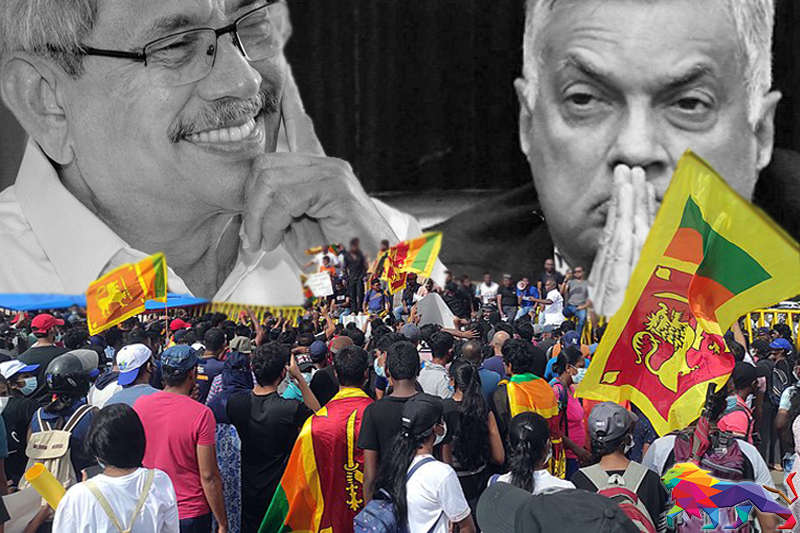
Sky-rocketing food and fuel prices in Sri Lanka have precipitated the worst political unrest in the South Asian country in years, as tens of thousands of demonstrators march for change on empty stomachs. With the government teetering alongside its economy, the international community must take urgent action to help stabilize Sri Lanka, where domestic challenges have a history of going global quickly.

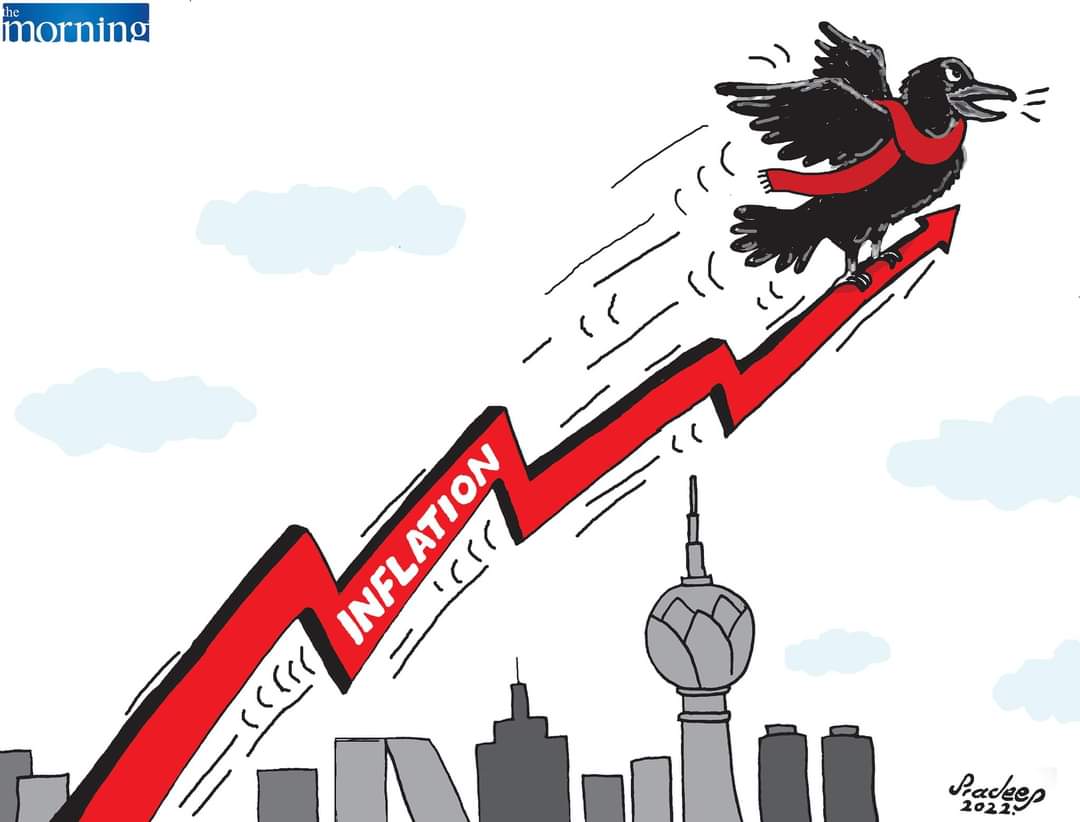
Sri Lanka is on the brink. Last month, the country became the first in South Asia to default on its debt repayments for two decades. With an estimated foreign debt of more than $50 billion, the government has admitted it is now hard to scrounge even $1 million in foreign reserve currency with reserves having fallen to their lowest ever levels. Inflation skyrocketed to 30 percent in April, the highest in Asia—sending prices soaring on rapidly diminishing supplies of basics such as food, fuel and cooking stoves. An economic crisis is now a public health calamity. Dwindling medical supplies are forcing physicians to make heart-wrenching choices as many families struggle to pay the rapidly escalating cost of scarce prescription drugs. A country that aspired to be the next Singapore is now looking at a Lebanon-style collapse, with the Sri Lankan rupee the worst performing currency in the world.

Like many countries, Sri Lanka is still suffering shocks from the COVID-19 pandemic, particularly to its historically vibrant tourism sector, as well as inflation brought on by Russia’s invasion of Ukraine. However, Sri Lanka’s economic vulnerability to these events is also the consequence of years of wrong-headed economic policy, disastrous agricultural decision-making and an over-reliance on Chinese infrastructure spending.

Having cut taxes unsustainably for years, Sri Lanka’s government is starved for revenue and its rating was consequently downgraded, cutting the country off from international debt markets. Sri Lanka’s gross debt rose from 91 percent of annual output in 2018 to 119 percent in 2019, according to the IMF. Making matters worse, Sri Lanka was facing a self-inflicted food supply crisis long before the Russian invasion, with the government having unilaterally cut Sri Lanka off from basic fertilizer imports to save money, instead resulting in reduced crop yields. As crop yields have fallen, rice imports to Sri Lanka have surged 368 percent, according to the UNDP. Finally, lucrative Chinese loans instilled a culture of corruption in the government. And now, the chicken is coming home to roost for Sri Lanka’s extensive ties with China, as Belt and Road Initiative (BRI) infrastructure loans totaling as much as $3.5 billion at high interest rates fail to deliver returns.

Not unlike recent demonstrations in the Middle East against corruption and economic mismanagement, multinational demonstrations in Sri Lanka in response to this perfect storm appear to represent a wide cross-section of what has historically been a sharply divided society. Political independents, students and liberally-minded youth are leading the call for change in Sri Lanka. Organizing pop-up universities and community food hubs, there is room for optimism where a population historically divided along ethnic and religious lines is uniting for a better future.

In Lebanon’s recent elections, independents were some of those returned to parliament. In like manner, Sri Lanka’s popular movements should channel energy into conventional politics with a view to increasing representation for pragmatic progressives. Unrest could be an opportunity for Sri Lanka to reset and secure its future for the next 50 years.

However, the grievances now driving these popular movements are as much a possible threat as an opportunity. In a country where Islamist extremism has already killed hundreds and where historic Tamil grievances remain largely unaddressed, economic and political instability will offer an enticing seedbed for destructive ideologies and influences. During Sri Lanka’s civil war, the Tamil Tigers were one of the most internationally ubiquitous terrorist groups. Pioneering modern suicide bombing, political extremism in Sri Lanka has often found its way to foreign shores.

The international community needs to pay attention to the crisis in Sri Lanka, and the potential for renewed terrorism is not the only reason. As in other countries, Sri Lanka’s reliance on investment from China has left it vulnerable, as the country goes cap in hand to the IMF. Sri Lanka is far from the only emerging country over which China is exercising strategic financial leverage. Private bondholders and China have gone from holding 5 percent of debt among poorer states in 2006 to 29 percent. Rather than turning its back on countries burned by Chinese debt-trap diplomacy, the West should use growing skepticism about China’s role in emerging countries as a window of opportunity to reinvest in countries such as Sri Lanka.

What Sri Lanka needs is responsible government and sustainable international investment. The U.K., once Sri Lanka’s most important bilateral partner, should join with the U.S., India and other “quad countries” to provide urgent bridge funding to stabilize the country and offer a coherent competitive alternative to investment dependency on China.

Matt Godwin is a program lead at the Tony Blair Institute for Global Change. He has published on the internationalization of Sri Lankan politics, including in an upcoming book. His Twitter is @mkgodwin.

The views expressed in this article are the writer’s own.

Posted in Uncategorized

Sri Lanka has one of the slowest roads in the world: IMF study

Sri Lanka is among the nations in the world that has the slowest roads, which indicate the economy is facing obstacles in its development effort, an IMF analysis revealed.

Sri Lanka has a mean road speed of 50 Km/h, which is the same as Bolivia, and above only Bangladesh (41 Km/h) and Nicaragua (46 Km/h).

Falling in the slowest roads category is also India, that has a mean road speed of 58 Km/h, Afghanistan, 57 Km/h, Mongolia, 56 Km/h, and Indonesia, 55 Km/h.

The IMF analysis showed that the world’s fastest roads are found in richer economies including the United States 107 Km/h, Portugal 106 Km/h, Saudi Arabia 106 Km/h, and Canada 106 Km/h.

“High-speed roads that can carry goods to customers in far-off markets raise productivity, reduce poverty and are an important contributor to sustainable and inclusive economic development,” the IMF said in its new blog, whilst also justifying reasons why economists spend time trying to assess the state of the world’s roads through surveys and the like.

The analysis is drawn from an IMF developed tool that measures road quality across 162 countries using Google Maps. The tool determines the mean, or average, time it takes to drive between large cities that are at least 80 kilometers (50 miles). While it is a challenge to distill road quality into a single statistic, the IMF said its research shows that road quality is highly correlated with travel times.

It highlighted that the simple metric it has used to assess road quality can support policymakers and planners in assessing their road infrastructure relative to peer countries and the value of future road investments.

“This can help countries design policies to overcome road bottlenecks and improve their competitiveness by moving people and goods more expeditiously,” the IMF said.

It added that the metric can also be easily extended to monitor speeds in smaller roads that can be critical for
many in rural areas.

Posted in Uncategorized

GoSL’s MP borrowing costs (MPBCs)rises to record Rs 2.93T

Government of Sri Lanka’s (GoSL) face value money printing (FVMP) debt increased by 2.74 per cent (Rs 78,154.54 million) to a record Rs 2.9269 trillion on Wednesday (15 June) due to a persistent lack of revenue. GoSL’s previous record high FVMP debt was Rs 2.8959 trillion established on 27 May 2022.

However, Wednesday’s increase was non-demand-pull inflationary as it was used to make settlement for the payment of ‘essential’ imports led by fuel, by depreciating the country’s foreign reserves by US$ 266.81 million (Rs 95,999.54 million) on Wednesday. Conversions are based on the administered ‘spot’ price as at Friday which was Rs 359.80 to the US dollar.

Despite the increase in GoSL’s FVMP debt, GoSL’s MP borrowing costs (MPBCs), rather than increasing, fell for the seventh consecutive market day to Wednesday, with Wednesday’s decline ‘also’ being a sharp 1.75 per cent (Rs 1,816.94 million) to Rs 101,712.52 million over its Monday’s figure due to sustained buying pressure of riskless, low returns Treasury (T) Bills and
T Bonds in secondary market trading because of perennial uncertainty, rather than investing in the high returns private sector, the engine of growth. Tuesday was a Poson Poya holiday to the market. Market’s net shortfall increased by 2.63 per cent (Rs 17,845 million) to Rs 696,078 million yesterday.

GoSL’s FVMP debt has been over Rs two trillion for a record 96 consecutive market days to Wednesday due to an almost perennial lack of revenue. The market has been short for a record 186 market days to Wednesday. GoSL’s highest to the 190th highest FVMP debt has been registered for a record 190 market days to Wednesday. GoSL’s FVMP debt is equivalent to the totality of CBSL’s T Bill and T Bond holdings. MP is the exclusive right of CBSL. GoSL’s MPBCs are prorated to the outcome in secondary market trading of T Bills and T Bonds on the reference day.

‘Spot’ trades are settled after two-market days from the date of transaction.The ‘spot’ is administered to minimise GoSL’s foreign debt in rupee terms and lower the cost of ‘essential’ imports, while ‘essential’ imports are met from the country’s foreign reserves and not from the market to prevent further depreciative pressure on the rupee as Sri Lanka is an import dependent economy. CBSL lacks transparency in its open market operations. Transactions between CBSL and GoSL are foreign reserves neutral.

Special Jaffna-Colombo express train service from today

After introducing special passenger transportation plans from June 15, the Railway Department has launched an intercity luxury express train service from Mount Lavinia to Jaffna today.

They said the transportation plans were implemented due to the recent increase in transport costs and bus fares following the fuel price increase.

The train will start its journey from Mount Lavinia to Jaffna every weekend from today.

The train will leave from Mount Lavinia at 10:00 pm and reach Jaffna at 5:30 am on the following day. The same train will leave Jaffna on Sunday night at 10:00 pm and reach Colombo Fort at 5:30 am on Monday (20).

According to the Railways Department, the train has 520 seats in air-conditioned compartments, including 10 first class compartments.

Commuters will be charged Rs. 2,800 for a start-to-end journey, the department said.

Spiraling food crisis hits Sri Lanka as farmers abandon fields

For R. Daranagama, a 70-year-old rice farmer, the past year ranks among the most difficult of his life.

As Sri Lanka battles its worst economic crisis in decades, Daranagama has barely touched his four-acre field this season. Without access to fertilizer, he and other farmers expect crop yields to slump, threatening food supplies across a nation already pushed to the brink.

“I do not know what the harvest will be,” said Daranagama, who grows rice in the coastal district of Gampaha. “I have never seen a situation like this.”

Fears of a hunger crisis are rising in Sri Lanka, a teardrop-shaped island south of India. Shortages of items like flour and milk powder are widespread. Food inflation hovers around 60%. Faced with exorbitant costs, many farmers like Daranagama have skipped rice cultivation entirely this season. It’s a scary turnaround for a middle-income country that once faced no problems feeding a population of 22 million people.

Sri Lanka’s economic meltdown, the most dire since the nation achieved independence from the British in 1948, has taken a severe toll on the agriculture sector. Rice production in the last harvest season had already plunged 40% to 50%. Now, seed and fertilizer scarcities could shrink crop yields by as much as 50% this year, according to Mahinda Amaraweera, the agriculture minister.

Prime Minister Ranil Wickremesinghe has warned that curbing hunger is one of Sri Lanka’s biggest challenges over the next few months, prompting people with means to start stockpiling supplies. The United Nations estimates that almost a quarter of the population already require food assistance.

Jayavardhana Pridarshani, a mother of four who lives in Hambantota, a stronghold of the ruling Rajapaksa dynasty, said her family used to eat fish or eggs daily. These days, they can only afford to have those items once a month. She said schools have stopped serving meals to students and fishermen rarely go out to sea because of fuel shortages, even though there’s an abundance of fish.

“Children here, including mine, are suffering from fatigue and weakness,” she said, adding that a doctor had warned that those were symptoms of protein deficiency.

The problem echoes across Sri Lanka. Sajith Premadasa, leader of the political opposition, said an estimated 15% of children in the country are “wasting.” That term refers to underweight children whose immune systems are weak, leaving them vulnerable to developmental delays, disease and even death.

At the Lady Ridgeway hospital in Colombo, the country’s largest for children, about 20% of patients suffer from malnutrition due to the ongoing crisis, local media reported. Poor nutrition carries a significant economic burden in terms of higher health care costs and reduced productivity.

Read: A Powerful Dynasty Bankrupted Sri Lanka in Just 30 Months

Sri Lanka’s woes trace to depleted foreign currency reserves, ill-timed tax cuts, loss of tourism dollars and disruptions from the Covid-19 pandemic. In the agriculture sector, policy missteps have also played a role. In April 2021, the government, led by President Gotabaya Rajapaksa, banned synthetic fertilizer imports to push the country toward organic farming.

But without adequate preparation, the plan backfired. Sri Lanka’s entire agricultural chain — around a third of the labor force and 8% of gross domestic product — faced disruptions. Export earnings from tea, a key revenue source, dried up. As backlash grew, the government began to reverse the ban in November.

President Rajapaksa said the synthetic fertilizer ban was intended to increase the income of farmers by providing them with sustainable and cheaper alternatives. In a recent interview with Bloomberg News, he acknowledged problems with execution.

“Our organic fertilizer manufacturers didn’t have the capacity, but I was not informed,” he said. “I didn’t get the support from people who were responsible.”

Without a bailout from the International Monetary Fund, many worry that Sri Lanka could now go the way of Venezuela, with an essentially worthless currency causing hardship for years to come. For weeks, demonstrators have shut down parts of Colombo, the capital. Much of the public’s anger is directed at the Rajapaksa family, who have led the country for most of the past two decades.

Shock waves from the fertilizer ban continue to reverberate. Due to the increased costs of production — as high as double for paddy crops — a smaller fraction of farmers have prepared for this year’s Yala harvest, which coincides with the monsoon season running from May to August.

The situation has turned desperate for poorer Sri Lankans. Amaraweera, the agriculture minister, has urged people to grow crops at home, saying it’s the only solution to the crisis. For the next three months, the government has given state employees Fridays off from work to tend to their gardens. To meet shortages, Sri Lanka will need to spend over $200 million to import fertilizers this year.

So far, the government expects a combined $150 million in assistance from the World Bank and Asian Development Bank, according to a senior official familiar with the matter. The Export-Import Bank of India has already extended a $55 million loan to Sri Lanka to buy urea, a form of synthetic nitrogen fertilizer. And China has sent rice shipments to fill supply gaps.

But with dwindling food reserves and record global prices for grain and fertilizer due to the war in Ukraine, Sri Lanka is running out of options. Even with humanitarian aid and a recent uptick in cultivation, widespread hunger is possible if more farmers can’t grow or harvest their crops because of runaway prices.

K. Sugath, a 52-year-old farmer, said the challenges keep piling up. Without access to urea, he planted only an acre of rice paddy this season. Many farmers in his area have opted against cultivation entirely, arguing that available organic fertilizers yield limited crops. High fuel prices also mean running a tractor costs twice as much now.

Sugath isn’t optimistic about his harvest, but he worries there’s no choice if he wants to keep his family fed.

“Paddy prices have gone up but no one is selling,” he said.

Bloomberg (Source)

Posted in Uncategorized

Chinese President Xi directs birthday letter to President Gotabaya

Chinese President Xi Jinping has directed a birthday letter to President Gotabaya Rajapaksa, assuring that China always stands ready to extend its support to Sri Lanka.

The Chinese President has also underlined the spirit of the Rubber-Rice pact “independence, self-reliance, unity & mutual Support” against the current situation.

As 2022 marks the 65th anniversary of Chinese and Sri Lankan diplomatic ties, President Xi Jinping had pointed out that the two countries have remained understanding and supportive with each other for 65 years.

“I attach great importance to the development of our relations and would continue work to elevate it to new heights,” he had stated.