Sri Lankans protest against the Adani Group in India on energy projects

A protest took place in Colombo on Thursday (16) against the secret dealings between the Sri Lankan Government and the Adani Group in India.

Recent controversial and retracted remarks by the Former Chairman of the Ceylon Electricity Board linked Indian influence on Sri Lankan Energy Projects.

M.M. C Ferdinando, the chairman of Sri Lanka’s Ceylon Electricity Board (CEB), resigned on the 14th of June 2022, three days after he claimed before a parliamentary panel that he was told by President Gotabaya Rajapaksa about Indian Prime Minister Narendra Modi pressuring him to give the wind power project directly to the Adani Group.

The allegations involve a 500-Megawatt renewable energy project in Sri Lanka’s Mannar district.

A letter dated the 25th of November 2021 from the now-resigned Chairman of the Ceylon Electricity Board to the then-Secretary of Finance S. R. Attygalle has somewhat detailed the matter surrounding the Adani Group investment in renewable energy projects in Sri Lanka.

According to point number (3) in the letter, immediately after the progress review meeting on renewable energy with HE the President on 16.11.2021 at the Presidential Secretariat, Ferdinando was directed by HE the President to facilitate M/s Adani greeen Energy to develop 500 MW win and solar, renewable energy project in Mannar and Punarin, as he had already agreed to invest a substantial amount of FDI in Sri Lanka.

“As per this directive, I assumed that this is a proposal of an investor backed by the Government of India on the basis of the bilateral discussion between the two heads of states,” said the letter.

Ferdinando had noted that on the above basis, it is logical to assume that this is an investment proposal on the basis of G-G and can be processed as an investment channeled through the Board of Investment.

Sri Lankan President Gotabaya Rajapaksa categoriacally denied the statement made by the Chairman of the Ceylon Electricity Board with regard to awarding a Wind Power Project.

Crisis-hit Sri Lanka in process to mend Japanese ties after cancelling LRT, ECT projects

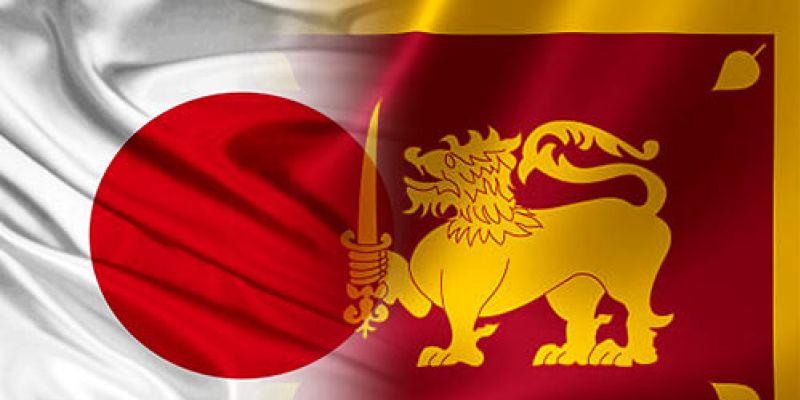
Sri Lanka is in the process to mend severed ties with Japan after the island nation unilaterally cancelled a 1.5 billion US dollar light rail transit (LRT) and East Container Terminal (ECT) projects as the crisis-hit South Asian nation is seeking international help to come out of its economic downturn amid a political crisis.

Higher government officials and ruling Sri Lanka Podujana Peramuna (SLPP) members have told EconomyNext that most foreign countries were hesitant to help Sri Lanka unlike in the past because some harsh ‘undiplomatic’ experiences in the past.

A former SLPP cabinet minister has said some countries have indirectly told the government that they would not help until President Mahinda Rajapaksa and his family members are in power.

Foreign Minister G L Peiris at a meeting with Miyake Shingo, Parliamentary Vice Minister for Foreign Affairs of Japan, said “the relationship with Japan is vital for Sri Lanka,” after he met the Japanese high official on the sidelines of the 50th session of the Human Rights Council.

Peiris noted that, over the decades, Japan has been a close partner of Sri Lanka, and “expressed appreciation for the assistance provided, particularly in the areas of skills development, computer technology, the construction of the Sri Jayawardenepura Hospital, assistance to the Rupavahini Corporation, the significant assistance provided recently for medical and pharmaceutical items, as well as Japan’s supportive stance on Sri Lanka”, the island nation’s Foreign Ministry said in a statement.

“He also recalled the support extended by Sri Lanka to Japan at the San Francisco Conference at the conclusion of World War II. Sri Lanka wished to expand cooperation with Japan in the areas of digitalization, carbon credit, and ocean related activities including coast conservation, fisheries and global warming. Reference was also made to exploring cooperation in areas coming under the purview of the World Trade Organisation.”

The government under President Gotabaya Rajapaksa, which was close to China earlier, unilaterally suspended a 1.5 billion US dollar LRT project and 500 million US dollar ECT project, which is involved with a tripartite deal with India as well.

Shingo noted that Japan, too, wished to deepen and strengthen cooperation with Sri Lanka in international fora.

Both countries are celebrating 70th year of diplomatic relations this year.

“He…. expressed the hope that long before the 100 year celebration, the relations between the two countries would be elevated to an even higher level. He expressed interest in furthering cooperation with Sri Lanka in the areas mentioned,” Sri Lankan Foreign Ministry said.

Japan has been the top lender for Sri Lanka under its concessionary funding and has poured billions of yens to Sri Lanka’s main Colombo port and many other infrastructure projects.

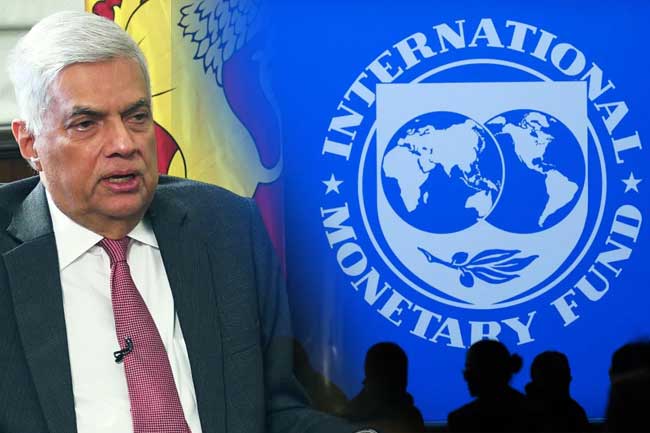
Sri Lanka is facing its worst economic crisis in the post-independent era. Many countries have pledged help but said only they can do that once Sri Lanka ensures an International Monetary Fund programme after renegotiations with its creditors.

The diplomatic ties with Japan was severed after Rajapaksa’s decision to cancel the key projects which were signed under the previous government.

Japan played a key role when Sri Lanka faced an economic collapse in 2001. It helped to host a donor forum for Sri Lanka and raise 4.5 billion US dollar in 2003 to rebuild war ravaged infrastructure during a ceasefire agreement in the island nation’s civil war. But the country was unable to use the funding fully as there was a government change in 2004.

Posted in Uncategorized

Sri Lanka tells UN not to interfere in China’s domestic issues

Sri Lanka has told the United Nations (UN) not to interfere in China’s domestic issues.

The Sri Lankan delegation in Geneva noted that UNGA resolutions 60/251 and 48/141 require that the work of the Human Rights Council and the High Commissioner’s Office is guided by principles of impartiality, non-selectivity, constructive international dialogue and cooperation.

“We reiterate the importance of the Council and its associated entities adhering to these salient principles,” Sri Lanka told the UN Human Rights Council at its ongoing 50th Session.

Sri Lanka said it welcomes the visit paid by the United Nations High Commissioner for Human Rights Michelle Bachelet to China, including the Xinjiang Uygur Autonomous Region, at the invitation of the Chinese Government.

“We welcome that the Chinese side and the OHCHR had a thorough exchange on cooperation,” the Sri Lanka delegation said.

Sri Lanka noted that respect for the sovereignty and non-interference, as enshrined in Article 2 of the UN Charter, must form the bedrock of engagement in all multilateral fora.

The Sri Lanka delegation added that Sri Lanka has consistently adhered to the One China policy and continues to do so.

“Initiatives taken with the consent and cooperation of the country concerned, will contribute to genuine dialogue and productivity,” the Sri Lanka Government said.

Sri Lanka said it stands ready to continuing engagement with the HRC and its mechanisms on a footing of mutual cooperation and respect, in line with our national priorities.

Chinese banks ready to negotiate with Sri Lanka on “properly handling matured debts”: Envoy

The Chinese Ambassador to Sri Lanka, Qi Zhenhong, who called on Prime Minister Ranil Wickremasinghe on Monday told him that Chinese banks also ready to negotiate with Sri Lanka on “properly handling matured debts”, by which he perhaps meant rescheduling debt repayment.

Qi also reaffirmed China’s “continued and concrete support” covering grant, trade, investment in Sri Lanka during the current crisis.

Wickremasinghe agreed with Ambassado Qi that Chinese and Sri Lankan joint ventures and projects have been playing a vitally important role in Sri Lanka’s development and employment in the crisis, and both sides should support their construction and operation to generate impulses for Sri Lanka economic recovery.

Ambassador Qi highlighted that 11,000 Sri Lankans are working in Chinese and Sri Lankan joint ventures and projects across the island.

Despite the COVID-19 pandemic and all the other challenges, many companies and projects have managed to increase their wage levels to support their families.

Prime Minister Wickremesinghe said that Sri Lanka and China will jointly expedite the development of Port City Colombo and Hambantota Port and Industrial Park, and attract more FDI to Sri Lanka. The new government is also committed to protecting the legitimate rights and interests of Chinese and international investors, he added.

Posted in Uncategorized

Catholic bishops warn that Sri Lanka is close to the worst tragedy in its history

Colombo (Asia News) – The Catholic Bishops’ Conference of Sri Lanka (CBCSL) issued a statement at the end of its recent plenary assembly warning that violence is a real danger as the country’s economic crisis worsens.

To cope with the situation, the bishops urge the government to immediately change its policies and amend the constitution to limit the powers of the president.

“We earnestly urge the government to take drastic steps to address these issues and bring about justice, equity and open the way for our children and youth to have a country to live with dignity,” reads the CBCSL statement.

“People are stranded [. . .] without basic needs such as food, fuel and domestic and industrial gas. Patients are left in the lurch without the medicine needed to sustain their life. Parents are yearning to find milk food for infants and children,” the statement goes on to say.

For the CBCSL, “The tragedy that has struck our nation is in no uncertain terms the worst of our times.” Hence, they demand the caretaker government in power address these issues and free the population from daily suffering.

“There should be a relief package to provide basic food items to the poorest of the poor. The unbridled rise in prices of basic necessities, shortages and hoarding seriously affect the day-to-day lives of people who are forced to stay in long queues”.

The statement also notes that, “It is so unfortunate that our leaders have allowed the 20th Amendment to be passed in parliament”; in fact, the CBCSL is very concerned that the changes to the constitution have concentrated too many powers in the hands of the president.

The Catholic bishops reiterate the need for the “absolute independence of the judiciary”” and all other commissions, “subject only to the guidance of the parliament.” Only “This way, true democracy can be re-instituted in the country.”

To reach this goal, everyone should desist from violence, and insist that the government respect the legitimate right to freedom of expression and movement guaranteed by the constitution.

Posted in Uncategorized

Three-wheeler driver dies while waiting for fuel

A person who was waiting in line at a petrol station in the Wekada area in Panadura has passed away due to a sudden illness.

The victim had been admitted to the Panadura Hospital this morning (Jan. 16) due to a sudden illness while waiting in line to get fuel for the three-wheeler with his son.

The deceased has been identified as a 53-year-old resident of Hirana.

People at the scene said the arrival of an ambulance was delayed for about half an hour and that the individual had later died on the way to the hospital. He is suspected to have suffered a heart attack.

The son of the deceased had also been in a fuel queue at the same filling station to obtain petrol for his motorcycle.

Meanwhile in a separate incident, a man transporting a gas cylinder using a wheelbarrow has died due to a sudden illness in the Pugoda area.

The deceased has been identified as a 64-year-old man from the area, police said.

Posted in Uncategorized

Schoolgirl Rape & Four Murders: The 1996 Rape & Murder Of Krishanthi Kumaraswamy In Jaffna By Angie Singam

The schoolgirl

Krishanthi Kumaraswamy cycles along a dusty road in the sweltering afternoon heat of Jaffna. ‘Ubiquitous palms, unique to the dry zone, stand direct like sentinels. An eerie feeling permeates the scenery and vegetation in this no-man’s land’. She was on her way to her Chemistry Advanced Level exam. She would be home for lunch. Home was her haven, the place that cushioned her from the war that she had known almost all her life – the place she shared with her widowed mother and younger brother.

Krishanthi was a high achiever. She had aced her O’Levels with seven distinctions and she knew that she was going to blitz the A’Levels as well. She had to. She wanted to study Medicine at University, a very competitive and demanding course. One that only a handful of elite Jaffna students could get into.

Krishanthi never arrived home! Her A’Level results were posted posthumously. She had passed with the highest possible grades, but she wasn’t there to celebrate the news! The 18 year old had been raped and killed by army personnel who had stopped her at a checkpoint on her way home, ostensibly to question her.

The book

Krishanthi remains the face of the horrors of the thirty year civil war in Sri Lanka and the tragic victim of the militarisation of the North. The rape and murder of the schoolgirl by the army and the murder of her mother, brother and neighbour who went looking for her in September 1996, has been graphically captured in a book written by Bhagavadas Sriskanthadas ‘Schoolgirl Rape & Four Murders’. It follows the crime through the court case and the proceedings some of which are produced ad verbatim in the book and provide first- hand accounts of what transpired.

The book was launched at Gleebooks in Sydney on 5 June 2022. Speaking at the launch, Sriskanthadas a former human rights lawyer, journalist and solicitor at the Aboriginal Legal Service in Australia, described the atrocities of war and rape in particular, as a weapon of war. He listed Rwanda, the Congo, Yugoslavia and more recently, Ukraine as countries where rape was systemic during conflict. In his foreword he also describes the many human rights violations committed during the war in Sri Lanka and the absence of any Governmental measures to curb the military or hold them accountable for the atrocities they committed.

Sriskanthadas writes with the clinical accuracy of someone who had poured over the court proceedings and researched conditions in Jaffna during the war, but writes with the heart of someone who understands and appreciates the Tamil culture and ethos. He travelled to Kaithady, Jaffna, where he interviewed neighbours, relatives and friends of the Kumaraswamy family while compiling the book.

Life in the North

Peppered through the book are cameos of life in the North which are familiar to someone who has grown up there – bicycles (a common mode of transport in Jaffna) and the history behind them, the meaning of the Thali Kodi for a Hindu wife, Saraswathi, the Goddess of Learning and Krishanthi’s affinity to her… Sriskanthadas’ powers of observation are heightened by his knowledge of Tamil culture and history.

While the burden of war was punishing, the people continued with their daily rituals and routines – their attempts to maintain normalcy in an otherwise abnormal environment. A review of the book by Philip Radmall, Macquarie University, says that ‘it speaks from the precariousness of ordinary life; how randomly the horror of the killings takes place out of the domestic context and routine goals of a day’. Sriskanthadas captures those routine moments with great detail and warmth.

Against this backdrop, Krishanthi’s personality and family life come alive.

What is distinct in the book is that the Kumaraswamy family were well respected people in the area – cosmopolitan, educated and influential. Krishanthi’s mother grew up in Malaya and did a Bachelor of Arts in India, returning to serve as Principal at a public school in Jaffna. Both younger children were in the best fee paying schools in Jaffna (the oldest daughter was in Colombo). Arguably, they had some power and influence and their family members were able to get the then President of the country, Chandrika Kumaratunga to intervene and justice was served in a fairly quick trial without jury.

The State Counsel for the prosecution in the Kumaraswamy case said in an interview, “In March or April of 1997 the case started and in 1998 it was over. Krishanthi Kumaraswamy was the first successful prosecution against military personnel for rape in the context of the conflict in Sri Lanka”. A pyrrhic victory for the Kumaraswamy family, who lost three members of their family in a senseless act of violence.

The political narrative

While the story is about Krishanthi and the subsequent court case and victory, running through the book is a political narrative that speaks of an ineffectual Government and a country with a tainted human rights record… A country that abandoned its duty towards its people in the North and East and its humanitarian obligations towards them.

Jaffna was wrested from the terrorists in December 1995 and supposedly in the safekeeping of the army. The irony is not lost on the young girl as she is shoved into the army bunker ostensibly for questioning, but in reality for a far more sinister purpose. “We trusted you and we came”, she tells the army corporal. The so-called saviours, the perpetrators of crimes against humanity!
The previous year, the UN’s Fourth World Conference on Women specified that rape by armed groups during wartime is a war crime. ‘The jurisdiction of the international tribunals established to prosecute crimes committed in the conflicts in the former Yugoslavia and Rwanda both included rape, making these tribunals among the first international bodies to prosecute sexual violence as a war crime’.

The UN and human rights groups have pressed Sri Lanka to set up a war crimes tribunal, a request that Colombo has resisted saying it is an internal matter and would be dealt with internally. So many women have been raped, tortured and murdered in Jaffna during the occupation by the armed forces with complete impunity. Their tragedy is just a line item in statistics compiled by human rights organisations.

In March 2000, the UN special rapporteur on violence against women expressed grave concern over the lack of credible investigations into allegations of gang rape, and murder of women and girls. In a January 2002 report Amnesty International noted that not a single member of the security forces had been brought to trial in connection with incidents of rape in custody.

A tribute

Krishanthi’s rape and murder and the murder of her family rocked Jaffna, but for every Krishanthi whose body is recovered and whose story is told, there are a thousand Krishanthis who will remain unknown and unmourned, except by their close families. Jaffna keeps some dark secrets and the book lifts the veil on one of them.

The author concedes that people may question the relevance of the book and the fact that it had been written 20 years after the event – it is a seminal case which was prosecuted successfully, (despite the evidence being largely circumstantial), but one that is sadly not representative of the outcome of many rapes, abductions and killings by the military in the North and East.
Bhagavadas Sriskanthadas’ book is not just a tribute to a Jaffna schoolgirl with a dream who never came home, but it is also a tribute to all those women in the North and East who will never come home to their families.

Posted in Uncategorized

Wijeyadasa tell why 21A is delayed

Approval of the proposed 21st Amendment to the Constitution has been further postponed by the Cabinet of ministers.

According to Justice Minister Wijeyadasa Rajapakshe, the weekly meeting of the Cabinet of Ministers convened yesterday has not green-lighted the constitutional amendments as it was decided that further educating the political party leaders in this regard is necessary.

Thereby, several political party leaders will be informed of the 21st Amendment to the Constitution at a discussion scheduled for tomorrow (16) at 4.00pm.

Subsequently, the 21st Amendment to the Constitution is expected to be approved at the meeting of the Cabinet of Ministers next Monday.

SLPP General Secretary – Sagara Kariyawasam had earlier claimed that they were not given a chance to express the party’s stance on the 21A. Responding to this claim, the Justice minister had pointed out that leaders of 43 parties were informed in writing to present their suggestions and views.

“We have especially informed the SLPP. So, they cannot say that they did not get a chance. We also had a special discussion with a group including Basil Rajapaksa. Now, if they say that recovering the economy should be prioritized first, the public will handle them. Because the 21 A itself is a need for the public. If anyone stands against it, the people will respond,” he added.

UNHRC core group express concern over attacks on peaceful protestors

The Core Group on Sri Lanka led by the United Kingdom has expressed concern over the attack on peaceful protesters, during the 50th UN human rights council sessions in Geneva.

The delegation in presence noted that protesters have exercised their right to freedom of peaceful assembly and association, and freedom of expression in recent months.

They further stated that the core group has become deeply concerned over the attacks on peaceful protesters and subsequent violence against government allied politicians and supporters.

They emphasized that those responsible for this violence must be held to account.

Woman abducted for ransom in northern Sri Lanka rescued by police

A woman from the Northern Sri Lankan town of Puvarasankulam who was abducted by four men for a ransom of 500,000 rupees was rescued and her captivators taken into police custody on Tuesday (14), police said.

Police had received a complaint on Monday (13) that the woman had gone missing and was being held in a house against her will, the police media division said.

The abductors had telephoned the victim’s daughter and demanded 500,000 rupees in order to release the woman. They had then threatened to kill the woman if the ransom was not paid.

Police who had gone in under the guise of people known to the woman to pay the ransom managed to rescue the woman, and her four abductors – aged between 26 and 49 and all residents of the northern province – were arrested, police said.

The suspects were produced in the High Court of Vavuniya on Tuesday.

Sri Lanka is going through its worst economic crisis since independence and analysts have expressed fears of an increase in crime as living costs soar.

Posted in Uncategorized