India has “really helped” Sri Lanka in its efforts to cope with the island’s economic crash, the island nation’s Prime Minister Ranil Wickremesinghe said, however observing that aid coming in from different sources has put Sri Lanka “in the middle of geopolitics”.
It has been over a month since you took charge as PM amid the unprecedented crisis. What are your key interventions so far?
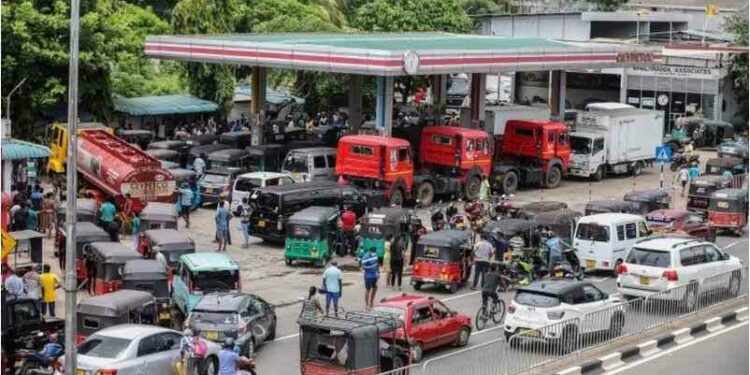
I would say the key intervention is in the economy. By next month, we will certainly be able to deal with the issue of fuel. As we came in, it was uncoordinated, now we are coordinating it. We have been able to use the Indian credit line. We have also been finding some money, Sri Lanka on its own, and we got the fuel in. But as I said, looking back at the orders earlier, the next three weeks are going to be difficult. That is why you see some queues for petrol. Fortunately, diesel and gas are not a problem immediately. We want to have uninterrupted supply and we feel by next month, we should be able to handle it.
The main issue is that, at the moment, we can only offer about 50% of the normal consumption. We must now decide on the priority areas. So that has been a problem for the people. I can understand their frustration, standing in those queues. But if we are careful in managing the fuel available to us, we could even keep a small reserve.
As far as the financial situation is concerned, we have started the discussion with the IMF [International Monetary Fund]. We are also having Lazard and Clifford Chance [financial and legal advisers] in here. We are trying to finish the IMF staff-level agreement, if possible, by the end of this month. Then we have to wait for the debt restructuring plan. That will give us a clear indication of what we have to do. By July, I also hope to bring in the interim budget. The appropriation Bill will be gazetted in July. And if no one goes to court over it, certainly we can debate it at the end of the month.
By that time, we finish the IMF discussions, then we go on to the next one, the donor conference. There, we have got to ensure that India, China, Japan all are singing the same tune. There is a question of whether anyone will get an advantage over the others, you have got to ensure that does not happen. Once we get the [aid] consortium into place, then the initial work is over.
Once we can get the IMF board to accept it, we can get the bridging finance. At the moment, only India is giving us funding. Once the IMF approves the EFF [Extended Fund Facility], we can get some bridging finance from the World Bank and others, and some of the other countries will also help us.
Sri Lanka’s export earnings in April were about $915 million, and then worker remittances of about $250 million. Imports were at $1.7 million. What is the priority for the government with the available export revenue?
It is just essential imports. In addition to the export revenue, we are also using the credit lines given by India, and then there have been transfers to help the different sectors like agriculture and health. The money, being sent to fund some programmes here, that is coming in dollars, is being utilised. In these three ways we are managing.
You spoke of the ongoing IMF negotiations, and said you are hoping to firm up the staff-level agreement soon. In addition to Indian assistance [totalling $3.5 billion this year], you have sought help from China and Japan. You have especially urged the Quad grouping to take the lead in setting up an aid consortium for Sri Lanka. How are they all responding?
Well, there are two main members of the Quad who are involved, that is, India and Japan. India has taken the lead so far in providing assistance. We have just started communicating with Japan, and speaking about this, because the relations are strained for some time. In addition to this, we have China also coming in.
Now we have two Quad members, and one Belt and Road [Initiative] member. And we have one Paris Club member, that is Japan, and two non-Paris Club members, India and China. So we are in the middle of geopolitics [laughs].
I must say that Indian assistance has helped us get through these difficult times. Dr. Jaishankar met a parliamentary committee and has said India stands with Sri Lanka. Even when I met him in Abu Dhabi for the Indian Ocean conference, we discussed the issue and at that time, he was concerned about the situation. He did not want any turbulence in Sri Lanka. And then again, when he came here, he said, we are going to commit to help Sri Lanka. I told him you may have to bail us out. They have been working for some time and the Finance Minister has also been a great help. Both of them, and the Prime Minister have really helped us through this time.
Are you expecting any further assistance from India apart from the $3.5 billion committed?
We are hoping to get an additional $500 million assistance for fuel.
Significantly, China has commended India’s assistance to Sri Lanka, and expressed willingness to work with India and the international community to help Sri Lanka. We saw that the Chinese and the U.S. Ambassadors in Colombo recently met for a discussion. Do you think China is willing to support Sri Lanka’s debt restructure initiative backed by the IMF?
I think they will certainly do that. We will speak with them. And I hope at some time the three countries, Japan, China and India, will speak with each other. China has acknowledged India’s contribution. I think it is a good start, but there will be so many other issues to be debated.
One of the mechanisms you have put forward is a new budget with a new tax regime. Some revisions, such as increased VAT, have already come about. Do you also see Sri Lanka going for higher direct taxation?
Yes, we will go for higher direct taxation. There is a growing inequality in the country, so we have do that. The budget will be an interim budget. We have to reduce spending in many areas. We are saving some of the monies to pay the high interest rates. And I’d like to put over 200 billion into the social welfare sector, so that sort of adjustment.
We will also bring some other legislation with regard to taxation and so on. This will be in July, August. Then in November, we present the new budget. So, from August to December, all economic matters will be debated, studied, maybe into the early part of 2023.
You are planning to divert some resources to social welfare, as inequality is growing. Sri Lanka has an enviable tradition in our region in universal social welfare, especially in education and health. Now there is talk of targeted social security, how will you reconcile the two?
Targeted means programmes targeting the poor. We find in some of the welfare programmes, people who are not entitled to it are also the recipients. And the monies you save by removing people who are not entitled to be recipients can be put back to help some of those who come in, or to increase the assistance that is being given.
Some are raising concern over an IMF programme, citing past experience and other examples, that the conditions that come with it could be tough. Do you think Sri Lanka will be forced to go down the austerity path for some time?
Well, if you look at it now, I think we agreed with the IMF that the vulnerable groups have to be supported. If you look at some of what are called tough conditions, even if the IMF is not there, we would have had to do it. The advantage of going with the IMF is that you get money through the Extended Fund Facility. If you do it on your own, you get nothing. If you go with the IMF, you get something or maybe everything.
So you are saying tough conditions are inevitable.
Yes, they are inevitable. So, I am focusing on what we would have to do if there was no IMF. We agree on those, and then we will have to discuss the remaining conditionalities.
Would you say Sri Lanka has enough bargaining power in this negotiation with the IMF?
Different from earlier times, but nevertheless, you have your bargaining power if you first look at the situation and decide what is it that you have to do. That becomes your bargaining power. It means that you have realised what is happening, you are going on the correct track. So that strengthens your case, when you’re dealing with the IMF.
Secondly, you asked me about austerity. Yes, there has to be austerity, but we want it to be on a short term so that by 2024, we can start moving. 2023 is going to be a difficult year, because while we may make an improvement, the global GDP growth is now down to 2.9%. We still don’t know if it will go further down because of the Ukraine war, and the inflation in the West and issues in China.
Much of Sri Lanka’s response to the crisis relies on external assistance, be it an IMF programme, support from other multilateral donors, or bilateral credit. Meanwhile, Sri Lanka faces a looming food crisis and actual fears of starvation. What about domestic production, especially given the impact of last year’s chemical fertilizer ban?
We are now looking at domestic production, going on the basis that while we will have a shortage of food, since most countries will not export food due to the Ukraine crisis, and the global food crises that will come along. So we will have a food security programme, which is to ensure that we are secure in basic foodstuff. If we cannot have rice, we’ll have to take something else like moong beans and so on. We must ensure people have the minimum calories required, and we must feed those who are unable to pay for it. So, this is a campaign that we will be launching, decentralised down to 336 collectors’ divisions.
As part of its response to the crisis Sri Lanka is seeking foreign direct investment in different crucial sectors such as energy. The Adani Group’s entry into the sector has become controversial, with many in Sri Lanka asking how they got in, in the absence of an international bidding process. There have been protests resisting the move. Wouldn’t this deter other potential investors and affect the country’s image?
Adani Group has brought in $500 million, which we need at the moment. It is a good sign that investors are coming in. Sri Lanka’s potential for renewable energy, wind power, is big. I don’t think all the big companies coming in here will be able to fully exploit it. It is there in many areas of the country. The advantage of Mannar is that you can also supply to India. So, we have no problem about Adani coming in.
How did they come in? Well, Adani is no stranger to Sri Lanka. They came here for the East Container Terminal at the Colombo Port, linked up with John Keells Holdings [Sri Lankan conglomerate] and are now doing the West Container Terminal (WCT). They are experienced in this game. Similarly, having the experience of dealing with the BOI [Sri Lanka’s Board of Investment] and others on the West terminal, now they have applied for this project in Mannar.
I looked at the Cabinet papers, it has been recommended. This was before I became PM, but we have a committee of secretaries who look at all unsolicited proposals and take a decision. This has come from there. They have been forwarded to the BOI, so I don’t think there has been any issue. If the Indian government was really interested, I would have been told about this by Prime Minister Modi or his office. I haven’t got any request to expedite it.
Look, if anyone else in India wants to invest another $500 million [project], I am not objecting [laughs]. If a third party wants it, we will give it to them. In this position, are we to throw $500 million away?
We are only purchasing power. Anyone with land in Mannar can come and supply power, like anyone with land in Texas with oil can supply oil. We have the same situation. No one should actually shout. If there are any more [willing to invest] from India, I’d be more than happy to receive them here, and ask the same committee to go through it. If Mr. Adani can put another project I don’t mind. Last time I was there I spoke to Ratan Tata, unfortunately they went into litigation later on. I’ve spoken to Narayana Murthy [Infosys], a lot of Indians have spoken to me from time to time.
One of our biggest successes is [Singaporean company] Prima, which came in unsolicited. It doesn’t matter if it is unsolicited or solicited, it is a matter for the Government of Sri Lanka. But certainly, there was no intervention by the Indian Prime Minister of his office as far as I am concerned.
You mentioned the Adani Group’s entry into the East Container Terminal project first. That was a tri-lateral governmental agreement among Sri Lanka, India and Japan, and it was said that the Group came in as the Indian government’s nominee then. The questions that have risen now pertain to projects calling for private investments, where there is no governmental involvement. Critics are asking how private investments coming in without a bidding process can be to Sri Lanka’s advantage?
On the East Container Terminal, I had expressed concerns of whether the new port in Kerala will compete with Sri Lanka. When Adani’s name came up, I was more than happy because they have to look after the Sri Lankan port if they are not to lose out.
We were free to take any other company, but then Adani was doing the Kerala port. I had been raising concerns about Kerala, so if the company responsible for the Kerala port was coming in here, I mean, nothing could have been better. We [former Maithripala Sirisena-Wickremesinghe administration] had made the agreements with the Japanese also, but the [Rajapaksa] government that came in thereafter cancelled it.
But being a businessman, Adani got together with John Keells, which is running the South Asia Gateway Terminals, and collaborated on the West Container Terminal. I hear Adani is on very good terms with China Merchant as well. [The SAGT and China Merchant Port Holdings’ Colombo International Container Terminals are other terminals at the Colombo Port]. Now if there is a Japanese company that makes an offer, we will give it [projects] to them too.
What about the renewable energy projects coming up in the three islands off Jaffna Peninsula? Earlier, China won the contract through an ADB-backed bid, but the Sri Lankan government has now roped in India to execute the same project after concerns were raised about the close proximity of a Chinese project to the southern coast of India. China has expressed disappointment over its project being dropped. So there’s a geopolitical dimension to these investments, isn’t it?
That was controversial, but the government has now gone ahead with the Indian government [project]. I can’t speak about that, because I was not there. These are issues that are sensitive and have to be handled carefully.
Apart from the daunting economic crisis, the government faces a severe crisis of credibility, citizens’ protests are going on against the President, you, this government. How will the government restore confidence among citizens, that too when it must adopt tough measures to cope with the crisis?
Firstly, the 21st Amendment was discussed by all the parties, the government and outside, and it will be put before Cabinet next Monday. There were some issues that some of the backbench MPs wanted resolved. I understand that the matters were discussed and a final agreement was reached about two or three days ago. So the draft will come to Cabinet on Monday. Then, on Tuesday, we will have to also look at the Supreme Court determination on the Leader of the Opposition and the SJB’s [Samagi Jana Balawegaya, the main Opposition party] draft amendment to see how it interacts with the SC determination.
What about political credibility in the eyes of citizens?
So that will be the first step of building political credibility. Secondly, I have put some proposals about the committee systems in Parliament. I have handed them to former Speaker Mr. Karu Jayasuriya. Once that report comes in, we will discuss it in Parliament and make the amendments there. So it is a sort of a step-by-step operation, but I think these two will be big. And we have asked everyone to be transparent in what they do.
You were brought in at such a crucial time to set the economy in order. Do you have the political backing of the President and the ruling party? Your proposal didn’t have the party’s support when the Deputy Speaker was elected in Parliament, for instance.
In my case, on the 9th of May, some of the backbench MPs wanted me to be Prime Minister [after Mahinda Rajapaksa resigned]. I said no because the Leader of the Opposition Mr. Sajith Premadasa had been invited. Subsequently, when he put a condition that the President must resign, the President summoned Mr. Sarath Fonseka [Opposition MP]. Later, ruling party MPs had gone and recommended me to the President. They were telling me if the President calls you, go there, don’t say no. And then the President called me, and I went along and met him. The situation was serious, and I thought someone had to take it and to do the job. So as I came in, I had the support of some of the backbenchers. Then later on, the support built up, the President and the party gave me the support. Among some of the members of the Tamil National Alliance and even in the SJB there is recognition that we have to get together to pull the country out of the mess we are in, before you start fighting again. And on the question of the Deputy Speaker, the ruling party MPs said they didn’t know of my proposal or they would have backed it.
So, you are confident that you have adequate political backing.
Well, I’ll somehow manage[laughs]. I came here because there wasn’t anyone else. The situation is so bad at the moment that no one else may turn up [for the job].
You mean they have to support you by virtue of that?
I go measure by measure. I want the Opposition and the government to work together. Forget about the differences. We can always go back to the principle of the Second World War in the U.K. The leadership of the Opposition was kept in the Labour Party. They could nominate who they want. And at the same time, their members were free to serve in the Cabinet of Winston Churchill. So we can do the same, we can go ahead with the same practice. It is a crisis, you do not require something new. The main Opposition party then has the advantage of being in opposition and being in the government. But to get the country out of this situation everyone has to be together.
Has this unexpected assignment changed your political prospects? Your party was wiped out in the 2020 general elections, you lost and came in through the national list as the UNP’s sole MP. It seemed like your political career had ended.
I took on a challenge, let us see where it ends. But I always thought that being a party of one was a strength, not weakness. You could deal with anyone in the opposition or the government [laughs]. You are not a threat to anyone. If you had five people, you would have been a threat to someone, but when you are a single member, you are not a threat to anyone, and you carry on. But actually, with the political parties the situation is very fluid at the moment in Parliament. We can see that in all the parties there are different groups emerging. It is about how you deal with them and ensure we get through the next year or so.
The Hindu (Source)