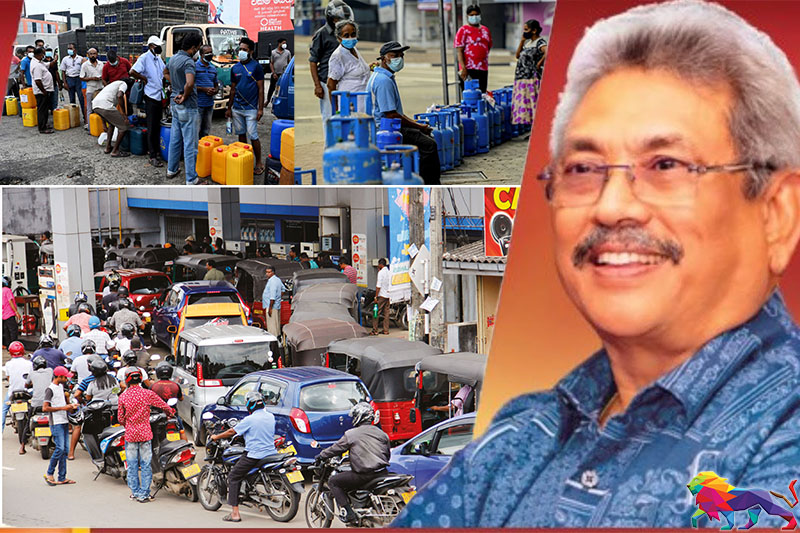
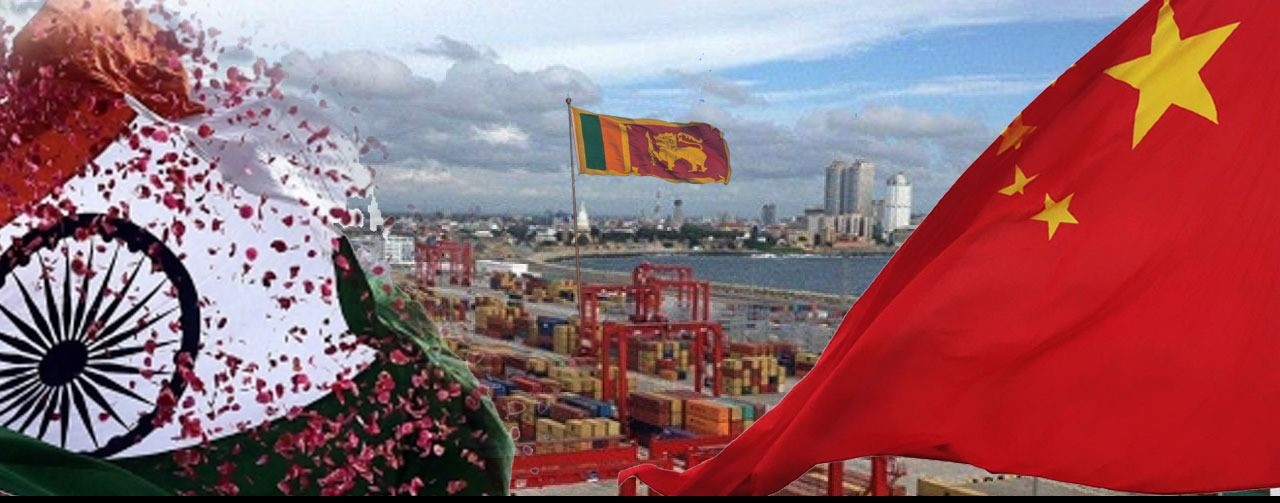
In Sri Lanka, even the Rajapaksa heartland is broken -Bloomberg

The road to Hambantota may be paved with Chinese money, but its value is up for debate — now more than ever.

Set among the soft, green rice paddies and coconut palms of Sri Lanka’s deep south, Hambantota is best known as the stronghold of the nation’s Rajapaksa clan, who have spent years using borrowed money to build monuments to themselves. The little-used Mattala Rajapaksa International Airport, the often overgrown Mahinda Rajapaksa Stadium, and a memorial to the Rajapaksa elders that was burned and destroyed by a furious crowd of protesters on May 9, are testament to that terrible waste.

A statue commemorating D.A. Rakapaksa — a former member of parliament and father of President Gotabaya Rajapaksa and the recently resigned prime minister, Mahinda — was also targeted. It now lies on the ground, covered in a tattered piece of orange tarpaulin — another symbol of citizens’ anger against the family. The clocktower in the center of their home town of Weeraketiya has been vandalized, “Gota Go Home” spray-painted on its sides. Until now, it would have been unimaginable to see this sentiment expressed in the Rajapaksa heartland. While some locals say the infrastructure projects have created jobs, others vow they will no longer stand for what they see as such obvious misuse of public funds.

Less than 10 kilometers (6.2 miles) away, local farmers and traders are preparing for the worst. The president’s decision to flick the switch to organic farming overnight by banning chemical fertilizer imports in May last year caught everyone by surprise, and irrevocably harmed those in the agriculture sector in the family bastion. The ban was lifted six months later, but by then, the damage was done — yields were decimated and the country had plunged into a food and foreign reserve crisis that ended with its default on May 19.

“He destroyed his own village with that decision,” says cinnamon farmer and local opposition politician, Anura Vidana Arichi, gesturing to the rice paddies just beyond his house. “These fields have been cultivated for decades — yields have fallen more than 50% this season and we have abandoned the farming for now. Next season only 10% will be planted, and even then we don’t know what will grow without fertilizer.”

As inflation neared 40% last week, the government urged farmers to start planting rice. No matter. This attempt to stave off a an ever deeper food crisis will likely have little effect — there is no money to import fertilizer and without it, the crops just won’t produce anything close to what’s needed to feed the island’s 22 million people. Wickremesinghe has warned of an acute food shortage by September, while the president has asked officials to start stockpiling essentials in preparation.

The South Asian nation needs as much as $4 billion to see it through its worst economic crisis since it gained independence from Britain in 1948. Negotiations with the International Monetary Fund and key bilateral creditors, China, Japan and India, are ongoing. But it is going to take a lot to unpick its tens of billions in foreign debt and the tangled web of capital market borrowings and Chinese loans for those unprofitable infrastructure projects. The Rajapaksa government’s decision in 2019 to cut taxes, especially for the wealthy and corporations, led to annual revenue losses of as much as $2.2 billion. The new regime is looking to reverse that decision in order to meet IMF bailout conditions.

In Colombo, doctors and lawyers have joined together in an unprecedented push to convince the government to undertake real reform, not just constituting committees, as new Prime Minister Ranil Wickremesinghe is famous for. Keeping the hospitals, clinics and courts running will be done at all costs. But forcing politicians to abandon the corrupt practices of the past and rebuild Sri Lanka’s public sector will take more sustained efforts, they say. Like the protesters camped in the capital, they want the president to resign.

An urgent letter sent to the nation’s diplomatic community in April that flagged alarming shortages in the medical supply chain of 273 critical items — from anti-cancer drugs to orthopedic implants and reagents used for blood tests — prompted swift action from embassies and high commissions. Some drug donations arrived and stocks of anesthesia were temporarily replenished, but most elective surgery has been canceled due to the crisis. The juggle to maintain treatment regimes for patients with chronic conditions, as well as deal with emergencies and viral illnesses, particularly as the dengue season kicks in, is intense, say doctors like general practitioner Ruviaz Haniffa and senior physician, Ananda Wijewickrama.

“We have been telling the government since last October they had to requisition these drugs, and by January we’d warned them this was becoming acute,” Haniffa says. “We cannot run a health system on donations alone.” Former Maldives President Mohamed Nasheed, who was appointed last month to coordinate relief efforts, is also leading the global appeal for urgently needed medical supplies, Wickremesinghe said June 3.

Is it any wonder people are angry at what they have lost? They have seen the politicians’ mansions and luxury cars and all those wasted billions — and now they are feeling the pain of default in every aspect of their lives. (A court case, in which the president was indicted over the misappropriation of 33 million rupees ($91,000) in public funds to build the museum to his parents, was dropped soon after his election in November 2019. There are other serious allegations against the family and their associates, including money laundering, the illegal transfer of state-owned weapons worth millions and a separate case of mismanagement and corruption at Sri Lankan Airlines. The brothers deny all corruption claims.)

Sri Lanka’s China-baked Port City set back by soft-peg collapse, unrest

Sri Lanka’s China-backed Port City Project has faced a setback due to the unstable situation in the country a top official said after two years of money printing to keep rates down triggered currency collapse and social unrest.

The Port City is a 1.4 billion US dollar sea reclamation project by unit China Communications Construction Company Limited, in partnership with the government of Sri Lanka which will sell a share of land to get revenue. Already 1.2 billion had been spent.

“We had a huge plan to aggressively market and sell Port City from this year but we have been challenged by the country situation,” Assistant Managing Director of CHEC Port City, Thulci Aluwihare told an online forum on May 28 by the Sri Lanka Economics Association.

Sri Lanka has seen progressive downgrades as money was printed to keep rates down and boost growth (stimulus or output gap targeting) under flexible inflation targeting triggering three currency crises in seven years as open market operations became increasingly aggressive.

In the latest crisis, the rupee collapsed to 366 to the US dollars from 200, in a botched float with a surrender requirement after a global pandemic which also delayed the project.

Monetary stability has still not been restored with money printing continuing and shortages seen in energy and medicines.

The Port City’s first large project, a 250,000 square metre office and retail development called the International Financial Centre are due to break ground in the third quarter of 2022, Aluwihare said.

The billion-dollar IFC’s first phase will see 500 million US dollars invested.

A Duty-free Store in association with two international operators, which is currently under construction, will be opened in the fourth quarter of 2022.

Utility connections to the periphery are to be completed by June 2023, he said.

Of the 100 hectares of land ready for development, 4.4 hectares by the Marina were sold for 200 million US dollars to predominantly local investors.

The Marina will be utilised for the development of an international luxury yacht marina and a five-star city hotel, which is also generating interest for residential development, he said.

Investors who get the land will then construct buildings, and permanent economic activities will then begin as businesses and residents occupy the buildings.

The project is slated to generate 143,400 direct jobs, and add 24 billion US dollars in economic value from reclamation and development. It is expected to generate 13 billion US dollars of gross domestic product a year when fully operational.

Posted in Uncategorized

Sri Lankan PM Ranil Wickremesinghe Speaks To NDTV: Full Transcript

New Delhi: Sri Lanka is grappling with its worst financial crisis in over seven decades with a severe foreign exchange shortage that has left it struggling to pay for essential imports including food, fuel, fertilisers and medicines. Its Prime Minister, Ranil Wickremesinghe, spoke to NDTV on the present situation in the island nation and also thanked India for its support during the time of crisis.
Here is the full transcript of the discussion:

NDTV: From sliding to an upper middle-class status down to middle class status, and today we are looking at Sri Lanka which is suffering from economic crisis, and this is a deep economic crisis that we are talking about. We see people out lined up in queues, you know, outside the fuels station. People, you know, they don’t have food. So, to talk about these challenges, we see Prime Minister Ranil Wickremesinghe is joining us here, exclusively for the first time on Indian national television, here on NDTV, to talk to us about what it has been for the last two weeks. He’s taken over on May 12th. Thank you Sir for joining us here on NDTV.

Ranil Wickremesinghe: Thank you for calling me.

NDTV: Thank you. My first question to you is, why did you accept when you were invited by Mr Gotobaya Rajapaksa to take over as the Prime Minister. Did you already see it coming in terms of the economic crisis?

Ranil Wickremesinghe: I accepted because there is a crisis on and there was no one else who was willing to be Prime Minister. If I did not take this challenge, our country would have been in a much worse situation. I felt that if I come in and take on the challenge, I can at least slow down the economic decline, stabilise it, and then we can think of ways of turning it around. People are without food, enterprises are closing down, and there was a lot of political instability. There was a campaign that the President should leave, being led by a lot of young people who were camping out on Galle Face. But by the time I came in, that issue had been resolved to a certain extent, because the Sri Lankan Bar Association proposed that we bring in, we reintroduce the 19th Amendment, we strengthen Parliament, which was taken away in 2020 after Parliamentary elections and thereafter go in for a complete abolition of the Executive Presidency. By then the President had also announced that he was staying on in office, but he was willing to bring back the 19th Amendment and go for a complete abolition of the Executive Presidency. In that light, I went in and I thought my job now is, if I wanted, I am certainly willing to stabilise the economy. So, I took the challenge.

NDTV: What’s changed after you took over as Prime Minister? Because I believe, on previous occasions, you have never had to deal with a situation such as this.

Ranil Wickremesinghe: No, I don’t think they have precedent. My party has only one member, that is me. So therefore, we are the most united party in Parliament.

NDTV: Unfortunately, we see that, you know, it’s just a single seat. You don’t have the people’s mandate, but…

Ranil Wickremesinghe: In a crisis, you can’t look at a mandate, a crisis calls for a person who is willing to take it on, and people think that person, he or she, is capable. So, I took it on, Cabinet has been formed, there have been representatives from different political parties and groups, and we are tackling issues. I must say I have been able to speak with the President, and we have agreed on a programme. I am going ahead and implementing it. The Ministers are backing me. The Special Minister of Agriculture, the Minister of Health, the Minister of Energy, we are working very, very closely on stabilising the situation here. How do you find foreign exchange? Our foreign reserves are zero. Some days have nothing, other days we have thirty-forty million dollars, it is difficult to imagine. Seven and a half billion dollars in reserve when I handed the government over. But we have been helped really by the Indian government. The help that you all have given us, with the lines of credit, the swap, there have been help from some other countries, too, in different grades, the line of relief. We can manage at the moment if this keeps moving, but we have to come to an agreement with IMF and I am just focusing on that agreement.

NDTV: Right. You were talking about how there were quite a lot of Ministers who were backing you. Do you really have a majority at the moment? Because we see the chorus that is growing hereafter here in Sri Lanka, because if we are talking about the opinion polls, at least about 89-90% of the people are demanding that they want Gotobaya Rajapaksa to go home, because very recently what has happened at even Gotagogama, you know. We see a lot of youth protesting for over 50 days. They say there is nothing going to stop them, so are you the people’s Prime Minister, or are you the Prime Minister in terms of Gotobaya Rajapaksa?

Ranil Wickremesinghe: I am the crisis Prime Minister. There is a political crisis and an economic crisis. When I say the Ministers are backing me, that is to resolve these issues. I am not looking in terms of them coming and backing my party. Certainly, as Prime Minister, they have been helping me. I am grateful to them. Opposition also hasn’t been too hard. There are two issues: one is the whole issue of the economy, how people are going to live. It’s very, very difficult. You can’t keep that aside while dealing with a political issue also. So, my focus has been actually on the economic issues. As far as the political issues are concerned, the party must decide what is going to happen, but I think that is best done when the economic situation comes back to normal, at least we stabilise it. In the meantime, there can be discussions on what can take place. Already, when I came in, they already; the agreement I mentioned earlier. But I have been involved in the political issues too. We met yesterday with the Leader of parties in Parliament and were able to come to an agreement in principle on the new 21st Amendment, which will bring back the 19th Amendment. I myself proposed some changes in the Parliamentary system, bringing in the oversight committees, increasing the powers of Parliament over public finance, and even a National Council, which is really a committee of the political party leaders in Parliament. This can look at the broad policy issues, and we want the young people, youth protestors and all, to join these committees. I hope this will help to reduce the political tension.

NDTV: Have you had that discussion with the youth that you’re talking about?

Ranil Wickremesinghe: I have put it out. I want the proposers to be, I want to get the former Speaker, Mr Jayasuriya, to put flesh into the details, and then maybe they can speak with them if they don’t want to speak with me. You can have a group of people. So young people have, the young people and the people out in the streets have really made a political revolution. I won’t say no to that.

NDTV: So, you’re willing to speak, but I believe the comment was that we hear from these protestors, they just want the government to go. Do you really feel that? Because I want to try and understand the ground situation. You, as the Prime Minister, have taken over. It’s been over two to three weeks. Have you really, after you took over this post, have you really gone on ground to check the reality of the people, because I constantly see people, some of them sitting on the streets, they are with their plates, at least they get food at Gotagogama. You have long queues; I myself have stood in those queues, because I am here in Sri Lanka. So, have you personally gone through these, where your normal, common man is going through?

Ranil Wickremesinghe: I know what they are going through, and there have been a lot of people who have said, we will help you to get this resolved economically. I think that’s a positive response. The country has wanted some action to address the economic issues that they were facing. You can understand, you’re standing, some people are standing for four-five hours to get diesel at one time. There’s a queue in front of the Prime Minister’s office.

NDTV: How long will that continue, do you think?

Ranil Wickremesinghe: I think it has eased off now. The issue is on diesel, which should come in, and on gas, which affects really the urban areas, not the rural areas. We are tackling the issue of gas, too.

NDTV: So why is there a difference when you say that, you know, not the urban areas, but the rural areas.

Ranil Wickremesinghe: No, for gas, it’s urban areas. For diesel and petrol, it’s the whole country.

NDTV: Okay. So, I want to understand, do you think that this revolt by the Sri Lankan citizens, basically do you believe this is just a protest, do you believe this is going to wane off in the next couple of days? How do you see this coming?

Ranil Wickremesinghe: Well, the protest will go on, because how long, I suppose the people at Galle Face decide how long they are going to carry it out after the 21st Amendment, whether they are going to take the protest elsewhere, or they are going to stay there, that’s their decision. As far as government is concerned, we are not going to interfere. If they want to stay, certainly they can stay there and carry out their protest, but I feel the people also realise now that we are going to face a shortage of food. It’s really two issues which are combined. One is the lack of fertiliser, which has led to the rice crop being reduced by about one-third.

NDTV: Yes, Sri Lanka was always self-sufficient.

Ranil Wickremesinghe: That’s right, and other crops. So how do we get over that? We need fertiliser. If we have fertiliser, then from February onwards, we can go back to self-sufficiency, so the second issue is that it is coming at a stage when there is, a time when there is going to be a global shortage of food. Countries are not exporting food. So, we will find some about October till about February. It’s really going to be a difficult time for Sri Lanka. Let’s hope that the global food shortage really won’t become a crisis of large magnitude.

NDTV: Can you explain how worse can that get? When you say Sri Lanka, which has always self-sufficient in terms of rice production, but then with the fertilisers back, how worse can it get?

Ranil Wickremesinghe: One is, remember Russia and Ukraine are large suppliers of wheat. Russia in number one, Ukraine in number five. They are into corn, they are, I think, into sunflower seeds, so there are so many areas. So that means when the wheat production is reduced, the prices go up. That affects the prices of rice, too. Same thing in corn. And in corn, it means it also affects animal feed. Secondly, the shortage of fertiliser is also impacting other places. Brazil, for instance, their sugar, their wheat, all is getting affected. Even in US. So, there is a shortage, there is a shortage created by Russia. There is a shortage in the countries that do create food, and there’s going to be a shortage of meats because the animals also will not have food, and it’s a question of how high will the prices go up, and if the countries are storing food. So that is also sending prices up.

NDTV: Okay, so we are going to see a huge crisis situation in Sri Lanka. But people can go without food?

Ranil Wickremesinghe: They need food. For instance, a good example is Egypt. They’re buying food from Russia and Ukraine, now they’re buying wheat from India. So, like that, again, Africa needs food. So, it’s going to be a food crisis. Sri Lanka is going to be one of the countries affected. I mean people expect Africa, I mean, yes African countries will be affected, but from south Asia, and the Asian region, Sri Lanka will be the only country.

NDTV: Right. I would like to come to the question of bankruptcy. Bankrupt Sri Lanka can’t really tap 1.5 billion credit line from India, as China’s concern, in terms of the IMF, may force delays. Now how exactly are you planning to, you know, have a negotiation. Are you going to bring this up with China as well?

Ranil Wickremesinghe: No, we are bringing it up with China. When the agreement was given to us, the rule is that you cannot utilise it unless you have three months of reserves. So, at the time that we signed it, we didn’t have three months of reserves. So, the question is, from our end, why did we sign it? Why didn’t we negotiate further with China and ask them to do away with this? And if we couldn’t, we should not have signed this, instead of which we signed. This 1.5 billion was showing as part of our reserves, and all of a sudden, a country which had zero reserves was showing about 2 billion in reserves. Of that 2 billion, I think 1.9 billion could not be utilised. So, whether it was just for the purpose of adding on to reserves, I don’t, it’s something that the Parliament must find out, why the Central Bank entered into this agreement.

NDTV: Now with you as the Prime Minister, will you find out?

Ranil Wickremesinghe: No, the Parliament will have to find out. I would recommend that the Parliament finds out. In the meantime, we will speak to the Chinese government to see the possibilities of amending the agreement.

NDTV: So, is Sri Lanka counting on more help from India till the cheque arrives from the IMF?

Ranil Wickremesinghe: We are counting for help from India. The major country that will be helping us. There are the others, but India has done most of the work for us.

NDTV: So, I really would like to know, drawing, basically, assistance from both the countries, this is to do with India and China here. So, there’s a balancing act being done by Sri Lanka here, given the geographical proximity, right, and the advantage. So, do you consider India to be a trusted ally, as opposed to China? Because we have seen how China in the last one decade or so, they have gone all out to give you all funding, but you all are in deep economic crisis. Where is China?

Ranil Wickremesinghe: China is a very friendly country to Sri Lanka. What is India? India is different. You all are the other side of the coin, so are we. We have far more in common with south India than north India. Buddhism came from here. So, we have to treat each other like in that way. It’s not like having friendships with Japan and China, we are very friendly countries. You have to realise, we are the other side of the coin. You have Hinduism, we have Buddhism. We took the Mauryan sense of kingship, you all went with others. But what is it? As countries we have interests, and we must respect each other for that.

NDTV: You just said interest. What’s your interest, in terms of China?

Ranil Wickremesinghe: In terms of China, China has also been friends with us. History with China also goes back thousands of years. Once you send Buddhism to China, we had to follow and go there, so India started all this. Amartya Sen’s book ‘The Argumentative Indian’ has a very good explanation of it, I would recommend that you read it. But with India, we are already in one part of the region. I am more familiar, I can easily fit into Chennai or Kerala without a problem, while similarly people in the south can fit in here. China is a friend, Japan is a friend, but when it comes here, India and Sri Lanka have interests. We have common interests, because we were under the British. We had the British system of governance. We both believe that the Indian Ocean should be free of big power rivalry. But we have had a long relationship with China. We have had a long relationship with Japan. And China is now carrying out the Belt and Road Initiative, which, the Belt and Road Initiative, from our point of view has no military significance, it has an economic one. So, you can look at the economic side and decide: did we take, did the Chinese help us or not?

At the same time, we understand the issues between India and China especially on the Himalayas. From 1962, Sri Lanka knows that issue. But we work with each other, we work with each other very closely, issues of terrorism, and it is the agreement after 1987, we will not allow our soil to be used for anything that is harmful to India’s national security. Similarly, India will also reciprocate. So, we have been going on, and this relationship goes on despite what the governments have to say. The people go in, the people come back. That’s different.

NDTV: Okay, so do you; there are a lot of allegations, or even for that matter, it’s a fact of the matter, you have several Ministers, you know, Parliamentarians, and, you know, activists, and talking about economists as well, where they say one of the reasons why Sri Lanka is today in this state is also because of China. Do you agree with that?

Ranil Wickremesinghe: There is the Chinese debt. But China and Japan are the two large distributor nations, as far as we are concerned. The issue on China is, whether the Chinese loans were used on economically viable projects? Well, the issue there is the projects were decided by Sri Lanka. Hambantota Harbour and Mattala Airport were pushed by Sri Lanka. Chinese came in and gave the money when Sri Lanka wanted it, so these really are; did we make the correct assessment?

NDTV: So, yes, you’re putting the blame on Sri Lanka itself for choosing such, you know, the wrong projects.

Ranil Wickremesinghe: Yes, yes, and China went along and gave the money, but we are the ones, the big issues we have on China, but otherwise, the Belt and Road will be a way of integrating into the Asian system.

NDTV: It’s not done right, is what you’re saying.

Ranil Wickremesinghe: No, selecting the projects. But the biggest problem is not the loans from creditor nations, it is the loans we have taken on the international market, the ISB, the International Sovereign Bonds, which really constitute nearly 49 to 50%, because the loans we have gotten from China and Japan were on projects. They were project loans. But we took ISB and then we used it for so many other purposes. Issue is we shouldn’t have taken so much ISB.

NDTV: So, Sri Lanka made a mistake.

Ranil Wickremesinghe: Well, I think we should have controlled it and put more of our money into developing the sectors of our economy. After the war was over, there was a lot of money available for the north and the east infrastructure, and people went ahead with it. Then we decided that we will go ahead with a construction economy, so the money was had to develop the infrastructure in Sri Lanka. Okay, there was an extension of the road from Mantota to Hambantota. I mean we had even recommended, earlier, when I was in government, but you took on two major, there was the Katunayake Highway, that’s alright, but we took on some of these big projects which were really not economically viable. Added to that, that was only adding on to the burden we had with the ISBs. Lot of the other work was being financed by the ISBs, and we were not really, when our budget, and certainly the balance of trade was not in our favour. And we’re taking ISBs when the balance of trade was against us. At least, the loans from friendly nations had a gestation period, but this is what really brought the economy down.

NDTV: The choice of projects?

Ranil Wickremesinghe: No, the choice of ISB lending. The choice of projects added on to it, but as far Hambantota Harbour was concerned, we were able to get a billion dollars back.

NDTV: So, in terms of, when you are talking about the kind of projects that you choose, Sri Lanka has a very strange fiscal economy. The minute that the country faces trouble, when you know there is trouble coming, you all immediately either sell the assets, keep government assets, or privatise. For example, the recent Sri Lankan airlines. Why is that?

Ranil Wickremesinghe: Why did you sell Air India? Same reason. Okay. You were making so much losses, you just couldn’t turn it around. We had the same issue, and our economy is crumbling so we couldn’t support it anymore. It was the same issues that you all have in India, we have here.

NDTV: So, do you think privatisation is the right strategy?

Ranil Wickremesinghe: What else can we do? When you follow the Indian government, what’s your question?

NDTV: But how far will you take this?

Ranil Wickremesinghe: The Committee on Public Enterprises has said that some, we will have to shed some of the state enterprises. This has happened everywhere. India, China. There may be, we’ll ask what is the position on this.

NDTV: So, there are more in the offing?

Ranil Wickremesinghe: There may be, I can’t say there is. But certainly, Sri Lanka is what we have.

NDTV: Do you think there will be accountability when that is done?

Ranil Wickremesinghe: There may be. We don’t have much of an argument on this in Sri Lanka. It’s not a big issue in Sri Lanka.

NDTV: Right. So, are any Indian business in touch with Sri Lanka at the moment, to take part in the building of the Sri Lankan economy right now?

Ranil Wickremesinghe: Some of the companies have been there, and they have been getting involved in. There will be others that come, we won’t actually woo them once we stabilise the situation.

NDTV: Okay, so it is still in the offing, you mean?

Ranil Wickremesinghe: Yes, there are many that are looking at it. I don’t think they come immediately, but by next year I will be impressed. Already I think Adani’s are there in west terminal. And they are doing some projects in the north on renewable energy.

NDTV: Okay, so I would like to really ask, you did talk about how there were certain, how, of course, Sri Lanka did make mistakes in terms of short-term projects that would produce what’s required at that point of time. We are here and talking about how several people are echoing where they wanted Rajapaksas to go home, and eventually it was just to Gotobaya Rajapaksa. Will there be any corruption charges filed against Mr Gotoboya Rajapaksa or other family members for, you know, leading Sri Lanka to this state?

Ranil Wickremesinghe: If they had violated the law, then certainly. Not only them, but anyone, all of us. That is a matter for the investigative agency.

NDTV: So, you hold all of yourselves responsible?

Ranil Wickremesinghe: Not for the mess, but I’m saying that if any charges against us having violated the law, then the investigative agencies must go into it and decide whether to prosecute or not. You can see the courts becoming more independent and even departments, pushing cases which are sometimes embarrassing to the state, to the government.

NDTV: Do you know, is there a time frame, because we see protests still happening, as we speak?

Ranil Wickremesinghe: Yes, that will go on, the protests. So, this is a matter for the agencies, the State to act, and there is intervention by outsiders, there is intervention by the courts, I think we look at the judgements made recently, there has been nothing to the advantage of the government.

NDTV: But personally, how long would you want those youth to be there on the streets, to protest?

Ranil Wickremesinghe: No, I’d like them to get involved in the system.

NDTV: When you say involved in the system, how?

Ranil Wickremesinghe: Come in, take part in the committees we’ve set, be able to have a dialogue with the government and the people, they’ve to adjust in the next stage.

NDTV: Is that going to happen very soon?

Ranil Wickremesinghe: For them, if they’re willing to, it’ll happen soon.

NDTV: So, it’s an open dialogue?

Ranil Wickremesinghe: Open dialogue, not only that, how we appeal to the system, are they going to stay out or are they going to come in? That’s the main issue that all the youth have to decide

NDTV: Can I take that one question, that few of them who I spoke to when I was at Gotagogama, I asked a couple of them and I asked them that are you willing to take up the dialogue with Mr Ranil Wickremsinghe? They were all of the opinion that they want the government. What do you make of it? Because they say that they don’t really want to have a dialogue, they want the government to go, they don’t really want to see a change especially off course you have been open.

Ranil Wickremesinghe: Okay, they can say their views but my question is that if the government goes, we are not in a position to hold an election. The general public don’t want elections at this moment. They want their issues to be resolved. If you could have elections, yes, I won’t be here, there would have been elections without even campaigning. But I came in, in a situation where we couldn’t hold in. And most of us are of the view that if the government goes, what do you do? He offered to the Leader of the Opposition, the Opposition didn’t want to take the Premiership. They have others who aren’t willing at the moment to take the Premiership. So, in that circumstance, normally, in a normal circumstance we would have gone for elections. You can’t have elections, what do you do?

NDTV: So, when you say you can’t have elections, then the upcoming one, will it happen or not?

Ranil Wickremesinghe: Which one?

NDTV: The upcoming one?

Ranil Wickremesinghe: The upcoming elections will be in the end of 2023 or early 2024, by that time this should get over, we should have money, when we have no money, not only dollars, we’ve no rupees. This election is not by government spending money, this election is also about the political party spending money. Where will the political party get the money, from the private businesses? When the private businesses are down, how will they give money? When there no donations, when there are no fuels, how will you campaign? When there is no electricity, how will you conduct meetings. So, this is impossible, unless you come back, you can’t have meetings, you can’t use the TV, you will have no fuel, and there’s no political donations and contribution to the party.

NDTV: So, are you saying that the elections are unlikely to happen in 2024?

Ranil Wickremesinghe: The 21st Amendment will be passed by the Parliament but it does not call for the elections.

NDTV: Okay

Ranil Wickremesinghe: The abolition of the Executive Presidency also means a referendum and we just can’t hold a referendum now. You’ve to address the issue. That’s called the responsibility. You can’t run away from it.

NDTV: Finally, you’ve also said that you want the youth to come forward and you want have a dialogue about it. My question to here is, I believe in the past 2 months or so you’ve seen the Sri Lanka uprising, several youths have been taken in custody, they’ve been protesting peacefully, what is your reaction to that, about police using their brutal force on them, do you stand by that? Why do you want your police to immediately resort to them in tear gas, water gas? Is that the way?

Ranil Wickremesinghe: Look, the decision to remand a person, young or old is made by the magistrate, not by the police. And the police in respect with that area arrested the Members of the Parliament, other Members of the Parliament have been named as suspects, they are taking down statements. There are a lot members from the local authorities who have all been arrested from one side. Similarly, they’ve asked people to come in here to give statements and go away, this issue came up to me that they’ve been taken and IGP said that he’ll look into it but I told the people that the Bar Association is working with the police, so speak to the Bar Association. So, we’ve a line of communication and then of course the lawyers must go and make their case. But anyone who’s charged will be produced front of the courts and it’s for the magistrate to decide. Lot of people have been released and then there’s the burning of 50 houses of Members of the Parliament.

NDTV: I believe that happened when the pro government protestors…

Ranil Wickremesinghe: But most of the members are not even involved. Many of them have not even attended the meeting. That’s one. Then two members. One member was killed when he was travelling by the road. And the other member, opponent of President Rajapaksha, Kumar Vergam, he was taken, he would have been killed if not for some local people who got in and rescued him. But ask him what happened, that’s the question we’ve been asking. It’s not only the people who’ve been at the Galle Face but members who’ve not been, and you can’t allow Parliamentary democracy to be treated that way and that’s the issue that we’ve…

NDTV: And…

Ranil Wickremesinghe: And I’m asking the Commonwealth Parliamentary Association to come in and give a report on all the incidents that have taken place.

NDTV: But do you think that this incident would have taken place had it not been for the pro government protestors if they would have not lodged an…

Ranil Wickremesinghe: No, what happened was on the grounds there. I was in one of the hotels nearby. I had gone for a wedding and the issue got resolved. The pro government protestors have been chased off. Their buses have been stopped.

NDTV: Some of the protestors were chased?

Ranil Wickremesinghe: Chased off.

NDTV: By the anti-government?

Ranil Wickremesinghe: Not anti-government

NDTV: Were chased?

Ranil Wickremesinghe: The protestors in Galle Face, they were chased off. There were very few protestors at that time but the people in the surrounding area, the slave island came for their defence and chased away the pro government demonstrators.

NDTV: Okay

Ranil Wickremesinghe: I know the area because I have represented it. I know a lot of people who live there and they came and chased them away.

NDTV: So, the people who were protesting at the Galle Face or the Gotagogama are responsible?

Ranil Wickremesinghe: No, I’m not saying that. You’re not allowing me to finish it.

NDTV: Okay

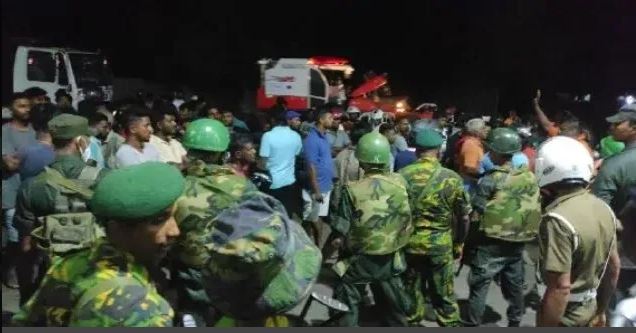
Ranil Wickremesinghe: So they came, the people in Colombo came and chased them away and as far as Colombo was concerned, about 2:30 to 3 the issue was over. By 2 it was over in the site. I was watching it and about 3 the people have been somewhere dumped in the Colombo Lake, the Beira Lake, some of the buses were burned and the police had to step in and ensure that these people are able to get out of Colombo. We didn’t want them hanging around in Colombo. I was not in the government. I spoke to the IGP. I said we might clear them out of Colombo. So that was over. The burnings took place at 11 in the night. What is the connection? The burnings took place 100 miles away, 150 miles away, that is the connection. That is the one I question. Let’s say the people in Galle Face acted in self-defence or the people in surrounding areas, like Slave area came to protect these people so that’s over, we’ve closed that chapter. That’s being investigated by the police, those who came in, those who acted in self-defence, but what has happened is outside that. Why was Mr Vergam, who was going back home in the night attacked? Everyone knows who Kumar Vergam is. Why were these Members of Parliament who had nothing to do come here? The Deputy Minister, he was returning home, why was he and his two security officers killed?

NDTV: Why…

Ranil Wickremesinghe:…and why were these homes set on fire? That what we want to know. I think you’ve to take action, anyone’s house. I’m against setting homes on fire and properties. I’ve been against that always whether it belongs to the government or the opposition party. You’ve to take action.

NDTV: So, what about those who were attacked specially, the anti- government protestors?

Ranil Wickremesinghe: Pardon?

NDTV: The anti-government protestors.

Ranil Wickremesinghe: There’s no anti-government protestors

NDTV: I’m talking about the anti-protestors who were sitting at the Gotagogama and protesting. They were a few of them. They were attacked.

Ranil Wickremesinghe: Few of them were attacked and that’s why the police is taking action against those who came. That’s all. And when you look at the clips, you see people fighting with each other. They’ve to question everyone who’s identified, whether they belong to the youth protestors or the government protestors.

NDTV: So, the identification is on?

Ranil Wickremesinghe: That’s why some of them have been called. That’s a personal law issue. Bar Association is looking after them. So, I don’t think there’s a risk of anything happening to them. But the other enquiries must also go on.

NDTV: And I just want to understand, one final question that we are ending here is, finally I believe after speaking to the people and Gotagogama, several citizens, they say they will continue the protest. What is the final word from your side for them?

Ranil Wickremesinghe: Certainly, go ahead. We’ll protect you. I’ve a delegation which can negotiate with Gotagogama if they want to, I will give the website that we’ve here. Certainly, if they want to protest, they are free to do so. We’ll give them all protection and all the facilities they want.

NDTV: Do you want them to continue?

Ranil Wickremesinghe: If they want to continue, what can I do?

NDTV: All that they’re demanding is that they want Gotabaya to go home.

Ranil Wickremesinghe: So, if they’re demanding…

NDTV: So, the protestors say that if he goes home, we will go home.

Ranil Wickremesinghe: That’s for the President and the protestors to decide.

NDTV: Right, so what’s the final word you want to give to the citizens of Sri Lanka in terms with the economic turmoil? How do you plan to lift the entire country of 22 million outside the crisis?

Ranil Wickremesinghe: We have to work together. We have to work together and then we can pull the country out. The economic crisis we have. We work together, we can resolve the political crisis.

NDTV: Do you have a time frame?

Ranil Wickremesinghe: Soon as possible.

NDTV: Thank you Mr. Ranil for joining us on NDTV.

Posted in Uncategorized

What the Crisis in Sri Lanka Means for the World -Time.Com

Many middle-income and developing countries are now suffering from a combination of internal political dysfunction and external economic shocks generated mainly by COVID-19 and the war in Ukraine. Sri Lanka provides a powerful example and a warning for countries in other regions that will face similar predicaments.

Sri Lanka is not a poor country. When adjusted for purchasing power, per capita GDP in this nation of 22 million people is higher than in South Africa, Peru, Egypt, or Indonesia. But the country now faces a political crisis powered by severe shortages of food, fuel, electricity, and medicine. The currency is collapsing, and the government can’t afford imports or to make its debt payments. At times in recent weeks, violent protests have threatened to spiral out of control.

How did we get here?

A quarter century of civil war, which ended in 2009, has created a legacy of violence at the heart of Sri Lanka’s politics. In 2019, a terrorist attack by an ISIS-inspired Islamist group on minority Christians made international headlines. On Easter Sunday, a series of bombs detonated in churches and hotels killed and injured hundreds of people. Those attacks, and the sense of insecurity they created across the island nation helped elect Gotabaya Rajapaksa, a former defense minister with a reputation for toughness, later that year.

Gota, as the president is widely known, then named his older brother, Mahinda, a former president, as prime minister. A landslide election victory in 2020 gave the Rajapaksas a two-thirds parliamentary majority, which then allowed them to rewrite Sri Lanka’s constitution to give the president extraordinary new powers.

Then hubris kicked in. Family and friends were given important posts in government. A series of economic mistakes, including populist tax cuts, deprived the government of revenue and made it much harder to borrow money abroad.

External shocks have also played a big role in Sri Lanka’s troubles. COVID-19 devastated a tourism sector still reeling from terrorism, a sector that’s critical for government revenue and job creation in the country. The pandemic also cut deeply into remittances, money sent home by Sri Lankans working abroad.

The increasingly unpopular Rajapaksas refused to accept the need for government spending cuts and tax increases to help Sri Lanka avoid even tougher economic conditions. A ban on chemical fertilizers to push farmers toward organic farming in the middle of the economic crisis made matters worse for the country’s food supply.

Then came Russia’s invasion of Ukraine and the damage it is now inflicting on global food and fuel prices. Russia and Ukraine are both leading exporters of grain, and the war has shut in much of that production. Russia and its ally Belarus, which also faces Western sanctions for allowing Russia to use his country’s territory as a launchpad for attacks on Ukraine, are leading producers of fertilizer. Higher prices for fuel are the natural result of supply worries that have pushed oil above $100 per barrel. Sri Lanka also imports more than 80 percent of its medical supplies. Donors in India and in Europe have helped, but there’s a limit to how much they are willing to do.

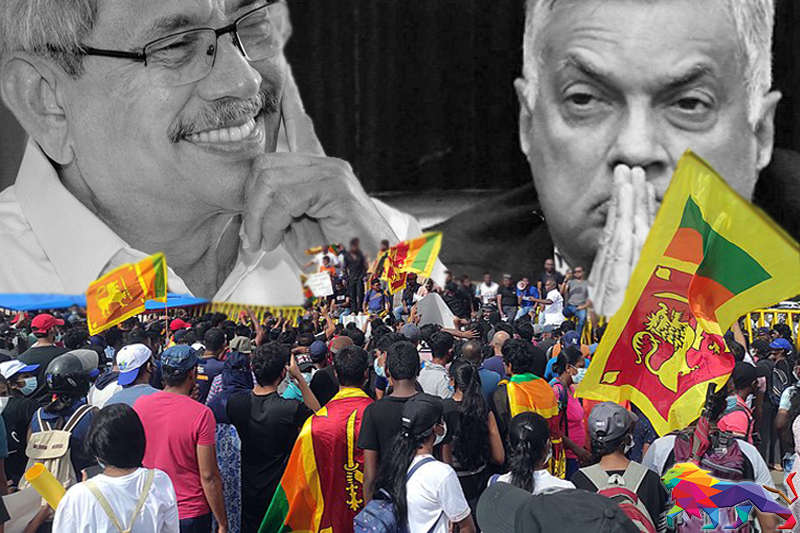
In Sri Lanka, public anger came to a head in early May. Economic pressures exacerbated infighting within the Rajapaksa family, particularly between the president and prime minister. After the government appeared to send counter-protesters to attack the mainly peaceful crowds that called for the prime minister to resign, bloodshed ensued. Enraged anti-government protesters then went on an arson spree, attacking the homes of Rajapaksa family allies, and threatening the prime minister’s own residence. The PM was forced to step down, and he needed the protection of security forces for a 4 AM evacuation of his home.

A state of emergency was declared across the county. Angry mobs have launched more attacks on politicians and their homes. Hundreds have been injured in recent weeks, and some have died. A member of parliament was killed in his car. Two more of President Rajapaksa’s siblings and a nephew have resigned their cabinet posts.

Late last month, Sri Lanka defaulted on its debt for the first time in the nation’s history.

What now?

President Rajapaksa, struggling to survive politically, has pledged to reverse some of the constitutional changes that gave him more power. He has accepted help for Sri Lanka’s economy from India and China, and he’s appealed to the IMF for a bailout. New Prime Minister Ranil Wickremesing, a political veteran, has been brutally honest in his public comments on the scale of the problems Sri Lanka faces and the need for bold action to solve them. He has said Sri Lanka will raise tax rates to earn a bailout from the International Monetary Fund. He then used a televised speech to call on protest groups to join in the process of reform. He pledged that parliamentary committees will allow lawmakers, young people and experts to work together.

For now, the protesters continue to demand President Rajapaksa’s resignation, though there don’t appear to be enough votes in parliament to impeach him, and the opposition looks to have little interest in sharing responsibility for cleaning up this mess by joining a government of national unity.

In short, a chastened Sri Lankan government will try to muddle through, hope the pandemic and Russia’s war in Ukraine end soon, and do its best to secure long-term financial health.

It’s a pattern that will be repeated in many developing countries in coming years.

Posted in Uncategorized

21st Amendment to be submitted to Cabinet for approval tomorrow

Sri Lanka’s Minister of Justice Wijedasa Rajapakshe says that the draft bill pertaining to the 21st Amendment to the Constitution is expected to be presented to the Cabinet of Ministers for approval tomorrow (06).

The Minister pointed out that the views and suggestions obtained from the party leaders will be included tomorrow in the 21st Amendment Draft Bill, which has already been submitted to the Cabinet.

Accordingly, the relevant amendment is to be discussed in the Cabinet and approved.

Minister Wijedasa Rajapakshe stated that it is expected to be presented to Parliament soon after receiving the Cabinet approval.

The 21st Amendment is expected to annul the 20th Amendment to the Constitution, which gives unfettered powers to President Gotabaya Rajapaksa after abolishing the 19th Amendment that will strengthen Parliament.

Rajapakshe said that the 21st Amendment to the Constitution, including proposals submitted by political parties and various other parties, will be submitted to the Cabinet for approval on Monday, the portal reported.

He said that the draft of the amendment will be gazetted after receiving the approval of the Cabinet.

Prime Minister Wickremesinghe last week batted for the 21st Amendment to the Constitution, saying it will curb the president’s unlimited powers while enhancing the role of Parliament in governing the debt-ridden country which is also facing an unprecedented political turmoil.

Under the 21A, the President will be held accountable to the Parliament. The Cabinet of Ministers is also accountable to Parliament. The National Council is also accountable to Parliament. Fifteen Committees and Oversight Committees are accountable to Parliament.

Posted in Uncategorized

21st Amendment: Three key issues yet to be resolved

Three key issues related to presidential powers are yet to be resolved before the final draft of the 21st Amendment is to be submitted to the cabinet for approval, a senior government official said.

President Gotabaya Rajapaksa, Prime Minister Ranil Wickremesinghe and Justice Minister Wijeyadasa Rajapakshe met last night to sort out the outstanding issues. A separate meeting between the Prime Minister, Justice Minister and the Attorney General has been scheduled for today.

The key outstanding issues are whether the President should retain the defence portfolio, the powers of the President to remove the prime minister and the prime minister’s powers on the appointment of Cabinet Ministers, the official said.

The outstanding issues were directly linked to moves to increase the Prime Minister’s and Parliament’s powers, the official said.

He said the diplomatic community and donor agencies were keen on the Government’s stability before going ahead with providing further financial and other assistance.

The officials said that, bedsides the key issues, the proposal to restrict dual citizenship holders serving as Members of Parliament also has turned out to be a contentious issue, with some SLPP members opposing the move. “However, that is a matter for the President to discuss with SLPP members and resolve,” he said.

Justice Minister Wijeyadasa Rajapakshe told the Sunday Times that at Friday’s meeting with party leaders, there was consensus that the proposed amendments should not include clauses which may require a referendum.

He said the objective of the discussions scheduled for last night was to reach middle ground between the Presidential and Parliamentary powers.

Parliamentarian Anura Priyadharshana Yapa said there was an understanding that the Presidential powers to remove the Prime Minister should be transferred to Parliament.

He said positive proposals made by the Samagi Jana Balawegaya too should be included in the draft proposals.

Posted in Uncategorized

End to 74-years of corrupt rule in Sri Lanka Demonstration and signature campaign in Fort

A demonstration and signature campaign against the Government and 74-years of corrupt rule, was staged in Fort today.

The demonstrators called for an end to 74-years of corrupt rule in Sri Lanka.

Various groups and individuals joined the demonstration shouting slogans against the Government.

Separately, a signature campaign was carried out near the Fort Railway Station against President Gotabaya Rajapaksa and Prime Minister Ranil Wickremesinghe.

The camping sought support against the Government formed by President Gotabaya Rajapaksa and Prime Minister Ranil Wickremesinghe.

The signature campaign was carried out by the Inter-University Students’s Federation (IUSF).

Russia warns Lanka: Detention of Aeroflot plane could jeopardize ties

The detention of a Russian Aeroflot flight with 191 passengers on board at the Colombo International airport on June 2 following an order from the Colombo Commercial High Court, is threatening to jeopardize Russo-Sri Lankan ties.

The Russian Foreign Office summoned the Sri Lankan Ambassador to Moscow, Janitha Abewickrema Liyanage on Friday and lodged a protest saying that the detention of the aircraft was “groundless” and that it could have a “negative impact on the traditionally friendly bilateral relations.” The Russians “urged the Sri Lankan side to settle this problem as soon as possible.”

On Friday, Aeroflot reported that the departure of its SU-289 flight from Colombo to Moscow scheduled for June 2 was at first delayed and then canceled due to the absence of a permit from Sri Lanka’s aviation authorities. Earlier, Colombo’s Commercial High Court had entertained a complaint filed by Ireland’s leasing company, Celestial Aviation Trading Limited, against Aeroflot and banned its Airbus A330 jet from leaving the country until June 16. However, a court hearing to lift the seizure of the aircraft is scheduled for June 8, 2022.

Meanwhile, displeased with the detention and backed by the Russian government, Aeroflot announced that it will be suspending commercial flights to Sri Lanka for the time being. “Aeroflot is suspending commercial flights to Colombo (Sri Lanka) for the near future due to the unreliability of the situation in terms of ensuring unhindered flights of the airline’s aircraft to Sri Lanka. Ticket sales for flights to Colombo are temporarily closed,” the company said in a statement.

“Aeroflot passengers who are in Colombo (Sri Lanka) and have tickets for return flights to Moscow SU289 dated June 2, June 4 and June 5 will be delivered to Moscow by SU289 flights departing on June 4 and June 5,” the news agency Sputnik reported.

Sputnik saw this row as being part of the Ukraine crisis and the US and Western sanctions against Russia for launching military operations against Ukraine.

“The wave of EU sanctions against Russia over its military operation in Ukraine banned sales of aircraft and their parts to Russian carriers and obligated European leasing companies to retrieve all leased planes from Russia. A number of countries have closed their airspace to Russian flights and threatened to detain the planes registered and leased abroad,” Sputnik recalled.

After Western countries sanctioned Russia for attacking Ukraine, aircraft lessors demanded the return of the leased planes but Russia retained most of them, saying that the demand violated lease agreements. Russia also started registering planes in the country itself. The aircraft in question was registered in Russia in April and Sri Lanka was duly informed.

The Russian government said in a statement that the aircraft was registered in Bermuda and had dual registration. It further said that the Airbus A330 aircraft in question had flown to Sri Lanka on 7 previous occasions. It had been detained even after the Sri Lankan authorities had given a guarantee to the Russian aviation agency last March, that they would not detain aircraft of the Russian airline.

The Irish Lessor’s Case

The Colombo-based financial daily DailyFT said that the owner of the aircraft, Celestial Aviation Trading Ltd. of Ireland, had filed action against the Aeroflot Russian Airlines seeking interim relief from the Commercial High Court of Colombo pending arbitration proceedings instituted in London.

According to the lessor, the aircraft, identified by its unique manufacturer’s serial number registered in Bermuda, was leased by its owner to Aeroflot, and the said lease was terminated in March 2022 due to Aeroflot’s failure to act in compliance with the terms of the lease agreement.

Contrary to the owner’s request to cease operations of the aircraft and handover possession, Aeroflot continued the use of the aircraft for flights between Colombo and Moscow. It has been further submitted to Court that the aircraft did not have a valid airworthiness certificate or an insurance, as per the terms of the lease.

While these disputes had already been referred to arbitration in London, the owner, Celestial Aviation, sought relief in the Commercial High Court to preserve the subject matter of the dispute (the aircraft) until the determination of the arbitration, by seeking an enjoining order against Aeroflot preventing them from operating, handling, taking off the ground the identified aircraft. A further enjoining order was sought to prevent Aeroflot from removing any parts, equipment systems and modules etc.

After hearing the submissions made by Avindra Rodrigo Counsel for the Plaintiff owner of the craft, High Court Judge Harsha Sethunge, granted both enjoining orders on 2 June, few minutes prior to the arrival of the said aircraft at the BIA. The aircraft was scheduled to leave Colombo at 12.50 p.m. on the same day on a turnaround flight. The enjoining order issued by Court was served on and conveyed to the Acting Head of Air Navigation Services as directed by Court. The Aeroflot flight SU 289 carrying around 191 passengers scheduled to leave Colombo was stopped a few minutes before its take-off.

Dr.Lasantha Hettiarachchi appearing for Aeroflot informed the Court of the inconvenience caused to the passengers of the flight and sought to vacate the enjoining orders. The Counsel submitted that additional expenses are incurred for each delayed day as a result of having to provide for 191 passengers, however, admitted that the craft is owned by the Plaintiff.

Avindra Rodrigo with Aruna de Silva instructed by F J & G de Saram, appearing for the owner of the aircraft, impressed upon the Court that the dispute between the parties stems purely from a commercial transaction which is to be resolved through arbitration and reliefs are sought in Commercial High Court to preserve the aircraft which is the subject matter of the arbitration.

The Counsel further emphasized that the aircraft is owned by his client and that Aeroflot is operating it without any authorization. The Counsel drew the attention of the Court to alternative flights scheduled between Colombo and Moscow which could be arranged for the passengers of the cancelled flight.

The High Court Judge directed the Defendants to file their objections and any applications formally so that the proper procedure of the Court can be followed in taking this matter forward and decided to hear the matter on June 8, taking into cognizance its urgency.

Moragoda calls on Tamil Nadu Chief Minister Stalin

Sri Lanka’s High Commissioner to India MilindaMoragoda, paid a courtesy call on the Chief Minister of Tamil Nadu, Thiru M.K. Stalin on Saturday (04) morning at the Chief Minister’s office in Chennai. The Chief Secretary of the Tamil Nadu Government Thiru Irai Anbuand several other key State officials were present at the meeting. This was the first time that a Sri Lankan High Commissioner in New Delhi met with the Chief Minister of the State of Tamil Nadu after 2011.

This was made known via a media release by the Indian High Commission in Sri Lanka today (04).

The courtesy call on the Chief Minister of Tamil Nadu by the High Commissioner came as part of the latter’s plan to expand Sri Lanka’s footprint at state level to promote greater interactions between Sri Lanka and the states of the Indian Union as stipulated in his policy road map the “Integrated Country Strategy for Sri Lanka Diplomatic Missions in India”.

At the outset, the Chief Minister extended a warm welcome to the High Commissioner of Sri Lanka. During the very cordial discussion that followed, the High Commissioner thanked the Chief Minister and the people of Tamil Nadu for the humanitarian assistance worth of LKR two billion that they recently extended to Sri Lanka to help it manage the current economic situation.

In response, Chief Minister Stalin observed that he was concerned with the situation in Sri Lanka and had made arrangements to immediately dispatch the first shipment of essential commodities. He added that a second shipment is also in line to be dispatched and that a few more shipments are expected.

The statement further noted that Moragoda and Stalin discussed an array of areas pertaining to the relationship between Sri Lanka and the State of Tamil Nadu, including the fishermen’s issue. The two dignitaries reviewed the ancient and strong ethnic, cultural and religious affinities between Tamil Nadu and Sri Lanka and discussed the ways to further strengthen them. In this regard, Chief Minister Stalin requested that Sri Lanka may wish to install a statue of the celebrated Tamil poet and philosopher Thiruvalluvar in a suitable premise in Sri Lanka, such as a university. The High Commissioner welcomed the suggestion made by the Chief Minister and undertook to support and facilitate this initiative.

With a view to having better coordination on all aspects of the relationship between Sri Lanka and the State of Tamil Nadu, High Commissioner Moragoda requested the Chief Minister to designate a focal point at state level. High Commissioner Moragoda invited Chief Minister Stalin to visit Sri Lanka as well.

High Commissioner Moragoda also presented a copy of the Tamil translation of the book containing his parliamentary speeches to the Chief Minister. The High Commissioner recalled how he had presented a copy of the same book to the father of Chief Minister Stalin, the late Thiru M. Karunanidhi, former Chief Minister of Tamil Nadu, in 2006.

High Commissioner Moragoda was accompanied by the Deputy High Commissioner of Sri Lanka to Southern India Dr. D. Venkateshwaran, Deputy High Commissioner of Sri Lanka in New Delhi NilukaKadurugamuwa and Second Secretary of the Deputy High Commission of Sri Lanka in Chennai SupunDeshaprema to this meeting.

Posted in Uncategorized