Parliament debate on Supplementary Estimates set for June 8

The debate on the Supplementary Estimate of Rs. 695 billion which is to be presented on the 7th of June by Prime Minister Ranil Wickremesinghe will be taken up for debate on the 8th until 5.30 pm, the Secretary General of Parliament Dhammika Dasanayake said.

The Secretary General also said that the Resolutions under Section 8 of the Appropriation Act No. 7 of 2020 are to be passed following the debate on the same day.

The decisions were taken at the Committee on Parliamentary Business chaired by Speaker of Parliament Mahinda Yapa Abeywardana, this morning (02).

Furthermore, Regulations as mentioned in the Gazette Notification No. 2274/42 dated 09.04.2022 imposed under the Import and Export (Control) Act and the Regulation under the Local Treasury Bills Ordinance for the purpose of increasing the Credit limit by Rs. One Trillion are to be passed without a debate on the 7th.

Prime Minister Ranil Wickremesinghe will then make a special statement on the current situation in the country and the adjournment debate on the said statement will be held until 5.30 pm.

The Sri Lanka Electricity (Amendment) Bill (Second Reading) and Regulations under the Petroleum Resources Act are scheduled to be taken up for debate until 4.30 pm and passed in Parliament. Thereafter, time has been allotted for Questions at the Adjournment Time from 4.30 pm to 4.50 pm followed by the Motion at the Adjournment Time by the Government from 4.50 pm to 5.30 pm.

Furthermore, it has been decided set aside time from 10.00 am to 5.30 pm on June 10th for the Vote of Condolences given the murder of Member of Parliament Amarakeerthi Athukorala who was killed during the recent clashes.

Parliament meets daily at 10.00 am and except for June 10th, time has been allotted from 10.00 am to 11.00 am every day to raise Questions for Oral Answers.

Amendments brought in by the Leader of the House Dinesh Gunawardena to increase the strength of the Committees on Public Enterprises (COPE), the Committee on Public Accounts (COPA) and the Committee on Public Petitions in Parliament pertaining to its review mechanism was considered.

Accordingly, it has been decided to convene a special meeting of the Committee on Parliamentary Business on the 7th at 2.30 pm to discuss this matter further.

The Committee also drew attention to the letter sent by the Secretary to the Ministry of Finance proposing the importance of maintaining the business of Parliament with a minimum of paper use in relation to the creation of an eco-friendly e-government service while minimizing costs.

The Committee also focused on the possibility of submitting soft copies of all reports and documents tabled in Parliament to a special web portal on the Parliamentary website for the use of Members of Parliament.

Accordingly, the Speaker has given the necessary instructions by the unanimous decision of the Members of the Committee to take the necessary action expeditiously in the future.

Furthermore, the Committee also decided to set aside Monday, July 04th as a special parliamentary day to take up 50 Questions for Oral Answers which could not be taken up in Parliament due to various reasons.

Sri Lanka seeking USD 3 Bn under IMF Extended Fund Facility: report

Sri Lanka is in talks with the International Monetary Fund (IMF) to borrow at least USD 3 billion via the lender’s extended fund facility (EFF), sources familiar with the matter told Reuters.

The island state’s government expects another round of technical talks with the IMF in early June and hopes to reach to a staff-level agreement as soon as the end of this month, two of the sources said, speaking on condition of anonymity.

A spokesperson for the IMF didn’t immediately reply to a request for comment. Spokespeople for Sri Lanka’s finance ministry and central bank didn’t respond to a request for comment.

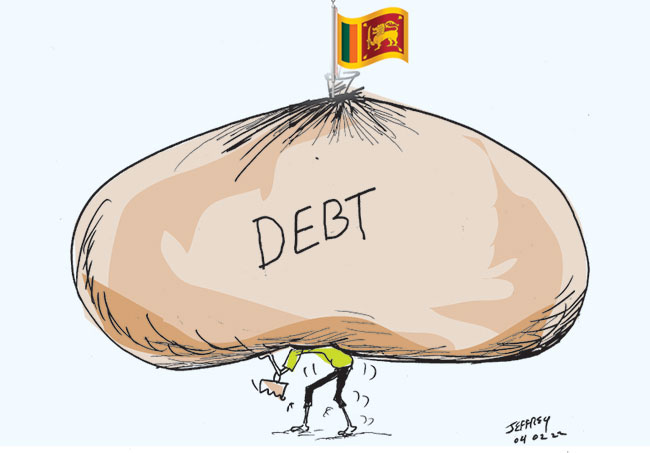
Sri Lanka has requested a rescue plan to overcome its worst economic crisis since independence in 1948. It defaulted on some overseas debt earlier this year and is struggling to pay for imports of basics such as fuel and medicine.

An EFF programme, which would be the 17th IMF plan for the nation, requires countries to make structural economic reforms “to correct deep-rooted weaknesses,” according to the IMF’s website. These programmes normally last three years with a grace period of 4-1/2 years to start paying back the loan, once the plan is approved.

A USD 3 billion deal would represent almost four times the country’s quota with the IMF.

The IMF said last week it was in talks with Sri Lanka for a “comprehensive” reform package, but didn’t specify what type of programme was being negotiated.

Prime Minister Ranil Wickremesinghe, who took office in May after mass protests forced the resignation of his predecessor, Mahinda Rajapaksa, plans to present an interim budget within weeks.

The government announced on Tuesday a taxation overhaul to boost revenue, hiking corporate tax and raising the value added tax (VAT) rate to 12% from 8% with immediate effect.

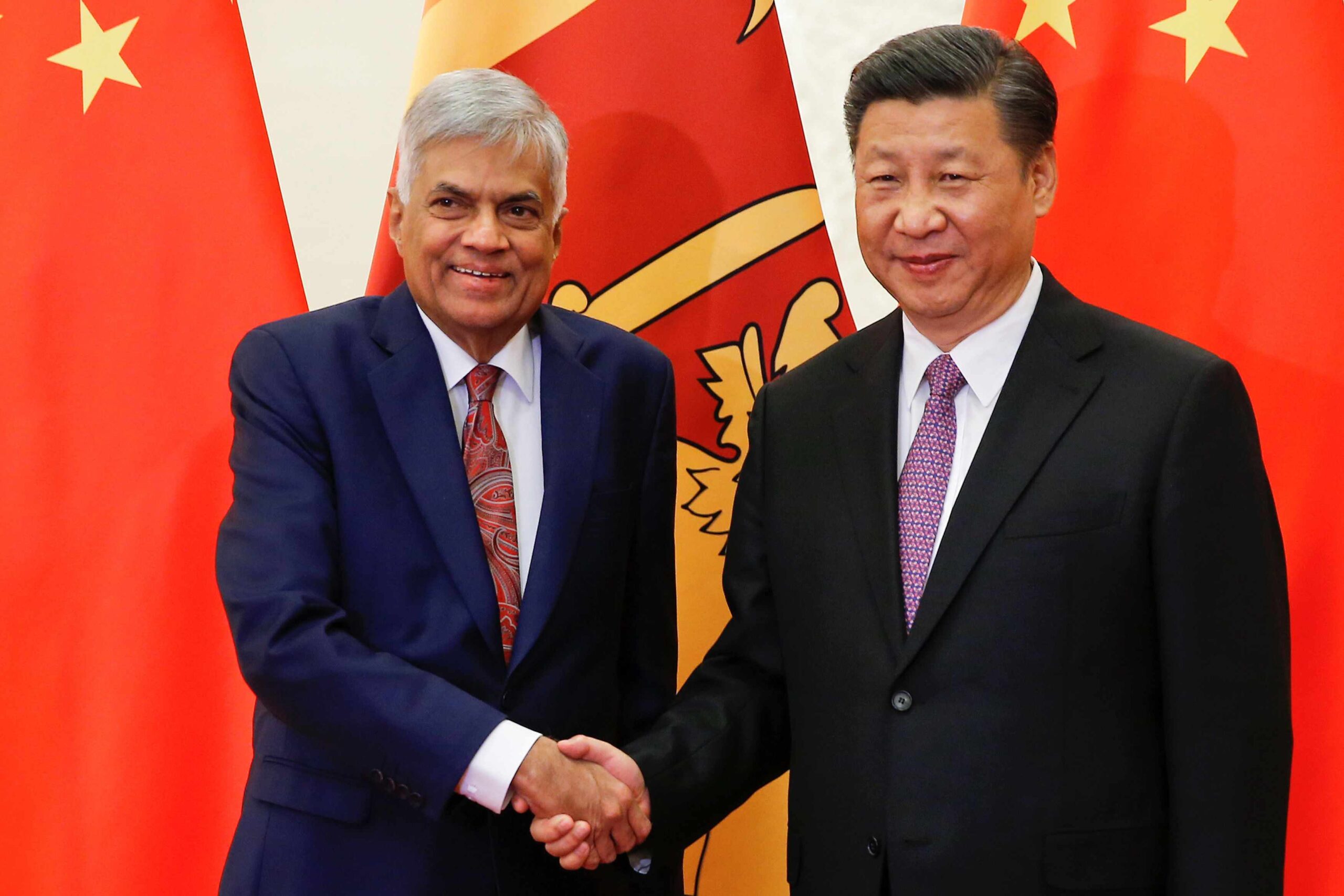
Sri Lanka recently appointed financial and legal advisers to kick off talks with bondholders and bilateral lenders, such as China and Japan.

Source: Reuters

Posted in Uncategorized

Sri Lanka can’t use $1.5 billion China swap due to IMF concerns: Report

Bankrupt Sri Lanka can’t tap a $1.5 billion credit line from China as the Chinese are concerned the International Monetary Fund may force delays in repayment, BNN Bloomberg reports.

“There is a condition in relation to the months of import cover that we need to have in order to be able to draw on that money,” Indrajit Coomaraswamy, who is advising the Sri Lankan government, said at an event organized by the central bank Thursday. It’s difficult for the Chinese to waive off the condition “because this is a three-year swap, it might be termed a loan and there may be pressure from IMF and others to include it in the stock of debt that we reschedule and therefore clearly that would be a disadvantage to the Chinese,” he said.

India — creditor and neighbor to Sri Lanka and China’s rival — wants the IMF to treat China on par with other creditors. Meanwhile, India has used a recent summit of the Quad to ask Japan to also aid Sri Lanka. The Quad is an informal grouping comprising India, Japan, US, and Australia, whose unstated aim is to contain China’s power.

China Must Be Treated as Equal Sri Lanka Creditor, India Says

“There is some indication that the Japanese government may also now be more forthcoming in providing bridge financing,” Coomaraswamy said. Prime Minister Ranil Wickremesinghe previously told Bloomberg that the percentage of loans from Japan and China are the same, but the Chinese interest rates are higher.

The bridge loans are essential for the island nation to pay for food and fuel, with severe shortages stoking inflation to 40%. Sri Lanka has defaulted on foreign payments and is seeking both rapid aid and a longer extended fund facility from the IMF, but must first show it has taken steps to reduce its existing debt burden.

Coomaraswamy said Sri Lanka expects a staff level agreement with the IMF as early as this month, which won’t mean that cash will be disbursed, but could increase confidence in the nation’s financial assets.

The first task however is to agree on a base line for the Debt Sustainability Analysis and those negotiations are underway, Coomaraswamy said. Once the base line is established, Sri Lanka would need to work out what kind of offer it makes to the creditors.

“So it’s going to take some months, and given the fact that our reserves have gone toward almost zero, we need to find some ways of mobilizing,” Coomaraswamy said.

Source: BNN Bloomberg

JVP Leader holds talks with the Chinese Ambassador to SL

Leader of the JVP Anura Kumara Dissanayake and the Chinese Ambassador to Sri Lanka Qi Zhenhong have held discussions at the JVP headquarters today.

The JVP said the economic crisis and present political situation were discussed while the talks also focused on enhancing cooperation between parties.

Propaganda Secretary of the JVP Parliamentarian Vijitha Herath and two officials of the political unit of the Chinese Embassy to Sri Lanka were present during the talks.

Posted in Uncategorized

Sri Lanka president extends tenure of controversial One Country One Law task force

Sri Lanka President Gotabaya Rajapaksa on Wednesday (01) once again extended the tenure of the ‘One Country One Law’ presidential task force headed by a controversial Buddhist monk, days after police informed a magistrate court that the Attorney General wanted charges filed against the monk.

The tenure of the task force was extended by three weeks as of May 27 to “complete the task assigned” to it, according to a gazette issued on Wednesday.

The task force is headed by General Secretary of the Bodu Bala Sena (BBS) Galagodaaththe Gnanasara Thero, who according to media reports is currently in Saudi Arabia to discuss religious extremism. Sri Lanka’s privately owned Daily Mirror reported that the monk was in Saudia Arabia upon official invitation by the Saudi government.

Meanwhile, the Colombo Crime Division (CCD) of the police informed Colombo Fort Chief Magistrate Thilina Gamage on Tuesday (31) that the Attorney General had instructed the CCD to file charges against Gnanasara Thero for using language deemed hurtful to religious sentiments.

The charges are to be filed under Sections 291A of the Penal Code, which reads: “Whoever, with the deliberate intention of wounding the religious feelings of any person, utters any word or makes any sound in the hearing of that person, or makes any gesture in the sight of that person, or places any object in the sight of that person, shall be punished.”

President Rajapaksa gazetted the One Country One Law task force in late October 2021 to come up with proposals for “one law” for all Sri Lankans abolishing all other personal laws including the Muslim marriage law and some other regional laws that go back centuries. The Muslim Marriage and Divorce Act (MMDA) in particular has been the focus of much debate, with many women’s rights activists within the Muslim community calling for reform and an end to child marriage.

The BBS chief’s appointment as the head of the task force was widely panned by some opposition lawmakers, civil society groups and others including those within the government’s own ranks.

The firebrand monk has been accused of promoting Islamophobia in Sri Lanka.

In 2012, Gnanasara Thero was allegedly at the forefront of an anti-Muslim campaign which called on the majority Sinhalese to boycott Muslim-owned businesses.

The United States in 2014 cancelled a visa issued to the monk while social media platform Facebook blocked his account after the BBS’s alleged involvement in violence against Sri Lanka’s minority Muslims in the Western coastal town of Aluthgama.

He was arrested for contempt of court in 2018 during the previous administration but was later pardoned by President Maithripala Sirisnena.

Critics have said Gnanasara Thero has been used to create a rift between the Sinhala majority and Muslim minority for political reasons. But the monk has denied the allegation and has said Sri Lanka’s Sinhala majority has issues that have been ignored by politicians, issues that he had tried to address.

Since the 2019 Easter bombings, the monk has maintained that his cause is not against ordinary Muslims who have coexisted with the Sinhalese for centuries but with extremist, Wahabist elements in Muslim society.

Speaking to reporters in November last year, Gnanasara Thero said recommendations by the BBS, widely seen as an ultranationalist outfit, will make it to the proposals of the presidential task force he leads.

Related: BBS proposals will make it to ‘one country, one law’ task force: Sri Lanka hardline monk

The monk said the BBS had spoken about unethical conversions, destruction of archaeological monuments and cultural invasion.

The task force was also criticised for not having any Tamil representation initially, prompting President Rajapaksa to appoint three new members, purportedly representing women and the minority Tamil community. Former Justice Minister Ali Sabry was also reported to have expressed his surprise at the task force and the appointment of Gnanasara Thero as its chair without his consultation.

Opposition MP and leader of the Janatha Vimukthi Peramuna Anura Kumara Dissanayake has said the task force may be a step towards further division between communities rather than a means to bring them closer.

“This is serious. Some communities have expressed opposition to this committee and have shared their concerns. We must govern not in a direction that sees conflict intensify but in a direction that sees conflict resolved, not in a direction that sees communities grow apart but come closer,” Dissanayake told parliament,” Dissanayake told parliament on November 10, 2021.

Posted in Uncategorized

History in flames: remembering the burning of Jaffna Library

At midnight on May 31, 1981, the Jaffna Public Library, the crucible of Tamil literature and heritage, was set ablaze by Sri Lankan security forces and state-sponsored mobs. The burning has since been marked by Eelam Tamils as an act of genocide.

Over 97,000 unique and irreplaceable Tamil palm leaves (ola), manuscripts, parchments, books, magazines and newspapers, housed within an impressive building inspired by ancient Dravidian architecture, were destroyed during the burning. Some texts that were kept in the library, such as the Yalpanam Vaipavamalai (a history of Jaffna), were literally irreplaceable, being the only copies in existence. It was one of the largest libraries in Asia.

The destruction took place under the rule of the UNP at a time when District Development Council elections were underway, and two notorious Sinhala chauvinist cabinet ministers – Cyril Mathew and Gamini Dissanayake – were in Jaffna. Earlier on in the day, three Sinhalese police officers were killed during a rally by the TULF (Tamil United Liberation Front).

Nancy Murray, a western author, wrote at the time ”uniformed security men and plainclothes thugs carried out some well organised acts of destruction”.

“They burned to the ground certain chosen targets – including the Jaffna Public Library, with its 95,000 volumes and priceless manuscripts…no mention of this appeared in the national newspapers, not even the burning of the library, the symbol of Tamils’ cultural identity. The government delayed bringing in emergency rule until 2 June, by which time the key targets had been destroyed.”

The burning continued unchecked for two nights.

Homes and shops across Jaffna town were also set alight by the mob, including the TULF headquarters and the offices of the Eelanadu newspaper.

Virginia Leary wrote in Ethnic Conflict and Violence in Sri Lanka – Report of a Mission to Sri Lanka on behalf of the International Commission of Jurists, July/August 1981, that “the destruction of the Jaffna Public Library was the incident, which appeared to cause the most distress to the people of Jaffna.”

The Movement for Inter-racial Justice and Equality said in a report, after sending a delegation to Jaffna,

“If the Delegation were asked which act of destruction had the greatest impact on the people of Jaffna, the answer would be the savage attack on this monument to the learning and culture and the desire for learning and culture of the people of Jaffna… There is no doubt that the destruction of the Library will leave bitter memories behind for many years.”

The scholar and community leader, Reverend Father David reportedly died from shock days after the incineration of his beloved institution. While his statue in the library courtyard is surrounded now by the spirit-soothing greens of local flora, his demise epitomises the loss suffered by every member of the Tamil nation alive on that day, and each generation born afterwards: the irrevocable loss of memories, of the lives and deaths of our predecessors, of the beauty they created as well as of the destruction they may have wreaked.

In 2001, then mayor of Jaffna Nadarajah Raviraj stated that the burning “is in my memory”. ”Still I feel like crying after 20 years,” he said. Mr Raviraj was assassinated in Colombo in November 2006. Still no-one has been held accountable for his murder.

Despite Tamil attempts to memorialise the catastrophic event, by keeping part of the burnt wreckage preserved, the Sri Lankan government allegedly insisted on ensuring all areas of the building were completely rebuilt, leaving no signs of the damage done.

Yet, in 2010 the library was once again vandalised by a group of Sinhalese tourists. The Sinhalese group had attempted to gain access to the library whilst it was closed for an All Ceylon Medical Association seminar that weekend. Denied entry the “tourists reacted by running amok” said the BBC, “breaking some of the shelves and throwing books on the ground”.

They also went on to vandalise a statue of veteran Tamil politician S J V Chelvanayagam, remembered across the Tamil nation for spear heading the Vaddukoddai resolution.

In December 2016, an ‘apology’ for the burning, by current Sri Lankan Prime Minister Ranil Wickremesinghe, was criticised – after initially receiving praise as a step towards reconciliation; the offhand manner in which it was delivered revealing a marked disregard for how deeply Tamils on the island continue to mourn the burning.

Posted in Uncategorized

Sri Lanka appeals for food aid as debt crisis worsens – FT

Sri Lanka is appealing for food assistance from its neighbours as the country’s debt crisis spirals into a humanitarian emergency.

The government is applying for aid from a food bank operated by the South Asian Association for Regional Cooperation, which has supplied rice and other staples to member states during food crises.

J Krishnamoorthy, Sri Lanka’s food commissioner, told the Financial Times that her department had “just started the process” of applying. “We have contacted SAARC . . . [regarding] food bank assistance,” she said, adding that Sri Lanka was seeking about 100,000 metric tonnes of food either as donations or subsidised sales.

The request highlights how Sri Lanka is sliding from an upper-middle-income country, the most prosperous among its neighbours, to one dependent on donations and emergency loans for food, medicines and fuel.

The country, which defaulted on international debts of more than $50bn last month, has been wracked by severe shortages of essential goods since it effectively ran out of foreign reserves.

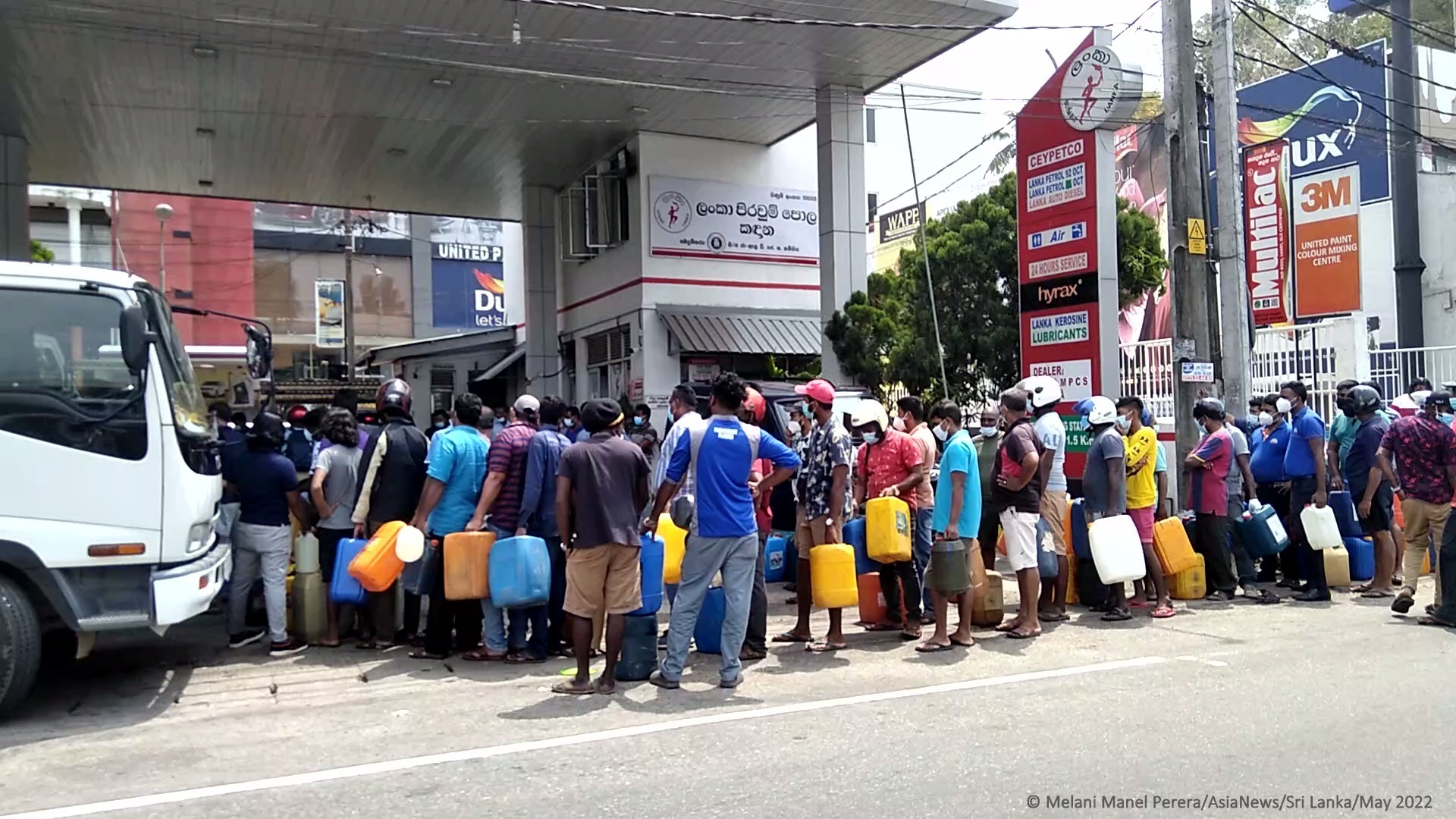
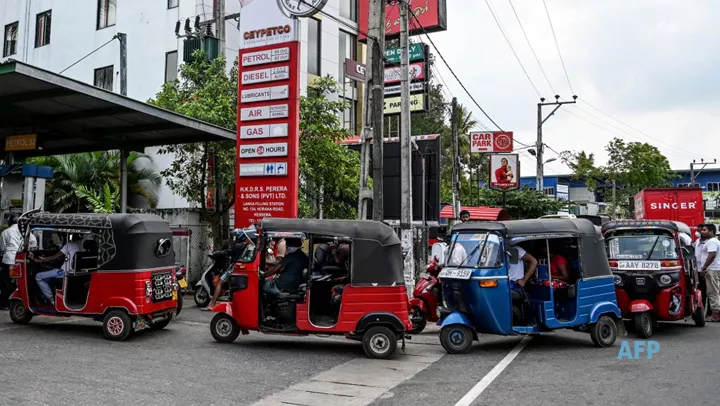
Fuel shortages have led to long blackouts as power stations close while hospitals are postponing treatment because of a lack of medicine. Aid groups also warn of a worsening hunger crisis owing to double-digit inflation.

Robert Juhkam, the UN Development Programme’s resident representative in Colombo, said that while Sri Lanka had been able to pay for most of its own food, the situation had deteriorated to a point where donations were becoming necessary.

“If the need is evident, and maybe it’s becoming more evident by the day, then it can be acted on,” he said of the SAARC food bank application, for which UNDP lobbied the Sri Lankan government.

Crop yields have fallen sharply after President Gotabaya Rajapaksa abruptly banned chemical fertilisers last year. The decision was swiftly reversed but rice imports to Sri Lanka — which was previously self-sufficient — have surged 368 per cent since then, UNDP said.

Sri Lanka is urgently seeking emergency assistance from other countries. India has provided more than $3bn this year through credit lines and currency swaps while China has offered “a few hundred million dollars” in lending, Sri Lanka’s new prime minister told the FT last week. Japan and the Indian state of Tamil Nadu have also donated food and medicine.

Efforts to engage SAARC could bump up against hard geopolitical realities, however. The body, which includes arch-rivals India and Pakistan, has been hampered by dysfunction since it was founded in 1985.

The SAARC food bank was set up in 2007 to provide rice and wheat to countries during emergencies but was used for the first time only in 2020 when Bhutan sourced a rice shipment.

Analysts said that Sri Lanka’s crisis could be a chance to invigorate SAARC.

Constantino Xavier, a fellow at New Delhi’s Centre for Social and Economic Progress think-tank, said that India — SAARC’s most powerful member — could view routing assistance through the bloc as a way to stop rivals such as China from playing a larger role.

The food bank “is operationalised and they can deliver”, said Xavier. “Maybe there is a precedent and all the politics don’t matter.”

SAARC secretary-general Esala Weerakoon said he was not aware of an application from Sri Lanka.

Posted in Uncategorized

Sri Lanka hikes tax rates to boost government revenues

Sri Lanka’s cash-strapped government has announced a taxation overhaul to boost revenue amid the country’s crippling economic crisis, hiking value added taxes and corporate income tax, and slashing the relief given to individual taxpayers.

Prime Minister Ranil Wickremesinghe, who took office this month and plans to present an interim budget within weeks, said on Tuesday the measures were necessary as the current state of government finances was unsustainable.

“The implementation of a strong fiscal consolidation plan is imperative through revenue enhancement as well as expenditure rationalization measures in 2022,” Wickremesinghe’s office said in a statement.

Sri Lanka’s inflation rose to 39.1 percent in May, its statistics office said – a record level, compared with the previous high of 29.8 percent recorded in April.

An increase in value added tax (VAT) to 12 percent from 8 percent with immediate effect is among the key tax increases announced on Tuesday, which is expected to boost government revenues by 65 billion Sri Lankan rupees ($180.56m).

Other measures, including increasing corporate income tax to 30 percent from 24 percent from October, will earn an additional 52 billion rupees ($143.46m) for the exchequer.

Withholding tax on employment income has been made mandatory and exemptions for individual taxpayers have been reduced, the statement said.

The island nation of 22 million people has been battered by its worst economic crisis since independence from Britain in 1948, with a severe shortage of foreign currency stalling imports of essentials, including food, fuel and medicines.

The roots of the crisis lie in tax cuts enacted by President Gotabaya Rajapaksa in late 2019, which came months before the COVID-19 pandemic that battered the country’s lucrative tourism industry and led to a drop in foreign workers’ remittances.

The tax cuts caused annual public revenue losses of about 800 billion rupees ($2.2bn), the prime minister’s office said in its statement.

The new tax regime and COVID-19’s impact, together with the pandemic relief measures, widened the budget deficit significantly to 12.2 percent of gross domestic product (GDP) in 2021 from 9.6 percent of GDP two years earlier.

In an interview with the Reuters news agency this month, Wickremesinghe – who also holds the finance ministry portfolio – said he would cut expenditures down “to the bone” in the upcoming interim budget and reroute funds into a two-year relief programme.

The tax hikes are aimed at putting public revenues back at pre-pandemic levels and focused on fiscal consolidation as the country seeks a loan package from the International Monetary Fund (IMF), said Lakshini Fernando, a macroeconomist at investment firm Asia Securities.

“The tax increases are definitely a very positive first step, especially for IMF talks and debt restructuring,” Fernando said.

“This was required to take forward discussions and will also help the government in talks with bilateral and multilateral partners to secure more funding,” Fernando said.

SOURCE: REUTERS

New Army Commander Lieutenant General Vikum Liyanage Assumes Duties

Lieutenant General Vikum Liyanage, who was appointed as the 24th Army Commander, assumed duties on Wednesday (1) at the Army Headquarters.

President Gotabaya Rajapaksa in his capacity as Commander-In-Chief of the Armed Forces promoted Vikum Liyanage to the rank of Lieutenant General, effective from 1st June 2022.

Lieutenant General Vikum Liyanage as the 24th Commander of the Army replaced General Shavendra Silva who has now been appointed the Chief of Defence Staff.

The formal relinquishment of office of the 23rd Commander of the Army General Shavendra Silva, who has now been appointed as the Chief of Defence Staff took place last afternoon (31) at a simple formality where the outgoing Commander symbolically handed over the authority, Sword and the Truncheon to his successor.

The gesture that took place at the office of the Commander of the Army signified the transfer of command in the military way to the incoming Army Chief of the Gajaba Regiment.

The glittering replica of the Sword, crafted with gold and silver colour with a seven-headed lion, called ‘serapendia’ symbolizes the Command and other parts reflect natural laws, respect and dignity for profession, protection of the nation, religions, culture, and the State.

The ornamental Truncheon represents the commanding authority that can only be held by an incumbent Commander of the Army. Both these symbolic replicas signify the significance of the office of the Commander of the Army and the authority it commands over the organization for the best interests of the country.

Who is the new Army Commander?

Lieutenant General HLVM Liyanage RWP RSP ndu has been appointed as the 24th Commander of the Sri Lanka Army, effective from 01 June 2022 by the President Gotabaya Rajapaksa in his capacity as the Commander-in-Chief of the Armed Forces after he was elevated to the rank of Lieutenant General with effect from the same date.

Lieutenant General HLVM Liyanage, more popularly known as Vikum Liyanage, prior to his new appointment was serving as the Chief of Staff of the Sri Lanka Army. He is the most Senior Officer in the Army as at present next to the outgoing Commander.

Lieutenant General Vikum Liyanage as an Officer Cadet joined the Regular Force of the Sri Lanka Army on 27 October 1986 in the Regular Intake – 26 and followed basic military training at the prestigious Sri Lanka Military Academy at Diyatalawa and subsequently at Pakistan Military Academy. Upon successful completion of Officer Cadet training, he was commissioned in the rank of Second Lieutenant and was posted to the Gajaba Regiment.

During his 35 years of illustrious military career, he has held a number of significant command, staff and instructional appointments, including Platoon Commander, Company Commander and Adjutant of 4th Gajaba Regiment. In the Eastern theatre of operations, Lieutenant General Vikum Liyanage performed a commendable role contributing to the eradication of terrorism from the region. He was also the Intelligence Officer of 21 and 55 Infantry Divisions, Second in Command of 14th Gajaba Regiment, Adjutant of General Sir John Kotelawala Defence University, Staff Officer II (Admin) at Regimental Centre of the Gajaba Regiment, Second in Command of 10th Gajaba Regiment, Staff Officer II at Directorate of Staff Duties, Commanding Officer of 8th Gajaba Regiment during which Lieutenant General Vikum Liyanage with his troops in the ‘rice bowl’ of Mannar made progress and advanced into terrorist-held areas in impressive operations.

Brigade Commander (Overlooking) of 225 and 553 Infantry Brigades, Sector Commander at Operations Command Colombo, Brigade Commander of 215, 542, 224, 221 and 623 Infantry Brigades, Director (Doctrine & Training) and Director (Operations & Systems) at the Office of the Chief of Defence Staff (OCDS), Commandant of Combat Training School (Ampara), Director General of Psychological Operations, General Officer Commanding of 21 Infantry Division, Commander Security Forces – West, Commander Security Forces – Central, Colonel of the Regiment of Sri Lanka National Guard, Commandant, Sri Lanka Army Volunteer Force and the Chairman of Sri Lanka Army Wushu Committee.

Lieutenant General Vikum Liyanage was able to widen his horizons through the experience gained over the years from respective appointments in his office and through further training he underwent. He has successfully followed a number of local courses, including the Internal Security/ Counter-Revolution Warfare Course at Army Training School (Maduru Oya), Method of Instructions Course at Sri Lanka Military Academy, Forward Observation Officer Course at School of Artillery (Minneriya), Battalion Support Weapon Course at Infantry Training Centre (Minneriya), Platoon Commanders’ Refresher Course at Army Training School (Maduru Oya), Company Commanders’ Refresher Course at Army Headquarters, Unit Security Officers’ Course at Military Intelligence Corps, Management & Leadership Development Course at General Sir John Kotelawala Defence University, Basic Mediation Skills & Process (UNHCR) course at 21 Division and Multinational Platoon Exercise-3 at Kukuleganga.

To his credit, he has also followed many overseas courses, workshops and seminars of professional value, including Officers’ Physical Training Course in India, Young Officers’ Course in Pakistan, Junior Command Course in India, Unit Commanders’ Course in Bangladesh, Senior Command Course in India, Advanced Security Cooperation Programme in Hawai and Regular Education Programme at National Institute of Lemhannas in Indonesia.

Further, he holds a Masters’ degree in Strategic and Resilience Studies from Lemhannas University, Indonesia and a degree on ‘Global Security in Indo-Pacific Region’ from Asia-Pacific Centre for Security Studies in Hawai. In addition, he has received a Diploma in Defence Management from the University of Indore in India.

During the peak of the final humanitarian operation, General Vikum Liyanage commanded the 8 Gajaba Regiment of victorious 57 and 56 Divisions which were actively conducting operations. He was able to achieve many victories against the LTTE. Over and above, Lieutenant General Vikum Liyanage who has actively taken part in operations against the LTTE has been adorned with gallantry awards of Rana Wickrama Padakkama (RWP) for individual or associated acts of bravery in the face of the enemy and performed voluntarily. He was also decorated with the Rana Sura Padakkama (RSP) for distinguished conduct in the face of the enemy. The Senior Officer was awarded above medals thrice during his military career for being a pioneer in eradicating terrorism during North and East Humanitarian Operations. Further, he is a recipient of Desha Puthra Padakkama for being wounded whilst on operations due to enemy action. Lieutenant General Vikum Liyanage has also received service decorations such as East Humanitarian Operation Medal, North Humanitarian Operation Medal, Purna Bhumi Padakkama, North and East Operation Medal, Riviresa Campaign Service Medal, 50th Independence Anniversary Commemoration Medal, Sri Lanka Army 50th Anniversary Medal, Long Service Medal, Seva Abhimani Medal and Service Medal.

During his school career, he shone in athletics and hockey as a bright student and received accolades for the school, Vijaya College in Matale.

Similarly, the honorary title of ‘Janamanya Vibhutiratna’ in the Buddhist Monastic Order of Amarapura Chapter was conferred in recognition of his immense contribution for fostering of the Buddha Sasana. He is married to Mrs. Janaki Liyanage and blessed with a daughter and a son.

Economic crisis: Muslims in SL to abstain from Hajj pilgrimage

Sri Lankan Muslims have decided not to take part in Hajj pilgrimage this year, after taking into account the ongoing economic crisis in the country.

Saudi Arabia had approved a quota of 1,585 Hajj pilgrims from Sri Lanka for the year 2022, out of the 1 million foreign and domestic Muslims allowed to travel the holy city of Makkah in the pilgrimage season.

However, it was decided not to any devotees on Hajj pilgrims this time following a discussion held by several parties including the National Hajj Committee, Hajj Tour Operators Association and the Muslim Religious and Cultural Affairs Department.

Posted in Uncategorized