Fitch downgrades Sri Lanka to ‘RD’

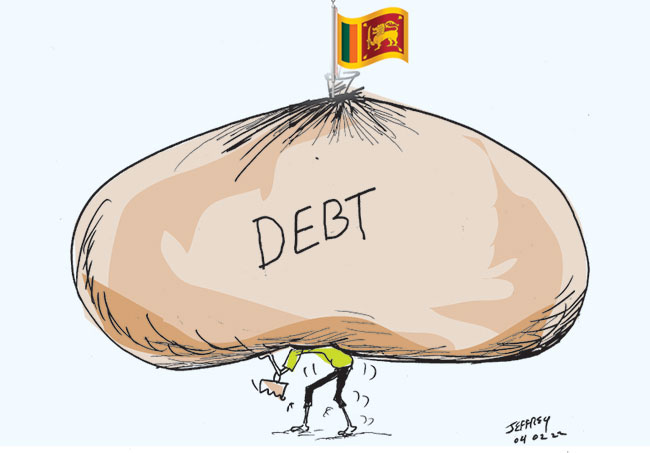
Fitch Ratings has downgraded Sri Lanka’s Long-Term Foreign-Currency (LTFC) Issuer Default Rating (IDR) to ‘RD’ (restricted default) from ‘C’.

KEY RATING DRIVERS

Grace Period Ends: The downgrade of Sri Lanka’s LTFC IDR to ‘RD’ follows expiry of the 30-day grace period on coupon payments that were due on 18 April 18 2022 on two international sovereign bonds.
On 12 April 2022 the Ministry of Finance made a statement that it had suspended normal debt servicing of several categories of its external debts, including bonds issued in the international capital markets and foreign currency-denominated loan agreements or credit facilities with commercial banks or institutional lenders. Following this announcement, we downgraded the LTFC IDR to ‘C’ on 13 April 2022.

Fitch has downgraded Sri Lanka’s foreign-currency issue ratings to ‘D’ from ‘C’, given the default on the senior unsecured foreign-currency bonds and the cross-default clauses triggered in the other rated international foreign-currency sovereign bonds.

Local Currency Debt Not Affected: The rating action applies only to the government’s long-term external debt obligations. We have affirmed Sri Lanka’s Long-Term Local-Currency IDR at ‘CCC’, as the government has continued to service local-currency debt and we assume this will continue. We have also affirmed Sri Lanka’s Short-Term IDRs at ‘C’ and the Country Ceiling at ‘B-’.

ESG – Governance: Sri Lanka has an ESG Relevance Score of ‘5’ for Political Stability and Rights as well as for the Rule of Law, Institutional and Regulatory Quality and Control of Corruption, as is the case for all sovereigns. These scores reflect the high weight that the World Bank Governance Indicators have in our proprietary Sovereign Rating Model. Sri Lanka has a medium World Bank Governance Indicator ranking in the 46th percentile, reflecting a recent record of peaceful political transitions, a moderate level of rights for participation in the political process, moderate institutional capacity, established rule of law and a moderate level of corruption.

ESG – Creditor Rights: Sri Lanka has an ESG Relevance Score of ‘5’ for Creditor Rights as willingness to service and repay debt is highly relevant to the rating and is a key rating driver with a high weight. The downgrade of Sri Lanka’s rating to ‘RD’ reflects a default event.

Posted in Uncategorized

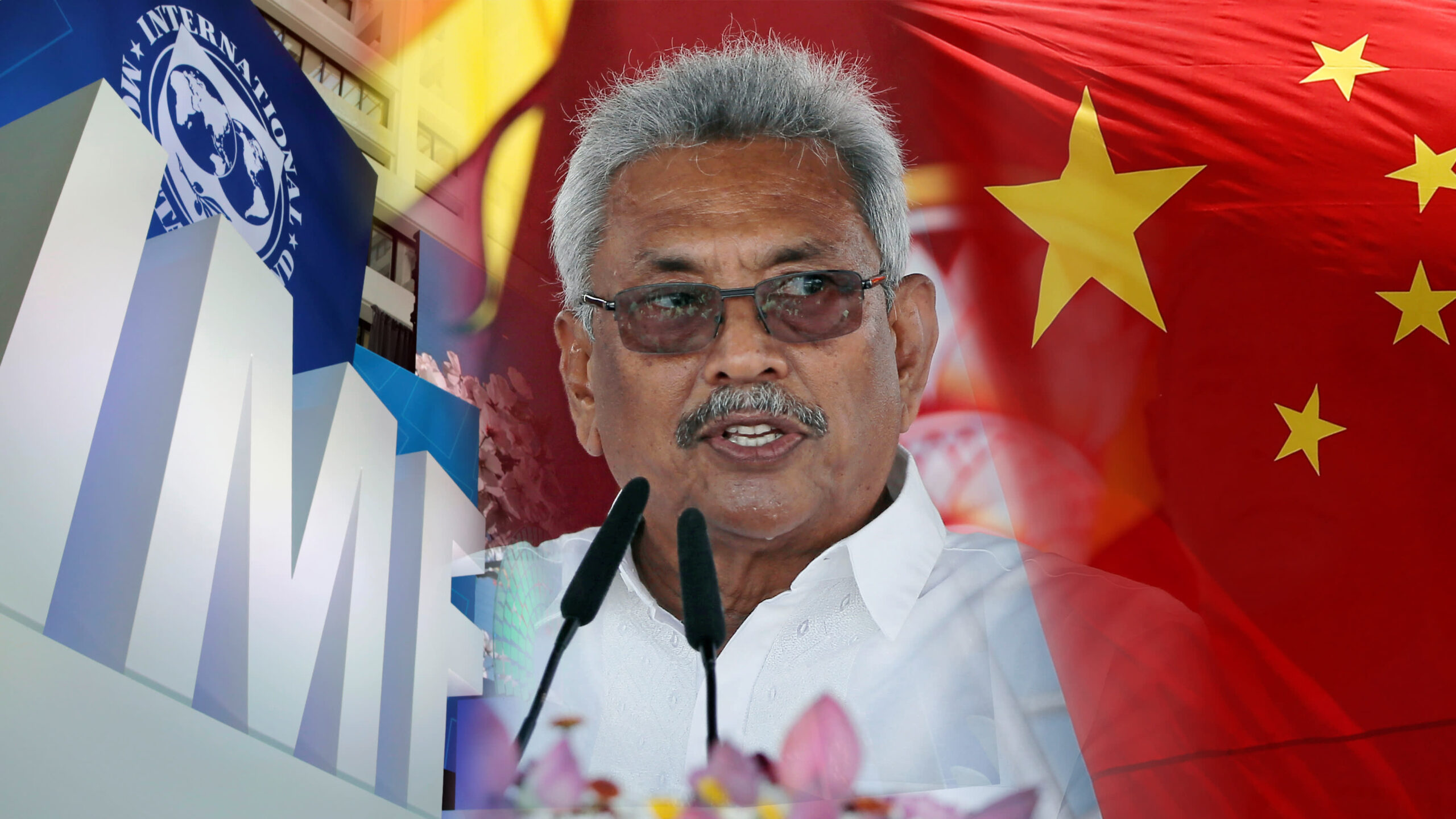
China ready to play constructive role in easing Sri Lanka’s debt burden: Chinese Foreign Ministry

China fully relates to the difficulties and challenges facing Sri Lanka and stands ready to play a constructive role in its steady economic and social development, says the Foreign Ministry Spokesperson of China, Wang Wenbin.

Answering questions directed by media, the Foreign Ministry Spokesperson said that with regard to Sri Lanka’s debt to China, the country supports relevant financial institutions in having consultations with Sri Lanka to seek a proper settlement.

China stands ready to work with relevant countries and international financial institutions and continue to play a positive role in easing Sri Lanka’s debt burden and helping it achieve sustainable development, he added.

In the meantime, Wenbin stated that he hopes and believes that Sri Lanka will work in the same direction and make independent efforts to uphold the legitimate rights and interests of foreign investment and financing partners, and maintain stability and credibility of its investment and financing environment, the Spokesperson emphasized.

State of Emergency lapses

The State of Emergency imposed by President Gotabaya Rajapaksa earlier this month, has lapsed with effect from last night.

The President’s Office said that the State of Emergency lapsed last night (20th May).

President Gotabaya Rajapaksa had declared a State of Emergency on 6th May.

The State of Emergency gave the security forces sweeping powers to maintain law and order.

Issuing a gazette notice on 6th May, the President said that he is of the opinion that by reason of a public emergency in Sri Lanka, it is expedient, so to do, in the interests of public security, the protection of public order and the maintenance of supplies and services essential to the life of the community.

The gazette says the President, by virtue of the powers vested in him by Section 2 of the Public Security Ordinance (Chapter 40), as amended by Act, No. 8 of 1959, Law No. 6 of 1978 and Act, No. 28 of 1988, do by the proclamation declare that the provisions of Part II of that Ordinance, shall come into operation throughout Sri Lanka with effect from 06th May, Two Thousand and Twenty Two.

PTA Amendment Bill: A Facade for Backdoor Human Right Violations?

Counterterrorism and protecting human rights has been a long standing dichotomy on a global scale. The same fate was experienced in the Sri Lankan context with the civil war and internal insurrections. Among all counterterrorism measures, the Prevention of Terrorism Act (Temporary Provisions) (PTA) of No. 48 of 1979 has been the most debated. The PTA was enacted on July 15, 1979 as a temporary urgent bill. It was presented to the Parliament by President J.R. Jayewardene, debated and passed within one day. Although President Jayewardene presented the Bill to deal with terrorism in North, ironically first to be detained under the Act were two Sinhalese activists of the opposition. Thus since its enactment the PTA has had ulterior motives. All in all the PTA is yet another embodiment of horrors of undemocratic and unfettered executive powers. Despite several attempts to amend or repeal this draconian piece of legislation it has existed, causing grave human right violations in the country, particularly targeting minorities, political opponents, activists and journalists. Beyond such egregious and inhumane violations, the research has shown its larger impact on socio-economic conditions as well. The most recent attempt in answering constant international and domestic aversion to the Act has been the PTA Amendment Bill of 2022.

President Gotabaya Rajapaksa appointed a committee in June 2021 to make recommendations to the cabinet sub-committee to review the PTA. In the process of the committee deciding whether to amend the existing law or to draft a new legislation, they also looked at the Counter Terrorism Bill formulated under the previous government. Meanwhile in August 2021, the president appointed an Advisory board on the PTA to make recommendations and advise him. The first report of the committee was handed over to the president in November 2021 without taking measures to publicise it. The Bill was tabled in Parliament on February 10, 2022 amid heavy criticism of minority MPs and civil society activists. Furthemore it is evident that the government is attempting to pass a pretense legislation in haste to rescue GSP+ granted by the European Union (EU) and face UN Human Rights Council However, (un)fortunately after the bill was tabled the EU noted its concern over leaving out crucial amendments. The Human Rights Commission of Sri Lanka, despite stripping off its independence under the 20th Amendment, advocated for the repeal of the Act with the tabling of the Bill.

In analysing the provisions of the Bill it is apparent that many controversial and undemocratic provisions of the Act that led to serious human right violations have been left out and ignored. Firstly the Bill has completely refrained from addressing key provisions that outright violate the freedom from arbitrary arrest, detention and punishments and the right to a fair and due process. Under S. 16 of the PTA confessions and statements by suspects are made admissible in contrary to the requisites of the Evidence Ordinance. For example under the Evidence Ordinance confessions made to a police officer or while in police custody are inadmissible, however the PTA allows them. The Act further puts the burden of proof on the suspect to prove that a statement is obtained under inducement, threat or promise.

The Bill has not amended the initial period of 72 hours after arrest and before producing a suspect before a magistrate whereas under the general law, the maximum period in custody before being produced is 24 hours. However, the Bill has amended the S.9 of the PTA where the period of 18 months of detention without bail is now 12 months, has imposed a duty on Magistrate to visit the suspect and has made it a requisite to inform HRCSL on such detentions. While the latter amendments are commendable yet there is much space to progress such as making it mandatory for the Magistrate to direct the suspect to judicial medical officer and IGP if he or she is subjected to torture. Furthermore under the Bill the Minister can still decide the detention place of the suspect. The case studies have consistently shown how the freedom from torture has been inhumanely violated to obtain confessions while detaining suspects for longer periods of time, yet these provisions have not been answered adequately by the Bill.

There is no provision in the PTA to inform the suspects about their charges, causes and rights at the time of arrest. Although it is required under the general law the PTA has remained exceptional, and still remains so under the Bill. This is a violation of Article 13(1) of the Constitution and Sri Lanka’s international obligation under Article 9(2) of the ICCPR, where any person arrested has to be informed of the reason for arrest. Another leeway for torture under the PTA is the unfettered powers granted to investigating officers under S.6 including to take suspects from place to place, seizure and search. While these powers should be exercised while ensuring human rights and international standards, many case studies reveal the contrary. However the Bill has not addressed this section at all.

It is noted that many extravagant additions in the Bill such as right to be represented by lawyer and right to challenge the decision in the Supreme Court by way of Writ have always existed. And when everything boils down to ground realities the situation can be entirely different. For example there are many case studies on how lawyers rejected certain detainees due to outside pressure. Therefore the PTA is not an answer on paper. The PTA does not only violate freedom from torture or even freedom from arbitrary arrest but it also has a ripple effect on freedom of expression, right to privacy, freedom of movement and freedom of assembly. Therefore the government should take the amendments seriously without attempting to fool the crowd.

Source:Ground Views

Several Indian investors in Tamil Nadu keen to invest in Sri Lanka

CHENNAI: Several Indian investors based in Tamil Nadu are keen to invest in Sri Lanka as they see the current economic crisis as an opportunity, said Sri Lankan Deputy High Commissioner Dr. D. Venkateshwaran in an EXCLUSIVE interview with Daily News Business.

The Deputy High Commissioner said he will also talk to major companies including pharma, motor, car component manufacturers, trade chambers, to have their future expansions, fresh investments or value-added investments in Sri Lanka. They could start manufacturing in Sri Lanka and use the FTA and re-export to the region (including Pakistan) and he got a positive feedback from them.’

“I will be visiting the southern states to woo investments into Sri Lanka. An investor forum is also being planned next month in this regard,” he said.

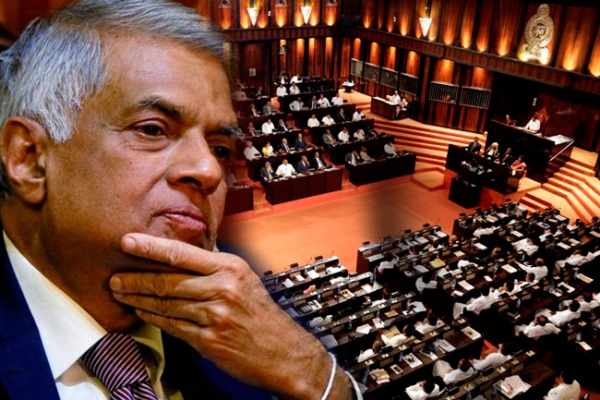
He said that the investor community has taken the appointment of new Prime Minister Ranil Wickremesinghe as a very positive step towards reactivating the Sri Lankan economy.

“The new PM has already taken some steps in the right direction and the Indian government is to support this initiative and have already sent fertiliser which will solve the ‘paddy fertiliser shortage issue for the Yala season’ almost immediately. I must also recall that power cuts are happening all over the world and also Indian fuel prices are more than Sri Lanka. We also see the Sri Lankan rupee stabilizing and expect some of the commodity prices to come down. It’s now time for the Sri Lankan politicians and also the business community to support the new PM to take the country back to its pre covid position. He also said that even with the escalating construction costs Sri Lanka real estate projects are far cheaper to India and Sri Lankan companies should market them to the Indian market more aggressively. With an increasing number of real estate projects getting developed, there is an oversupply of real estate inventory in Sri Lanka. With the economic crisis hitting Sri Lanka, the purchasing propensity of Sri Lankans is at its abysmal low. In this situation, Sri Lankan developers will have to explore international marketing channels for their projects and India is the best choice.

“The Sri Lanka government recently announced a new legislator to make ‘Sri Lanka’ the second home and further relaxed regulation for foreigners to purchase apartments. The Sri Lanka Real Estate sector should ‘cash’ on this and commence aggressive road shows to woo Indians to buy property in Sri Lanka. Sri Lanka being close to India is easier for Indians to invest in a second home in Colombo.

Hence, selling Sri Lankan real estate to Indians is a low hanging fruit for Sri Lankan real estate developers.”

“As per an Asia-Pacific Wealth Report, Indians were the highest investors in foreign real estate, with a 50% market share and the top destinations attracting Indians are Dubai, the United Kingdom, The Netherlands, Germany, USA, and Australia topping the charts. According to a 2019 report, over 3,000 Indian families own some of the most luxurious properties in London’s most influential addresses,” said economics, investment analyst and CEO, Inspiredge Ltd, Sumit Bothra from Chennei.

“As aspirations grow, we have noticed that the income brackets that can afford a piece of real estate abroad has also widened over the last five years,” he added.

Posted in Uncategorized

Technical discussions with IMF to conclude on May 24: Spokesman Rice

The technical discussions between Sri Lanka and the International Monetary Fund (IMF) on a potential loan programme will come to a close on May 24, IMF Spokesman Gerry Rice said.

Rice, addressing a virtual IMF briefing on Thursday (20), said that the agency is closely monitoring the events that are unfolding in the crisis-hit island nation.

Rice affirmed that the IMF remains committed to help Sri Lanka in line with the policies of the agency and that it would engage with the stakeholders in support of a timely resolution of the crisis that is being faced.

Commenting on the status of the economy, Rice said the IMF is concerned about the current economic crisis.

“We are concerned…especially, the hardships being endured by the people of Sri Lanka and especially many of those people poor and vulnerable. So, we are clearly monitoring the political and economic developments very closely,” Rice said.

Further, Rice said an IMF team has been engaged in technical discussions on the authorities’ request for an IMF-supported programme and the IMF has asked for the programme.

Posted in Uncategorized

Sri Lanka down to last day of petrol, new prime minister says -BBC

Sri Lanka’s new prime minister says the country is down to its last day of petrol as it faces its worst economic crisis in more than 70 years.

In a televised address, Ranil Wickremesinghe said the nation urgently needs $75m (£60.8m) of foreign currency in the next few days to pay for essential imports.

He said the central bank would have to print money to pay government wages.

Mr Wickremesinghe also said state-owned Sri Lankan Airlines may be privatised.

The island nation’s economy has been hit hard by the pandemic, rising energy prices, and populist tax cuts. A chronic shortage of foreign currency and soaring inflation had led to a severe shortage of medicines, fuel and other essentials.

Ravindu Perera, who lives in the capital Colombo, said he and his family had begun searching for fuel before daybreak on Monday.

“We went to several fuel stations and most of them were closed. At around 5.30am we took a chance and joined a queue at Townhall which is the station usually providing fuel for government vehicles,” he told the BBC.

“It was less crowded – but the queue gradually grew to about 2km long. We were lucky enough to get fuel around 9.00am once fuel was delivered.”

He said his friends outside the capital were having to wait even longer. “I’m working from home now to try and save fuel because who knows when I’ll get a full tank again.”

Auto rickshaws, the most popular means of transport in Colombo, and other vehicles have been queuing at petrol stations around the capital.

“At the moment, we only have petrol stocks for a single day. The next couple of months will be the most difficult ones of our lives,” said Mr Wickremesinghe in Monday’s address.

However, shipments of petrol and diesel using a credit line with India could provide fuel supplies in the next few days, he added.

Mr Wickremesinghe, who was appointed prime minister last Thursday, said the country’s central bank would have to print money to help meet the government’s wage bill and other commitments.

“Against my own wishes, I am compelled to permit printing money in order to pay state-sector employees and to pay for essential goods and services. However, we must remember that printing money leads to the depreciation of the rupee,” he said.

He also proposed selling off Sri Lankan Airlines as part of efforts to stabilise the nation’s finances. The carrier lost 45 billion Sri Lankan rupees ($129.5m; £105m) in the year ending March 2021.

In recent weeks, there have been large, sometimes violent, protests against President Gotabaya Rajapaksa and his family.

Last week, the president’s elder brother Mahinda resigned as prime minister after government supporters clashed with protesters. Nine people died and more than 300 were wounded in the violence.

On Friday, Mr Wickremesinghe told the BBC, that the economic crisis is “going to get worse before it gets better”.

In his first interview since taking office, he also pledged to ensure families would get three meals a day.

Appealing to the world for more financial help, he said “there won’t be a hunger crisis, we will find food”.

Sri Lanka’s UNP defends new prime minister’s vote against suspending standing orders

The United National Party (UNP), represented solely in parliament by crisis-riddled Sri Lanka’s new prime minister Ranil Wickremesinghe, defended his widely criticised vote against an opposition attempt to express parliament’s dissatisfaction with President Gotabaya Rajajapksa on Tuesday (17).

The UNP tweeted Tuesday afternoon that Wickremesinghe had informed the opposition that voting to suspend parliament’s standing orders was a “poor parliamentary strategy”.

Earlier that afternoon, a motion by Sri Lanka opposition Tamil National Alliance (TNA) MP M A Sumanthiran to suspend parliament’s standing orders in order to debate an expression of displeasure over President Rajapaksa was defeated, with 119 MPs including Wickremesinghe voting against it.

With the motion, the opposition sought to demonstrate how nationwide calls for President Rajapaksa’s resignation is reflected in the country’s legislature.

According to SJB MP Harsha de Silva, among those who voted against the motion was Sri Lanka’s newly elected Prime Minister Ranil Wickremesinghe.

The UNP tweeted: “He informed them that government MPs wanted to first debate the attacks on their houses. Since [the] Motion of Displeasure was on the order book it would be taken up after the adjournment debate.

“The Prime Minister explained that protecting the Motion of Displeasure was more important than suspending Standing Orders. He said government MPs would use the defeat of the vote to suspend Standing Orders as an opportunity to prevent a vote on the Motion

Ruling party MP Ajith Rajapaksa elected Deputy Speaker

Ruling party MP Ajith Rajapaksa has been elected as the Deputy Speaker of Parliament.

He was elected following a secret ballot conducted in Parliament.

Ajith Rajapaksa secured 109 votes and opposition nominee MP Rohini Kavirathna 78 votes.

Parliament MPs today failed to reach a consensus on the post of Deputy Speaker after two names were proposed, forcing Speaker Mahinda Yapa Abeywardena to call for a vote.

The Opposition Samagi Jana Balawegaya (SJB) had proposed MP Rohini Kavirathna for the post while the Government proposed Ajith Rajapaksa.

Some ruling party MPs and the independent group, including the Sri Lanka Freedom Party (SLFP) urged the SJB and the Government to reach a consensus and propose one name.

However, both sides failed to reach a consensus.

A heated exchange took place between the Opposition, Government and the Speaker.

The Speaker later informed the House that if there is no consensus then he has no choice but to go for a vote.

A vote was later taken to elect a new Deputy Speaker.

Several MPs decided to spoil their vote as a mark of protest over the failure to reach a consensus on the Deputy Speaker.

Posted in Uncategorized

Gang of Pohottuwa MP’s harass Journalists in P’ment; grab phones

Several MPs from the Sri Lanka Podujana Peramuna have accosted two journalists covering parliamentary proceedings, within the parliament complex on Tuesday (17).

The Chairman of the Sri Lanka Parliament Journalists Association Prageeth Perera and News 1st journalist Kasun Samaraweera were accosted while reporting on parliament affairs by MPs W. D. Weerasinghe and Indika Anuruddha, while MP Channa Jayasumana had aided in the confrontation.

The two journalists filed a complaint with the Welikada Police citing that the MPs accosted them, and also snatched their mobile devices.

The journalists said the Sergeant-at-Arms in Parliament returned the mobile devices to them, after erasing the footage recorded during the day.

Sri Lanka Podujana Peramuna MPs Professor Channa Jayasumana, and Attorney-at-Law Premanath C. Dolawatte raised their concerns in parliament on Tuesday (17) citing that several people had entered Parliament and were recording their movements/

The two MPs had raised concerns over their security within Parliament.

However, Opposition Leader Sajith Premadasa stood by the journalists noting that Chairman of the Sri Lanka Parliament Journalists Association Prageeth Perera, and journalist Kasun Samaraweera had not done anything wrong, and were only engaged in their professional duty.

He requested the Speaker to intervene and ensure their mobile devices are returned.

At the same time, Samagi Jana Balavegaya MP Manusha Nanayakkara warned the ruling party MPs NOT to behave like gangsters, adding ‘This is NOT a place for gangsters.’