How the world’s first all-organic farming nation has led to hunger, riots and economic ruin in Sri Lanka.

From the ethically sourced produce shops of Islington to the chemical-free acres of the Prince of Wales’s Highgrove farm, you could almost hear the cheering three years ago when Sri Lanka’s future president pledged a revolution.

It wouldn’t be on the streets but in the fields — as Gotabaya Rajapaksa vowed in his successful 2019 election campaign to transform the country into the world’s first fully organic farming nation.

Parroting the claims made for years by Prince Charles and fellow advocates of ‘sustainable farming’, the politician cited health and environmental reasons for this drastic move — in particular brandishing unproven claims of a link between chemical fertilisers and Sri Lanka’s high rate of chronic kidney disease.

Poverty

Rajapaksa’s commitment to producing 100 per cent of Sri Lanka’s food organically within a decade was accompanied by a ban on the use of all chemical fertilisers, pesticides and herbicides.

The consequences have been nothing short of catastrophic. Going organic — the bold, modern vision of the UK’s green lobby — has triggered the devastation of Sri Lanka’s economy, plunging much of its 22 million-strong population into desperate straits.

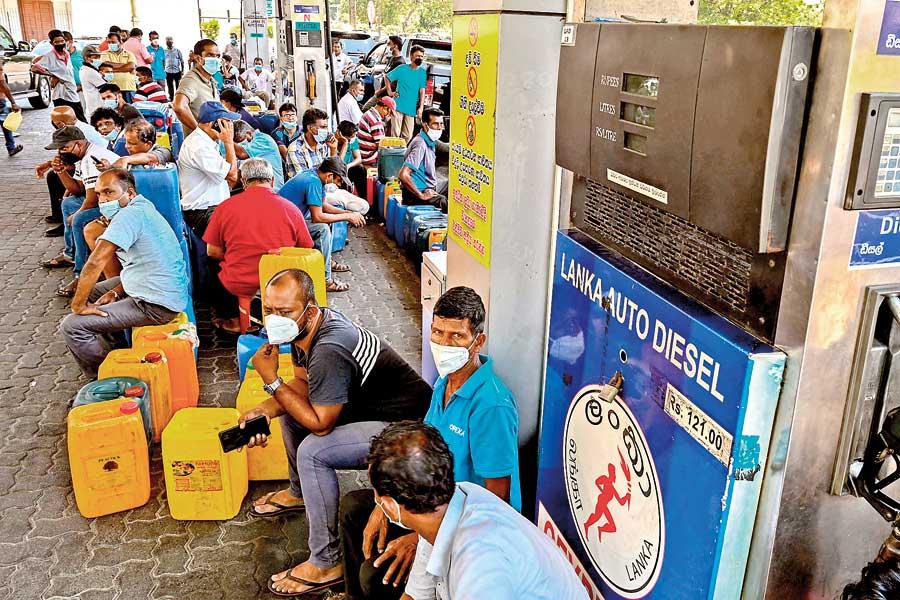
The chaos that has engulfed the country — including growing poverty, long queues for essentials, lethal street battles and attacks on the homes of government leaders — is a direct result of this one decision.

Rajapaksa’s announcement last April that the country’s two million farmers had to go organic overnight — and the disaster that has followed — is a timely lesson for all those who have been swept up by the hype surrounding organic food and its promise not only to improve our health but also to help save the planet.

Ironically, Sri Lanka had one of the strongest performing economies in Asia. In 2019, the World Bank upgraded its status to that of an upper middle-income country — only to reverse its decision just months after Rajapaksa was elected.

Soon after he ordered the organic transition, agronomists from the Sri Lanka Agricultural Economics Association warned he was making a terrible mistake. For all his concerns about water contamination, soil degradation, kidney disease and biodiversity damage, the cons of going organic far outweighed the pros, they said.

Studies show crop yields drop by an alarming 30 per cent under organic farming. Since the 1960s, Sri Lanka has subsidised farmers to use synthetic fertiliser, the main catalyst for the doubling of yields for many crops.

Outside the echo chamber of sustainable farming advocates, chemical fertilisers, along with pesticides and herbicides, are universally accepted as essential tools for modern agriculture.

Sri Lanka is heavily dependent on rice to feed itself and on tea to export. Forcing the producers of both crops to go entirely organic, warned experts, would drastically lower their yields — by 35 per cent and 50 per cent respectively. Rice is a nitrogen-intensive crop and is therefore tricky and expensive to grow without chemical fertilisers.

But Rajapaksa and his government wouldn’t listen to the warnings. When his brother, Mahinda, was president a decade ago, he also encouraged organic farming.

They will no doubt have been motivated by Sri Lanka’s growing reputation as a top destination for eco-tourists, who are drawn to luxury hotels that serve organic food, produced on their own farms.

Shunning conventional food production experts, the Rajapaksas have taken guidance from a cranky ‘civil society movement’ called Viyathmaga, which sums up its values as ‘Spiritual inside, Technocrat outside’.

Its plans include developing two million organic home gardens and turning over millions of acres of Sri Lankan forests and wetlands to producing bio fertiliser.

The whole project was accelerated by the pandemic, which destroyed the country’s tourism industry.

Sri Lanka’s ruling family saw a perfect chance to reduce its crippling balance of payments deficit and embrace organic farming by phasing out the $500 million a year it usually spends on buying foreign-made chemical fertiliser and subsidising farmers to use it.

Instead, the opposite happened and Sri Lanka’s balance-of-payments deficit soared as crop production tumbled, and the price of vegetables, rice and sugar rocketed. Sri Lanka failed to get hold of much organic fertiliser, leaving many farmers with no fertiliser of any sort.

The government also failed to offer them any guidance on how to farm organically. Many farmers, despairing of ever making a profit, gave up, accelerating the food shortages.

Humiliation

The loss of revenue from tea and other export crops vastly outstripped any savings from no longer importing fertiliser. In a final humiliation, Sri Lanka — a country until recently self-sufficient in rice — had to spend $450 million importing vast amounts of it, which the government then had to subsidise.

By October last year, it was desperately back-pedalling, relaxing the fertiliser ban for crucial export crops including tea, rubber and coconut. That humiliating U-turn didn’t stop President Rajapaksa boasting of his organic credentials a month later at Glasgow’s UN Climate Change Summit.

The climbdown came too late to avert economic meltdown. Annual food price inflation is currently running at 50 per cent, with vegetables such as carrots and tomatoes up to five times more expensive than they were last year.

Sri Lanka, which owes $51 billion to international creditors, last week defaulted on its debts for the first time since it gained independence from Britain in 1948.

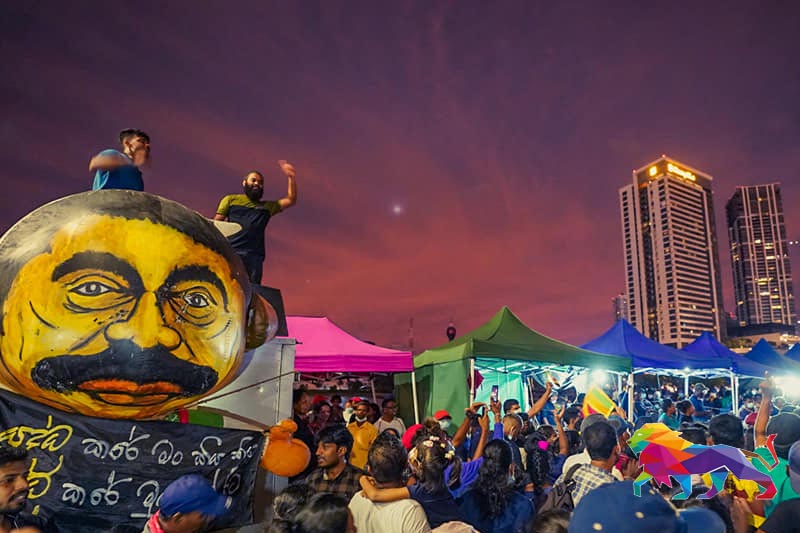
The country has been paralysed by strikes and violent clashes between Rajapaksa supporters and opponents in which people have died.

A museum dedicated to the ruling family has been torched: the organic dream has literally gone up in smoke.

Prince Charles was widely mocked by farmers when he transformed his 1,000-acre farm at Highgrove in Gloucestershire to become completely organic in 1985.

He has said: ‘In farming, as in gardening, I happen to believe that if you treat the land with love and respect . . . then it will repay you in kind.’

Deluded

Such thinking may be fine in a domestic garden or hobby farm, but not in international agriculture, according to experts.

Nearly all organic farming, they note, serves only the very richest and the very poorest people in the world. While the latter are forced to do it by necessity, as they cannot afford chemical fertilisers and pesticides, for the former it’s an expensive lifestyle choice.

As the success of Prince Charles’s range of organic produce (Waitrose Duchy Organic) illustrates, there’s no shortage of British customers willing to pay a premium for that all-important organic label.

Sceptics wonder why, citing tests that show organic food neither tastes better nor is more nutritional (though the organic lobby insists it contains higher levels of vitamin C and Omega 3 in milk). Nor, critics add, is there any conclusive evidence of the health effects of pesticides.

And organic farming is not always greener either, principally because the lower crop yields it offers means much more land has to be cultivated — land which could be used to grow trees and reduce carbon emissions. It also relies heavily on tilling fields that can accelerate soil exhaustion.

As Sri Lanka descends into chaos and its leaders run for cover, the smug advocates of sustainable farming must share the blame — for convincing them their deluded dream was even possible.

By TOM LEONARD FOR THE DAILY MAIL

Share or comment on this article: How the world’s first organic farm nation has led to hunger and economic ruin, writes TOM LEONARD
Partial de-militarization in the appointment of new Secretaries to Lankan Ministries

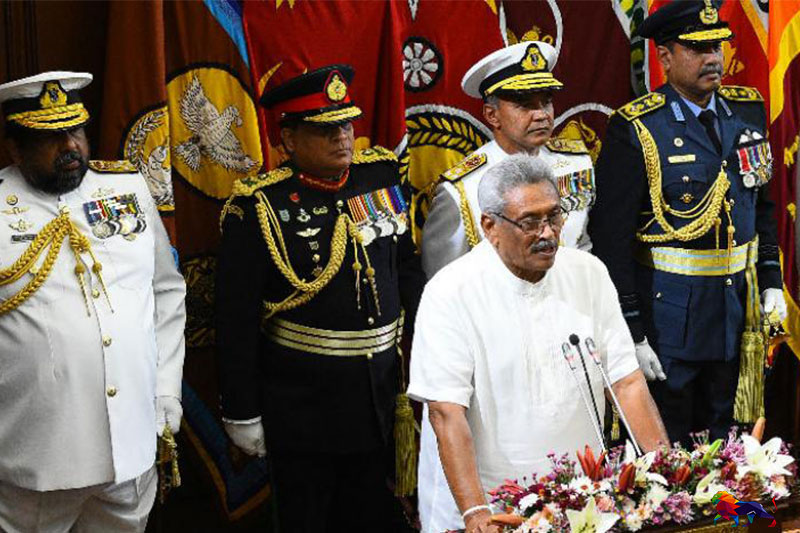
Three military officers who were Secretaries to ministries in the Mahinda Rajapaksa government have been replaced in the reshuffle carried out by the Sri Lankan President Gotabaya Rajapaksa on Tuesday.

In the partial de-militarization, Adm.Prof. Jayanath Colombage, Secretary to the Ministry of Foreign Affairs has been replaced by Mrs.Aruni Wijewardena; Maj.Gen.Sanjeewa Munasinghe, Secretary Health has been replaced by S.J.S.Chandraguptha and Maj.Jagath Alwis has been replaced by S.Hettiarachchi.

Both Adm.Colombage and Maj.Gen.Jagath Alwis had resigned earlier.

Two army men, Maj.Gen. Kamal Gunaratne and Gen.Daya Ratnayake retain their ministers which are Defense and Industries respectively.

In the reshuffle, some Secretaries have retained their posts, some have been shifted to other ministries and some have been dropped.

The list of new Secretaries appointed to the Cabinet Ministries is as follows.

01: Mr. R.W.R. Pemasiri – Transport and Highways Ministry
02: Mr. M.M.P.K. Mayadunne – Public Administration, Home Affairs, Provincial Councils and Local Government Ministry

03: Mr. K.D.S. Ruwanchandra – Ports, Shipping and Aviation Ministry

04: Mr. S.T. Kodikara – Trade, Commerce and Food Security Ministry

05: Ms. Wasantha Perera – Justice, Prisons Affairs and Constitutional Reforms Ministry

06: Mr. S. Hettiarachchi – Public Security Ministry

07: Mr. M.N. Ranasinghe – Education Ministry

08: Mr. M.P.D.U.K. Mapa Pathirana – Power and Energy Ministry

09: Ms. R.M.I. Ratnayake – Ministry of Fisheries

10: Mr. Monti Ranatunga – Ministry of Water Supply

11: Mr. U.D.C. Jayalal – Ministry of Irrigation

12: Mr. Anuradha Wijekoon – Sports and Youth Affairs Ministry

13: Dr. Anil Jasinghe – Ministry of Environment

14: Mr. Anusha Palpita – Ministry of Mass Media

15: Mr. M.B.R. Pushpakumara – Ministry of Agriculture

16: Mr. Somaratne Vidanapathirana – Buddhasasana, Religious and Cultural Affairs Ministry

17: General (Retired) Daya Ratnayake – Ministry of Industries

18: Ms. Aruni Wijewardena – Ministry of Foreign Affairs

19: Mr. B.L.A.J. Dharmakeerthi – Ministry of Plantation Industries

20: Ms. R.M.C.M. Herath – Wildlife and Forest Resources Conservation Ministry

21: Mr. S.J.S. Chandragupta – Ministry of Health

22: Mr. P.H.C. Ratnayake – Ministry of Urban Development and Housing

23: Mr. R.P.A. Wimalaweera – Ministry of Labor and Foreign Employment

SLPP slams Ranil over 21st Amendment

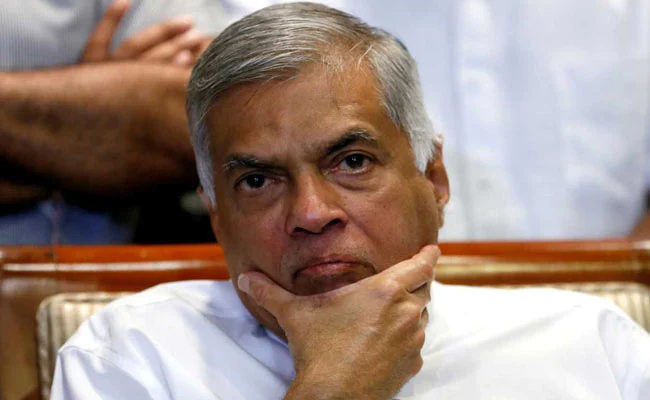
The Sri Lanka Podujana Peramuna (SLPP) yesterday (24) said that Prime Minister Ranil Wickremesinghe must solve the economic crisis before bringing in a Constitutional amendment, adding that such amendments should not be drafted to target any specific individuals, which prevent them from entering Parliament or becoming President.

“The SLPP cannot immediately say as to whether we are supporting the 21st Amendment to the Constitution Bill. We have to first properly analyse it and then understand the public’s ideas about it. We said that we will support Wickremesinghe to make a new Government to solve the country’s economic crisis. There is no Constitutional or political crisis here. He was appointed to find solutions for the economic crisis. But the economic crisis is still there.

“People are still on the roads in queues. And he is trying to bring a Constitutional amendment. First, solve the economic crisis and create an environment which allows a Parliamentarian to walk freely on the road and have the mental freedom to think. Then, we can discuss a Constitutional amendment,” SLPP General Secretary Attorney-at-Law MP Sagara Kariyawasam told The Morning yesterday.

The Morning questioned as to whether the SLPP’s support to the 21st Amendment to the Constitution Bill would depend on the provisions which bar dual citizens from entering the Parliament or holding public office. Responding to this, Kariyawasam said that the constitution of a country should not be designed targeting a specific individual.

“As a country’s constitution is its main document, it cannot be written with one person in mind. No country in the world makes constitutions to stop someone from coming to Parliament or to chase them away, or to prevent someone from becoming President. Constitutions are designed to the needs of the country,” he said.

Controversially, the 20th Amendment to the Constitution also allowed dual citizens to enter Parliament and hold public office, which paved the way for the entry of former Finance Minister Basil Rajapaksa into Parliament in 2021. The 21st Amendment to the Constitution is expected to repeal this clause. Basil Rajapaksa is also the Founder and National Organiser of the SLPP, which still holds a majority in Parliament.

Furthermore, Kariyawasam claimed that the previous Constitutional Amendment (a reference to the 19th Amendment to the Constitution), which was also brought forward by then-Minister of Justice and Buddhasasana Dr. Wijeyadasa Rajapakshe PC ultimately “resulted in the Easter Sunday terror attacks”.

“No one is accepting the responsibility of the said attacks, including former President and current MP Maithripala Sirisena and Wickremesinghe. These are the same people who are bringing in an amendment again,” he added.

The 20th Amendment to the Constitution was passed with a two-thirds majority in Parliament in 2020, repealing the Sirisena-Wickremesinghe Government’s 19th Amendment in 2015, which curtailed the powers of the Executive Presidency.

The 21st Amendment to the Constitution Bill has been drafted by a committee led by Wickremesinghe and Dr. Rajapakshe PC.

Kariyawasam cast doubts on the origins of the 21st Amendment and whether it serves a foreign power’s agenda.

“MPs should have a proper environment to understand and study it. Otherwise what they are trying to do is threaten MPs by saying that their houses will be burnt, and so, to sign this as fast as possible. So at this moment, we have a big question about who wants this amendment. Is it a foreign power? We can’t even think about that at the moment. This should be done very thoughtfully.”

However, he stopped short of confirming that the SLPP would vote against the 21st Amendment in Parliament.

“We are not saying that we will not eventually support the 21st Amendment to the Constitution. We first need a suitable environment where the Amendment can be brought in and discussed to do the correct thing for the country,” he added.

The draft 21st Amendment to the Constitution Bill was presented to the Cabinet of Ministers on Monday (23) and was sent to all party leaders representing Parliament yesterday. Reportedly, the draft Bill has reinstated some of the provisions of the 19th Amendment to the Constitution, whilst adding a number of other provisions, related to an Audit Service Commission, the Procurement Commission, and Parliamentary oversight concerning the appointment of the Governor to the Central Bank.

Posted in Uncategorized

Sri Lanka must pay USD 75 Mn for Crude

The Ministry of Power and Energy said that steps are being taken to pay the US $75 Million for the Crude Oil Tanker anchored in the seas off Sri Lanka.

The Ceylon Petroleum Corporation (CPC) has stated that the unloading of Petrol and Diesel shipments from two other vessels was completed, and fuel will be distributed continuously.

However, there were long queues in many parts of the island until last night to get fuel.

No new loans for Sri Lanka without proper economic plan: World Bank

The World Bank said it cannot give new loans to Sri Lanka until a proper economic plan is in place though it is re-directing money from un-disbursed loans for immediate humanitarian needs of the poor, the sick and school children.

Sri Lanka is suffering the worst currency crisis in the history of its 72 year-old intermediate regime central bank with rupee collapsing from 200 to 380 to the US dollar and inflation soaring to around 30 percent by April.

“We are concerned for the people of Sri Lanka and are working in coordination with the IMF and other development partners in advising on appropriate policies to restore economic stability and broad-based growth,” the World Bank said

“Until an adequate macroeconomic policy framework is in place, the World Bank does not plan to offer new financing to Sri Lanka.”

The World Bank is only re-purposing already approved loans, the agency said saying reports about a new ‘bridge financing’ is not correct.

The International Monetary Fund has said Sri Lanka’s debt is unsustainable and has to be restructured and a new fiscal and monetary program is being developed.

Other multilateral lenders also require a macro-fiscal sign off to make sure that the new loans are able to be repaid and does not further put the country into a debt crisis.

Posted in Uncategorized

PM should appoint competent professionals – TELO

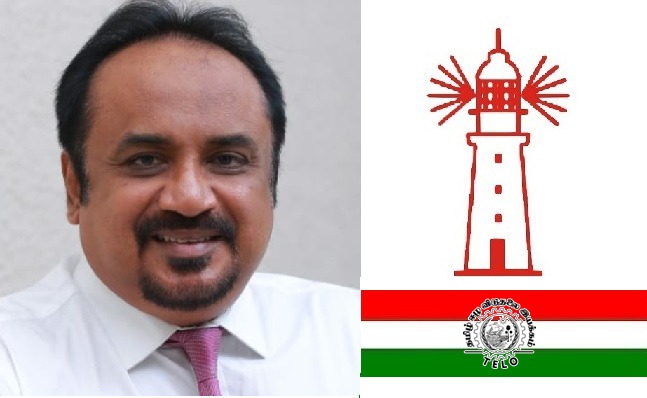
The Prime Minister should take steps to appoint professionals and capable people through the National List to the ministry posts, said the Media Spokesman of the Tamil Eelam Liberation Organization (TELO), Suren Gurusuwamy.

He said appointing capable people through the National List is the way forward to change the system within the country and this will be the only way to revive the country from the present crisis. “The former government and Parliamentarians have failed in managing the economy of the country and they have put the country in this situation today,” he added.

“The international community and the people of the country have lost faith in these Parliamentarians and appointing the same people of the former ruling party to a different ministerial post will not bring expected results to end the present crisis. Further, this strategy will not bring confidence to the citizens again about the Government,” he said.

He further said the donors have lost faith in the former ruling party members and therefore they are unwilling to provide assistance to the country.

“People started agitating against the Parliamentarians due to their failure to manage the economy and this is the main reason for the people to demand the resignation of ruling party members of Parliament. People mainly demanded the President resign immediately, similar to the resignation of the former Prime Minister, and to replace them with competent professionals,” Gurusuwamy said.

Meanwhile, Gurusuwamy further said competent professionals may not be found in Parliament, and suitable people should be sourced from society and appointed as National List MPs. “This will not only help the country move in the right direction, but will also help to win back the confidence of the citizens and the international community, especially the donors,” he said.

Posted in Uncategorized

USAID committed to help Sri Lanka: Samantha Power

The Administrator of USAID Samantha Power has held a call with Prime Minister of Sri Lanka, Ranil Wickremesinghe to discuss how USAID is responding to the country’s political and economic crises.

Administrator Power expressed her sympathy for those Sri Lankans who were killed or injured in the political unrest earlier this month.

Moreover, she pledged her support to the people of Sri Lanka and committed that USAID would help the country weather the crisis. She also stressed the need to urgently undertake political and economic reforms to gain the trust of the Sri Lankan people.

Administrator Power underscored that USAID is pivoting its ongoing programs in Sri Lanka to help address the urgent needs of Sri Lanka’s most vulnerable and marginalized communities as they experience the economic shocks, compounded by rising food, fuel and fertilizer prices due to Russia’s unprovoked war against Ukraine.

She further assured the Prime Minister that USAID would closely work with other donors such as the IMF, the World Bank, G7, and others to support Sri Lanka during this extraordinarily difficult period.

Posted in Uncategorized

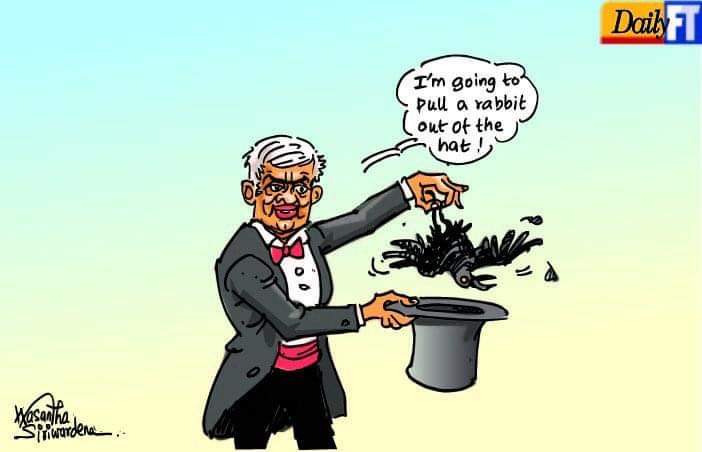
Sri Lanka PM Ranil Wickremesinghe sworn in as new Finance Minister

Sri Lanka Prime Minister Ranil Wickremesinghe was sworn as Minister of Finance, Economic Stability and National Policies Wednesday (25) morning before President Gotabaya Rajapaksa.

The finance portfolio has been vacant since the resignation of former Finance Minister Ali Sabry and the appointment of Wickremesinghe as Prime Minister.

On Tuesday (25), co-cabinet spokesman and Energy Minister Kanchana Wijesekara said President Rajapaksa would be serving as acting finance minister until a replacement was found.

Main opposition Samagi Jana Balavegaya (SJB) MP Harsha de Silva, who had been asked by various quarters to take up the job, had decided against it, claiming that he would only accept the position in an all-party government.

Posted in Uncategorized

Sri Lanka picks Lazard, Clifford Chance as advisers for landmark debt restructuring: Reuters

Sri Lanka has hired heavyweight financial and legal advisers Lazard and Clifford Chance as it prepares for the difficult task of renegotiating its debts, a trio of sources told Reuters on Monday.

The move is the latest development in Sri Lanka’s worst economic crisis since independence from Britain in 1948 and comes after the country was officially declared in default for the first time ever last week after it halted debt payments. read more

All three sources asked not to be named because the talks remain private. Spokespeople from Sri Lanka’s Cabinet and Lazard, which has handled debt talks for dozens of crisis-strained countries in recent years, did not immediately reply to requests for comment while law firm Clifford Chance declined to comment.

Experts and economists have been waiting for the appointment as the country looks to restructure over $12 billion of overseas debt that had been building up for years but become unsustainable when COVID-19 hammered the economy.

The economy of around 22 million people began to show cracks in 2019 after large tax cuts by President Gotabaya Rajapaksa’s government drained the country’s coffers. The pandemic then shattered the lucrative tourism industry, and rising global prices have left Colombo struggling for essentials such as fuel, medicine and food.

Violence between pro- and anti-government factions and police left nine dead and more than 300 injured earlier this month. That was followed by the resignation of former prime minister Mahinda Rajapaksa. read more

“By far the most important thing is to what extent the government will have the political will, and the ability, to deliver on the pre-conditions for the IMF programme,” said Gramercy’s co-head of sovereign research & strategy, Petar Atanasov.

“Governments are often willing to do the things that are required when their backs are completely against the wall.”

While there are hopes a deal can be struck to ease the economic crisis, it is unlikely to be straightforward.

A mix of loans from China, India and Japan, as well as all the bonds held by private investment funds mean long-resisted but now embraced talks with the International Monetary Fund (IMF) could be complex, especially if social unrest worsens.

Other factors have included heavily subsidised domestic prices of fuel and a decision to ban the import of chemical fertilisers, which devastated the agriculture sector.

A group of Sri Lanka’s largest sovereign dollar bondholders has hired Rothschild as its financial adviser and another legal firm, White & Case, as its legal adviser.

“I think the new Cabinet would really have to show quick solutions to really pressing problems such as electricity and importation of goods to pacify the people,” said Carlos de Sousa, an emerging market strategist at Vontobel Asset Management which holds Sri Lanka’s bonds.

“They will try, but it is not clear to me whether they will be sufficiently successful. We will see.”

Source: Reuters

Sri Lanka’s controversial 21st Amendment to Constitution fails to come up for Cabinet approval

In a major blow to Sri Lanka’s new Prime Minister Ranil Wickremesinghe, the proposal for the 21st Amendment to the Constitution to curb the unfettered powers of President Gotabaya Rajapaksa, scheduled to be referred to the Cabinet on Monday, was not presented before it.

According to sources, the proposal was not presented in the Cabinet after parliamentarians of the ruling Sri Lanka Podujana Peramuna (SLPP) objected to it in its present form. They demanded that the proposed legislation be approved by the Attorney General before referring it to the Cabinet.

The 21st Amendment is expected to annul the 20A which gave unlimited powers to President Gotabaya Rajapaksa after abolishing the 19th Amendment which had made Parliament powerful over the president.

The constitutional reform was a major plank of the agreement between Rajapaksa and Wickremesinghe when he took over the job of prime minister on May 12.

Rajapaksa had also pledged reforms in the Constitution in an address to the nation earlier this month.

The 21st Amendment would make it impossible for those with dual citizenship to hold a seat in Parliament. President Rajapaksa, who is facing growing demand for his resignation for mismanaging the country’s economy, had relinquished his US citizenship in April 2019 before contesting the presidential elections.

Justice Minister Wijayadasa Rajapaksa had earlier said that the 21st Amendment seeks to further strengthen the powers of the existing commissions and to make them independent as well.

In addition to the existing Independent Commissions, the National Audit Commission and the Procurement Commission will be amended as Independent Commissions under the proposed legislation.

The justice minister said the new amendment also proposes the appointment of the Governor of the Central Bank to come under the Constitutional Council.

The powerful Rajapaksa family tightened their grip on power after their massive victory in the general elections in August 2020, which allowed them to amend the Constitution to restore presidential powers and install close family members in key positions.

In his 2019 presidential bid, Gotabaya Rajapaksa won a convincing mandate for the presidency during which he sought full presidential powers over Parliament.

Sri Lanka has been grappling with unprecedented economic turmoil since its independence from Britain in 1948.

A crippling shortage of foreign reserves has led to long queues for fuel, cooking gas and other essentials, while power cuts and soaring food prices have heaped misery on people.

The economic crisis has also triggered a political crisis in Sri Lanka and a demand for the resignation of President Gotabaya Rajapaksa. The crisis has already forced prime minister Mahinda Rajapaksa, the elder brother of the president, to resign on May 9.

An inflation rate spiralling towards 40 per cent, shortages of food, fuel and medicines and rolling power blackouts have led to nationwide protests and a plunging currency, with the government short of the foreign currency reserves it needed to pay for imports.

Source:India Today