Sri Lanka to obtain another loan from India for petroleum purchases

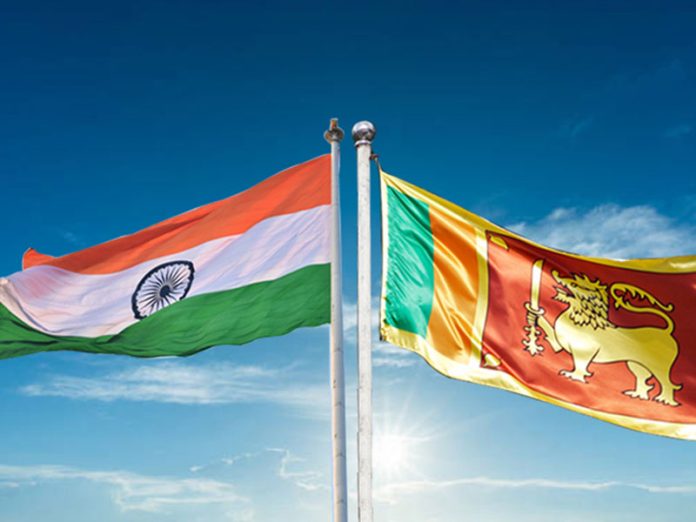
Sri Lanka will obtain another short-term loan facility of USD 500 million from the Export-Import Bank of India (EXIM Bank) to purchase petroleum products, the government says.

The new Cabinet of Ministers, which convened yesterday, approved the relevant proposal tabled by Minister of Power and Energy Kanchana Wijesekara.

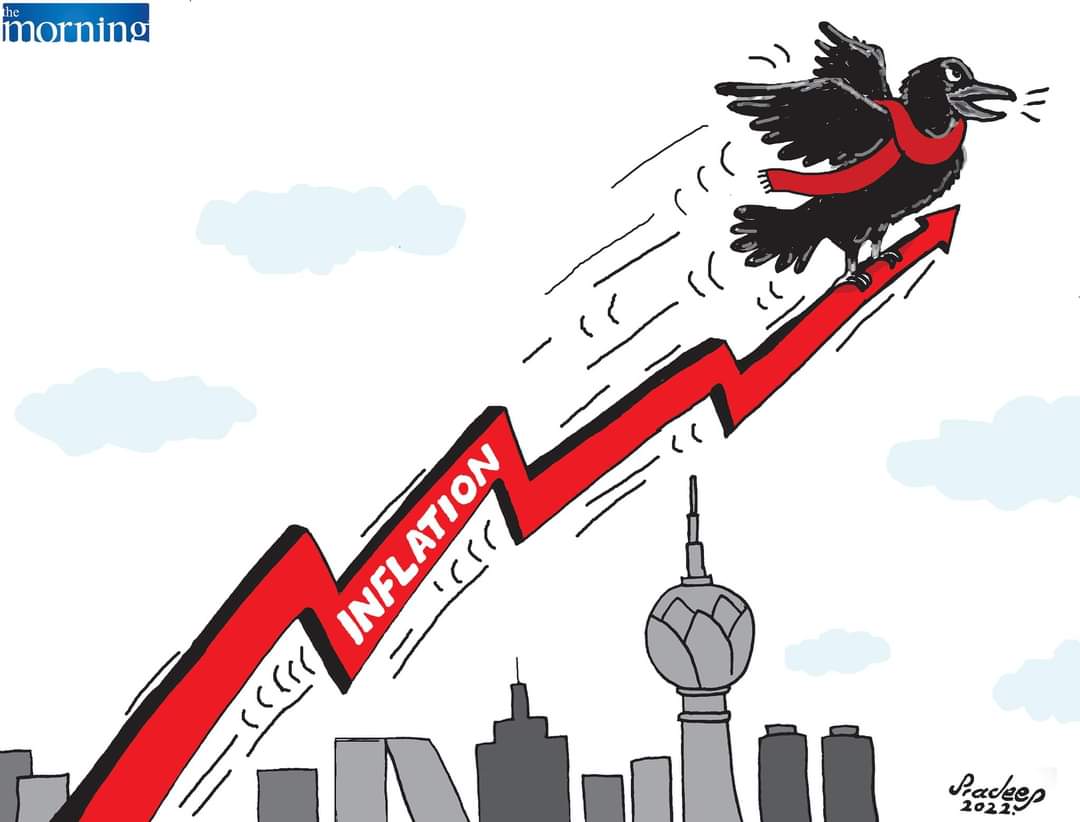
National inflation hits record high of 34% in April

The national consumer prices rose 33.8 percent in April over the same month in 2021, accelerating from 21.5 percent in March, as the after effects of the rupee weakness against the dollar sent shock waves across consumer markets, resulting in a multifold increase in the prices of everything from essentials to discretionary to durables.
This is higher than the 29.8 percent increase in the Colombo consumer prices reported for the same month a couple of weeks ago.

In April, both indices, the Colombo Consumer Price Index and National Consumer Price Index, recorded their highest ever inflation figures since their compiling began, signalling that the country has entered into a hyperinflation cycle, as the rupee lost 80 percent of its value since it was floated on March 7, exacerbating the price pressures already coming from higher commodities prices globally.

Meanwhile, the so-called core prices measured barring the often-volatile food, energy and transport, rose by 27.9 percent in April 2022 from a year ago, significantly up from 17.3 percent through March.

Central Bank Governor Dr. Nandalal Weerasinghe last week said that the near-term prices could hit upwards of 40 percent before any easing could happen with the decline in demand.

However, he said inflation happening beyond this point is out of the scope of their monetary policy tools, as the bulk of the price pressure at present is supply driven. Hence, he said they wouldn’t raise interest rates further higher to contain price pressures.

The monthly prices measured by the NCPI also rose by 10.2 percent, sharply up from 2.9 percent, reflecting the underlying price pressures, which were largely caused by the rupee weakness.

The food inflation measured by the NCPI rose by 45.1 percent in the 12 months to April 2022, up from 29.5 percent through March, as the prices of all food items, except for a couple of items in the NCPI basket, rose sharply.

The change in monthly food prices was 12.1 percent from March levels, compared to 2.4 percent between February and March.

Non-food inflation was recorded at 23.9 percent in the 12 months to April 2022, sharply accelerating from 14.5 percent through March, of which the largest contributor being the transport subcategory, as the fuel prices soared during April.

The prices measured on a monthly basis climbed 8.4 percent in April, compared to 3.4 percent in March over February levels.

There wasn’t a single subcategory under non-food inflation, which had even a slightest decline in prices in April, reflecting how broad-based and how deep the inflation runs through.

While inflation isn’t a phenomenon confined only to Sri Lanka, as almost every country, including the most inflation resistant countries such as Japan is confronted with ugly price pressures, the situation in Sri Lanka is more acute and painful, due to the weakness of its currency.

21A given to Cabinet, BASL unsatisfied

Following a meeting of the Constitution Amendment drafting committee held yesterday (23) at the Prime Minister’s office, the 21st Amendment to the Constitution was presented to the Cabinet of Ministers last evening, while the Bar Association of Sri Lanka (BASL) expressed concern that the draft Amendment has omitted several provisions of the 19th Amendment.

The Cabinet decided to distribute copies of the amendment amongst the Parliament party leaders for their observations and the amendment will be discussed on Friday (27). Following this, the Amendment will be sent back to Cabinet for final approval. The first meeting of the new Cabinet was held yesterday under the patronage of President Gotabaya Rajapaksa.

The Bill has reinstated the provisions of the 19th Amendment, whilst adding a number of other provisions, such as those related to an Audit Services Commission, Procurement Commission, and parliamentary oversight during the appointment of the Governor to the Central Bank of Sri Lanka (CBSL). The 21st Amendment Bill has been drafted by a committee led by Premier Ranil Wickremesinghe and newly appointed Justice Minister Wijayadasa Rajapaksa.

However, the BASL has expressed concern that while the 21st Amendment will bring back the provisions of the 19th Amendment regarding the Constitutional Council and the Independent commissions, there are several vital provisions contained in the 19th Amendment that are missing in the draft of the 21st Amendment.

The BASL said that the 21st Amendment must include a provision amending Article 44(2) of the Constitution to remove the power of the President to retain ministries and assign any subjects or functions to himself.

In letters addressed to President Gotabaya Rajapaksa, Prime Minister Ranil Wickremesinghe, and Justice Minister Dr. Wijeyadasa Rajapakshe, the Bar Association of Sri Lanka recommended that the following matters which were contained in the BASL proposals be included in the 21st Amendment:

A provision for the members of the Monetary Board to be appointed with the approval of the Constitutional Council (in addition to the Governor of the Central Bank);
A provision for the appointments of the Secretaries to the Ministries, Governors of the Provinces, and Ambassadors and Heads of Missions be made on the advice of the Prime Minister in consultation with the Cabinet of Ministers;
A provision to require Presidential Pardons to be granted according to the recommendation by a body established by law, appointed by the President on the recommendation of the Constitutional Council; and
A provision to enhance the financial independence, transparency, and accountability of the Independent Commissions.
The BASL further recommended that the number of members of the Constitutional Council who are not MPs be increased from three to five and conversely the number of MPs on the Constitutional Council be reduced from seven to five, as stipulated in the 17th Amendment to the Constitution. It noted that this is consistent with the position taken by the BASL in 2015 when the 19th Amendment was enacted.

The BASL called on the Government to ensure the early enactment of the 21st Amendment to the Constitution, as it is a necessary step towards achieving stability in Sri Lanka.

Posted in Uncategorized

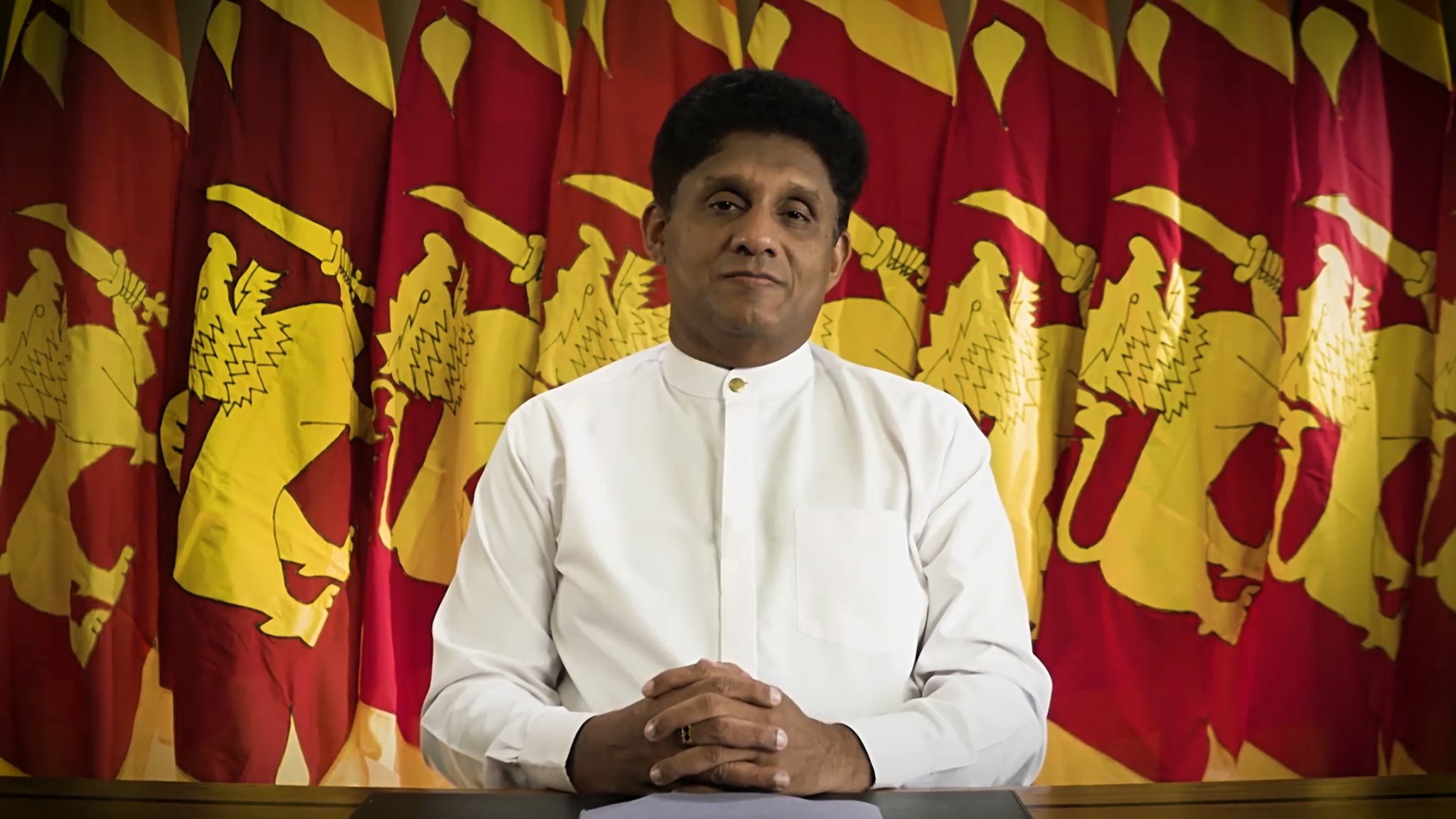
Sajith Slams Government’s Plans To Dilute 21A Proposals: Calls For Abolition Of Executive Presidency

Opposition Leader Sajith Premadasa said the government was planning to present a diluted version of the 21st Amendment to the Constitution.

Issuing a statement, Premadasa said the draft amendment his party presented the abolition of the Executive Presidency and the re-enactment of the 19th Amendment to the Constitution in its full force. P

Premadasa accused the current government of diluting those reforms and engaging in political conspiracies to hoodwink the public.

India sends another consignment of 40,000 MT of petrol to Sri Lanka

The latest consignment of 40,000 metric tons of petrol under the Indian credit line has been delivered to Sri Lanka today, the Indian High Commission in Colombo said.

The Ship GT Freedom carrying the 40,000 MT petrol has arrived in Sri Lanka today.

“Commitment delivered!! Around 40000 MT of petrol under Indian assistance reached Colombo today,” the High Commission tweeted.

It is reported that with this 40,000 metric tons of petrol, India has so far supplied over 500,000 metric tons of various types of fuel to Sri Lanka under Indian assistance.

Posted in Uncategorized

Sri Lankan medicine shortage a death sentence for some, doctors say

COLOMBO: A shortage of medicine caused by an economic crisis in Sri Lanka could soon cause deaths, doctors said, as hospitals are forced to postpone life-saving procedures for their patients because they do not have the necessary drugs.

Sri Lanka imports more than 80 per cent of its medical supplies but with foreign currency reserves running out because of the crisis, essential medications are disappearing from shelves and the healthcare system is close to collapse.

At the 950-bed Apeksha cancer hospital on the outskirts of the commercial capital, Colombo, patients, their loved ones and doctors feel increasingly helpless in the face of the shortages which are forcing the suspension of tests and postponement of procedures including critical surgery.

“It is very bad for cancer patients,” said Dr Roshan Amaratunga.

“Sometimes, in the morning we plan for some surgeries (but) we may not be able to do on that particular day … as (supplies) are not there.”

If the situation does not improve quickly, several patients would be facing a virtual death sentence, he said.

Sri Lanka is grappling with its most devastating economic crisis since independence in 1948, brought about by COVID-19 battering the tourism-reliant economy, rising oil prices, populist tax cuts and a ban on the import of chemical fertilisers, which devastated agriculture.

A government official working on procuring medical supplies, said about 180 items were running out, including injections for dialysis patients, medicine for patients who have undergone transplants and certain cancer drugs.

The official, Saman Rathnayake, told Reuters that India, Japan and multilateral donors were helping to provide supplies, but it could take up to four months for items to arrive.

In the meantime, Sri Lanka has called on private donors, both at home and abroad, for help, he said.

“TREMENDOUS FEAR”

Doctors say they are more worried than the patients or their relatives, as they are aware of the gravity of the situation and the consequences.

Referring to the ubiquitous queues for petrol and cooking gas, Dr Vasan Ratnasingam, a spokesman for the Government Medical Officers’ Association, said the consequences for people awaiting treatment were so much more dire.

“If patients are in a queue for drugs, they will lose their lives,” said Ratnasingam.

The mother of Binuli Bimsara, a four-year-old girl being treated for leukaemia, said she and her husband were terrified.

“Earlier, we had at least some hope because we had the medication but now we are living under tremendous fear,” the mother said.

“We are really helpless, our future is really dark when we hear about a shortage of medicines. We don’t have money to take our child abroad for treatment.”

Indian authorities delivered 25 tonnes of medical supplies, along with other aid, on Sunday (May 22), officials said.

“At no time has India assisted any other country to this extent … This is something for which we are deeply grateful,” Sri Lanka’s foreign minister, GL Peiris, said at Colombo’s port as he stood by a vessel bringing in thousands of sacks of supplies.

“This is probably the most difficult period that Sri Lanka has had to face since independence.”

Source: Reuters/lk

Posted in Uncategorized

Sri Lanka president appoints 8 new cabinet ministers

Eight new cabinet ministers were appointed by Sri Lanka President Gotabaya Rajapaksa on Monday (23), bringing total appointments to 25 so far since the appointment of Ranil Wickremesinghe as Prime Minister earlier this month.

The following MPs were sworn in as ministers Monday morning before President Rajapaksa.

Douglas Devananda: Minister of Fisheries

Bandula Gunawardena: Minister of Transport & Highways, and Mass Media

Keheliya Rambukwella: Minister of Water Supply

Mahinda Amaraweera: Minister of Agriculture, and Forest Resources and Wildlife

Ramesh Pathirana: Minister of Industries

Vidura Wickramanayake: Minister of Buddhashasana, Religious, and Cultural Affairs

Ahamed Naseer: Minister of Environment

Roshan Ranasinghe: Minister of Irrigation, and Sports and Youth Affairs

Notably, newly sworn in Agriculture Minister Mahinda Samaraweera represents the Sri Lanka Freedom Party (SLFP), which had said it would not be taking any cabinet positions within the government. The party has yet to respond to Amaraweera’s appointment.

Previously sworn in Ports and Aviation Minister Nimal Siripala de Silva also represents the SLFP.

Following nine new Cabinet Ministers of the Government of Sri Lanka were sworn-in on May 20, 2022. 01. Nimal Siripala de Silva – Minister of Ports, Shipping and Aviation
02. Dr. Susil Premajayantha – Minister of Education
03. Dr. Keheliya Rambukwella – Minister of Health
04. Dr. Wijayadasa Rajapaksha – Judiciary, Prisons and Minister of Constitutional Reforms
05. Harin Fernando – Minister of Tourism and Lands
06. Ramesh Pathirana – Minister of Plantation Industries
07. Manusha Nanayakkara – Minister of Labor and Foreign Employment
08. Nalin Fernando – Minister of Trade, Commerce and Food Security
09. Tiran Alles – Minister of Public Security

On May 14, President Rajapaksa appointed four ministers.

They are:

Prof. G.L Peiris – Minister of Foreign affairs
Dinesh Gunawardena – Minister of Public Administration, Home Affairs, Provincial Councils and Local Government
Prasanna Ranatunga- Minister of Urban Development & Housing
Kanchana Wijesekera- Minister of Power & Energy

Posted in Uncategorized

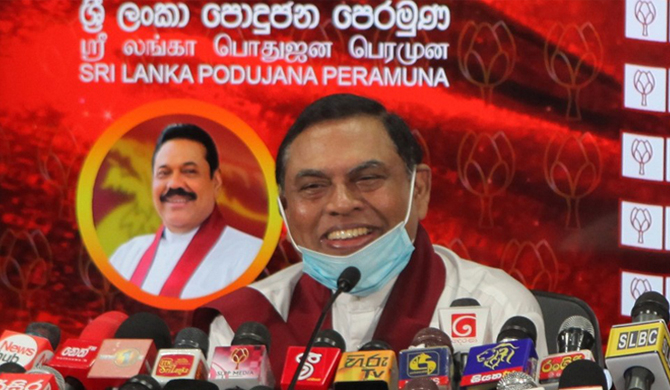
SLPP Expresses Concerns About 21st Amendment: Much Awaited Reform Still Hangs In The Balance

The Sri Lanka Podujana Peramuna has expressed concerns about the proposed 21st Amendment to the Constitution.

SLPP General Secretary Sagara Kariyawasam has said that the SLPP is not in favor of reintroducing the 19th Amendment to the Constitution in its previous form.

However, he has stated that the party is agreeable to reducing the powers of the Executive President and handing them over to Parliament.

Therefore, it is still not clear as to whether the SLPP – the party commanding the majority support in Parliament – will support the 21st Amendment.

The proposed 21st Amendment to the Constitution is drafted by the newly appointed Justice Minister Wijayadasa Rajapakshe.

Although the draft amendment was expected to be presented to the Cabinet today, informed sources said the move has been postponed.

Posted in Uncategorized

PM expresses gratitude to people of India for humanitarian assistance

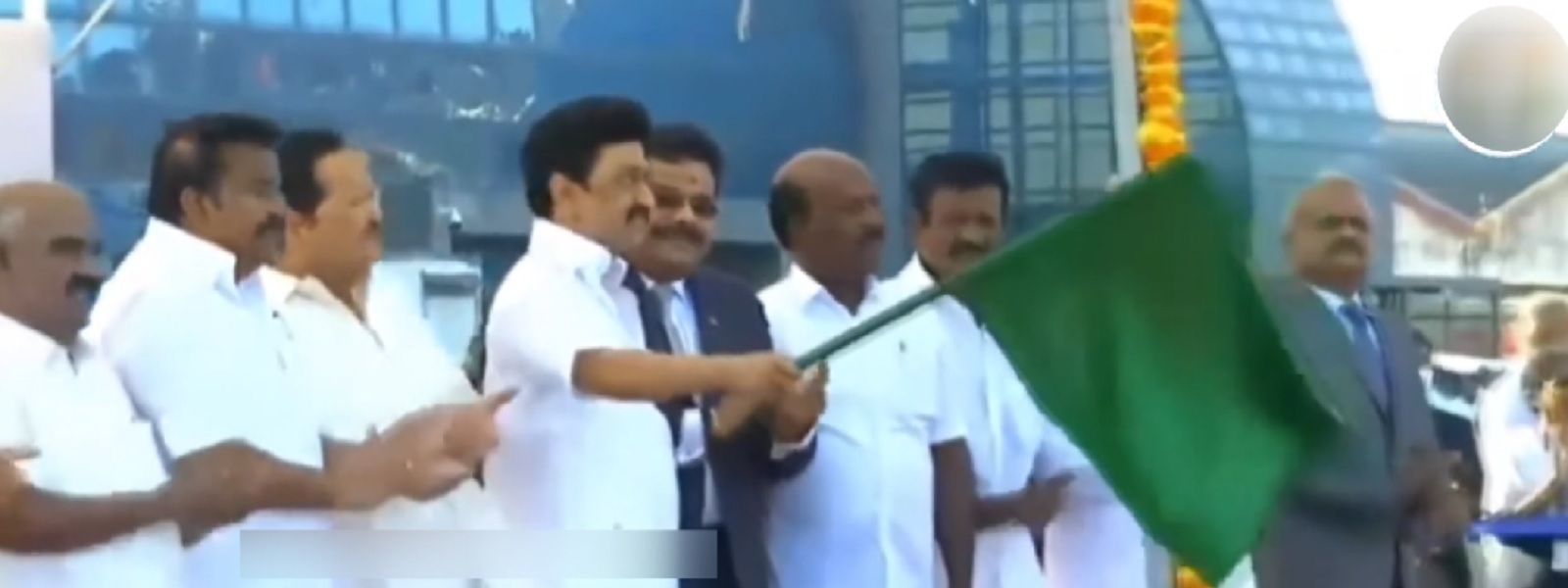
Sri Lanka prime minister Ranil Wickremesinghe on Sunday thanked Tamil Nadu chief minister MK Stalin, as well as the people of India, after a fresh consignment, containing food items and milk, reached Colombo after being flagged off from Chennai, on May 18.

“Sri Lanka today received Rs. 2 Billion worth Humanitarian aid including milk power, rice and medicines from India. Our sincere gratitude to the Tamil Nadu Chief Minister Hon. MK Stalin and the People of India for the support extended. I also appreciate the assistance given by the Indian High Commission in Sri Lanka and CWC leader S. Thondaman in Sri Lanka,” tweeted Wickremesinghe.

The Indian high commission to the island nation, based in its commercial capital of Colombo, informed more consignments would be sent from India.

“A message of care!!! From the people of India to the people of Sri Lanka…High Commissioner handed over rice, milk powder & medicines worth more than SLR 2 billion to Hon’ble FM Prof. GL Peiris in #Colombo today,” the high commissioned posted on its Twitter handle.

The latest consignment was flagged off by Tamil Nadu CM Stalin. India’s southern state and the neighbouring country are only separated by the Palk Strait.

Sri Lanka is in the middle of its worst economic crisis since 1948, when it gained freedom from British rule. New Delhi, under its ‘Neighbourhood First’ policy, has provided assistance to overcome the shortage of food and medicines.

Source: Hindustan Times

Sri Lanka loses apparel orders to India, Bangladesh

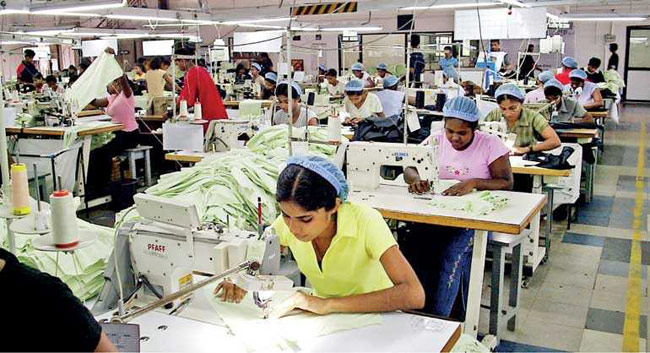
Sri Lanka’s apparel sector has started losing around 10-20% of its orders to neighbouring competitors India and Bangladesh, as buyers express concern over the country’s economic and political situation, stated the Joint Apparel Association Forum (JAAF) of Sri Lanka.

Speaking at an interview aired on Derana last Saturday (21), JAAF Deputy Chairman Felix Fernando said the country’s apparel sector has orders until June 2022, which were placed by buyers or brands at the end of 2021, when the situation of the country was considerably economically stable.

However, he said the buyers have proven reluctant to place their orders for the five to six months after June, due to Sri Lanka’s ongoing economic and political crisis.

“The buyers have started collecting information on Sri Lanka’s situation,” he said, adding that many major apparel brands’ suppliers in the country had to meet their buyers in the last few weeks to assure them that orders would be supplied without any disruption.

“Even now we have lost some orders. Some of the buyers have said that there is a high risk, so they have shifted 10-20% of their orders to India and Bangladesh,” Fernando said.

According to the Export Development Board (EDB), the apparel and textile sector has brought in $ 1.9 billion between January and April 2022, and according to Fernando, this is a 13% year-on-year (YoY) increase compared to 2021.

He said the apparel sector could keep up its increased export revenue until June 2022, but there would subsequently be a problem in keeping up its revenue, adding that although the sector is attempting to draw $ 6 billion to Sri Lanka over 2022, this would not be easy to achieve unless positive changes occur in the coming months.

Moreover, Fernando said that road closures due to protests have resulted in difficulties among apparel companies in getting their employees to work, which has left them unable to meet daily targets and overall deadlines.

“We cannot blame anyone, because the people in the country are under a lot of pressure, as the daily wage earners have no means of earning an income. But when they come to the street with their problems, the roads are closed; and when that happens, our factory employees find it difficult to go to work,” he added.

He also noted that the trade unions have understood the importance of the export sector for Sri Lanka at the moment, and have decided to continue working without strike action.

Fernando said that many economists have forecasted a global economic recession in the coming months that could reduce the buying power of apparel buyers if it occurs – which only spells more trouble for Sri Lanka’s export sector.

According to a Bloomberg Markets live survey conducted between 29 March and 1 April 2022, 48% of investors expect the US to fall into recession next year. Another 21% expect the downturn to happen in 2024, while 15% of the 525 respondents expect the recession to come as early as this year.