Inside the collapse of the Rajapaksa dynasty in Sri Lanka -Washington Post

COLOMBO, Sri Lanka — The mob was bashing on the gates of the Sri Lankan prime minister’s official residence, its size and fury swelling dangerously.

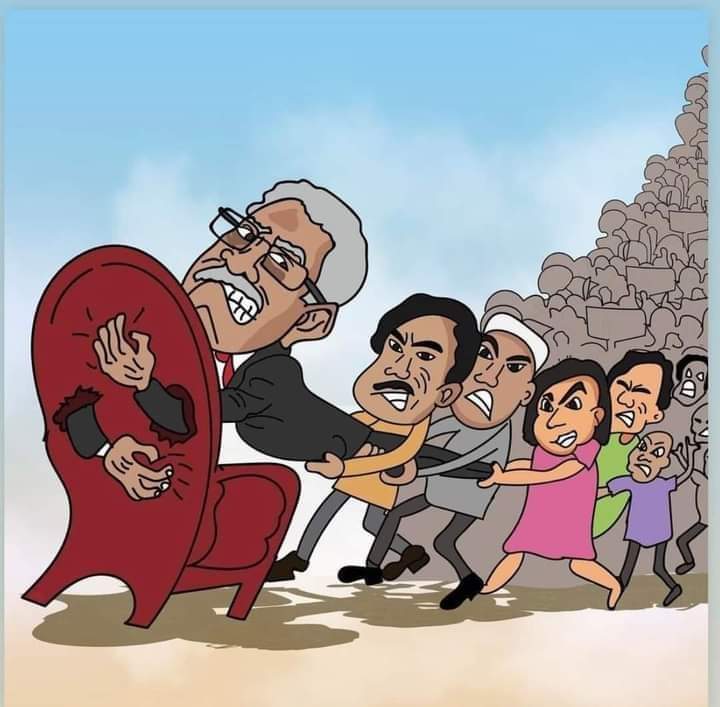
For weeks, Mahinda Rajapaksa, the 76-year-old prime minister, had been under pressure to resign as the economy imploded and protests erupted. The brother of the president, Gotabaya, and a patriarch of his own political dynasty, Mahinda was once hailed as appachchi, the beloved father of the people. Now he was huddled in his second-floor bedroom, accompanied by relatives who frantically called army officers, pleading to be rescued.

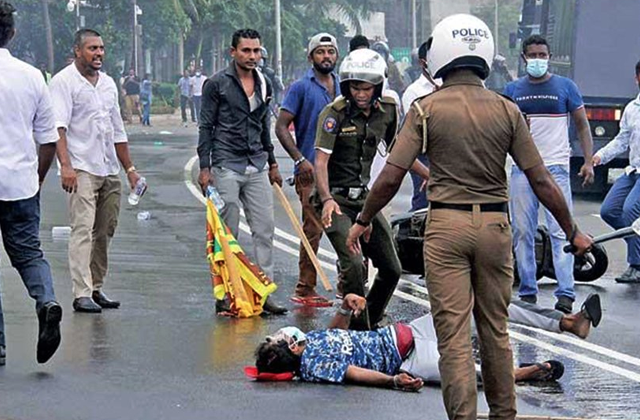
Outside the gates, anti-government protesters who had been attacked earlier by Mahinda’s supporters were taking their revenge — rioting, burning buses and torching hundreds of homes owned by allies of the Rajapaksas. A lawmaker from their party was beaten to death, his body dragged through the streets.

That day, May 9, was one of the most violent and chaotic in recent Sri Lankan history. But it was precipitated by years of turmoil inside the house of Rajapaksa.

The Rajapaksa brothers have dominated politics here for most of the last 20 years. After helping Mahinda win the presidency in 2005, his brothers Chamal, Gotabaya and Basil took over ministries that controlled three-quarters of the national budget and built popular support despite allegations of human rights abuses and corruption. But by 2019, when Gotabaya became president, the family was marred by infighting and dysfunction that would drive South Asia’s most developed nation into ruin.

In interviews, current and former ministers, foreign diplomats and Rajapaksa confidants, some of whom spoke for the first time as they saw the family splinter, said Gotabaya and Mahinda, and their respective factions, clashed over ministerial appointments and agricultural policies, investment deals and political favors. As the economy went into free fall this year, Mahinda, backed by several Rajapaksa scions, resisted Gotabaya’s wish that he step aside.

Distrust deepened to the point that members of Mahinda’s inner circle, besieged in his compound May 9, felt that the president had abandoned them. Udayanga Weeratunga, a cousin who was with the prime minister, and another family aide who was present, told The Washington Post that they suspect Gotabaya’s supporters in the army purposefully delayed coming to their aid for six hours.

Gotabaya is clinging to power after replacing his brother with a new prime minister, who revealed this week that Sri Lanka has less than $1 million in foreign reserves, dwindling medical supplies and almost no fuel.

Sri Lanka faces “total destruction,” former president Maithripala Sirisena said. “The country has learned a lesson about dynastic politics.”

The family business

When Mahinda, the son of a wealthy rice and coconut farmer who was active in politics, ran for parliament in 1970, he was following in the tradition of the few elite families that dominate Sri Lanka, a lush teardrop-shape island off the coast of India.

“You cannot win [in politics] if you’re not from an established family,” said Razeen Sally, a professor at the National University of Singapore. “So the system is left to established insiders who can pillage the state.”

The second of nine children, Mahinda was charismatic, loved crowds and stuck close to his younger brother, Basil, who is considered the family’s political strategist. Their middle brother, Gotabaya, was always different: aloof, politically inexperienced, a teetotaler and vegetarian who spent 21 years in the military. “He would visit the ancestral home only during New Year,” recalled Weeratunga, their cousin who is close to Mahinda.

The Rajapaksas ran the country like a family business during Mahinda’s 10-year presidency, starting in 2005. He named Gotabaya defense secretary while Basil and their oldest brother, Chamal, were placed in charge of irrigation and economic development. Sri Lanka enjoyed years of growth, fueled by a mountain of foreign debt.

Mahinda enjoyed the adulation of voters, who approved of his bloody but decisive victory in a 26-year civil war against Tamil rebels and his frequent appeals to Sinhalese Buddhist nationalism.

But allegations of corruption, including questionable deals with Chinese state companies and officials, swirled around Mahinda. Gotabaya was also implicated, though to a lesser extent, and faced scrutiny over the 2006 purchase of MiG fighters from Ukraine.

Sankhitha Gunaratne, deputy executive director of Transparency International Sri Lanka, said Mahinda and Basil have faced numerous accusations, including diverting tsunami relief aid and using public funds to buy land, but many cases have stalled or been withdrawn. “The alleged Rajapaksa corruption is like a large tree that provides shade to many people,” she said.

In 2021, a leaked trove of financial documents known as the Pandora Papers revealed that a niece of the Rajapaksa brothers had millions of dollars hidden in offshore accounts.

Amid growing anger over the Rajapaksas’ alleged cronyism and corruption, Mahinda lost a bid for a third term in 2015. Almost immediately, an eclectic coalition of pro-Western business executives, military hard-liners and Buddhist monks identified a new candidate: Gotabaya Rajapaksa.

The middle brother

It quickly became apparent that Gotabaya, backed by new political sponsors, would clash with Mahinda. The men rarely confronted each other directly, yet they disagreed on everything, including high-stakes political gamesmanship and petty corruption, family confidants said.

Dilith Jayaweera, a media magnate who is widely credited with launching Gotabaya’s candidacy, remembers an incident from 2018 when he was called by Mahinda to Gotabaya’s home. Mahinda had put Gotabaya’s name on the title to an illegally built resort so that a powerful monk, a political ally, could get free electricity. The scandal was about to leak and, as was often the case, Mahinda was reluctant to tell his brother, so he nudged Jayaweera to break the news to him.

Gotabaya was “livid,” Jayaweera said, and stormed off to a Buddhist temple, refusing to share a car with his brother.

In October 2018, a constitutional crisis erupted when Sirisena, then president, fired his prime minister, Ranil Wickremesinghe, and replaced him with Mahinda, who he had defeated at the polls just three years earlier. The capital was tense as both men made claims on the country’s No. 2 job and rumors swirled that Wickremesinghe might be removed by force. Fearing Mahinda and Basil were trying to outflank him and engineer their own return to power, Gotabaya secretly met Wickremesinghe to pledge his support.

Soon after, the Supreme Court ruled against Mahinda’s claim, and he backed down. The family had no option but to support Gotabaya.

In the run-up to elections, terrorist attacks by Muslim extremists rocked Sri Lanka, galvanizing Sinhalese Buddhist support around the former military man. On the campaign trail, Gotabaya spoke of security, good governance and development, pitching himself as a technocrat, and Colombo, with its emerging skyline of Indian- and Chinese-funded skyscrapers, as the next Singapore. He won in a landslide.

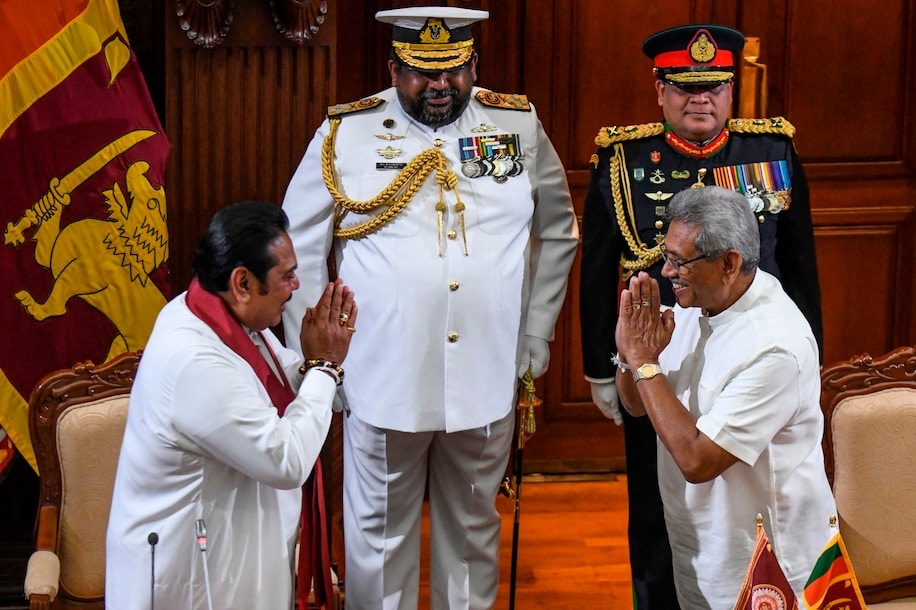
On the day of his swearing-in on Nov. 19, 2019, Gotabaya signaled a break from his family. He refused to wear a red “sataka,” the Rajapaksa clan’s signature scarf, favoring a short-sleeved shirt. Unlike Mahinda, who printed his own image on 1,000-rupee notes while he was president, Gotabaya prohibited government offices from hanging his official portrait.

But the next day was “the beginning of the downfall,” said Nalaka Godahewa, a former financial executive who was later Gotabaya’s minister of mass media.

Gotabaya’s pro-Western business-sector backers had recommended a list of appointments, but when the president unveiled his first Cabinet, it was led by Mahinda as prime minister and stocked with Basil and Mahinda loyalists. They enacted steep tax cuts and argued against seeking aid from the International Monetary Fund despite mounting debt. Gotabaya personally pushed through a ban on chemical fertilizers that hurt crop yields, just as global food prices soared.

Mahinda’s supporters said they had shaped the Cabinet only to be undermined by Gotabaya’s appointments. In several instances, the government issued trade policies that were retracted within 24 hours. “You had ministers fighting secretaries,” Weeratunga said. “Fighting permeated the administration.”

The Rajapaksas were united on one issue: A constitutional amendment passed in 2020 that weakened commissions investigating corruption and granted the president far-reaching powers over the courts.

The fall
By early 2022, the economy was in free fall. Foodstuffs like rice doubled in price from a year prior. Gasoline and electricity were in short supply. Foreign currency reserves were running out.

In April, nightly demonstrations took root in the capital demanding that the Rajapaksas leave politics, and some turned violent. Gotabaya’s entire Cabinet — which included Basil, the finance minister; the elder brother, Chamal; and Mahinda’s son — resigned, giving Gotabaya a chance to form a new government. Sri Lanka needed a stable image to present to foreign lenders and negotiate an urgent bailout.

But Mahinda, the prime minister, resisted calls from the opposition and even signals from the president to quit.

Gotabaya didn’t force the issue. “G.R. would say, ‘He knows what I want,’ ” said Godahewa, who joined the Cabinet after several Rajapaksas departed. “He felt he needed the support of Basil and Mahinda.”

With pressure mounting on Mahinda, his supporters organized a May 9 rally at Temple Trees, the prime minister’s compound. The patriarch, feeling deflated and mulling resigning, suddenly seemed energized, according to two family insiders and videos of the event.

“As a leader who has always listened to the people, I now ask you: What needs to be done?” Mahinda said to thousands of supporters sitting cross-legged in a chandelier-lit hall. “You must stay!” the crowd roared. “Does that mean I shouldn’t resign?” he asked again, soaking in calls to fight on.

When the rally ended, supporters streamed out of Temple Trees with steel rods and wooden sticks, beating anti-government protesters and sparking a bloody backlash that shocked the nation.

Holed up in Temple Trees with his sons, who had urged him to stay, Mahinda told his speechwriter at 4 p.m. that he was resigning. The speechwriter spread the news to the media, but that didn’t stop the violence, said two people inside the compound. Despite the family’s pleas, the army didn’t send reinforcements until 11 p.m., after protesters had already breached a gate. At 4 a.m., Mahinda was evacuated by soldiers to a military base.

“Mahinda understood this stalling was deliberate,” said Weeratunga, who accused Gotabaya of trying to intimidate his brothers. But two ministers who were by the president’s side that day said he furiously called military officers to no avail.

“He could neither control the army nor police,” Godahewa said.

Godahewa and foreign diplomats said army commander Shavendra Silva — who has been in frequent touch with Western officials — was reluctant to deploy his forces for fear of being seen as ordering a military crackdown.

The absence of the military that day widened the fissures among the brothers. In a speech to parliament this week, Chamal chastised Mahinda for not leaving politics in 2015. And at a recent meeting of the Rajapaksas’ party members, family allies angrily asked why they were not protected on May 9 in a rare display of discord. “How Gotabaya treats the party now will decide the direction of the people’s wrath,” Weeratunga said.

On May 12, an embattled and isolated Gotabaya named a new prime minister: Ranil Wickremesinghe, the man he secretly met with in 2018 when he first jockeyed for the position against his brother.

Four years later, Sri Lanka’s most powerful family was crumbling — maybe for good, said Jayaweera, the media magnate.

“The Rajapaksas, and Sri Lanka, ended in tragedy,” he said. “It ended because of their own doing.”
UK Opposition Leader suggests taking Lanka to Intl Criminal Court

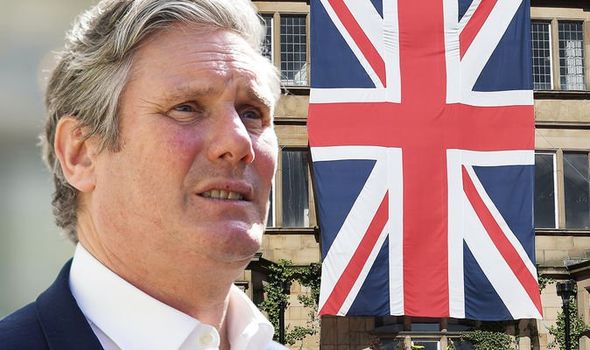
UK’s Opposition Leader Sir Keir Starmer delivering an address for Remembrance Day on May 18, urged the British Government “to stand with the Tamils and heed the recommendation of the UN High Commissioner” and to refer perpetrators of atrocities during the final phase of Sri Lanka’s civil war to the international Criminal Court.

The Labour Party Leader said, on Mullivaikkal Remembrance Day, the party remembers the tens of thousands of Tamils killed during the final stages of the Sri Lankan conflict. Starmer said the event is also a reminder of the need for truth, accountability, and reconciliation.

“13 years on, the perpetrators of these atrocities still have not been brought to justice. Today, the Labour Party recommits to securing justice for the families of those who died and the survivors who suffered such grave human rights violations,” Labour Party Leader said in his address.


Posted in Uncategorized

What if Gota won’t go? Sunday Island Editorial

Prime Minister Ranil Wickremesinghe, like all politicians, is fond of publicity. He may perhaps be like a former outspoken UNP minister in the 1965 UNP administration, Mr. IMRA Iriyagolla, who once famously said that “bad publicity is better than no publicity.” Despite the heavy demands on his time and energy, he has been able to find space for Western and other television stations to discuss the current situation in our island nation where the political and economic turmoil continues unabated. The premier has been praised in many quarters for coming clean on the situation confronting us all. He went public on the whole depressing story and, in the bargain, cracked a couple of jokes for the television cameras. He even told a BBC journalist to learn her history saying Churchill came to office in 1939 – actually 1940 – with just three supporters. We are told that this is not strictly correct as Churchill had the support of the Conservative Party after Chamberlain’s resignation and an International Churchill Society publication says “his time in the wilderness was over.”

Be that as it may, having led the UNP to near zero at the last election and himself taken the one National List seat then secured by the greens after months of procrastination, Ranil Wickremesinghe’s time in the wilderness seems to be also over. Accusations have been made, and will continue to be made, that President Gotabaya’s choice of the single-seat party leader as the new prime minister was nothing more than a strategy of saving his own skin. Wickremesinghe, well schooled in the art of political wheeling and dealing, was assured of the support of the Sri Lanka Podu Jana Permuna (SLPP) which he has now obtained. Several former ministers elected on that party’s ticket took cabinet office in the new administration in the first round of the prize giving and others have since followed. Despite some noises made by the SLFP decrying negotiations with individuals rather than the party, some SLFPers are also on board and, we are sure, there will be more to follow. Sajith Premadasa’s Samagi Jana Balavegaya (SJB) has not been able to hold its ranks and two MPs from that party have also joined the cabinet. They are obviously not afraid of the disciplinary action already threatened and have piously intoned that they will give all for the sake of the country.

However that be, the problems of the people remain unabated as evidenced by the daily television news visuals and bulletins of petrol/diesel and gas queues. The voice cuts are eloquently damning and ordinary people at the end of their tether don’t care a jot about roundly condemning on camera those who have placed them in their present predicament. That at least is a plus mark for GR because the white vans of the past are now history – although the perpetrators remain free – and people are not afraid to speak out their minds publicly. But that is not changing the situation in any tangible way. There are no dollars to pay for essentials and whether the external support now mobilized after the appointment of a new Central Bank governor and prime minister can ease the present situation in the short term remains to be seen. Some assurances have been offered that at least the petroleum and gas situations will be somewhat eased in coming days. Let us fervently hope that this will be so. But with a price of a loaf of bread going up to Rs. 170 last week where the cost of living is going is not rocket science.

The good news is that some kind of cross-party government is being formed but it will be bigger than what this country needs. The optimistic assessment was that ministers will be restricted to 12 but the word, as this is being written, is that it will be around 20. But there are the state ministers who will also be appointed. The prime minister has gone public that ministers will lose many of their perks and the extravaganza that has for too long been part and parcel of this country’s governing structure will be savagely pruned. There has even been a suggestion that ministers draw no emoluments but whether that will come to pass remains to be seen. Such economies will be wildly applauded by all the people of this country and not only those sweating and getting drenched at the Galle Face aragalaya. The people of Sri Lanka have always resented the gravy train that politics in this country had become and gone on for far too long. Judging by what is said in parliament these days, the MPs themselves are now becoming acutely aware of public opinion in this regard. Speeches on special arrangements made for MPs to obtain fuel and suggestions that the parliament restaurant offering subsidized meals be closed down reflect a growing awareness among parliamentarians of what their electors think of them.

Unfortunately, despite the many political developments crammed into the week that has passed, President Gotabaya Rajapaksa has not offered even the slightest hint that he will quit the presidency, bowing to the demands of those who overwhelmingly voted him into office two and a half years ago. He may be perhaps waiting for a way for a dignified exit being prepared for him. There have been many mean culpas, the latest from Chamal, the eldest of the Rajapaksa brothers who told parliament that MR should have gracefully retired after his second term and avoided the present ignominy confronting the whole clan.

SL rupee shortage alongside dollar crisis

Recent bids at the Treasury Bill auction of the Central Bank (CB) reflect the rupee liquidity shortage in the country’s banks, economists point out.

The gravity of the rupee liquidity shortage is witnessed by the bids submitted by primary dealers at spurious rates, they say.

Now they bid at high rates to capitalise on high inflation followed by higher interest rates, analysts say.

“They are expecting inflation to increase further and anticipate being compensated higher when they rise,” Murtaza Jafferjee, CEO JB stockbrokers told the Business Times on Thursday. Inflation is expected to go up to 40 per cent, CB Governor Dr. Nandalal Weerasinghe told reporters on Thursday.

Primary dealers are authorised to bid for the regulator’s Treasury Bill auctions and required to offer bids at a minimum 10 per cent of the auction amount.

Last Wednesday, Rs. 90 billion was offered by the CB. The regulator accepted only Rs. 16 billion (at 24 per cent) from the bidders with analysts saying that the balance Rs. 74 billion is likely to be printed. This is ample testimony of the rupee shortage, economists say.

They say that when the credit-worthiness of the country declines these are some of the many outcomes.

A senior banker told the Business Times that offering bids at high rates is nothing new because when there is a calamity the primary dealers will try to get the best deal.

The Bank of Ceylon (BoC) seems to be the institution that needs the most cash evident from the rates offered at the Treasury bill auction on Wednesday (ranging from 28 to 31 per cent and on May 11 (36 to 37 per cent).

Economists point out that this state-owned enterprise has lent the highest amount of loans to the Ceylon Petroleum Corporation, the Ceylon Electricity Board etc and to continue to do so they need to participate at higher rates at the auctions in the current context.

On Wednesday, U.S. investment bank JP Morgan backed Sri Lanka’s crisis-hit government bonds, saying recent political changes in the country should slowly improve its stresses and help its talks with the International Monetary Fund. “This report says that things are stabilising and the expectation that international sovereign bond yields are on the decline is a good thing,” an industry source said. He said that the primary dealers were trying to push the government to give them the bids at higher rates but if money comes into the country after the international report the requirement for borrowing at these rates won’t be necessary. He added that if the inflation shows high rates the current auction rates may not look so good.

Current interest rates, which shot up in April, have been left unchanged for May, the Central Bank said in a statement after its regular monthly policy review meeting on Wednesday of its Monetary Board.

Posted in Uncategorized

21st Amendment for Cabinet approval tomorrow (23)

Minister of Justice Dr. Wijayadasa Rajapaksa states that the 21st Amendment to the Constitution will be referred to the Cabinet for approval tomorrow (23).

The Minister said that the amendment would make it impossible for those with dual citizenship to hold a seat in Parliament.

Moreover, n addition to the existing Independent Commissions, the National Audit Commission and the Procurement Commission will be amended as Independent Commissions.

Wijeyadasa Rajapaksa, Minister of Justice stated that the 21st Amendment to the Constitution seeks to further strengthen the powers of the existing commissions and to make them independent as well.

The Minister added that the new amendment also proposes to for the appointment of the Governor of the Central Bank to come under the Constitutional Council.

Posted in Uncategorized

CWC undecided on joining Government?

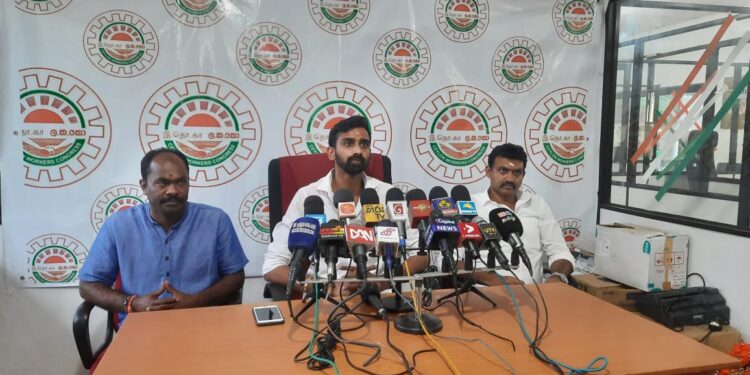
The Ceylon Workers’ Congress (CWC) maintains that the party will extend its support to the incumbent Government and assist in providing economic relief to the people, but is yet to make a final call on joining the Government, according to CWC Leader Senthil Thondaman.

Thondaman noted that the party’s decision to join the Government would be based on its economic revival plan, which was yet to be seen by the CWC.

“We have clearly stated that the CWC will join a government that will provide the best economic revival plan for the country. However, the current Government has not yet presented such an economic revival plan,” he said.

However, it is also learnt that the CWC’s General Secretary Jeevan Thondaman is to be sworn in as a Cabinet minister this week along with the remaining Cabinet members. A total of 13 Cabinet ministers have so far been appointed in two stages.

A senior Government source told The Sunday Morning yesterday (21) that Jeevan Thondaman had already confirmed that he would assume a Cabinet portfolio after he returned from a visit to India.

The two CWC leaders, Senthil and Jeevan, visited India last week where they met with Indian officials including India’s Finance Minister Nirmala Sitharaman and made representations on behalf of Sri Lanka, seeking further assistance to overcome the ongoing economic crisis in the island.

Posted in Uncategorized

Fitch downgrades Sri Lanka to ‘RD’

Fitch Ratings has downgraded Sri Lanka’s Long-Term Foreign-Currency (LTFC) Issuer Default Rating (IDR) to ‘RD’ (restricted default) from ‘C’.

KEY RATING DRIVERS

Grace Period Ends: The downgrade of Sri Lanka’s LTFC IDR to ‘RD’ follows expiry of the 30-day grace period on coupon payments that were due on 18 April 18 2022 on two international sovereign bonds.
On 12 April 2022 the Ministry of Finance made a statement that it had suspended normal debt servicing of several categories of its external debts, including bonds issued in the international capital markets and foreign currency-denominated loan agreements or credit facilities with commercial banks or institutional lenders. Following this announcement, we downgraded the LTFC IDR to ‘C’ on 13 April 2022.

Fitch has downgraded Sri Lanka’s foreign-currency issue ratings to ‘D’ from ‘C’, given the default on the senior unsecured foreign-currency bonds and the cross-default clauses triggered in the other rated international foreign-currency sovereign bonds.

Local Currency Debt Not Affected: The rating action applies only to the government’s long-term external debt obligations. We have affirmed Sri Lanka’s Long-Term Local-Currency IDR at ‘CCC’, as the government has continued to service local-currency debt and we assume this will continue. We have also affirmed Sri Lanka’s Short-Term IDRs at ‘C’ and the Country Ceiling at ‘B-’.

ESG – Governance: Sri Lanka has an ESG Relevance Score of ‘5’ for Political Stability and Rights as well as for the Rule of Law, Institutional and Regulatory Quality and Control of Corruption, as is the case for all sovereigns. These scores reflect the high weight that the World Bank Governance Indicators have in our proprietary Sovereign Rating Model. Sri Lanka has a medium World Bank Governance Indicator ranking in the 46th percentile, reflecting a recent record of peaceful political transitions, a moderate level of rights for participation in the political process, moderate institutional capacity, established rule of law and a moderate level of corruption.

ESG – Creditor Rights: Sri Lanka has an ESG Relevance Score of ‘5’ for Creditor Rights as willingness to service and repay debt is highly relevant to the rating and is a key rating driver with a high weight. The downgrade of Sri Lanka’s rating to ‘RD’ reflects a default event.

Posted in Uncategorized

China ready to play constructive role in easing Sri Lanka’s debt burden: Chinese Foreign Ministry

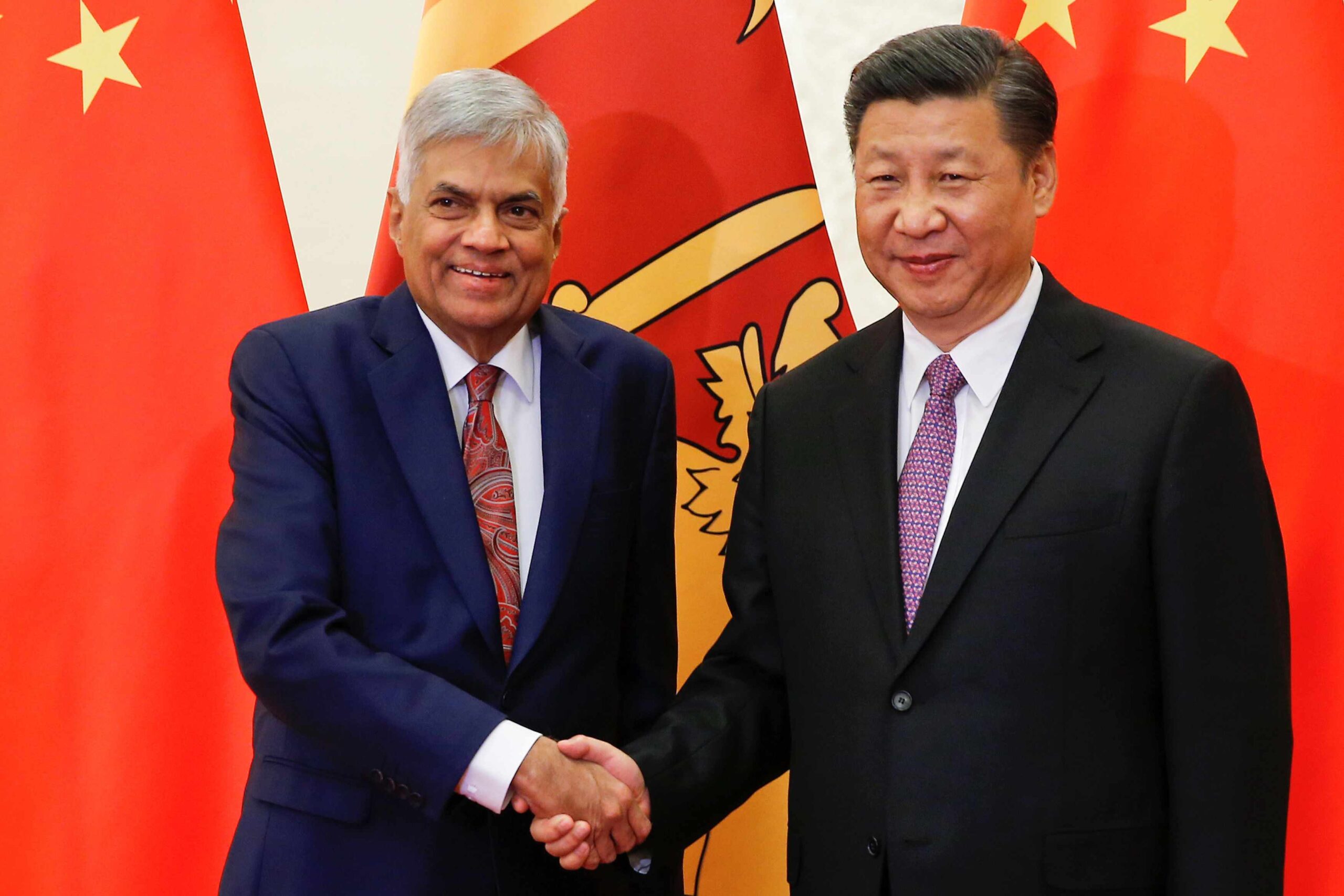
China fully relates to the difficulties and challenges facing Sri Lanka and stands ready to play a constructive role in its steady economic and social development, says the Foreign Ministry Spokesperson of China, Wang Wenbin.

Answering questions directed by media, the Foreign Ministry Spokesperson said that with regard to Sri Lanka’s debt to China, the country supports relevant financial institutions in having consultations with Sri Lanka to seek a proper settlement.

China stands ready to work with relevant countries and international financial institutions and continue to play a positive role in easing Sri Lanka’s debt burden and helping it achieve sustainable development, he added.

In the meantime, Wenbin stated that he hopes and believes that Sri Lanka will work in the same direction and make independent efforts to uphold the legitimate rights and interests of foreign investment and financing partners, and maintain stability and credibility of its investment and financing environment, the Spokesperson emphasized.

State of Emergency lapses

The State of Emergency imposed by President Gotabaya Rajapaksa earlier this month, has lapsed with effect from last night.

The President’s Office said that the State of Emergency lapsed last night (20th May).

President Gotabaya Rajapaksa had declared a State of Emergency on 6th May.

The State of Emergency gave the security forces sweeping powers to maintain law and order.

Issuing a gazette notice on 6th May, the President said that he is of the opinion that by reason of a public emergency in Sri Lanka, it is expedient, so to do, in the interests of public security, the protection of public order and the maintenance of supplies and services essential to the life of the community.

The gazette says the President, by virtue of the powers vested in him by Section 2 of the Public Security Ordinance (Chapter 40), as amended by Act, No. 8 of 1959, Law No. 6 of 1978 and Act, No. 28 of 1988, do by the proclamation declare that the provisions of Part II of that Ordinance, shall come into operation throughout Sri Lanka with effect from 06th May, Two Thousand and Twenty Two.

PTA Amendment Bill: A Facade for Backdoor Human Right Violations?

Counterterrorism and protecting human rights has been a long standing dichotomy on a global scale. The same fate was experienced in the Sri Lankan context with the civil war and internal insurrections. Among all counterterrorism measures, the Prevention of Terrorism Act (Temporary Provisions) (PTA) of No. 48 of 1979 has been the most debated. The PTA was enacted on July 15, 1979 as a temporary urgent bill. It was presented to the Parliament by President J.R. Jayewardene, debated and passed within one day. Although President Jayewardene presented the Bill to deal with terrorism in North, ironically first to be detained under the Act were two Sinhalese activists of the opposition. Thus since its enactment the PTA has had ulterior motives. All in all the PTA is yet another embodiment of horrors of undemocratic and unfettered executive powers. Despite several attempts to amend or repeal this draconian piece of legislation it has existed, causing grave human right violations in the country, particularly targeting minorities, political opponents, activists and journalists. Beyond such egregious and inhumane violations, the research has shown its larger impact on socio-economic conditions as well. The most recent attempt in answering constant international and domestic aversion to the Act has been the PTA Amendment Bill of 2022.

President Gotabaya Rajapaksa appointed a committee in June 2021 to make recommendations to the cabinet sub-committee to review the PTA. In the process of the committee deciding whether to amend the existing law or to draft a new legislation, they also looked at the Counter Terrorism Bill formulated under the previous government. Meanwhile in August 2021, the president appointed an Advisory board on the PTA to make recommendations and advise him. The first report of the committee was handed over to the president in November 2021 without taking measures to publicise it. The Bill was tabled in Parliament on February 10, 2022 amid heavy criticism of minority MPs and civil society activists. Furthemore it is evident that the government is attempting to pass a pretense legislation in haste to rescue GSP+ granted by the European Union (EU) and face UN Human Rights Council However, (un)fortunately after the bill was tabled the EU noted its concern over leaving out crucial amendments. The Human Rights Commission of Sri Lanka, despite stripping off its independence under the 20th Amendment, advocated for the repeal of the Act with the tabling of the Bill.

In analysing the provisions of the Bill it is apparent that many controversial and undemocratic provisions of the Act that led to serious human right violations have been left out and ignored. Firstly the Bill has completely refrained from addressing key provisions that outright violate the freedom from arbitrary arrest, detention and punishments and the right to a fair and due process. Under S. 16 of the PTA confessions and statements by suspects are made admissible in contrary to the requisites of the Evidence Ordinance. For example under the Evidence Ordinance confessions made to a police officer or while in police custody are inadmissible, however the PTA allows them. The Act further puts the burden of proof on the suspect to prove that a statement is obtained under inducement, threat or promise.

The Bill has not amended the initial period of 72 hours after arrest and before producing a suspect before a magistrate whereas under the general law, the maximum period in custody before being produced is 24 hours. However, the Bill has amended the S.9 of the PTA where the period of 18 months of detention without bail is now 12 months, has imposed a duty on Magistrate to visit the suspect and has made it a requisite to inform HRCSL on such detentions. While the latter amendments are commendable yet there is much space to progress such as making it mandatory for the Magistrate to direct the suspect to judicial medical officer and IGP if he or she is subjected to torture. Furthermore under the Bill the Minister can still decide the detention place of the suspect. The case studies have consistently shown how the freedom from torture has been inhumanely violated to obtain confessions while detaining suspects for longer periods of time, yet these provisions have not been answered adequately by the Bill.

There is no provision in the PTA to inform the suspects about their charges, causes and rights at the time of arrest. Although it is required under the general law the PTA has remained exceptional, and still remains so under the Bill. This is a violation of Article 13(1) of the Constitution and Sri Lanka’s international obligation under Article 9(2) of the ICCPR, where any person arrested has to be informed of the reason for arrest. Another leeway for torture under the PTA is the unfettered powers granted to investigating officers under S.6 including to take suspects from place to place, seizure and search. While these powers should be exercised while ensuring human rights and international standards, many case studies reveal the contrary. However the Bill has not addressed this section at all.

It is noted that many extravagant additions in the Bill such as right to be represented by lawyer and right to challenge the decision in the Supreme Court by way of Writ have always existed. And when everything boils down to ground realities the situation can be entirely different. For example there are many case studies on how lawyers rejected certain detainees due to outside pressure. Therefore the PTA is not an answer on paper. The PTA does not only violate freedom from torture or even freedom from arbitrary arrest but it also has a ripple effect on freedom of expression, right to privacy, freedom of movement and freedom of assembly. Therefore the government should take the amendments seriously without attempting to fool the crowd.

Source:Ground Views

Posted in Uncategorized