Sri Lanka crisis: Gotabaya Rajapaksa loses parliamentary majority

41 lawmakers leave coalition, leaving Rajapaksa’s government with fewer than the 113 members needed to maintain a majority in the 225-member house

Sri Lanka’s President Gotabaya Rajapaksa on Tuesday lost his parliamentary majority, as a group of lawmakers from the ruling party and its allies sat independently in the House, deserting the government that faces enormous public criticism for “mishandling” the economic crisis.

Over 42 MPs, including from key partner Sri Lanka Freedom Party (SLFP), quit the ruling Sri Lanka Podujana Peramuna (SLPP or People’s Front)-led alliance, and the government lost its majority in the 225-member legislature. Thier defection signalled the collapse of the government ‘s popularity that, in 2020, fetched it a formidable two-thirds majority. However, there is no vote of confidence scheduled yet to test the strength of the government or Opposition .

In his address to Parliament on Tuesday, Leader of Opposition Sajith Premadasa blamed the government for the current crisis, and said it was time for the country to abolish Executive Presidency that allows the President sweeping powers to take unilateral decisions. Opposition legislator and Jaffna MP M.A. Sumanthiran too intervened, challenging the government to put its recently imposed Emergency regulations to vote in the House, as is mandated in the Constitution.

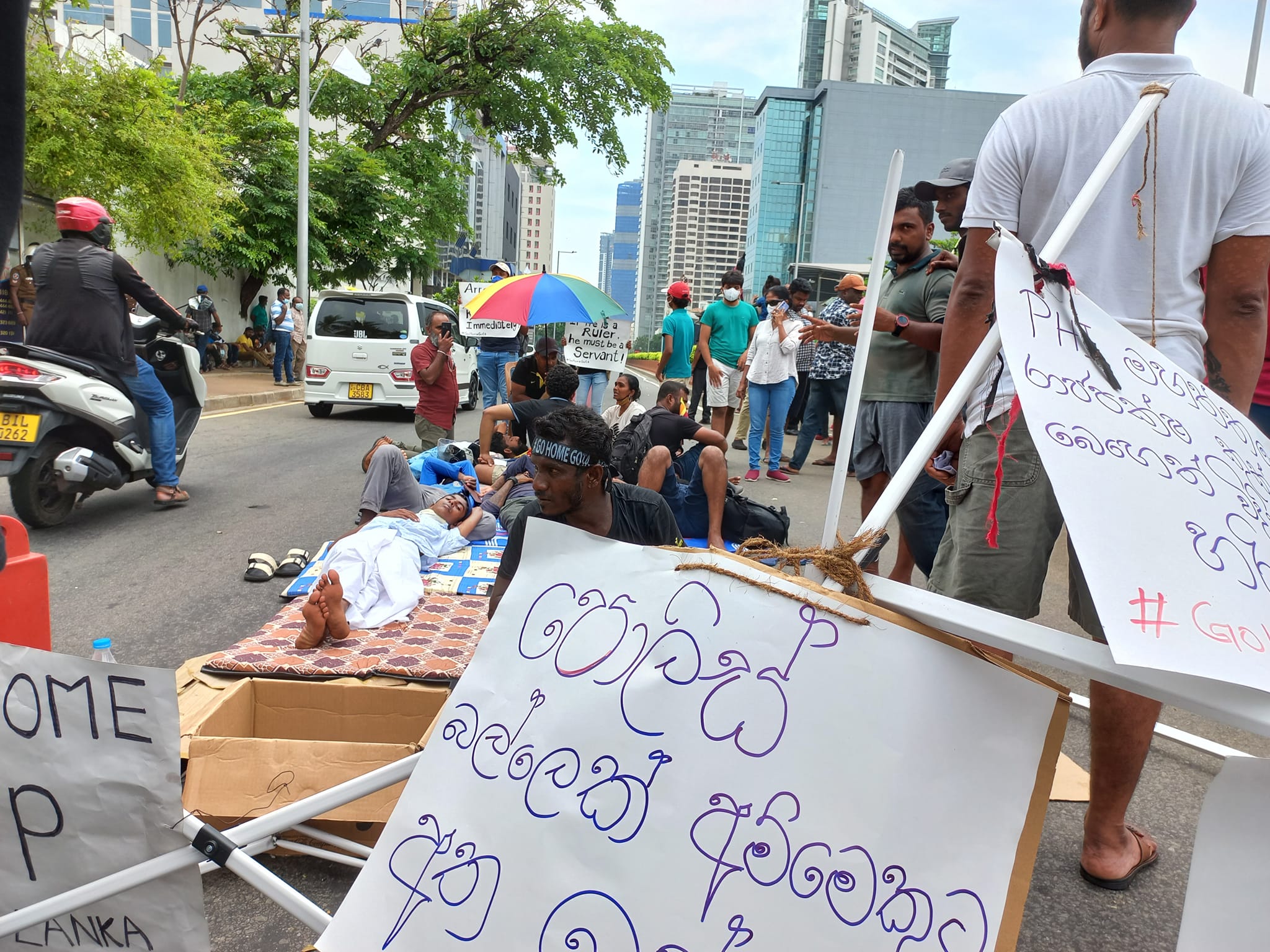
The Parliament will convene on Wednesday to debate the country’s economic crisis that has resulted in severe shortage of essentials for citizens and skyrocketing prices. It has also led to a spontaneous eruption of street protests, with citizens demanding that the President step down.

The President’s attempt to appoint a “new” Cabinet after mass resignations appears to have backfired, with the newly appointed Finance Minister Ali Sabry resigning barely 24 hours after his appointment. Top bureaucrat and Secretary to the Treasury and Finance Ministry resigned on Tuesday, resulting in two crucial positions falling vacant at a time of a dire economic crisis.

Meanwhile, the International Monetary Fund (IMF), where Sri Lanka has sought support, on Tuesday said that it is monitoring political and economic developments in Sri Lanka “very closely” amid growing public unrest, Reuters reported. “IMF staff is looking forward to program discussions with the authorities, including during the visit of the newly appointed Finance Minister to Washington later this month,” IMF Sri Lanka mission chief was quoted as saying. Except, with Mr. Sabry’s resignation, Sri Lanka did not have a Finance Minister as of Tuesday.

On Tuesday, citizens and professionals including health workers, lawyers, continued agitating at different locations, including outside Prime Minister Mahinda Rajapaksa’s private resident, asking the Rajapaksas to resign immediately. As protests swell in different parts of the country, despite the police attempting to disperse crowds with water cannons and tear gas in some areas, the Ministry of Defence urged citizens not to resort to violence. “I further emphasize that the security forces will act to maintain peace and also will not hesitate to enforce law against those involving in violence,” said General GDH Kamal Gunaratne (Retd), Secretary, Ministry of Defence in a statement.

The UN on Tuesday expressed concern over “excessive and unwarranted police violence” against protesters. Recalling the report of the UN Human Rights Chief, a spokesman said in a statement: “the drift towards militarisation and the weakening of institutional checks and balances in Sri Lanka have affected the State’s ability to effectively tackle the economic crisis.”

Source:The Hindu

Sri Lanka opposition rejects president’s unity government offer

Sri Lanka’s opposition has rejected an invitation from the president to form a unity government, urging his resignation over the country’s worsening shortages of food, fuel and medicines.

The opposition’s demand on Monday came as anti-government protests continued throughout the country over its worst economic crisis in memory and deepening mistrust in President Gotabaya Rajapaksa’s leadership.

Earlier on Monday, the president’s office said he “invites all political parties represented in the parliament to come together to accept ministerial portfolios in order to find solutions to this national crisis”.

The largest opposition political alliance – the United People’s Power or Samagi Jana Balawegaya (SJB) – rejected the proposal.

“The people of this country want Gotabaya and the entire Rajapaksa family to go and we can’t go against the people’s will and we can’t work alongside the corrupt,” top SJB official Ranjith Madduma Bandara told The Associated Press news agency.

SJB has 54 MPs in the 225-member parliament.

The left-wing People’s Liberation Front (JVP) also responded by urging Rajapaksa and his once-popular and powerful family to immediately step down.

“He really must be a lunatic to think that opposition MPs will prop up a government that is crumbling,” JVP MP Anura Dissanayaka told reporters in Colombo.

The main minority opposition party, the Tamil National Alliance (TNA), joined the voices dismissing the idea.

“His offer to reconstitute the cabinet with opposition MPs is nonsensical and infuriates the people who have been demanding his resignation,” TNA MP Mathiaparanan Abraham Sumanthiran told the AFP news agency.

All 26 Cabinet ministers handed in their resignations on Sunday, after thousands of people defied a countrywide state of emergency and curfew and joined street protests to denounce the government.

Two other Rajapaksa brothers, Finance Minister Basil Rajapaksa and Irrigation Minister Chamal Rajapaksa, were among those who resigned, along with the prime minister’s son, Sports Minister Namal Rajapaksa.

The departures cleared the way for the country’s ruling political family to seek to shore up its weakening position and attempt to stem growing public protests.

But the president has already reappointed four of the outgoing ministers – three of them to their old jobs – while replacing brother Basil Rajapaksa as finance minister with the previous justice chief. Previous ministers of foreign affairs, education and highways kept their positions.

Protests continue

On Monday, April 4, police used a water cannon to disperse protesters who marched towards the Rajapaksa family home in southern Sri Lanka demanding that the ruling family quit.

The debt-laden country, led by Rajapaksa and several members of his family since 2019, is struggling to pay for imports of fuel and other goods due to a scarcity of foreign exchange, leading to hours-long power cuts and a shortage of essentials.

The extent of the crisis became clear when the country could not pay for imports of basic supplies because of its huge debts and dwindling foreign reserves.

As protests grew and calls increased for him to step down, President Rajapaksa assumed emergency powers by decree at midnight on Friday. The government also declared a countrywide curfew, which was lifted Monday morning.

Authorities also reportedly blocked access for nearly 15 hours to Facebook, Twitter, YouTube, WhatsApp and other social media platforms that were used to organise the protests.

Posted in Uncategorized

Protests intensify against Sri Lanka President demanding resignation

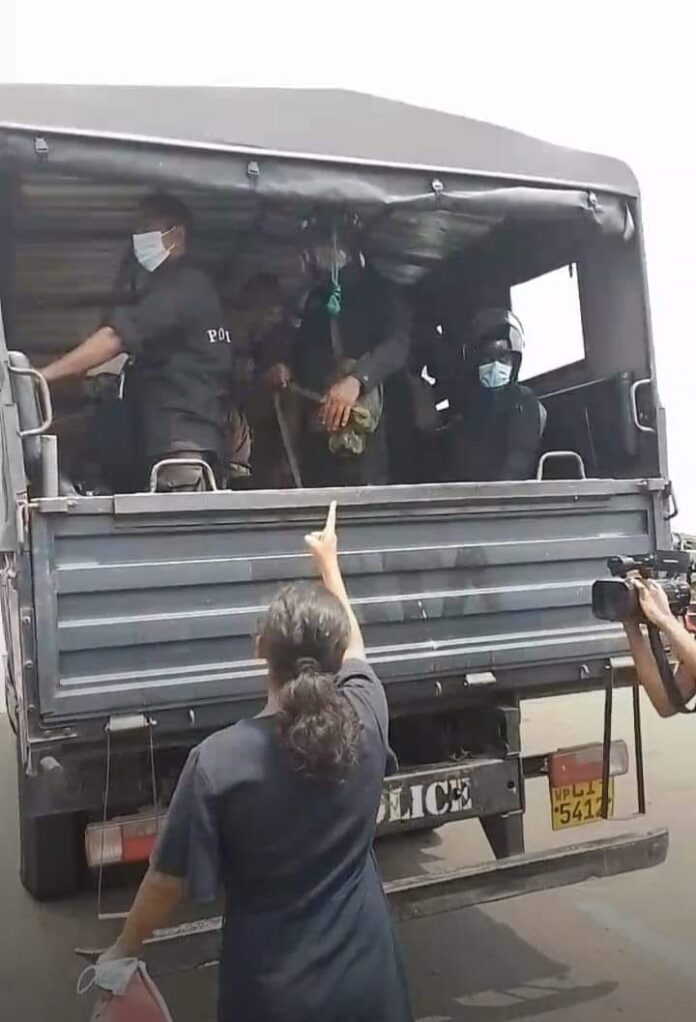
Protests have intensified against Sri Lanka President Gotabaya Rajapaksa and his Government with several protests being held in various parts of the country today.

The public has engaged in peaceful public protests in several areas demanding the President resign over the current economic crisis.

A move by the President to appoint a four-member temporary government has failed, as the public has continued to stage protests today as well to show their displeasure over the conduct of the President and his Government.

Meanwhile, the houses of several leading ministers and state ministers were also surrounded by the public during the protests that are being carried out in various parts of Sri Lanka.

The public has surrounded the houses of government ministers and has staged protests, calling for their resignations along with the President amidst the current economic crisis.

Prime Minister Mahinda Rajapaksa’s private residence in Tangalle, the houses of ministers Keheliya Rambukwella, Gamini, Lokuge Ramesh Pathirana, Kanchana Wijesekera, Roshan Ranasinghe Nimal Lanza, and Janaka Bandara Tennakoon had been surrounded by the protesting public.

The protesters are also reported to have surrounded the office of Minister Douglas Devananda in Jaffna, while he was inside the premises.

(NewsWire)

Protest erupts outside GR’s son’s house in LA

A small group of protestors have gathered outside President Gotabaya Rakapaksa’s son’s house in Los Angeles, USA, with protestors calling on him to call his father back home.

The protester said that President Gotabaya had to go down and his money had to come back. The protester said that people in Los Angeles are with Sri Lankans.

Posted in Uncategorized

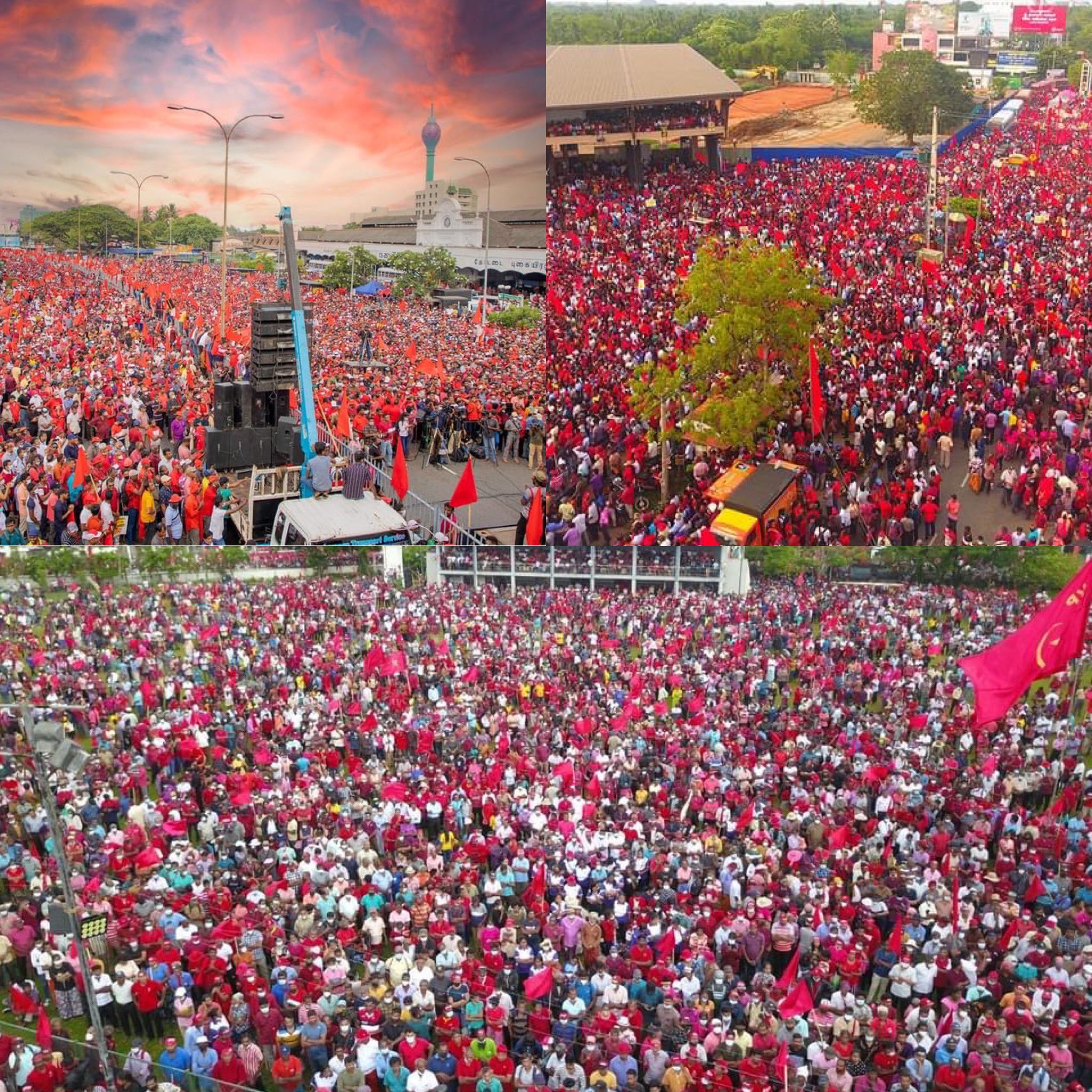
Massive Protest Outside President’s Secretariat: Thousands Gather Demanding President’s Removal

A massive protest is currently taking place oppsoite the Presidential Secretariat, Colombo.

Thousands of people have gathered near the President’s office chanting slogans and demanding his resignation.

A heavy police and military presence was seen in the President’s Office.

People were also protesting on Galle Face Green and several other places in Colombo against the President.

However, the President still maintains that he will not leave office due to public pressure.

Posted in Uncategorized

Army Commander meets foreign diplomats to brief on current situation

The armed forces of Sri Lanka would always comply with the Constitution and the Army is no exception. The Army as a professional outfit is always prepared to provide security and protection to the State as necessary”, so said Chief of Defence Staff and Commander of the Army, General Shavendra Silva, addressing a gathering of Defence Advisers/Attaches of Sri Lanka-based High Commissions and embassies, invited to the Office of Chief of Defence Staff today (4).

The meeting was meant to keep those foreign Defence Advisers/Attaches informed of the current situation.

Captain Ian Keith Cain, Defence Adviser (Australia), Commander, M Shafil Bari, Defence Adviser, Bangladesh, Senior Colonel Wan Dong, Military, Naval and Air Attaché (China), Lieutenant Colonel Chang Qianjin, Assistant Military Naval and Air Attache, (China), Captain Vikas Sood, Defence Adviser (India), Lieutenant Colonel Punnet Sushill, Assistant Defence Adviser, (India), Colonel Homayou Ali Yari, Military Attaché, (Iran), Captain Gaku Fukaura, Defence / Security Attaché, (Japan), Colonel Ismail Naseer, Defence Adviser, (Maldives), Colonel Muhammad Safdar Khan, Defence Adviser, (Pakistan), Colonel Aleksey A Bondarev, Military, Naval & Air Attaché, (Russia), Colonel P.J Clayton, Defence Adviser, (United Kingdom) and Lieutenant Commander Richard Lister, Naval Attaché (United States of America) were present at this meeting.

Posted in Uncategorized

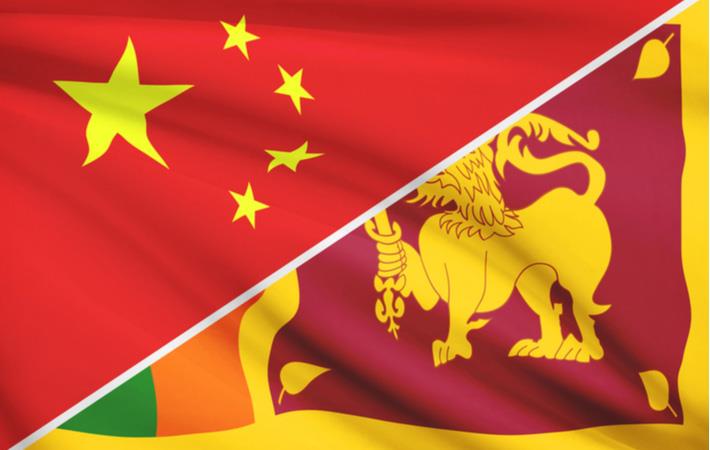
Pakistan and Sri Lanka face political turmoil fueled by Chinese debt

It is the unfolding crisis in Pakistan and Sri Lanka which is forcing countries like Maldives, Nepal and Bangladesh to think again on Chinese infrastructure loans and being part of the BRI initiative.

During his trip to India last week, Nepal Prime Minister Sher Bahadur Deuba informally shared a conversation about Chinese foreign minister Wang Yi’s visit to Kathmandu in late March. The Nepalese PM, who has an equally political and erudite wife Arzu, told the visiting Wang that his country can only accept grants from Beijing and not loans for infrastructure projects. Fact is, not a single agreement on the much-touted Belt Road Initiative (BRI) was signed during Wang’s visit to Kathmandu.

With the Chinese debt in South Asia rising from USD 4.7 billion to upwards of USD 40 billion, Nepal under Deuba chose to walk out of the debt trap of the Middle Kingdom after seeing the mounting political crisis in Beijing’s tributary state of Pakistan and Sri Lanka. With more than 10 per cent of Pakistan’s external debt owed to China, the milk and honey relationship no longer tastes sweet with the Islamic Republic descending into political chaos with all democratic institutions made vulnerable by a self-serving Prime Minister in Imran Ahmed Khan Niazi and his cronies.

The situation in Sri Lanka is no different and this time they don’t have India to blame for the country staring into an economic and political abyss with hardly any foreign reserves to buy fuel and oil. The blame squarely lies on the door of the Rajapaksa Incorporated, which brought the country under severe economic stress by taking high-interest loans from China in the name of infrastructure development. Today, the island nation is under lockdown with the public having no options but to protest the state of governance of the Rajapaksa family.

It is the unfolding crisis in Pakistan and Sri Lanka which is forcing countries like Maldives, Nepal and Bangladesh to think again on Chinese infrastructure loans and being part of the BRI initiative. It was not long ago that the Chinese ambassador to Nepal used to be the Queen Bee in Nepali politics with Maoist and Communist politicians paying obeisance to Beijing’s representative.

While it seems that Sri Lanka has realized the soup its economy is in, Pakistan has doubly complicated its economic recovery with PM Niazi plunging the country into a full-blown political crisis for his own survival. He is trying to whip up public sentiment in his support by singling out the Biden administration for covertly conspiring with the Opposition to topple his regime. As if the US has Pakistan still on its high priority at a time when the Russian President has invaded Ukraine.

EU mulls tougher sanctions following Bucha ‘atrocities’

Brussels is pushing for a tougher fifth round of sanctions against Moscow following the ‘atrocities’ revealed over the weekend in the Ukrainian town of Bucha. The EU’s foreign policy chief Josep Borrell said the bloc “will advance, as a matter of urgency, work on further sanctions against Russia”. “The massacres in the town of Bucha and other Ukrainian…

While Imran Niazi’s rant against the US may be music to Beijing’s ears, China should also be worried about the future of BRI in Pakistan and about the recovery of the multi-billion-dollar loan given to Islamabad. A weak Islamabad will give strength to fissiparous forces within Pakistan as nationalist movements are building up in Balochistan, Sindh, and Khyber Pakhtunkhwa. Given the US control on global financial institutions, both Pakistan and Sri Lanka will find it very hard to recover as the two countries had shifted loyalties to Beijing in the past two decades.

Source: Hindustan Times

Posted in Uncategorized

Sri Lanka crisis: Trading on stock exchange halted after share market crashes

Trading on the Sri Lankan stock exchange has been halted after the share market crashed amid an economic crisis in the country.

Authorities on Monday halted trading on Sri Lanka’s stock exchange after the share market plunged 5.9 per cent, according to a report by AFP.

This comes even as Sri Lanka’s president Gotabaya Rajapaksa is all set to appoint a new cabinet Monday as security forces brace for possible violence with more protests expected against worsening shortages of food, fuel and medicines, the AFP report said.

The son of Sri Lanka’s prime minister resigned from the cabinet on Monday and several other members have offered to do so, a minister said, just days after President Gotabaya Rajapaksa declared a state of emergency following protests over an economic crisis, as per a Reuters report.

The debt-laden country is struggling to pay for imports of fuel and other essentials due to a severe shortage of foreign currency, leading to hours-long power cuts and widespread demonstrations that continued despite a weekend curfew

Traffic was back on the streets of the country’s main city Colombo on Monday, but there were reports of sporadic and peaceful protests from across the country.

Youth and Sports Minister Namal Rajapaksa, nephew of Gotabaya and the son of Prime Minister Mahinda Rajapaksa, said on Twitter on Monday he had told the president’s secretary about his resignation with immediate effect.

The island nation of 22 million, is also grappling with soaring inflation after the government steeply devalued its currency last month ahead of talks with the International Monetary Fund for a loan programme.

The country’s expenditure has exceeded its income under successive governments while its production of tradable goods and services has been inadequate. The twin deficits were badly exposed by the COVID-19 pandemic that crippled its economic mainstay, the tourism industry.

Maha Nayaka thera calls for Cabinet and PM dissolution

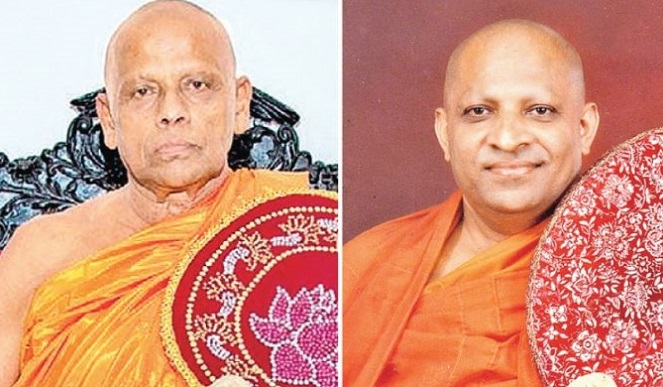
The Chief Prelates of the Asgiri, Malwathu, Amarapura, and Ramanna Maha Nikaya have called on President Gotabaya Rajapaksa to immediately dissolve the Cabinet including the post of Prime Minister in accordance with powers vested with him.

The Maha Nayaka Thera directed a letter in this regard to President Rajapaksa.

The venerable said the country should be handed over to an interim government comprising representatives of all parties that represent Parliament until a government is elected through a Parliamentary Election.

The letter states that an expert advisory board must be appointed to obtain necessary advice and guidance in the interim for the purpose of administration.

The letter added that the proposal of the advisory board should be taken up for debate in Parliament and implemented void of party politics based on a national policy.

The Chief Incumbents also claimed that an independent committee must be appointed to follow up on the proposals tabled by the advisory board that should be appointed to resolve the economic crisis while such actions should be subject to judicial questioning and a formal audit and made public periodically.

The Maha Nayaka Thera are of the view that the President, as the pioneer of the government during this period, must be held accountable to act in accordance with the decisions of the board.

SLFP quits the government; 14 MPs to remain independent

The parliamentary group of the Sri Lanka Freedom Party (SLFP) has decided to leave the government and function as an independent group in Parliament.

This was confirmed by SLFP member and State Minister Duminda Dissanayake, speaking to Ada Derana.

He said the parliamentary group of the party had convened a meeting today while the fourteen parliamentarians of the SLFP had decided to quit the government and act independently at tomorrow’s parliamentary session.

Meanwhile the state ministers Lasantha Alagiyawanna, Duminda Dissanayake and Priyankara Jayaratne have resigned from their respective ministerial portfolios.

Posted in Uncategorized