SJB to focus on abolishing 20A first

The Samagi Jana Balawegeya (SJB) said yesterday (3) that they are in discussions with a number of political parties, organisations, and individuals on what next steps to take, with priority being given to revoke the 20th Amendment from the Constitution.

“We are going step by step. We are telling those who are saying that they are opposed to the Government, but within the Government, let’s get together and vote against the 20th Amendment. That is step one. Then we can see all these people who professed to be against the Government, whether they are actually against the Government,” SJB MP Eran Wickremaratne told The Morning yesterday, speaking during the protest organised by the main parliamentary Opposition Samagi Jana Balawegaya (SJB) near Independence Square in Colombo yesterday, demanding the resignation of President Gotabaya Rajapaksa and the incumbent Sri Lanka Podujana Peramuna (SLPP)- led Government.

He added that there were discussions yesterday regarding the matter.

“Today, a lot of the Opposition came together and discussed it. We will build on that,” said Wickremaratne, adding: “Ultimately, we are the alternative government – we are doing our homework. We have two main objectives: in the short term how to end the queues and secondly, how to reform the economy and make some hard decisions.”

Speaking to The Morning, SJB National Organiser and MP Tissa Attanayake said that the SJB has appointed a four-member committee to reach out to political parties, organisations, and individuals who are not sitting with the SJB.

The four-member committee includes Attanayake, SJB General Secretary Ranjith Madduma Bandara, and SJB MPs Kabir Hashim and Eran Wickremaratne.

Meanwhile, SJB MP Field Marshal Sarath Fonseka told The Morning that a no-confidence motion against the Government will not take place at the time.

Protests have become a common sight around the island in the past three months, as citizens’ calls for the supply of basic essentials, such as fuel, electricity, food items, and gas have been increasing. Alongside this, the “#GoHomeGota” hashtag has been popularised across social media. A state of emergency was declared over the weekend, followed by a curfew and a ban on social media applications, as dissent against the Government continues to grow.

A tense situation arose at around 9.30 a.m. yesterday, when a group of SJB Parliamentarians, including SJB and Opposition Leader Sajith Premadasa, attempted to enter the Independence Square premises in Colombo. However, the Police and the Army had set up roadblocks at the scene.

Speaking to police and army personnel at the time, Premadasa said that the Police and the Army were bound not to protect the Rajapaksa family (a reference to the family of President Rajapaksa and Prime Minister Mahinda Rajapaksa), but to protect the people of the country. He also said that no one can violate the Constitution of the country for the protection of one family.

“Neither the Government nor the President nor anyone else can suppress public opinion. We have come to this place today (3) for the sake of the millions of people. Today the people have become helpless to the fullest. They have no milk powder, no gas, no electricity. However, the Government is suppressing the people’s voice against the current rule.” he said yesterday.

Claiming that not a single person or property would be harmed in the protest, Premadasa called on the security personnel to allow them to enter Independence Square. He also said that no one has the power to obstruct the activities of the elected MPs, including the Opposition Leader.

“We do not threaten anyone in the security forces, but do not act in a way that destroys our respect towards you. What you are doing today is completely unconstitutional. The Rajapaksas will finally flee to the US, but you all will have to end up going to courts,” he told the police and army personnel.

Meanwhile, commenting during the protest, SJB MP Field Marshal Sarath Fonseka said: “The current President and Government are misusing the emergency law and oppressing the people. Therefore, the security forces should not turn their guns on us, instead, guns must be aimed at corrupt rulers.”

After protesting near the Independence Square for about one hour, the group of SJB MPs including Premadasa was seen leaving the premises.

Over the past few months, several protests have been held on a daily basis during which people demanded solutions for the issues including the prevailing shortages of essential commodities. Moreover, despite the President having declared a state of emergency and imposed a curfew until 6 a.m. today (4), both political and non-political groups had organised several protests islandwide yesterday.

Sri Lankan Cabinet decides to resign; Mahinda Rajapaksa to remain as PM

The Sri Lankan Cabinet of Ministers have decided to resign and have submitted their letters of resignation to Prime Minister Mahinda Rajapaksa.

However, Rajapaksa will continue to function as the Prime Minister, said Dinesh Gunwardena who was the Minister of Education until today (3).

Jaishankar’s meeting with TNA – Sunday Times

A significant event in Colombo this week was the meeting between Indian External Affairs Minister (EAM), Subrahmaniyam Jaishanker and a delegation from the Tamil National Alliance (TNA). Jaishankar was in Colombo for the BIMSTEC summit.

“Vanakkam,” intoned Dr Jaishankar greeting TNA leader Rajavarothayam Sampanthan last Monday at the India House. He then asked him” Saukiyama?” or are you well. That was in Tamil. The Indian EAM was born in New Delhi and is one of three sons of Krishnaswamy Subramaniyam and Sulochana Jaishanker who have their origins from Tiruchirapalli and Chennai in Tamil Nadu respectively.

Samapanthan gave an overview of the discussions they had with President Gotabaya Rajapaksa on March 18 and asked Sumanthiran to explain the details. Sumanthiran declared that the President and his team wanted to discuss and negotiate a long-term political solution for the Tamil’s demand for devolution of power once the draft constitution is translated within the next two months. This, he declared, was agreed. However, he said, that the President further agreed to resolve several immediate issues faced by the people of North and the East — releasing persons detained under the Prevention of Terrorism Act (PTA) and held over a long term (over 10 years), and the cases of others in custody should reviewed; an immediate halt to land takeover by the military and the Government for reported archaeological investigations, wildlife and forest preservation etc; addressing the need for investigation of the disappeared and establishing a North-East Development Fund. There is no finality on this. However, TNA sources said that they hoped to receive funds from the Tamil diaspora and Tamil Nadu through this mechanism for development purposes.

Jaishankar had nodded in agreement and commented at the end that he felt satisfied that a process of negotiation had started and seemed to be clearly defining scope. He said the Indian government fully supported this process and encouraged the TNA to be proactive. He said for the first time he had heard by and large the same details being shared by the Government side as well as the TNA.

Jaishankar said India would encourage both parties to remain proactively engaged with belief and sincerity. He said President Rajapaksa has assured him that he is fully committed to delivering on the four immediate confidence building measures identified by the TNA as immediate issues to be resolved.

According to sources familiar with the discussion, the TNA team was also advised by a key member of the Indian team to enhance its dialogue with opposition political parties. In other words, it was felt that they were not interacting with the opposition groups very much. A TNA source said the remarks were “very significant” but declined to elaborate. Associated with the meeting was Indian High Commissioner Gopal Baglay.

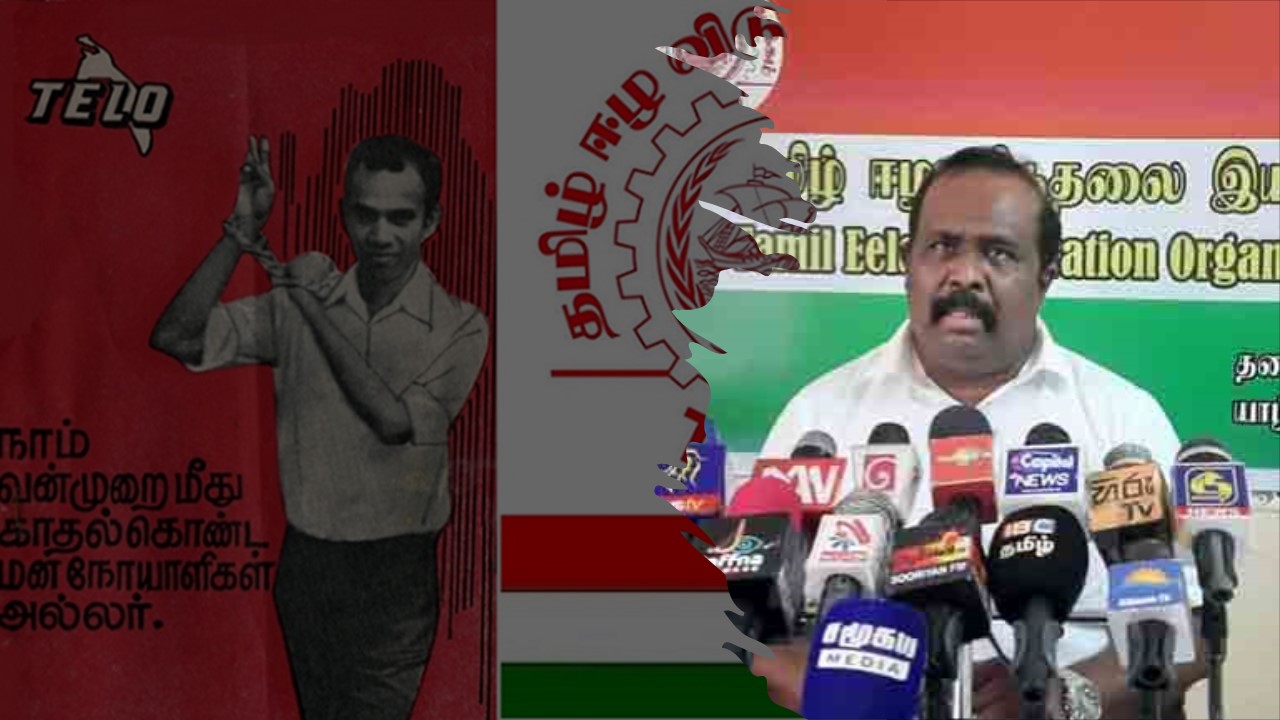
TELO Leader Selvam Adaikalanathan intervened and tried to explain his party’s decision to boycott last Friday’s meeting with the President and said in Tamil that if India too was involved in the discussions as a possible mediator, then the TELO might reconsider attending future meetings with the Government. In response, Jaishankar said in Tamil that there were no plans or intentions for any direct involvement of India in any such talks.

Ahead of TNA’s talks with President Rajapaksa, diplomatic sources said, Adaikalanathan had been told to take part in the event. According to these sources, the TELO decision to boycott, despite advice, was the result of one of its key members holding office in a friendship organization where China is involved. However, TELO members deny the charge though they concede one of their top- rungers is a Joint Deputy Chairman of the organization.

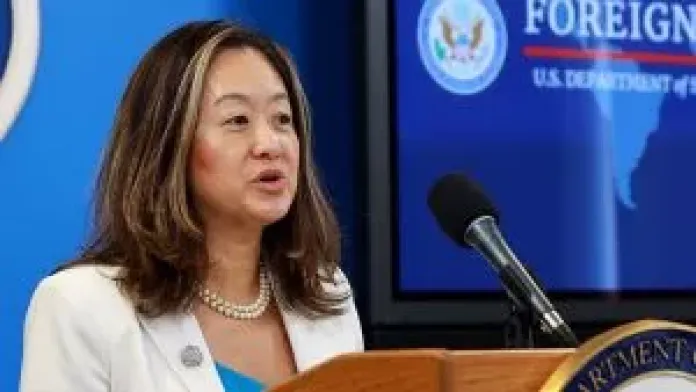
In the same week, a delegation from the London-based Global Tamil Forum (GTF) led by Suren Surendiran, a group banned in Sri Lanka, had a meeting with top officials in the US Department of State. A tweet from the Department said: “The US values our relationship with diaspora communities who helped build bridges of understanding between Americans and the rest of the world. Assistant Secretary (David) Lu met with Global Tamil Forum at GTF online to discuss democracy, human rights, and economic challenges in Sri Lanka.”

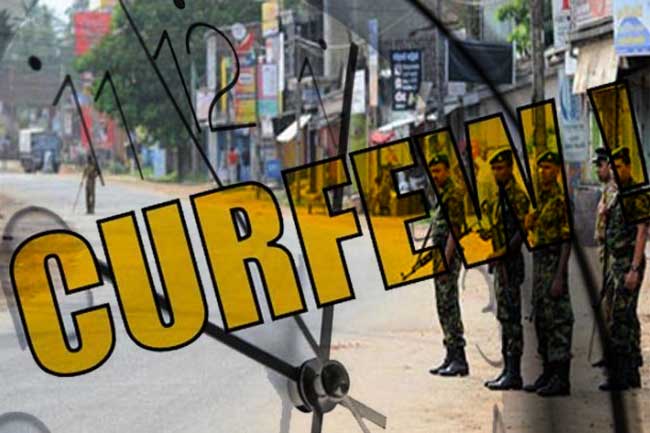
With the State of Emergency in place, and a 36-hour curfew declared from 6 p.m. Saturday till 6 a.m. tomorrow, the government has already deployed troops district wise. It is determined to ensure no countrywide protests take place today. Thus, the battle lines are clearly drawn between the government and the public who are protesting.

This is whilst considerable international attention is being focused on developments in Sri Lanka, as the following tweets, will indicate:

The US Senate Foreign Relations Committee: Closely monitoring the situation in Sri Lanka. Out of an abundance of caution …..

The European Union: Concerned by the state of emergency, EU strongly urges Sri Lankan authorities to safeguard democratic rights of all citizens, including right to free assembly and dissent, which has to be peaceful. Challenging times for Sri Lankan people- EU continues to follow situation closely….

Sarah Hulton, British High Commissioner in Sri Lanka: Concerned by reports of the use of force against journalists and protesters, and the recently imposed Emergency Laws. A citizen’s right to protest peacefully is an essential part of democracy.

Julie Chung, United States Ambassador in Sri Lanka: Sri Lankans have a right to protest peacefully – essential for democratic expression. I am watching the situation closely, and hope the coming days bring restraint from all sides, as well as much needed economic stability and relief for those suffering.

Posted in Uncategorized

Decisive meeting between President and PM?

Prime Minister Mahinda Rajapaksa has left for a crucial meeting with President Gotabaya Rajapaksa, internal sources told Ada Derana.

According to the source, several important political decisions are expected to be taken during this meeting.

The source further added that the Cabinet of Ministers is likely to resign after the meeting, however further discussion with regard to this are still ongoing.

Opposition protesting in Colombo despite curfew

Sri Lankan Opposition Leader Sajith Premadasa led a protest march towards Independence Square in Colombo on Sunday (7), defying the nationwide curfew.

However, the protest march was obstructed by police barricades that were set up around Independence Square, Colombo.

A heavy security detail was also deployed to the vicinity.

However, the protestors including SJB Parliamentarians continued to protest in the presence of the police and military personnel.

“You are supposed to protect the people and the not government,” Sajith Premadasa told police officers who were manning the barricade.

“We are causing any damage to public or private property. We are here to protest peacefully. All those present with me are the MPs. You, the law enforcement, are bound to the mandate of the people and you cannot suppress it,” said the Opposition Leader, adding that he respects the police and military, and has no intention to threaten them.

SJB MP Patali Champika Ranawaka warned the police officers that obstructing the movement of any MP would land them in jail for five years and that the actions of the police is a violation of the constitution.

Posted in Uncategorized

Massive protest in Wijerama; Students & local defy curfew order

A massive protest took place on Sunday (3) evening at the Wijerama Junction close to the Sri Jayawardenapura University.

University Students were joined by local residents in this protest, and when they reached the Wijerama Junction they were met with a heavy security forces presence.

Sri Lanka Police, The three-armed Force, and the Police Riot Police were seen stationed on the path of the protestors who defied the curfew and stepped out onto the streets to voice their anger over the present situation in the country.

As they were not allowed to proceed, they positioned themselves opposite the barricade and carried out a protest, with songs and chants.

At the same time, well-known lecturer Upul Shantha Sannasgala, also known as ‘Sannasgala Sir’ visited the Wijerama Junction and condemned the actions of the government.

Posted in Uncategorized

Heading for ‘Arab Spring’ or Anarchy? B N Sathiya Moorthy

The ‘stray incident’ (?) involving rioting and arson outside President Gotabaya Rajapaksa’s Mirihana house should be an eye-opener for all stake-holders, starting and ending with the Nation. The situation can worsen with the sporadic protests across the nation that have been planned, supposedly as people’s protests, on Monday, 3 April, and may get extended by will and/or wisdom, can have consequences that could become hard to revert for a political class, including most in the Opposition, who have lost touch with the ground very long ago.

President Gotabaya Rajapaksa has since proclaimed emergency, under the Public Security Ordinance. This is the second time ‘emergency’ of some kind is being proclaimed over the continuing economic crisis, caused mainly by an unprecedentedly crippling forex shortage. The last time it was mostly a ‘food emergency’, when early signs of food shortage began emerging, to become what it is today. The ‘food emergency’ reportedly helped the government target hoarders and black-marketers. It was withdrawn when the situation eased relatively – but never to the original levels.

The President’s Media Division has since attributed the Mirihana incident, in which angry protestors broke the thin police barricades and set fire to an empty bus parked to deny them access to Gota’s house, to ‘extremist groups’. Details would be known when the government provides them to the courts, Parliament or the courts.

Rumour-mills at work

That the rumour mill was working overtime, with the additional intent of besmirching the fair name of the Indian neighbour became clear when the social media was full of reports about India rushing armed forces to help the Gota regime to quell the riots, anticipated even more in the coming days. It implied that the government had lost the faith of the uniformed services in the country – and vice versa. The script on which the ‘Arab Spring’ and the ‘Orange Revolution’ were based, elsewhere in the past.

The Indian High Commission lost no time in denying any such intent, and also all the content of the mischievous campaign. Clearly, it was a mischievous effort to link India to the Rajapaksas, little realising that in this social media era, such bluff could be called out early just as they can be spread around.

However, this was not the first time a pro-Rajapaksas tilt of India has been floated around. On the eve of the post-war presidential polls of 2010, in the absence of the social media like today, a whisper campaign gained ground in ‘news-hungry’ capital Colombo, that all the Rajapaksas except incumbent President Mahinda R had ‘escaped’ to the Indian Air Force (IAF) base in Thiruvananthapuram, anticipating defeat at the hands of the common Opposition candidate and war-victor of a general in Sarath Fonseka.

There were even claims that someone’s cousin or brother who was working in the Ratmalana airport or the Sri Lanka Air Force (SLAF) had actually seen it happen the previous night, or had actually facilitated the travel. As the day wore on, every Rajapaksa was found to be in the country, mostly in Colombo. As it turned out, Mahinda Rajapaksa won the presidential poll with a high score, but not as high a score as predecessor Chandrika Kumaratunga’s record from 1995.

Already, reports indicate that small groups of people are collecting and protesting impromptu in different parts of the country. It’s understandable, given their economic plight and consequent social tensions. There is also said to be a hashtag ‘EnoughisEnough’ against the government leadership, and is trending.

Thankfully, the Opposition is divided on identifying with these protests. The main Opposition SJB Leader of the Opposition, has extended support to the party, and has also named the party’s district organisers to coordinate support for what they want the nation to believe are people’s protests, at their respective levels. T

here seems to be reservations and opposition to the move from within the SJB as sections are unhappy with the mood and method of the leadership. Two left-leaning parties that in the normal course would have been expected to back such protests, or organise similar rallies themselves, have decided to stay away. The JVP and the breakaway Frontline Socialist Party (FSP) are acting responsibly.

Aiming for an ‘Arab Spring’?

The protest is bad news, support from a section of the mainline Opposition is worse – possibly as bad as the economic crisis. It is worse than all that the nation has been feeling and touching through the past months of economic-cum-forex crises. And the worst hit would still be the poor, who are supposed to form the vanguard of any people-centric revolution, where the present political leaderships of every kind could also be thrown by the way side.

Sri Lanka is not new to insurgency (JVP), terrorism (LTTE) or forgotten coup-attempts, (in the early sixties). If the nation came out of it all in a single piece it owed to a strong and central leadership that could take decisions and have them executed. An anarchy is a situation where the State and the government leadership lose that very authority. It is not necessary that there should be blood-letting.

An ‘Arab Spring’ or ‘Orange Revolution’ kind of situation too was anarchist, whether or not Sri Lankan blood flows – more than already, since Independence. It was attempted during President Mahinda Rajapaksa’s second term but did not take off. This time, the situation may be different – and for known and different reasons.

Anarchy is not going to set right the economic mess. But hunger knows no bounds. So do pent-up frustrations. The current generation had moved faraway from the economic trials and tribulations of their forefathers, both before and after Independence. For them, Covid lockdown was hard. The forex mess that they don’t know anything about and in the creation of which they did not have any role, was incomprehensible to begin with, and intolerable since. They react in the only way they know – as there are no solutions, no hint of solutions, and no promises of solutions, now or later.

Public behaviour

Yet, this kind of ‘public behaviour’ can only worsen the situation for the protestors, to begin with. They cannot hope to revive the economy and forex position, which alone can help solve their problems, which have lost the number-count, by the day and now, by the hour. The nation needs a huge injection of forex. That alone can solve the food crisis, the power-crisis, the pharma crisis, the transport crisis – and whatever you want to and need to add. But anarchist national behaviour can put off those investors, whether they are overseas private sector or international institutions.

The IMF falls in the second category. IMF does not invest in the traditional sense of the term, which creates jobs. Instead, IMF investments can save jobs. It too can shore up the forex reserves and give a fresh lease of life to the nation’s economy. Reports that some nation or other could put in big money on big-ticket investment sound reasonably credible as a possible solution. But is it going to happen, and if so when? — is the question.

In such a scenario, the prediction is that there will be a re-enactment of the Hambantota Port kind of a deal, but without China’s participation. No, no one is talking about the Indian neighbour, either. But if it were to happen, and if that nation is not identified with the existing blocs identified with the US and China, then and then alone would the nation be safe, in geo-political and geo-strategic terms. Else, the hoped-for economic recovery can lead to more complex situations, though the rulers may still not be unhappy to leave behind legacy issues for successors, just as they too have inherited now.

Debatable issue

Granting that the Rajapaksas’ days in office are numbered – say, even if it’s only with the next round of parliamentary or presidential elections that are not due in the near future — political parties that are clinging onto such nation-wide protests with this end in mind would have to think twice. It makes a political message for them now. The strategy provides for the logistics or the lack of it, in transporting people from rural areas to urban centres for massive protests of the kind with the main Opposition SJB and the left-leaning JVP organised in capital Colombo not very long ago.

But unless political parties are ready to lend leadership and direction to such protests, which otherwise is a democratic right of parties and people, could lead to situations where the future-day political masters, as they see themselves, too can lost control. The nation may witness leadership-change one way or the other, the economy too may begin showing signs of revival, but those that have taken to the streets without leadership and direction, may not return home.

Instead, some / many of them may decide to take to the jungles. But there is no Rohana Wijeweera or Velupillai Prabhakaran, at least as yet, to give them leadership and direction. Which of the two is worse – militant insurgent movements with leaderships or without it, is a debate that has found no sure-fire answers.

The precedents

There are precedents. Sections within the ruling party under then Prime Minister Ranasinghe Premadasa created conditions through their silent encouragement for protests against the Indo-Sri Lanka Accord. Premadasa could not stop the Second JVP Insurgency through peaceful means after becoming President. According to independent assessments, not acknowledged by any government since, not less than 60,000 Sinhala youth, both men and women, lost their lives in the savage retribution handed down by the armed forces.

While in power, Premadasa also encouraged the LTTE, and reportedly armed and funded the terror-outfit, to force the exit of the Indian Peace-Keeping Force (IPKF), called in by his predecessor and one-time boss, President J R Jayawardena. In the end, Premadasa, Sr, fell to his own tactics, and was slain by an LTTE suicide-bomber, who was working in his kitchen, after all.

From among the Tamil polity, the late S J V Chelvanayagam got the Vaddukottai Resolution on ‘self-determination’ passed when he was already ageing and ailing, with the pious hope that it would redirect the mis-guided energies of the Tamil youth who were already frustrated with his pious, Gandhian ways. He passed away, the spirit of the VAddukottai resolution remained, and the LTTE obliterated other Tamil militant youth organisations, to claim ‘sole representative’ status for the self, but at gun-point.

Message of 2015

If it’s not anarchy, is the nation expecting an ‘Orange Revolution’ like situation? Yes and No. Even if it is an organised protest or protests with pious contents and peaceful intent, there is nothing to suggest that mis-guided youth generation with their hands eternally on their social media knowledge-seeking would follow suit. It happened a decade after SWRD became the Prime Minister of a left-leaning government. The JVP was born as the youth found the SWRD kind of sops for the nation’s poor and down-trodden woefully inadequate against expectations, needs and promises.

Either way, it’s not the way for the region’s oldest elected democracy. In the past, the nation got rid of elected leaders whose ways they did not approve of. The great Mahinda Rajapaksa, who as President had vanquished the unwinnable LTTE, did bite dust in Elections-2015. People had no use for leaders who could not adopt and re-adopt themselves to changing socio-political situations. That was the message.

If earlier, it was only the economy, now it’s also the exploding social situation. It is here more than possibly the other where ‘now is the time for all good men to come to the aid of the nation’. Social and political responsibility is the name of the game just as economic prudence is on the other track. Neither can wait either, and have to move forwards at the same time and in fast-tracked and regulated pace. Nothing more, nothing less!

(The writer is Policy Analyst & Commentator, based in Chennai, India. Email: sathiyam54@nsathiyamoorthy.com)

Posted in Uncategorized

Sri Lanka to remove ban on social media

The Telecommunications Regulatory Commission of Sri Lanka (TRCSL) says that the restrictions imposed on social media will be lifted at 3.30 p.m. today (03) on the advice of the Defence Ministry.

The Sri Lankan government had blocked access to all social media sites, including Facebook, Twitter, Instagram, WhatsApp and YouTube, through an order late on Saturday. It said the decision was taken to stem “misinformation”.

The Director General of the TRCSL had said that service providers have been advised to temporarily restrict access to social media websites, on the request of the Ministry of Defence.

“It was imposed in the interests of the country and people to maintain calm,” the commission’s Chairman, Jayantha de Silva had told Reuters.

NetBlocks, a watchdog organization that monitors cybersecurity and the governance of the Internet, had confirmed the restriction of multiple social media platforms including Facebook, Twitter, WhatsApp, Viber and YouTube in Sri Lanka after midnight on Saturday.

Metrics corroborate user reports of service unavailability across the country, showing that all of Sri Lanka’s major network operators including Dialog, Sri Lanka Telecom, Mobitel, Hutch are covered by the measure.

Fully or partially impacted social media and messaging platforms include Facebook, Twitter, YouTube, Instagram, TikTok, Snapchat, WhatsApp, Viber, Telegram, and Facebook Messenger.

However, Sri Lankan Minister Namal Rajapaksa had urged the government to reconsider the curbs on social media, pointing out that such bans are “completely useless”.

Namal Rajapaksa, who is the Cabinet Minister of Youth and Sports as well as the State Minister of Digital Technology and Enterprise Development, tweeted, “I will never condone the blocking of social media. The availability of VPN, just like I’m using now, makes such bans completely useless.”

“I urge the authorities to think more progressively and reconsider this decision.”

VPN stands for virtual private network and can be used to protect yourself from snooping, access content restricted to some locations and to bypass censorship.

The Public Utilities Commission of Sri Lanka (PUCSL) had also requested the TRCSL and service providers to restore access to all social media platforms immediately, as it is unable to inform electricity consumers about impending power cuts.

The Human Rights Commission of Sri Lanka (HRCSL) had also criticized the move to block social media in the country.

SLFP gives President one week ultimatum

The Sri Lanka Freedom Party (SLFP) has written to President Gotabaya Rajapaksa calling for the setting up of a caretaker government within a week.

The SLFP warns that if not the fourteen parliamentarians of the party will quit the government and function as an independent group in the Parliament.

In the letter to the President, signed by SLFP general secretary Dayasiri Jayasekara, the party states that in the next few days, discussions should be held with all the political parties represented in Parliament and necessary steps should be taken to govern the country in the future under a caretaker government with a sustainable program for the betterment of the country.

Meanwhile it is reported that the executive committee of the Sri Lanka Freedom Party is slated to meet later tonight (03).

During this meeting, the party is expected to reach a final decision on whether or not it will continue to remain in the government, sources told Ada Derana.

The full letter sent by the SLFP to the President is attached below: